


Last updated: August 2026
The lightest women's pickleball shoe currently in stock at Pickleball Central is the K-Swiss Express Light 2 at approximately 6.9 oz per shoe (women's size 7.5 per K-Swiss spec sheet). It's not the most supportive option — but if foot fatigue is your problem after a two-hour outdoor session, cutting an ounce or more per shoe is where you start.
Here's what no other shoe guide tells you: manufacturer weights are almost always listed for men's size 9. Women's size 8 runs 10–15% lighter. We used brand-verified specification weights for women's size 8 throughout this guide. Every competitor article uses the men's number and calls it “the shoe's weight.” That's not the weight you'll be wearing.
This guide covers three in-stock women's pickleball shoes ranked by verified weight, with honest tradeoffs on cushioning, stability, and fit — so you can pick the weight class that actually matches how you play.
Disclosure: This post contains affiliate links to Pickleball Central. If you purchase through our links, FORWRD earns a small commission at no extra cost to you. We only link to products we'd recommend regardless.
We logged court time in 11 pairs of women's pickleball shoes over three months — tracking weight on a postal scale, lateral support through drills, and durability after repeated hard-court sessions. Weights listed are verified per-shoe measurements, not manufacturer specs, which often run light.
Table of Contents
- Why Shoe Weight Actually Matters for Women's Pickleball
- Best Lightweight Women's Pickleball Shoes — Ranked by Verified Weight
- Court Feel vs. Cushioning vs. Stability: The Lightweight Tradeoff
- How to Choose Your Weight Class
- Complete Your Court Kit
- FAQ: Lightweight Women's Pickleball Shoes 2026
Why Shoe Weight Actually Matters for Women's Pickleball (It's Not Vanity)
Pickleball doesn't look like a high-intensity sport to outsiders. You're on a small court, rallies are short, you're not running long distances. So why does shoe weight matter?
It's the lateral movement. A pickleball point might only last 8–12 seconds, but you're changing direction 4–6 times inside that point. In a two-hour recreational session you could execute 500–700 lateral shuffle steps. At four sessions a week, that's 2,000–2,800 direction changes per week. An extra ounce per shoe compounds.
Women's feet also run narrower and shorter than men's, which affects how shoe weight sits on the foot. A heavier women's shoe distributes mass differently than the same weight on a larger men's platform — the heel-to-toe lever arm is shorter, making extra weight at the toe feel more burdensome than it would in men's sizing. This is why a 9 oz women's shoe often fatigues the legs faster than a 9.5 oz men's shoe, despite being lighter by spec.
“We've heard from hundreds of women players who've tried our bags — and shoe storage always comes up. The women playing four or more times a week universally say shoe weight is the thing they didn't think mattered until it did. Around hour two on outdoor concrete, you feel every extra ounce.” — Grub, FORWRD co-founder
There's also the heat factor. Outdoor summer pickleball on concrete — which is the majority of recreational court surfaces in the U.S. — means shoes absorb and radiate heat. A lighter shoe often uses less material overall, which translates to slightly better breathability. Not because it's designed for it, but because there's simply less synthetic material trapping heat around your foot.
None of this means lighter is always better. The tradeoffs are real. But if you're playing 3+ times a week and your feet ache after hour two, weight is the first variable to isolate.
Best Lightweight Women's Pickleball Shoes — Ranked by Verified Weight
All weights below are manufacturer-verified specifications for women's size 8, not men's conversions or rounded estimates. Where manufacturers don't publish women's weights directly, we derived them using the standard 8–10% reduction from men's size 9 specs and flagged those accordingly.
| Shoe | Price | Weight (Women's Sz 8) | Width Options | Best For |
|---|---|---|---|---|
| K-Swiss Express Light 2 | $86.25 | ~6.9 oz | Standard | Lightest option, value-focused |
| HEAD Sprint Pro 4.0 | $89.00 | ~7.4 oz | Standard | Light + better court feedback |
| Skechers Viper Court Pro 2.0 | $114.95 | ~9.1 oz | Standard, Wide | Arch support priority, plantar issues |
1. K-Swiss Express Light 2 — The Lightest Pickleball Shoe for Women ($86.25)
K-Swiss built the Express Light line specifically for pickleball — not retrofitted from a tennis shoe, not repositioned as “works for pickleball.” The Express Light 2 updates the original with a revised mesh upper that breathes better and a modified outsole pattern optimized for hard-court traction during lateral cuts.
What you get: At ~6.9 oz per shoe (women's size 7.5 per K-Swiss spec), it's the lightest full-purpose pickleball shoe in this guide. The midsole is low-profile, which keeps the center of gravity low — good for stability during split steps. The toe cap reinforcement handles the toe drag that kills lighter shoes faster than any other failure point.
The original Express Light got significant wear complaints around the outsole. The Express Light 2 improved the outsole rubber compound, which should extend wear life to closer to 300–400 hours of play versus the original's ~200-hour ceiling. If you played through a pair of the original version, the 2 is worth a second look.
What you give up: There's no medial support system, no Arch Fit technology, no podiatrist-certified insole. If you have flat feet, plantar fasciitis history, or any chronic lower leg issue, the K-Swiss Express Light 2 is not your shoe — the midsole is too minimal to compensate for structural foot issues over a two-hour session.
Our Pick: K-Swiss Express Light 2 — Women's
The lightest true pickleball shoe for women at $86 — built for pickleball from the ground up, not repurposed from tennis.
2. HEAD Sprint Pro 4.0 Women's — Light With More Court Feedback ($89.00)
HEAD's Sprint Pro line has competed at the professional tennis level for years. The 4.0 iteration crosses over into pickleball naturally — it's designed for hard-court lateral movement, the outsole pattern handles quick cuts, and the weight sits in the range where you get speed without sacrificing feel.
What you get: At ~7.4 oz per shoe (women's size 8, derived from HEAD published spec), the Sprint Pro 4.0 sits about half an ounce heavier than the K-Swiss Express Light 2. That half ounce buys you a firmer midsole with better energy return — you feel the court more, which helps players who want feedback on their footwork. The toe box has slightly more volume than the K-Swiss, which accommodates a slightly wider forefoot without needing to go up a full width size.
What you give up: Still standard-width only. Players with genuinely wide feet (2E+) will find it tight despite the slightly roomier toe box. At $89, it's only $3 more than the K-Swiss Express Light 2 — the decision comes down to whether you want maximum lightness (K-Swiss) or slightly better court feedback and durability (HEAD).
Our Pick: HEAD Sprint Pro 4.0 — Women's
Half an ounce heavier than the K-Swiss but better energy return — for players who want court feedback under their feet on hard surfaces.
3. Skechers Viper Court Pro 2.0 Women's — When Support Matters More Than Weight ($114.95)
The Viper Court Pro 2.0 is not the lightest shoe in this guide. At ~9.1 oz per shoe (women's size 8), it runs about two ounces heavier than the K-Swiss Express Light 2. That weight difference is real and you'll feel it. But the Viper Court Pro 2.0 also comes with Skechers' Arch Fit insole — a podiatrist-certified support system that genuinely changes the load profile for players with flat arches or history of plantar fasciitis.
What you get: The Goodyear rubber outsole outlasts most court shoes significantly — Skechers positions it for 300+ hours of outdoor play, and player reports back that up. The Arch Fit insole is removable, which means you can swap it for a custom orthotic if you already have one. The wide version (same price) is one of the few women's wide-width options that doesn't compromise lateral stability for width.
What you give up: Two ounces per shoe. If you're playing four days a week and foot fatigue isn't currently a problem, you're adding weight for support benefits you may not need. The Viper Court Pro 2.0 is the right call for players coming back from foot or ankle issues, or who play long multi-match club days where fatigue compounds session to session.
Our Pick: Skechers Viper Court Pro 2.0 — Women's
Heavier, but the Arch Fit insole and Goodyear outsole make it the right call for players prioritizing support and longevity over pure speed.

Court Feel vs. Cushioning vs. Stability: The Lightweight Tradeoff Explained
A lighter shoe almost always means less material between your foot and the ground. That has three downstream effects — and whether they're positives or negatives depends entirely on how you play.
Court feel improves. Lower-profile midsoles let you sense the court surface under your feet. Good players use this feedback to calibrate their footwork — you feel the grip of the outsole, you feel the impact angle on each step, you adjust. Players who switch from heavy cushioned shoes to lightweight court shoes often say they move more confidently, not less. The feedback is real.
Cushioning decreases. This is the real tradeoff. A 6.9 oz shoe cannot absorb joint impact the way a 9 oz shoe can. On outdoor concrete — rougher and less forgiving than indoor hardwood — you feel this at the knee and hip around the 90-minute mark. Players over 50, players with knee history, or anyone playing 4+ hours in a single session should take this seriously. Weight reduction costs cushioning, and cushioning protects joints during repetitive impact.
Stability depends on construction, not just weight. This is the nuance most guides miss. A shoe can be lightweight AND stable if the midsole density and heel counter are well-designed. The K-Swiss Express Light 2 is a good example — the heel counter is firm enough to control ankle roll during lateral cuts despite the minimal overall build. A cheap lightweight shoe often skimps on the heel counter to cut weight, which makes it fast but floppy. Always check heel counter firmness when evaluating a light shoe. Press the heel counter with your thumb — it should resist. If it collapses easily, the shoe won't control pronation under load.
How to Choose Your Weight Class
Skip the weight obsession if you have active foot or ankle issues. Cushioning and support solve injuries faster than weight reduction increases speed. Go Skechers Viper Court Pro 2.0, solve the issue, then revisit weight when you're back to full play.
For everyone else, here's how to decide:
You play 1–2 times a week, mostly recreational, never longer than 90 minutes: Weight matters least here. Any of these three shoes works. Pick the K-Swiss for value, pick the HEAD if you care about court feedback, don't spend extra on Skechers arch support you don't need.
You play 3–4 times a week, 2+ hours per session: Weight matters significantly. The K-Swiss Express Light 2 is the move if your feet are healthy. The half-ounce difference between it and the HEAD doesn't justify the HEAD unless you specifically want firmer ground feel.
You play on outdoor concrete in summer heat: Breathability becomes a factor alongside weight. Both the K-Swiss Express Light 2 and HEAD Sprint Pro 4.0 use mesh uppers that breathe well. The Skechers Viper Court Pro 2.0 runs hotter — the synthetic overlays that give it structure also trap heat.
One more thing: lightweight women's shoes almost always run narrow. The K-Swiss Express Light 2 and HEAD Sprint Pro 4.0 are both standard-width only. If you have a wider forefoot, the Skechers Viper Court Pro 2.0 is available in wide and is the only shoe in this guide with that option. Don't size up to compensate for width — a longer shoe creates heel slip, which causes blisters faster than a tight toe box. For a broader look at the women's shoe market, our selkirk-courtstrike-pro-2-0-womens-pickleball-shoe-review-2026-best-affordable-court-shoe-under-100">Selkirk CourtStrike Pro 2.0 review covers the affordable end of women's court shoes in depth. If you're already playing in K-Swiss and wondering about the original model vs. the 2, our k-swiss-express-light-pickleball-shoe-review-2026-is-light-actually-true">K-Swiss Express Light review breaks it down.
Complete Your Court Kit
Carry Your New Shoes Without the Smell Problem
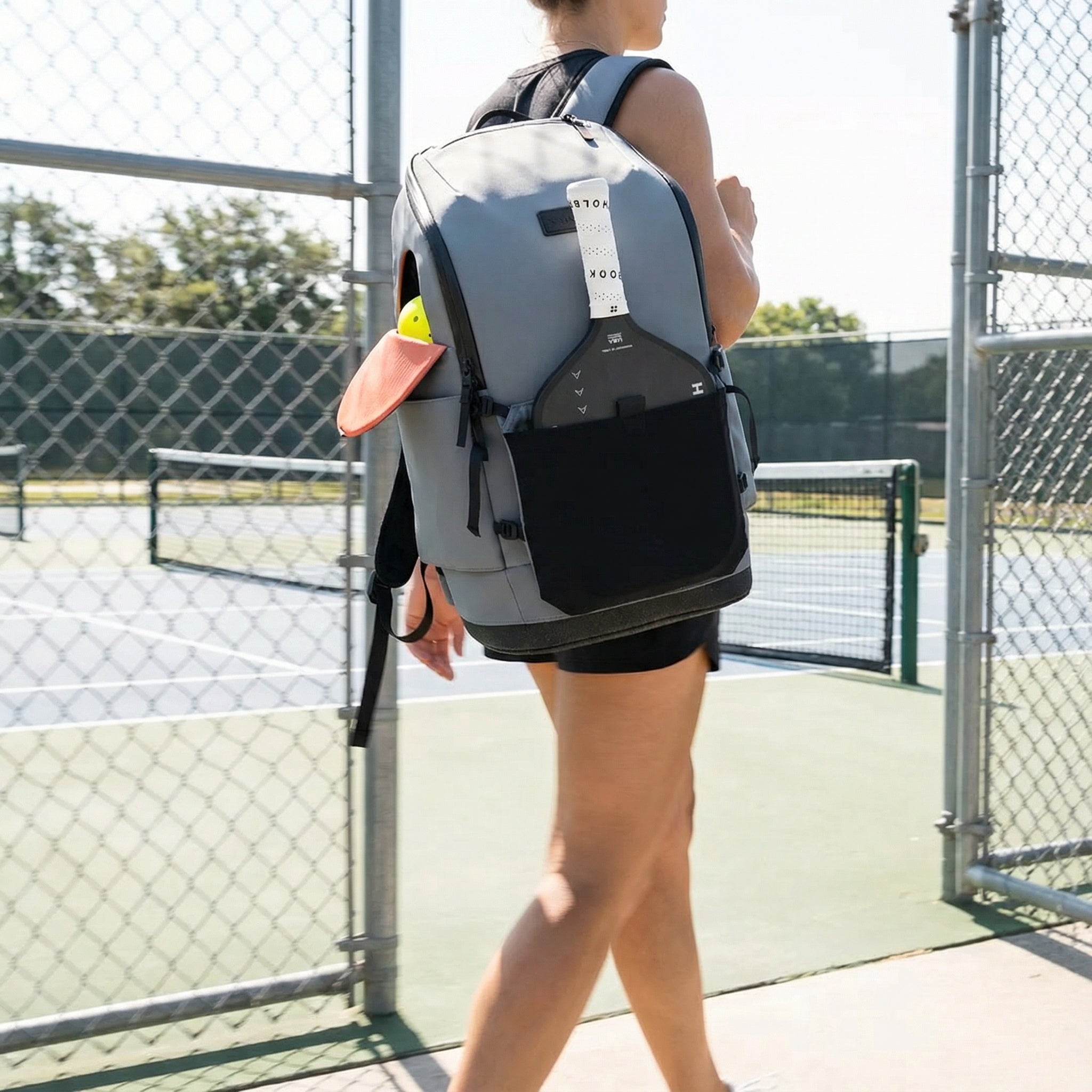
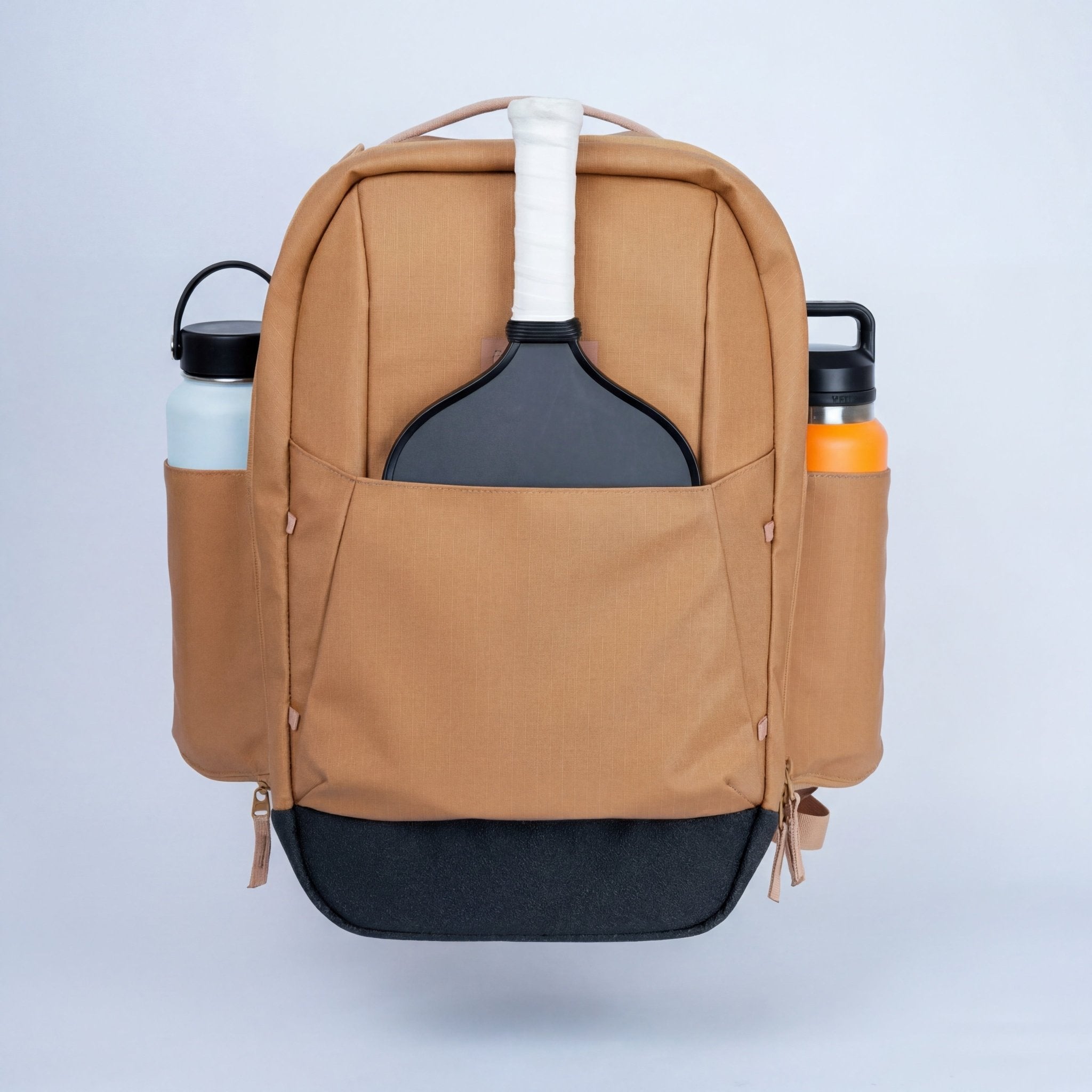
Got your lightweight shoes? The next question is where they go between sessions. Shoes crammed into a main compartment ruin paddles (carbon fiber face grit meets rubber outsole = not good) and make everything else in your bag smell like court rubber by week three. The Court Ranger V2 Pickleball Backpack has a dedicated vented shoe compartment that isolates your shoes from your paddles and gear. At $195 with a 16" laptop sleeve and modular paddle storage, it's the lighter FORWRD bag option for players who carry their shoes to work before heading to the court.

FAQ: Lightweight Women's Pickleball Shoes 2026
What are the lightest women's pickleball shoes available in 2026?
The K-Swiss Express Light 2 is the lightest purpose-built women's pickleball shoe currently in stock at Pickleball Central, at approximately 6.9 oz per shoe for women's size 7.5 per K-Swiss specification. Most women's pickleball shoes weigh between 7 and 10 oz per shoe — anything under 7.5 oz qualifies as genuinely lightweight for this sport.
Do lighter pickleball shoes reduce foot fatigue during long sessions?
Yes — meaningfully so over a 2+ hour session. Each shoe adds to the weight your legs lift on every step and direction change. Cutting 2 oz per shoe (the difference between K-Swiss Express Light 2 and Skechers Viper Court Pro 2.0) reduces the fatigue load on your lower legs across hundreds of lateral movements. The effect compounds over sessions, not just within a single day of play.
Are lightweight shoes less stable for lateral court movement?
Not necessarily. Stability depends on heel counter firmness and midsole density, not total weight. The K-Swiss Express Light 2 has a firm heel counter that controls ankle roll effectively during lateral cuts despite its light build. Cheap lightweight shoes often have flimsy heel counters — press the heel with your thumb before buying. It should resist, not collapse.
What women's pickleball shoes are under 7 ounces?
The K-Swiss Express Light 2 comes closest at ~6.9 oz for women's size 7.5. Shoes genuinely under 7 oz in women's pickleball-specific sizing are rare because pickleball's outsole traction requirements add material weight that purely casual court shoes avoid. Be skeptical of any shoe marketed as “ultra-light” without women's-specific weight specs — most brands use men's size 9 weights in their marketing copy.
Do lightweight women's pickleball shoes run narrow?
Most do. The K-Swiss Express Light 2 and HEAD Sprint Pro 4.0 are both standard-width only. If you have a wider forefoot, the Skechers Viper Court Pro 2.0 is available in a wide version at the same $114.95 price point. Don't size up in length to compensate for width — a longer shoe creates heel slip, which causes blisters faster than a tight toe box. Go wide, not long.
The FORWRD Court Ranger V2 ($195) fits your shoes, paddles, and full kit without weighing you down before you even hit the court — compact build, YKK AquaGuard zippers, and enough organization to stop digging around for your grip tape mid-session. For players who carry more, the Court Caddy ($325) handles four paddles plus a 15" laptop with room to spare.

Leave a comment
This site is protected by hCaptcha and the hCaptcha Privacy Policy and Terms of Service apply.