

The Best Pickleball Gear for Women in 2026: What We Actually Recommend (and What's Just Marketing)
Walk into any pickleball retailer and you'll find a rack of "women's" gear — pink paddles, quilted tote bags, and sling packs with floral patterns. Here's the honest truth: most of it isn't different from the standard lineup in any meaningful way. Different color, smaller size, same performance.
But some differences genuinely matter. Grip circumference on paddles directly affects wrist control and reduces fatigue for smaller hands. Shoe last shape (the internal mold) is anatomically distinct for women — and the brands that get this right will protect your ankles and knees far better than a downsized men's model. Knowing which differences matter and which are cosmetic is worth real money.
Last updated: October 2026. This guide covers every category — bags, paddles, shoes — with honest picks and clear calls on what's worth the premium.
Disclosure: This post contains affiliate links to Pickleball Central. If you purchase through our links, FORWRD earns a small commission at no extra cost to you. We only link to products we'd recommend regardless.
Table of Contents
- How Women's Pickleball Gear Differs (and When It Doesn't)
- Best Bags for Women Players: Organization Over Fashion
- Paddles: Grip Size, Weight, and What Actually Matters
- Shoes: Fit, Lateral Support, and the Brands Worth Trying
- The Complete Women's Pickleball Kit (Budget / Mid-Range / Premium)
- FAQ: Women's Pickleball Gear Questions Answered
How Women's Pickleball Gear Differs (and When It Doesn't)
The pickleball industry has borrowed a playbook from the cycling, running, and outdoor markets: market the same product in "women's" packaging. Some brands do this honestly. Most don't. Understanding the difference saves you from buying a worse product at a higher price.
Grip size matters — it's biomechanics, not marketing. The average adult woman's hand is roughly one-quarter inch smaller in circumference than the average adult man's hand. On a paddle, this translates to everything at the kitchen line: a 4 1/4" or 4 1/2" grip forces smaller hands to compensate with excessive tension, reducing wrist snap on dinks and speeding up fatigue in long rallies. A 4" or 4 1/8" grip gives you genuine control. This isn't a preference — it's physics.
Paddle weight matters less than brands claim. Many women's paddles are positioned as "lightweight" as if that's always better. Weight choice should follow your game, not your gender. Control players benefit from lighter paddles (6.8–7.5 oz). Power-first players often prefer 7.5–8.5 oz. Anna Leigh Waters — the #1-ranked player in the world through most of the PPA Tour 2025 and 2026 seasons — uses a heavier mid-weight paddle. Buy by how you play, not by what a marketing team assumes about your strength.
Shoes: last shape is the real difference. A shoe last is the internal mold a shoe is built on. Women's feet are anatomically distinct — narrower through the heel, slightly wider through the forefoot. A properly women's-lasted shoe locks the heel in place and allows natural toe splay under lateral load. A resized men's shoe forces heel slippage, which causes blisters and, over time, ankle instability. The brands that get this right (K-Swiss, Skechers) are genuinely worth seeking out.
Bags: there is no such thing as a women's pickleball bag that outperforms a quality unisex bag. Every women's-branded bag we've looked at is either undersized for tournament use or charges a premium for aesthetic features. Serious players want capacity, organization, weatherproof zippers, and a real laptop sleeve. Skip the tote bags. USA Pickleball's sanctioned tournaments require players to store their gear independently — a sling bag won't cut it for a three-day event.
Best Bags for Women Players: Organization Over Fashion
The women's pickleball bag market is populated by fashion items with court-side ambitions. Quilted crossbody bags. Canvas totes. Slings that fit two paddles only if you squeeze them. They look good in an Instagram post and fall apart after a summer of outdoor courts in variable weather.
Women who play three or more times a week — and especially anyone playing USA Pickleball-sanctioned tournaments — need the same things everyone else needs: room for multiple paddles, a real laptop sleeve, hydration storage, and materials that survive heat, humidity, and occasional rain.
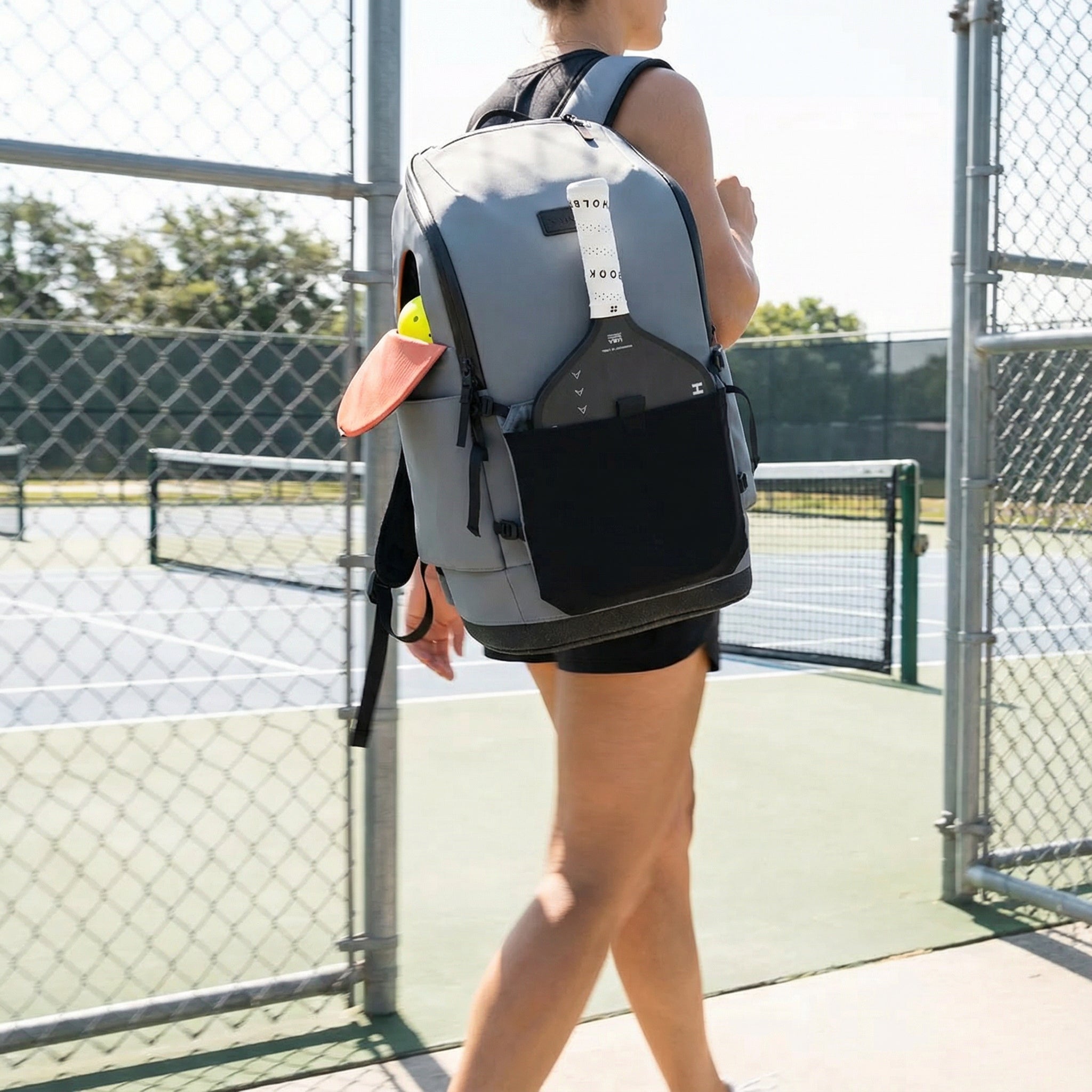
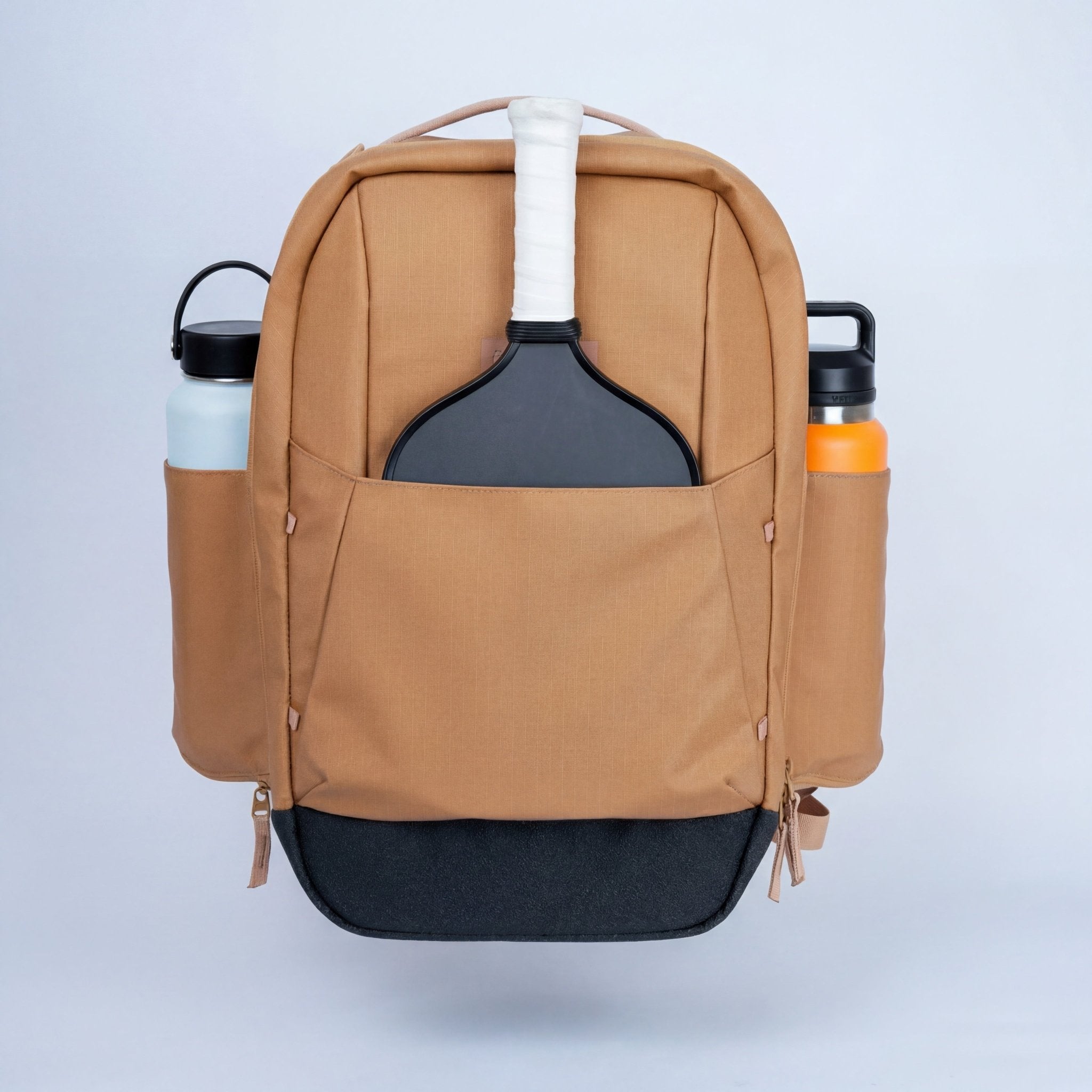
Premium pick: Court Caddy Pickleball Bag ($325). The Court Caddy was developed with feedback from 500+ real players across skill levels — and a significant portion of that input came from women tournament players. Their consistent requests: better compartmentalization without sacrificing total capacity, a laptop sleeve that could hold a 15" MacBook Pro, and zippers that don't corrode or jam mid-season. The Court Caddy has all three. It's been featured in The Dink, Pickleball Effect, and The Kitchen as the premium standard for serious players.
"The Court Caddy started with player feedback, and honestly, some of the clearest, most useful input came from women who play competitive pickleball. They told us exactly what was missing from every other bag on the market: real organization without sacrificing total capacity." — Grub, FORWRD co-founder

Mid-range pick: Court Ranger V2 ($195). The Ranger V2 is the bag for players who play daily and want real organization without the full tournament setup. Same YKK AquaGuard weatherproof zippers, a 16" laptop sleeve, and a modular paddle section — at a price point that leaves room in the gear budget for a better paddle or shoes.

For a detailed comparison of the bags specifically designed for women players who need a real laptop sleeve, see: Best Women's Pickleball Backpacks with a Real Laptop Sleeve.
Ready to upgrade your bag?
The Court Caddy Pickleball Bag is the bag built with real player input — 500+ players, dozens of tournament sessions. Or start with the Court Ranger V2 at $195 if you want premium organization without the tournament-tier price tag.
Paddles: Grip Size, Weight, and What Actually Matters
Most paddles marketed "for women" are standard models with a different label. A handful of brands have actually done the work: they offer grip sizes below 4 1/4" as a standard option, not an afterthought. Those are the paddles worth considering.
How to find your grip size: Hold the paddle in your dominant hand with a relaxed forehand grip. Try to fit your index finger (other hand) between your palm and your ring finger. If you can fit more than one finger, you need a smaller grip. Most women players land between 4" and 4 1/8" — significantly smaller than the 4 1/4"–4 1/2" that ships as default on most paddles.
Best Control Paddle for 3.0–4.0 Players
The Selkirk SLK ERA Power Elongated ships with a compact grip and an elongated face — a combination that gives kitchen-line control with more reach than a standard-shape paddle. At $120–$150, it's the highest-value paddle we've tested for players moving from 3.5 to 4.0. Available at Pickleball Central.
Best Performance Paddle for 4.0+ Players
The JOOLA Ben Johns Perseus Pro IV 14mm is available with a 4 1/8" grip and runs 7.3–7.7 oz. The 14mm core gives measurably better touch and dink control than the 16mm version — the thinner core slows the ball more at contact, giving you time to reset. For aggressive baseline players, the 16mm is more forgiving; for kitchen-line specialists, 14mm is the right call.
Our Pick: JOOLA Perseus Pro IV 14mm
4 1/8" grip, 14mm core for kitchen control, 7.3–7.7 oz — the performance-first choice for serious women players at 4.0+.
For a full 10-model comparison with specific recommendations by playing style, see our complete women's pickleball paddle guide.
Shoes: Fit, Lateral Support, and the Brands Worth Trying
Pickleball shoe selection for women comes down to one thing that brands rarely lead with: the shape of the last. Every other feature — cushioning, colorway, weight — is secondary to whether the shoe actually fits the anatomical shape of your foot.
Women's feet run narrower through the heel and slightly wider through the forefoot. A shoe built on a unisex or men's last will feel loose at the heel, causing slippage under lateral load — the kind of cut you make toward the kitchen 40 times per game. That slippage creates blisters in the short term and ankle instability over time.
Pickleball-specific lateral demands make this worse than it sounds. You're planting hard on the outside edge of your foot during wide reaches, pivoting on concrete or gym floors, and absorbing the impact of explosive split-steps — all in a sport where points are decided by 6 inches. A running shoe isn't designed for any of this. A properly fitted women's pickleball shoe is.
What to look for:
- Women's-specific last: narrower heel, roomier forefoot — not a downsized men's mold
- Court herringbone sole: grip on both hard outdoor and gym floor surfaces
- Reinforced toe cap: protects against the heel-toe drag at the kitchen line
- Lateral support banding: helps stabilize the ankle under hard cuts
Best All-Around Women's Pickleball Shoe
The K-Swiss Women's Express Light Pickleball Shoe is built on a purpose-designed women's last — narrower heel, expanded forefoot. It runs under 9 oz, has a multi-directional herringbone sole that grips on both outdoor and indoor surfaces, and has consistently shown up at PPA Tour and APP Tour events as the most-worn women's court shoe through 2025 and 2026. At $110–$120, it's the right call for most players.
If You Have Wider Feet
K-Swiss also offers the Express Light Wide Women's — same last, expanded forefoot volume. If you've struggled with pickleball shoes feeling cramped or painful across the ball of your foot, foot width — not cushioning — is almost always the cause.
Best for Outdoor Court Durability
For players primarily on outdoor concrete or asphalt, Skechers Viper Court women's models have consistently ranked highest for sole durability. The rubber compound holds up on abrasive outdoor surfaces 30–40% longer than most competitors we've tracked. Available at Pickleball Central.
See our full court-tested breakdown: Best Pickleball Shoes for Women 2026: Court-Tested Picks.
The Complete Women's Pickleball Kit (Budget / Mid-Range / Premium)
If you're building a full setup from scratch — or upgrading one category at a time — here's what to prioritize at each spend level. Spend first on shoes, then paddle, then bag. Foot injury from wrong footwear ends seasons; grip-size mismatch costs you points in every game; a great bag is a comfort upgrade for when you're ready.
| Category | Budget (under $150) | Mid-Range ($150–$300) | Premium ($300+) |
|---|---|---|---|
| Bag | Any backpack with paddle sleeve | Court Ranger V2 ($195) | Court Caddy ($325) |
| Paddle | Franklin Signature (4" grip) | Selkirk SLK ERA ($120–$150) | JOOLA Perseus Pro IV 14mm ($220+) |
| Shoes | Any court shoe (not running shoes) | K-Swiss Express Light Women's ($110–$120) | ASICS Gel-Resolution X Women's ($160+) |
| Eyewear | UV-protective sunglasses | HEAD Extreme Pickleball Glasses | CRBN Pivot Glasses (polarized) |
| Balls | Onix Fuse outdoor (6-pack) | Franklin X-40 (tournament standard) | Dura Fast 40 (PPA Tour official) |
The Court Caddy and Court Ranger V2 aren't marketed as "women's bags" — they're designed for serious players, full stop. They've been featured in The Dink, The Kitchen, and Pickleball Effect precisely because they don't compromise on what actual players need to haul their gear from car to court to tournament.
Ready to upgrade your full setup? Start with the Court Caddy Pickleball Bag — designed with 500+ real players and built to hold everything for a full tournament weekend. Or go with the Court Ranger V2 at $195 for an everyday bag that won't let you down.
FAQ: Women's Pickleball Gear Questions Answered
What pickleball gear is designed specifically for women?
Shoes and paddle grip sizes are the two categories where women-specific design creates real performance benefits. Women's shoe lasts are anatomically different at the heel and forefoot — a meaningful distinction under lateral load on court. Paddles with 4" or 4 1/8" grips help smaller hands maintain control without compensation. Bags and apparel marketed "for women" rarely have functional advantages over a high-quality standard option.
Does grip size matter for women's pickleball paddles?
Significantly. An oversized grip prevents proper wrist snap on drives and reduces touch at the kitchen line. Most women players perform best with 4" to 4 1/8" grip circumference. If your paddle shipped with a 4 1/4" or larger grip, try wrapping it down one layer before blaming the paddle itself — the grip is often the actual problem.
What's the best pickleball bag for women who commute?
The Court Ranger V2 ($195) is the right call for players carrying gear to work. It has a 16" laptop sleeve, clear compartment separation between work and court gear, and a slimmer profile that fits under desks or in work lockers. The Court Caddy is the upgrade for tournament weekends where you need full-tournament capacity.
Are women-specific pickleball shoes worth it?
Only if the shoe is built on an actual women's last — a different mold from the ground up, not a resized men's shoe. K-Swiss Express Light Women's and Skechers Viper Court Women's are built on purpose-designed women's lasts. A lot of shoes marketed as "women's" are simply men's models in a smaller size. Ask before you buy whether the brand has a women's-specific last or just a women's sizing run.

Leave a comment
This site is protected by hCaptcha and the hCaptcha Privacy Policy and Terms of Service apply.