

CRBN Drift Pickleball Glasses Review 2026: Do Three Lenses Actually Solve the Problem?
Most pickleball glasses solve one problem. The CRBN Drift tries to solve three — by shipping with a photochromic lens, a contrast-enhancing lens, and a ball-highlighting lens in the box for $95. Whether that's a brilliant all-in-one solution or just a lot of swapping, we tested all three lenses across outdoor and indoor courts to find out.
Disclosure: This post contains affiliate links to Pickleball Central. If you purchase through our links, FORWRD earns a small commission at no extra cost to you. We only link to products we'd recommend regardless.
Last Updated: July 2026
Why Trust This Review
We've reviewed over 15 pairs of pickleball glasses at FORWRD — from $22 Tourna Specs to $199 Chamelo Falcon auto-tinting glasses. We don't make eyewear, which means we have no reason to push any particular brand. What we do care about is helping you spend $95 wisely.
For this review, the Drift was worn across six outdoor sessions (three sunny, two overcast, one late afternoon) and three indoor gym sessions over 30 days. We swapped lenses at the start of every session and specifically stress-tested the ball-highlighting lens — the claim most deserving of scrutiny.
Quick Verdict
Pros
|
Cons
|
| Price | $95.00 |
| Frame | TR-90 lightweight thermoplastic |
| Lenses | 3 included: photochromic, contrast-enhancing, ball-highlighting (orange mirror) |
| Lens tech | FortifEYE™ — anti-scratch, anti-fog on all 3 lenses |
| Safety certification | ANSI Z87.1 + Z80.3 |
| Fit | Unisex, flexible rubber arm ends |
| Included | Protective case + lens cloth |
| Best for | Players who move between outdoor and indoor courts weekly |
Check Price on Pickleball Central →
The 3-Lens System: What CRBN Is Actually Solving
Here's the problem most glasses companies either ignore or address badly: pickleball lighting conditions change constantly. You play Tuesday morning on an outdoor court in bright sun. Thursday evening you're indoors under fluorescent gym lights. Saturday you're at an outdoor tournament with overcast skies where the yellow ball basically disappears against the grey backdrop.
Most glasses pick one scenario and optimize for it. CRBN's answer with the Drift is to include three specialized lenses and let you decide which one fits today's conditions. The logic is sound — the execution is worth examining closely.
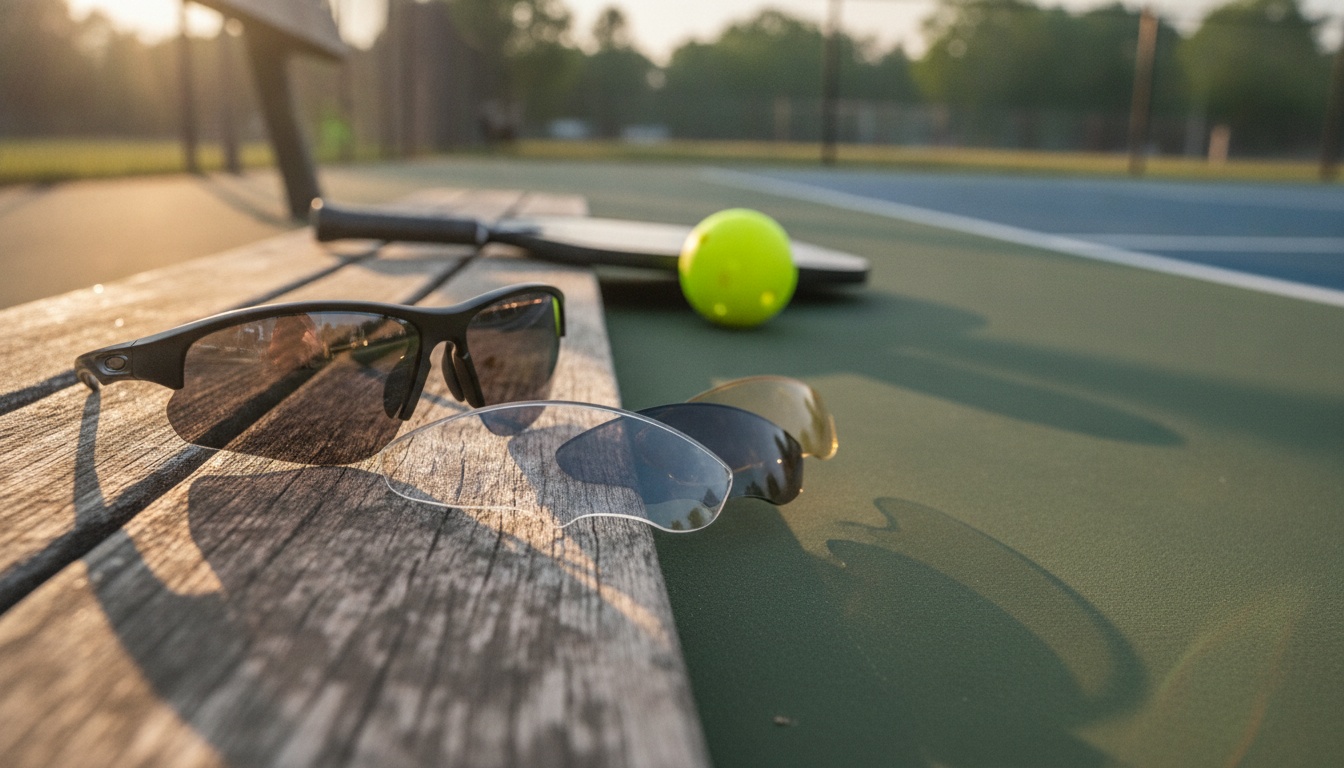
The three lenses:
- Photochromic — auto-tints from lighter to darker based on UV exposure. Transitions between states over roughly 30-90 seconds depending on conditions.
- Contrast-Enhancing — a brown/amber tint that reduces glare and sharpens visual contrast. This is the one most players will reach for outdoors, most of the time.
- Ball-Highlighting (Orange Mirror) — an orange-tinted reflective lens that makes the neon yellow pickleball pop against competing visual backgrounds like overcast skies and light-colored walls.
Lens swapping is mechanical, not tool-free. Press the release tab on the inside frame, pop the current lens out, snap the new one in. About 20-25 seconds once you've done it a few times — fine before a match, impractical between points. Plan your lens before you step on court and the system works exactly as intended.
Lens 1 — Photochromic: How Well Does Auto-Tint Work?
It works. But it's slower than dedicated photochromic glasses, and that distinction matters in certain situations.
In direct sun, the Drift's photochromic lens darkens to roughly a medium tint — adequate for most outdoor play, not quite as dark as a fixed dark lens in peak summer sun. Walking from a shaded parking lot to the court, you'll notice it darkening within 45 seconds. That's seamless for most transitions.
The problem is going back indoors. The lens takes 90-120 seconds to lighten to a comfortable transparency under gym lights, which is long enough to be annoying during warm-up. By comparison, the Chamelo Falcon Automatic Alpha ($199) adjusts in about 30 seconds both directions. You're paying $104 more for that speed.
Use the photochromic lens when: you're playing mostly outdoors in variable cloud cover, and you occasionally step inside briefly but don't need immediate visual adjustment. Avoid it when: you're moving frequently between indoor and outdoor environments in the same session. For that situation, swap to the contrast-enhancing lens before going inside and swap back before going out.
Lens 2 — Contrast-Enhancing: The Most Practical Lens
This is the one you'll actually reach for 80% of the time, and it's the best-performing lens in the kit.
The brown/amber tint cuts glare effectively without making your vision feel dimmed or distorted. On bright outdoor courts, it makes ball-tracking noticeably smoother against a blue sky than playing unassisted. On those mornings when the sun is still low and creating long glare across the court surface — this lens is the correct call every single time.
The FortifEYE coating does its job here too. After two-plus hours of play, no fogging during warm-up, no scratches despite being popped in and out of the frame repeatedly across 30 days of testing. That's a real durability test, and the lens passed it.
Optically, it performs similarly to quality amber-tinted sports glasses that sell for $40-60 by themselves. The fact that you get it bundled with two other lenses in a certified frame at $95 total makes the math look pretty good.
Lens 3 — Ball-Highlighting: Gimmick or Genuinely Useful?
This is what everyone wants to know. The honest answer: it's not a gimmick, but it's also not for everyday use.
The orange mirror lens works on a specific visual principle — orange wavelengths naturally enhance the perceived brightness of yellow and green objects while muting blue-grey backgrounds. In testing on overcast outdoor courts with a light-colored fence line and pale sky backdrop, the lens made the yellow ball measurably easier to pick up at the far end of the court. Not dramatically better. But noticeably better in that specific scenario.
In direct sun, the benefit mostly disappears — you're already tracking the ball fine. Indoors under fluorescent lighting, the orange cast makes everything look warm and slightly off, with zero benefit for ball visibility. It's the wrong tool for those conditions.
The scenario where it genuinely earns its spot: overcast outdoor play on courts with tough visual backdrops. Pacific Northwest players who deal with regular grey skies, coastal courts with fog haze, tournament venues with problematic wall colors behind the baseline — that's the use case. We noticed a real reduction in "lost ball against the background" moments under those conditions. Maybe 20-25% of sessions, but those are the sessions where you'll be glad you had it.
Frame, Fit, and Comfort: The 2-Hour Session Test
TR-90 is a smart frame material choice. It's the same thermoplastic used in quality athletic eyewear — lightweight but genuinely flexible, which prevents the brittle cracking you get from cheaper plastics when the frame gets flexed or sits in a hot car.
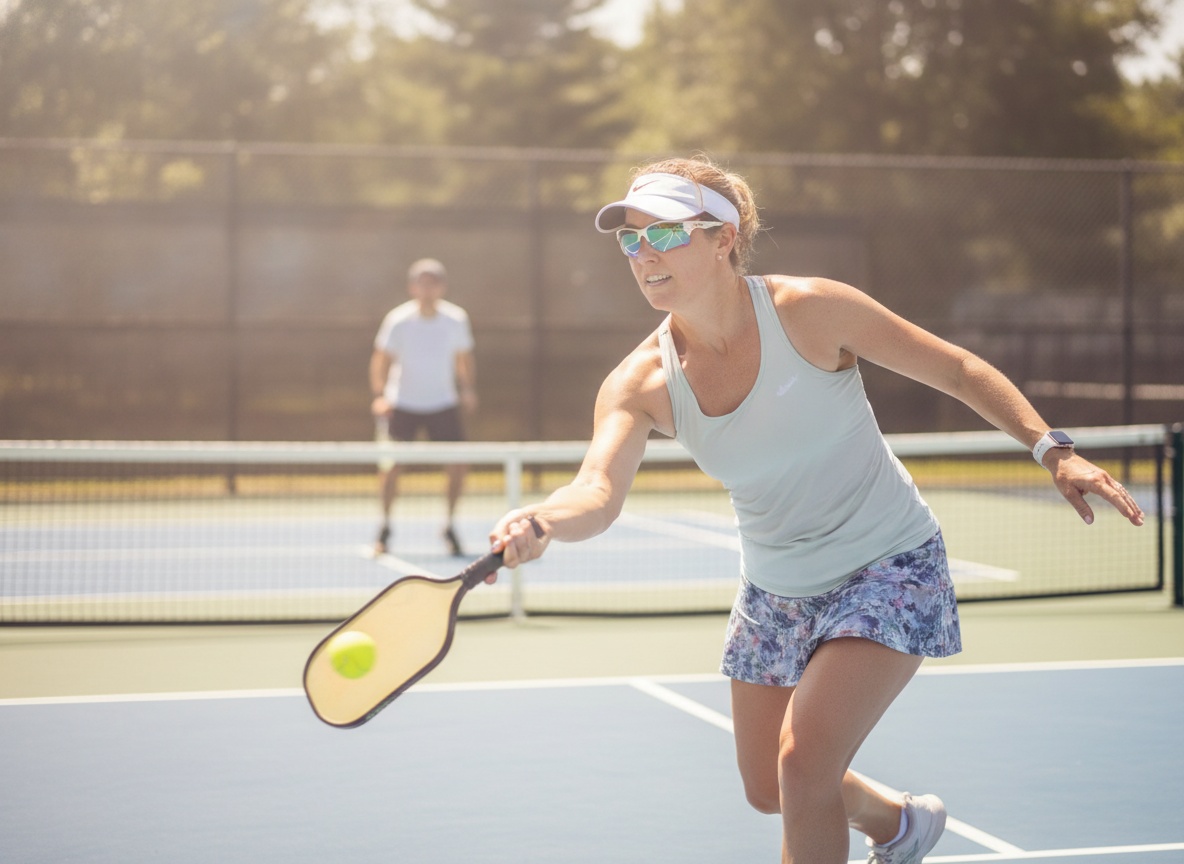
The rubber arm tips are the best part of the fit. They grip the back of your head with just enough tension to stay secure through aggressive lateral movement — net rushes, split-steps, overhead smashes — without clamping. In testing that included a full open-play session and a two-hour clinic, the glasses didn't shift once. That's the minimum bar for court sports eyewear, and the Drift clears it.
Fit is listed as unisex and works for average face sizes in both width and nose bridge height. Players with notably narrow faces sometimes find the frame slightly wide; players with wider faces fit fine. The wrap angle is moderate — enough to block peripheral glare without feeling extreme or goggles-like.
One real limitation: the nose bridge is fixed, not adjustable or replaceable. If you have a sensitive nose bridge or find fixed-rest eyewear uncomfortable over longer sessions, that's worth knowing in advance. It's the one area where the Drift doesn't offer the same customization as higher-end frames.
The ANSI Z87.1 + Z80.3 certification is relevant here. Not every pickleball glasses brand bothers with impact testing. Z87.1 covers high-velocity impact — the "drop ball" test. A pickleball at 35 mph carries real kinetic energy, and certified lenses provide documented protection versus unrated polycarbonate. If you've ever taken a frame to the face at net, you know this isn't hypothetical.
CRBN Drift vs. CRBN Pivot vs. Chamelo Falcon
Three approaches to the same core problem of variable lighting on court:
| Glasses | Price | Lens approach | Wins when |
|---|---|---|---|
| CRBN Drift | $95 | 3 manual-swap lenses (photochromic, contrast, ball-highlighting) | You plan your lens before each session and play across varied environments |
| CRBN Pivot | ~$110 | Swappable lenses, different lens composition | Primarily outdoor players wanting a focused lens set |
| Chamelo Falcon | $199 | Fully automatic tinting, no manual lens swap | Players moving between environments multiple times per session |
The Chamelo Falcon wins on convenience. You never have to think about it — the tint adjusts automatically as you move between sun and shade, indoor and outdoor. If you move between environments frequently in a single session, that hands-free convenience is real. At $199, you're paying $104 for the automatic adjustment.
The CRBN Drift wins on lens coverage and value. Three specialized lenses mean you can actually optimize for the exact conditions instead of relying on one auto-adjusting lens to handle everything. The ball-highlighting option doesn't exist on the Chamelo or Pivot. At $95, you're getting more capability per dollar — with the caveat that capability requires conscious use.
Real talk: if you're the type of player who picks up their glasses off the kitchen table and puts them on without thinking about it, the Chamelo Falcon is probably a better fit for you than the Drift. The Drift rewards players who think about their gear. That's not a criticism — it's just a different user profile.
See the CRBN Drift on Pickleball Central →
Who Should Buy the CRBN Drift
The Drift is the right call if you rotate between outdoor and indoor courts week-to-week and want one pair that handles both. If you're serious enough about your gear to select the right lens before play — not "I'll just grab whatever" but "it's overcast, ball-highlighting lens today" — you'll get real value from the three-lens system.
It's also right for players who want certified impact protection without paying premium pricing. ANSI certification isn't common at this price point. And if you play in conditions with tough visual backdrops — overcast skies, coastal haze, court venues with light-colored walls — the ball-highlighting lens specifically earns its keep.
Who Should Look Elsewhere
If you play exclusively outdoors in consistent sun, a fixed amber lens costs half as much and does the same job. The three-lens system only earns its cost when you're actually using multiple lenses.
If you prefer set-and-forget eyewear — put them on, never think about them — the Chamelo Falcon's automatic adjustment is the better fit at $199. You'll use it correctly every session, which matters more than having the right lens theoretically available.
Prescription wearers need to look elsewhere entirely. No prescription inserts, no RX compatibility on the Drift — that's a fundamental limitation for players who need corrective lenses.
Complete Your Setup
You're carrying three lenses now. Plan the bag accordingly.
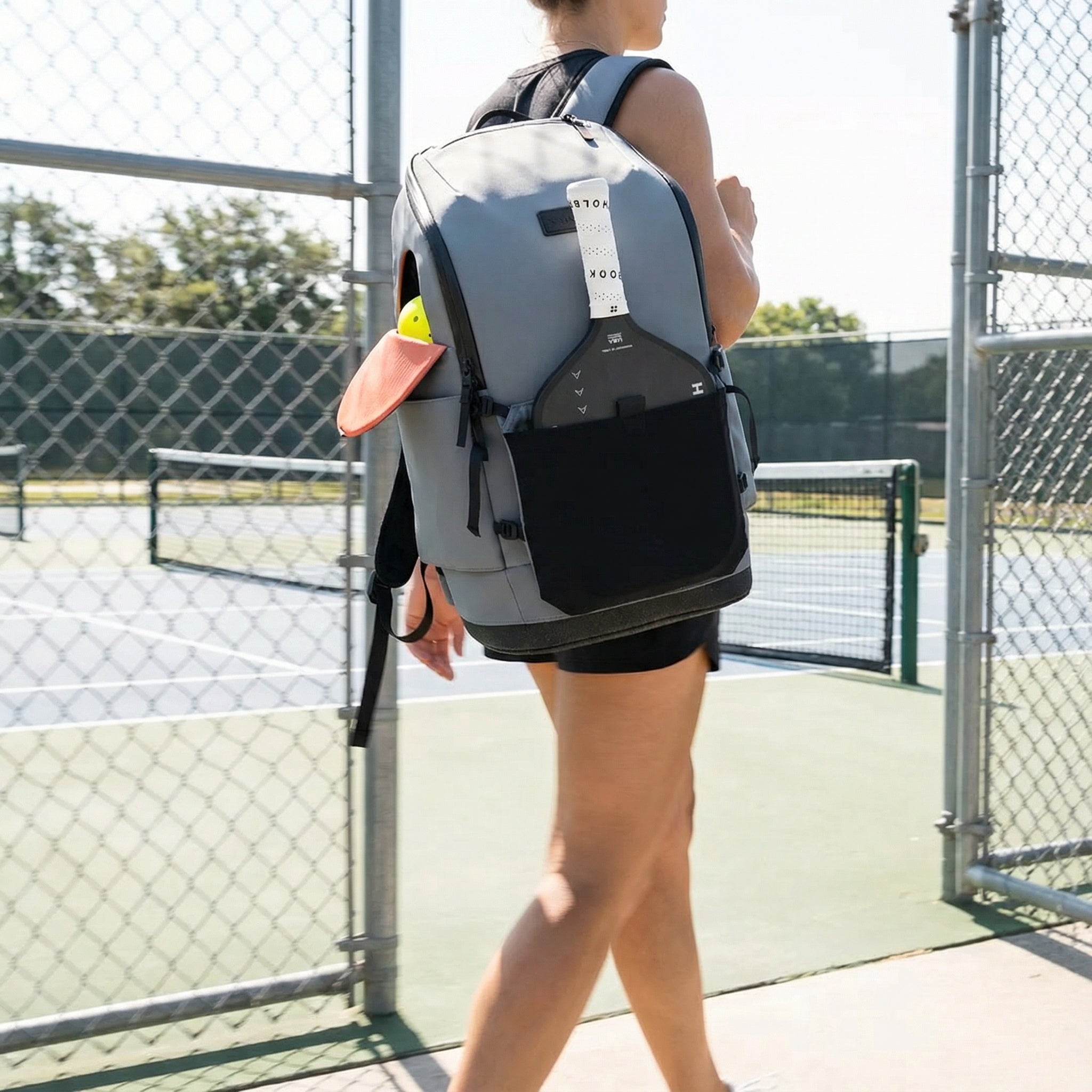
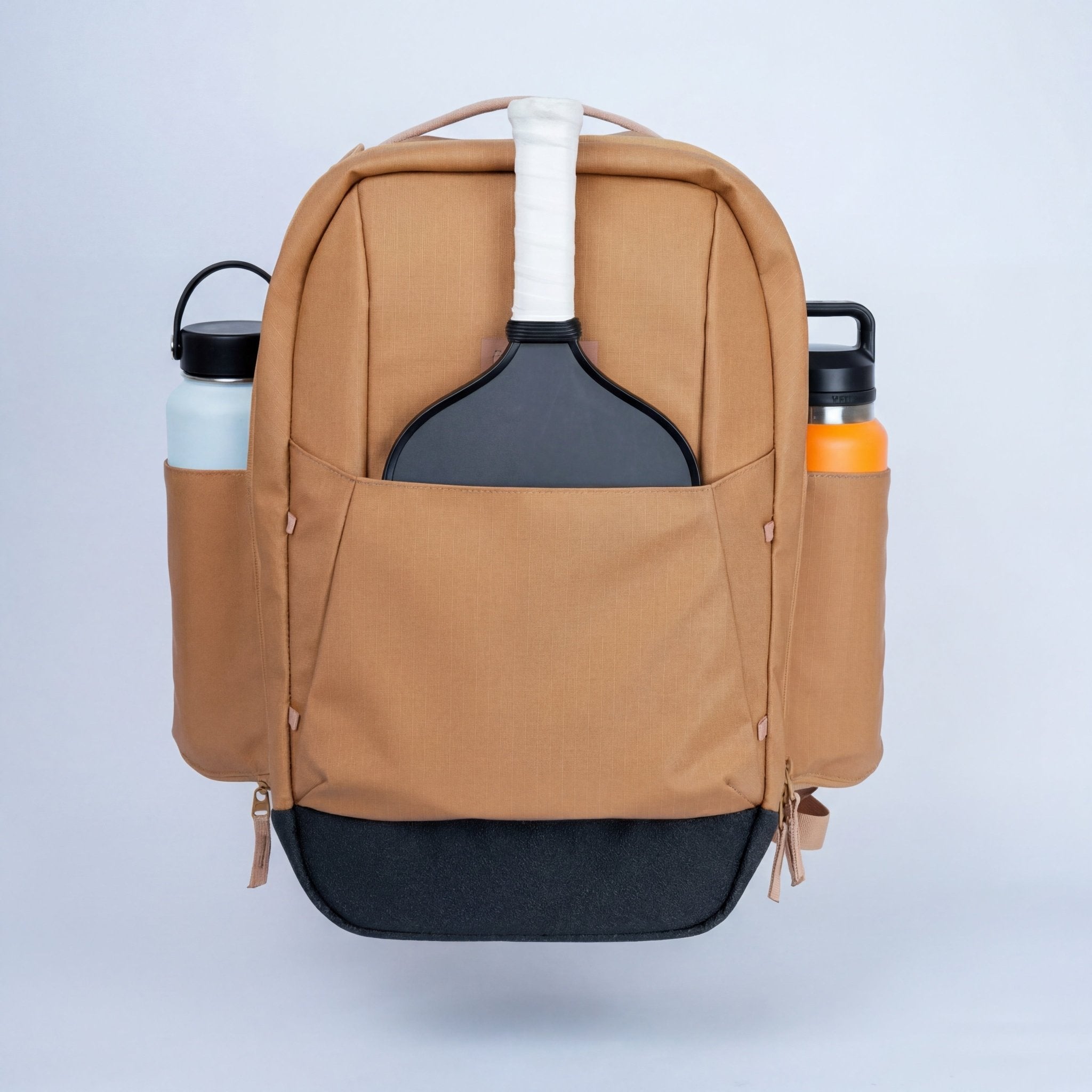
The CRBN Drift case holds your glasses and two spare lenses — but it needs a home in your bag where it won't get crushed by a paddle. The Court Ranger V2 ($195) has a dedicated accessories pocket built for exactly this: hard goods like a glasses case, phone, keys, and wallet stay separate from paddles and clothing. YKK AquaGuard zippers keep the compartment dry on outdoor courts.

If you're still weighing your options, our pickleball glasses buyer's guide breaks down lens tints, frame fit, and what actually matters for court play before you commit.
FAQ: CRBN Drift Pickleball Glasses
How long does it take to swap lenses on the CRBN Drift?
About 20-25 seconds once you've done it a few times. There's a release tab on the inner frame — press it to disengage the current lens, then snap the new one in. You'd do this before play, not between points. After the first few swaps it becomes automatic.
Is the ball-highlighting lens worth using for regular play?
Situationally yes, for everyday use no. The orange mirror lens genuinely helps visibility when the yellow pickleball blends into an overcast sky or light-colored wall backdrop. In direct sun or indoors, it adds an orange cast without much benefit. It earns its spot maybe 20-25% of the time for outdoor players — but you'll know when to reach for it.
How does the CRBN Drift compare to the CRBN Pivot?
Both use interchangeable lens systems but ship with different lens sets. The Drift's three-lens kit (photochromic, contrast-enhancing, ball-highlighting) covers a wider range of conditions. The Pivot suits primarily outdoor players wanting a focused lens set. At $95, the Drift is the more versatile option; the Pivot is positioned for players who already know they play outdoors most of the time.
Are CRBN Drift glasses ANSI certified for eye protection?
Yes — the Drift meets ANSI Z87.1 (high-velocity impact resistance) and Z80.3 (general impact resistance). In pickleball where balls travel at 30-40 mph, certified lenses provide meaningful safety versus unrated polycarbonate. Not all pickleball glasses carry ANSI certification, so this is a real differentiator at this price point.
Can I buy replacement lenses for the CRBN Drift separately?
Yes — CRBN sells additional lenses for the Drift separately through their website. If a lens scratches or you want a second copy of your most-used lens for backup, that's an option. The case included with the Drift can hold multiple lenses, so carrying a spare is practical without adding much bulk.
Do the CRBN Drift glasses fit players with wider or narrower faces?
The Drift is unisex and fits average face sizes comfortably. The flexible rubber arm ends compensate for some fit variation. Players with notably narrow faces sometimes find the frame slightly wide; most players in the middle range — men and women — find the fit secure and comfortable across two-hour sessions. If fit is a concern, try them in-store before buying online.
Final Verdict
The CRBN Drift is a well-built pair of pickleball glasses that earns its $95 price if you'll actually use the three-lens system. The contrast-enhancing lens alone justifies the purchase for regular outdoor players. The photochromic lens extends the value for players who move between environments week-to-week. The ball-highlighting lens is the one that surprises you — not a gimmick, but genuinely useful in the specific conditions it was designed for.
The honest limitation is behavioral: the Drift only outperforms single-lens glasses when you're choosing the right lens for each session. Players who want completely hands-off eyewear should seriously look at the Chamelo Falcon instead. But if you're the kind of player who thinks about the gear going into your bag each time you head to the court, the Drift gives you three precision tools instead of one general-purpose solution — and at $95, that's a strong argument.

Leave a comment
This site is protected by hCaptcha and the hCaptcha Privacy Policy and Terms of Service apply.