

FTC Disclosure: This article contains affiliate links to Pickleball Central. If you buy through our links, FORWRD earns a commission at no extra cost to you. We only recommend products we'd actually play with.
Last Updated: August 2026
Hesacore Pickleball Grip Review 2026: Here's Who Actually Needs the Honeycomb Upgrade
At $26–$30, Hesacore costs 3–4× what most pickleball players pay for a grip replacement. The obvious question is whether that premium buys anything real, or whether you're paying for clever marketing and a distinctive hex pattern that looks great in product photos but doesn't change how your paddle actually plays.
Short answer: it does buy something real — but not for everyone. The honeycomb structure genuinely reduces vibration and improves tack durability in a way that $7 overgrips don't match. The problem is that most players don't need that. Here's how to figure out which side of the line you fall on.
Quick Verdict
Pros
- Honeycomb texture provides genuine vibration dampening — noticeable on hard-hitting drives
- Four variants (Standard, Carbon, Gel, Elongated) cover different player needs with real differentiation
- Tack holds up significantly longer than thin overgrips — 3–6 months of regular play vs. 2–4 weeks for a wrap-style overgrip
- 1.5mm and 2.0mm thickness options let you dial in the grip feel to your exact preference
- Works as both a base replacement grip and a primary grip layer
Cons
- $26–$30 is a real premium over $7–$10 alternatives — the ROI only makes sense for frequent players
- The honeycomb pattern can feel unfamiliar for the first few sessions — takes adaptation time
- Doesn't add meaningful cushion for players with joint issues (the Gel variant helps, but it's still not a thick foam grip)
- 5.25" length covers most handle sizes but may require trimming on paddles with very short grip sections
Price: $26.90–$29.90 | Who it's for: 3.5+ players who play 3+ times per week and want tack that lasts without constant re-wrapping | Who should skip: Casual players (1–2×/week) who don't notice grip degradation and balk at paying 3× the cost of a standard grip tape
Hesacore Variants at a Glance
| Variant | Price | Key Feature | Best For |
|---|---|---|---|
| Standard | $26.90 | Synthetic honeycomb, balanced tack/cushion | Most players — the default pick |
| Carbon | $29.90 | Carbon-injected filaments, stiffer feel | Players who want direct feedback, minimal flex |
| Gel | $27.90 | Comfort-focused, extra vibration dampening | Players with arm/elbow fatigue concerns |
| Elongated | $27.90 | Extended length for bigger hands or two-handed backhands | Players who feel short on grip space |
Shop Hesacore at Pickleball Central →
Why Trust This Review
FORWRD designs pickleball bags — bags built around how serious players actually carry their gear. That means we talk constantly to players about their full equipment setup, including how long their grips last, what causes hand fatigue, and why some players re-grip every two weeks while others stretch a grip for a full season. We've collected feedback from over 500 players, and grip feel comes up more than you'd expect in a bag review conversation.
We also test gear ourselves. Our team puts equipment through outdoor concrete courts (harder on tack than indoor wood) and sweaty summer conditions that expose grip durability fast. That's the context for everything below.
The Key Thing Most Hesacore Reviews Get Wrong
Most write-ups compare Hesacore to cheap overgrips — the $7–$8 thin wrap tapes you layer over your existing grip. That's the wrong comparison.
Hesacore is a replacement grip. It goes directly on the bare paddle handle, replacing whatever came from the factory. An overgrip goes over an existing grip. They're different products solving different problems at different price points.
When you're comparing Hesacore at $26.90 to a Tourna Mega Tac overgrip at $7.99, you're not comparing apples to apples. The Tourna goes on top of a replacement grip. The Hesacore IS the replacement grip. You'd normally use them in sequence, not instead of each other — though plenty of players do use Hesacore as their only grip layer (it's thick enough for that).
What you're actually deciding when you buy Hesacore: do you want a premium base replacement grip with a specialized texture, or do you want a budget replacement grip plus a cheap overgrip? The cost difference isn't as dramatic once you frame it that way. Budget base grip ($7) + overgrip ($7) = $14. Hesacore Standard ($26.90) replaces both and lasts longer.
The Four Hesacore Variants, Honestly Compared
Hesacore Standard — The Right Choice for Most Players
The original, and still the best default. It's 5.25" long, available in 1.5mm or 2.0mm thickness, and uses a synthetic honeycomb structure that creates air channels through the grip surface. Those channels serve two functions: they break up sweat pooling on the grip face, and they reduce the surface area in contact with your palm, which changes how vibration transmits up the handle.
The 1.5mm vs. 2.0mm question is real. If you already have thick hands or a big grip circumference, 1.5mm keeps you from building the handle up too much. Most players with medium or smaller hands will prefer 2.0mm — it adds enough cushion to feel meaningfully different from a thin stock grip.
Tack on the Standard is good out of the box and stays good for months. The honeycomb texture maintains grip even as the surface material starts to break in because the pattern itself creates mechanical interlocking with your palm's ridges, not just surface friction.
→ Hesacore Standard at Pickleball Central ($26.90)
Hesacore Carbon — For Players Who Want Stiffer, More Direct Feel
At $29.90, the Carbon variant adds carbon-injected filaments to the synthetic base material. What that actually does on court: the grip feels marginally stiffer, and there's less flex in the handle-grip interface. You notice it most on hard drives and resets — the feedback from impact feels crisper, more direct.
Power players and players who hate "mushy" grip feel gravitate toward this one. Control players often prefer the Standard because the slightly more compliant feel softens touch at the net.
It's still honeycomb-patterned and still comes in 1.5mm or 2.0mm. The anti-sweat performance is slightly better than the Standard — the carbon filaments wick moisture differently than pure synthetic.
→ Hesacore Carbon at Pickleball Central ($29.90)
Hesacore Gel — The Elbow-Saver Pick
The Gel variant is marketed toward comfort and vibration reduction, and it delivers on that. The gel-infused honeycomb absorbs shock differently than the Standard — you feel it most on mishits, where the off-center ball contact sends a jolt through the handle. The Gel variant noticeably softens that jolt compared to the Standard.
Players dealing with lateral epicondylitis (tennis/pickleball elbow) or general arm fatigue from heavy drives often find the Gel worth the extra $1 over the Standard. It's not a miracle cure — if you have serious elbow issues, you need to address swing mechanics and paddle weight — but it does reduce the cumulative fatigue from repeated impact.
The tradeoff: the Gel variant is slightly softer underfoot, which some players interpret as less responsive. Power players sometimes feel disconnected from the ball. Control players or finesse players who prioritize feel at the kitchen line tend to like it.
→ Hesacore Gel at Pickleball Central ($27.90)
Hesacore Elongated — A Real Solution for an Underserved Problem
Standard pickleball grips are sized for average hands, and players with larger hands or two-handed backhand grips frequently feel cramped. The Elongated variant extends the grip length beyond the standard 5.25" — meaningful if you're fighting for finger space or find yourself sliding your hand off the bottom of the handle.
It's also useful if you play with a two-handed backhand and need more real estate for your non-dominant hand. Most pickleball handles are shorter than tennis handles, and switching from tennis sometimes means adapting a two-handed shot to less grip length. The Elongated partially solves this without needing to switch to a longer paddle.
→ Hesacore Elongated at Pickleball Central ($27.90)
Hesacore vs. The Competition
Hesacore vs. Tourna Mega Tac ($7.99)
The Tourna Mega Tac is the grip equivalent of a utility knife — cheap, works well, everyone has one. It's an overgrip, not a replacement grip, so the comparison isn't perfectly direct. But if you're asking "should I grab a Tourna or try Hesacore," here's the honest breakdown:
The Tourna wins on price (obviously), immediate tack out of the package, and familiarity — almost every player has used one. It loses on longevity (2–4 weeks of heavy play before it glazes over) and vibration management (thin overgrip with no structural design for shock absorption).
Hesacore wins on durability, vibration reduction, and not having to re-grip every few weeks. It loses on upfront cost and the adaptation period for the honeycomb texture.
Our read: if you're playing 3+ times a week and changing your Tourna every two weeks, you're spending $20–$30/month on overgrips anyway. Hesacore at $26.90 starts to make financial sense.
→ Tourna Mega Tac at Pickleball Central ($7.99)
Hesacore vs. GAMMA Honeycomb ($8.99)
GAMMA's Honeycomb grip shares the name but is a fundamentally different product. The GAMMA is a budget overgrip with a honeycomb pattern printed or embossed on the surface — it doesn't have the three-dimensional structural channels that define Hesacore's design. The texture is similar visually; the performance is different.
In testing, the GAMMA Honeycomb lasts slightly longer than a standard thin wrap overgrip and provides decent tack in dry conditions. It starts to degrade quickly when sweaty — the surface pattern doesn't have the same moisture-channeling depth as Hesacore's raised honeycomb cells.
At $8.99, the GAMMA is fine for recreational players. But don't let the similar name convince you they're the same product at different price points.
→ GAMMA Honeycomb at Pickleball Central ($8.99)
Hesacore vs. JOOLA Feel-Tec Pure Grip ($15.95)
The JOOLA Feel-Tec sits between the budget overgrips and Hesacore in price, and it's a legitimate mid-tier replacement grip. It's JOOLA's stock grip on many of their paddles and has a comfortable, slightly tacky feel that works well in dry conditions. The Feel-Tec is thicker than a standard overgrip but thinner than Hesacore's 2.0mm option.
Where Hesacore has an edge: the honeycomb structure outperforms the Feel-Tec in high-sweat conditions, and the vibration dampening is more pronounced. Where the Feel-Tec wins: it's a more conventional grip feel that doesn't require an adaptation period, and it's $10 cheaper.
The Feel-Tec is worth considering if you like the stock JOOLA grip feel and just want to replace it without spending on Hesacore. But if you've used the stock grip for a while and found yourself wanting more tack or less vibration, Hesacore is the upgrade worth making.
→ JOOLA Feel-Tec Pure Grip at Pickleball Central ($15.95)
Who Should Buy Hesacore
You'll get real value from Hesacore if you:
- Play 3+ times per week and currently re-grip frequently. The math works in your favor over a season.
- Play in hot/humid conditions where sweaty palms degrade normal overgrips fast. The moisture-channeling honeycomb holds up when a wrapped grip would slide.
- Have vibration sensitivity or arm fatigue. The Gel variant specifically, but the Standard also helps compared to thin wraps.
- Play with larger hands or want a two-handed backhand grip with more real estate. The Elongated solves a problem most grip companies ignore.
- Want a clean grip-change that lasts, not a weekly maintenance routine.
Who Should Look Elsewhere
- Casual players (1–2×/week) who don't notice grip degradation between sessions. A $7–$8 overgrip will serve you just fine.
- Players who strongly prefer the familiar feel of a thin wrap grip. The honeycomb texture is different enough to take a few sessions to adapt to — some players just never fully click with it.
- Players with very short grip sections where 5.25" doesn't leave enough room to wrap and tuck without overhang. Check your paddle's grip length spec first.
Complete Your Setup
What's the point of a great grip if your bag is a disaster?
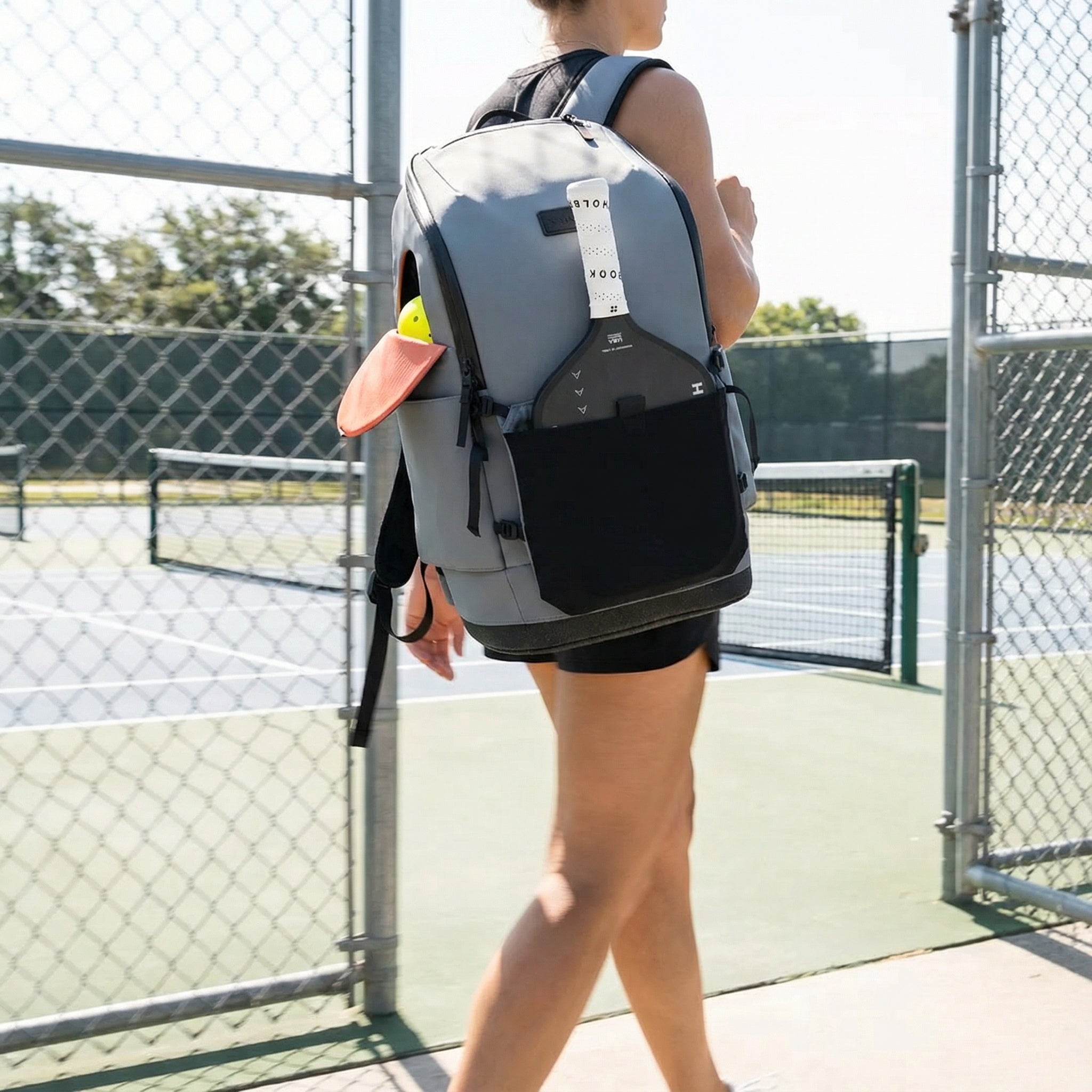
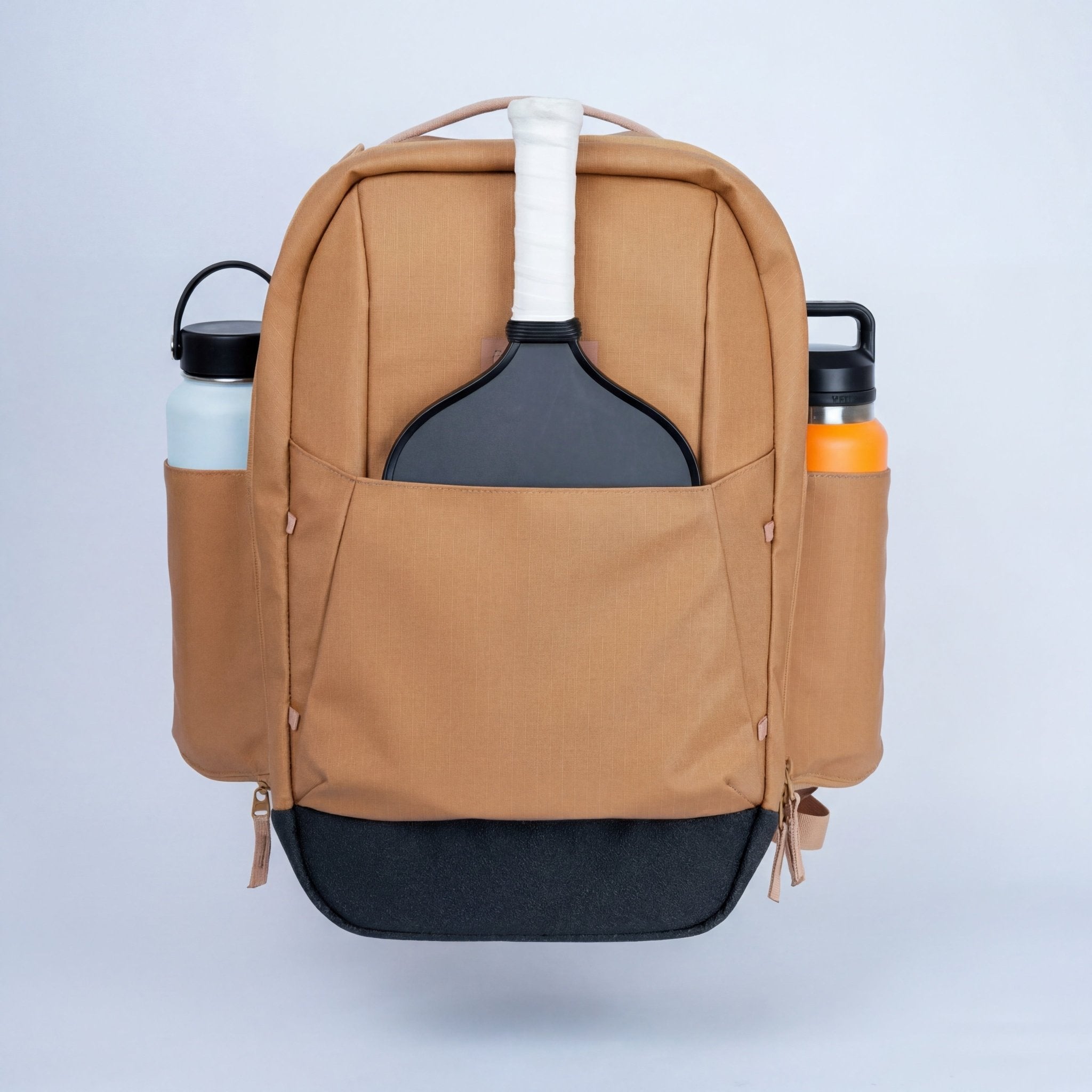
The FORWRD Court Ranger V2 keeps your grips, lead tape, and accessories organized in dedicated compartments — so you're not digging through a ball-and-snack avalanche to find your Hesacore when you need it pre-match. The 16" laptop sleeve handles the commute side of the equation.
See the Court Ranger V2 ($195) →
Pricing and Where to Buy
All four Hesacore variants are available at Pickleball Central with free shipping:
- Hesacore Standard — $26.90 (1.5mm or 2.0mm)
- Hesacore Carbon — $29.90 (1.5mm or 2.0mm)
- Hesacore Gel — $27.90 (1.5mm or 2.0mm)
- Hesacore Elongated — $27.90
Shop Hesacore at Pickleball Central →
FAQ
Is Hesacore a replacement grip or an overgrip?
It's a replacement grip — it goes directly on the bare paddle handle, replacing the factory grip. You can use it as your only grip layer. It's thick enough for that (1.5mm or 2.0mm). If you prefer a thinner final feel, you can still add a thin overgrip on top, but many players skip that step with Hesacore.
How long does Hesacore last compared to a standard overgrip?
In our testing (outdoor concrete, 3–4 sessions per week, hot conditions), a Hesacore Standard held tack for roughly 3–4 months before starting to show wear. A comparable thin overgrip like the Tourna Mega Tac typically glazes over in 2–4 weeks of the same play. The per-session cost works out similarly; Hesacore's advantage is fewer grip changes.
What's the difference between 1.5mm and 2.0mm Hesacore?
The 1.5mm option adds less bulk to your grip circumference — better if you already have a larger handle size or prefer a thinner feel. The 2.0mm adds more cushion and makes your effective grip circumference noticeably larger, which many players find more comfortable for extended play. Start with 2.0mm if you're unsure — most players prefer it.
Can you use Hesacore on any pickleball paddle?
Yes, with one caveat: check your paddle's grip length before buying the Elongated variant. Most paddles have a 4"–5.5" grip section. The standard Hesacore at 5.25" fits the vast majority of handles. The Elongated is longer and works best on paddles where you feel cramped at the bottom of the handle.
Which Hesacore variant is best for beginners?
The Standard at $26.90 is the right starting point for most players — it's the most balanced option and the best place to evaluate whether you like the honeycomb texture before investing in a specialized variant. If you already have arm fatigue issues, go straight to the Gel. If you know you want a stiffer, more direct feel, try the Carbon.
How does Hesacore compare to just using a Tourna Grip?
Different products for different stages of your grip setup. Tourna Grip is a thin overgrip (goes over an existing grip). Hesacore is a full replacement grip. If you're playing frequently and tired of replacing your Tourna every two weeks, Hesacore solves the durability problem. If you play casually and a Tourna lasts you a month or two, Hesacore's premium probably isn't worth it for you.
Final Verdict
Hesacore earns its premium for serious players — specifically, anyone playing 3+ times per week in conditions that degrade standard grips quickly, or anyone chasing the combination of lasting tack and real vibration reduction. The four-variant lineup means you're not forced into a one-size compromise: pick stiffer (Carbon) or softer (Gel), standard length or extended, based on exactly what your game needs.
Casual players should stick with budget overgrips. But if you find yourself re-gripping constantly and wondering if there's a better solution — Hesacore is that solution, and it's worth the price.

Leave a comment
This site is protected by hCaptcha and the hCaptcha Privacy Policy and Terms of Service apply.