

Last Updated: June 2026

Most pickleball players make this choice the same way: they walk into a sporting goods store, pick up whichever bag looks right, and live with it. Then six months later they're either hauling a duffel by hand across a parking lot wishing they had shoulder straps, or trying to dig a water bottle out of the bottom of a backpack through a narrow opening.
Backpack or duffel isn't a feature question. It's a lifestyle question. The right answer depends on how you get to the courts, what you carry, and whether you need the bag to do double duty as a commuter or work bag. Here's the honest framework for making the call.
Backpack vs. Duffel: The Core Trade-Off in Pickleball Bags
The core difference comes down to one thing: carry style. A backpack distributes weight across both shoulders and leaves your hands free. A duffel sits in your hand or on one shoulder and opens wide for fast access.
That carry-style difference cascades into everything else. Backpacks win in transit — walking long distances, biking, subway commutes, moving between courts. Duffels win at the court itself — wide-mouth opening, easy gear dump, everything visible without digging. The question is which environment you spend more time in.
We packed the same kit — 2 paddles, court shoes, water bottle, change of clothes — into a backpack and a duffel and tracked both through a realistic court day: 20-minute car commute, 5-minute walk from parking lot to indoor courts, 90-minute session, drive home. The backpack won in transit by a wide margin. The duffel had faster gear access at the court. Neither dominated so clearly that the other was wrong — which is why the player-type question matters more than the feature list.
When a Pickleball Backpack Is the Right Choice
Backpacks are the right choice for most recreational players who play 2–4 times a week. Here's specifically when a backpack wins:
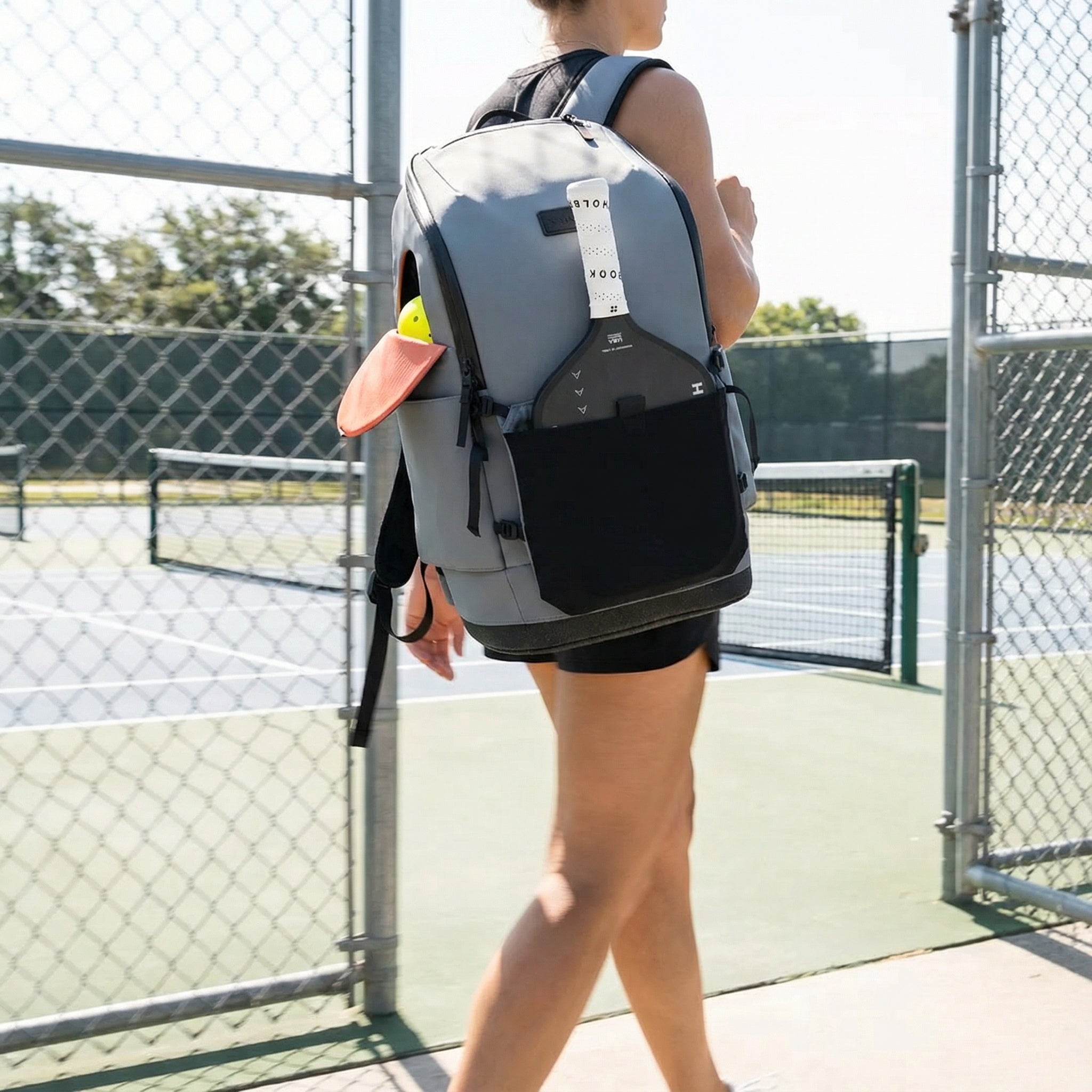
You walk, bike, or take transit to the courts. This is the most important factor. Carrying a loaded duffel 3 blocks or through a subway turnstile is genuinely uncomfortable. A backpack distributes the same weight across both shoulders — a 15-lb loaded bag feels like 8 lbs on your back versus 15 lbs pulling one shoulder down. FORWRD's player feedback from 500+ players: the #1 reason players switched from duffel to backpack was shoulder and back strain after transit.
"Most players we talked to during testing couldn't articulate why their duffel was wearing them out until we asked specifically about the walk to the court. A backpack turns a 15-lb loaded bag into a non-event. Same gear, completely different experience over a week of sessions."
— Topher, FORWRD Co-founder
You need a laptop sleeve. No duffel has a proper padded laptop compartment. The Court Caddy ($325) has a 15" padded sleeve — padded on all sides, not just the back panel — and the Court Ranger V2 ($195) has a 16" sleeve. If your bag needs to handle a work commute, the backpack format is the only one that protects a laptop adequately. A laptop bouncing around in a duffel main compartment against paddle edges is an expensive mistake.
You store your bag between sessions. Under a bench, in a locker, in a car trunk — backpacks are more compact when not in use and hold their shape better. A duffel with 2 paddles and gear in it goes wherever you set it; a backpack with the same contents stands up, fits under the bench, and doesn't roll into the court during play.
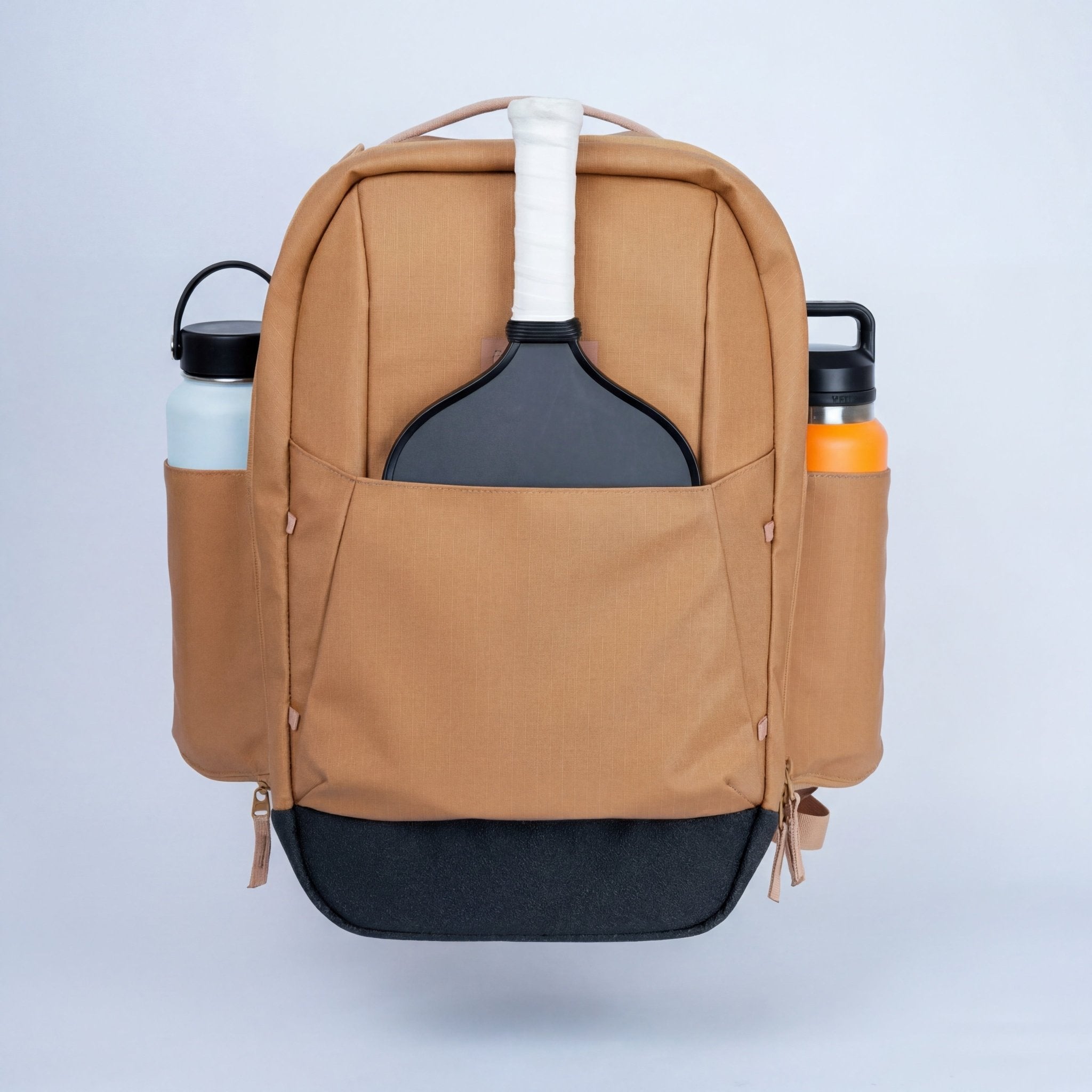
You play 2–3 paddles max. The Court Caddy's modular sleeve holds 4 paddles; the Court Ranger V2 holds 2–3. For most recreational players, that's exactly what they carry. Backpack paddle organization (individual sleeve, protection from handle-edge contact) is also better than the typical duffel paddle pocket, which is either a wide-mouth slot or an exposed top compartment.

The Court Ranger V2 ($195) is built specifically for the player who wants hands-free carry with proper organization — modular paddle sleeve, 16" laptop sleeve, YKK AquaGuard weatherproof zippers, and a lifetime warranty. If the backpack format fits your court life, this is the value anchor of the category.

When a Pickleball Duffel Makes More Sense
Duffels aren't the wrong choice — they're the right choice for a specific player type that most bag guides don't acknowledge honestly. Here's when a duffel genuinely wins:
You're a coach or team captain carrying demo inventory. 6+ paddles, a ball hopper, cones, multiple pairs of shoes — a duffel's wide-mouth opening and maximum volume handles this where a backpack can't. No backpack holds 8 paddles without becoming unwearable. Duffels designed for tennis or pickleball instruction have multi-paddle dividers and enough main compartment space to function as a mobile gear depot.
You check a bag for tournament travel. Airlines treat checked bags better when they're soft-sided and compressible. A duffel checks better than a rigid backpack frame, and tournament players who check equipment bags often prefer the duffel format specifically because it packs flat when empty and expands to full capacity when loaded. If you're flying to destination tournaments multiple times a year, the duffel form factor has a real functional advantage.
You drive directly to the court and courtside access is easy. If there's no transit involved — you drive, park adjacent to the court, unload, and set up — the duffel's faster access and wider opening is genuinely useful. You're not carrying it far; you're using it as a gear station at courtside. In that scenario, organization is less important than access speed.
You prefer the carry style. Some players just prefer the over-shoulder or hand-carry feel of a duffel. This is a legitimate preference — backpacks distribute weight differently and some players find the backpack format hot in summer or uncomfortable with certain clothing. If you've tried both and prefer the duffel, that's a valid choice; just be honest with yourself about the transit scenarios you're actually doing with it.
For players in the duffel camp who want a quality option with a dedicated paddle compartment and proper organization, the JOOLA Pro Tour Bag is a well-reviewed option with structured paddle sections and a wide main compartment — available at Pickleball Central.
Disclosure: This post contains affiliate links to Pickleball Central. If you purchase through our links, FORWRD earns a small commission at no extra cost to you. We only link to products we'd recommend regardless.
The Hybrid Option: Convertible Bags
Some bags attempt to solve this by doing both — a backpack that converts into a duffel, or a bag with both carry handles and shoulder straps. This is the "it does everything, masters nothing" category, and it's worth being honest about what you're getting.
The functional problem with convertibles: they're engineered for versatility, not optimization. The shoulder straps are thinner and less padded than a dedicated backpack's. The organization is less structured than either format does when it's purpose-built. The bag is almost always heavier than a dedicated backpack because of the extra hardware.
Who convertibles work for: players who genuinely split their court time between transit-heavy commutes and long drive-in sessions where they want wide-mouth access. If you're 60% transit and 40% drive-in, a convertible might be worth the trade-off. If you're 80% either way, get the purpose-built option for your dominant use case.
Comparison Table: Backpack vs. Duffel for Pickleball
| Factor | Backpack | Duffel |
|---|---|---|
| Transit carry | ✅ Hands-free, weight distributed | ❌ One shoulder or hand carry |
| Courtside access | ❌ Slower — dig through compartments | ✅ Wide-mouth, everything visible |
| Laptop protection | ✅ Dedicated padded sleeve | ❌ Paddles and laptop share space |
| Max paddle capacity | 2–4 paddles (depends on model) | 4–8+ paddles (coach capacity) |
| Under-bench fit | ✅ Compact, holds shape | ❌ Wider footprint, falls over |
| Tournament air travel | ❌ Frame structure doesn't compress | ✅ Soft-sided, compresses flat |
| Best player type | Commuters, 2–4× rec players, court movers | Coaches, tournament travelers, drive-in players |
| FORWRD option | Court Caddy $325 / Court Ranger V2 $195 | Not FORWRD's format — see JOOLA Pro Tour Bag |
The 3-Question Decision Framework
If you're still unsure after reading the sections above, run through these three questions. The answer usually becomes obvious.
1. How do you get to the courts? Walk, bike, or transit → backpack. Drive-to-court directly → either works, lean toward format preference.
2. What's your maximum paddle load? 2–3 paddles → backpack handles it well. 4 paddles + tournament kit → Court Caddy backpack (4-paddle capacity). 6+ paddles or demo gear → duffel is the only format that works.
3. Does your bag need to serve double duty? Work commute, laptop carry, coffee meeting before courts → backpack with a proper laptop sleeve is the only format. Pure court bag, no laptop, no work context → both formats work equally.
If you're in the backpack camp and exploring whether a sling bag might be a lighter option for some sessions, our pickleball sling bag vs. backpack guide breaks down that comparison in the same framework.
FAQ: Pickleball Bag Format Questions
Is a backpack or duffel bag better for pickleball?
It depends on how you get to the courts. If you walk, bike, or use transit, a backpack wins every time — hands-free carry and weight distribution across both shoulders make a real difference on a loaded bag. If you drive directly to the court and prioritize fast courtside access over comfort in transit, a duffel is a legitimate choice. Most recreational players who play 2–4 times a week are better served by a backpack.
What type of bag do most pickleball players use?
Backpacks are the most common format among recreational players, particularly as the sport has grown and more players are commuting to courts by foot or transit. Coaches and tournament players who need to carry 6+ paddles or check bags for travel often prefer duffels or tour bags. At the recreational 3.0–4.5 level, backpacks dominate — primarily because the organization and transit ergonomics match how most players actually use their bags.
Can a regular duffel bag work as a pickleball bag?
Technically yes, but it comes with real drawbacks: no paddle protection (paddles bounce against each other in a general compartment), no water-resistant materials, no dedicated organization, and usually no laptop sleeve. A general duffel will hold your gear, but a purpose-built pickleball duffel with paddle dividers and organized pockets will protect your equipment and make your court day significantly less annoying. If you're playing regularly, a purpose-built bag is worth it.
What are the advantages of a pickleball backpack over a duffel?
Four main advantages: (1) Hands-free carry distributes weight across both shoulders, critical for players who transit to courts. (2) Dedicated padded laptop sleeve — no duffel handles a laptop safely alongside paddles. (3) Under-bench fit — backpacks store compactly and stand upright while you play. (4) Ergonomics on long wear — a padded backpack for a 30-minute commute is night-and-day vs. a duffel pulling one shoulder down.
What's the best pickleball duffel bag for tournament travel?
Look for duffels with dedicated paddle dividers, a shoe compartment or exterior shoe pocket, and soft-sided construction that checks flat. The JOOLA Pro Tour Bag is a solid option with structured paddle sections. For players who fly to tournaments regularly, you want a bag that compresses flat for the return trip and has internal organization that keeps paddles from shifting in checked baggage.

Leave a comment
This site is protected by hCaptcha and the hCaptcha Privacy Policy and Terms of Service apply.