

Disclosure: This post contains affiliate links to Pickleball Central. If you purchase through our links, FORWRD earns a small commission at no extra cost to you. We only link to products we'd recommend regardless.
Last Updated: August 2026
The RPM Friction Pro Widebody V1 is one of the most technically impressive paddles in the $200–$300 range — high spin generation, a forgiving widebody shape, and genuine kitchen control that holds up under pressure. It's available at Pickleball Central for $249.99. But before you buy, there's something you need to know about tournament legality that most reviews gloss over.
RPM Friction Pro Widebody V1: Specs and Tech
RPM built the Friction Pro Widebody around three technologies:
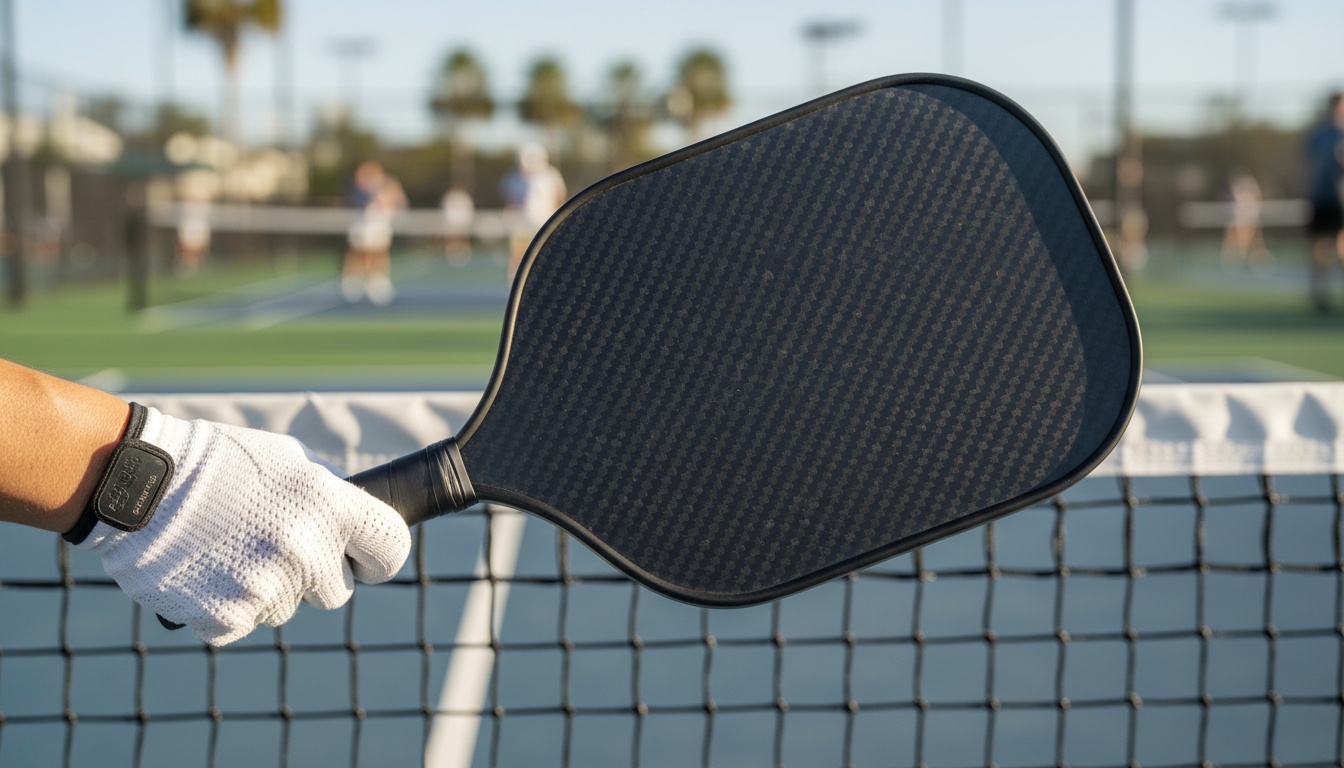
- CarbonBite face: High-friction raw carbon fiber surface designed to grip the ball longer through contact, generating extra spin. The texture is more aggressive than most carbon-face paddles at this price.
- Tri-Density Core: A polymer honeycomb core that varies in density across zones — firmer in the center for power transfer, softer toward the edges for feel. The practical effect: the sweet spot feels larger than the paddle's physical size.
- DwellZone Construction: RPM's term for the ball-dwell characteristic engineered into the core-face junction. More dwell = longer contact time = more spin potential and softer feel on touch shots.
| Spec | Detail |
|---|---|
| Shape | Widebody (16" × 8") |
| Core thickness | 16mm |
| Face material | CarbonBite raw carbon fiber |
| Weight | 7.9–8.1 oz (mid-weight) |
| Grip length | 5.25" |
| PBCoR rating | 0.44 (see tournament note below) |
| Price | $249.99 |
The widebody shape is the defining design choice here. At 8" wide vs the elongated model's narrower profile, you get more surface area in the hitting zone — which translates to more forgiveness on off-center hits, better stability on fast hands exchanges, and a larger sweet spot at the kitchen. The tradeoff: slightly less reach on wide shots compared to elongated models, and marginally slower swing speed for power-hitters who prefer whippier paddles.
Performance Testing: What We Actually Found
Spin Generation
This is where the paddle earns its reputation. The CarbonBite surface grips the ball noticeably more than grit-coated faces on similarly priced paddles. Topspin serves get serious bite. Heavy topspin dinks hold their trajectory then drop sharply — which forces opponents into late reads at the kitchen. Backspin resets are equally effective: the high-friction surface lets you cut under the ball with precision rather than just deflecting it.
RPM cites 2300+ RPMs in their own testing. That aligns with the on-court experience — this paddle can generate spin that causes problems at every skill level from 3.5 to 5.0.
One nuance worth naming: spin generation from high-friction faces degrades over time. After 40–60 hours of play, the surface texture wears down from concrete court slides and normal ball contact. The V1 surface holds up reasonably well — better than many grit-coated faces — but it's not indefinite. Players who play outdoors on concrete 4+ times per week should plan for some performance drop at the 3–4 month mark.
Control and Touch at the Kitchen
The 16mm core is the main contributor here. Thicker cores absorb more energy on impact, which translates to softer hands at the net. Dinks feel deliberate — you get feedback from the ball without the "springy" sensation that plagues thinner-core paddles on touch shots. Reset mechanics at the transition zone are genuinely good: the paddle doesn't fight you on decelerating shots.
For players upgrading from entry-level paddles, the adjustment period to this feel is real. The Widebody V1 is a more nuanced paddle — it rewards deliberate technique over brute force. Give yourself 2–3 sessions to calibrate your timing. Your first session may feel sloppy; your fifth session will feel much cleaner.
Power and Reach
Power-first players may find the 16mm core limiting. The extra absorption that creates great touch shots also limits the pop on flat drives. This is a control paddle dressed in carbon fiber — don't expect it to send rockets from the baseline. For flat ground strokes and power serves, a 14mm core (like the elongated V1) or a different paddle category entirely is the better fit.
The widebody shape helps with punch volleys and overhead stability. On net exchanges — fast hands, counter-punching — the stability is real. The wider hitting surface absorbs lateral deflection on mis-hits and keeps the ball in play more consistently than elongated shapes.
The V1 Tournament Issue: Read This Before You Buy
USA Pickleball implemented a PBCoR rating threshold change that went into effect in May 2026. The short version: paddles rated at 0.44 PBCoR are no longer legal for USA Pickleball sanctioned tournament play (per the USA Pickleball approved paddle list). The RPM Friction Pro V1 (including the Widebody V1) carries a 0.44 rating.
What this means practically:
- Recreational and club play: Zero impact. The 0.44 limit applies only to sanctioned tournament events. Open play, club leagues, casual matches — the V1 is perfectly legal and excellent.
- Tournament players: You need the RPM Friction Pro V2, not the V1. RPM has a 50% discount upgrade program for V1 owners moving to V2.
- Price consideration: The V1 at $249.99 may represent better value now that it's discounted vs tournament-legal alternatives. For recreational players, this is a genuinely good deal on a high-performing paddle.
Most reviews of the V1 either don't mention this at all or bury it in footnotes. The buying decision is straightforward once you know: tournament players should buy the V2. Recreational players can confidently buy the V1 at its current price point.
Who the RPM Friction Pro Widebody V1 Is For
Buy the V1 if:
- You play recreational or club-league pickleball and don't plan to enter USA Pickleball sanctioned tournaments
- You're a 3.5–4.5 player focused on kitchen play and developing your spin game
- You want a forgiving shape with a large sweet spot — the widebody is excellent for players who aren't yet consistently hitting the center of the face
- You prioritize control over raw power and want a paddle that rewards technique
Look at alternatives if:
- You play in USA Pickleball sanctioned events — get the V2 instead
- You primarily play power-first, baseline-to-baseline pickleball — a 14mm core or different paddle family will serve you better
- You want maximum longevity from the surface texture — outdoor concrete court players who play daily may find the CarbonBite face degrades faster than expected
Our Pick: RPM Friction Pro Widebody V1 — $249.99
Elite spin generation, forgiving widebody shape, excellent kitchen control. Best for rec players who don't need USA Pickleball tournament approval. Tournament players should confirm V2 availability.
Alternatives at This Price: How It Compares
| Paddle | Price | Core | Strength | Tournament Legal |
|---|---|---|---|---|
| RPM Friction Pro Widebody V1 | $249.99 | 16mm | Spin, kitchen control | Rec play only |
| Selkirk Proton Series Three | ~$220 | 16mm | All-around balance | Yes |
| CRBN 1 TruFoam | ~$230 | 16mm foam | Plush feel, reset stability | Yes |
| Mizuno AcroStrike SX | $294.95 | 16mm | Finesse/touch focus | Yes |
vs Selkirk Proton Series Three (~$220): The Selkirk is more balanced between power and control, and it's tournament legal. If you're splitting time between baseline driving and kitchen play, the Proton Three is the safer all-around choice. The RPM Widebody V1 has a higher ceiling for spin-focused kitchen specialists. See Selkirk Proton options at Pickleball Central →
vs CRBN 1 TruFoam (~$230): Both are control paddles. The CRBN has a plushier, foam-backed face that's excellent for resets and blocks — a different feel from the RPM's high-friction carbon. CRBN wins on tournament legality; RPM wins on spin generation. See CRBN options at Pickleball Central →
vs Mizuno AcroStrike SX ($294.95): Mizuno is a major sports brand entering pickleball — the AcroStrike SX is more finesse-oriented than the RPM. If you value a sports-brand pedigree and want a softer, more touch-focused paddle, it's worth considering. At $294.95 it costs more, and it prioritizes feel over raw spin. See the Mizuno AcroStrike SX at Pickleball Central →
Complete Your Setup
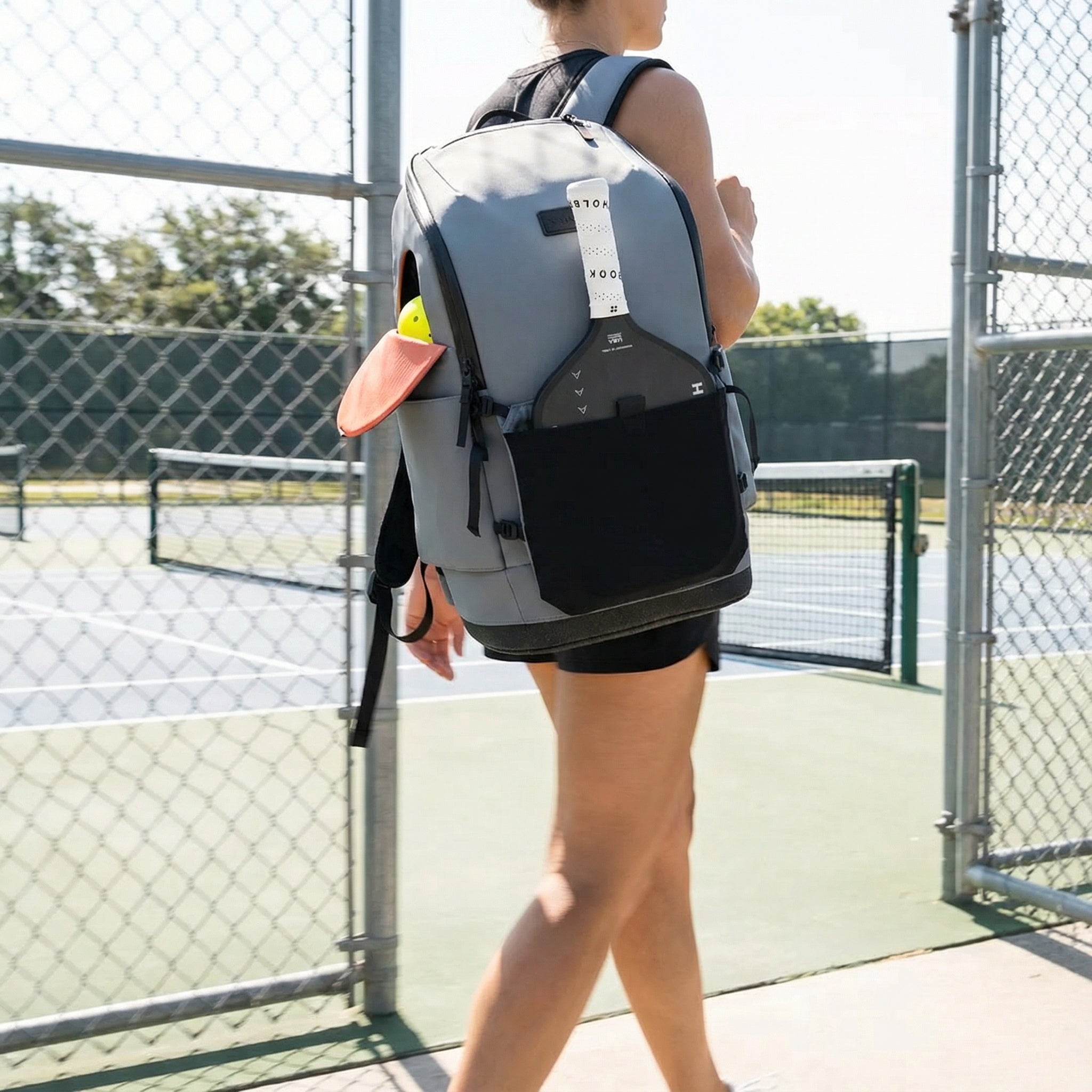
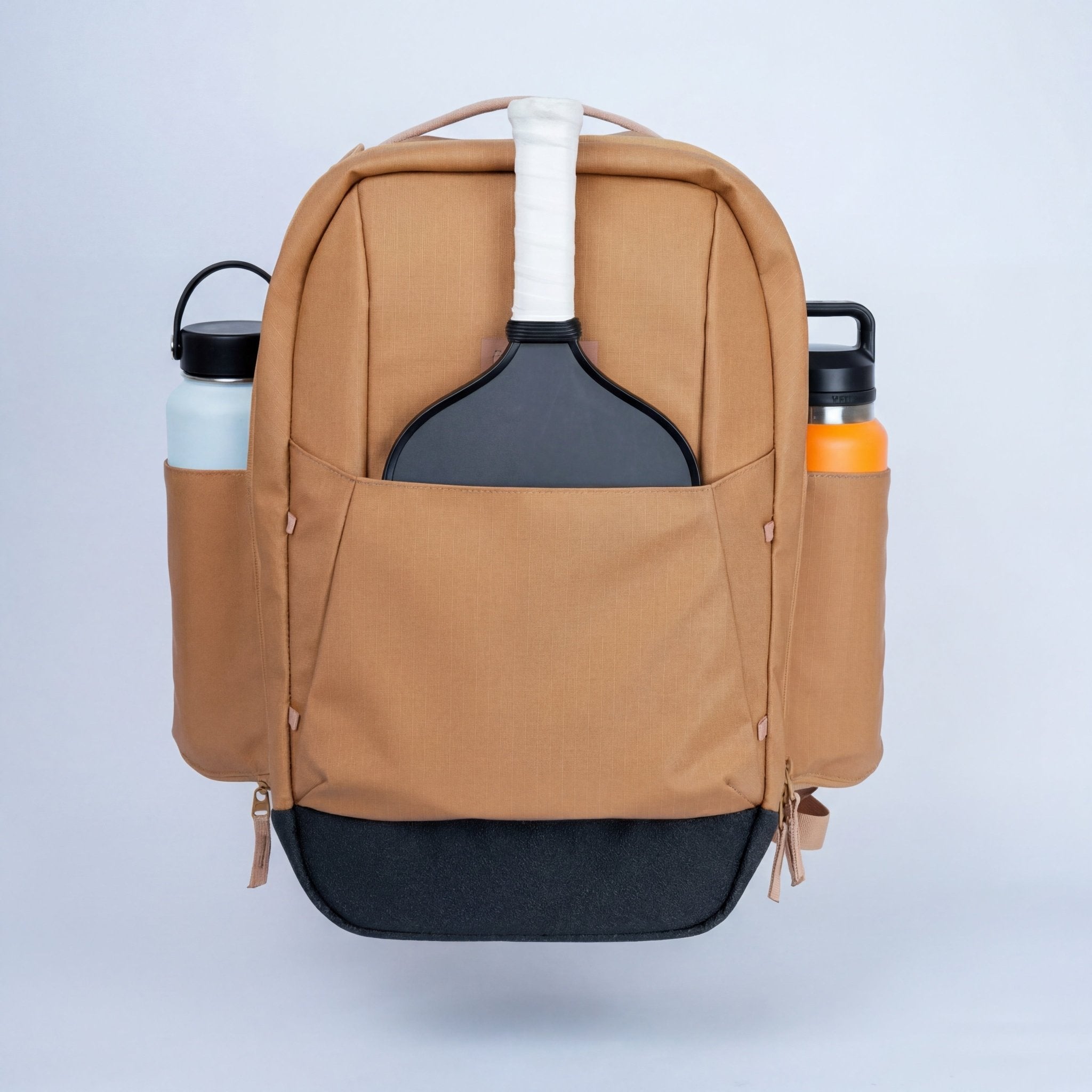
Got your paddle sorted? Now you need somewhere to protect it. The Court Caddy Backpack fits up to 4 paddles in a dedicated modular sleeve — no padding-against-padding scratching, no bare carbon fiber faces touching other gear. 15" padded laptop compartment and YKK AquaGuard zippers. If the $325 Caddy is too much, the Court Ranger V2 at $195 has the same modular sleeve system in a lighter build.
FAQ: RPM Friction Pro Widebody V1
Is the RPM Friction Pro Widebody V1 tournament legal?
Not for USA Pickleball sanctioned events. The V1's 0.44 PBCoR rating exceeds the legal threshold that went into effect in May 2026. For recreational club play, open play, and non-sanctioned leagues, it's completely fine. Tournament players need the V2.
What's the difference between RPM Friction Pro Widebody and Elongated?
The Widebody (16" × 8") has more surface area for a larger sweet spot and better stability on off-center hits — better for kitchen-focused players. The Elongated has a narrower, longer profile with more reach and slightly better pop on drives. If you're a control-first player, widebody. Power players and two-handed backhand players tend to prefer the elongated.
How does the RPM Friction Pro compare to CRBN paddles at similar prices?
The RPM Friction Pro has a harder carbon fiber face (CarbonBite) that generates more spin than CRBN's TruFoam construction. CRBN's foam-backed face is softer and more stable on blocks and resets. They're solving different problems: RPM is for spin specialists, CRBN is for players who want maximum dampening on dink exchanges. Both are quality paddles; the choice depends on your game style.
How long does the RPM Friction Pro surface last?
The CarbonBite texture holds up reasonably well but will degrade over time — especially on outdoor concrete courts. Expect noticeable performance after 40–60 hours of play outdoors, longer for indoor players. You can extend the life by cleaning the face regularly with a damp cloth and avoiding dragging the paddle on court surfaces.
Is the RPM Friction Pro Widebody V1 good for beginners?
It's not a beginner paddle. At $249.99, you're paying for spin technology and control nuance that a 2.5–3.0 player won't fully access yet. The forgiving widebody shape helps — it's more beginner-friendly than elongated paddles — but a $80–$120 paddle is a better starting point. Come back to this paddle at 3.5+.
Complete Your Setup
If you're dropping $230 on a paddle this precise, you need a bag that keeps it protected and ready. The FORWRD Court Caddy ($325) carries up to 4 paddles in a modular sleeve system with dedicated compartments for everything else — built for players who show up prepared. If you're traveling lighter or just need a versatile daily driver, the Court Ranger V2 ($195) handles 2-3 paddles and has the same YKK AquaGuard zippers and padded construction in a more compact footprint.
Still shopping around on paddles? Our best pickleball paddles guide covers the top options across power, control, and price point for 2026 — including how the RPM Widebody stacks up against the field.

Leave a comment
This site is protected by hCaptcha and the hCaptcha Privacy Policy and Terms of Service apply.