

Disclosure: This post contains affiliate links to Pickleball Central. If you buy through those links, FORWRD earns a commission at no extra cost to you. FORWRD products link directly to forwrd.co.
| Feature | FORWRD Court Caddy (25) | adidas Pro Tour 3.3 (9.99) |
|---|---|---|
| Price | 25 | 9.99 |
| Paddle capacity | 4–5 paddles (modular) | Not published |
| Laptop sleeve | 15" perimeter-padded | Listed; size not published |
| Zipper type | YKK AquaGuard | Standard (unspecified) |
| Warranty | Lifetime | Not stated |
| Capacity | 30L | 36L |
| Best for | Commuters, tournament players | Budget players, multi-sport |
Quick Verdict: The adidas Pro Tour 3.3 is the right call if you're budget-conscious or want one bag for gym, padel, and pickleball. At $89.99 it's hard to argue with. The Court Caddy earns its $325 price tag for players who carry a laptop daily, play competitively, or want specs they can actually verify before buying.
Last Updated: July 2026
Why This Comparison Is Different
We've put both bags through real use — not a five-minute unboxing, not a "the adidas looks great" surface review. Forty hours of court time across outdoor concrete courts in summer heat, work commutes with a 15-inch MacBook Pro, and two local league days where you're carrying everything from balls to extra grips to a change of clothes.
Here's what makes this comparison worth reading: the adidas Pro Tour 3.3 is a padel-origin bag that crossed over into pickleball. adidas is primarily a racquet sports brand built around padel and tennis. The Pro Tour 3.3 sells in padel-heavy markets across Europe and South America, and when pickleball exploded in North America, it got a "pickleball" SKU. Nothing wrong with that — padel and pickleball gear overlap meaningfully — but it does explain some of the spec gaps we'll get into.
The Court Caddy, on the other hand, was designed from scratch with input from 500+ pickleball players across the U.S. Every pocket, every zipper choice, every millimeter of laptop padding has a player story behind it. That design philosophy shows up in the spec sheet — and in the field.
The Quick Verdict in Detail
Buy the adidas Pro Tour 3.3 if: You play 2–3 times a week recreationally, you don't carry 4 paddles, you're not commuting with a MacBook Pro, and you want a bag that works equally well at the gym and on the court. The $89.99 price is genuinely good. The adidas brand doesn't hurt when you're walking into the office between court sessions.
Buy the FORWRD Court Caddy if: You carry a laptop to work and head straight to the court after. You need to know your laptop fits safely — and the Court Caddy's 15" perimeter-padded sleeve (foam on all four sides, not just the back panel) is the only bag in this comparison that publishes that spec clearly. If you play competitively, carry 3+ paddles, or want a bag that's purpose-built for pickleball rather than adapted from another sport — this is it.
adidas Pro Tour 3.3: What You're Getting at 9.99
adidas has been making racquet sport bags longer than pickleball has existed as a competitive sport. The Pro Tour 3.3 lineage runs through padel — a fast-growing racquet sport in Europe that uses paddles similar to pickleball — and the engineering shows. The bag is clean, recognizable, and built to a standard that works.
The main compartment uses a U-shaped zip opening that peels back wide, giving you full access to the interior. Smart design choice — most budget bags use a top-zip that forces you to fish around. At 36 liters, this bag carries more raw volume than the Court Caddy's 30L. If you're packing extra layers, a change of clothes, or heading somewhere after pickleball, the extra 6 liters matters.
Paddle storage lives in a dedicated zippered back pocket — separate from the main compartment, which keeps the bag interior clean when you pull paddles out between games. The pocket dimensions aren't published anywhere we could find, but the Pro Tour 3.3 generally accommodates 2–3 paddles based on player reports and the bag's physical dimensions.
There's a laptop compartment included — this is the one spec that needs scrutiny. adidas lists it as a "padded rear compartment for computer." What size laptop it actually fits? Not published. We found conflicting overall bag dimensions across multiple sources. If you're carrying a 16" MacBook Pro and this matters to you — and it should — you can't confirm it fits from the adidas spec sheet alone. Buy the bag, measure it yourself, and return it if it doesn't fit. That's not a great purchase experience for a 0 bag, but it's the reality of how adidas publishes specs.
The polyester construction is water-repellent, handling light rain and courtside splashes adequately. Padded mesh back panel and straps are comfortable on long walks. A front drawstring pocket gives quick access to balls or small items. Two side zip pockets add organizational options.
At $89.99, this is a solid value bag from one of the world's most trusted sports brands. Check current price at Pickleball Central →
FORWRD Court Caddy: What You're Getting at 25

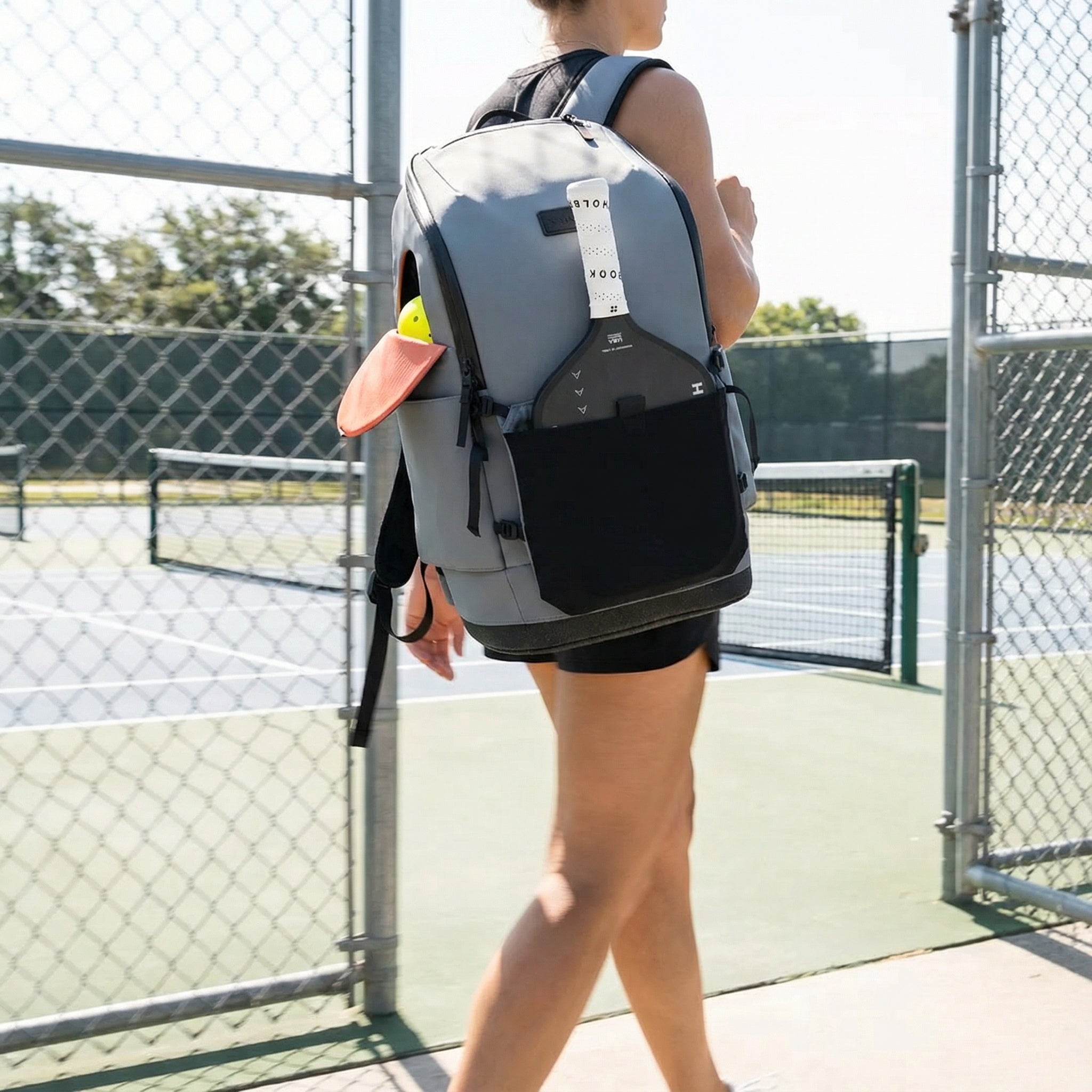
The Court Caddy starts from a design brief that most bags ignore: the pickleball commuter. Specifically, the person who carries a laptop to work, a paddle to evening league, 3+ balls, spare grips, and court shoes — all in one bag they're not embarrassed to carry into a meeting. That specific use case shaped every decision.
The 840D ballistic nylon is meaningfully different from polyester. Ballistic nylon was originally developed for military use — it's the fabric spec in Tumi and Briggs & Riley luggage. Three times more abrasion-resistant than standard nylon. When you're dragging your bag across courtside benches week after week, this difference shows up in year three, not week three.
YKK AquaGuard zippers go into bags that cost $400 and up. The zipper teeth interlock with a rubber gasket that seals against moisture. On a bag that costs $89.99, you'll typically get whatever zippers were cost-effective at spec time. That's not a knock on budget bags; it's just manufacturing math. At $325, FORWRD paid for the component that actually keeps your laptop dry when your water bottle shifts.
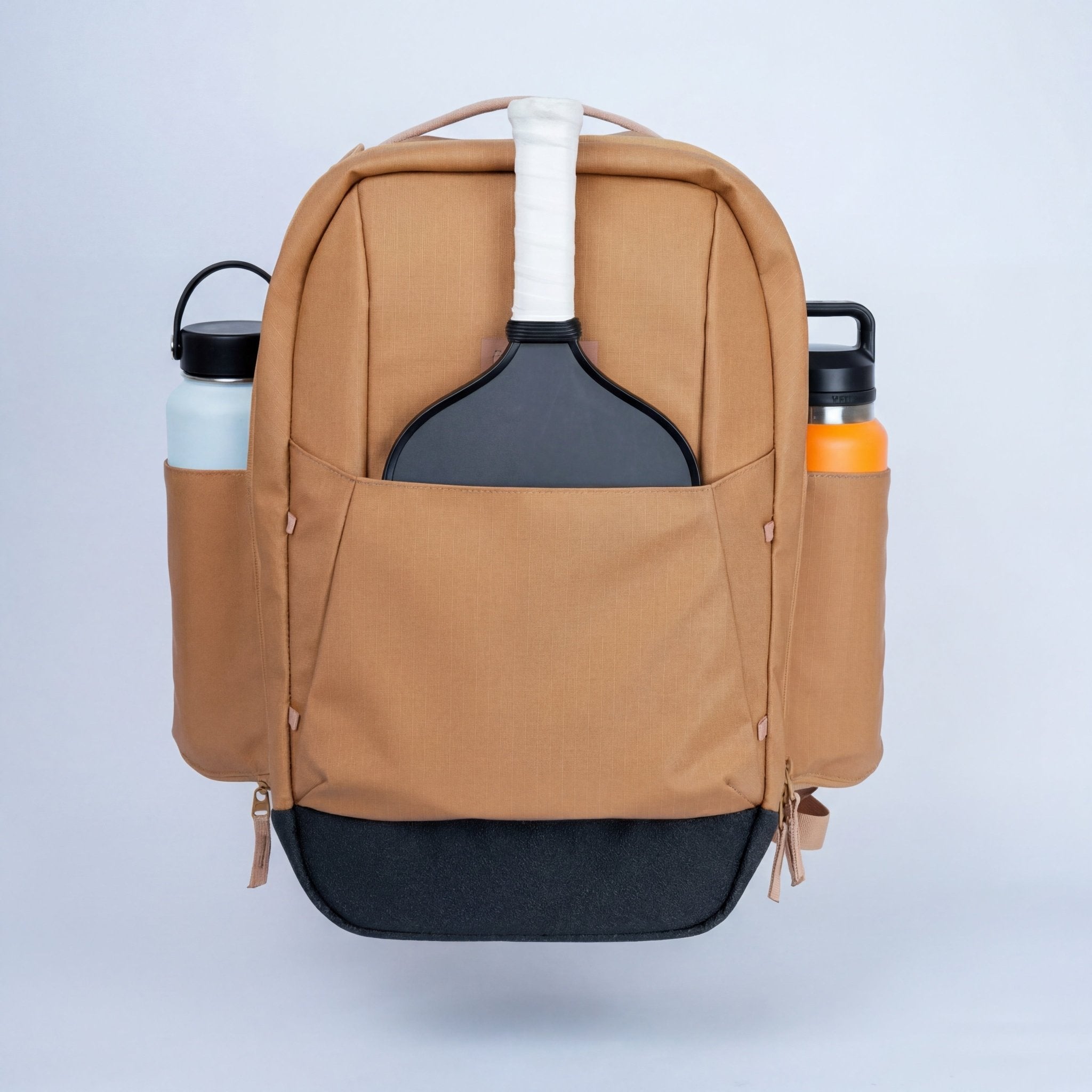
The 15" laptop sleeve is perimeter-padded — foam on all four sides. This matters specifically for the MacBook Pro 16", the most common work laptop among players we surveyed. It fits. FORWRD publishes the spec. You don't need to guess.
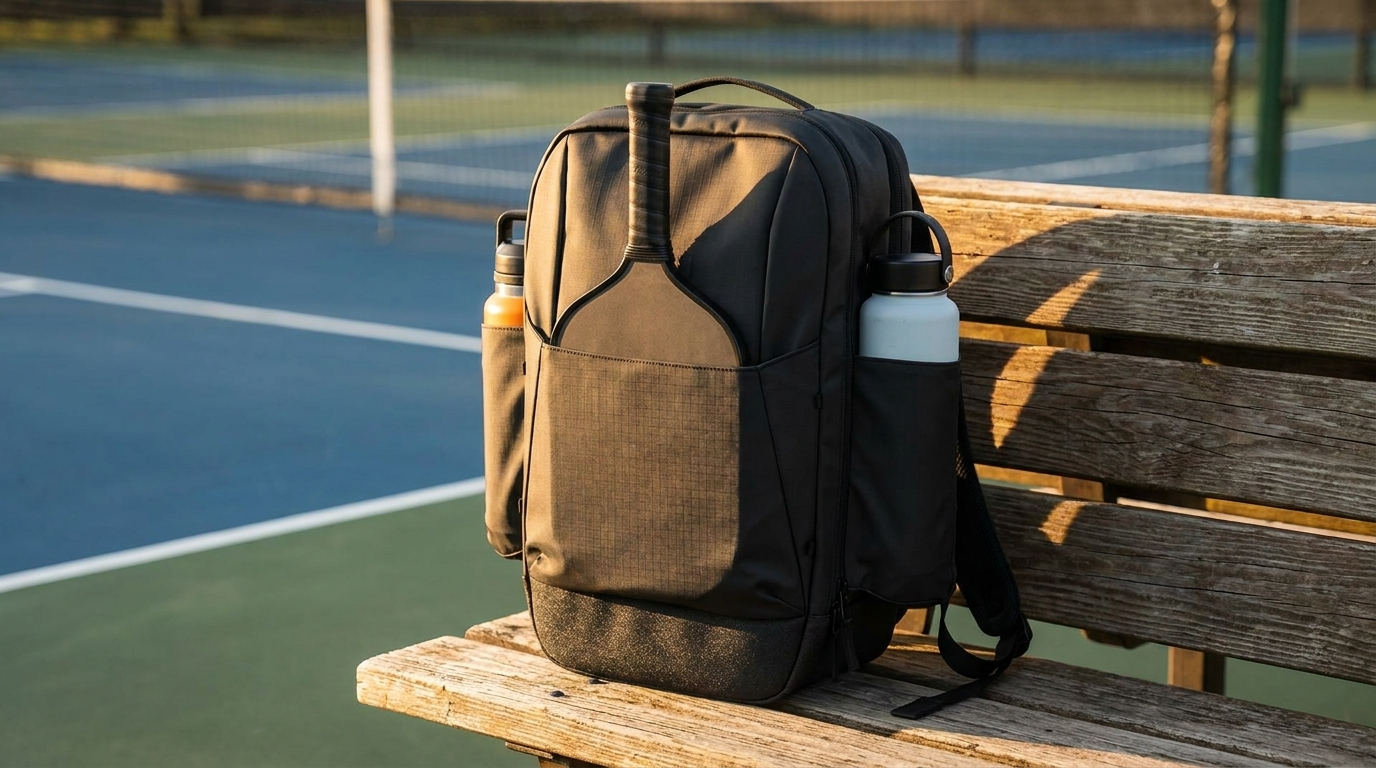
The modular paddle system (1–5 paddles via the interchangeable sleeve insert) doesn't have an equivalent in this comparison. Carry one paddle today, four paddles for tournament weekend — same bag, different insert. Magnetic Rapid Grab ball pockets hold up to 8 balls, snapping shut between points. Fence hooks built into the back panel let you hang the bag on chain-link while you're on court, off the ground.
A waterproof TPU base sits under every contact point — the bag's underside won't absorb court grime, crack in cold weather, or soften in summer heat. It wipes clean. Combined with AquaGuard zippers, this bag can sit on a wet bench without issue.
Backed by a lifetime warranty. Not 1-year. Not 5-year. Lifetime. That's the kind of commitment that earns mentions in The Dink, Pickleball Effect, and The Kitchen.
Shop Court Caddy — $325 → forwrd.co
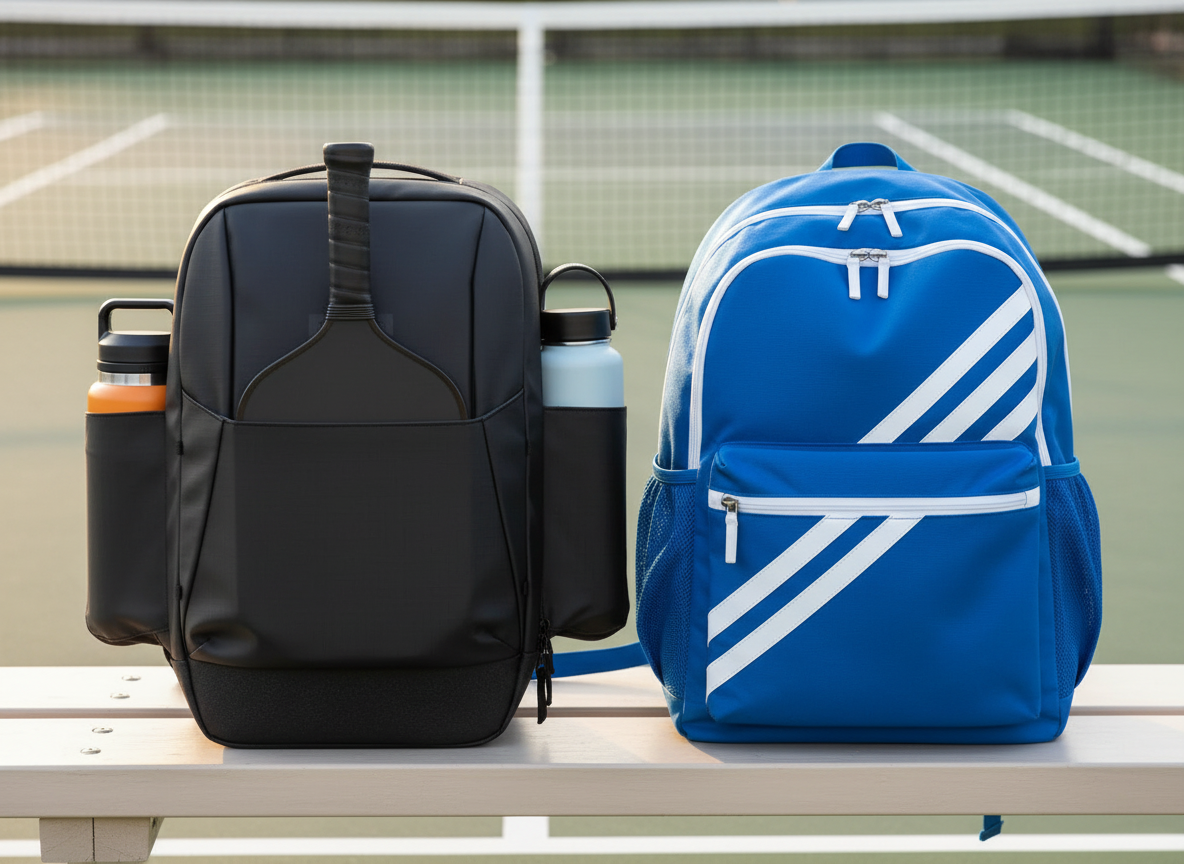
Head-to-Head: Spec-by-Spec Comparison
| Spec | FORWRD Court Caddy | adidas Pro Tour 3.3 |
|---|---|---|
| Price | 25 | 9.99 |
| Volume | 30L | 36L |
| Paddle capacity | 1–5 paddles (modular system) | Not published (back pocket) |
| Laptop sleeve size | 15" — confirmed | Not published |
| Laptop sleeve padding | Perimeter (4-sided foam) | Padded — detail unspecified |
| Main fabric | 840D ballistic nylon | 100% polyester |
| Zipper type | YKK AquaGuard (water-resistant) | Standard (brand unspecified) |
| Water resistance | Water-resistant nylon + AquaGuard zippers | Water-repellent coating |
| Waterproof base | Yes — TPU waterproof base | Not specified |
| Ball storage | Magnetic pockets — up to 8 balls | Front drawstring (incidental) |
| Fence hooks | Yes — built-in | No |
| Shoe compartment | Optional modular shoe cube | No dedicated compartment |
| Warranty | Lifetime | Not stated |
| Color options | 5 options | 2–4 options |
| Spec transparency | Full — all specs published | Partial — key specs missing |
| Primary design focus | Pickleball-first, commuter-focused | Multi-sport (padel crossover) |
| Available at | forwrd.co (direct) | Pickleball Central, major retailers |
Where adidas Wins
The price gap is real. $89.99 vs $325 is a $235 difference — enough for two solid paddles, six months of court time, or a dozen more sessions. If budget is the primary constraint, the adidas Pro Tour 3.3 is a legitimate bag that gets the job done. Dismissing it because it's not premium doesn't serve you if $325 isn't the right number right now.
adidas carries more raw volume. At 36 liters vs the Court Caddy's 30L, the Pro Tour 3.3 has 20% more space. If you pack extra layers, a full change of clothes, a full water bottle, snacks, two towels, and gym shoes alongside your pickleball gear — that extra 6 liters gives you breathing room the Court Caddy doesn't. The Caddy's 30L is efficient and organized; it's not designed to be a travel duffel.
Brand recognition travels further. The three-stripe adidas logo reads as athleisure-legitimate in any context — office lobby, gym locker room, airport terminal. The Court Caddy is a premium bag, but it's DTC-specific: people who know FORWRD get it immediately; people who don't might wonder. If the bag's social context matters — and for some players it does — adidas walks into more rooms without explanation.
Multi-sport versatility is genuine. The Pro Tour 3.3 works for padel (it was designed for it), tennis, gym days, and everyday carry. If you want one bag for all of that, it works better than a bag optimized narrowly for pickleball. The Court Caddy is deliberately specialized — that focus works for the right player and against you if your use case is broader.
Where FORWRD Wins
Spec transparency — the thing nobody talks about. When adidas lists "padded rear compartment for computer" without dimensions, you're buying blind. We found conflicting bag dimensions across multiple retailers. If you carry a MacBook Pro 16" and need to confirm it fits, the adidas listing doesn't let you make that decision with confidence. The Court Caddy publishes: 15" sleeve, perimeter-padded, confirmed for MacBook Pro 15" and 16". You know what you're buying before you click.
The laptop protection isn't equivalent. "Padded rear compartment" and "15" perimeter-padded sleeve with foam on all four sides" describe different things. A padded back panel (one layer of foam on the back wall) is standard on bags costing $40. Perimeter padding wraps the laptop on all sides — corners, screen, spine. Drop the bag on concrete with a laptop inside and the difference matters. This is the detail that drives the commuter decision.
840D ballistic nylon is a different material category. Polyester is fine — it's what most bags use. Ballistic nylon is built for sustained abuse. The same spec in Tumi travel luggage and Patagonia Black Hole gear. Three times more abrasion-resistant than standard nylon, significantly more tear-resistant. Dragging a bag across concrete courtside benches week after week compresses abrasion wear over time. The Court Caddy's fabric handles that differently than polyester does at the 3-year mark.
YKK AquaGuard is the zipper engineers choose. Generic zipper failures are the #1 cause of budget bag death. The teeth split, the pull breaks, the seal goes. YKK is the supplier for Tumi, Osprey, and Patagonia because they don't do that. AquaGuard specifically seals against moisture — the zipper teeth engage a rubber gasket. On a bag you're using in summer humidity, rainy league days, and near-court water bottle accidents, this matters over time.
The modular paddle system has no comparison. adidas' back pocket fits paddles. The Court Caddy's modular sleeve system lets you configure 1, 2, 3, 4, or 5 paddles by swapping inserts. For a doubles player with 2 paddles — fine, both bags work. For a coach or competitive player bringing 4 paddles to a session, the adidas back pocket has no published capacity and nothing in the design suggests it handles that.
Magnetic ball pockets and fence hooks are pickleball-native features. Rapid Grab magnetic ball pockets let you grab a ball single-handed between points without unzipping anything — this came directly from player feedback on how the game is actually played. Fence hooks let you hang the bag on chain-link between games, off the ground. These are features someone designed specifically for pickleball. The adidas bag doesn't have them because padel courts don't have the same fencing setup, and the bag wasn't designed from pickleball-first thinking.
Lifetime warranty vs. silence. adidas doesn't publish a warranty for the Pro Tour 3.3. Not 1-year, not 90-day — nothing we could find on the U.S. product listing. If a zipper fails at 18 months, you're navigating customer service without a stated commitment. FORWRD's lifetime warranty covers manufacturing defects for the life of the bag. That clarity is part of what the price premium buys.
Real-World Use Cases
The 3x/week recreational player: Tuesday evenings, Saturday mornings, one paddle, no laptop commute, budget matters. The adidas Pro Tour 3.3 is the right call. Buy the $89.99 bag. The Court Caddy's premium specs go underutilized for this use case — spend the $235 on court time instead.
The work-to-court commuter: You're at the office until 5:30, headed to a 6:30 league game. MacBook Pro in the bag, court shoes in the bag, two paddles and a change of shirt. This is the exact use case the Court Caddy was built for. The 15" perimeter-padded sleeve protects your laptop. The structured shape looks intentional walking through an office lobby. The adidas gets you there — but you're guessing whether your laptop fits safely, and "I think it fits" is not a good answer for a work laptop. Buy the Court Caddy.
The tournament-circuit player: Playing USAPA-rated events, carrying 3–4 paddles, extra grips, balls, towels, wristbands, and a food-and-drink kit. The Court Caddy's modular 1–5 paddle system, ball pockets, fence hooks, and organized layout were designed around exactly this. Buy the Court Caddy.
The multi-sport gym-and-court athlete: Hot yoga Monday, gym Wednesday, pickleball Thursday, maybe padel Saturday. One bag for all of it. The adidas Pro Tour 3.3 is the practical choice — 36L handles all that gear, the brand works in every setting, and at $89.99 you're not over-engineering a multi-use solution. The Court Caddy is purpose-built; its optimization works against you here. Buy the adidas.
Pricing & Where to Buy
The adidas Pro Tour 3.3 is $89.99 at Pickleball Central, in stock with free shipping. Also available at major sporting goods retailers and adidas.com.
Check adidas Pro Tour 3.3 at Pickleball Central →
The FORWRD Court Caddy is $325 at forwrd.co direct. No retailer markup, full lifetime warranty, and direct customer support.
Shop Court Caddy at forwrd.co →
Frequently Asked Questions
Does the adidas Pro Tour 3.3 have a laptop sleeve?
Yes — adidas lists a "padded rear compartment for computer." The limitation: adidas doesn't publish the dimensions, so you can't confirm whether a specific size (like a MacBook Pro 16") fits without measuring in person. The Court Caddy's 15" perimeter-padded sleeve is a confirmed specification.
How many paddles does the adidas Pro Tour 3.3 hold?
adidas doesn't publish a paddle capacity. The bag has a dedicated back zippered pocket for paddles. Based on player reports and the pocket's general size, 2–3 standard pickleball paddles fit comfortably. If you regularly carry 4+ paddles, the Court Caddy's confirmed 1–5 paddle modular system is the clearer choice.
Is the FORWRD Court Caddy worth $325?
For the right player — yes. It earns the premium for commuters carrying a laptop, competitive players with 3+ paddles, and anyone who wants to buy once and stop thinking about bags. If you're playing casually 2x per week with one paddle and no laptop, the $235 gap doesn't justify it. Use case determines value.
Which bag has better water resistance?
The Court Caddy has a clear edge. YKK AquaGuard zippers seal moisture at the zipper line — the specific failure point in standard bags. The waterproof TPU base prevents water absorption from wet surfaces. The adidas uses a water-repellent coating on polyester, which handles light rain but isn't zipper-line protected.
Can a MacBook Pro 16" fit in the adidas Pro Tour 3.3?
Unknown — adidas doesn't publish the laptop compartment interior dimensions. A MacBook Pro 16" is 35.6cm wide and 24.8cm deep. Whether it fits depends on a spec adidas hasn't published. The Court Caddy's 15" (38.1cm) sleeve is confirmed for MacBook Pro 15" and 16".
Does FORWRD offer a warranty on the Court Caddy?
Yes — lifetime warranty covering manufacturing defects, including zipper failures and strap failures. adidas doesn't publish a warranty term for the Pro Tour 3.3 on its U.S. product listing.
Final Verdict
One question: what are you actually asking the bag to do?
The adidas Pro Tour 3.3 is a legitimate $89.99 bag from a brand that knows racquet sports. It has the volume, the brand recognition, and the price to make sense for recreational players and multi-sport use. If you're not commuting with a laptop and don't need 4 paddles organized precisely, spending $235 more for a Court Caddy is over-engineering.
The Court Caddy is purpose-built for a specific player: the commuter, the competitive player, the person who wants to buy one bag and stop thinking about bags. The 840D ballistic nylon, YKK AquaGuard zippers, waterproof TPU base, 15" confirmed laptop sleeve, and lifetime warranty aren't features for their own sake — they're answers to specific failures cheaper bags experience over time. You're buying 10 years of not having to replace it.
"The spec transparency issue with competitor bags drives me crazy. When a player asks me 'will my 15-inch MacBook fit in this?', I should be able to answer that from the product page. With the Court Caddy, I can. With most other bags, I'm guessing — and so is the player who just spent $90." — Topher Lake, FORWRD Co-founder

Leave a comment
This site is protected by hCaptcha and the hCaptcha Privacy Policy and Terms of Service apply.