

Disclosure: This post contains affiliate links to Pickleball Central. If you purchase through our links, FORWRD earns a small commission at no extra cost to you. We only link to products we'd recommend regardless.
Most bag guides lead with the flashiest options — thermal lining, modular paddle systems, six pockets per side. Nothing wrong with any of that. But there's a growing group of players who've made weight the non-negotiable: daily commuters who've wrecked a shoulder carrying 3.5 lbs each way, frequent flyers who hit airline weight limits before packing gear, and minimalists who just want paddles and shoes on the court without hauling a luggage set.
The sub-1.5 lb pickleball bag actually exists. Here's what's real, what you give up, and whether the savings are worth it for your specific situation.
Last updated: September 2026
Table of Contents
- Why Weight Matters (and When It Doesn't)
- The Physics of Pickleball Bag Weight
- The 1.5 LB Club: Lightest Options Reviewed
- What Lightweight Bags Actually Sacrifice
- Commuters vs. Travelers: Different Weight Needs
- When to Skip Ultralight
- Packing Smart in a Smaller Bag
- FAQ: Lightweight Pickleball Bags
Why Weight Matters (and When It Doesn't)
Honest answer first: if you drive to a court, drop your bag courtside, and load it back into your car two hours later, bag weight is essentially irrelevant. A 3.5 lb bag feels the same as a 1.2 lb bag when you're carrying it 40 feet from your trunk.
But commuting changes everything. A 3.5 lb bag plus paddles, shoes, a water bottle, and a change of clothes can push your total carry past 12 lbs. Over a 30-40 minute commute on foot or transit, that's real shoulder load — and because most players carry on their dominant side, it's asymmetric. Players who've dropped 1.5 lbs from their bag report it the same way: the court time feels identical, the walk to the court doesn't anymore.
Same logic for travel. Airlines have tightened personal item restrictions. A 3 lb bag technically under the size limit can push you into checked luggage fees when combined with everything else in your carry-on.
Weight matters most when you carry for 20+ minutes or you're subject to airline restrictions. Neither applies? Skip this guide and buy whichever bag best fits your gear. The weight obsession is real — but it only pays off in specific situations.
The Physics of Pickleball Bag Weight
Bag weight breaks down into four components. Understanding them lets you evaluate any bag on the spec sheet, not just after you've already bought it.
Shell fabric is the biggest variable. Standard pickleball bags use 600D polyester — denier (D) measures thread density, and higher is heavier. Premium bags use 1000D Cordura nylon, which is more abrasion-resistant but adds weight. Ultralight designs drop to 420D or 210D nylon — noticeably lighter, noticeably less resistant to bench edge scuffs and rough concrete surfaces.
Padding adds more weight than most people realize. Back panel foam, shoulder strap cushioning, paddle compartment lining, laptop sleeve padding — fully padded touring backpacks can have 0.5-0.8 lbs of padding alone. Ultralight designs strip this to a thin flat back panel and basic strap webbing.
Hardware — zippers, buckles, D-rings, attachment loops — compounds in ounces. YKK AquaGuard weather-resistant zippers weigh more than standard nylon coil zippers. Six pockets means six zipper pulls, six zipper sliders, six reinforced zipper tape panels. Minimalist bags go to two or three compartments max, and use the lightest hardware available.
Structural components — base boards, frame sheets, internal dividers — add rigidity and weight. A bag that holds its shape empty is heavier than one that collapses flat. For commuters who need to compress the bag, structure is the enemy. For tournament players who need to access gear quickly, it's essential.
"We went through about eleven fabric samples before landing on the Court Ranger V2's shell weight. Commuters wanted lighter. Tournament players wanted durability. You can't fully win both — so we optimized for the player who plays three times a week and needs gear to last three-plus years. That puts you in the 1.8-2.0 lb range with full-weather protection, not sub-1.5."
— Grub, FORWRD Co-Founder
The 1.5 LB Club: Lightest Options Reviewed
Note on what follows: weights are manufacturer-reported or derived from current retailer listings. Actual weight can vary slightly by colorway and production run. Verify specs on current PBC product pages before purchasing — these numbers shift between model years.
CRBN Pro Team Sling Bag
Sling bags are inherently lighter than full backpacks — one strap versus two, no structural frame requirement, smaller overall footprint. CRBN's Pro Team sling sits at the lightweight end of their line-up: one main compartment fits 2-3 paddles, a side pocket handles balls and accessories, and the shell is their standard nylon (lighter than Cordura, heavier than budget polyester). No laptop sleeve, no thermal lining, no base board. For players who carry minimal gear to a local court, this is CRBN's lightest practical option.
Best for: Local-court casual players, secondary bags, anyone who plays twice a week and doesn't need tournament organization.
CRBN Pro Team Sling Bag
Single-strap sling design, 2-3 paddle capacity, standard nylon shell — CRBN's lightest carry option.
Selkirk Core Series Day Backpack
Selkirk's Core line is designed for recreational players who want a functional bag without the weight or cost of their Team or Pro options. The Day Backpack fits two paddles, has a few accessory pockets, and uses lighter fabric than Selkirk's upper-tier construction. It's a true dual-strap backpack in the lightweight tier — the trade-off is exactly what you'd expect: no thermal compartment, no laptop sleeve, and lighter zipper hardware than their premium range. For players who want backpack carry without touring bag weight, this is the most functional option in its category.
Best for: Casual players (1-2 sessions/week), beginners, players who prefer backpack carry but need to keep weight down.
Selkirk Core Series Day Backpack
Lightweight dual-strap backpack, recreational-grade construction, Selkirk's entry-level line.
Trelle Co Simpatico Tote
Trelle is a smaller brand in the pickleball gear space, and their Simpatico is a tote-style carry — the lightest possible format because it skips backpack hardware entirely. No frame, no padded back panel, no shoulder strap system. You get a tote that holds paddles, balls, and basic accessories. It's not a tournament bag and it's not a commuter bag for long walks. But for players whose court is a short walk away and whose priority is the absolute minimum weight, a quality tote can get you under 1 lb empty. This is the extreme end of the category.
Best for: Ultra-minimalists, park players, anyone whose court access is steps from their door.
Trelle Co Simpatico Tote
Ultra-lightweight tote carry, sub-1 lb design, minimal structure — the lightest possible format.
ProKennex Sports Series Backpack
ProKennex's Sports Series sits at the upper end of the lightweight range — closer to 1.3-1.5 lbs depending on the variant. It's a dual-compartment backpack with organized paddle storage, basic accessory pockets, and a functional strap system. Not as minimal as a sling, not as heavy as a touring bag. For players who need actual backpack organization but want to stay under the 1.5 lb threshold, this is a practical middle ground. The zipper quality is mid-range — expect solid performance for 18-30 months of regular use.
Best for: Players who need backpack carry with some organization, 2-3 sessions per week, weight-conscious but not ultralight.
ProKennex Sports Series Backpack
Mid-lightweight dual-compartment backpack, organized storage, lighter construction than touring options.
Browse All Lightweight Pickleball Bags on Pickleball Central →
What Lightweight Bags Actually Sacrifice
No tricks here — under 1.5 lbs means real trade-offs. Here's what actually goes:
Thermal protection. Paddle faces — especially carbon fiber and fiberglass — can warp in extreme heat. Think 140°F car interiors in July or below-zero trunk storage in January. Thermal-lined compartments add meaningful protection, and they add weight. Sub-1.5 lb bags almost never include them.
Laptop sleeve. A padded 15" or 16" laptop compartment adds 0.3-0.5 lbs of structure and padding. If you commute court-to-office and need to carry a laptop, ultralight isn't your category. Check out our Gearbox Core Backpack review for a solid mid-range office-to-court option.
Shoe separation. Dedicated shoe tunnels keep court shoes from contaminating clean gear. They add structural weight. Most lightweight bags skip them — shoes go in the main compartment, mixed with everything else.
Zipper durability. This is the most common failure point in sub-1.5 lb bags. Premium bags use YKK AquaGuard zippers rated for thousands of cycles. Budget and lightweight bags use standard nylon coil zippers that hold up for 6-18 months of daily use before starting to catch or fail.
Strap comfort over distance. An unpadded strap carries fine for a short walk. Over a 40-minute commute, pressure concentrates on a smaller surface area. Mid-weight bags with contoured padded straps distribute load meaningfully better — and that matters daily, not theoretically.
Weight vs. Durability: The Honest Table
| Bag Weight | Typical Lifespan | Best For | What You Lose |
|---|---|---|---|
| Under 1 lb (tote/sling) | 6–12 months daily | Casual park players | Everything premium: thermal, laptop, structure |
| 1.0–1.5 lbs (light backpack/sling) | 12–24 months | Commuters, light travelers | Thermal lining, padded straps, shoe separation |
| 1.5–2.5 lbs (mid-weight, e.g. Court Ranger V2) | 4–6 years | Regular players (2-4x/week) | Nothing critical — best durability-per-pound tier |
| 2.5+ lbs (full touring) | 5–8 years | Tournament players, daily players | Heavier on long commutes |
Commuters vs. Travelers: Different Weight Needs
These two use cases sound the same but pull toward different solutions.
Commuters care most about carry comfort, not raw bag weight. You're moving with a full load daily — paddles, shoes, change of clothes, sometimes a lunch bag. The strap system and back panel matter more than whether the shell is 420D or 600D polyester. A bag that's 0.3 lbs lighter but has an unpadded shoulder strap can feel heavier on a 30-minute walk because the load concentrates instead of distributing. For commuters, the right ultralight option is usually a sling (eliminates the second strap, creates an asymmetric distribution that some players find more comfortable over longer distances) or a well-padded minimal backpack.
Ask yourself honestly: am I trying to reduce what I carry, or how I carry it? They're not the same question.
Travelers care about packed dimensions and compressibility. You're hitting airline personal item limits, which often measure strict box dimensions (18" x 14" x 8" is a common limit). A bag that compresses flat when not fully loaded is more valuable than one that's 0.2 lbs lighter but holds a rigid shape. Tote-style and collapsible slings work better in this context than structured backpacks, even light ones.
When to Skip Ultralight
If you play competitively more than twice per week, ultralight will likely cost you more over time. The durability math isn't flattering: a $55 bag lasting 14 months with daily use costs more over five years than a $195 bag with a lifetime warranty that lasts indefinitely. And that's before factoring in the organizational friction — a single-compartment lightweight bag during a tournament means digging for a ball retriever or wrist strap while your partner is waiting.
The actual sweet spot for competitive players who want lighter carry: a mid-weight bag with smart material choices, not a thin bag with less everything. That's the 1.5-2.2 lb range — where durability, organization, and weight find a reasonable balance.

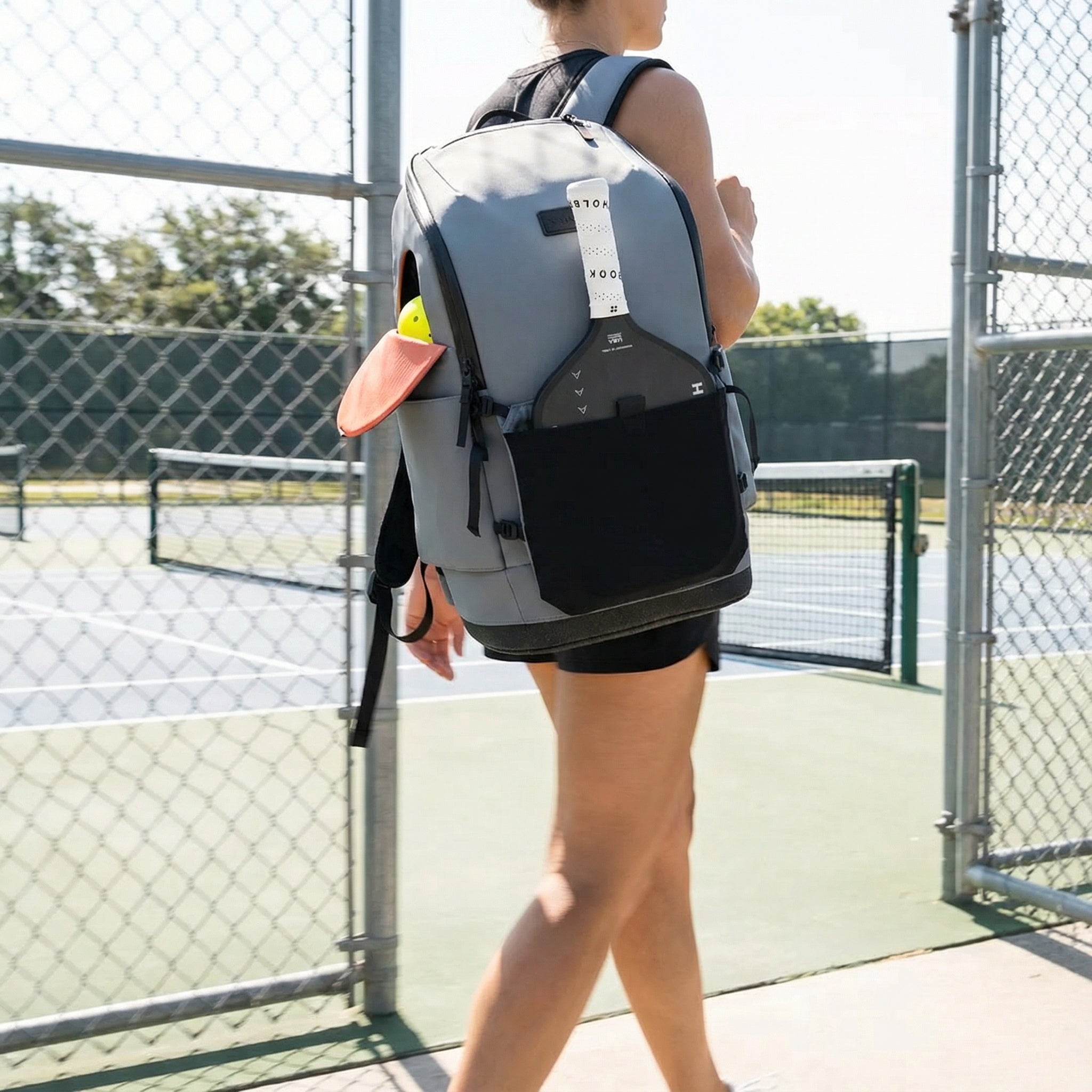
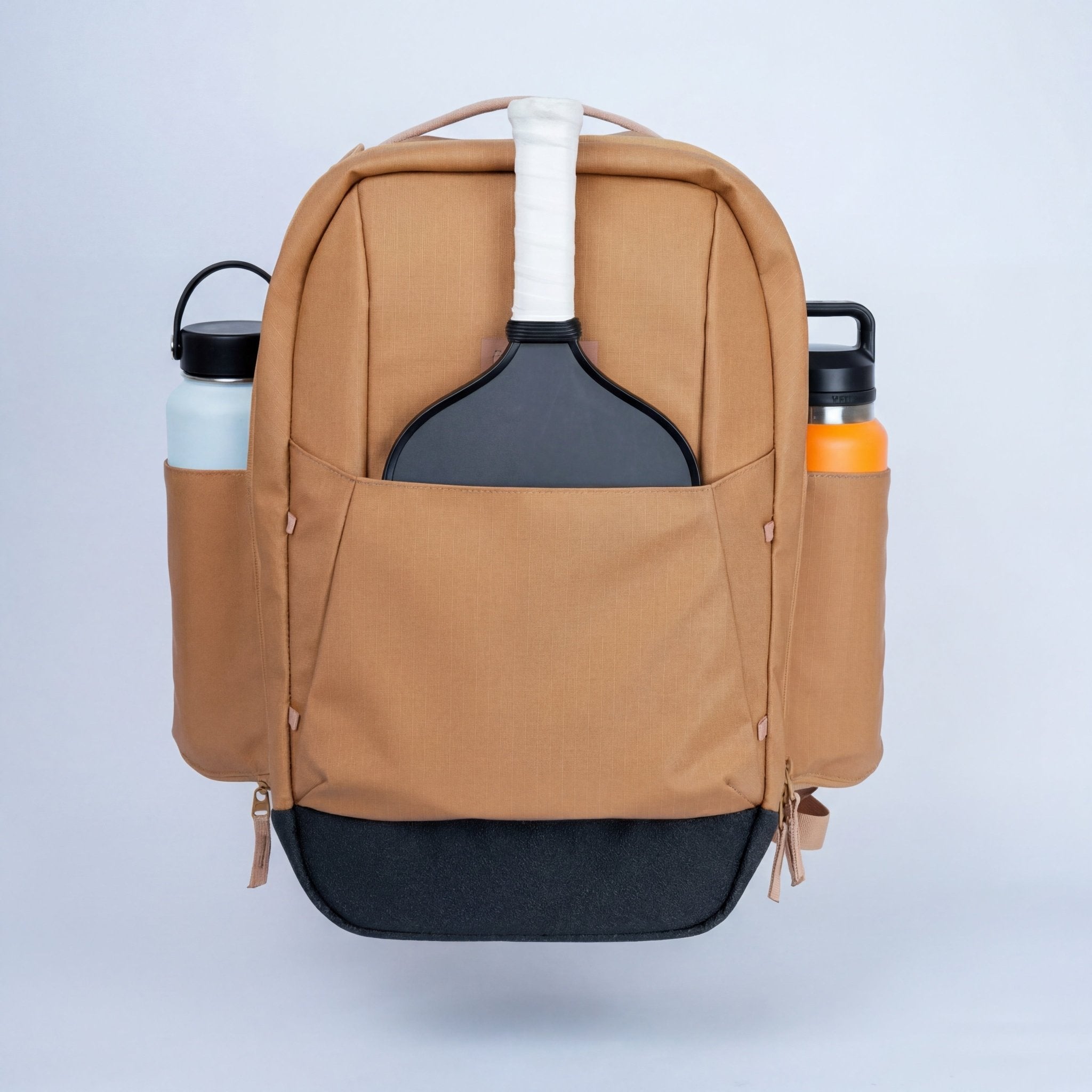
The Court Ranger V2 ($195) sits in this mid-weight tier — designed from the start to be the lightest bag in its durability category. YKK AquaGuard zippers, a 16" laptop sleeve, modular paddle sleeve, and a lifetime warranty. Not sub-1.5 lbs, but for players who play 2-4 times per week and need gear that survives years of use, the weight-to-features ratio is better than anything in the ultralight category. Compare it directly in the table above.
If sub-$60 is your budget, see our guide to the best pickleball bags under $50 — a separate category from lightweight optimization, but with useful overlap for players who want both budget and minimal weight.
Packing Smart in a Smaller Bag
Going lightweight works better with the right packing approach.
Dedicated paddle case. A rigid or semi-rigid paddle case (separate from your bag) protects your paddles and lets you pack more flexibly. Tote bags without structured paddle compartments benefit most from this — keep the bag light, protect the paddles separately.
One paddle, not two. Most ultralight bag players carry one paddle. You're optimizing for minimal carry — that mindset usually extends to what goes in the bag. Reserve the second paddle for tournament days, where you'll likely use a heavier, better-organized bag anyway.
Roll clothing. Rolling a change of clothes saves meaningful volume in a compact bag. Volume matters more than weight savings here — a crammed lightweight bag is worse than a roomy one.
Mesh shoe bag. A separate lightweight mesh bag for court shoes keeps your main compartment cleaner and adds maybe 1-2 oz. Worth it for the organization alone.
FAQ: Lightweight Pickleball Bags
Is a pickleball backpack under 1.5 lbs actually realistic?
Yes, but mostly in sling and tote designs. True dual-strap backpacks with any meaningful structure typically land in the 1.3-1.8 lb range. Slings and totes can get to 0.8-1.2 lbs. Verify actual weights on current PBC listings — manufacturer specs occasionally run optimistic.
Does a lightweight bag hold paddles securely?
Depends on the design. Sling bags with a dedicated paddle sleeve hold 2-3 paddles securely. Tote bags and single-compartment designs let paddles shift during carry. If you're hauling a $300+ paddle, a lightweight bag without a padded compartment introduces real risk on bumpy commutes or crowded transit.
How long do ultralight pickleball bags last?
Realistically, 12-24 months at 3+ sessions per week. The consistent failure points are zipper fatigue (usually 7-18 months on standard coil zippers), strap stitching at attachment points, and shell abrasion from court bench contact. Mid-range lightweight bags (not bottom-tier) tend to push this toward the 24-month end.
Is paying more for a lighter bag worth it?
Rarely within the ultralight category itself. A $120 ultralight bag isn't meaningfully more durable than a $45 one — both use thin-fabric construction. If you're spending more, make sure you're getting at least 4+ oz of real weight reduction plus better hardware, not just a brand premium on a comparably light bag.
What's the lightest complete pickleball bag setup?
A lightweight tote or sling plus a separate rigid paddle case. The tote stays under 1 lb, the rigid case protects paddles, and total empty weight stays under 1.5 lbs while giving paddles better protection than any all-in-one lightweight backpack. It's a two-piece system — but for players who've really optimized for weight, it's the answer.
Ready to find your weight match? Browse lightweight pickleball bags on Pickleball Central — compare current weights, prices, and available styles across their full catalog.

Leave a comment
This site is protected by hCaptcha and the hCaptcha Privacy Policy and Terms of Service apply.