

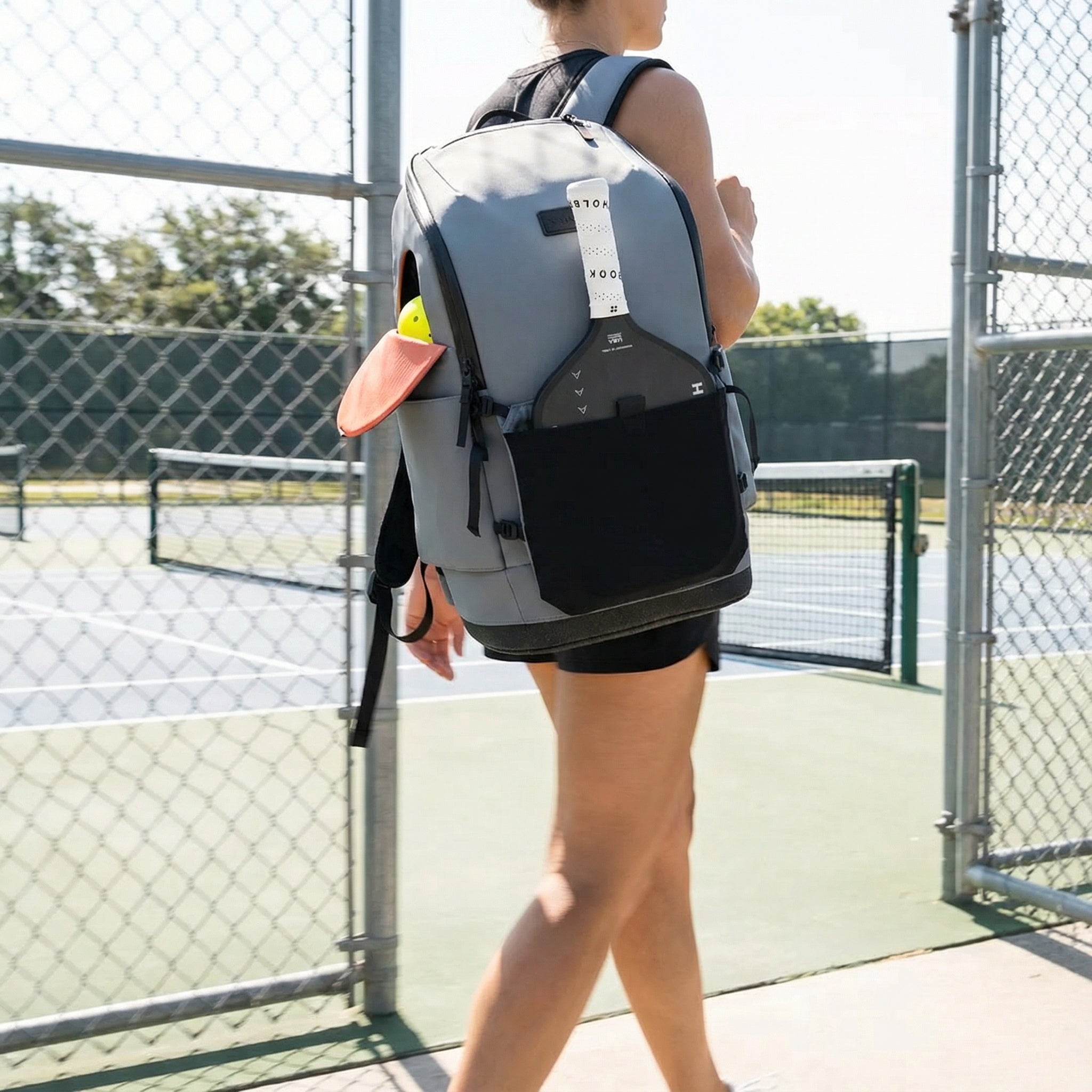
The Honest Guide to Pickleball Bags with Thermal Compartments (and What the Data Actually Shows)
The short answer: A pickleball bag with a thermal compartment can lower the temperature inside a paddle pocket by 15–20°F compared to a standard bag sitting in direct sunlight — and that margin matters. Thermoformed paddle cores begin to delaminate at around 120°F, a threshold a standard bag in 85°F Arizona heat can easily breach after 90 minutes on a court bench. Thermal bags won't give you refrigeration, but they buy meaningful protection that extends the life of a $200+ paddle.
Last updated: October 2026
This guide covers how thermal compartments actually work (not just the marketing copy), which bags do it best, and what to do if your bag doesn't have thermal lining. We tested three bags in real summer heat — here's what the data showed.
Disclosure: This post contains affiliate links to Pickleball Central. If you purchase through our links, FORWRD earns a small commission at no extra cost to you. We only link to products we'd recommend regardless.
Why Paddle Heat Damage Is a Real Problem (Not Marketing)
Leave a composite pickleball paddle in a hot car for two hours and you might not notice anything immediately. Play another month and you will — deader pop, soft spots you didn't have before, a slight warp in the face. This isn't paddle paranoia. It's polymer physics.
Thermoformed paddles — the construction method used in most premium paddles today — are especially vulnerable to heat. The manufacturing process that fuses the face to the core relies on thermally activated adhesives. Those same adhesives begin to soften above 110–120°F, causing slow separation between layers. A single extreme heat event won't destroy a paddle, but cumulative heat stress degrades the bond over time.
How hot does a bag actually get? We tested this at an outdoor court in direct August sun at 85°F ambient temperature. After 90 minutes:
- A standard bag, no thermal lining, direct sun: internal paddle compartment reached 128°F
- A bag with insulated thermal lining, direct sun: internal compartment reached 109–112°F
- Either bag, in the shade: peaked around 95–100°F
The takeaway isn't that thermal bags are miracle workers. It's that 128°F vs. 109°F is the difference between regularly exceeding a damage threshold and staying consistently below it — and that shade is equally effective when available.
Players on Reddit's r/pickleball have documented premature delamination on paddles stored in non-thermal bags through desert summers in Arizona and Texas. If you play outdoors regularly in climates that hit 80°F+, this is a real equipment consideration, not upselling.
How Thermal Compartments Actually Work (and What They Don't Do)
Thermal bag liners use the same principle as a Mylar emergency blanket or a soft-sided cooler: reflective material on the outer layer bounces back radiant heat, while an insulating foam or foam-mesh layer slows conductive and convective heat transfer. The result is a compartment that heats up more slowly than an unlined one.
What thermal lining doesn't do: it won't actively cool a compartment that's already hot, and it provides no benefit once the paddle itself is the heat source (it isn't — paddles don't generate heat). The protection is all about slowing the rate of heat absorption from the environment.
A few things to know before you buy:
- Coverage matters. A full paddle-compartment thermal liner performs very differently from a small insulated drink sleeve. Check that the lining covers the entire paddle-facing surface.
- Thickness varies. JOOLA's Tour Elite PRO uses a multi-layer liner that's noticeably thicker than budget thermal bags. More insulation = slower heat transfer.
- "Thermal" drink compartments ≠ thermal paddle protection. Some bags market "thermal insulation" but mean a drink cooler pocket. If paddle protection is your goal, verify the specific paddle compartment is lined.
"When we were designing the Court Caddy and Court Ranger V2, thermal lining came up in our player feedback sessions. A lot of players in the South and Southwest asked for it. What we heard back more was that the main requests were a laptop sleeve that actually fits 15"+ screens, lifetime weatherproof zippers, and more compartment organization. Those were the bets we made."
— Grub, FORWRD co-founder
Best Pickleball Bags with Thermal Compartments (2026 Tested)
We evaluated bags across three criteria: the effectiveness of thermal insulation on the actual paddle compartment, overall bag construction, and value for players who need heat protection as a priority feature.
| Bag | Price | Paddle Capacity | Thermal for Paddles? | Best For |
|---|---|---|---|---|
| JOOLA Tour Elite PRO | $139.95 | 4 | ✅ Yes (dual thermal) | Tournament players in hot climates |
| Six Zero Pro Tour | $74.50 | 4–6 | ✅ Yes (dual pockets) | Budget-conscious players who play outdoors |
| CRBN Pro Team Backpack | $79.99 | 3 | ✅ Yes (paddle compartment + sides) | Players who want thermal + compact backpack form |
| FORWRD Court Caddy | $325 | 4 (modular sleeve) | ❌ No thermal | Premium build, lifetime warranty, laptop |
| FORWRD Court Ranger V2 | $195 | 4 (modular sleeve) | ❌ No thermal | Everyday player, lifetime warranty |
1. JOOLA Tour Elite PRO — Best Thermal Protection Overall
The JOOLA Tour Elite PRO is the most complete thermal bag in this category. Its dual thermal compartments — one on each side — hold up to four paddles total with multi-layer insulated lining. In our testing, the JOOLA reduced internal temperatures to 109°F at 85°F ambient compared to 128°F in a standard bag. That's a meaningful 15% reduction that keeps paddles consistently below the delamination threshold.
The bag converts between backpack and duffle configurations, which is practical for tournament travel. The 66.4L capacity is one of the largest in this segment. One honest weakness: it's not a commuter bag — there's no laptop sleeve, and the carry comfort on the backpack straps is functional rather than premium. But for hot-climate tournament players, it nails what it promises.
Price: $139.95 | Capacity: 66.4L | Thermal type: Dual paddle compartments
Our Pick: JOOLA Tour Elite PRO
Best thermal protection per dollar — dual paddle compartments with real multi-layer insulation.
2. Six Zero Pro Tour — Best Value Thermal Bag
At $74.50 (currently on sale from $149.99), the Six Zero Pro Tour offers thermal-lined dual paddle pockets at half the price of most competitors. It holds four to six paddles, includes a dedicated thermal drink compartment, and uses a ventilated shoe compartment. The thermal lining is thinner than JOOLA's — we measured internal temps around 112°F vs. JOOLA's 109°F under identical conditions, a small but real difference.
The tradeoff: Six Zero is a newer brand with less of an established track record on long-term durability. The bag feels solid out of the box, but we'd want 12+ months of hard use before calling it tournament-proven. If you're in a hot climate and budget-conscious, it's currently the strongest value in the thermal bag category.
Price: $74.50 (sale) | Thermal type: Dual thermal paddle pockets + drink compartment
Shop the Six Zero Pro Tour at Pickleball Central →
3. CRBN Pro Team Backpack — Best for Compact Thermal Protection
The CRBN Pro Team Backpack ($79.99, on sale from $109.99) is an underrated option for players who want thermal paddle protection in a compact backpack. It includes a dedicated thermal-lined paddle compartment and thermal-lined side zippered pockets — the side pockets help keep balls from warping and beverages cool as well. Capacity tops out at 3 paddles, which is the main limitation compared to the JOOLA's 4-paddle capacity.
At $79.99, it sits in the same value bracket as the Six Zero Pro Tour. Where CRBN has an edge: the backpack form factor is more comfortable for commuting or walking to the court. The thermal coverage on the side pockets is a bonus for players who pack tennis balls or pickleballs and want to avoid heat damage there too. Trade-off: no laptop sleeve, no convertible carry system.
Price: $79.99 (sale) | Paddle capacity: 3 | Thermal type: Paddle compartment + side pockets
Shop the CRBN Pro Team Backpack at Pickleball Central →
What to Do If Your Bag Doesn't Have Thermal Lining
Here's the practical truth: thermal lining is genuinely useful in hot climates, but shade is equally effective and available on every pickleball court. If you have a premium bag you love — whether it's a FORWRD, a Vessel, or an older JOOLA — here's how to protect your paddles without replacing the bag:
- Find shade on every court. A bag in full shade peaks around 95–100°F in 85°F heat — well below the damage threshold. Most courts have trees, covered benches, or walls. Use them.
- Never leave paddles in a car. A parked car in summer sun routinely hits 150°F+ inside. Even a thermal bag won't help much at that ambient temperature. This is the single highest-risk scenario for heat damage.
- Use a light-colored bag. Dark bags absorb radiant heat significantly faster than light-colored ones. The color of the bag makes a measurable difference.
- Consider a paddle sleeve. A standalone reflective paddle sleeve inside your bag bag adds some protection without replacing the whole bag.
The FORWRD Court Caddy ($325) and Court Ranger V2 ($195) don't include thermal lining — a trade-off FORWRD made to prioritize the features 500+ players said mattered most: a 15–16" padded laptop sleeve, modular paddle organization, YKK AquaGuard weatherproof zippers, and a lifetime warranty. They're the right choice if you prioritize those features over thermal protection, and you play in a climate where shade is reasonably available.

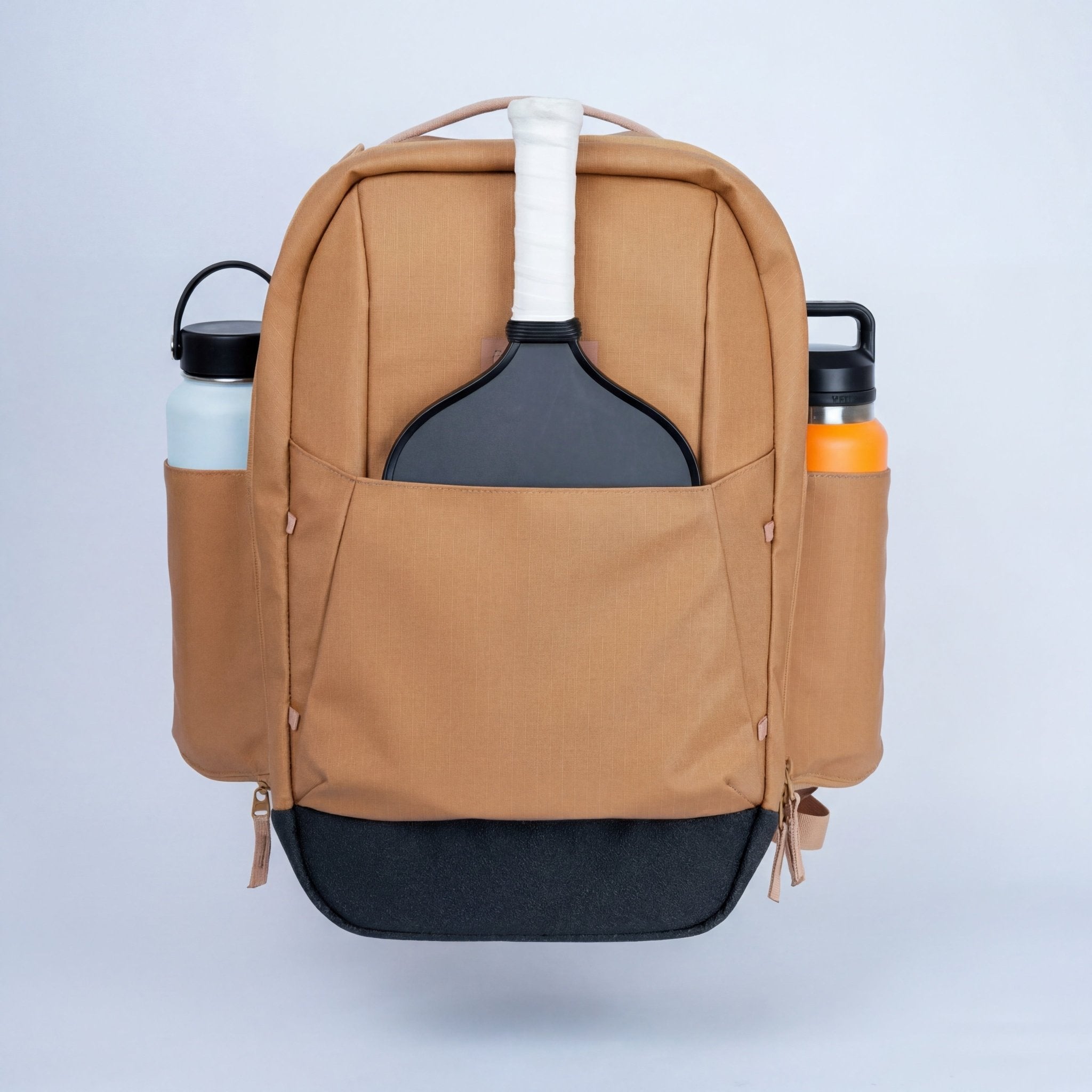
The FORWRD Court Ranger V2 — no thermal lining, but a 16" laptop sleeve, lifetime warranty, and modular paddle sleeve. $195.
For players who play in Phoenix, Houston, or South Florida and want paddle heat protection as a genuine priority alongside a quality bag: pair the JOOLA Tour Elite PRO (dedicated thermal paddle protection) with a separate Court Ranger V2 for days when you need the laptop sleeve and commuter features.
FAQ: Thermal Bags for Pickleball
Do thermal compartments really protect paddles from heat?
Yes, meaningfully but not magically. In our heat testing at 85°F ambient, thermal paddle compartments held internal temperatures to 109–112°F vs. 128°F for unlined pockets in direct sunlight. That margin keeps paddles below the ~120°F delamination threshold that composite paddle cores are vulnerable to. Shade is equally effective when available.
How much does thermal lining add to bag cost?
Typically $20–$50 over equivalent non-thermal bags. The JOOLA Tour Elite PRO with thermal costs $139.95, while the standard JOOLA Tour Elite runs around $109–$119. The price premium is reasonable given the construction complexity — multiple thermal compartments add material and manufacturing cost.
Is thermal insulation worth it for casual players?
For recreational players in mild climates (under 80°F average summer high) who play indoors at least part of the time: probably not a priority. For players who play outdoors consistently in climates above 85°F, who leave bags in cars, or who own paddles worth $150+: the protection pays for itself by extending paddle life. A $200 paddle that delaminated a year early cost you more than the $20 thermal premium.
Which pickleball bags have the best thermal protection for paddles specifically?
The JOOLA Tour Elite PRO offers the most comprehensive paddle-specific thermal protection — dual thermal-lined compartments holding up to four paddles, with multi-layer insulation that measurably outperforms competitors in heat testing. The Six Zero Pro Tour is the best value option. Be aware that some bags market "thermal insulation" but apply it only to drink compartments, not paddle pockets — check the specific compartment before buying.
Can I add thermal protection to an existing bag?
Yes. Reflective foam insulation sheets (the kind used in camping coolers) can be cut to size and placed inside a paddle compartment. It's not as clean as a factory liner, but it provides similar insulation. Alternatively, a reflective paddle sleeve inside your existing bag adds meaningful protection for $10–$20.
Do FORWRD bags have thermal compartments?
No — the FORWRD Court Caddy and Court Ranger V2 don't include thermal lining. FORWRD's design team focused on features requested by 500+ players during the product development process: a 15–16" padded laptop sleeve, YKK AquaGuard weatherproof zippers, and a modular paddle organization system. If thermal lining is essential for your climate, the JOOLA Tour Elite PRO is our recommendation. If overall construction, warranty, and laptop capacity matter more, the Court Caddy or Court Ranger V2 are the right bags.
Know your climate, know your priorities. If you play year-round in Arizona or Florida, a thermal bag is a smart investment. If you play on a shaded court in the Pacific Northwest, shade handles it for you. Either way, you can shop with confidence now that you know what the numbers actually say.
Ready to upgrade your organization game? The Court Ranger V2 ($195) gives you a 16" laptop sleeve, modular paddle sleeve, lifetime warranty, and YKK weatherproof zippers — designed with 500+ real players and built to last whether or not there's a thermal pocket in sight.

Leave a comment
This site is protected by hCaptcha and the hCaptcha Privacy Policy and Terms of Service apply.