

Disclosure: This post contains affiliate links to Pickleball Central. If you purchase through our links, FORWRD earns a small commission at no extra cost to you. We only link to products we'd recommend regardless.
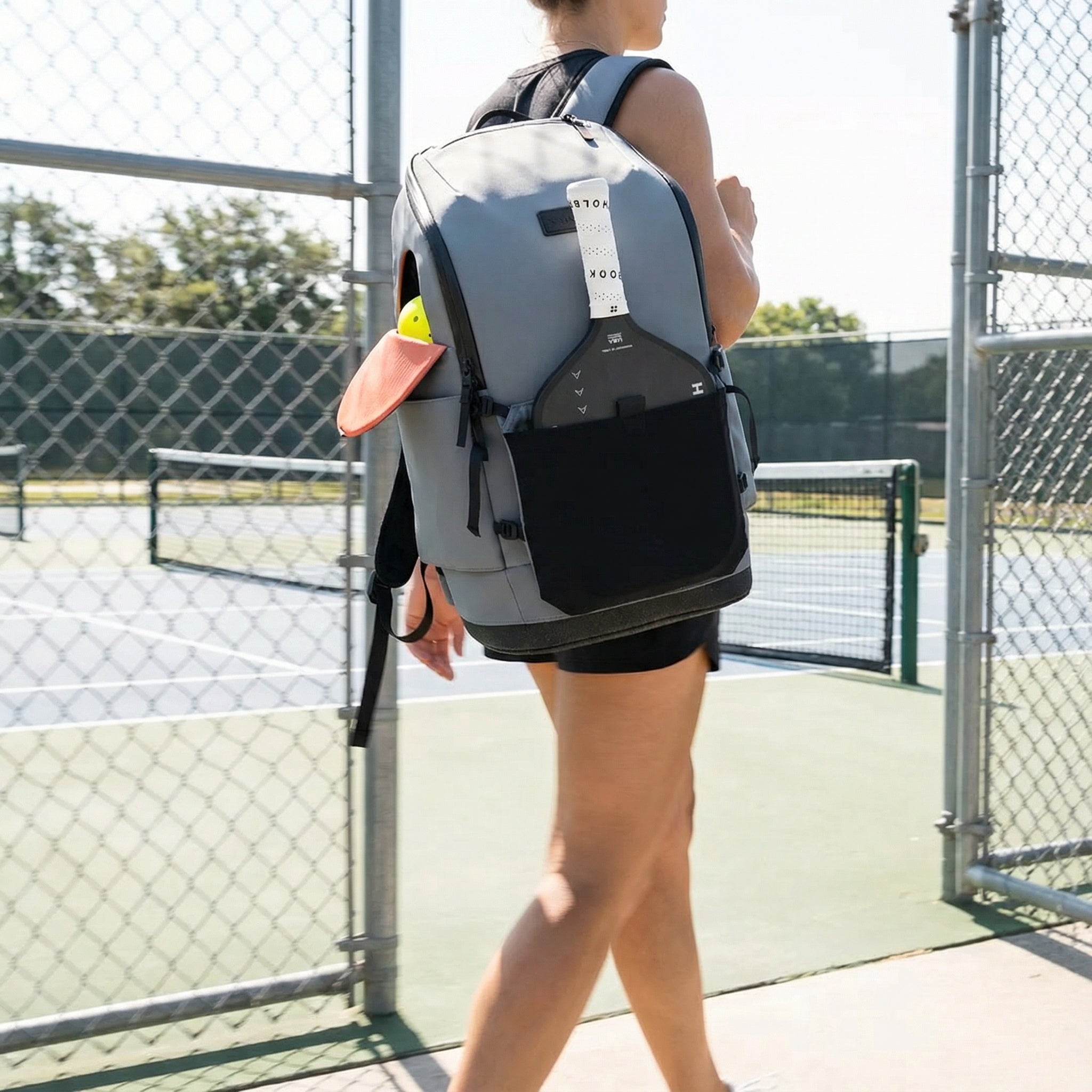
The Selkirk Core Line Tour Bag and Pro Line Tour Bag share the same exact dimensions — 14" × 11" × 20.5", same thermal pouch, same 15" laptop sleeve, same fence clip. What changes between them is less obvious from the product page: materials, internal organization, and — the part that actually drives long-term value — warranty coverage. The Core ($130) is a solid bag until it isn't. The Pro ($150–$200, currently on sale) is built to hold up longer, and Selkirk will back it with a limited lifetime warranty. Here's the honest breakdown of what that upgrade buys and when it makes sense.
Last updated: September 2026
The Price Gap: What $130 vs. $200 Actually Looks Like
Right now the Pro Line Tour Bag is on sale at $150 — which makes the Core vs. Pro decision feel almost irrelevant on price alone. But Selkirk's regular price for the Pro is $200, and it'll return there. At the regular $70 difference, the question changes. So let's evaluate both scenarios: the $20 gap you might see today and the $70 gap you'll see most of the time.
At $20 apart: buy the Pro. There's no version of this where the materials downgrade and warranty gap is worth $20 in savings. At $70 apart: it depends — on how often you play, how hard you are on gear, and whether you play outdoors in heat or wet conditions. That's what the rest of this comparison answers.
A note on what you're not comparing here: the Pro Line 2.0 Tour Backpack ($200+, 35L, 4 magnetic paddle sleeves) is a different product from the Pro Line Tour Bag. The 2.0 is a separate model. If you're seeing the 4-paddle CourtAccess™ system in reviews, that's the 2.0 — not this bag. Keep them straight.
Materials & Build Quality
Selkirk uses two different fabric systems across these bags. The Core runs on +V11 Max Polyfiber Performance material — a lightweight construction that's genuinely durable for regular recreational use. It handles abrasion on metal court benches and chain-link fences reasonably well. What it doesn't handle as reliably is sustained outdoor wear over multiple seasons.
The Pro uses V-MAX Woven Performance material, which is higher density and more structured. You notice it immediately — the bag holds its shape better, especially the main compartment. V-MAX is noticeably more abrasion-resistant on court surfaces, which matters if you're dragging the bag across concrete or gravel parking lots (and you are, you just don't think about it).
Both bags use the same overall zipper system, though the Pro features upgraded zipper pulls. The Core's pulls are functional — nothing embarrassing — but the Pro's feel more substantial in the hand. After 6-8 months of daily use, zipper pull wear is where budget bags typically start showing their age first.
"The material upgrade from Core to Pro is real — not marketing language. V-MAX is closer to what you'd expect from a tournament bag in the $200+ tier. Whether that matters to you depends entirely on how often you're dragging this bag across asphalt and concrete."
— Grub, FORWRD co-founder
Both bags weigh in around 3 lbs — verified from Selkirk's specs on the Pro. Core weight isn't officially published, but it tracks close based on construction.
Organization & Paddle Storage
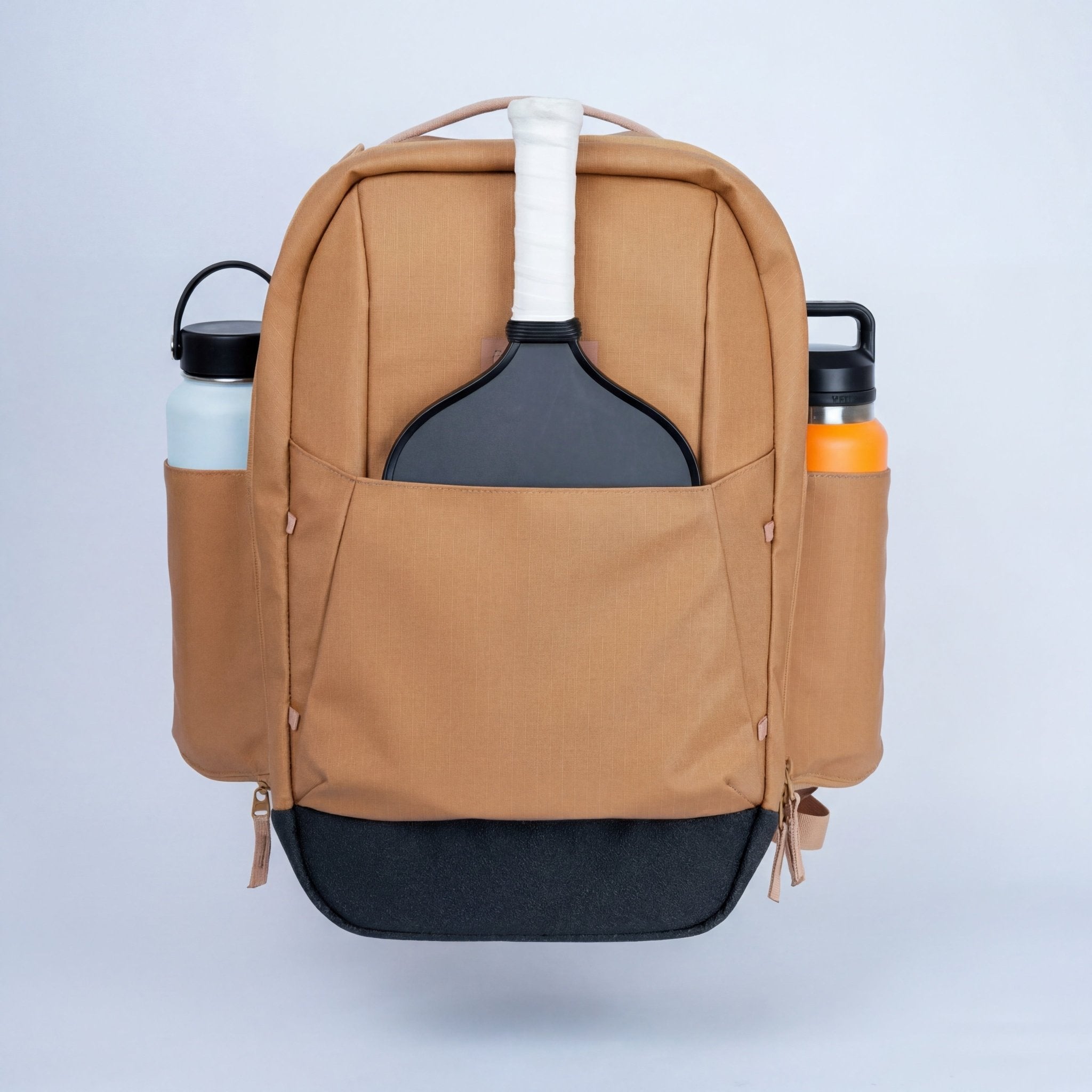
This is where the two bags diverge most noticeably in day-to-day use. Both hold 2 paddles in a dedicated sleeve — identical here. Both have a main compartment, shoe section, front pocket, mesh sides, and an EVA top with a cellphone slot. So far, so similar.
What's different: the Pro has five internal zipper pockets inside the main compartment. The Core takes a "bucket" approach — one large open main section where your gear sits together. If you're the type who just shoves everything in and goes, the Core works fine. If you travel to tournaments and want your grip tape in a different pocket from your extra balls from your phone charger, the Pro's organizational system matters.
Neither bag handles more than 2 paddles in the dedicated sleeve. If you carry 3 or 4 paddles regularly, you're looking at the Pro Line 2.0 or a different bag altogether — our full Selkirk Core review covers this limitation in detail.
Thermal Protection & Paddle Care
Both bags include an insulated thermal food and drink pouch. Same feature, same placement. Neither bag has dedicated paddle face thermal protection — if you're parking your bag in a hot car trunk and want your carbon fiber paddle face protected from heat delamination, neither the Core nor the Pro solves that at this level. You'd want a bag with a dedicated thermally lined paddle compartment.
The thermal pouch on both works fine for a water bottle and a snack. Don't expect it to hold temperature through a 3-hour tournament session in 90°F heat. It buys you maybe 45-60 minutes of meaningful cold retention — useful, not a replacement for a proper cooler bag.
Real-world player feedback on this: the thermal pouch keeps drinks cool through warm-up and the first couple of games. After that, you're on your own. Both bags perform identically here — neither wins this category.
Comfort & Carrying
The Pro adds upgraded EVA back padding and an improved shoulder strap system. The Core's back panel is padded but less structured. Over a 30-minute car-to-court walk, the difference is subtle. Over a full tournament day — 6-8 hours on and off your back — it accumulates.
The Pro's new strap system distributes weight slightly better across the shoulders. For players carrying a full tournament kit (2 paddles, shoes, water bottles, snacks, extra layers), the Pro's strap upgrade is noticeable. For a casual Tuesday night drop-in where you're carrying 2 paddles and a water bottle, both bags feel about the same.
Both include a padded top grab handle and a fence clip. Identical carry features aside from the strap system difference.

Warranty & Support — Where Pro Actually Wins
This is the real comparison. The Core has Selkirk's standard return policy — 30 days on unused items, no stated long-term coverage. The Pro carries a limited lifetime warranty.
Here's what that means in practical terms. If you play 3 sessions per week, you're putting roughly 150 sessions on this bag per year. By year 2, that's 300 sessions. Zipper wear, seam stress, and strap padding compression are real by 12-18 months of heavy use. The Core offers no coverage when those issues show up. The Pro's lifetime warranty means Selkirk is on the hook for defect-related failures — not normal wear, but structural failures — for as long as you own the bag.
At $130 vs. $200 regular price: the warranty calculation becomes clear. If you replace a Core bag every 2 years at $130, that's $65/year. If the Pro's lifetime warranty extends its useful life to 4 years at $200, that's $50/year — and you've carried a better-built bag the whole time. The upgrade pays for itself in durability alone for players logging serious court time.
For casual players who play once a week, the warranty math flips. A Core bag at twice-weekly casual play might last 5+ years without issues. The warranty premium doesn't earn itself back as quickly.
Side-by-Side Comparison
| Feature | Core Line Tour ($130) | Pro Line Tour ($150–$200) |
|---|---|---|
| Dimensions | 14" × 11" × 20.5" | 14" × 11" × 20.5" |
| Volume | Not published | 30L (1,830 cu in) |
| Material | +V11 Max Polyfiber | V-MAX Woven Performance |
| Paddle capacity | 2 paddles | 2 paddles |
| Laptop sleeve | 15" protected sleeve | 15" protected sleeve |
| Internal pockets | Bucket-style main compartment | 5 zipper pockets inside main |
| Thermal pouch | Yes | Yes |
| Shoe compartment | Ventilated | Ventilated |
| Warranty | 30-day return only | Limited lifetime warranty |
| Rating | 4.8/5 (278 reviews) | N/A published |
| Best for | Casual play, 1–2×/week | Competitive play, 3+×/week |
Browse Selkirk Core and Pro bags at Pickleball Central — availability varies by season.
Real-World Use Cases: Who Should Buy Each
Buy the Core if: you play 1-2 times per week in casual rec or league settings, you prioritize lower upfront cost, and you don't need multi-compartment organization. The Core has 278 reviews at 4.8 stars for a reason — it works well for its intended audience.
Buy the Pro if: you play 3+ times a week, compete in tournaments (even occasionally), or play outdoors where bag surfaces take abuse. The warranty is the primary argument. The organization upgrade is secondary but real. At the current sale price of $150, the Pro is simply the better value. At full price of $200, it's still worth it for serious players — you just need to do the usage math honestly.
One scenario where Core doesn't make sense even for casual players: if you carry a laptop to the courts regularly. The Core's 15" sleeve works, but it's not padded as robustly as the Pro's. For players commuting court-to-office, the Pro's sleeve protection is worth the upgrade regardless of play frequency.
When You Need More Than Either Selkirk
Both the Core and Pro share two limitations that serious tournament players hit quickly: 2-paddle max capacity and a 15" laptop sleeve that's not weatherproofed. If you carry 3-4 paddles, or you're playing in any wet conditions and need your laptop protected, you've outgrown both bags.
Next Tier Up: FORWRD Court Ranger V2
16" laptop sleeve (bigger than Selkirk's 15"), YKK AquaGuard weatherproof zippers — the spec Selkirk doesn't match at any tier — and FORWRD's lifetime warranty. $195.
The Court Ranger V2 sits $45 above Selkirk's Pro at regular price — and delivers the zipper upgrade Selkirk's V-MAX material doesn't include. YKK AquaGuard zippers are a specific, verifiable spec difference: they're designed to shed water, resist grit, and outlast standard zipper systems by a significant margin. How FORWRD's build compares to other premium brands gets into the detail on that.
For players ready to invest in a bag they won't replace for 5+ years, the Court Caddy ($325) carries 4 paddles in its modular sleeve system, adds the same YKK weatherproofing, and was designed with direct input from 500+ real players across skill levels. It's a different category from either Selkirk bag — more organization, more capacity, more protection.
Common Questions About the Selkirk Core vs Pro Tour Bag
Is the Selkirk Pro Line Tour Bag worth $70 more than the Core?
At the regular $70 price difference: yes, for players logging 3+ sessions per week. The V-MAX material, 5 internal pocket organization, and limited lifetime warranty add genuine value over time. For once-a-week casual players, the Core's value proposition holds. At the current sale price ($20 difference), the Pro is an easy call for anyone.
Do both bags hold the same number of paddles?
Yes — both the Core and Pro Line Tour Bags hold 2 paddles in a dedicated sleeve. Neither holds 3 or 4. The 4-paddle magnetic sleeve version is the Pro Line 2.0 Tour Backpack, which is a separate product at a higher price point.
Does the Selkirk Core Tour Bag have a warranty?
Selkirk publishes a 30-day free return window for unused items on the Core. No long-term structural warranty is listed for the Core Line bags. The Pro Line Tour Bag carries Selkirk's limited lifetime warranty — a significant difference for players expecting multi-year ownership.
How does Selkirk Pro Line thermal lining compare to premium bags?
The insulated food and drink pouch on the Pro works for short-duration temperature retention — roughly 45-60 minutes. It's not designed for paddle face thermal protection or extended outdoor heat exposure. Bags with dedicated paddle compartment thermal lining (a different spec entirely) provide more meaningful heat protection for carbon fiber paddle faces.
Which Selkirk tour bag should a beginner buy?
The Core at $130 is the right entry point for beginners playing casually. If you're not sure whether pickleball will stick, don't spend $200 on a bag. Buy the Core, play for 6 months, and upgrade when you know your play frequency and organizational needs better.
Are these bags available on Pickleball Central?
Availability fluctuates — search Pickleball Central for current Selkirk bag inventory. Both bags are available directly through Selkirk's website year-round.
Verdict: Core or Pro?
If the Pro is on sale at $150 or close to it: buy the Pro. The $20 premium for V-MAX material, 5 internal pockets, and a lifetime warranty is a simple decision.
At the regular $70 gap — Core at $130, Pro at $200 — here's the honest decision tree:
- 1–2×/week, casual play, budget-conscious: Core. It works well, the community loves it (278 reviews at 4.8 stars), and the savings are real for lighter users.
- 3+×/week, competitive play, outdoor exposure: Pro. The warranty alone makes the math work. The material upgrade is a bonus.
- Tournament player who carries a laptop: Seriously consider stepping above both Selkirk options. The Court Ranger V2 at $195 beats both on weatherproofing, laptop sleeve size (16" vs. 15"), and zipper quality — for $45 above Selkirk's Pro regular price.
Neither bag is the wrong choice. Selkirk makes quality gear at both tiers. The Core is priced and built for recreational players; the Pro is priced and built for competitive ones. Know which one you are, and the decision is clear.
Ready to step up from either? See the Court Ranger V2 — designed with 500+ real players and built to last across seasons.

Leave a comment
This site is protected by hCaptcha and the hCaptcha Privacy Policy and Terms of Service apply.