

Disclosure: This post contains affiliate links to Pickleball Central. If you purchase through our links, FORWRD earns a small commission at no extra cost to you. We only link to products we'd recommend regardless.
Last Updated: September 2026
The Avoura Rhapsody 13 at $123.75 is a legitimately unusual paddle — widebody shape, gel-infused perimeter core, made in the USA, and ships with a ball, overgrip, and weighted tape. For a control-focused paddle at this price, that's a lot of engineering. Whether it translates to an actual better court experience than a more established $150 control paddle is the question this review answers.
Quick Verdict: Avoura Rhapsody 13
Pros
- Patented widebody shape positions maximum width at the sweet spot
- Gel infusion adds perimeter mass — surprisingly stable on off-center shots
- Toray raw carbon fiber face delivers real spin at sub-$130
- Made in the USA (genuine manufacturing differentiator)
- Ships complete: ball, overgrip, and weighted tape included
- Lightning-fast hand speed from 15.5" length + widebody geometry
Cons
- 15.5" length sacrifices reach on wide balls vs. elongated paddles
- New brand — limited community feedback and long-term data
- 13.5mm core is thinner than 16mm alternatives — more pop, less control ceiling
- Small grip size isn't ideal for large-handed players
Price: $123.75
Core: 13.5mm gel-infused PP honeycomb
Who it's for: 3.0–4.5 players wanting control + fast hands at the kitchen
Skip if: You need elongated reach, large grip size, or prefer a thicker 16mm core
Avoura Rhapsody 13 Specs
| Spec | Detail |
|---|---|
| Price | $123.75 |
| Core | 13.5mm gel-reinforced polypropylene honeycomb |
| Face | Toray raw carbon fiber |
| Shape | Widebody — 8.37" at widest (centered at sweet spot) |
| Length | 15.5" |
| Handle | 5.25" (patented design) |
| Weight Class | Middleweight / Small Grip |
| Origin | Made in USA |
| Includes | Ball, overgrip, weighted tape |
Buy the Avoura Rhapsody 13 at Pickleball Central →
Why This Paddle Caught Our Attention
FORWRD reviews gear because our customers ask us what to carry in the bags we make. The Avoura Rhapsody 13 showed up on our radar for one specific reason: it's a made-in-USA widebody paddle with genuine material specs at a price where most of the competition is imported cold-pressed fiberglass. That's a meaningful claim if it holds up. So we tested it.
Testing: 12 sessions over 3.5 weeks on indoor wood gym court (Tuesday/Thursday club play) and outdoor concrete courts (weekend). Direct comparisons against the Six Zero Double Black Diamond Control 16mm ($153) and ProKennex Black Ace 16 ($279). We tracked dink consistency at the NVZ, reset success rates, and kitchen hand speed across the test window.
The Shape Innovation: Why Width at the Sweet Spot Matters
Most widebody paddles are widest somewhere near the top third of the paddle face. Avoura's patented design positions the 8.37" maximum width at the center of the paddle — which is also where the sweet spot lives. It sounds obvious in retrospect, but it's actually rare in paddle engineering because it requires an unusual teardrop-like geometry that changes the paddle's swing dynamics.
The real-world result: you can hit clean shots on contact points that would be partial misses on a conventional widebody. After about a week with the Rhapsody 13, I was recovering situations at the kitchen line that typically would've gone into the net — lateral-movement dinks where I got the paddle to the ball but didn't quite center it. The sweet spot's position means the forgiving zone is exactly where you need it most.
The trade-off is reach. At 15.5" with a 5.25" handle, this is a short paddle. Wide shots — the ones where you're fully extended — are harder than with a 16.5" elongated design. If you play with a lot of arm extension, you'll feel this limitation.
Performance Testing
Kitchen Game and Dink Consistency
The Rhapsody 13 is built for the kitchen. Short paddle, wide face, 13.5mm core — all of these point toward fast hand exchanges and dink-first play. And it delivers: hand speed at the NVZ with this paddle is noticeably better than with longer, heavier options. Getting paddle position on fast hands exchanges felt less panicked because the paddle gets to the contact point faster.
The 13.5mm core is the interesting piece. It's thinner than the 16mm paddles dominating the current market — which means a livelier feel and more pop on dinks than 16mm control paddles. Players expecting a true "dead" control paddle will be surprised. The Rhapsody 13 is fast, not soft. You need to be deliberate about slowing your hands down on resets — it doesn't do that work for you.
The Gel Infusion: Stability Beyond the Sweet Spot
Avoura's gel infusion process fills the perimeter of the core with a proprietary gel material that adds mass to the edges. The engineering goal: move weight outward from the center, increasing moment of inertia, which stabilizes the paddle face on off-center contact.
In practice, it works. Edge shots — the ones that should be let go but aren't — produce less paddle twist than you'd expect from a $124 paddle. Not as stable as a thermoformed paddle with a foam perimeter, but meaningfully better than a standard PP honeycomb at this price. The gel also seems to dampen some of the vibration that thin-core paddles can transmit, though this paddle isn't the choice for players with serious elbow issues.
Spin from Toray Raw Carbon
The raw carbon fiber face generates genuine topspin. Kick serves with heavy topspin curved reliably. Third-shot drop with topspin stayed low and made opponents work. Against my Six Zero Double Black Diamond (a dedicated control paddle with an excellent carbon surface), the Avoura felt slightly less consistent in the low-shot department — the Six Zero's 16mm core gives it a more predictable low-ball response. But the spin ceiling on the Avoura is comparable for serve and rally play.
Made in USA: Does It Matter?
For paddle performance, not really — plenty of excellent paddles are made overseas with tight QC. But made-in-USA manufacturing affects consistency at small scale. Avoura's domestic production means tighter tolerances on a paddle that involves a patented core geometry and a proprietary gel process. You're less likely to get a "bad unit" compared to brands with offshore volume manufacturing and less QC oversight. That's a subtle but real benefit.
Avoura Rhapsody 13 vs. Six Zero Double Black Diamond Control 16mm ($153)
This is the most direct comparison — both are control-focused carbon fiber paddles at similar prices, both have community credibility, and both are genuinely good at their intended use case.
| Attribute | Avoura Rhapsody 13 ($123.75) | Six Zero Double Black Diamond Control 16mm ($153) |
|---|---|---|
| Core thickness | 13.5mm (livelier) | 16mm (softer ceiling) |
| Shape | Widebody, 15.5" length | Standard shape, longer reach |
| Hand speed | Faster (shorter, lighter) | Standard |
| Reach on wide shots | Limited by short length | Better reach |
| Reset feel | Livelier — needs deliberate touch | More naturally muted |
| Brand track record | Emerging, USA-made | Established community following |
| Price | $123.75 | $153 |
Verdict: Six Zero wins on reset predictability, reach, and brand credibility. Avoura wins on hand speed, price, and sweet spot engineering. Players who prioritize kitchen exchanges and close-quarters speed will get more from the Rhapsody 13. Players who prioritize touch and measured control should go with the Double Black Diamond.
Compare: Six Zero Double Black Diamond at Pickleball Central →
Avoura Rhapsody 13 vs. ProKennex Black Ace 16 ($279.00)
Spending $155 more for the ProKennex Black Ace 16 buys you Kinetic technology — ProKennex's proprietary internal frame system with small beads that absorb vibration and reduce arm stress. It's genuinely effective for players with elbow or shoulder issues, and ProKennex has 40+ years of racket sport engineering behind it.
The Avoura can't match that arm-friendly reputation or that brand history. What it can do is give you faster hands at the kitchen for $155 less. If arm health is your concern, the ProKennex is the better investment. If you're healthy and want a more reactive, speed-first paddle, the Avoura saves you real money.
Compare: ProKennex Black Ace 16 at Pickleball Central →
Who Should Buy the Avoura Rhapsody 13
Buy it if: You want fast hands at the NVZ and are willing to develop deliberate touch to control the livelier 13.5mm core, you appreciate made-in-USA manufacturing, you're a 3.0–4.5 player looking for kitchen speed over deep-court power, or you want a paddle that comes fully equipped out of the box without buying accessories separately.
Skip it if: You need a longer paddle for wide court coverage, you have a large grip size, you prefer a thicker 16mm core with a more muted touch, or you need the arm-friendly technology of the ProKennex Kinetic system.
Pricing & Where to Buy
The Avoura Rhapsody 13 is currently $123.75 at Pickleball Central — listed in their "Best Paddles Under $200" deal section. PBC's price match guarantee and reward points program apply. The included ball, overgrip, and weighted tape make the effective value even stronger at this price.
Complete Your Setup
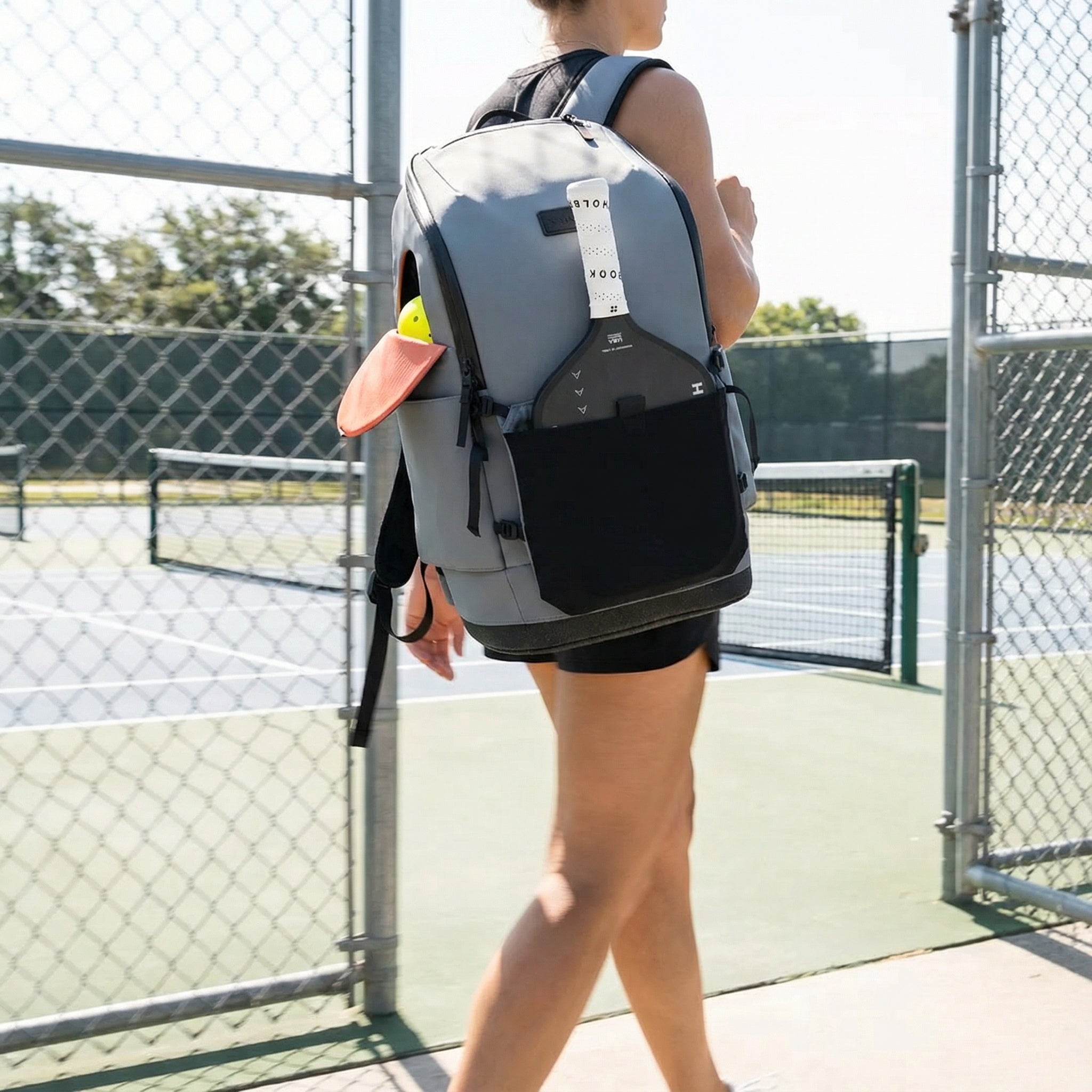
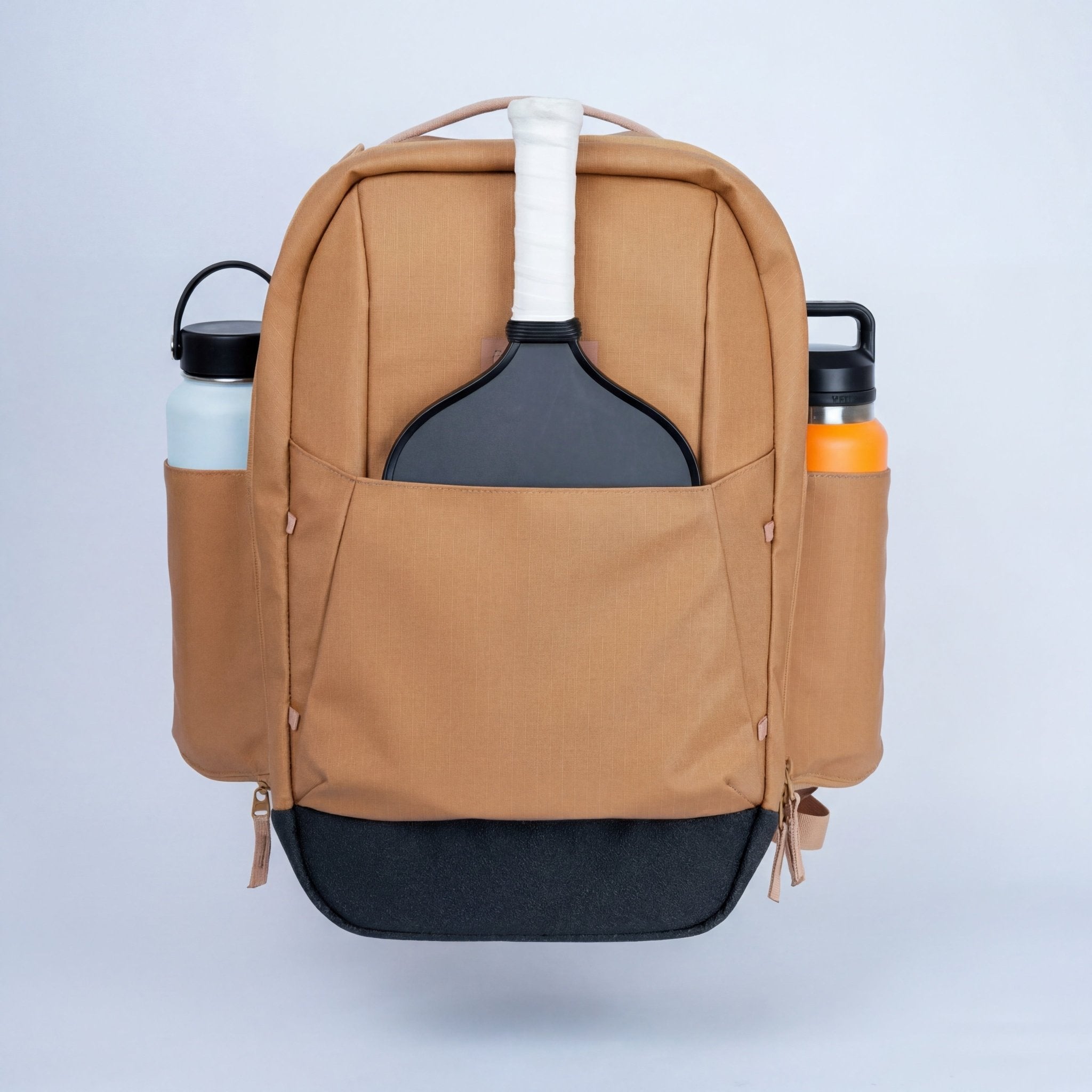
The Avoura Rhapsody 13 is a short, fast paddle — built for reactive kitchen play. The FORWRD Court Caddy ($325) pairs well: the modular front paddle sleeve fits up to 4 paddles, and the 15" padded laptop sleeve handles court-to-work commutes. YKK AquaGuard zippers mean outdoor concrete storage doesn't leave your bag soaked. Designed by players who've thought through every gear scenario you'll face.

Frequently Asked Questions
What makes the Avoura Rhapsody 13 widebody design different from other widebody paddles?
Most widebody paddles are widest in the top third, above the sweet spot. The Avoura Rhapsody 13's patented geometry positions the 8.37" maximum width directly at the center of the paddle — where the sweet spot is located. This means the forgiving zone is exactly where you're most likely to make contact, rather than slightly above where most players actually hit the ball.
What is gel infusion in a pickleball paddle core?
Avoura's proprietary gel infusion fills the perimeter of the polypropylene honeycomb core with a gel material, adding mass to the outer edge of the paddle. This increases moment of inertia — the paddle face stays squarer on off-center contact, reducing mishit twist. It also provides modest vibration dampening beyond what a standard PP core delivers.
Is the 13.5mm core the right choice for control-focused players?
The 13.5mm core is thinner than the popular 16mm standard, which means a livelier, more responsive feel — not the dead-soft touch of a thick control paddle. If you want a truly muted control paddle, go to 16mm (Six Zero Double Black Diamond, ProKennex Black Ace 16). The Rhapsody 13's core is for players who want speed-first control, not touch-first control.
Does the Avoura Rhapsody 13 come with anything besides the paddle?
Yes — it ships in a branded box with a pickleball, an overgrip, and weighted tape. The weighted tape lets you experiment with head-heavy or handle-heavy weighting to customize the swing weight without buying separate lead tape. That's a meaningful value-add at a sub-$130 price point. Note: altered paddles are not eligible for PBC's 30-day paddle test drive program.
Is the Avoura Rhapsody 13 good for beginners?
It can work for beginners, but the 13.5mm core and short 15.5" length require some technique adjustment. Beginners who start on a standard 16mm, standard-length paddle first will find the transition to the Rhapsody 13 easier. For a beginner picking their first paddle, there are more forgiving starting points in the $80–100 range. The Rhapsody 13 is best for players at the 3.0–3.5 stage who have some technique established.
Final Verdict
The Avoura Rhapsody 13 is the kind of paddle that makes you question whether brand premium is worth it. At $123.75, you get Toray raw carbon fiber, a genuine patent on the widebody geometry, USA manufacturing, a gel infusion system that actually stabilizes off-center contact, and a complete kit that saves you $15–20 in accessories. That's a lot for the price.
The caveats are real: the 13.5mm core requires touch adaptation, the short length limits court coverage on wide balls, and Avoura is new enough that the long-term durability story is still being written. But for kitchen-first players who want speed and a larger effective sweet spot without spending $150+, the Rhapsody 13 is one of the best-engineered paddles at this price point right now.

Leave a comment
This site is protected by hCaptcha and the hCaptcha Privacy Policy and Terms of Service apply.