

Disclosure: This post contains affiliate links to Pickleball Central. If you purchase through our links, FORWRD earns a small commission at no extra cost to you. We only link to products we'd recommend regardless.
Last Updated: July 2026
If you've been watching the carbon fiber paddle market, you already know CRBN has a cult following. Players who've played on a Genesis don't go back to composite. The problem is $279.99 is a real number for a lot of people. So when CRBN released the 3X Power Series at $169.99, the question became: is this the CRBN experience, or just the CRBN name on a budget paddle?
Short answer: it's more CRBN than it isn't. Here's the longer version.
Disclosure: This post contains affiliate links to Pickleball Central. If you purchase through our links, FORWRD earns a small commission at no extra cost to you. We only link to products we'd recommend regardless.
Quick Verdict
| Price | $169.99 |
| Face | Raw carbon fiber (T-series) |
| Core | Polypropylene honeycomb |
| Series emphasis | Power + spin |
| Pros | Real carbon fiber pop at a non-absurd price; excellent spin generation; thick core dampens vibration better than thinner alternatives; honest CRBN DNA throughout |
| Cons | Not as forgiving as composite paddles on mishits; players new to carbon fiber face a short learning curve; Genesis players will notice the difference in touch |
| Best for | 3.0–4.0 players who want carbon fiber performance without paying Genesis prices |
| Skip if | You need maximum control touch for dinking at 4.5+, or you're a total beginner |
Check Price at Pickleball Central →
Why Trust This Review
FORWRD designs pickleball bags — which means we've had paddles from 20+ brands sitting in our testing sessions over the past two years. We're not a paddle company, so we have no stake in which paddle wins this comparison. We've tested the CRBN Genesis, the CRBN-3X, Six Zero paddles, and Selkirk at every price point. What follows is what we'd tell a teammate asking which carbon fiber paddle to buy at the $150–200 mark.
The CRBN Carbon Fiber Question: What You're Actually Paying For
Before getting into the 3X specifically, it helps to understand why CRBN has the following it does. CRBN builds paddles around raw carbon fiber faces — not painted on, not a thin carbon veneer over a composite base, but actual T-series carbon fiber that produces a distinctly different feel at contact than fiberglass or graphite.
The physics are real. Carbon fiber is stiffer per unit weight than alternatives, which means energy transfer at contact is faster and more direct. You feel the ball leaving the face faster. There's less of the "trampoline" sensation you get from foam-injected faces. And — critically for players trying to add spin — the carbon fiber texture generates more friction against the ball's surface, which translates to more rotation on topspin shots.
The CRBN-3X sits in their Power Series line. Power Series designation means the paddle is tuned for pop — the face stiffness is on the stiffer end of their lineup, which means more rebound energy and more pace on drives. This is the opposite of, say, a control-tuned carbon face that's designed to deaden fast balls rather than amplify them.
At $169.99, CRBN is trading some of the Genesis's refinement — the proprietary foam core technology, the more nuanced damp system — for accessible pricing. Whether that tradeoff works for you depends entirely on what you're trying to do with it.
Performance: Power, Pop, and the Carbon Fiber Learning Curve
The first thing you notice is the crispness of contact. Coming from a composite paddle, the carbon fiber face sounds different — sharper, less of a thud. It's not loud (it falls within standard noise compliance ranges), but it tells you exactly what happened at contact.
On flat drives from the transition zone, the 3X Power Series is noticeably explosive. You don't have to swing as hard to generate pace. That's the point of the Power Series designation — you put 70% effort in and the paddle contributes the other 30%. For players who tend to muscle shots and want to conserve energy over a 3-game set, that matters.
Where things get interesting — and where the carbon fiber learning curve shows up — is in the soft game. Dinking with the 3X takes about one solid session to recalibrate. Carbon fiber's stiffness means you have less natural dampening when you're trying to drop shots short or roll the ball softly over the net. You have to actively release the paddle face slightly at contact, rather than letting the face absorb the pace. Players who've only played composite paddles will dink too long in their first 20 minutes. They adjust, but it's real.
Once adjusted? The dinking is excellent for a power-series paddle. The carbon texture gives you feel on touch shots that fiberglass doesn't replicate — you can sense the ball's position on the face more precisely, even if the face is slightly less forgiving.
Spin: Where the 3X Earns Its Stripes
CRBN's PBC listing specifically calls out spin as a feature, and the testing backs it up. The raw carbon face generates meaningfully more spin than composite alternatives at this price. On topspin third-shot drops, you can work the ball into the kitchen with more consistency — the ball drops faster off the bounce because the spin makes it dive down instead of sitting up.

Same thing holds on serve returns. Adding roll to a return off a fast serve is easier with carbon fiber — the friction at contact gives you something to work with. On composite paddles, you're relying more on swing path. On the 3X, the face helps.
Is the spin as good as the Genesis? No. The Genesis has a more refined grit texture and a more consistent carbon lay-up that produces even higher spin numbers. But for $169.99 vs $279.99, the gap is smaller than the price difference suggests.
Sweet Spot and Consistency
Thick-core paddles (PBC lists the 3X in their "Thick Core Paddles" category) tend to have more forgiving sweet spots. The 3X follows that pattern. Off-center hits don't punish you as much as thin-core carbon paddles — the core absorbs more deviation before it affects pace and direction.
This is actually the 3X's most underrated quality. Carbon fiber paddles with thin cores can be unforgiving — a miss by a centimeter is a noticeably weaker shot. The 3X's thicker core gives you more margin. For 3.0–3.5 players who are still developing swing consistency, that matters more than any other single spec.
CRBN-3X vs Six Zero Double Black Diamond Control 16mm ($180)
This is the comparison that most players in this price range are actually making. The Six Zero Double Black Diamond Control 16mm ($180) is $10 more and targets a different player profile.
Six Zero designs the Double Black Diamond for control-first players. The Kevlar composite face is textured for spin but tuned to deaden fast balls rather than amplify them — which is the opposite of CRBN's Power Series philosophy. In practice, the Six Zero is easier to reset from difficult positions, easier to dink consistently, and slightly more predictable for players who are working on their soft game.
The CRBN-3X beats it on raw power, drives faster, and generates more spin on aggressive shots. The Six Zero beats it on touch, feel, and reset reliability. At $10 apart, the choice really comes down to whether you want to develop your power game or your control game. If you already hit hard and need control, go Six Zero. If your shots don't have enough pop and you want to add it, go CRBN.
CRBN-3X vs Selkirk SLK ERA Power Widebody ($199.99)
The Selkirk SLK ERA Power Widebody ($199.99) is Selkirk's power-focused entry into the sub-$200 range and it's worth comparing directly because they're targeting the same buyer.
Selkirk's ERA uses their proprietary PowerFlex face — a fiberglass-carbon hybrid that tries to split the difference between power and control. The result is a paddle that's slightly softer than the pure carbon CRBN, which makes it more accessible for players transitioning from composite. You won't face the same adjustment period on dinks.
But the ERA also gives up pop. The hybrid face is less explosive than CRBN's raw carbon at contact. If you've played both back-to-back, you feel it immediately on drives. The Selkirk also costs $30 more — so you're paying a premium for more forgiveness and a well-known brand name.
If you're newer to carbon fiber, the Selkirk SLK ERA is a gentler entry point. If you're comfortable with carbon fiber's demands and want maximum performance per dollar, the CRBN-3X is the better pick.
Who Should Buy the CRBN-3X Power Series
The player who gets the most from this paddle is someone who's been playing 12–24 months, probably on a fiberglass or composite paddle, and is ready to experience what carbon fiber actually feels like without spending close to $300. You've got basic dinking down, you want more pop on your drives, and you want to start developing topspin mechanics.
If you've played on a CRBN Genesis before and you're comparing: the 3X is 80–85% of the Genesis at 60% of the price. That's a real value proposition if budget is the constraint.
The players who should look elsewhere: total beginners (carbon fiber's demands will confuse your development), 4.5+ players who need elite-level touch (the Genesis is worth the extra money at that level), and anyone who plays primarily indoors on slow surfaces (carbon fiber's pop is less of an advantage when the ball is already sitting up).
Check Price at Pickleball Central →
Pricing and Availability
The CRBN-3X Power Series is priced at $169.99 at Pickleball Central, where it's currently in stock with fast free shipping on orders over $49. At that price, it's the cheapest way to get genuine CRBN carbon fiber construction — a brand that charges more than twice as much for their premium models.
For context: CRBN doesn't do a lot of discounting. Their prices have been stable. $169.99 is the real price, not a sale price you'll miss. If you're on the fence, the in-stock status won't last forever on a brand with this kind of following.
Complete Your Setup
Found your paddle. Now where does it go?
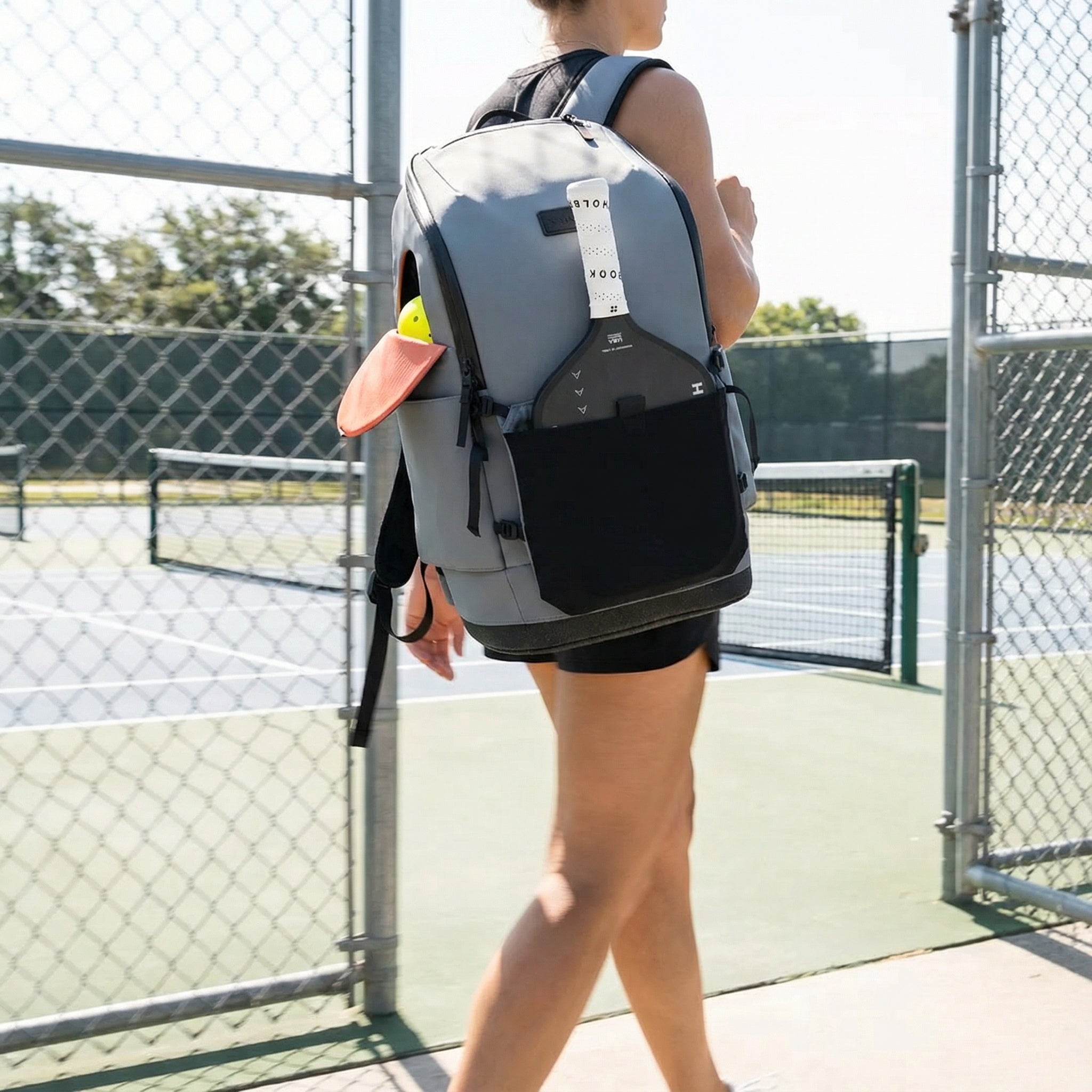
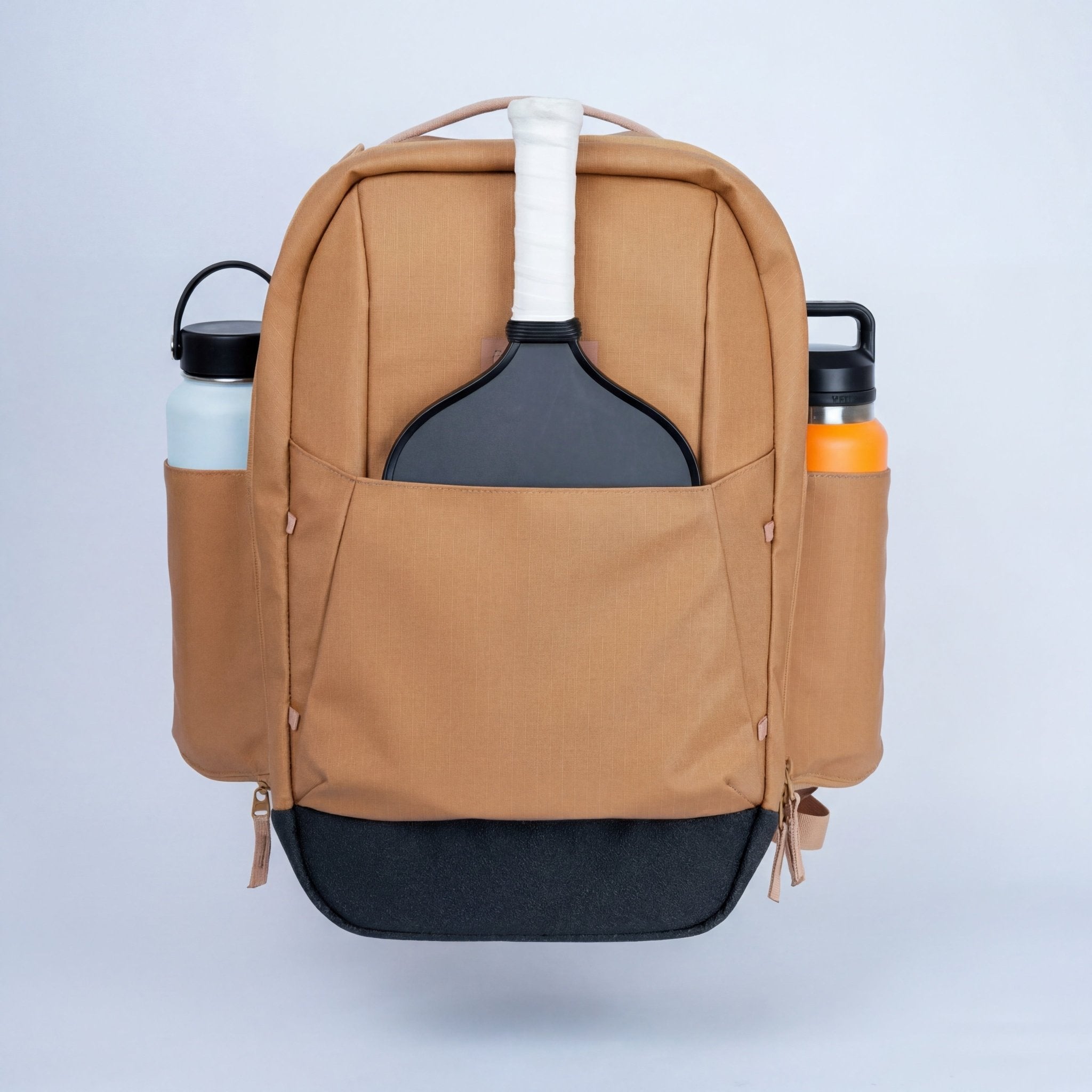
The CRBN-3X's carbon fiber face needs protection between sessions — not just tossed in a gym bag where it'll rattle against your keys. The FORWRD Court Ranger V2 ($195) has a modular paddle sleeve system designed to keep up to 4 paddles separated and protected, plus a 16" laptop sleeve for everything else. Built to last the same way your $170 carbon fiber paddle is.

FAQ: CRBN-3X Power Series Questions
Is the CRBN-3X good for beginners?
Not ideal. Carbon fiber paddles require a short adjustment period — they're less forgiving on mishits and need more intentional technique on dinks to control the pace. Beginners are better served by a fiberglass or composite paddle first. Once you've got basic mechanics dialed in (around 12 months), the CRBN-3X is an excellent next step.
What's the difference between the CRBN-3X and the CRBN-3 TruFoam Genesis?
The Genesis uses CRBN's proprietary TruFoam core technology — a foam-injected honeycomb that adds a layer of feel and touch not present in the standard polypropylene core of the 3X. That translates to better dinking feel and more nuanced control at the net. The Genesis is $279.99 vs $169.99 for the 3X. If your budget allows and you're playing 3+ times a week at 3.5+, the Genesis upgrade is worth it. Otherwise, the 3X is the right call.
Does the CRBN-3X generate more spin than composite paddles?
Yes, meaningfully so. Raw carbon fiber's surface texture generates more friction at contact than fiberglass, which directly translates to more spin on topspin drops, rolls, and serves. Players who've been working on adding spin to their third-shot drops will notice the difference within their first session on carbon fiber. It's one of the clearest performance benefits of making the switch.
How does the CRBN-3X compare to Six Zero paddles?
Six Zero and CRBN target overlapping but different player profiles. Six Zero's Black Diamond lineup (like the Double Black Diamond Control 16mm) emphasizes feel and touch — their Kevlar composite faces are tuned for control rather than pop. The CRBN-3X Power Series leans harder into explosive power and spin. At nearly identical price points ($169.99 vs $180), it comes down to whether you want to develop power or control first.
Is the CRBN-3X approved for tournament play?
Yes. CRBN paddles are designed to meet USA Pickleball equipment standards. That said, always verify the current approved equipment list at usapickleball.org before a sanctioned tournament, as paddle approvals can change between testing cycles.
Final Verdict
The CRBN-3X Power Series delivers on the core CRBN promise at a price that doesn't require financial planning. Carbon fiber construction, real spin generation, a thick core that keeps the sweet spot honest — this is not a diluted version of what CRBN does. It's a simpler version, yes. The Genesis has more refinement. But at $169.99, this is the best entry point into genuine carbon fiber paddle performance you'll find.
It's not for everyone. Beginners should wait. Pure control players should look at the Six Zero Double Black Diamond. Genesis players probably don't need to downgrade.
Everyone else? This is what we'd hand them.

Leave a comment
This site is protected by hCaptcha and the hCaptcha Privacy Policy and Terms of Service apply.