

Last Updated: September 2026
The kitchen — officially the non-volley zone (NVZ) — is the 7-foot area on each side of the net that makes pickleball pickleball. It's the reason a 4.5-rated player can neutralize a power hitter. It's also the rule that trips up new players the most and causes disputed calls even at 3.0 level.
If you want to understand it completely, you're in the right place.
The kitchen in pickleball might be the most misunderstood area on the court, yet mastering these rules can dramatically improve your court IQ. Whether you're a new player confused by line calls or an experienced player looking to refine your strategic play, understanding pickleball kitchen rules is essential for fair play and competitive success.
Here are the rules, from basic fundamentals to the advanced strategies used by the pros. You'll learn when you can step into the kitchen, how momentum carries affect your shots, and why this unique zone exists in the first place.
What is the Kitchen in Pickleball?
The kitchen in pickleball refers to the 7-foot non volley zone extending from the net on both sides of the pickleball court. This rectangular area spans the full 20-foot width of the court, creating a zone that measures exactly 140 square feet per side.
While commonly referred to as the "kitchen," the official rules use the term "non-volley zone" or NVZ. The pickleball kitchen is defined by clear boundary markings that include:
-
The kitchen line (parallel to the net, exactly 7 feet away)
-
The sidelines (court's outermost lateral boundaries)
-
The net itself
An important detail many players miss: the lines marking the kitchen area are officially considered part of the kitchen zone itself. This means touching the non volley zone line during a volley constitutes a fault, just as stepping inside the kitchen zone would.
Fundamental Kitchen Rules You Must Know
Understanding pickleball's non volley zone rules starts with these core principles that every pickleball player must follow:
The Primary Rule: No Volleying in the Kitchen
You cannot volley the ball while standing in the kitchen or while any part of your body or equipment touches the kitchen zone. This rule prevents players from positioning themselves aggressively close to the net for easy smash shots.
What Constitutes a Volley?
A volley means hitting the ball in the air before it bounces on the court surface. This includes:
-
Overhead smashes
-
Quick reflex shots at the net
-
Any contact with the ball before the ball bounces
The key distinction: volleys happen before the ball bounce, while groundstrokes occur after the ball bounces on your side of the court.
Understanding Momentum in Kitchen Rules
Player's momentum plays a crucial role in kitchen violations. According to USA Pickleball official rules 9.B.1, 9.C, and 3.A.20, it's a fault if your momentum from a volley causes you to subsequently touch the kitchen or kitchen line, even if you made contact outside the zone.
Here's the scenario most players don't see coming: you're positioned at the kitchen line. Your opponent pops a lob, you back up to the transition zone, smash it cleanly, and your forward momentum from the swing carries you forward — and your foot lands in the kitchen. You hit the ball before it bounced, the ball was clearly outside the NVZ when you struck it. Is it a fault?
Yes. It's a fault.
USA Pickleball Rule 9.C is explicit: "If a player's momentum after a volley causes any part of the player or anything carried by the player to touch the non-volley zone, it is a fault." The fault isn't tied to when you touch the kitchen — it's tied to whether your momentum from the volley caused you to enter the NVZ. After every volley, you need to demonstrate you've arrested your forward motion before stepping into the kitchen.
"The momentum fault is the one I see called on experienced players the most. They're completely comfortable at the kitchen, they've played hundreds of hours — and they've never been corrected on the forward-step-after-the-overhead fault because nobody called it in rec play. In a tournament, referees call it."
One exception worth knowing: if you're inside the kitchen and hit a shot that bounces in the kitchen — a legal groundstroke from the NVZ — you can stay in the kitchen afterward. The momentum rule only applies to volleys. A bounce shot from inside the kitchen has no momentum rule attached, because the bounce removes the volley constraint entirely.
Clothing, Equipment, and Partner: What Counts as a Kitchen Fault
Rule 9.D covers this directly: "It is a fault when a player's clothing, equipment, or anything carried or worn by the player touches the non-volley zone." The rule doesn't distinguish between body parts, clothing, a dropped paddle, or a hat that falls off mid-swing. If it touches the NVZ during a volley — or as a result of momentum from a volley — it's a fault.
Clothing examples: A long sleeve that brushes the kitchen line during a volley. Shorts hanging over the line at contact. A shoelace coming untied and dragging into the kitchen. All faults. This is why some tournament players tuck in their shirts and tie double knots before play — it's not vanity, it's risk management.
Equipment examples: Your paddle head drops below the kitchen line during a volley (the handle is held outside the NVZ, but the paddle face dips to touch the line). Fault. A spare ball falls from your pocket into the kitchen during a volley. Fault.
The partner scenario: Your partner accidentally bumps into you during a volley, causing your foot to step into the kitchen. Fault — on your side. The rule doesn't carve out an exception for accidental contact from a doubles partner. The outcome is what matters: a part of your body touched the NVZ during or after a volley.
What's NOT a fault: your paddle crosses over the kitchen in space (above it) without touching anything. The rule is about physical contact with the NVZ surface or lines, not about paddle trajectory. You can swing your paddle over the entire kitchen on every shot without fault, as long as you don't touch it.
When You Can and Cannot Enter the Kitchen
Contrary to common misconceptions, players can legally enter the kitchen zone under specific circumstances:
Legal Kitchen Entry
You can step into the kitchen when:
-
Playing any shot after the ball bounces (dinks, drop shots, returns)
-
Moving through the area between rallies
-
Positioning yourself before the ball is hit by your opponent
-
Retrieving balls that have bounced in the kitchen area
Kitchen Rules for Serving
Serving has special restrictions regarding the kitchen zone:
-
Your pickleball serve cannot land in the kitchen or touch the kitchen line
-
Unlike other court lines that are considered "in," the kitchen line is "out" for serves
-
Any pickleball serve hit that lands in the kitchen area results in a fault
This unique serving rule emphasizes the kitchen's special status compared to other areas of the court.
Wheelchair Pickleball Kitchen Adaptations
The official rules include adaptations for wheelchair players to ensure fair play:
-
Front wheels may touch the kitchen line during volleys
-
Rear wheel contact with the non volley zone line constitutes a fault
-
These modifications account for turning radius and stability needs while maintaining rule integrity
Advanced Kitchen Strategies and Shots
Experienced players use the kitchen area as the center of their strategic play, employing sophisticated techniques that new players should understand.
Dinking: The Primary Kitchen Strategy
Dinking involves hitting soft shots that land just inside the opponent's kitchen, forcing them to let the ball bounce before playing their next shot. Effective dinking requires:
-
Precise shot placement to keep the ball low
-
Positioning with feet just behind the kitchen line
-
Patience to engage in longer rallies
-
Control to avoid hitting shots too high (giving opponents easy volleys)
Doubles Positioning Around the Kitchen
In doubles play, both partners typically position themselves near but not touching the kitchen line. This allows for:
-
Quick movement to cover aggressive net shots
-
Ability to step into the kitchen for soft returns
-
Optimal court coverage while avoiding line faults
-
Communication for effective teamwork
The Erne Shot and Kitchen Rules
The erne shot, named after player Erne Perry, represents a legal loophole around kitchen restrictions. Players execute this advanced technique by:
-
Predicting an opponent's cross-court dink
-
Moving outside the sideline while the ball is in the air
-
Volleying the ball while positioned off-court
-
Landing outside the court boundaries
Since the player's feet and body are outside the sidelines rather than in the kitchen zone, this volley is perfectly legal under current rules.
Common Kitchen Rule Violations and Faults
Understanding frequent mistakes helps players avoid costly errors during play:
Most Common Violations
|
Violation Type |
Description |
Consequence |
|---|---|---|
|
Line touching |
Foot or equipment touches kitchen line during volley |
Loss of point/serve |
|
Momentum fault |
Forward motion carries player into kitchen after legal volley |
Loss of point/serve |
|
Equipment drop |
Paddle, hat, or clothing falls into kitchen during volley |
Loss of point/serve |
|
Serve placement |
Ball lands in kitchen or on kitchen line during serve |
Service fault |
Developing Kitchen Awareness
To avoid stepping into violations:
-
Practice deliberate footwork drills near the kitchen line
-
Develop awareness of your position relative to the line
-
Control your follow through to prevent momentum carries
-
Secure loose clothing and equipment before playing
⚡ Kitchen Fault Decision Tree — screenshot this
Walk through this before arguing a call. Start at the top.
1. Did you hit the ball before it bounced (a volley)?
→ NO: Not a kitchen fault. Bounce shots from inside the NVZ are always legal.
→ YES: Continue to step 2.
2. Were any part of your body, clothing, or equipment touching the NVZ or its lines at the moment of contact?
→ YES: Fault. No exceptions.
→ NO: Continue to step 3.
3. After the shot, did your momentum carry you into the NVZ before you came to a controlled stop?
→ YES: Fault. Momentum rule (Rule 9.C).
→ NO: Continue to step 4.
4. Did anything you were wearing or carrying (dropped ball, hat, trailing fabric) touch the NVZ due to the volley motion?
→ YES: Fault.
→ NO: Not a fault. Legal shot.
Kitchen Line Faults in Tournament Play: How Umpires Call It
In refereed tournament play, the kitchen fault protocol works differently from rec play. In recreational pickleball, faults are usually self-called or called by opponents. In USA Pickleball sanctioned events with line judges or referees, kitchen faults are called by the referee when observed — and they're called even when the player who committed the fault doesn't know it happened.
Referees position themselves at the side of the net specifically to observe NVZ lines. They're watching the kitchen line during every volley exchange. In high-level sanctioned play, the referee can call a kitchen fault overruling a player's self-call of "in." The referee's call is final unless an Expedited Appeal Process applies.
Common tournament scenarios
The step-in-after-overhead fault is the most frequently called kitchen violation in sanctioned doubles. A player volleys an overhead smash from mid-court, their follow-through carries them toward the net, and the momentum step lands in the kitchen. The referee calls the fault. The player often protests — "I was outside when I hit it" — and they were right. The ball contact was legal. The momentum entry was not.
The close-line-call fault is harder. A player's heel appears to touch the kitchen line during a volley. In rec play, nobody says anything. In tournament play, referees are positioned to observe that exact angle and will call it if they see contact. This is why many tournament players deliberately play a step back from the kitchen line — a small tactical concession to eliminate the risk.
Players can request an Expedited Appeal (in events that offer it) on a kitchen line fault call. The appeal goes to the head referee. If they determine the referee made an error in fact (misidentified which player touched the line, for example), the call can be reversed. If it's a judgment call, it stands.
Why the Kitchen Exists in Pickleball
The non-volley zone serves several important purposes that distinguish pickleball from other racquet sports:
Preventing Net Domination
The rule prevents players from positioning themselves aggressively at the net for easy put-away shots. Without this restriction, the game would become dominated by quick, aggressive volleys rather than the strategic, patient play that characterizes pickleball.
Encouraging Longer Rallies
By forcing players to hit the ball after it bounces when close to the net, the kitchen rules promote:
-
Extended rallies that test endurance and strategy
-
More opportunities for shot placement and finesse
-
Greater emphasis on soft shots and ball control
-
Reduced reliance on power and aggressive positioning
Historical Development
The non-volley zone has been fundamental to pickleball since the game's inception in 1965. As the sport evolved, this rule was refined to maintain competitive balance and prevent dangerous play close to the net.
Origin of the "Kitchen" Name
The term "kitchen" likely originated from shuffleboard, where the "kitchen" or "10-off" area penalizes players whose shots land there. The pickleball community adopted this terminology, and it stuck despite the official designation being "non-volley zone."
Another theory connects to the phrase "if you can't stand the heat, get out of the kitchen," referencing the high-pressure, high-risk nature of play near the net.
Frequently Asked Questions About Kitchen Rules
Can you jump and land in the kitchen after volleying? No. Even if you're airborne when you volley the ball, landing in the kitchen afterward constitutes a momentum fault.
What happens if partners take turns entering the kitchen? Each player must follow kitchen rules independently. One partner being outside the kitchen doesn't allow the other to volley from inside the zone.
Is the kitchen line "in" or "out" during regular play? During rallies, the kitchen line is "in" and playable. Only during serves is the kitchen line considered "out."
Can you reach over the kitchen line to volley? Yes, as long as no part of your body or equipment touches the kitchen or its lines. However, be careful about momentum carrying you forward.
What if the ball hits the kitchen line during play? If a live ball bounces and touches the kitchen line, play continues normally. The line is only "out" for serves.
Frequently Asked Questions About the Kitchen
Can you step into the kitchen in pickleball?
Yes — you can step into the kitchen any time you want. The rule only prohibits volleying (hitting the ball before it bounces) while standing in the kitchen or touching the kitchen lines. You can step in to hit a ball that's already bounced, then exit before your next volley. The NVZ isn't forbidden territory; it just has a specific restriction.
What happens if you step on the kitchen line while volleying?
Touching the kitchen line during a volley is a fault, the same as stepping into the kitchen itself. The lines are officially part of the non-volley zone. This extends to momentum too: if you volley from outside the kitchen but your follow-through carries you onto the line or into the zone, that's a fault — even if you were completely clear at the moment of contact.
Can you reach over the kitchen to hit a ball?
Yes. You can reach across the kitchen line to volley a ball as long as no part of your body or paddle touches the kitchen or kitchen lines. The restriction is about contact with the zone, not about reaching over it. Watch your follow-through — forward momentum that carries you into the kitchen after the shot still counts as a fault.
What's the difference between the kitchen line and the sideline in pickleball?
The kitchen line runs parallel to the net, exactly 7 feet away from it on each side. It defines the near boundary of the non-volley zone. The sidelines run perpendicular to the net and mark the outer edges of the court. During serves, the ball must land in the correct service box — inside the sidelines and past the kitchen line (the kitchen is out for serves).
Why does the kitchen exist in pickleball?
The NVZ was created to prevent players from camping right at the net and volleying everything at point-blank range. Without it, power players would dominate by staying close and smashing every ball before opponents could respond. The kitchen zone forces players back from the net, creating the rally-driven, strategy-heavy style that defines pickleball and makes it different from tennis or paddleball.
Kitchen Mastery Takes Practice — Get the Right Gear to Match
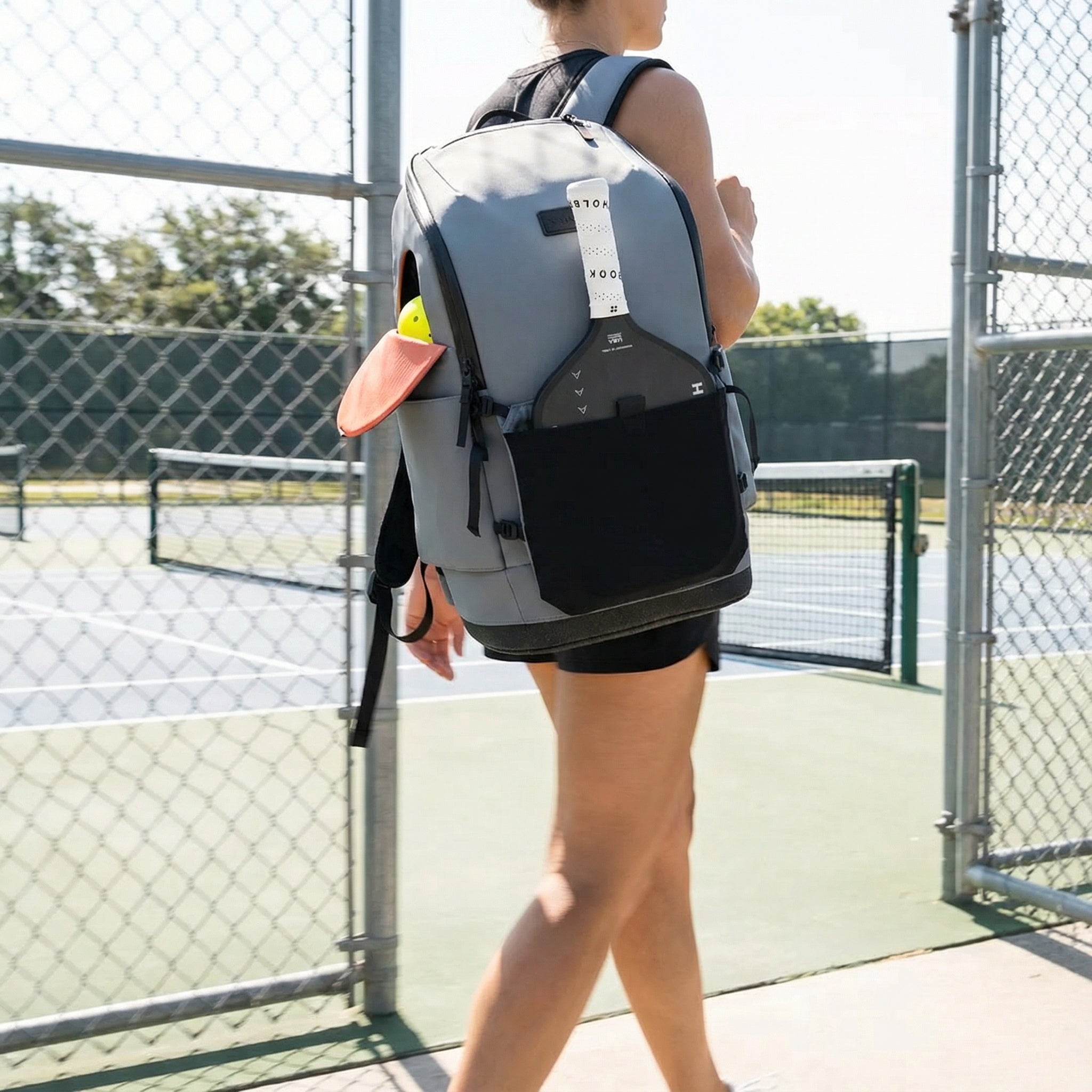
Understanding the kitchen rules gives you a real edge. Now make sure your gear doesn't slow you down. Whether you're drilling dinks or running your opponents side-to-side, showing up organized matters.
Getting Your Kitchen Game Right Takes the Right Setup
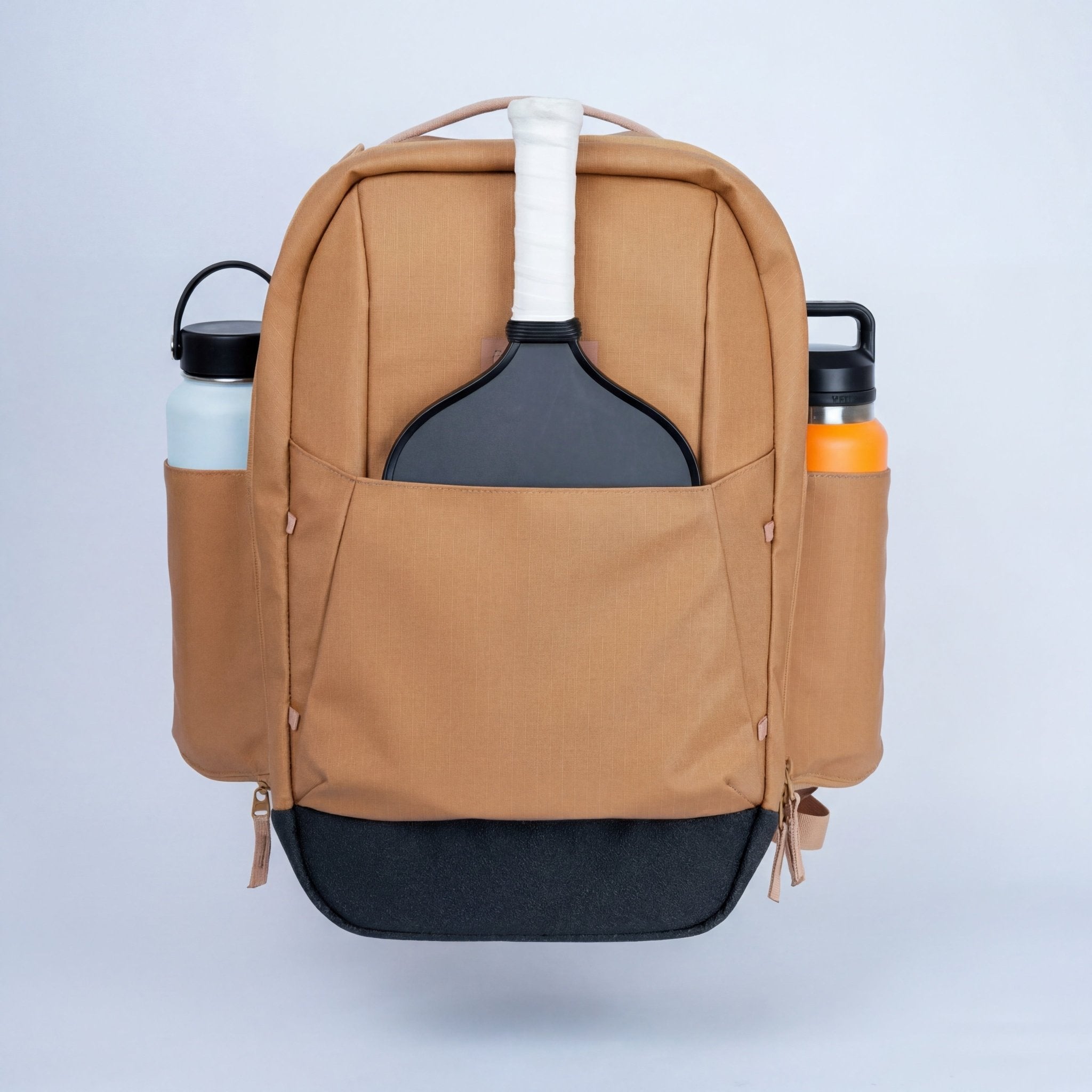
You've got the rules — now make sure your gear doesn't hold you back. The FORWRD Court Ranger V2 ($195) and Court Caddy ($325) were both designed with feedback from 500+ real players, built to get you to the kitchen line with everything organized and ready.

"The kitchen is where games are won at every skill level. Players who are comfortable there — who understand momentum, the no-volley rule, and the lines — have a massive advantage over players who are nervous about stepping close to the net." — Topher, FORWRD Co-Founder
Ready to play? Shop the Court Ranger V2 — built with 500+ real players, featuring a 16-inch laptop sleeve and modular paddle sleeve.

Leave a comment
This site is protected by hCaptcha and the hCaptcha Privacy Policy and Terms of Service apply.