

Disclosure: This post contains affiliate links to Pickleball Central. If you purchase through our links, FORWRD earns a small commission at no extra cost to you. We only link to products we'd recommend regardless.
Last Updated: August 2026
Picking up pickleball is easy. Picking up the right pickleball equipment — without spending $400 on a paddle you'll outgrow in six months — is where most new players get stuck. This guide cuts through the noise. You'll learn what paddle materials actually mean for your game, which ball specs matter (and which don't), why court shoes aren't optional, and how to choose a bag that doesn't fall apart after a month on hard courts.
If you've already played a few times and are ready to upgrade, skip to the section that covers your current weak point. If you're buying your first setup, read it in order — the first three sections alone will save you from the three most common beginner mistakes.
Essential Pickleball Equipment: The Five Starting Points
Five things get you on the court. Everything else is optimization.
1. A Paddle — Your most consequential gear decision. Material, weight, and grip size all affect how your arm feels after two hours. Start mid-range ($60–130) and play with borrowed equipment whenever you can before committing to anything expensive.
2. Approved Pickleballs — Indoor and outdoor balls are not interchangeable. Match your ball to your playing environment or your shots won't fly the way you expect. Get a sleeve of three to start.
3. Court Shoes — Non-negotiable. Running shoes create ankle injury risk on pickleball courts. More on this below.
4. Athletic Clothing — Anything with full range of motion works. Moisture-wicking fabric helps on hot courts. No special gear required here.
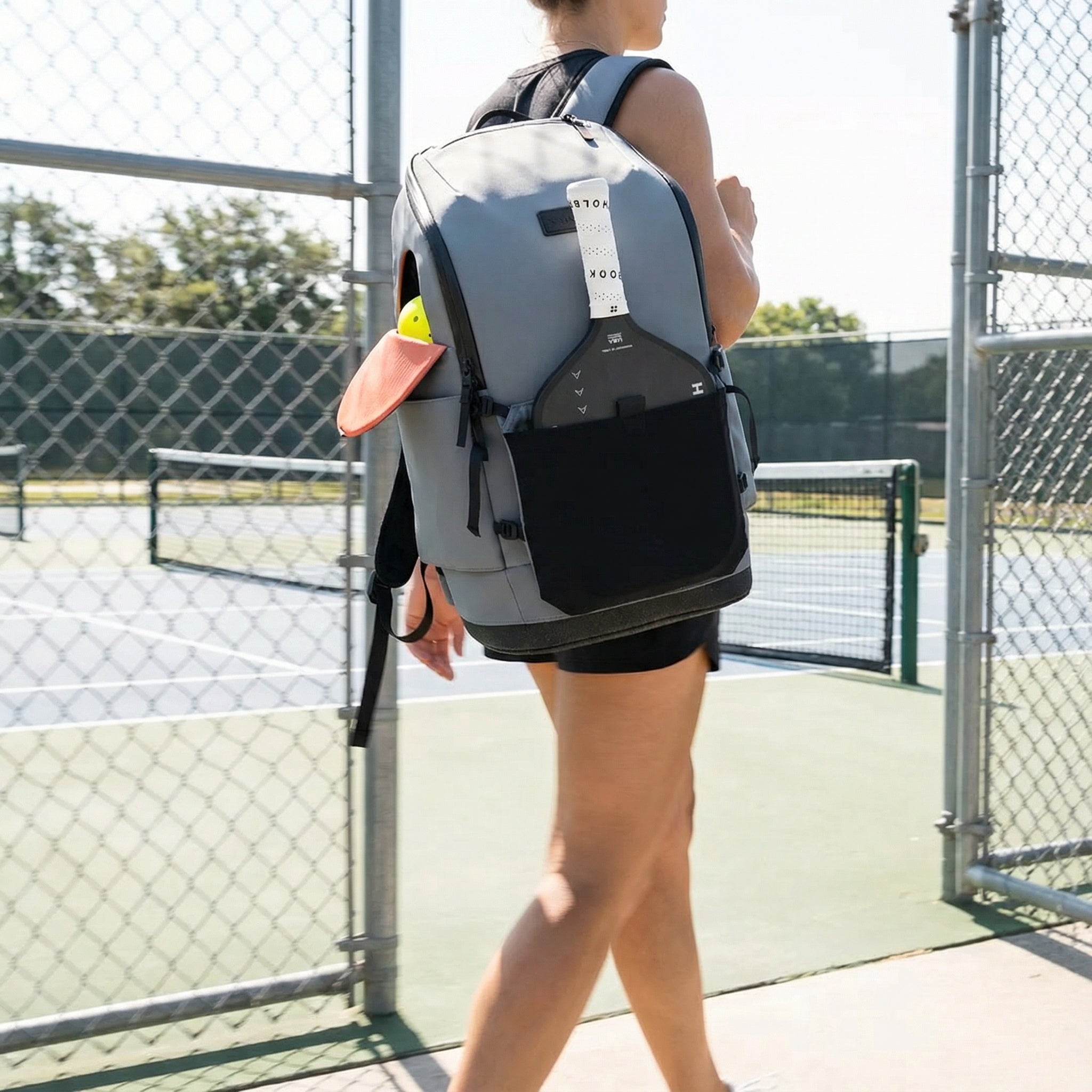
5. A Bag — A gym bag technically works, but a purpose-built pickleball bag makes showing up to court dramatically easier. A separated shoe compartment keeps your shoes from contaminating your gear, and a padded paddle sleeve protects your paddle face on the way to the court.
"The number one thing I tell new players: don't cheap out on shoes. You can borrow a paddle, but ankle injuries don't borrow. Get court shoes with lateral support before you step on court the first time."
— Topher Lake, FORWRD Co-founder
Pickleball Paddles: What the Materials Actually Mean
Paddle marketing uses a lot of words. Here's what the core ones mean when you're actually playing:
Weight
Paddle weight is the single variable new players feel most immediately. Light paddles (under 7.8 oz) are faster to accelerate and easier on the elbow — good for players with wrist or forearm sensitivity. Heavy paddles (8.5+ oz) drive the ball harder but create more vibration and fatigue during long sessions. Most recreational players land best in the 7.9–8.4 oz mid-range.
Face Materials
Graphite: Stiff, lightweight, excellent touch and responsiveness. Makes soft shots feel precise and predictable. Best fit for players who prioritize control and the dink game. Less pop on drives.
Carbon fiber: Stiffer than graphite with better energy transfer for power shots. The textured carbon surface grips the ball for spin. More aggressive option, but higher skill ceiling to use well. Most new-generation "power" paddles use raw carbon fiber faces.
Composite (fiberglass): Softer face that provides more pop on contact — the ball "trampolines" slightly. Beginner-friendly because it's forgiving on off-center hits. Great for all-around play.
Core Material
The honeycomb polymer core is standard across most quality paddles — it balances weight, vibration dampening, and durability. Nomex (older paper-based core) is stiffer and louder. Aluminum cores are rare and usually found in budget paddles. If the paddle listing doesn't specify the core, that's a yellow flag.
Grip Size and Shape
Grip circumference ranges from 4 to 4.5 inches. Too small and you death-grip the handle; too large and you lose touch. A loose grip test: if you can't fit your index finger of your non-dominant hand between the grip and your fingertips when holding the paddle, size up. If there's more than a finger's width of space, size down.
Paddle shapes affect reach and sweet spot. Elongated paddles (up to 17 inches) give extra reach for groundstrokes but shrink the sweet spot. Wide-body paddles maximize hitting surface — better for consistency. Standard shapes split the difference for most players.
USA Pickleball Certification
Tournament play requires USAPA-approved paddles. The approval process tests paddle rebound characteristics (the PBCoR test), surface roughness, and dimensions. Any paddle sold for tournament use should be on the official USAPA approved equipment list — worth verifying before a competition, since approvals can be revoked if a manufacturer changes materials without re-submitting.
Pickleball Balls: Indoor vs. Outdoor Matters More Than You Think
The physical difference is straightforward: indoor balls have 26 larger holes; outdoor balls have 40 smaller holes. The play difference is significant.
Indoor Balls
Softer plastic, larger holes, slower flight. The lower speed gives you more time to react and makes the dink game feel more controlled. Indoor balls are also quieter on impact — important in gym settings where noise bounces off walls. They don't hold up long outdoors because harder courts crack the softer plastic.
Outdoor Balls
Harder plastic, 40-hole design, built to handle wind. Outdoor balls are more consistent in a breeze and survive repeated impacts on concrete and asphalt. They're louder on contact. The harder shell means they can crack in cold temperatures — below 50°F, outdoor balls get brittle fast.
All approved balls are 73–75.5 mm in diameter and weigh between 22–26.5 grams. Those specs don't vary between brands — what varies is feel, durability, and flight characteristics based on the plastic compound and hole configuration.
Court Shoes: Not Optional
Running shoes are engineered for forward motion. Pickleball is 70% lateral movement. That mismatch has a predictable outcome: rolled ankles, knee torque, and Achilles strain from a shoe that was never designed for side-to-side cuts.
Court shoes built for pickleball or tennis have:
- Reinforced lateral walls that hold the ankle during quick direction changes
- A wider outsole base that doesn't tip over on lateral cuts
- Non-marking soles required on most courts
- Adequate traction for the specific court surface (hard court vs. indoor gym vs. clay)
Players who take pickleball seriously often have a dedicated pair of court shoes that live in their bag. Separating court shoes from street shoes also extends the life of both. A bag with a separate ventilated shoe compartment helps — shoes in the main compartment contaminate everything else in the bag.
Eyewear and Protective Gear
Protective Eyewear
Protective eyewear is worth discussing seriously. Eye injuries from errant balls or paddle contact are real — they're more common in women over 65 and in youth players where size mismatches create head-height ball trajectories. Sports goggles engineered for racquet sports are inexpensive insurance. Look for polycarbonate lenses rated ANSI Z87.1 and a wraparound frame that won't slip on a sweaty face. Pickleball-specific eyewear options run $20–80 and are worth every dollar compared to an emergency room visit.
Overgrips and Small Accessories
Overgrips are the most underrated piece of gear. A tacky overgrip reduces grip pressure (which reduces forearm fatigue) and is the cheapest way to customize paddle feel. Replace them every 5–8 hours of play or when they lose tackiness — most players go much longer than they should.
Bags: The Gear Decision Nobody Talks About
Your bag sets the tone for every session. A player who shows up organized — court shoes separated, paddle protected, water ready — is already a step ahead of the player digging through a gym bag at the baseline.
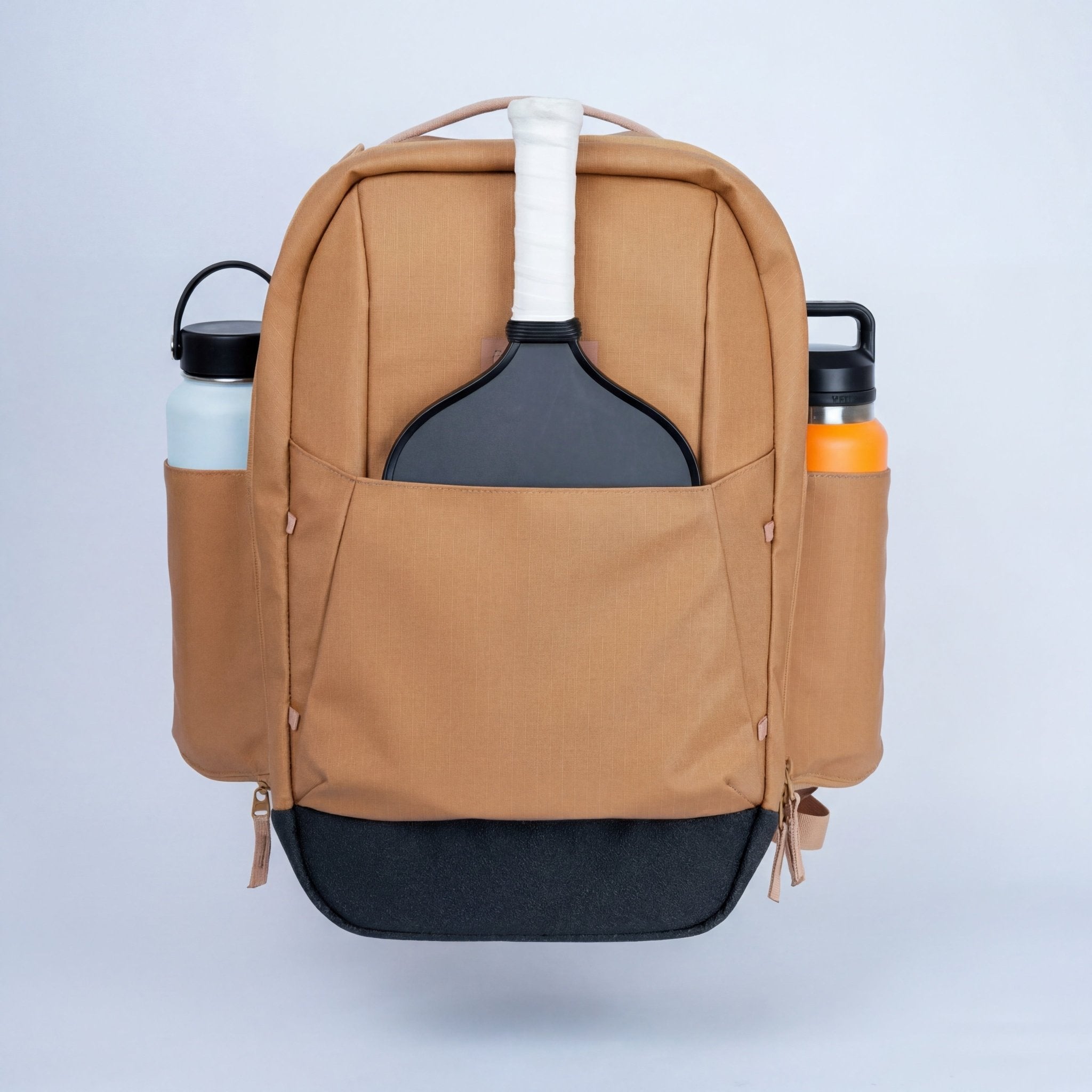
For serious players and anyone playing more than twice a week, a purpose-built pickleball backpack is the right tool. What to look for:
- Padded paddle sleeve — protects the paddle face from scratches
- Separate shoe compartment — ventilated, keeps your gear clean
- Water bottle holder — external access so you don't dig through everything
- Laptop sleeve if you carry work gear to court (this is more common than it sounds)

The FORWRD Court Caddy Backpack ($325) fits a 15" laptop alongside two paddles, balls, shoes, and a full court kit. It was designed with feedback from 500+ real players and is the standard recommendation from coaches who see what survives daily court use. YKK AquaGuard zippers keep moisture out; the modular paddle sleeve protects your gear on commutes and flights.
If you want something lighter for practice sessions, the FORWRD Court Ranger V2 ($195) handles a 16" laptop and everyday practice gear without the premium. Both bags are significantly better organized than generic gym backpacks adapted for pickleball.
Training Equipment and Advanced Accessories
Ball machines are the biggest investment in solo practice — they feed balls at programmable intervals, speeds, and trajectories. Entry-level machines like the Pickleball Tutor Spin start around $1,200; professional models run $3,000+. If you have consistent practice partners, you may not need one. If you're drilling technique alone, a ball machine pays for itself quickly.
Training targets, rebounders, and reaction cones support specific drills. These are low cost and worth having if you drill regularly. Lead tape for paddle weighting is popular among intermediate players dialing in paddle feel — it lets you adjust balance and weight before committing to a new $200 paddle.
For a deep look at the best training tools, see our Pickleball Training Aids Guide.
Equipment Standards: What USA Pickleball Certification Means
USA Pickleball maintains strict standards to keep competitive play fair. Paddles must pass the PBCoR test (measuring energy rebound off the surface), surface roughness evaluation, and dimensional checks. Balls must meet diameter and weight specifications.
The certification system exists to prevent one-sided equipment advantages. It's also why you'll occasionally see paddles pulled from approved lists — manufacturers sometimes tweak materials or construction in ways that push past the allowed limits. Before a tournament, always verify your paddle is still on the approved list.
Where FORWRD Products Fit In Your Kit
FORWRD doesn't make paddles or balls — those categories have excellent options across every price range. What FORWRD makes is the gear that organizes and protects everything else: bags built around how real players show up to court, move between sessions, and carry their full kit.
Start with the equipment decisions that affect your play most (paddle, shoes, ball type), then build your bag setup around how you actually use your gear. If you're playing three days a week and carrying a laptop, the Court Caddy is a direct upgrade. If you need a lighter everyday bag for evening practice, the Court Ranger V2 does the job at $195.
Frequently Asked Questions
What equipment do you need to play pickleball?
You need five things to start: an approved paddle, outdoor or indoor pickleballs, court shoes with lateral support, athletic clothing, and a bag to carry it all. The one purchase worth getting right early is court shoes — they prevent ankle injuries that running shoes can't protect against on hard courts.
What is the best pickleball paddle for beginners?
A mid-weight composite paddle (7.9–8.3 oz, fiberglass or carbon fiber face, polymer core) gives you the best balance of power and control as a beginner. Brands like Selkirk, JOOLA, and CRBN all make solid beginner-appropriate paddles in the $60–130 range. Avoid ultra-light paddles until you know your playing style.
Indoor vs. outdoor pickleball balls: does it really matter?
Yes. Indoor balls (26 holes, softer) don't fly predictably outdoors in wind. Outdoor balls (40 holes, harder) crack in cold temperatures indoors and feel harsh on gymnasium surfaces. Using the right ball for the environment makes a noticeable difference in play quality.
Do I need USA Pickleball approved equipment for recreational play?
No — certification only matters for sanctioned tournament play. For recreational and club play, any paddle that feels right for your game is fine. If you're planning to enter tournaments, verify your paddle is on the USAPA approved list before competition day.
How much does a complete pickleball equipment setup cost?
A solid starter kit runs $150–350 depending on how you approach each category. Budget paddle ($60) + 3 outdoor balls ($15) + entry-level court shoes ($70) + basic bag ($30) = around $175. Step up to a quality mid-range paddle and a dedicated pickleball backpack and you're at $350–500. Tournament players typically spend $300–700+ on paddle alone.
Complete Your Setup
Our Pick: FORWRD Court Caddy Backpack
Fits paddle, balls, court shoes, and a 15" laptop in a bag built around how players actually show up to court. Designed with 500+ players. YKK AquaGuard zippers, modular paddle sleeve.
Ready to build your kit? Start with the basics, get your court shoes right, and choose a bag that actually keeps your gear organized. Shop the Court Caddy — built with the players who use it every day.

Leave a comment
This site is protected by hCaptcha and the hCaptcha Privacy Policy and Terms of Service apply.