

Best Pickleball Glasses in 2026:
The Complete Buyer's Guide
Every category covered — protective, performance, indoor, prescription, and budget. Plus the one lens choice that's killing your depth perception, and how to fix it.
Disclosure: This post contains affiliate links to Pickleball Central. If you purchase through our links, FORWRD earns a small commission at no extra cost to you. We only link to products we'd recommend regardless.
Last Updated: September 2026
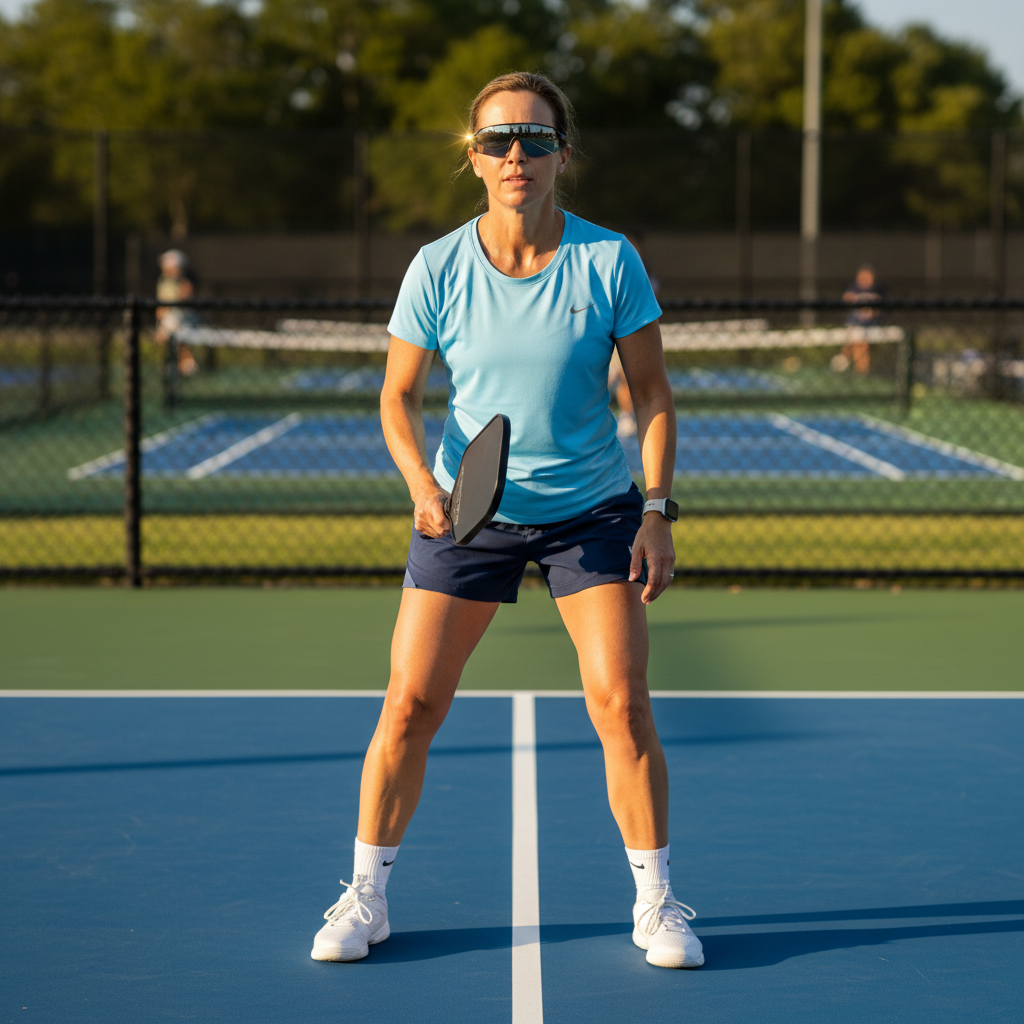
Pickleball balls hit the face. It happens at every level — a hard volley, a deflection off a paddle edge, a poached ball that clips the wrong player. Eye injuries in pickleball are real and preventable, and yet most players show up to the court in regular sunglasses, no glasses at all, or whatever sporting goods store had on the clearance rack. This guide covers every category of pickleball eyewear with honest pros, cons, and ideal use cases — so you can find the right pair and actually wear it.
Last Updated: September 2026
Best Picks by Category — At a Glance
Not ready to read the full breakdown? Here's the short version. Full reviews for each pick are in the sections below.
Why Eyewear Actually Matters in Pickleball
Pickleball balls travel between 25–45 mph in recreational play and over 70 mph at competitive levels. At those speeds, a direct hit to the eye can cause corneal abrasion, lens dislocation, or retinal detachment. These aren't freak accidents — they're documented outcomes from normal gameplay, including casual rec sessions.
Beyond protection, the right lenses actively improve how you play. Contrast-enhancing tints make the yellow pickleball pop against court surfaces, especially in mixed or flat lighting. Anti-fog coatings keep your vision clear during long matches. And a secure, no-slip fit means the glasses stay put during explosive lateral movement — not sliding down your nose at 9–10.
"I played without glasses for two years and took a ball to the face at the kitchen. Not a freak accident — just a hard reset at close range. The next week I was wearing Tifosi Swickets on every court. Now I won't play without them. It's not a style thing; it's a don't-lose-your-eyesight thing."
— Grub, FORWRD Co-Founder & 4.0 player
"Eye protection is the piece of gear I see players skip most — and I get why, it feels like overkill. But once you've played at 4.0+ level, or even just watched a hard dink exchange go sideways at the kitchen, you understand. The ball isn't slow. A direct hit from 7 feet isn't going to just sting. Get something rated for impact and actually wear it."
— Topher, FORWRD Co-Founder & 4.5+ rated player
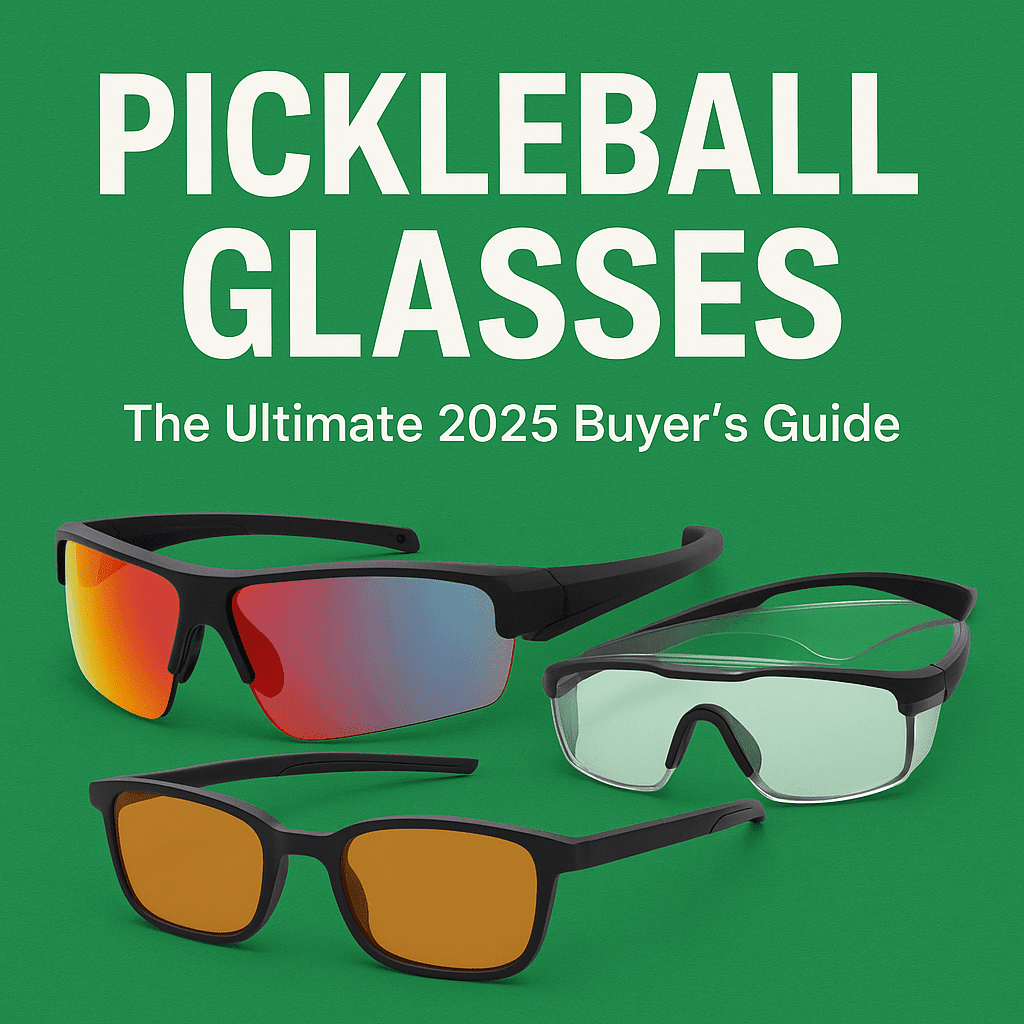
Polarized lenses are one of the most common mistakes pickleball players make. They reduce surface glare — useful for fishing or driving — but they distort depth perception in fast-moving racket sports. Optical experts specifically advise against them for pickleball: the depth cues you need to judge a fast volley are the same ones polarization suppresses. Stick with non-polarized, contrast-enhancing tints (rose, amber, or yellow) for court play.
Lens Tint Quick Reference
| Tint | Best For | Depth Perception | Ball Contrast | Recommend? |
|---|---|---|---|---|
| Rose / Amber | All-around, mixed light | Excellent | Best | Yes |
| Clear | Indoor, low-light courts | Excellent | Good | Yes |
| Yellow | Indoor, overcast | Excellent | High | Yes |
| Gray / Green | Bright outdoor sun | Good | Neutral | In bright sun |
| Photochromic | Indoor + outdoor (auto-adjusts) | Excellent | Adaptive | Yes |
| Polarized (any) | Glare reduction only | Poor | Neutral | Avoid |
Lens Technology: Which Type Fits Your Game
The tint table above tells you what color to pick. This tells you what type of lens technology you actually need — and there are five distinct categories, each built around a different playing situation.
| Lens Type | How It Works | Best For | Price Range | Rx Compatible? |
|---|---|---|---|---|
| Fixed Tint | Single non-polarized tint chosen at purchase. Amber/rose is the all-around court standard. | Players who play primarily one court type (indoor or outdoor) | $25–$100 | Some models |
| Photochromic | Auto-darkens in UV light, clears back indoors. Transition time is ~30–60 sec — fine for most changeovers. | Players who split time between indoor and outdoor courts | $80–$220 | Yes |
| Interchangeable | One frame, multiple lens sets swapped manually. Fastest visual adaptation to changing conditions. | Players who want maximum performance control per session | $60–$180 | Select models |
| Polarized | Filters horizontal light to reduce surface glare. Also suppresses depth perception cues. | Off-court use only — fishing, driving | Any | Yes |
| Prescription Insert | Clip-in or magnetically attached Rx lens behind an outer sport shield. | Players who need vision correction and certified impact protection | $120–$260 | By design |
Play both indoor and outdoor? Photochromic is the cleanest single-pair answer — no swapping, no second case to carry. The CRBN Pivot and Rudy Project Rydon are the two models worth shortlisting. Full breakdown: Best Photochromic Pickleball Glasses 2026.
Need prescription correction? Not all sport frames physically accommodate Rx lenses — especially high-wrap geometries with strong prescriptions. Our Prescription Pickleball Glasses 2026 guide covers which frames accept full builds versus insert systems, and what to discuss with your optician before ordering.
Best Protective Pickleball Glasses
If you're recovering from eye surgery, play at a competitive pace, or simply prioritize keeping your eyes in one piece — start here. These frames meet certified impact standards (ANSI Z87.1 or ASTM F803) and provide the widest coverage on court.
The best all-around protective option built specifically for pickleball. The Pivot uses a modular shield-style frame that meets ANSI Z87.1, with quick-swap photochromic lenses that auto-tint indoors and out. The amber contrast lens is particularly effective for tracking yellow balls in mixed lighting. It accepts prescription inserts, which makes it the top pick for players who need Rx without giving up certified protection.
The Gamer holds ASTM F803 certification — the standard specifically written for racket sports and high-velocity ball impact. Clear lens maximizes light transmission for both indoor and outdoor play. The optional strap converts it to goggle mode, and it's fully Rx-compatible. The industrial look isn't for everyone, but for players with serious protection requirements, nothing on this list is more certified.
A solid mid-market option with a sporty wraparound design and three interchangeable lenses (amber, blue, clear). The adjustable nosepiece, anti-fog coating, and vented design make it practical for real court conditions. It's not ANSI-certified, but the polycarbonate build and 99.9% UV coverage make it a reasonable protective choice for recreational players who want versatility at an accessible price.
Best Performance Pickleball Sunglasses
Performance sunglasses prioritize optical quality, secure fit during fast movement, and non-polarized contrast lenses that enhance rather than distort your court vision. These are the picks for outdoor players who want their eyewear actively helping their game — not just protecting it.
The benchmark for sport eyewear. The PRIZM™ lens technology is genuinely excellent — it's engineered to enhance contrast in specific environments, and the Field variant makes yellow objects (like a pickleball) visibly sharper against most court backgrounds. The O-Matter frame is durable and light, Unobtainium® grips hold under sweat, and the entire line accepts prescription builds. The price is real, but so is the optics advantage.
The Rydon earns its spot through adaptability. ImpactX photochromic lenses auto-adjust tint from indoor clear to dark outdoor, meaning one pair covers every court condition without a lens swap. The adjustable nose pads and temple system genuinely fit a wide range of face shapes, and the hydrophobic AR coating handles both sweat and rain. Best for players who move between indoor and outdoor courts regularly and don't want to manage multiple pairs.
A 2025 release engineered specifically for pickleball courts — not repurposed from cycling or running. Non-polarized UV400 polycarbonate, anti-scratch coating, lightweight frame with sweat-resistant grips, and full prescription availability. The brand is pickleball-only, which means the design decisions (lens curve, coverage area, grip placement) are all made with racket-sport movement in mind. An honest, purpose-built option at a fair price.
The best performance lens isn't the darkest one —
it's the one that makes the yellow ball sharper.
The COLORBOOST lens technology in the RJX Enhance genuinely works — it filters specific wavelengths to make the yellow pickleball pop against background colors, which matters most on busy outdoor courts with mixed backgrounds. Non-polarized (critical for depth perception), secure temple grip, and a fit system designed for sustained play rather than just looking good on the shelf. Our full JOOLA RJX Enhance review breaks down what COLORBOOST actually does vs. standard contrast lenses.
Best Indoor & Low-Light Pickleball Glasses
Indoor pickleball courts are often lit with fluorescent panels or mixed-source lighting that creates flat shadows and reduces contrast. The wrong lens — especially a dark tint — makes ball tracking harder, not easier. For indoor play, you want clear or light-yellow lenses with anti-fog treatment and vented frames.
A full-coverage sport frame with a completely clear lens — zero tint, maximum light transmission. Anti-scratch and anti-fog treated out of the box, with a vented frame to prevent fogging during active play. Clean-looking enough that you won't feel like you're wearing safety gear. The definitive recommendation for indoor court play.
A workhorse sport frame that balances indoor and outdoor utility. Shatterproof polycarbonate lenses with a glare-reducing coating, vented design to reduce fog, and adjustable nose and ear pieces for a customized fit. The amber lens option enhances contrast in variable lighting, making it a strong choice for players who play both inside and outside without wanting to swap frames.
Best Budget Pickleball Glasses (Under $50)
You don't need to spend $150 to protect your eyes. These picks offer genuine UV protection, polycarbonate impact resistance, and non-slip sport fits at prices that make it easy to just buy them and stop thinking about it.
The cleanest budget recommendation on this list. Non-polarized, polycarbonate, vented to prevent fogging, with a flexible frame that fits most face sizes. No prescription option and no lens swappability, but for a player who just needs protection and doesn't want to overthink it — this is the answer. Pick the amber lens for outdoor, clear for indoor.
The lowest-cost option worth recommending. Shatterproof polycarbonate in several tints (amber, blue, clear), lightweight construction, and a basic sport fit. No advanced coatings, no Rx option, and limited ventilation — but at this price point, they're a legitimate "just wear something" solution. Especially well-suited as a beginner pair or backup set.
Punches well above its price. Three interchangeable lenses included (not sold separately), full UV400 protection, lightweight frame, and a lifetime warranty — all from a brand built specifically for pickleball. The lack of premium coatings is a trade-off at this price, but the lens system and warranty alone put it ahead of most options in the $50–$80 range.
The best-reviewed budget option at this price point in 2026. Polycarbonate lens, anti-scratch coating, wraparound sport fit with adjustable nose pads — all for less than a dinner out. The yellow tint option is particularly good for overcast outdoor courts where a clear lens feels flat. We put the full story in our Gearbox Vision review — short version: buy them.
Keep your glasses
court-ready
Universal size, soft interior, sturdy foam protection. Attaches magnetically to your Court Caddy so your eyewear is always accessible — not buried at the bottom of your bag.
Best Prescription Pickleball Glasses
Playing in contacts works for many players, but if you prefer not to — or can't — there are solid Rx options built for sport use. The key requirements: polycarbonate or high-index lenses (not glass, never glass), certified impact resistance where possible, and a frame geometry that your optician can actually grind a prescription into. High-wrap frames have real limitations for strong prescriptions.
- Best overall Rx option: Wiley X Gamer or Oakley Flak 2.0 XL. Both accept full prescription builds, have established Rx lab networks, and meet impact safety standards.
- Best for high prescriptions: ROKA Barton 2.0 — flatter frame geometry accommodates strong Rx values that wraparound designs can't handle.
- Best insert system: CRBN Pivot. A clip-in Rx insert sits behind the shield lens, combining certified outer protection with your prescription correction inside.
- Photochromic Rx: Rudy Project Rydon with ImpactX prescription lenses — one pair handles every lighting condition automatically.
What to Ask Your Optician
Before ordering prescription sport glasses, confirm three things: that the frame can physically accommodate your lens power (especially for high prescriptions in wrap geometries), that your lenses will be polycarbonate or high-index rather than standard plastic, and that the frame you're ordering has been approved by your Rx lab. Not every lab works with every sport frame.
We tested the top Rx-compatible frames head-to-head — including which labs support which models and what to expect for strong prescriptions in high-wrap builds — in the full Prescription Pickleball Glasses 2026 guide.
What to Look For: Buying Checklist
Once you've identified your category, narrow down options using these criteria. Every pick on this list was evaluated against all of them.
Non-Negotiables
- Polycarbonate or Trivex lenses: Impact-resistant, lightweight, shatterproof. No glass. No cheap plastic.
- Non-polarized: Polarized lenses kill depth perception in racket sports. This is not debatable. See the warning block above.
- UV400 protection: Blocks 99–100% of UV-A and UV-B rays. Standard on nearly all sport eyewear; verify it's listed before buying.
- Secure fit under movement: Rubber nose grips, rubberized temple tips, or optional strap. Glasses that slip are glasses that don't get worn.
Worthwhile Upgrades
- ANSI Z87.1 or ASTM F803 certification: Certified impact resistance for high-velocity ball sports. Worth prioritizing if you play competitive or hard-hitting rec.
- Anti-fog venting: Vented frames or anti-fog coatings prevent clouding during long matches, especially on hot courts or when transitioning indoor/outdoor.
- Interchangeable lens system: One frame, multiple tints. Lets you run a clear lens indoors and swap to amber or gray outdoors without buying two pairs.
- Photochromic lenses: Auto-tinting from clear to dark based on UV light. Best solution for players who hate carrying multiple lens sets.
Nice to Have
- Adjustable nose pads: Critical for players with flatter or higher nose bridges — most sport frames assume a narrower nose profile.
- Scratch-resistant and hydrophobic coatings: Extend lens life on frames you'll use daily and keep vision clear in sweaty conditions.
- Warranty: Solaro offers lifetime warranty at $60. Cheaper options usually offer nothing. Factor replacement cost into your actual decision.
Pickleball Glasses FAQ
Complete Your Setup
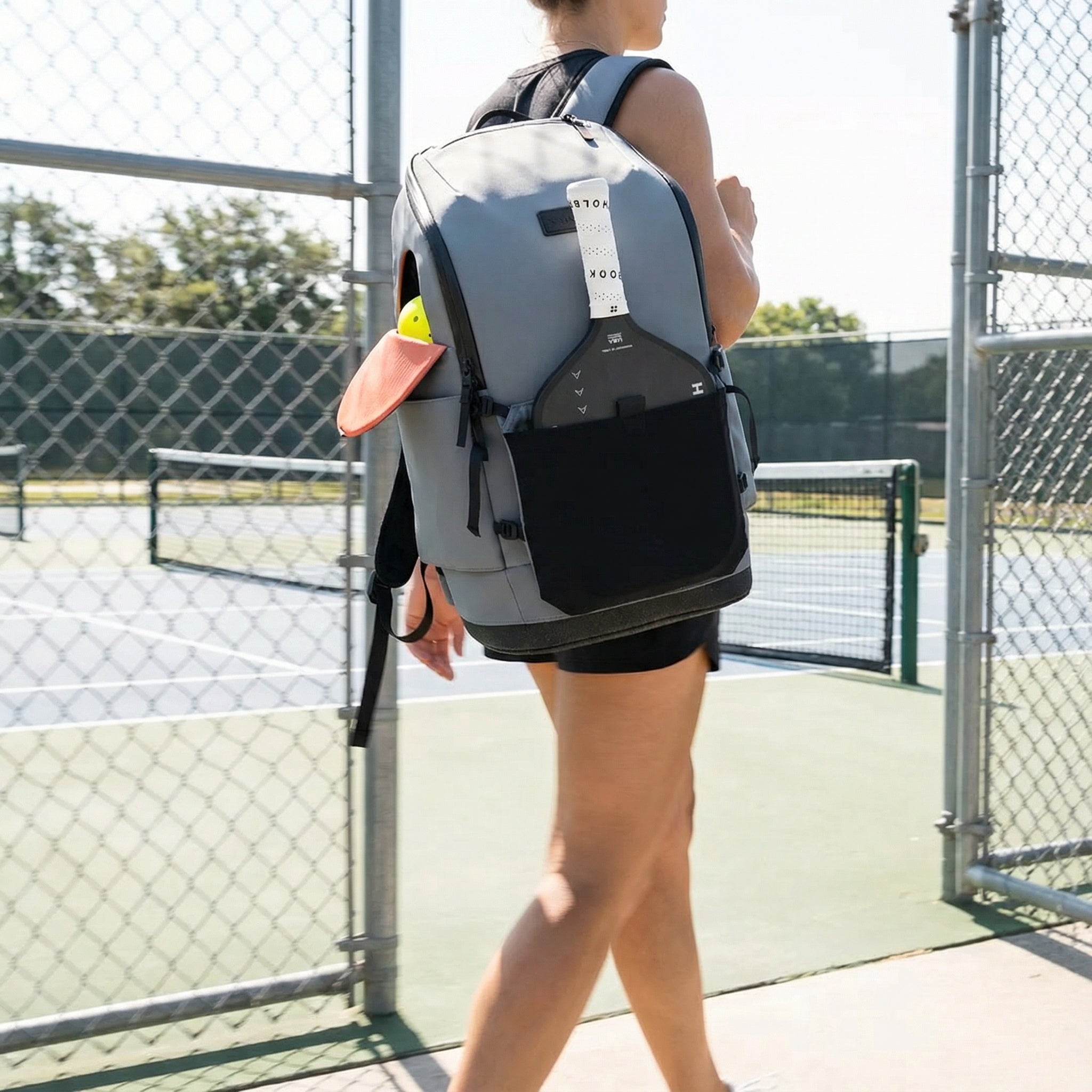
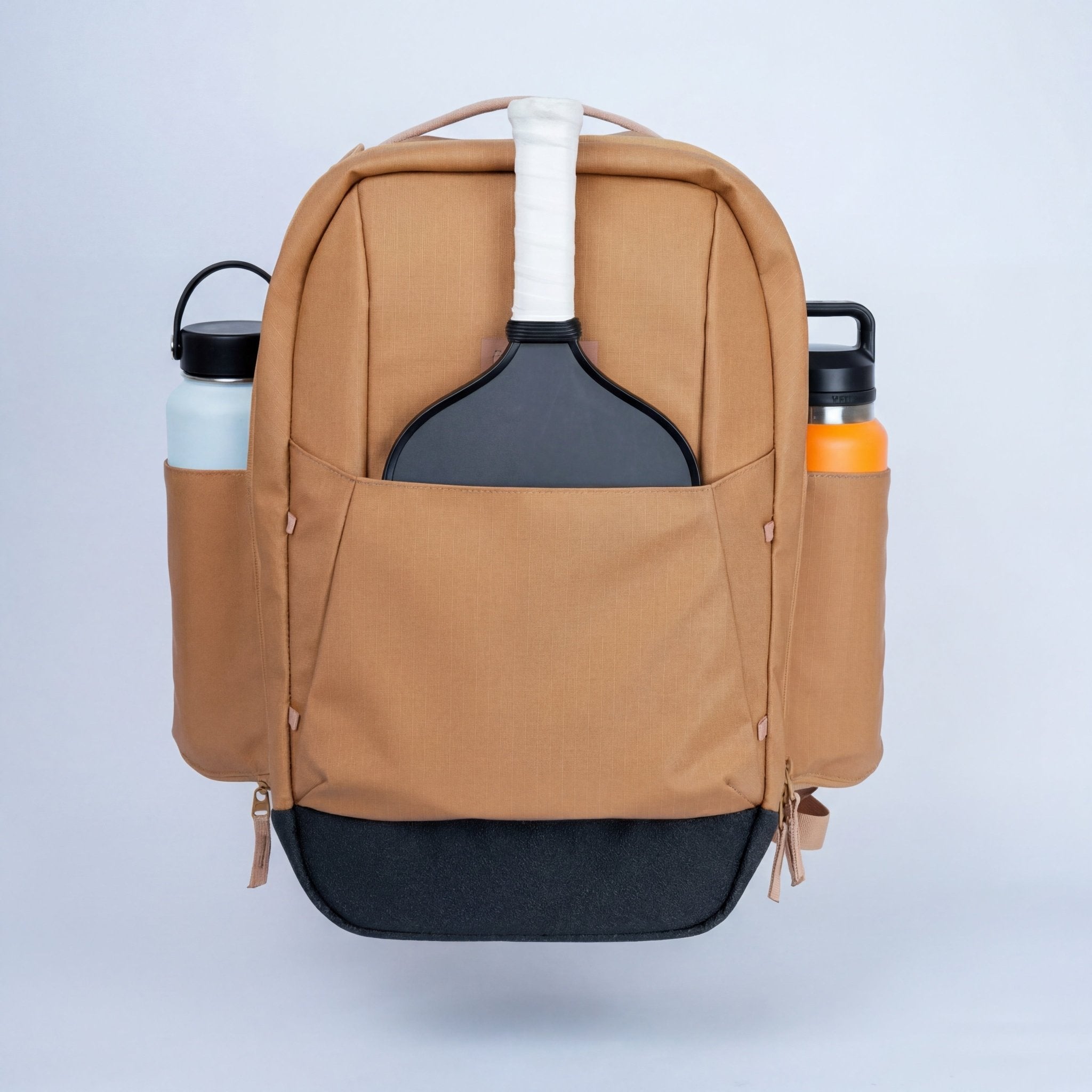
Good eyewear is one piece of the puzzle. The other is a bag that keeps all your court gear — glasses case included — organized and ready. The Court Caddy has a dedicated accessories pocket for exactly this kind of thing.

Bottom Line: Protect First, Optimize Second
The best pickleball glasses are the ones you actually wear. Start with a non-polarized, polycarbonate frame in your price range — even a $25 Tifosi Intense is a genuine upgrade over bare eyes. Then optimize from there: better contrast lenses if you're playing competitively, photochromic if you move between indoor and outdoor, prescription builds if you need vision correction.
Keep them in a case, not loose in your bag. If you're carrying a FORWRD Court Caddy, the Magnetic Eyewear Case clips directly to the bag so your glasses are accessible at the fence without digging. Small detail, but one less reason to leave them in the car.
Protect your eyes. They're the hardest piece of gear to replace.
Recommended Pickleball Glasses from Pickleball Central
FORWRD may earn a commission on purchases made through these links.
- CRBN Pivot Pickleball Glasses — ANSI Z87.1 certified, photochromic lenses, prescription-ready insert system
- JOOLA RJX Lite Eyewear — Lightweight polycarbonate, swappable lenses, great for indoor and outdoor play
- JOOLA RJX Boost Eyewear — COLORBOOST™ AI-enhanced contrast lenses, ANSI Z87.1 certified, interchangeable lens system. See our full review.
- Tourna Specs Pickleball Sunglasses — Budget-friendly amber-tint protection under $40

1 comment
jeff
Can we PLEASE stop having AI slop blog posts like this. They are ruining the internet. You didn’t even bother to check the links.
Leave a comment
This site is protected by hCaptcha and the hCaptcha Privacy Policy and Terms of Service apply.