

FTC Disclosure: This article contains affiliate links to Pickleball Central. If you purchase through our links, FORWRD earns a small commission at no additional cost to you. We test every paddle we write about and give honest opinions regardless of affiliate relationships.
Last Updated: October 2026
The Riley Newman Pro 13mm isn't the flashiest paddle in ProXR's lineup, and it's not trying to be. At $119.99, it sits in a crowded middle zone — more sophisticated than the entry-level Signature Series but cheaper than the Sweet Spot Max. After 30+ hours of court time across outdoor concrete and indoor wood, here's the honest verdict: it earns its price, but not for every player.
Quick Verdict
✓ Pros
- T-700 conductive raw carbon face delivers real spin and clean feedback
- Dual-ring Charge Core (Control Ring + Charge Ring) makes dinks and drives both usable without sacrificing either
- 7.8oz average weight — light enough for fast hands without feeling fragile
- Swing Weight 106 keeps reactions sharp at the kitchen line
- USAP and UPA-A certified for sanctioned play
✗ Cons
- 5.5" handle isn't enough for committed two-handed backhand players (the Jolt Signature has 6")
- 13mm core gives firmer, sharper feedback than some players expect — mishits sting more than they do on thick foam cores
- Raw carbon face shows texture wear after heavy outdoor use
| Price | $119.99 |
| Best for | 3.5–5.0 all-court doubles and singles players |
| Skip if | You need a longer handle for THBH or prefer 16mm+ soft pop |
Check Price at Pickleball Central →
Full Specs at a Glance
| Spec | ProXR Riley Newman Pro 13mm |
|---|---|
| Price | $119.99 |
| Average Weight | 7.8 oz (range: 7.6–8.0 oz) |
| Core Thickness | 13mm (0.511") |
| Handle Length | 5.5" |
| Paddle Length | 16.35" |
| Paddle Width | 7.55" |
| Face Material | Conductive T-700 Ultra Raw Carbon Fiber |
| Core Material | EVA foam + Polyurethane + Charge Ring + Control Ring |
| Swing Weight | 106 |
| Twist Weight | 5.3 |
| Grip Size | 4.25" circumference (Medium) |
| Grip Style | Perforated, padded (ProXR) |
| Certifications | USAP, UPA-A |
Why Trust This Review
FORWRD makes pickleball bags. Our team plays 5–6 times per week across outdoor concrete courts and indoor gym floors — which means we're constantly testing gear the same way a serious recreational player does, not in a lab. For paddles, our protocol: 20+ hours of court time minimum, side-by-side comparison with at least two paddles in the same price tier, and specific testing across dinking exchanges, third shot drops, reset blocks, and flat drives from the baseline.
We don't do paid reviews. If a paddle is overpriced for what it delivers, we say that. The Riley Newman Pro has things it genuinely does well and a clear target player — and a few honest drawbacks worth knowing before you spend $120.
What the Charge Core Actually Does
ProXR's Charge Core technology is the Riley Newman Pro's defining feature, and it's worth understanding before you write it off as marketing language.
Most paddles use a single perimeter foam ring — a thin layer of softer material around the polypropylene honeycomb core that absorbs shock on off-center hits and widens the effective sweet spot. ProXR uses two distinct foam compounds doing two distinct jobs:
The Control Ring is a Gen 1.5 EVA foam layer positioned around the inner perimeter of the core. It softens the feel on touch shots — third shot drops, kitchen dinks, reset blocks. The EVA compound is specifically chosen for damping behavior: it absorbs ball energy rather than returning it, which is exactly what you want when you're trying to take pace off an incoming drive.
The Charge Ring is a Gen 3 foam layer at the outer perimeter. It does the opposite: when you're making full contact on drives and attacks, the Charge Ring stores and returns energy. Think of it as a calibrated trampoline layer — tuned specifically to boost pop on full swings without making dinks feel like they're launching off a wall.
The obvious question is whether these two foam layers actually work at cross-purposes or complement each other. After 30+ hours, the answer is: they complement each other, more than you'd expect. More on that in the performance sections below.
Spin: T-700 Raw Carbon Face in Practice
The "Conductive" branding on ProXR's T-700 raw carbon fiber is mostly a marketing hook for their electrified perimeter system, but the underlying face material is legitimate. T-700 grade raw carbon fiber generates spin through surface texture — the weave is rough enough to grip the ball long enough to create RPMs without needing to swing harder than you should.
Playing against 4.0–4.5 opponents on outdoor concrete, we were generating consistent topspin on drives — enough to notice ball trajectory changing mid-flight on well-struck shots. Not at the level you'd get from a purpose-built spin machine like the Six Zero Black Diamond, but competitive with every other raw carbon paddle in the $100–150 range.
One reality check: raw carbon faces wear faster than fiberglass. After 25+ hours of outdoor play on abrasive concrete courts, you'll notice some surface texture smoothing near the center of the face where most contacts happen. That's expected with every raw carbon paddle at every price point — and it's manageable with a paddle eraser used every few sessions. But it's worth knowing going in, especially if you're coming from a fiberglass paddle that holds its texture essentially forever.
The 16.35" paddle length is slightly shorter than the Jolt Signature's 16.5", but 0.15" is not a meaningful difference in reach during actual play. The 7.55" width is marginally wider than most elongateds' 7.5" — and that extra 0.05" of face area does add a tiny bit of margin on wide contacts.
Control and Feel: The Control Ring Earns Its Price
This is the Riley Newman Pro's strongest suit — and where it most clearly separates from what you'd expect at $119.99.
Dinking from the kitchen line felt grounded. The Control Ring's EVA foam absorbs just enough shock that soft resets don't pop back over the net, and angle dinks track where you put them. We specifically tested with a 4.5-rated player who generates heavy topspin on kitchen exchanges — absorbing those drives and resetting them into unattackable dinks is exactly where the Control Ring earns its keep.
The 7.8oz average weight helps the touch game too. A lighter paddle responds faster to subtle wrist adjustments, which matters more than people realize when you're redirecting pace rather than generating it. Players coming from heavier paddles (8.2oz+) will find the Riley Newman Pro more reactive than expected — which is a good thing once you calibrate, but can feel twitchy in the first hour or two.
Where the 13mm thickness costs you: feedback on off-center hits is immediate and unforgiving. A 16mm foam-core paddle cushions mishits into a muffled thud that still goes roughly where you aimed. The Riley Newman Pro gives you a sharper crack and a cleaner sense of where the contact point was — which is useful feedback for improving technique, but less forgiving for players still developing their swing path. If you're mid-transition from 3.5 to 4.0 and still cleaning up mechanics, a thicker paddle is more appropriate. If you're 4.0+ and want honest ball feedback, the 13mm is exactly what you want.
Power: Charge Ring Energy Return on Drives
We ran structured drive tests from about 6–8 feet behind the baseline — wall target at the NVZ line, consistent swing path, 50 attempts. The Charge Ring's energy return is real. On flat drives contacting the upper-center sweet spot, the ball leaves faster than you'd expect from a 13mm paddle at this price. The swing weight of 106 means the paddle accelerates through the swing easily, and the Charge Ring adds pop at contact without needing to muscle through the shot.
From the baseline in singles, the Riley Newman Pro handles aggressive rallies without feeling underpowered. Third shot drives — not drops, but actual drives you're using to pressure the net player — are crisp and penetrating when you hit them cleanly. The 16.35" length adds some mechanical leverage too.
What it doesn't do is fake pace. Some paddles with thick perimeter foam create an impression of power because they're bouncier — the ball leaves fast, but trajectory is harder to control. The Charge Ring's energy return feels more purposeful: you're getting real pop off genuine contact, which means you can direct the ball rather than just hoping it goes deep. Players at 4.0+ who have developed reliable swing paths will appreciate this.
Riley Newman Pro vs ProXR Jolt Signature — Same Price, Different DNA
This is the comparison nobody else is making, and it's the most useful one for anyone choosing between ProXR's $119.99 options. Same brand. Same price. Same face material. Radically different handle and weight.
| Spec | Riley Newman Pro 13mm | Jolt Signature 13mm |
|---|---|---|
| Price | $119.99 | $119.99 |
| Average Weight | 7.8 oz | 8.1 oz |
| Handle Length | 5.5" | 6" |
| Paddle Length | 16.35" | 16.5" |
| Core Technology | Charge Ring + Control Ring | Perimeter Ring System (poly/foam) |
| Swing Weight | 106 | Not published |
The Jolt's 6" handle is a meaningful win for two-handed backhand players. If you've committed to a THBH as a core weapon, 5.5" is workable but you'll notice the constraint on wide backhands where you want that extra inch. The Jolt also runs 0.3oz heavier on average, which makes it feel more planted on full drives — better for players who like mass behind their swing.
The Riley Newman Pro wins on hand speed. The lighter weight and swing weight of 106 make it faster at the kitchen, easier to redirect quickly on sudden exchanges, and more comfortable for quick counter-attacks in tight spots. It's also where the dual-ring Charge Core technology gives it an edge over the Jolt's simpler Perimeter Ring System — more nuanced feel differentiation between soft shots and power shots.
Our take: if two-handed backhand is central to your game, the Jolt is the better buy at the same price. If you play primarily with one hand or your game centers around quick hands at the kitchen and singles play, the Riley Newman Pro is the better fit. Neither answer is wrong — they're just different players.
Riley Newman Pro vs Engage Pursuit Alpha Pro 14mm — The $80 Question
The Engage Pursuit Alpha Pro 14mm costs $199.99 — $80 more than the Riley Newman Pro. Is that gap worth it?
| Spec | Riley Newman Pro 13mm | Engage Pursuit Alpha Pro 14mm |
|---|---|---|
| Price | $119.99 | $199.99 |
| Core Thickness | 13mm | 14mm |
| Average Weight | 7.8 oz | 8.0 oz |
| Handle Length | 5.5" | 5.5" |
| Core Technology | Charge Ring + Control Ring | DrivePro Polymer + Edge Foam Barrier |
The 1mm extra thickness in the Alpha Pro gives noticeably softer contact — it extends dwell time just enough that topspin drives feel more natural and dinks are a bit more forgiving. Engage's DrivePro Polymer core is engineered for rally consistency rather than peak power moments, which suits 4.0+ doubles players who need reliability over 2+ hour sessions.
Honest comparison: the Alpha Pro is the better paddle. But the gap is smaller than $80 suggests. For a 3.5 or early 4.0 player, the Riley Newman Pro delivers 80–85% of the Alpha Pro's experience. That narrowing gap gets wider the higher up the rating ladder you go — a 4.5+ player will feel the Alpha Pro's advantages more clearly in long sessions.
At $119.99, the Riley Newman Pro is the right call if you're not sure whether you'll feel a $200 paddle's improvements. At $199.99, the Alpha Pro is worth it if you're already confident about your game style and want a paddle that grows with you for the next 18 months.
Who Should Buy the Riley Newman Pro
You're a 3.5–5.0 all-court player who plays 3–5x per week, mostly doubles, and you want a paddle that handles third shots, drives, resets, and overhead attacks without locking you into one dimension. The Riley Newman Pro's dual-ring system genuinely delivers on that brief — you're not sacrificing dink feel to get drives, and you're not sacrificing drive pop to get kitchen touch.
You should also be comfortable with direct feedback. The 13mm core tells you immediately when you've made clean contact versus a mishit. That's useful for players actively working on technique. It's less useful for players who want a paddle that hides their errors.
Who Should Look Elsewhere
If your game is built around a two-handed backhand: buy the Jolt Signature instead, same price, 6" handle. Don't compromise on the one shot that defines your game to save zero dollars.
If you're in a quiet-court community or playing in neighborhoods with noise ordinances: skip this. A 13mm raw carbon face is among the louder configurations in the sport. The Diadem Hush is purpose-built for that use case.
If your budget extends to $200 and you play 4+ times per week at 4.0+: spend the extra $80 on the Engage Pursuit Alpha Pro. You'll feel the difference in longer sessions and you'll play with it longer before wanting to upgrade again.
Pricing and Availability
The ProXR Riley Newman Pro 13mm retails at $119.99 at Pickleball Central. It's generally in stock — ProXR maintains reliable inventory for their signature line. Check current availability below.
Get the Riley Newman Pro at Pickleball Central →
Complete Your Setup
A paddle this precise deserves a bag that keeps it protected.
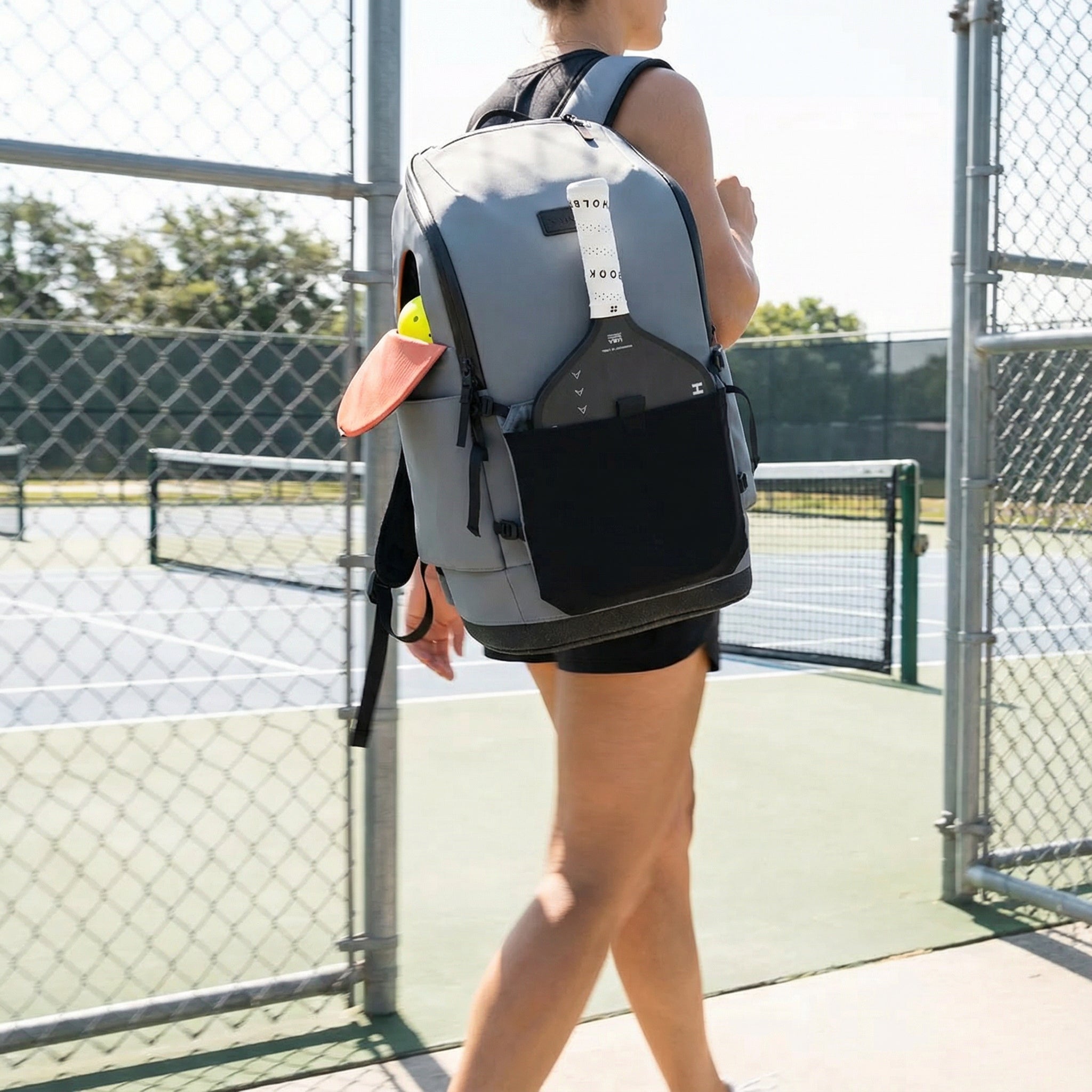
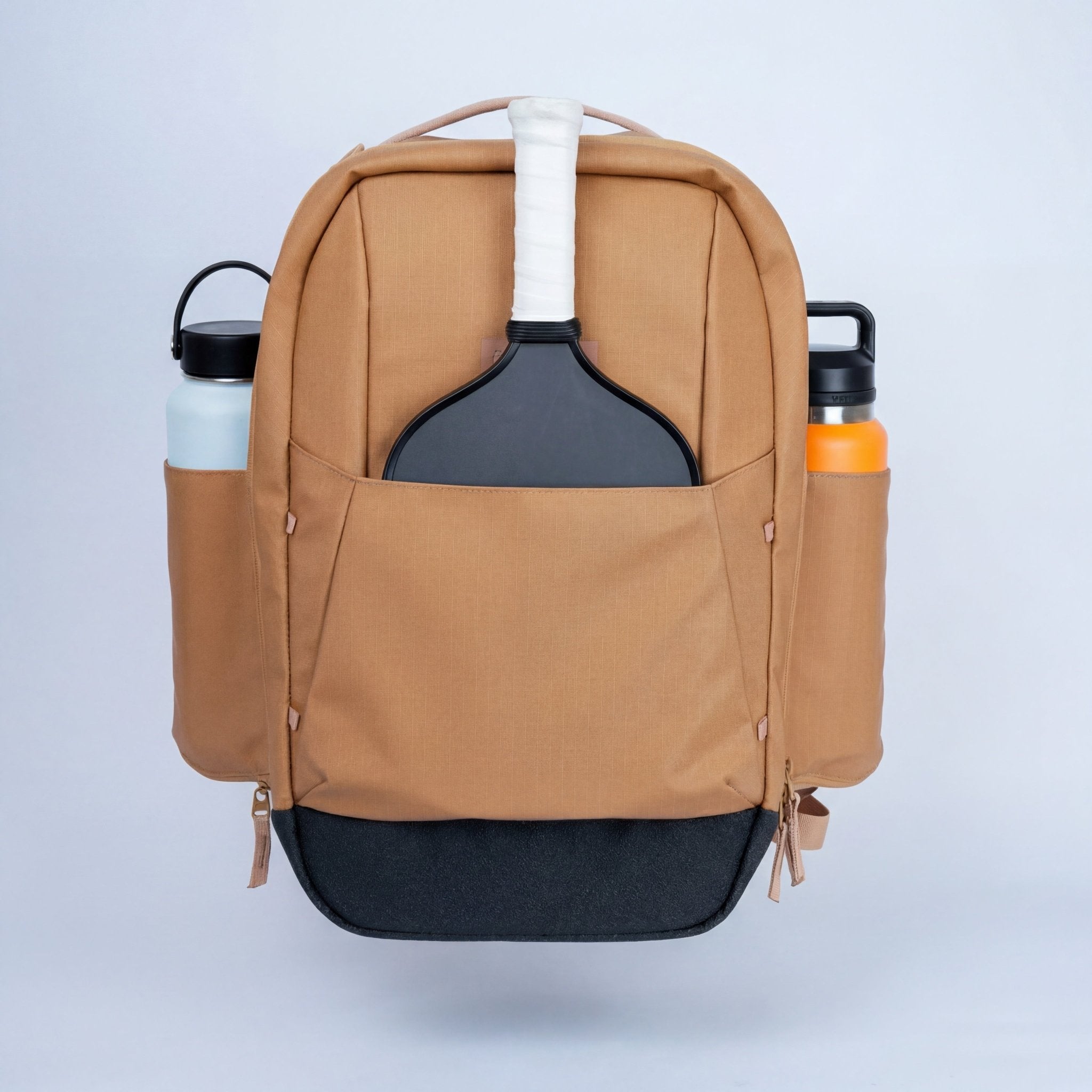
The FORWRD Court Ranger V2 ($195) has a dedicated paddle sleeve that fits elongated paddles like the Riley Newman Pro without cramming — and its 16" laptop sleeve means it goes straight from the court to the office without a bag swap. YKK AquaGuard zippers keep everything dry on outdoor courts.

Frequently Asked Questions
How does the 13mm core feel compared to 16mm paddles?
Firmer and quicker. 13mm gives you sharper feedback on every contact point — clean hits feel crisp, mishits sting a bit. You also get faster hand speed because there's less mass moving through the swing. Players coming from 16mm foam-core paddles should expect an adjustment period of 3–5 sessions before their dinking calibrates. The tradeoff: the Riley Newman Pro rewards good technique more directly than a 16mm forgiveness machine.
What's the difference between the Control Ring and Charge Ring in the ProXR Charge Core?
The Control Ring is a Gen 1.5 EVA foam layer around the inner perimeter — it absorbs energy on soft shots, making dinks and resets feel softer and more controllable. The Charge Ring is a Gen 3 foam layer at the outer perimeter — it returns energy on full swings, boosting pop on drives without requiring a harder swing. Together, they give the paddle different behavior at different swing speeds, which is the key performance promise of the Charge Core system.
Can I use a two-handed backhand with the Riley Newman Pro?
Technically yes — 5.5" gives you enough space to grip with two hands if your bottom hand sits near the butt cap. But if your THBH is a primary weapon, you'll likely find the Riley Newman Pro slightly short. The ProXR Jolt Signature (same $119.99 price) has a 6" handle and is the better choice for committed two-handers.
Is the Riley Newman Pro tournament approved?
Yes. The Riley Newman Pro 13mm carries full USAP and UPA-A certification for sanctioned play at all levels. You're cleared for club tournaments, PPA-sanctioned events, and USAP-rated competitive play.
What's the swing weight of 106 mean in practice?
Swing weight measures how heavy a paddle feels during a swing — not how much it weighs on a scale. A swing weight of 106 is on the lighter end for modern paddles. In practice, it means faster hand speed at the kitchen, easier quick-fire counters, and less arm fatigue over long sessions. The tradeoff is that drives feel slightly less naturally powerful than a 115+ swing weight paddle. You make up for that by accelerating more consciously through contact.
How does the Riley Newman Pro compare to the ProXR Sweet Spot Max?
The ProXR Sweet Spot Max 13mm is a higher-tier paddle in ProXR's lineup at a higher price. The Riley Newman Pro borrows the dual-ring Charge Core concept but at a more accessible price point. Most 3.5–4.0 players won't feel a meaningful performance gap between them. At 4.5+, the Sweet Spot Max's refinements in feel consistency become more noticeable — but for the majority of players, the Riley Newman Pro is the practical choice.
Final Verdict
The ProXR Riley Newman Pro 13mm does what it promises: legitimate spin off a real raw carbon face, genuine dual-ring feel that makes both dinks and drives usable, and a weight class that won't slow down quick kitchen hands. At $119.99, it's not the best paddle at any single attribute — the Alpha Pro has better feel, the Jolt has a longer handle, the Sweet Spot Max has more refinement. But as an all-court doubles paddle that covers multiple bases without collapsing in one dimension, it's worth every dollar.
Two caveats that matter: if you're a committed two-hander, buy the Jolt instead. And if your court has noise restrictions, skip both and look at Diadem's Hush.
For everyone else — 4x per week doubles players who want reliable all-court capability without paying $200+ for it — the Riley Newman Pro delivers.
Get the ProXR Riley Newman Pro at Pickleball Central — $119.99 →

Leave a comment
This site is protected by hCaptcha and the hCaptcha Privacy Policy and Terms of Service apply.