

Last Updated: September 2026
FORWRD may earn a commission on purchases made through links to Pickleball Central. We only link to products we'd recommend regardless.
Choosing the right pickleball bag sounds simple until you're at the court with a scratched paddle face, a soaked change of clothes, and no idea where you put your extra balls. The wrong bag creates friction — the right one disappears into your routine.
This guide covers every bag type, the features that actually matter, how much to spend at each level, and what real players look for when they've been through a few bags. We'll also tell you exactly which bag we recommend — and why.
Why Your Pickleball Bag Matters More Than You Think
Most players underestimate their bag until something goes wrong. A paddle sleeve that doesn't hold the paddle flat leads to edge guard chips. No ventilation on the shoe compartment means everything smells by session three. Cheap zippers fail at the worst moment — usually when you're rushing to get on court.
A well-designed pickleball bag isn't about status. It's about protecting equipment that costs $100–$200 a paddle, having everything where you expect it, and walking to the court without feeling like you're carrying a disorganized duffel. After working with 500+ real players during product development, the single most common complaint we heard wasn't about paddles or balls — it was about bags that didn't keep gear organized.
Players who carry their gear properly protect their paddles, look more prepared, and waste less time digging.
The Three Main Types of Pickleball Bags
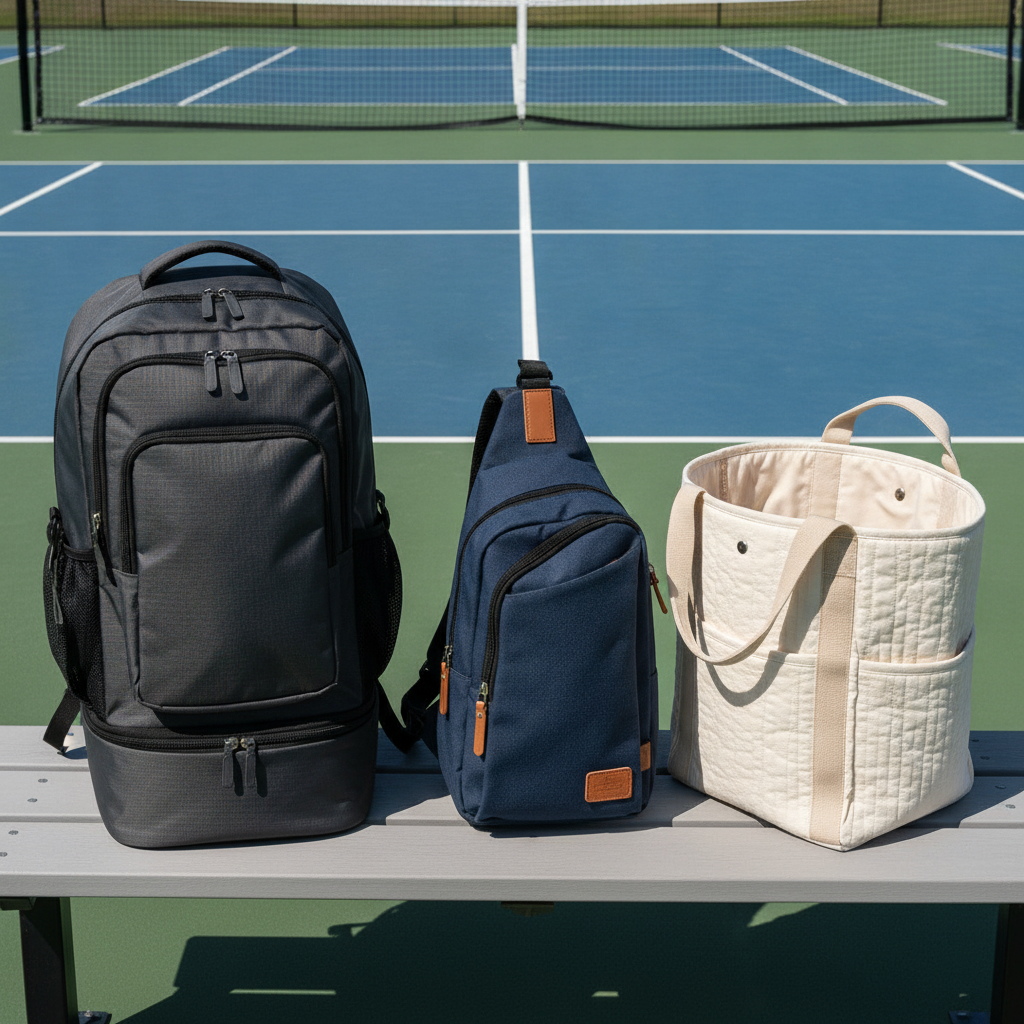
Pickleball Backpack
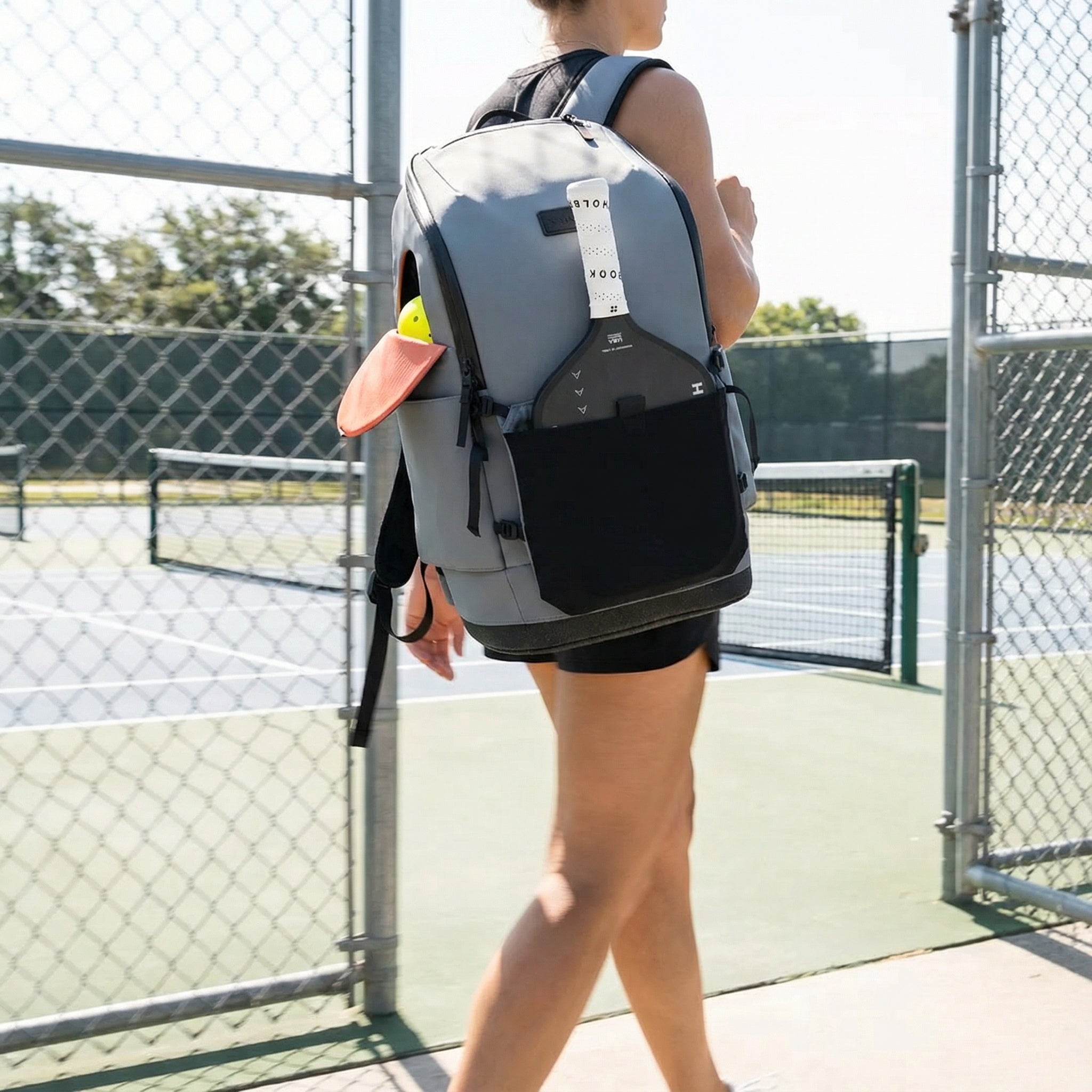
The most versatile option for most players. A pickleball backpack distributes weight evenly across both shoulders, making it the best choice for anyone carrying a full kit: paddles, shoes, balls, a water bottle, snacks, and a change of clothes.
Look for: padded paddle sleeve, structured base, laptop or valuables pocket, padded shoulder straps, water-resistant exterior.
Best for: Club players, tournament players, and anyone commuting to the courts who needs to carry a full day's worth of gear.
Pickleball Sling Bag
A single-shoulder option that prioritizes speed and lightness over capacity. Sling bags are faster to swing on and off, which makes them popular for players bouncing between courts at a rec facility. The tradeoff is comfort — carrying 10+ lbs on one shoulder gets old quickly, especially after a two-hour session on outdoor concrete.
Look for: quick-access paddle pocket, chest strap to stabilize the load, adjustable shoulder strap.
Best for: Casual players who bring 1–2 paddles, minimal gear, and want mobility over storage.
Pickleball Tote Bag
Open-top or zip-top totes prioritize easy access. They're popular with players who want to grab and go — throw in a paddle, shoes, and a water bottle and head to the courts. The downside is organization: totes don't have dedicated compartments, so everything ends up in a pile.
Look for: reinforced handles, interior dividers, a separate shoe pocket if possible.
Best for: Players who travel extremely light and won't be carrying more than one paddle and basic essentials.
"After testing every bag category in this guide, the answer I give 9 out of 10 players is: get a backpack with a proper paddle sleeve. The sling is fast but your shoulder knows it after a double session. The tote makes you dig for everything. A backpack with real organization just gets out of your way."
— Grub, FORWRD Co-founder and co-designer of the Court Caddy
Key Features to Look For in a Pickleball Bag
| Feature | Why It Matters | What to Look For |
|---|---|---|
| Padded paddle sleeve | Prevents edge guard chips and face scratches | Fits 2–3 paddles flat; separate from main compartment |
| Vented shoe compartment | Keeps odors isolated from paddle and clothes | Bottom-load access, mesh ventilation |
| Water-resistant zippers | Outdoor courts mean rain and wet benches | YKK AquaGuard or equivalent coil zipper |
| Structured base | Bag stands upright instead of flopping over | Rigid or semi-rigid bottom panel |
| Capacity (25–40L) | Room for full kit without being oversized | Main compartment + secondary + paddle sleeve |
| Padded shoulder straps | Comfort over long days at the courts | Contoured foam with adjustable sternum strap |
Budget Guide: What to Spend on a Pickleball Bag
Not all price points deliver the same value — and where you play determines what you actually need.
| Price Tier | Who It's For | What You Get | What You Sacrifice |
|---|---|---|---|
|
$30–$70 Budget |
Brand-new players, kids, casual once-a-month play | Basic backpack with a paddle pocket, fits the basics | Zipper quality, ventilation, dedicated shoe compartment |
|
$70–$150 Mid-Range |
Recreational players, 1–2x per week | Real paddle sleeve, some organization, better materials | Premium weather protection, laptop sleeve, brand longevity |
|
$150–$200 Serious Recreational |
Club players, 3+ sessions per week | Structured bags with proper compartments, durable zippers | The very top-tier organization systems and warranties |
|
$200–$325+ Premium |
Competitive players, frequent travelers, daily players | Purpose-built paddle protection, modular organization, lifetime-grade construction | Nothing worth noting at this level |
Most players who play 3+ times a week end up spending more than they planned on their first bag — usually because they went budget, the zipper broke at month three, and they're now buying again. Spending $195–$325 once beats $70 twice.
Our Top Pick: The FORWRD Court Caddy Pickleball Backpack
After testing bags from across the market and working with 500+ real players to refine the design, our top recommendation is the Court Caddy Pickleball Backpack by FORWRD ($325).
The Court Caddy was built specifically around the problems pickleball players run into with generic backpacks: paddles rattling loose, shoes contaminating the main compartment, and zippers failing in wet conditions. Here's what sets it apart:
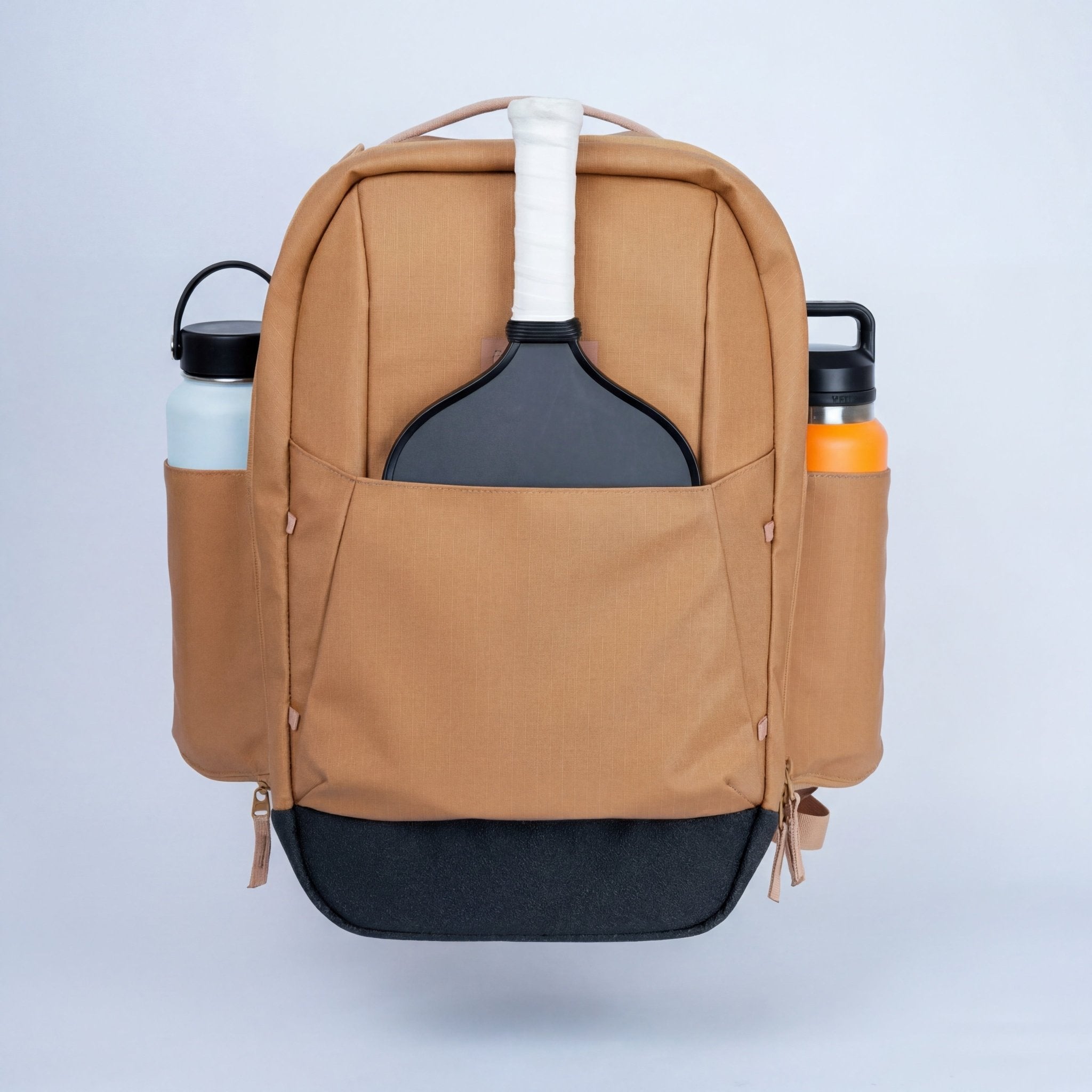
- 15" padded laptop sleeve doubles as a dedicated paddle compartment — holds up to 3 paddles flat and protected
- YKK AquaGuard zippers throughout — the same water-resistant coil zipper standard used on technical outdoor gear
- Modular paddle sleeve keeps paddles separated from keys, cables, and accessories that cause surface scratches
- Structured base so the bag stands upright on the bench instead of tipping over
- Featured in The Dink, Pickleball Effect, and The Kitchen
Other bags on the market can hold a paddle, but the Court Caddy's organization system means you're never digging. Everything has a place, and you'll find it every time.
Shop the Court Caddy Pickleball Backpack →

Pickleball Bag Comparison: Backpack vs. Sling vs. Tote
| Backpack | Sling Bag | Tote | |
|---|---|---|---|
| Carry comfort | ★★★★★ | ★★★☆☆ | ★★☆☆☆ |
| Storage capacity | ★★★★★ | ★★★☆☆ | ★★★☆☆ |
| Organization | ★★★★★ | ★★★☆☆ | ★★☆☆☆ |
| Quick access | ★★★☆☆ | ★★★★★ | ★★★★☆ |
| Best for | Full kit, tournaments, commuting | Light loads, rec play | Minimal gear, casual |
How to Choose Based on Your Playing Style
Recreational / Casual Player (1–2x per week)
If you're playing a couple times a week at a local rec center and keeping it simple, a mid-size backpack or a quality sling bag covers your needs. Prioritize a padded paddle sleeve and a water bottle pocket. You don't need 40L of space — you need organization.
Club / Regular Player (3+ per week)
At this frequency you're accumulating shoes that need isolation, multiple paddles, and a dedicated spot for your phone and keys. A structured backpack in the 30–40L range is the right call. The Court Caddy fits this profile exactly — it was designed by players who play at this level.
Tournament Player
Tournaments mean full days, multiple matches, food, extra gear, and a lot of time on benches between rounds. You need maximum capacity with maximum organization. Look for a large backpack with a separate shoe compartment, multiple accessory pockets, and a frame stiff enough to stand upright during the day. The Court Ranger V2 ($195, 16" sleeve) is built for this use case — maximum capacity, same YKK AquaGuard zippers and structured base as the Court Caddy, scaled for full-day tournament loads.

Common Pickleball Bag Mistakes to Avoid
We've seen players make the same bag mistakes repeatedly — here's how to avoid them:
- Buying by size alone. A 40L bag full of unorganized pockets is worse than a well-designed 25L backpack. Organization beats raw capacity every time.
- Skipping the shoe compartment. Once your shoes live with your paddle, the paddle face pays for it. Rubber sole marks on carbon fiber are permanent.
- Ignoring zipper quality. Budget zippers fail. Usually at an outdoor court, in the rain, mid-tournament. YKK-grade coil zippers are worth every dollar extra.
- Choosing a bag that can't stand upright. Flimsy bases mean the bag tips constantly on the bench. A structured base is a quality-of-life feature that you'll notice every single session.
- Going too small too soon. Most players level up their gear faster than they expect. A bag that fits your gear today might be tight in six months when you add a second paddle or a pair of court shoes.
Frequently Asked Questions
What size pickleball bag do I need?
Most recreational players do fine with a mid-size backpack (around 25–35L) that fits 2–4 paddles, balls, a water bottle, and a change of clothes. Tournament players who carry extra gear, shoes, and snacks should look for a larger 40L+ bag with dedicated compartments for each category.
What is the difference between a pickleball backpack and a sling bag?
A pickleball backpack distributes weight across both shoulders, making it more comfortable for carrying heavier loads. A sling bag sits on one shoulder and is lighter and quicker to access — ideal for players who bring minimal gear and want to move fast between courts.
Are pickleball bags worth it compared to a regular backpack?
Yes — pickleball-specific bags include paddle sleeves that prevent scratches, vented shoe compartments that keep odors contained, and water bottle pockets sized for 32oz bottles. A general backpack can technically hold the gear, but you'll deal with paddle damage that a purpose-built bag avoids entirely.
How many paddles should a pickleball bag hold?
Recreational players usually need space for 1–2 paddles. Competitive players often carry 2–3 paddles (a primary and a backup). The best bags include a dedicated padded sleeve that holds multiple paddles separately from the rest of your gear so handles and faces don't get scratched.
What features matter most in a pickleball bag?
The five features that make the biggest difference: a padded paddle sleeve, a vented shoe compartment, water-resistant zippers, a structured bottom so the bag stands upright, and padded shoulder straps for all-day comfort.
How much should I spend on a pickleball bag?
For casual players, $70–$150 gets you a solid mid-range bag. For regular club players or anyone playing 3+ times a week, $195–$325 buys a bag built to last — with the organization and durability to match frequent use. Budget bags save money upfront but rarely make it to year two.
Ready to upgrade your setup? The Court Caddy Pickleball Backpack was designed with 500+ real players and built to the standard recreational bags never hit. Shop the Court Caddy at forwrd.co →


Leave a comment
This site is protected by hCaptcha and the hCaptcha Privacy Policy and Terms of Service apply.