

Last Updated: August 2026
Paddle marketing is an arms race — every brand claims more spin, more control, more power. Most of those claims aren't wrong exactly. They're just measuring things that don't matter equally at every skill level. A 3.0 player and a 4.5 player have genuinely different needs that most "best paddles" lists collapse into the same five recommendations.
This guide is organized by where your game actually is. We cover core materials, face construction, weight, and shape — and what each one means for how you play right now, not how you want to play. If you're looking for a specific model, the FAQ and comparison table at the bottom have that. And once you've landed on a paddle, we cover the bag situation at the end — a new paddle bouncing loose in a drawstring bag is already getting edge guard damage.
Disclosure: This post contains affiliate links to Pickleball Central. If you purchase through our links, FORWRD earns a small commission at no extra cost to you. We only link to products we'd recommend regardless.
Understanding Pickleball Paddle Construction and Materials
A pickleball paddle consists of four primary components: the paddle face (hitting surface), core (internal structure), handle (grip area), and edge guard (protective perimeter). Each component directly influences paddle performance, with core technology and face materials serving as the primary performance determinants.
Modern paddle construction typically follows a sandwich design where face materials surround a honeycomb or foam core, creating a lightweight yet responsive structure. USAPA regulations limit paddle dimensions to 16.5 inches in length and 8.5 inches in width, with no thickness restrictions, allowing paddle companies to innovate within these parameters.
Core Technologies: Foam vs Honeycomb
Foam paddle cores, particularly polypropylene honeycomb core alternatives, provide enhanced power generation and better durability compared to traditional honeycomb designs. Foam cores reduce delamination risk where face materials separate from the core, a common failure point in lower-quality paddles. This construction delivers a softer feel on ball contact while maintaining structural integrity throughout the paddle’s lifespan.
Honeycomb cores, traditionally made from Nomex or aluminum, offer lightweight construction with a responsive feel that many experienced pickleball players prefer. However, honeycomb designs require precise manufacturing to prevent premature failure at stress points.
This connects directly to paddle longevity and performance consistency - foam cores generally provide better durability for recreational players, while honeycomb cores appeal to players prioritizing immediate ball feedback and control precision.
Face Materials: Carbon Fiber vs Fiberglass
Carbon fiber paddle faces deliver lightweight construction, enhanced spin potential, and premium durability that advanced players demand for elite spin generation and precise ball control. Carbon fiber’s rigid structure allows for better energy transfer from paddle to ball, resulting in more consistent shot velocity and improved accuracy on placement shots.
Fiberglass faces provide flexibility that generates natural power through slight surface deflection on ball contact. This fiberglass layer construction offers cost-effectiveness while delivering reliable performance for developing players who benefit from the power assistance during their skill development phase.
Building on core technology, face materials work synergistically with different paddle shapes to optimize performance characteristics for specific playing styles and skill levels.
Paddle Shapes and Weight Categories
Paddle shapes fundamentally alter court coverage, sweet spot size, and shot execution capabilities, with each design optimized for specific playing strategies and physical attributes. Understanding shape implications helps narrow paddle selection before considering specific models or brands.
Elongated Paddles
Elongated paddle designs typically measure 16.25 to 16.5 inches in length, providing increased reach and enhanced power potential for aggressive baseline play. The elongated shape appeals particularly to tennis players transitioning to pickleball, as the extended length mimics familiar racquet proportions and enables powerful overhead shots from deeper court positions.
However, elongated paddles feature smaller sweet spots requiring more precise ball contact, making them better suited for intermediate to advanced players who have developed consistent swing mechanics.
Widebody Paddles
Widebody designs measuring 15.5 to 16 inches in length with 8 to 8.5-inch widths maximize forgiveness through larger sweet spot areas. This hybrid shape configuration provides excellent stability for beginners developing fundamental stroke techniques, as off-center hits remain more controllable than with narrower designs.
The wider paddle face compensates for developing hand-eye coordination while still allowing progression toward more advanced shot-making as skills improve.
Hybrid Shape Paddles
Hybrid shape paddles balance reach and forgiveness with typical dimensions around 16.35 inches by 7.5 inches, offering versatile performance for all-court playing styles. This design appeals to players who want adaptability across different game situations without the extreme characteristics of purely elongated or widebody options.
These balanced proportions work effectively across skill levels, making hybrid shapes popular choices for players uncertain about their preferred playing style or those seeking one paddle for multiple game approaches.
Weight Categories and Performance Impact
Paddle weight directly influences swing speed, power generation, and fatigue levels, with each category optimized for different physical attributes and playing preferences. Weight distribution also affects paddle stability and control during ball contact, particularly on off-center hits.
Lightweight paddles (under 7.3 oz) enable faster swing speeds and reduce arm fatigue during extended play sessions. These designs benefit players with limited upper body strength or those recovering from arm injuries, while still providing adequate power for most recreational play.
Mid-weight paddles (7.3-8.4 oz) offer balanced power and control suitable for most skill levels and playing styles. This weight range provides sufficient mass for stable ball contact while maintaining maneuverability for quick net exchanges and defensive shots.
Heavyweight paddles (over 8.5 oz) deliver maximum power and stability for players with adequate arm strength to handle the additional mass. Advanced players often prefer heavier paddles for their ability to drive through the ball on power shots while maintaining control during aggressive rallies.
Weight selection should align with your physical capabilities and playing frequency - heavier paddles require more strength but reward players with consistent power output.
Choosing Your Perfect Pickleball Paddle
Selecting the right paddle requires systematic evaluation of your skill level, play style preferences, budget constraints, and physical considerations to ensure optimal performance and enjoyment. Rather than following trends or professional endorsements, focus on paddles that complement your current abilities while supporting skill development.
Step-by-Step: Paddle Selection Process
When to use this: Before purchasing any new paddle, whether upgrading from a starter paddle or replacing a worn model.
-
Assess your skill level: Beginners (developing basic shots), intermediate players (3.0-4.0 skill level with consistent rally ability), or advanced players (4.5+ with strategic shot placement).
-
Identify your play style: Power-focused attacking players, control-oriented strategic players, or balanced all-court players who adapt their approach based on game situations.
-
Determine budget range: Budget options ($50-100), mid range quality paddles ($100-200), or premium top paddles ($200+) with advanced materials and construction.
-
Test paddle weight and grip size: Ensure comfortable grip circumference (typically 4.25-4.75 inches) and manageable weight for your arm strength and playing frequency.
Comparison: Top Paddle Categories by Skill Level
|
Feature |
Beginners |
Intermediate (3.0-4.0) |
Advanced (4.5+) |
|---|---|---|---|
|
Core Type |
Foam core for power |
Polypropylene or honeycomb |
Thermoformed paddles with premium cores |
|
Face Material |
Fiberglass for forgiveness |
Carbon fiber or fiberglass blend |
Pure carbon fiber for control |
|
Weight Range |
7.0-8.0 oz for maneuverability |
7.5-8.5 oz for balance |
8.0-9.0 oz for stability |
|
Shape Preference |
Widebody for larger sweet spot |
Hybrid shape for versatility |
Elongated shape for reach and power |
|
Example Models |
JOOLA Ben Johns Hyperion CFS, Selkirk SLK Halo |
CRBN 1 TruFoam Genesis, Vatic Pro V7 |
Selkirk Vanguard Power Air, JOOLA Perseus Pro V |
Beginners benefit most from forgiving paddles with larger sweet spots and foam cores that provide natural power assistance. Intermediate players should focus on balanced designs that support skill development without limiting advanced technique progression. Advanced players can utilize specialized designs optimized for their refined playing strategies and consistent technique.
Common Challenges and Solutions
Most paddle selection mistakes stem from prioritizing marketing claims over actual gameplay needs, leading to paddles that hinder rather than enhance performance development.
Challenge 1: Choosing Paddles Based on Trends Instead of Play Style
Solution: Focus on your actual game needs rather than latest releases or professional endorsements promoted by different paddle companies. Professional players often use specialized equipment that may not suit recreational players’ development needs.
Demo paddles whenever possible through local retailers or paddle demo programs to experience how different designs feel during actual play rather than relying on specifications alone.
Challenge 2: Underestimating the Impact of Paddle Weight
Solution: Test different weights during actual gameplay, not just by holding the paddle statically. A paddle that feels comfortable in your hand may become fatiguing during extended rallies or tournament play.
Consider your arm strength, playing frequency, and any previous arm injuries when evaluating paddle weight. Heavier paddles provide more power but require greater physical conditioning to use effectively.
Challenge 3: Ignoring Grip Size and Handle Length
Solution: Measure your grip size properly using the ruler method (distance from middle finger tip to palm crease) and consider handle length preferences based on your hand size and playing style.
Handles measuring 5.25 inches work better for smaller hands, while 5.5+ inch handles accommodate larger hands and provide additional leverage for power generation.
Frequently Asked Questions About Pickleball Paddles
What is the best pickleball paddle for beginners?
For beginners, a fiberglass-face paddle with a foam or polypropylene core offers the most forgiveness. Widebody designs give you a larger sweet spot while you develop your swing mechanics. The JOOLA Ben Johns Hyperion CFS and Selkirk LUXX Control Air are both USAPA-approved options that won't punish off-center hits as you're learning.
How heavy should a pickleball paddle be?
Most players do best in the mid-weight range (7.3-8.4 oz). Lightweight paddles under 7.3 oz swing faster and reduce arm fatigue — good if you're prone to elbow issues or play frequent dink exchanges. Heavier paddles (8.5+ oz) add stability for power shots but require more arm strength to sustain over long matches.
What is the difference between carbon fiber and fiberglass pickleball paddles?
Carbon fiber faces give you more spin and a stiffer feel with a tighter sweet spot — preferred by intermediate and advanced players with consistent mechanics. Fiberglass faces are softer, more forgiving, and offer better touch at the kitchen line. Beginners generally do better with fiberglass until they develop reliable contact consistency.
How do I know when to upgrade my pickleball paddle?
Upgrade when your game outpaces your equipment. Signs: your shots are consistent but you're losing spin control, you've moved from 3.0 to 3.5+ skill level, or your paddle shows edge guard damage or face delamination. Don't upgrade based on trends — upgrade when you can feel the limitation of your current paddle during actual play.
Are thermoformed pickleball paddles worth it for recreational players?
Thermoformed paddles give elite control and pop, but the performance benefit is noticeable mainly at 4.0+ skill levels. For recreational play below 3.5, the $200+ price premium is hard to justify over a solid $100-150 mid-range paddle. Buy thermoformed once your technique is consistent enough to feel the difference.
What to Carry Your New Paddle In
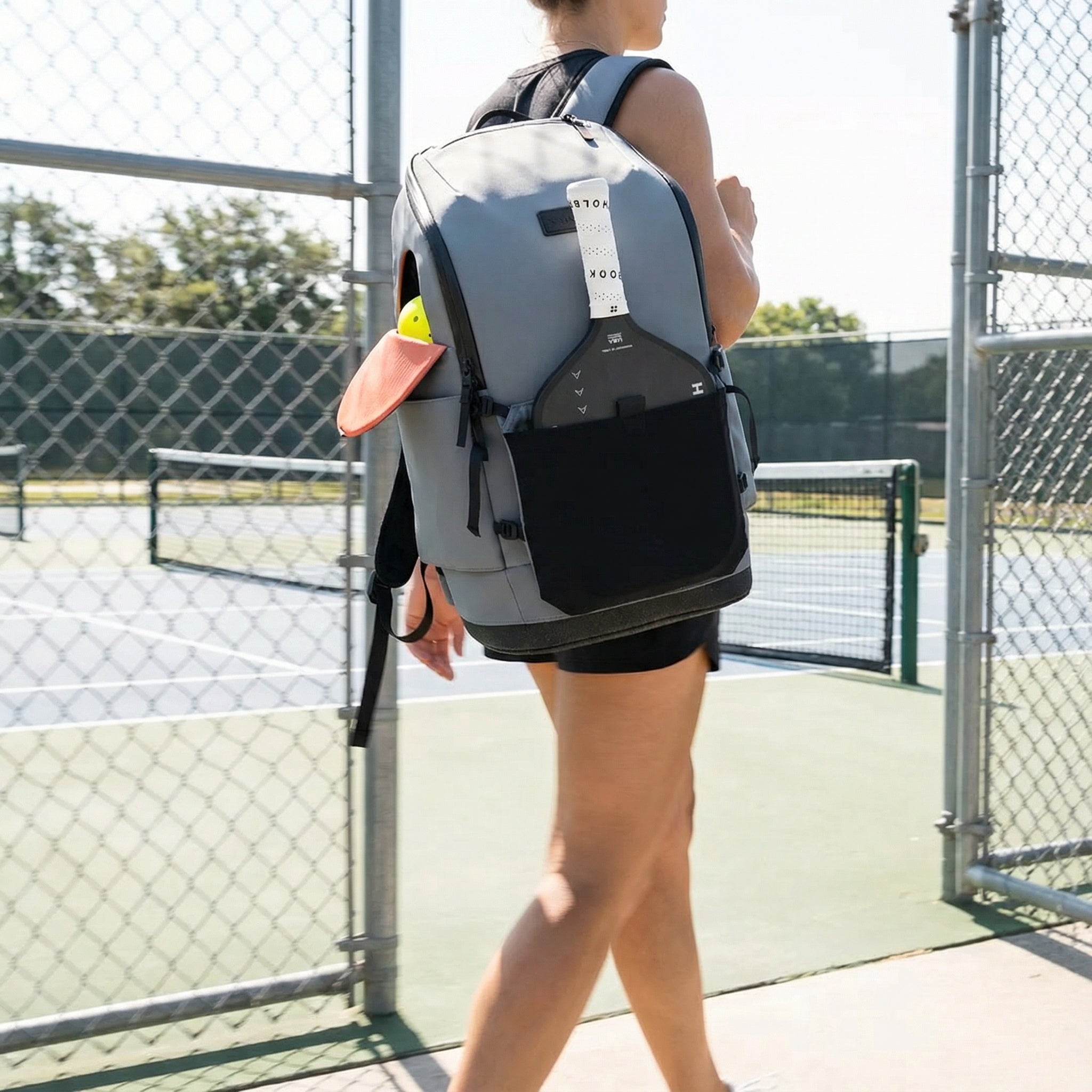
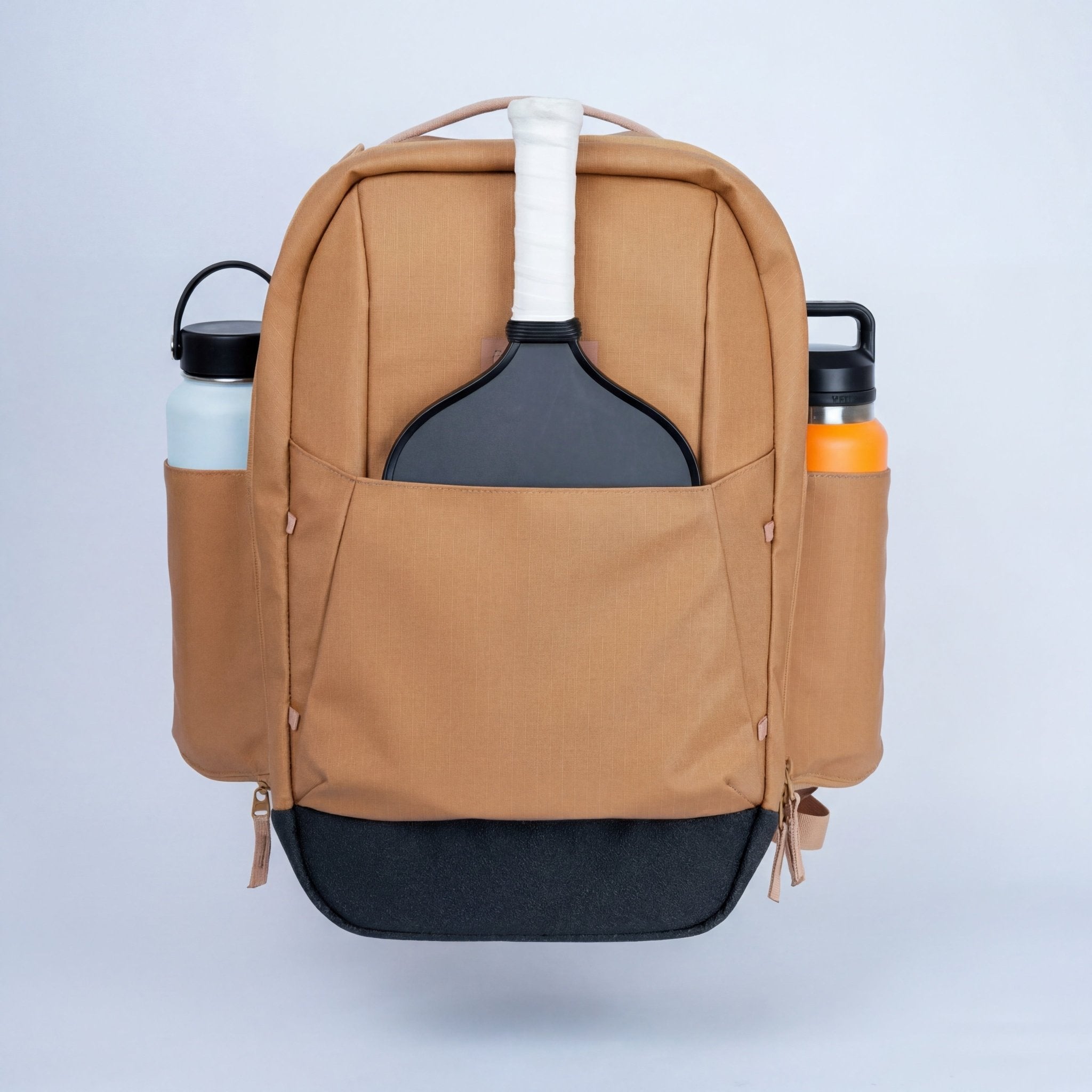
Once you've landed on the right paddle, you need somewhere to carry it. Your bag setup matters more than most players think — a paddle that bounces around in a cheap drawstring risks edge guard damage and scratched faces.

Our Pick: Court Ranger V2 Pickleball Backpack — $195
Dedicated modular paddle sleeve holds up to 4 paddles protected. 16" laptop sleeve, YKK AquaGuard zippers, designed with feedback from 500+ real players. Featured in The Dink and Pickleball Effect. Also consider the Court Caddy ($325) if you need a larger 15" laptop compartment and premium organization.
See how the Court Ranger V2 and Court Caddy compare to other top pickleball bags in 2026, or check our guide to the best pickleball paddles of 2026 for more specific model comparisons.
Ready to upgrade? Shop the Court Ranger V2 — built with 500+ real players.
Conclusion and Next Steps
The perfect paddle choice depends on honest assessment of your current skill level, preferred play style, and realistic budget allocation rather than pursuing the latest technology or professional endorsements. Quality paddles exist across all price ranges, with proper selection being more important than premium materials for most recreational players.
To get started:
-
Assess your current skill level honestly - focus on paddles designed for your actual abilities rather than aspirational equipment
-
Set a realistic budget - determine whether you need budget-friendly options, mid-range performance, or premium features based on your playing commitment
-
Research specific models that match your criteria and seek demo opportunities through local retailers, pickleball gear shops, or tournament demo programs

Leave a comment
This site is protected by hCaptcha and the hCaptcha Privacy Policy and Terms of Service apply.