


Last Updated: June 2026
In the summer of 1965 on Bainbridge Island, Washington, three friends invented one of America's fastest-growing sports almost entirely by accident. Joel Pritchard, Bill Bell, and Barney McCallum were looking for something — anything — to entertain their bored kids on a Saturday afternoon. They had an old badminton court but no shuttlecock. So they improvised.
The result was pickleball: a game with ping-pong paddles, a perforated plastic ball, and rules loose enough for an eight-year-old to learn in 20 minutes. What started as a one-afternoon distraction now has 19.8 million players in the U.S., major celebrity investors, and a full professional tour. Not bad for a pickup game.
The Origin of Pickleball
The game was born out of boredom and improvisation, not a business plan. Joel Pritchard and Bill Bell wanted to play badminton with their families but couldn't find a proper shuttlecock. Rather than give up, they lowered the net, grabbed ping-pong paddles from a nearby table, and found a perforated plastic ball that happened to bounce well on the asphalt.
Over the next few weekends, the rules took shape. The inventors experimented with court dimensions, net heights, and scoring until they had something that felt like its own distinct game — not a knock-off of badminton or tennis, but a new hybrid with its own rhythm. Within weeks, neighbors were showing up to play.
Setting the Stage: Summer of '65
It all started at Pritchard's property on Bainbridge Island. He and Bell were looking for a way to entertain their bored children on a lazy summer day. After a failed attempt to play badminton due to missing equipment, they improvised — lowering the badminton net and using ping-pong paddles and a perforated plastic ball.
This unexpected twist led to the creation of a game that combined elements of badminton, tennis, and table tennis. The combination was immediately accessible: no power serves required, rallies happened fast, and anyone from a ten-year-old to a retired grandparent could compete.
Improvised Equipment
With no proper equipment on hand, the inventors had to get creative. The ping-pong paddles were too light and the ball bounced differently than a shuttlecock — but that turned out to be a feature, not a bug. The lower, slower flight of a perforated plastic ball created longer, more competitive rallies than most casual racquet sports allowed.
The simplicity of the equipment made it accessible to everyone. You didn't need a professional racquet or specialized footwear. Just a paddle, a ball, and a clear patch of ground.
Key Figures Behind Pickleball
The creation of pickleball wouldn't have happened without three people thinking the same thing at the same time: this should be more fun. Joel Pritchard, Bill Bell, and Barney McCallum each brought something different — and all three were essential.
Joel Pritchard
Joel Pritchard was a U.S. Congressman from Washington State and the central figure in pickleball's creation. He co-created the game in the summer of 1965 as a means to entertain his family on a lazy afternoon. Pritchard's enthusiasm for the game ensured it spread beyond his backyard, and his wife Joan Pritchard played an early role in naming the sport.
Bill Bell
Bill Bell, a close friend of Pritchard's, was there at the very beginning and focused on making the game enjoyable for all ages. He worked with Pritchard to establish the early rules and dimensions, ensuring the game had enough structure to be repeatable without being so rigid that kids couldn't enjoy it. Bell's contributions shaped pickleball's foundational design.
Barney McCallum
Barney McCallum was introduced to pickleball shortly after its creation but quickly became essential to its development. He was instrumental in constructing better paddles and formalizing the rules into something teachable. McCallum's paddle-crafting work is part of why pickleball equipment evolved as quickly as it did. He helped turn an improvised backyard game into a codified sport.
Evolution and Growth of Pickleball
Pickleball's first decade was purely word-of-mouth. Neighbors showed up, friends brought friends, and the game spread through the Pacific Northwest before anyone thought to write it down officially. The first permanent pickleball court was established in Washington in the 1970s — a sign that people wanted to keep playing even when the summer ended.
The formation of the USA Pickleball Association (USAPA) in 1984 changed everything. That organization published the first official rulebook, standardized court dimensions and net heights, and organized the first national tournaments. Without USAPA, pickleball might have stayed a regional quirk. With it, the sport had a foundation to grow on.
From Backyard to Permanent Courts
As pickleball's popularity grew through the 1970s and 80s, communities started building permanent courts in parks and recreation centers. The move from makeshift setups to dedicated facilities reflected a shift in how people viewed the sport — not as a casual backyard diversion, but as a real game worth infrastructure investment.
Today, pickleball courts are a common sight in parks, sports centers, schools, and private clubs across all 50 states. More pickleball courts are being constructed every month than any other sport facility in the U.S. The court-building boom shows no signs of slowing.
The Formation of USA Pickleball
The USA Pickleball Association — originally called the United States Amateur Pickleball Association — was founded in 1984 by a group of players who recognized the sport needed a governing body. They published the first official rulebook, standardized tournament formats, and gave local clubs a framework to follow. Key early figures included Bill Bell and Barney McCallum, who remained involved in the sport's formal organization long after its invention.
USA Pickleball now sanctions thousands of tournaments annually, certifies referees, and coordinates with international federations to grow the sport globally. You can explore their official rulebook and event finder at usapickleball.org.
Rise of Professional Leagues
Professional pickleball arrived quickly once participation crossed the critical mass threshold. The Association of Pickleball Players (APP) and the Professional Pickleball Association (PPA) both launched in 2019, offering prize money and broadcast exposure that had never existed for the sport before. In 2023, the PPA and Major League Pickleball (MLP) merged to form the United Pickleball Association (UPA), consolidating the professional circuit.
High-profile investors — Patrick Mahomes, LeBron James, Tom Brady — have poured money into franchise teams, bringing mainstream sports media attention to the game. If you want a closer look at how the pro tour is structured today, here's our guide to the PPA Tour. The expansion of Major League Pickleball into international markets including Australia and Asia signals that this is no longer just an American story.
Why Is It Called Pickleball?
The name has two competing origin stories, and nobody has ever definitively settled the debate.
One theory ties the name to a "pickle boat" — a term from crew rowing that describes a team assembled from leftover rowers who didn't make the main boats. The scrappy, improvised nature of that crew mirrors how the game was invented: with leftover equipment, on a leftover court, on an afternoon with nothing better to do.
The other theory is simpler and more charming: the Pritchard family had a dog named Pickles who would chase the ball during early games. Joan Pritchard, Joel's wife, is often credited with suggesting the name. She's pointed to the pickle boat theory in interviews, but the dog story has taken on a life of its own in pickleball lore.
The Pickle Boat Story
In crew rowing, a pickle boat refers to a crew assembled from leftover rowers — players who weren't chosen for the main boats but still compete together. The analogy fits pickleball well: a game cobbled together from leftover elements of other sports (badminton, tennis, ping-pong) that became something entirely its own. Joan Pritchard has cited this theory in multiple accounts of the sport's naming.
The Dog Named Pickles
The Pritchards did have a dog named Pickles, and the story of Pickles chasing balls around the court has been told so many times it's practically official lore. Whether or not Pickles is actually the namesake, the story captures something real about the game's early spirit: loose, family-friendly, with a dog running onto the court between points.
Modern Day Pickleball
Pickleball is now the fastest-growing sport in America — and that's not a marketing claim, it's a measurement. From 2021 to 2024, participation grew 311%. The U.S. had an estimated 19.8 million players in 2024, a 45.8% jump from the prior year. Google Trends shows a 550% increase in search interest over the past five years.
The sport has attracted players who've never touched a tennis racket, former tennis and badminton players looking for something more social, and a complete demographic cross-section from retirees to college athletes. Part of what makes pickleball grow is that it's genuinely easy to start — you don't need lessons or a heavy investment to play your first competitive game.
Popularity and Participation
The participation numbers are staggering by any sport's measure. In just three years (2020–2023), USA Pickleball saw membership grow from under 40,000 to over 70,000 registered players — and that's just the formally affiliated count. The actual player base is dramatically larger, including millions who play recreationally at parks and indoor facilities without ever registering with a governing body.
According to the 2023 SFIA report, pickleball grew 223.5% in the United States over three years. The sport consistently ranks as the country's fastest-growing recreational activity, outpacing padel, esports, and virtually every other sport you can name.
Infrastructure and Investment
Court construction estimates project $855 million in investment needed over the next 5–7 years to keep pace with demand. Private clubs, YMCA facilities, and municipal parks programs are all building dedicated pickleball courts — often converting underused tennis courts in the process.
The professional leagues have attracted tens of millions in private equity and celebrity investment. Franchise valuations are climbing. Broadcast deals with ESPN and CBS Sports have brought the sport to mainstream audiences who would never have sought it out otherwise.
Celebrity Involvement and Media Coverage
The list of celebrity pickleball players and investors reads like a Hollywood and sports crossover event. Patrick Mahomes, LeBron James, Tom Brady, Kim Kardashian, Drew Brees, and Serena Williams have all publicly played or invested in the sport. Selena Gomez invested in a pickleball business. Drew Brees organized a pickleball festival to raise money for charity.
The celebrity involvement isn't just a vanity play — it's a real marketing accelerant that introduced millions of people to a game they'd never considered. When your favorite NFL quarterback is talking about his paddle, you get curious.
"I've been playing pickleball since before it was cool, and I still love that it's the same game — same court, same energy, same excuse to get outside and compete with people you like. That's the whole point." — Grub, Co-Founder, FORWRD
FORWRD Co-Founder Grub on why pickleball keeps growing
Ready to Play? Here's What You Need
Sixty years after Joel Pritchard lowered that badminton net, the core appeal hasn't changed: it's an easy game to start and a hard game to put down. If you're new to the sport — or if you've been playing but your gear hasn't kept up — here's the short version of what matters.
You'll need a paddle, a ball, and somewhere to play. For a breakdown of what gear actually matters when you're starting out, check our complete pickleball paddle guide. Paddles range from entry-level wood ($30) to high-performance carbon fiber ($200+). For courts, check local parks and recreation centers — most cities have dedicated courts now. And if you're serious about the game, you'll want a bag that keeps your paddles, balls, snacks, and gear organized between sessions.

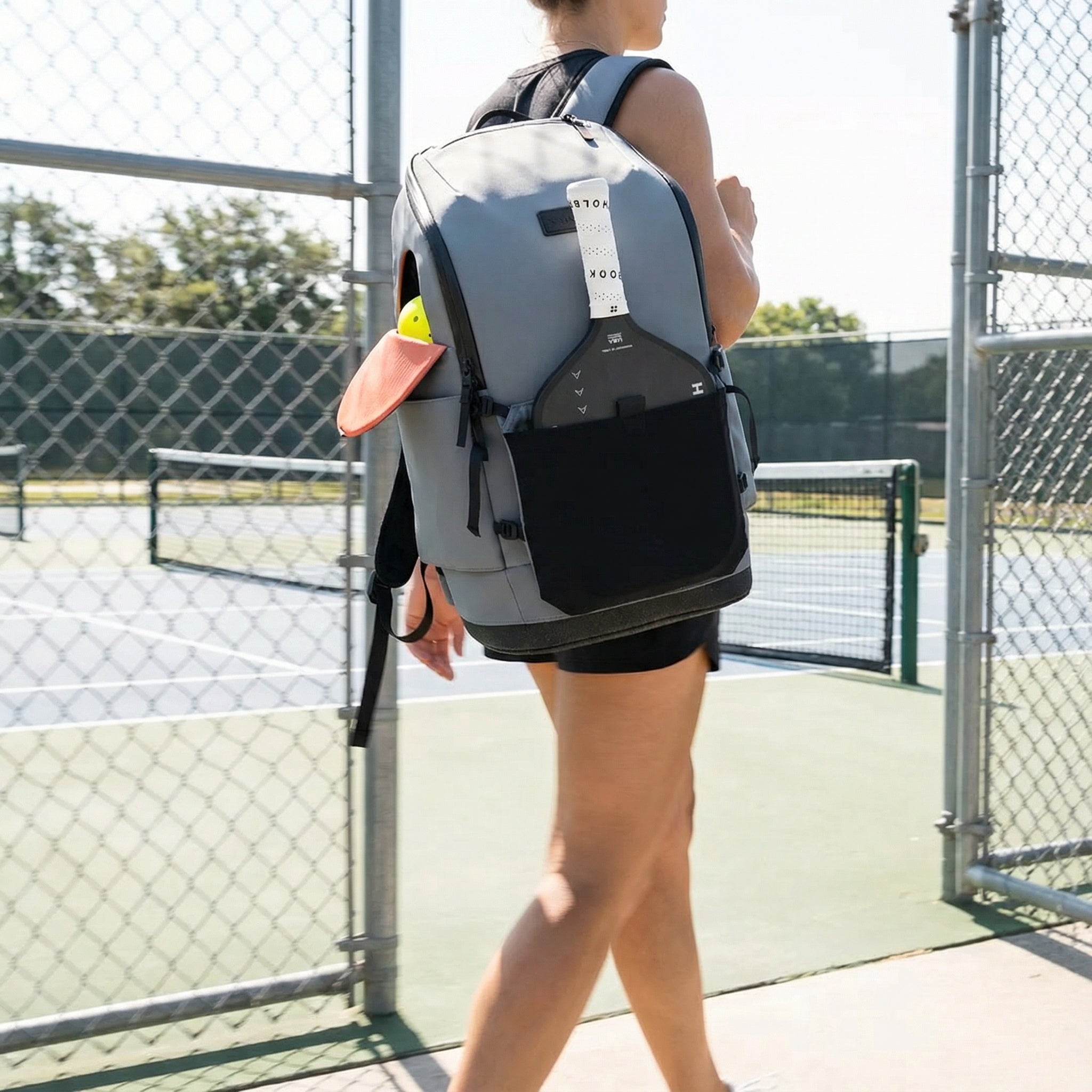
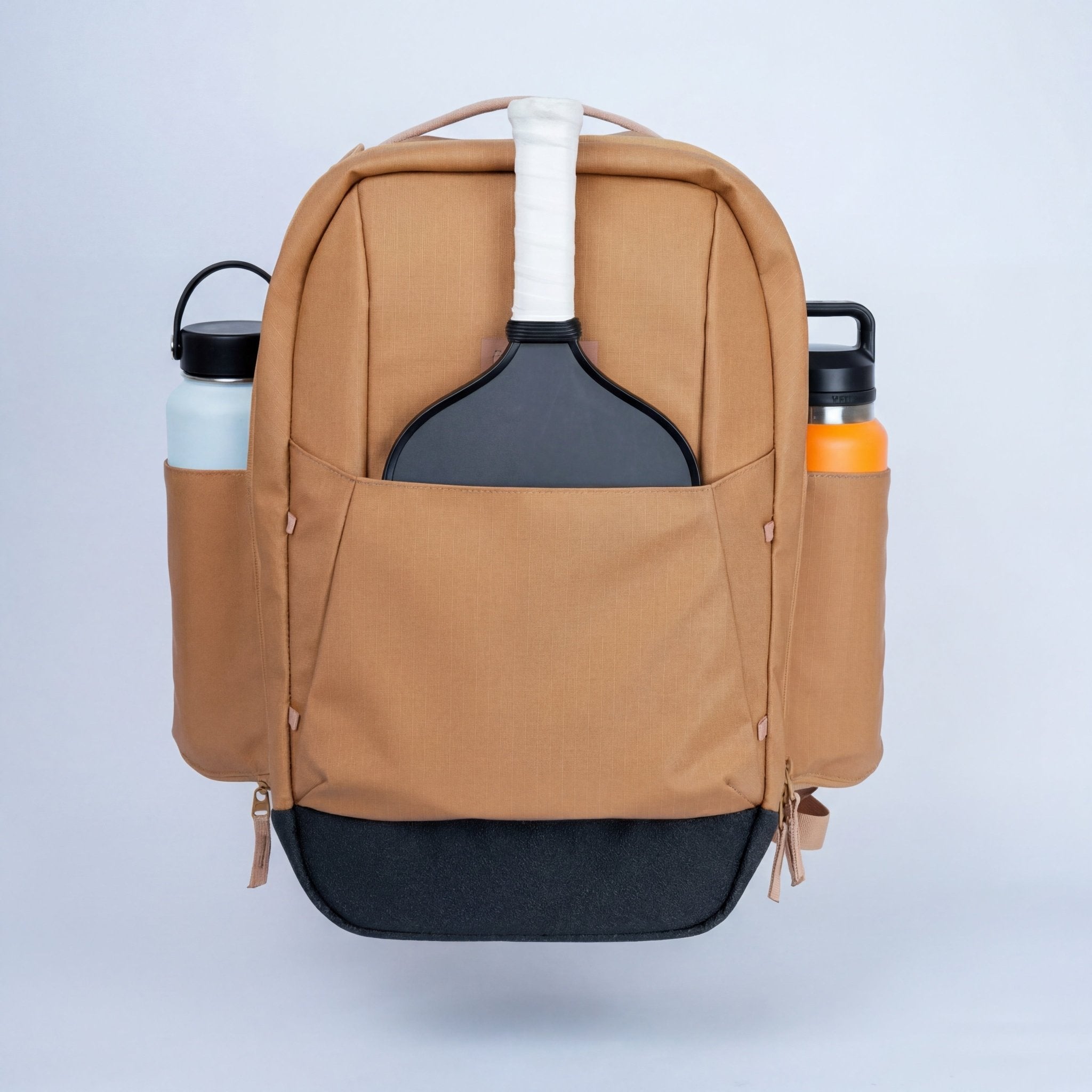
The FORWRD Court Ranger V2 ($195) is purpose-built for players who take the game seriously without going overboard on gear. It fits two paddles in the dedicated sleeve, has a 16" laptop compartment for commuters who go straight from work to courts, and uses YKK AquaGuard zippers that hold up to outdoor conditions. Designed with feedback from 500+ real players — the same kind of community that invented the sport in the first place.
Our Pick: FORWRD Court Ranger V2 Backpack
16" laptop sleeve + modular paddle sleeve — built for players who go straight from work to courts.
Frequently Asked Questions
Who invented pickleball?
Pickleball was invented in 1965 by Joel Pritchard, Bill Bell, and Barney McCallum on Bainbridge Island, Washington. Pritchard and Bell improvised the game on a summer afternoon when their families had nothing to do — lowering the badminton net and grabbing ping-pong paddles. McCallum joined shortly after and helped formalize the rules and equipment.
Why is it called pickleball?
Two theories exist. The first says the name comes from a "pickle boat" in crew rowing — a crew assembled from leftover rowers, reflecting how the game was pieced together from bits of other sports. The second credits the Pritchards' dog, Pickles, who chased the ball during early games. Joan Pritchard, Joel's wife, has cited the pickle boat theory in interviews.
What equipment is used in pickleball?
Standard pickleball gear includes a solid paddle — wood, composite, or carbon fiber — a perforated plastic ball in indoor or outdoor versions, and a net set to 36 inches at the sidelines and 34 inches at center court. Modern paddles range from $50 budget options to $200+ pro-grade carbon fiber models with textured faces for spin.
How fast has pickleball grown?
Remarkably fast. The U.S. had an estimated 19.8 million players in 2024 — a 45.8% jump from the prior year. Between 2021 and 2024 alone, participation grew 311%. Google Trends data shows a 550% increase in search interest over five years. It consistently ranks as America's fastest-growing sport across every demographic survey.
What is the USA Pickleball Association?
USA Pickleball (originally the United States Amateur Pickleball Association, founded 1984) is the national governing body for the sport. It publishes the official rulebook, sanctions tournaments, sets court standards, and promotes competitive play from youth through seniors. The association was instrumental in taking pickleball from a regional hobby to a nationally organized sport with a clear rules framework.

Leave a comment
This site is protected by hCaptcha and the hCaptcha Privacy Policy and Terms of Service apply.