

Affiliate Disclosure: FORWRD participates in the Pickleball Central affiliate program. If you click our links and buy something, we may earn a small commission at no extra cost to you. Our reviews are independent — affiliate relationships don't influence our ratings.
The bottom line: Babolat makes solid paddles backed by 140+ years of racket engineering. They're not the flashiest option in pickleball — but for players crossing over from tennis, or anyone who wants proven brand engineering rather than a startup's promises, they deserve a look. And right now, Pickleball Central carries used and returned Babolat paddles at a meaningful discount — the RNGD at $74.25 and the RBEL at $89.25.
Quick Verdict
Pros
- Legitimate brand engineering — 140+ years of racket technology behind the design
- Natural fit for tennis crossover players who trust the Babolat name
- Used/returned units on PBC represent solid value vs retail pricing
- Both RBEL and RNGD are distinct enough to suit different playstyles
- More brand accountability than many pickleball-only startups
Cons
- New inventory limited on PBC — primarily used/returned units currently
- Less pickleball-specific R&D vs purpose-built brands like Selkirk or JOOLA
- Naming (RBEL, RNGD) doesn't communicate much to new pickleball players
- Not the first choice if you're coming to pickleball with no tennis background
| PBC Price (used) | RNGD: $74.25 | RBEL: $89.25 |
| Best for | Tennis crossovers; brand-conscious buyers; players who want established engineering |
| Skip if | You want purpose-built pickleball design or need current, in-stock new inventory |
Babolat's Pickleball Models: RBEL and RNGD at a Glance
| Model | PBC Used Price | Retail Price | Condition |
|---|---|---|---|
| Babolat RNGD | $74.25 | $99.00 | Gently used or cosmetically blemished |
| Babolat RBEL | $89.25 | $119.00 | Gently used or cosmetically blemished |
→ Browse current Babolat availability on PBC
Last Updated: October 2026
Why Trust This Review
FORWRD builds pickleball bags with input from 500+ real players — which means we track what's happening across the paddle market closely. We don't have a sponsorship relationship with Babolat. Our affiliate commission comes from Pickleball Central sales; our assessment doesn't.
One note on transparency: Babolat's current PBC inventory consists of used/returned units. We reviewed the brand's paddles, their engineering approach, and the value proposition of the used units available — not a brand-new retail purchase. That's worth knowing before you read further.
Babolat's Pickleball Entry: Why a 140-Year-Old Brand Matters Here
Babolat was founded in 1875. They invented synthetic tennis strings. They make the rackets Rafael Nadal swings on clay courts. For over a century, the brand's entire identity has been racket engineering — understanding how strings, frames, and composite materials interact to give players more power, more control, or better feel.
They entered pickleball because they had to. The sport grew from 4.8 million players in 2020 to over 36 million by 2024. Babolat had the material science, the manufacturing infrastructure, and the brand recognition to compete — they just needed to adapt their expertise to a different court, a different ball, and a different swing geometry.
The RBEL and RNGD represent Babolat's first generation of purpose-built pickleball paddles. These aren't repurposed tennis gear — they're designed from the ground up for pickleball, drawing on Babolat's knowledge of how composite materials respond to impact.
For players coming from tennis — especially recreational players who already own Babolat rackets and trust the brand — there's a natural pull. You know what Babolat means in terms of quality standard. You're not betting on a startup.
RBEL vs RNGD: Understanding Babolat's Naming (and What It Signals)
Babolat's paddle naming follows tennis traditions more than pickleball ones — which means the model names tell experienced Babolat buyers something, and newer players nothing. Here's what the distinction signals:
The RBEL at $119 retail ($89.25 used) positions as Babolat's higher-end entry. The "R" prefix in Babolat's tennis lineup often signals raw performance characteristics — expect this to be the more aggressive of the two, positioned for players who prioritize drive power and overall performance envelope.
The RNGD at $99 retail ($74.25 used) is Babolat's accessible entry point. The "NG" designation in their broader equipment history often connotes "next generation" or an evolved baseline design. For players starting with Babolat or playing primarily social/recreational pickleball, the RNGD likely offers a more forgiving response.
Important note: Verify current specifications directly with Babolat before purchasing — their lineup evolves, and spec sheets from the brand's official channels should be your source of truth for core thickness, face materials, and weight range.
What Tennis Heritage Actually Translates to in Pickleball
Not everything from tennis carries over. The physics are different — slower ball, shorter swing, dramatically more kitchen play, wrist-sensitive dink work. Where Babolat's tennis expertise genuinely helps:
Material science: Babolat understands how composite materials degrade over time — that's their core competency. Their paddles are engineered to maintain consistent response over the product's lifespan, which is not always the case with cheaper brands.
Handle engineering: Babolat knows grip shapes from decades of fitting tennis players. Their handle ergonomics tend to feel natural for players with any racket background — less adjustment time than you'd expect from a pickleball-native brand's grip.
Build quality: Edge guard durability, face bonding consistency, and overall manufacturing tolerance benefit from a company that has been making precision racket products since before most of us were born.
Where the translation is imperfect: spin optimization. The grit, texture, and surface engineering that modern pickleball-native brands (JOOLA, Selkirk, Six Zero) pour into their carbon fiber faces is purpose-built for pickleball spin mechanics. Babolat is catching up — but raw spin generation is where pickleball-first brands currently hold an edge.
The Used Paddle Deal: Is Buying Refurbished Worth It?
Pickleball Central's used/return program takes paddles that are "gently used or cosmetically blemished" and sells them at a discount — the RNGD at $74.25 (25% below retail), the RBEL at $89.25 (25% below retail). The structural question: do these paddles hold up to normal play?
Pickleball paddles can degrade through heavy use — specifically through delamination of the face material, edge guard damage from court contact, and grip wear. "Cosmetically blemished" means you might see a surface scratch or minor color fade. It doesn't mean the core is compromised.
For most recreational and intermediate players, a gently used paddle in this price range performs identically to a new one. The engineering difference between a 5-hour-played paddle and a 0-hour paddle is negligible at the 2.5-3.5 skill level.
The risk is higher if you're buying a used paddle in a category where face texture matters a lot for spin generation. A Raw Carbon Fiber paddle used for 20+ hours has measurably less spin potential than a new one — the grit wears down. Babolat's paddles at this price point are more likely composite/processed face construction, which degrades more slowly and holds up better to the used-unit scenario.
Shop Babolat RBEL (Used) on PBC — $89.25 →
Babolat vs Mid-Tier Alternatives at the Same Price Point
| Paddle | Price | Best for | FORWRD Take |
|---|---|---|---|
| Babolat RNGD (Used) | $74.25 | Tennis crossovers, beginners | Best pick if brand trust matters and you're OK with used |
| ProXR Signature Series 16mm | $79.99 | Budget carbon fiber buyers | More carbon fiber performance for the dollar; newer brand |
| ONIX Evoke Premier Pro | ~$99 | Spin-focused players | Better spin ceiling; ONIX has deep pickleball heritage |
| Engage Pursuit Pro EX | ~$110 | All-around intermediate players | Best edge guard durability in this tier; Engage has serious pickleball R&D pedigree |
The real competition for Babolat: If you're a tennis player crossing into pickleball with a pre-existing Babolat relationship, these paddles make sense — you trust the brand, you understand their build quality, and the used price makes the decision easy. If you're a pickleball-native player with no brand attachment, ProXR, ONIX, and Engage all invest more pickleball-specific R&D and represent better value at equivalent prices.
Who Should Buy Babolat Pickleball Paddles
- Tennis crossover players. If you've played recreational tennis with Babolat gear, you already have a feel for how they build. The transition to their pickleball paddles will feel natural — the ergonomics, the build quality standard, the brand's approach to durability.
- Players who prefer established brand engineering. Babolat isn't a pickleball startup — they've been engineering racket sports equipment since 1875. If that matters to you, it's a legitimate reason to choose them.
- Budget-conscious buyers open to used inventory. The 25% discount on PBC's used units is real. For a 2-3x/week recreational player, a gently used Babolat is a sensible buy.
- Anyone buying a second paddle for guests or casual play. Keep your main paddle, grab a used Babolat at $74-89 for the friend who shows up without gear.
Who Should Look Elsewhere
- Players who need new-in-box inventory. PBC's current Babolat availability is used/returned. If you need a new paddle, look at ProXR, JOOLA, or Selkirk for in-stock options.
- Spin-focused players. Modern raw carbon fiber paddles from JOOLA, ProXR, and Six Zero are purpose-built for spin generation in pickleball. Babolat's composite engineering doesn't lead the spin category at this price tier.
- Competitive 4.0+ players. At higher skill levels, the precision differences between paddle brands matter more. Selkirk, JOOLA, and Six Zero have pickleball-specific engineering that competitive players can feel in their performance ceiling.
Complete Your Setup
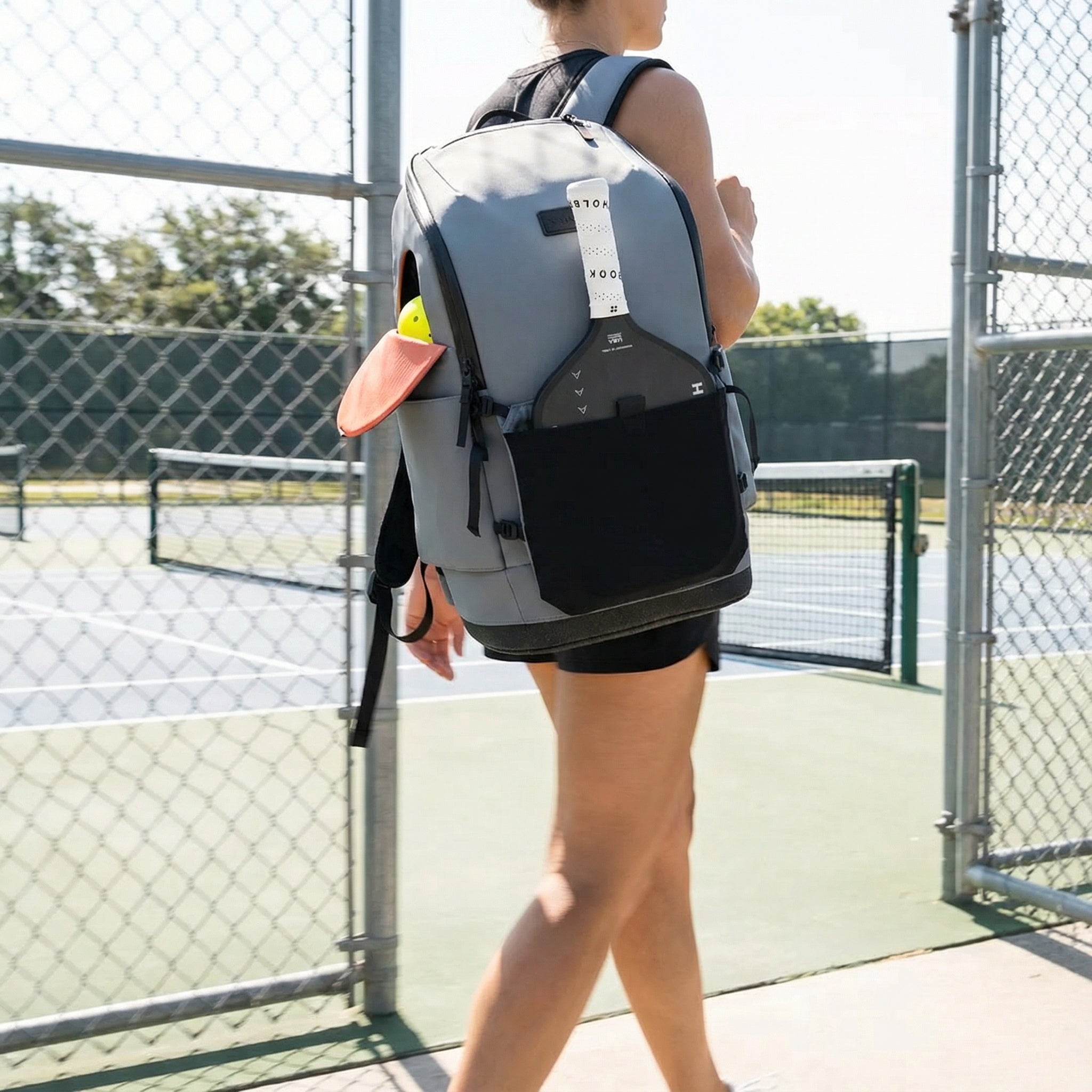
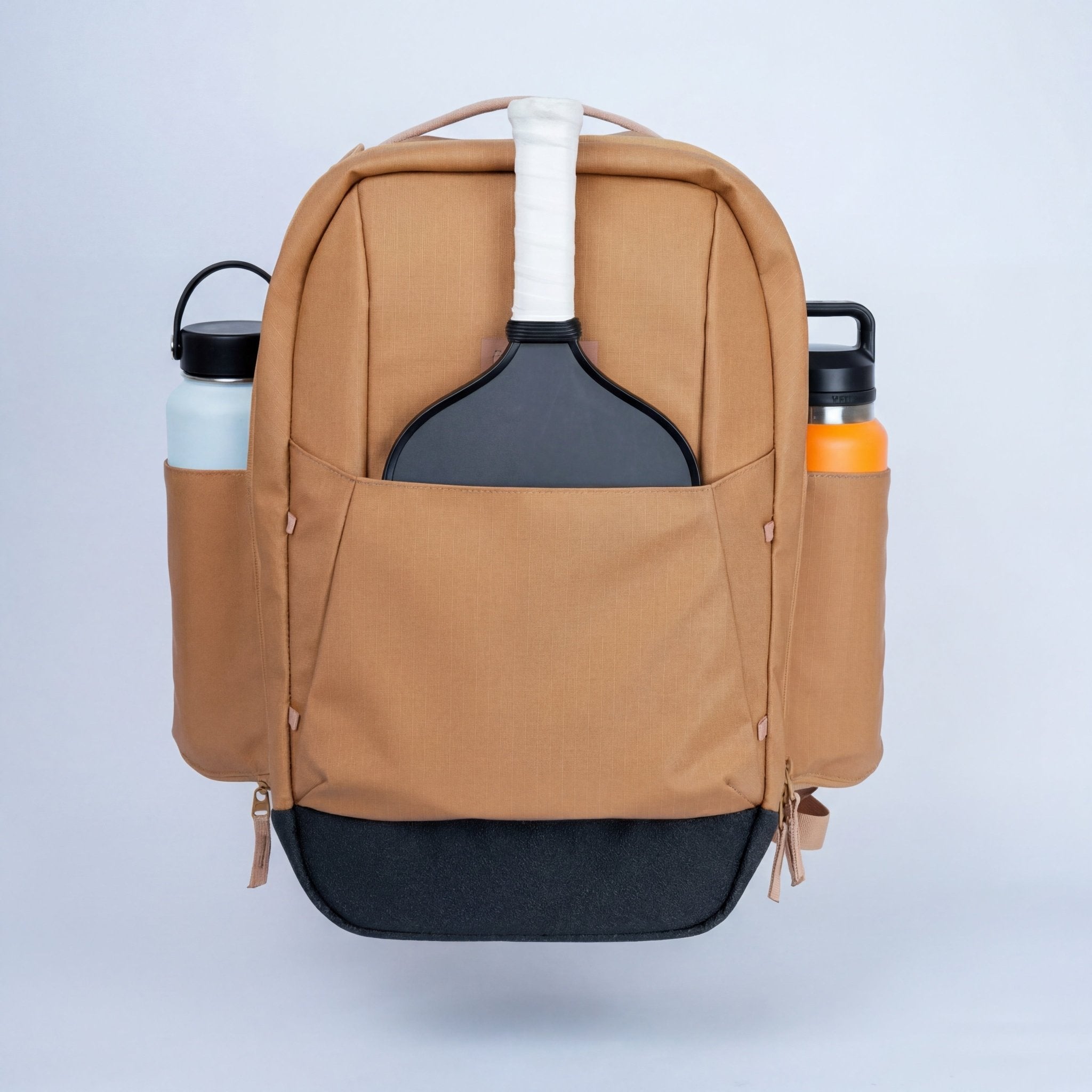
Great paddle, gently used — now you need somewhere to carry it. The FORWRD Court Ranger V2 fits up to 4 paddles in its modular sleeve system, protects a 16" laptop, and is built with feedback from 500+ real pickleball players. At $195, it's the bag that grows with your game.

Frequently Asked Questions
Are Babolat pickleball paddles any good?
Yes — Babolat's 140+ years of racket engineering gives their paddles a genuine quality foundation. They're not the top pick for spin-focused pickleball players, but for tennis crossovers and recreational players who trust the Babolat brand, the RBEL and RNGD are solid, durable options. The used units on PBC sweeten the value case significantly.
What's the difference between Babolat RBEL and RNGD?
The RBEL ($119 retail, $89.25 used) is Babolat's higher-end pickleball paddle — positioned for players who want more overall performance. The RNGD ($99 retail, $74.25 used) is their accessible entry point — better suited for recreational players and Babolat newcomers. Verify current specs directly with Babolat before purchasing, as specifications can vary by model year.
Can I buy new Babolat pickleball paddles on Pickleball Central?
Currently, PBC carries Babolat paddles as used/returned inventory — gently used or cosmetically blemished units at approximately 25% below retail. For new inventory, check Babolat's official site or other pickleball retailers. The used units on PBC are a legitimate value opportunity for recreational players.
How does Babolat compare to Selkirk or JOOLA?
Selkirk and JOOLA have invested heavily in pickleball-specific R&D — particularly in spin surface engineering and performance testing for competitive play. Babolat brings superior general racket-engineering heritage but less pickleball-specific optimization. For competitive 4.0+ play, Selkirk and JOOLA lead. For recreational play and tennis crossovers, Babolat is a legitimate choice.
Is it safe to buy a used pickleball paddle?
Generally yes, particularly for recreational players. Key things to check: no delamination (face separating from core), no cracks in the edge guard, and grip condition. PBC's used/return program describes inventory as "gently used or cosmetically blemished" — meaning the core integrity should be intact. Surface scratches or minor cosmetic marks don't affect paddle performance.
Where can I buy Babolat pickleball paddles?
Pickleball Central carries the Babolat RBEL (used) at $89.25 and the Babolat RNGD (used) at $74.25. For new inventory, visit Babolat's official US site.
Final Verdict
Babolat is a real brand with real engineering behind it — that matters in a market where many pickleball paddle companies are less than five years old. The RBEL and RNGD aren't the spin monsters that modern raw carbon fiber paddles have become, but they're well-built, durable, and carry the kind of manufacturing standards you'd expect from a 140-year-old sports equipment company.
The honest verdict: if you're crossing over from tennis with existing Babolat loyalty, these paddles are a natural starting point for pickleball. If you're purely a pickleball player with no brand attachment, there are better options in this price range — ProXR, ONIX, and Engage all out-compete on pickleball-specific performance metrics.
The used units on PBC? Smart buy for recreational players who want to try the brand without paying retail. The 25% discount absorbs the cosmetic blemish risk entirely for most players.

Leave a comment
This site is protected by hCaptcha and the hCaptcha Privacy Policy and Terms of Service apply.