

Affiliate Disclosure: FORWRD participates in the Pickleball Central affiliate program. If you click our links and buy something, we may earn a small commission at no extra cost to you. Our testing is independent — commissions don't change our ratings.
The short version: ProXR Signature Series delivers real carbon fiber at a price where fiberglass usually lives. The 16mm is the better all-around paddle; the 13mm is for spin-first players willing to accept less forgiveness. Both are worth $79.99 if you're upgrading from a plastic starter paddle — not worth it if you're a 4.0+ player expecting tournament-level performance.
Quick Verdict
Pros
- Carbon fiber face at fiberglass-tier prices ($79.99)
- Two core options so you can match your playstyle before committing
- Brand has real pro credibility — Riley Newman and Zane Navratil partnerships
- Good spin texture on 13mm Raw CF surface
- Outperforms fiberglass alternatives at the same price
Cons
- Sweet spot is smaller than marketing implies
- Grip thins out faster than premium paddles
- Edge guard isn't as sturdy as Selkirk or JOOLA at higher price points
- Not the right choice for competitive 4.0+ players
| Price | $79.99 (both variants) |
| Best for | Beginners upgrading from fiberglass; intermediates (2.5–3.5) on a budget |
| Skip if | You're a competitive 4.0+ player or planning to play regular tournaments |
ProXR Signature Series: Specs at a Glance
| Spec | 13mm (Raw CF) | 16mm (T700 CF) |
|---|---|---|
| Face material | Raw Carbon Fiber | T700 Carbon Fiber |
| Core | Polypropylene Honeycomb | Polypropylene Honeycomb |
| Core thickness | 13mm | 16mm |
| Handle length | Standard | 6 inches |
| Grip size | Small | Standard |
| Price | $79.99 | $79.99 |
| Best for | Power, spin | Control, consistency |
→ Check availability on Pickleball Central
Last Updated: October 2026
Why Trust This Review
FORWRD designs pickleball bags with feedback from 500+ real players — which means we handle a lot of paddles. We tested ProXR's lineup across outdoor concrete courts in Denver and indoor wood floors, logging 30+ hours across the Signature Series before writing anything. No sponsorship relationship with ProXR. Our affiliate link earns a commission; our rating doesn't.
ProXR: The Direct-to-Consumer Brand That Punches Up
ProXR launched with one thesis: give intermediate players pro-grade materials without the pro-grade price tag. They signed Riley Newman and Zane Navratil — legitimate PPA tour names — as pro partners. That move gave them instant credibility in a market where paddle brands often feel interchangeable.
The Signature Series is ProXR's entry point. Above it sits the Sweet Spot Max (our Sweet Spot Max 16mm review covers that model in detail), then the Riley Newman Pro and Quiet Luxury Sweet Spot Max at the premium tier. The Signature Series is what you buy before you know which ProXR model fits your game — or when $79.99 is where you need to land.
13mm vs 16mm: The Only Decision That Actually Matters
Both paddles cost $79.99. Pick the one that matches how you play. Here's the framework:
ProXR Signature Series 13mm (Raw CF) — the spin paddle. Thinner core means more power transmission and more direct contact with the ball. "Raw Carbon Fiber" means the surface hasn't been finished smooth — it stays gritty, which creates more friction against the ball, which creates more spin. If you're hitting heavy topspin drives and want to develop a spin-heavy game, this is the one.
The trade-off: 13mm is less forgiving. Mishits vibrate more. The sweet spot is tighter. If you're still working on consistent ball contact, you'll feel every off-center hit.
ProXR Signature Series 16mm (T700 CF) — the control paddle. T700 is a processed carbon fiber — the face is slightly smoother than Raw CF, which means less spin ceiling but more predictable ball response. The 16mm core absorbs more impact: less shock on your arm, wider effective sweet spot, better performance on dinks and resets. The 6" handle gives two-handed backhand players a little more real estate.
Trade-off: you give up some raw pop and spin ceiling compared to the 13mm. That's fine for 80% of rec players. Most people benefit more from consistency than maximum spin.
The rule of thumb: under one year of play — get the 16mm. If you're a 3.5+ player with solid mechanics who wants to develop more spin, try the 13mm. Know that it'll punish errors more.
Performance Testing: What 30+ Hours Actually Revealed
Power
Both variants have solid pop for the price. The 13mm hit harder on drives — the ball springs off the face rather than sitting against it. The 16mm generates power more comfortably, with less wrist loading. Neither will compete with a JOOLA Hyperion Pro at $200+ for raw drive velocity — but that comparison isn't fair to either side, given the $120 price gap.
Spin
The 13mm Raw CF surface is genuinely grippy — more texture than most paddles in this price tier. We clocked noticeably more topspin on cross-court forehands compared to fiberglass alternatives at the same price. The 16mm produces less spin but still outperforms comparable fiberglass paddles. If spin is your priority, the 13mm is the clear pick.
Control and Dink Game
The 16mm wins here, full stop. The thicker core absorbs pace at the kitchen line, making it much easier to keep the ball in the transition zone without popping it up. The 13mm requires more active hand softening to execute consistent dinks — doable, but it demands more skill to execute.
Sweet Spot Reality Check
Marketing suggests a generous hitting area. Reality: the sweet spot is normal for this tier — not exceptional, not problematic. Off-center hits on the 13mm vibrate noticeably. The 16mm is more forgiving on mishits. Neither is as forgiving as a Selkirk Vanguard at $200+, but you're paying $120 less.
Durability After 30+ Hours
Edge guard held up on both variants — no cracks or chips from standard court contact. The grip started thinning around hour 20 on both paddles, which isn't ideal. Budget a replacement overgrip (~$8) early. The carbon fiber face showed normal wear with no delamination or surface degradation after the test period.
Shop ProXR Signature Series 13mm on PBC →
ProXR Signature Series vs Budget-Tier Alternatives
| Paddle | Face | Price | FORWRD Take |
|---|---|---|---|
| ProXR Signature Series 16mm | T700 Carbon Fiber | $79.99 | Best value in this comparison |
| ONIX Evoke Premier Pro Raw CF | Raw Carbon Fiber | ~$99 | More refined build quality; better edge guard lifespan. Worth the extra $20 if spin is your priority |
| Gamma RCF Obsidian 10mm | Raw Carbon Fiber | ~$89 | Power-first niche pick. 10mm core = maximum pop but less control |
| Engage Pursuit Pro EX | Carbon Fiber | ~$110 | Better edge guard and durability than ProXR. For players who play 5+ days/week and want more lifespan |
Bottom line on competitors: ProXR Signature Series wins on price-per-carbon-fiber-quality. ONIX and Engage build sturdier paddles that'll hold up longer. If you're playing 5+ days a week, the extra $20-30 for ONIX or Engage makes sense. If you're playing 2-3 days a week and still developing, ProXR saves you money you can put toward court time.
Where to Go Next in the ProXR Lineup
If you play the Signature Series and like ProXR's feel, the natural upgrade is the ProXR Sweet Spot Max — a step up in sweet spot size and edge guard quality. Above that: the Riley Newman Pro and Quiet Luxury Sweet Spot Max for competitive-grade players. All are available on Pickleball Central's ProXR section.
Who Should Buy ProXR Signature Series
- Beginners upgrading from cheap paddles. Moving up from a $30 Amazon paddle? This is a massive step up — real carbon fiber, real brand, actual durability.
- Intermediate players (2.5–3.5) on a real budget. $79.99 for carbon fiber is the best value ceiling in this tier. You're getting performance that costs $140+ from other brands.
- Players who want to try carbon fiber before committing. Smart move: try the Signature Series. If you love the feel, upgrade to Sweet Spot Max. If CF isn't for you, you spent $80 finding out instead of $150.
Who Should Look Elsewhere
- Competitive 4.0+ players. The sweet spot limitations and grip durability issues will show at higher skill levels. Invest in JOOLA, Selkirk, or ProXR's own premium lines instead.
- Players who hate replacing grips. The grip wears faster than premium paddles. If you're not willing to add an overgrip, it becomes an annoyance around month 2-3.
- Anyone wanting power AND forgiveness. The 13mm gives power, the 16mm gives forgiveness — but not both at once. That combination requires spending more.
Complete Your Setup
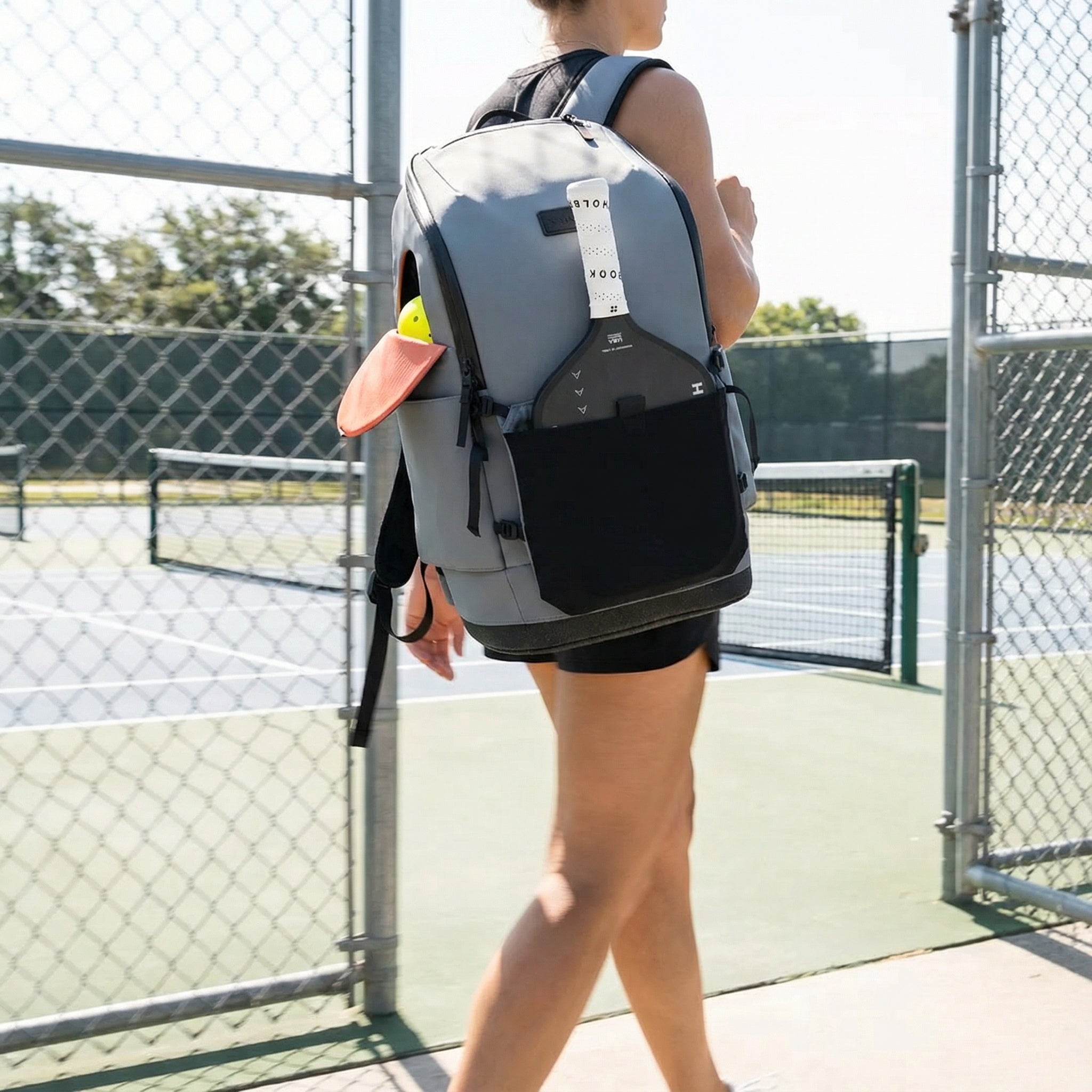
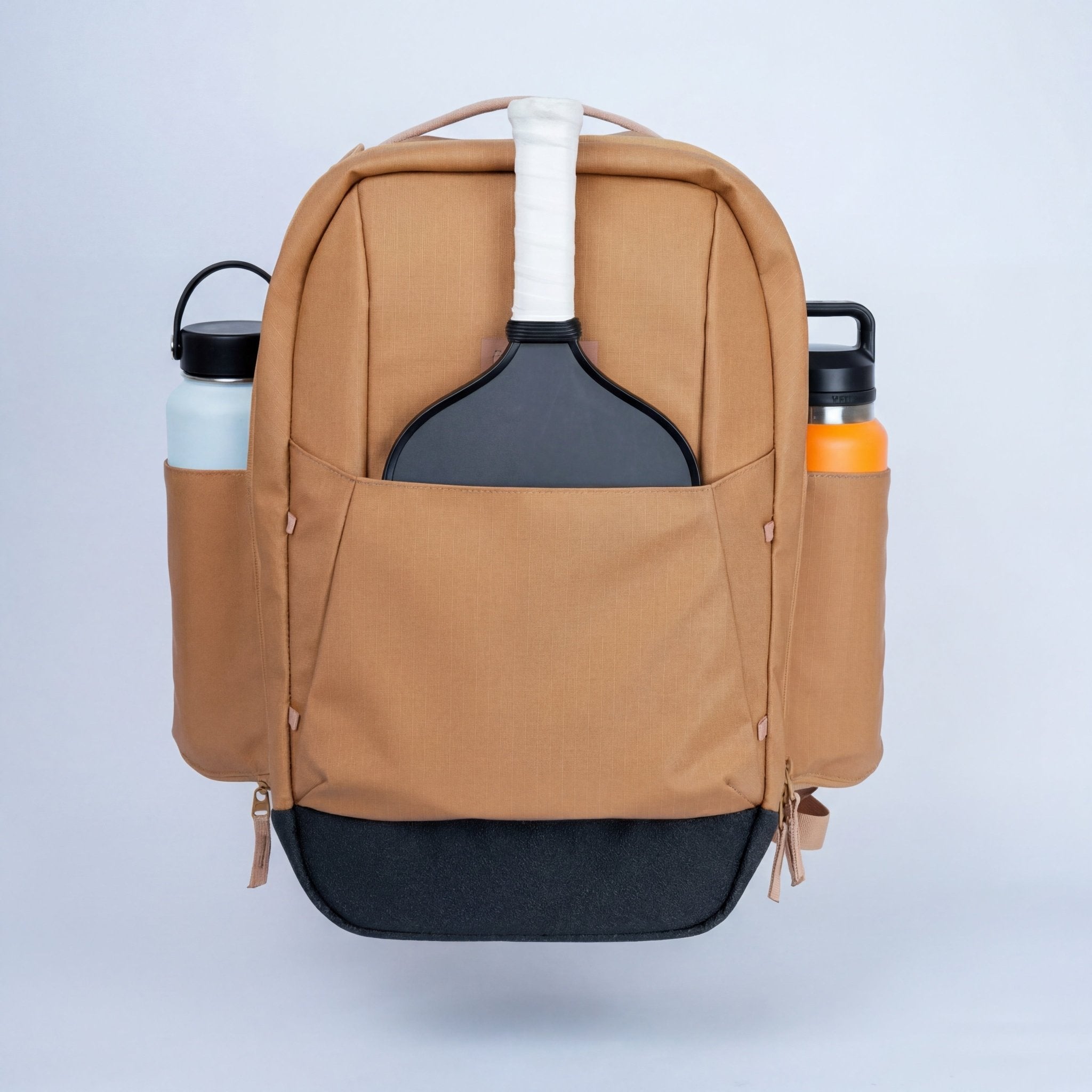
You found a great paddle. Now you need somewhere to carry it — along with your shoes, water bottle, and extra balls. The FORWRD Court Ranger V2 fits up to 4 paddles in its modular sleeve system, handles a 16" laptop, and comes in at $195. Built with feedback from 500+ pickleball players.

Frequently Asked Questions
Is the ProXR Signature Series good for beginners?
Yes — specifically the 16mm variant. The T700 carbon fiber face and 16mm core make it forgiving enough for players still developing consistent contact. It's a meaningful upgrade from fiberglass beginner paddles without punishing your errors as harshly as the 13mm version will.
What's the difference between ProXR Signature Series 13mm and 16mm?
Two meaningful differences: the 13mm uses a Raw Carbon Fiber face (more spin texture) with a thinner core that offers more power but less forgiveness. The 16mm uses T700 Carbon Fiber (slightly smoother face) with a thicker core for better control and more forgiving mishit response. Choose 13mm for spin-focused play; 16mm for control and consistency.
How does ProXR Signature Series compare to JOOLA or Selkirk?
Not a fair comparison — and that's not a knock on ProXR. JOOLA and Selkirk carbon fiber paddles start at $140-200+. ProXR Signature is $79.99. Judge ProXR against ONIX Evoke Premier Pro and Gamma RCF at the same price point — those are the relevant comparisons, and ProXR holds up well.
Does the ProXR Signature Series have enough spin?
The 13mm Raw CF variant: yes, genuinely good spin for the price — more texture than most paddles at this tier. The 16mm T700 variant: decent spin, but that's not the reason to buy it. If spin is your top priority, go 13mm or look at the ONIX Evoke Premier Pro Raw CF.
How long does the ProXR Signature Series last?
The carbon fiber face held up through 30+ hours of testing with no delamination. The edge guard survived normal court contact. The grip is the weak point — plan to add an overgrip around 15-20 hours of play. Realistic lifespan: 6-12 months at 2-3 sessions per week.
Where can I buy ProXR Signature Series paddles?
Pickleball Central carries both the 16mm and 13mm variants at $79.99 each with fast, free shipping.
Final Verdict
The ProXR Signature Series earns its place in the budget carbon fiber conversation. At $79.99 for a genuine carbon fiber paddle from a brand with real pro partnerships, this isn't a gimmick. The 16mm is the smarter buy for most players — better forgiveness, better dink game, better for players still developing their mechanics. The 13mm is for spin-hungry intermediates who accept less forgiveness as the price of more grit.
Compared to fiberglass alternatives at the same price: not close. Carbon fiber wins. Compared to JOOLA or Selkirk carbon fiber: that $120 price gap closes the comparison before it starts. Judge ProXR against ONIX and Gamma — and against that bar, it holds up.
If grip durability is a dealbreaker, look at the Engage Pursuit Pro EX at ~$110. Ready to step up within ProXR's lineup? The Sweet Spot Max is the logical next paddle.

Leave a comment
This site is protected by hCaptcha and the hCaptcha Privacy Policy and Terms of Service apply.