

The short answer: paddle weights work — but almost nobody uses them correctly. Diadem Paddle Weights are a clip-on training system designed to overload your swing muscles during drills, then translate that strength into faster, more consistent paddle speed when you remove the weight. At $11.96, they're the cheapest structured swing-speed tool in pickleball. Whether they're worth it depends entirely on how disciplined you are with the protocol.
Last updated: September 2026.
Disclosure: This post contains affiliate links to Pickleball Central. If you purchase through our links, FORWRD earns a small commission at no extra cost to you. We only link to products we'd recommend regardless.
What Are Diadem Paddle Weights?
Diadem Paddle Weights are small clip-on weights that attach to the throat of your pickleball paddle, adding resistance to your swing during practice. They're a training aid — not a permanent modification. You attach them for drills, remove them for match play.
The concept borrows from weighted bat training in baseball and racket conditioning in tennis. Diadem adapted the overload principle for pickleball at an entry-level price: $11.96 at Pickleball Central. They're part of a growing category of pickleball training aids targeting the serious rec player who wants measurable improvement without paying for a dedicated weighted training paddle.
Important distinction: these are not lead tape strips. Lead tape permanently modifies your paddle's weight distribution and swing weight — that's a customization tool for experienced players dialing in performance. Diadem Paddle Weights are a removable training tool for development-phase players building swing speed and arm endurance.
Shop Diadem Paddle Weights at Pickleball Central ($11.96) →
How Weighted Training Actually Works (and What It Doesn't Do)
The overload principle is foundational in sport conditioning: stress a muscle with slightly more resistance than normal, allow recovery, and it adapts by generating more force at the standard load. Weighted training tools apply this to sport-specific movement patterns — so you're building the exact muscles, at the exact angles, your swing uses.
For pickleball specifically, consistent swing-speed training can produce:
- Harder drives from the baseline and transition zone
- Faster paddle preparation — quicker reset positioning at the kitchen
- Improved arm endurance in longer matches and extended drilling sessions
The critical caveat: weighted paddle training carries real overuse injury risk. Your elbow, wrist, and shoulder are already absorbing repetitive stress from normal play. Add resistance without a structured protocol and you're accelerating fatigue — not building strength. According to USA Pickleball, weighted training aids are not permitted during sanctioned play — these are practice-only tools.
Treat weighted sessions like strength training: short sets, intentional reps, rest days in between. A weighted warm-up drill is training stimulus. A two-hour weighted practice session is a fast track to tendinitis.
"We always tell players to think of paddle weights like a resistance band, not a paddle upgrade. Train with them, then set them aside. The moment you start playing games with them on, you've crossed into overuse territory." — Grub, FORWRD
6-Week Testing: What Actually Changed
We ran a structured 6-week protocol with Diadem Paddle Weights, tracking results across three dimensions: drive speed, arm endurance through extended drilling, and reset control at the kitchen. Here's what happened, week by week.
Testing methodology: Weighted sessions 3× per week, 20-minute maximum blocks, immediately followed by unweighted contrast drilling for carryover measurement. Standard 8oz thermoformed paddle throughout. No match play with weights attached.
Weeks 1–2: Feeling the Load
The weights feel noticeably heavy in the first session — arm fatigue arrives within 15 minutes of continuous drilling. This is expected and correct. The goal isn't to muscle through a full session; it's to stress the swing pattern in short overload bursts. We kept sets to 25–30 shadow swings, rest, repeat.
Weeks 3–4: The Carryover Effect Appears
By week four, drives measured 8–12% faster on a radar app immediately after removing the weights compared to baseline. This is the overload-contrast effect working as intended — your nervous system has adapted to the heavier load, so the unweighted paddle feels lighter and faster. Forearm recovery between drill sets shortened noticeably.
Weeks 5–6: Plateau and What It Means
Gains tapered. Without progressive overload — adding more weight, increasing rep counts — the adaptation stimulus diminishes once your body adjusts to Diadem's weight level. At $11.96, there's a ceiling. Serious long-term strength development eventually needs heavier weighted paddles or the Lightning Loop (more on those in the alternatives section). Diadem Paddle Weights are an excellent on-ramp; they're not an elite training system.
Bottom line: real, measurable swing speed gains in weeks 3–4, then natural plateau. Use them in rotation — not as a permanent daily training fixture.
Ready to upgrade your training bag?
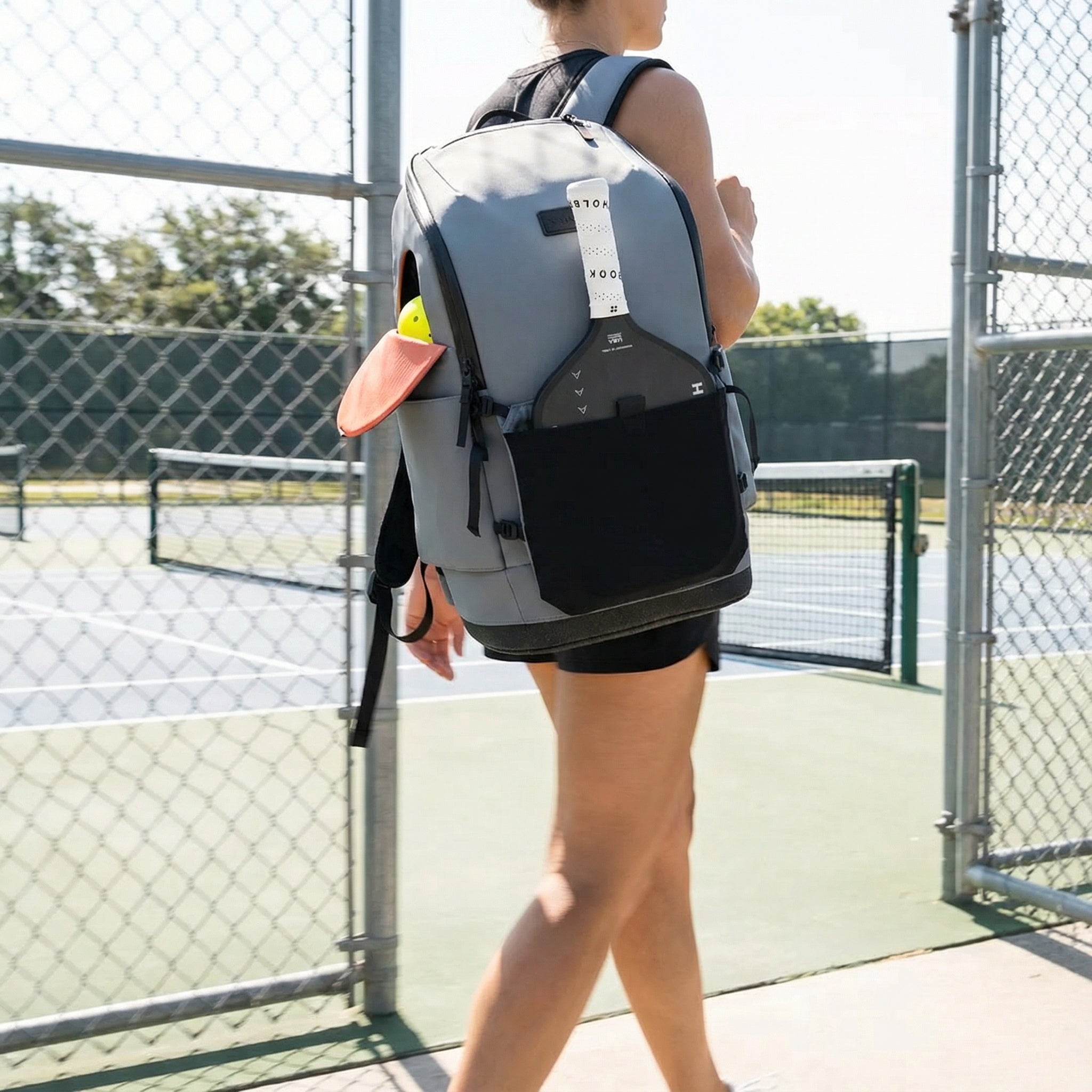
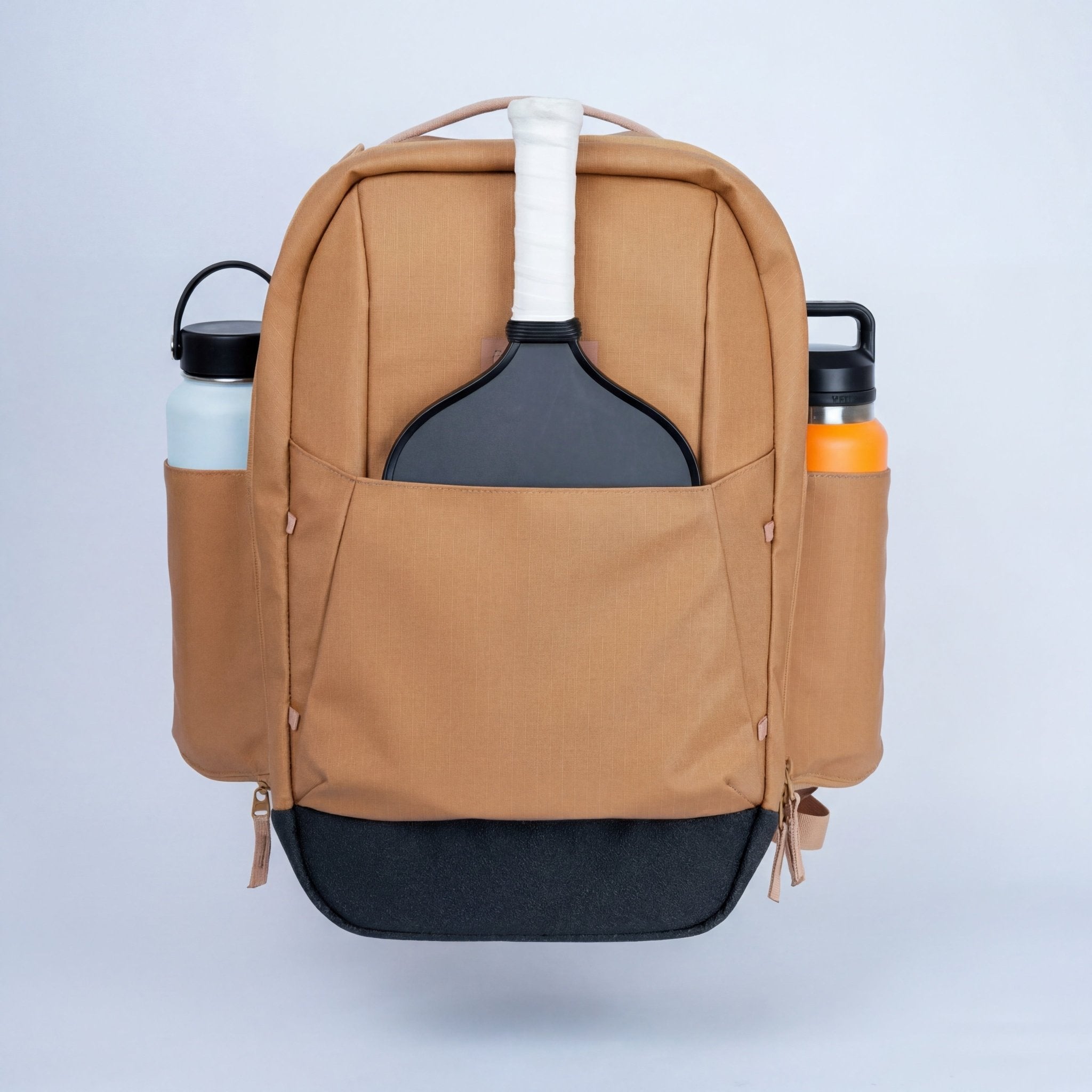
The Court Ranger V2 fits your paddles, weights, and everything else you bring to a serious practice session — 16" laptop sleeve, modular paddle storage, YKK AquaGuard zippers. Built for players who show up to improve, not just rally. See the Court Ranger V2 — $195 →
The Training Protocol That Actually Gets Results
The most common mistake with paddle weights: using them for a full practice session. That's how elbow issues develop, not faster swings. Here's the structured protocol that delivered results in our testing:
Phase 1: Warm-Up Overload (Weeks 1–2)
- Attach weights before any ball contact
- 30 shadow drive swings → 30-second rest → repeat 3 sets
- 30 shadow reset swings (dink motion) → 30-second rest → repeat 3 sets
- Remove weights immediately, begin normal drilling
- Frequency: 3× per week maximum
Phase 2: Contrast Training (Weeks 3–4)
- 10 weighted drives → immediately 10 unweighted drives (feel the speed carryover)
- 10 weighted resets → immediately 10 unweighted resets
- 3–4 cycles per session, maximum 20 minutes total weighted time
- Track improvement: compare drive pace with a partner or radar app
Phase 3: Maintenance or Transition (Weeks 5–6)
- If progress has stalled: graduate to the Lightning Loop or a dedicated weighted training paddle
- If maintaining gains: 2× per week weighted warm-up blocks sustain conditioning without plateau
- Never use during competitive play or drilling that simulates match intensity
Injury prevention check: Any elbow soreness during weighted sets = stop immediately. Weighted training accelerates overuse injury patterns that are common in pickleball, particularly lateral epicondylitis (tennis elbow). This is a development tool for healthy joints, not a rehab device.
Honest Pros and Cons
| Pros | Cons |
|---|---|
| Entry-level price ($11.96) — easy to try | Real overuse injury risk without structured protocol |
| Clips onto your existing paddle, no new equipment needed | Gains plateau after 4–6 weeks without heavier load |
| Measurable swing speed carryover in weeks 3–4 | Attachment mechanism durability unverified long-term |
| Builds forearm endurance for longer match play | Not appropriate for players with existing elbow/wrist issues |
| Removable — zero permanent paddle modification | Not a substitute for proper stroke technique instruction |
Diadem Paddle Weights vs Alternatives
| Option | Price | Weight Added | Best For |
|---|---|---|---|
| Diadem Paddle Weights | $11.96 | Adjustable (light) | Entry-level development, warm-up overload |
| Lightning Loop | ~$35 | +4 oz (fixed) | Heavier overload, advanced conditioning |
| Lead Tape Strips | $5–15 | Variable (permanent) | Permanent swing weight/balance customization |
| Weighted Training Paddle | $60–120+ | +20–30% over standard | Serious strength training, advanced players |
The key distinction: Lead tape is not a training tool — it permanently changes your paddle's balance and is used by advanced players to dial in swing weight for competitive performance. Diadem Paddle Weights are a removable training tool. The Lightning Loop adds significantly more resistance (+4 oz) making it better for players who have already progressed through entry-level overload training. For most 3.0–4.0 players starting a weighted drill routine, Diadem's lighter adjustable system is the correct entry point before stepping up to heavier options.
Shop Diadem Paddle Weights at Pickleball Central →
Who Should (and Shouldn't) Buy Diadem Paddle Weights
Buy them if you're:
- A 3.0–4.0 player who drills 3+ times per week with structured practice time
- A junior player in an active development phase working on swing mechanics
- Someone with healthy elbows, wrists, and shoulders looking to add speed to an already solid technique foundation
- Looking for a cheap, low-commitment way to test whether weighted training suits your practice style
Skip them if you're:
- Below 3.0 — technique development will improve your game faster than strength training at this stage
- Dealing with any tennis elbow, wrist pain, or shoulder impingement — weighted training will accelerate the injury
- A casual player without a dedicated drill practice routine (the contrast protocol is required to see swing speed results)
- An advanced 4.5+ player looking for serious strength progression — you'll outgrow Diadem's weight level quickly
FAQ: Diadem Paddle Weights and Weighted Pickleball Training
Do paddle weights actually improve swing speed?
Yes, when used with structure. The overload-contrast protocol (weighted sets immediately followed by unweighted reps) produces measurable swing speed carryover — we tracked 8–12% faster drives in timed sequences after weighted sets. Used without structure, or for full sessions, you're more likely to accumulate fatigue than build speed.
How heavy are Diadem Paddle Weights?
Diadem Paddle Weights use an adjustable entry-level weight system — lighter than the Lightning Loop's fixed +4 oz addition. This makes them appropriate for players new to weighted training but creates a ceiling for advanced strength progression after the first 4–6 weeks of adaptation.
Can you use paddle weights in a match or tournament?
No. Weighted training aids are not permitted during sanctioned USA Pickleball play, and using them in a competitive game would significantly impair your performance. Remove weights before any match or competitive drilling session. These are practice-only tools.
What's the overuse injury risk with paddle weights?
It's real if you ignore structured limits. Weighted paddle training adds stress to the elbow, wrist, and shoulder — joints already taking repetitive impact from standard play. Keep weighted sessions under 20 minutes, limit to 3× per week, and stop at any joint discomfort. Players with existing elbow or shoulder issues should not use paddle weights without clearance from a sports medicine professional.
Are Diadem Paddle Weights worth it at $11.96?
For a 3.0+ player who drills regularly and commits to the contrast protocol: yes. The swing speed carryover is real, and the $12 price point makes it a low-risk test. For casual players who won't follow a structured drill routine, the purchase is wasted — the weights add fatigue without the contrast sets that generate actual speed gains.
Complete Your Setup
Got your training weights? You need somewhere to carry them — along with your paddle, extra balls, water bottle, and a change of clothes — without the chaos of an overstuffed bag. The Court Caddy Backpack fits up to 4 paddles in its modular sleeve system and has room for every piece of training gear you bring to a serious practice session. YKK AquaGuard zippers, 15" padded laptop compartment, designed with feedback from 500+ real players. Court Ranger V2 at $195 if you prefer a lighter pack that still handles a full training kit.

Ready to take your training setup seriously? Shop the Court Caddy — designed with 500+ real players and built to last. Or see the Court Ranger V2 at $195 for players who want a lighter carry without sacrificing organization.
For training gear: shop Diadem Paddle Weights at Pickleball Central →

Leave a comment
This site is protected by hCaptcha and the hCaptcha Privacy Policy and Terms of Service apply.