

Last updated: November 2026
Cold weather doesn't retire pickleball players — it just separates the prepared ones from the ones who show up unprepared and leave after two games with stiff knees and cracked fingers. For players over 60, winter play isn't just a comfort issue. It's a physiology issue. Your body's response to cold is different at 65 than it was at 40, and your gear choices need to reflect that. This guide covers exactly what changes, what gear addresses those changes, and how to decide between playing outdoors or finding indoor courts near you.
Disclosure: This post contains affiliate links to Pickleball Central. If you purchase through our links, FORWRD earns a small commission at no extra cost to you. We only link to products we'd recommend regardless.
Why Winter Play Is Different After 60
The cold does measurable things to your body that are worth understanding — not to scare you off the court, but so you can prepare for what's actually happening.
Synovial fluid thickens in cold. The fluid that lubricates your joints — knees, hips, shoulders, wrists — becomes more viscous below 50°F. The practical effect: joints feel stiff for the first 15–20 minutes of play, and they're genuinely more vulnerable to strain during that window. For players over 60, that warm-up window is longer than it was at 40. Plan for it, don't fight it.
Grip pressure changes without you realizing it. Cold hands grip harder. When your fingers are chilly, your nervous system compensates by increasing grip force to maintain ball-contact precision — and that extra tension travels up through your forearm and elbow. Players who've battled pickleball elbow (lateral epicondylitis) will often notice it flares harder in cold weather, even if they haven't changed anything else. The fix isn't to grip looser consciously — it's to keep your hands warm so the grip pressure stays natural.
The ball is a different animal below 50°F. Standard outdoor pickleballs become noticeably harder and less lively when temperatures drop. They bounce shorter, fly flatter, and crack more easily on hard hits. This changes your game — drives have less margin, and third-shot drops behave differently than your indoor or summer reference points. Using a cold-weather ball rated for lower temperatures isn't just comfort — it's accuracy.
Warm-up time doubles. A 5-minute pre-game jog and arm circles might be enough at 75°F. At 40°F, senior players need 15–20 minutes of progressive movement before competitive play to bring joints and muscles to operating temperature. Players who skip this in cold weather are where most winter injuries come from.
"In cold weather, we tell players to treat the first game like a warm-up game — not a competitive one. The body needs time to find itself in the cold. Players who push into competitive intensity before they're warm are setting themselves up for a strain they'll be dealing with for two weeks." — Grub, FORWRD co-founder
Layering for the Court: What Actually Works
The layering advice you'll find everywhere — "wear a base layer, mid layer, and outer layer" — is correct but generic. Here's what that actually means for a 60+ player moving on a pickleball court, where you need full shoulder rotation, lateral movement, and arm swing range:
Base Layer: Moisture Management Comes First
You will sweat, even in cold weather. A cotton base layer will hold that moisture against your skin, chill you rapidly when you stop moving between points, and make the second half of your session miserable. Use a lightweight moisture-wicking base in polyester or merino wool. Merino is worth the extra cost for older players because it regulates temperature better in variable cold — not too hot when you're rallying, not too cold in the breeze between games.
Fit check: Base layers should be snug but not restrictive through the shoulders. If you can't complete a full overhead smash motion without the hem pulling out, the fit is wrong.
Mid Layer: Warmth Without Bulk
A quarter-zip fleece pullover is the gold standard for pickleball cold-weather play. It insulates during warm-up, and the quarter-zip lets you vent heat quickly when play intensity picks up. Avoid full-zip jackets with large front openings — they're harder to manage on the fly and can flap if only partially zipped.
For temperatures below 40°F, a thin down vest over the mid layer adds core warmth without restricting arm movement. Down vests specifically work because they warm your core (where your body prioritizes circulation in cold) while leaving your shoulders completely free.
Outer Layer: Wind Is the Actual Enemy
Outdoor pickleball courts are exposed. Wind cuts through fleece immediately — a 35°F day with 15 mph wind feels like 25°F. A lightweight wind shell over your mid layer is not optional on outdoor courts in winter. Look for something packable so you can stuff it in your bag when play heats up. It doesn't need to be waterproof — just wind-resistant.
Legs and Feet: Where Seniors Get Cold Fast
Circulation to the extremities slows with age and in cold weather. Your legs and feet will get cold before the rest of you. Thermal tights or fleece-lined athletic pants as a base keep leg muscles warmer — and warmer muscles mean faster reaction time and better lateral movement. For feet, wool-blend athletic socks add meaningful insulation without restricting movement inside court shoes. Add hand warmers to pockets for between-game use: 90-second recovery to warm hands between games is vastly underrated.
Hands: The Specific Problem for Pickleball
Standard winter gloves don't work for pickleball — you lose paddle feel immediately. Options that actually work:
- Golf rain gloves: Thin, flexible, designed for grip in adverse conditions. Use only on the paddle hand. Play bare-handed on the non-paddle side if you can.
- Thin fleece liner gloves: Acceptable for sub-35°F conditions. Expect some feel degradation on resets and dinks.
- Between-game warmers: Keep full mittens in your bag. Put them on between games and during changeovers — keeping hands warm during rest periods means they don't have to warm up repeatedly during play.
Gear That Protects Joints in Cold Weather
Joint protection in winter is not just about support braces — though those help. It's a system: warmth, compression, weight, and grip pressure working together.
Compression: What It Does and Doesn't Do
Compression sleeves on knees and elbows work in cold weather for one primary reason: they keep joint temperature up. Joints that stay warm move more freely and have better proprioception (the internal sense of joint position that prevents missteps and ankle rolls). A knee compression sleeve from Pickleball Central won't prevent injury in a fall — but it will keep the joint warmer and reduce that specific cold-induced stiffness in the first 20 minutes of play.
Elbow compression sleeves serve double duty for players with existing elbow or forearm issues. They apply gentle proprioceptive feedback and keep the muscles loose throughout a session. Players who run them in summer for elbow issues should definitely run them in winter.
Paddle Weight Considerations in Cold
This one surprises people: a heavier paddle is harder on stiff, cold joints than a lighter one. The added mass amplifies vibration transmission, and cold-stiffened forearm muscles and elbow joints absorb that vibration worse. If you typically play with a mid-weight paddle (8–8.5 oz), consider dropping to a lighter option (7.5–8 oz) in winter sessions until you're properly warmed up. Some players keep a lighter paddle specifically for cold-weather play.
Heat Before You Play
Applying heat to major joints before outdoor play — knee, shoulder, elbow — using a portable heat wrap or pad for 10–15 minutes before you get on court accelerates the warm-up process and reduces initial stiffness. This is especially relevant for players managing arthritis, old injuries, or tendon issues. Heat increases blood flow to the area and loosens the surrounding soft tissue before you put load on it. The warm-up jog and arm circles are still necessary afterward — heat is a primer, not a substitute for movement.
Cold-Weather Balls Are Not Optional
Standard outdoor balls crack more easily and become unpredictably hard in temperatures below 45°F. Cold-weather formulations use softer plastic compounds that maintain normal compression at lower temps. The ONIX Fuse outdoor ball is widely regarded as one of the most cold-tolerant options. Cold-weather balls fly slightly differently — slightly less travel distance, different bounce — but the consistency they provide is worth the adaptation time.
The Right Bag for Winter: Keeping Gear Dry and Accessible
Winter court bags have one job that summer bags don't: keeping everything dry. Cold weather means morning frost, damp court surfaces, unexpected rain or snow flurries, and condensation inside bag compartments from warm equipment hitting cold air. A bag that wasn't designed for moisture management will fail you in ways that feel expensive — cracked paddle edges, soaked overgrip, dead phone battery from cold-moist electronics exposure.
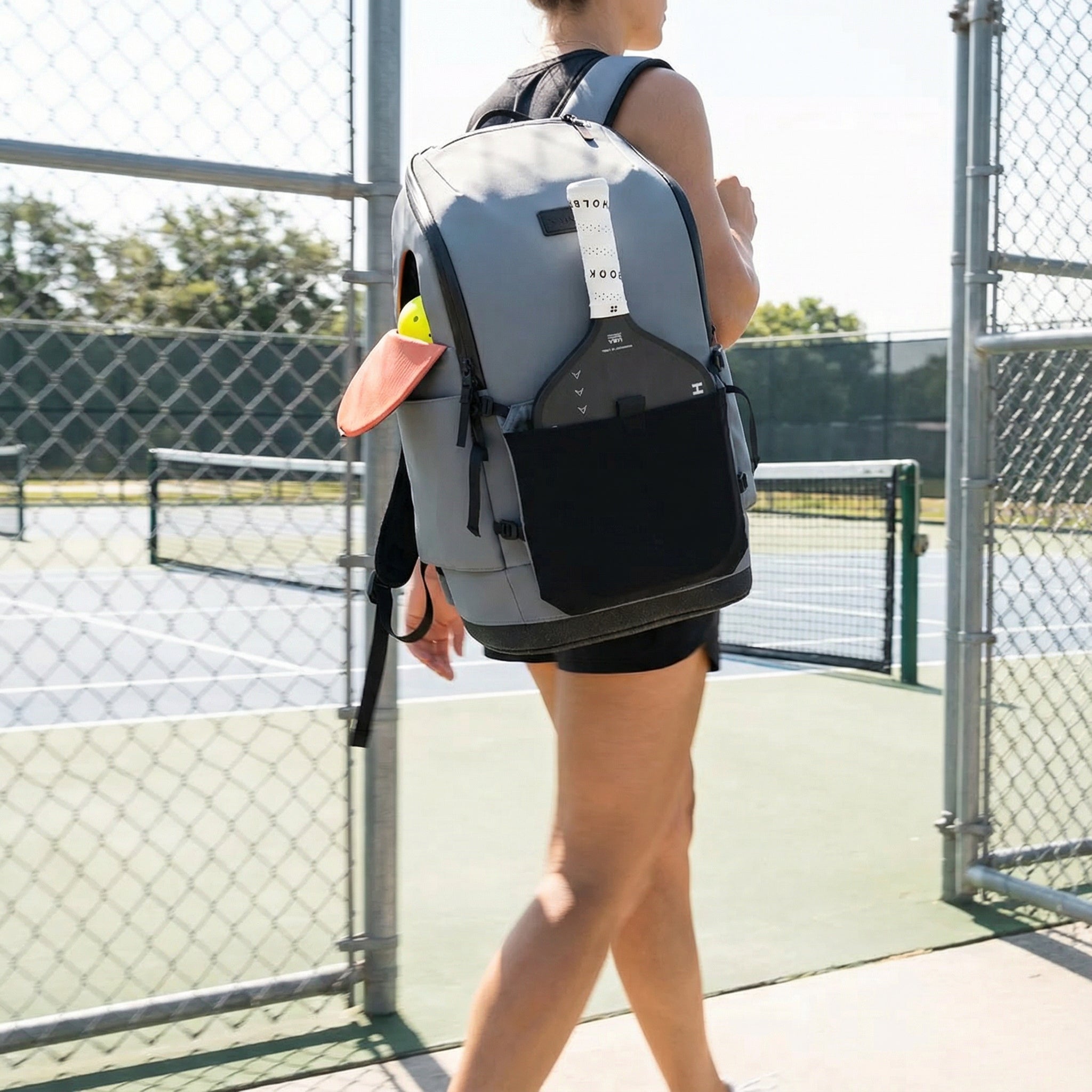
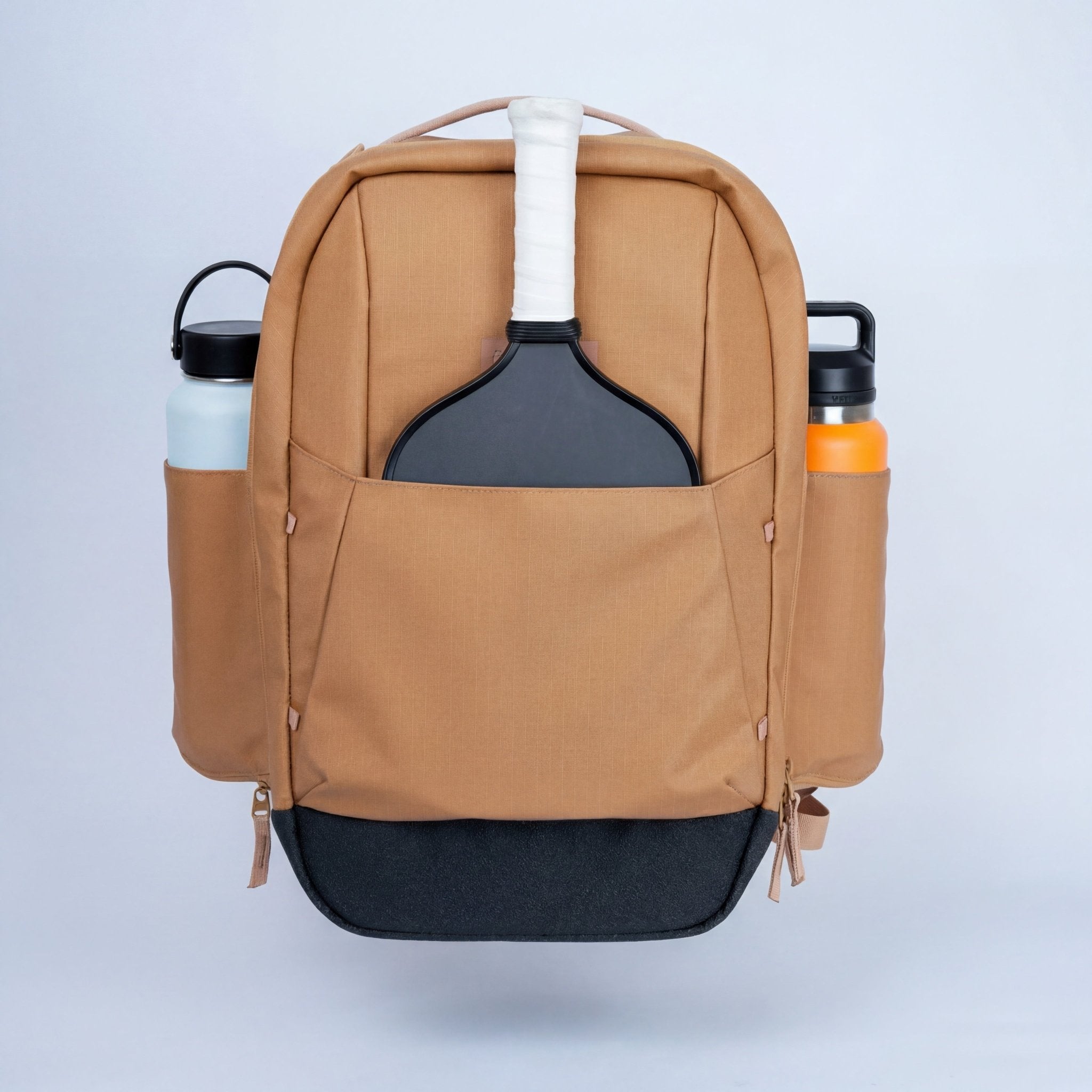
The Court Ranger V2 ($195) is our primary pick for independent winter players managing their own gear. The YKK AquaGuard zippers specifically matter here — they're designed to prevent water intrusion at the zipper track, not just resist light sprinkles. At 40°F outdoor courts, early morning frost and dew make this the difference between dry grip tape and a soggy paddle handle by game three.
The 16" padded laptop sleeve doubles as a gear insulation buffer in cold weather. Players who keep hand warmers, a heat wrap, and spare overgrip in that pocket benefit from the padding that buffers temperature swings. The main compartment is large enough to pack the extra layers (down vest, outer shell) you'll shed once you warm up — a bag that runs out of room when you pack for winter conditions is a real problem.
Our Pick: Court Ranger V2 ($195)
YKK AquaGuard weatherproof zippers, 16" padded compartment for cold-weather extras, designed with 500+ real players. Primary pick for independent senior players.
Shop Court Ranger V2 at FORWRD →
For players who travel to tournaments or play with organized club groups in winter, the Court Caddy ($325) handles the full tournament-day load: extra paddles, 15" padded laptop compartment, full gear separation, and the same YKK AquaGuard zippers. If you're packing for a full day at an indoor tournament venue — with multiple layers, extra balls, paddle options — the Court Caddy's organization earns its price tag.
What to look for in any winter bag:
- Weatherproof zippers: Not just "water resistant" — specifically rated for water intrusion prevention at the zipper track
- Modular organization: Cold-weather packing adds bulk; a bag with compartment flexibility handles extra layers without chaos
- Easy one-glove access: You'll be reaching into your bag with cold hands wearing gloves — large zipper pulls matter more than you think
- Enough capacity: Budget for 25% more volume than your summer pack; the extra layers are real bulk
Indoor vs. Outdoor Play in Winter: Finding Your Court
The honest answer to "should I play outdoors in winter?" depends on three variables: your temperature threshold, your joint condition, and what's available to you.
Temperature Decision Framework for Senior Players
| Temperature | Recommendation for 60+ Players |
|---|---|
| 50°F+ | Comfortable with appropriate layers. Normal warm-up protocol. |
| 40–50°F | Manageable with full layering, compression, and 20-minute warm-up. Cold-weather balls recommended. Players with active arthritis or cardiovascular conditions should consult their doctor before playing in this range. |
| 35–40°F | High stiffness risk. Only players in good condition with no major joint or cardiovascular issues should play outdoors. Warm-up time 25+ minutes. Standard balls will crack — cold-weather balls required. |
| Below 35°F | Seek indoor courts. Cold this severe significantly increases injury risk for older players regardless of preparation level. |
Finding Indoor Courts Near You
The easiest places to find indoor pickleball in winter:
- YMCA facilities: Many YMCAs now have dedicated pickleball courts, often with open play sessions and senior-specific programming. YMCA membership typically includes court access.
- Recreational centers and community centers: Many convert gym floors to pickleball courts with portable nets during winter months. Check your city parks and recreation department.
- Dedicated pickleball clubs: The number of indoor-only pickleball facilities has expanded significantly since 2024. Use USA Pickleball's court finder (usapickleball.com) to locate facilities in your area.
- Schools and colleges: Many gym facilities rent court time off-peak. Worth calling directly.
Indoor play also changes ball selection: standard indoor balls (Onix Fuse Indoor, Franklin X-40 Indoor) have different hole patterns than outdoor balls and play best on wood gym floors. Keep both in your bag if you're switching between venues in winter.

Shop Court Ranger V2 — $195 at FORWRD →
FAQ: Seniors Playing Pickleball in Winter
What gear do seniors need to play pickleball in winter?
The essentials for seniors playing pickleball in winter: a moisture-wicking base layer, insulating mid layer (quarter-zip fleece), and wind-resistant outer shell; compression sleeves for knees and/or elbows; thin golf gloves for paddle-hand grip; cold-weather balls (ONIX Fuse or equivalent); and a weatherproof bag with sealed zippers to keep gear dry. Plan for a 15–20 minute warm-up before competitive play — joint stiffness in cold requires longer preparation time than summer play.
Is pickleball safe to play outdoors in cold weather for seniors over 60?
Generally yes, with precautions: temperatures above 40°F are manageable for most healthy seniors with proper layering and an extended warm-up. Below 35°F, seek indoor courts — cold this severe significantly increases injury risk for older players. Players with active arthritis, cardiovascular conditions, or circulatory issues should consult their doctor before playing in temperatures below 45°F. The bigger risks are muscle strains from inadequate warm-up and increased fall risk on frost-covered court surfaces.
What do you wear to play pickleball when it's cold?
Layer three items: (1) a moisture-wicking base layer in polyester or merino wool — never cotton; (2) an insulating mid layer like a quarter-zip fleece pullover, which you can vent during intense play; (3) a lightweight wind-resistant shell to block court wind. Add thermal tights or fleece-lined pants for legs, wool-blend athletic socks, and thin golf gloves on the paddle hand. A beanie or ear-covering headband helps significantly — substantial heat loss occurs through the head in cold.
Are there indoor pickleball options for seniors who can't play outside in winter?
Yes — indoor pickleball has expanded significantly. YMCA facilities are the most common option, with many locations now offering dedicated courts and senior programming. Community recreation centers often convert gym space for winter pickleball. Dedicated indoor pickleball clubs have grown in most metro areas since 2024. USA Pickleball's online court finder (usapickleball.com) is the most reliable tool for finding indoor courts near you. Many clubs offer drop-in senior sessions specifically during weekday mornings.
Why do pickleball balls crack in cold weather?
Standard outdoor pickleballs are made from a plastic compound that becomes brittle in temperatures below 45°F. The repeated impact stress of normal play causes micro-fractures that propagate faster in rigid, cold plastic. Cold-weather balls use a softer plastic formulation that maintains flexibility at lower temperatures. If you're playing outdoors below 50°F, using a cold-weather ball prevents cracking and gives you more consistent bounce and flight performance throughout the session.
How should senior pickleball players warm up in cold weather?
Budget 15–20 minutes minimum before competitive play in cold. Start with 5–10 minutes of brisk walking to elevate core temperature. Follow with shoulder circles, hip rotations, ankle rotations, and knee bends — moving every joint through its full range before putting load on it. Then start hitting slowly for 5–10 minutes, escalating speed gradually. Players who apply heat wraps to knees or elbows for 10 minutes before play can reduce initial stiffness further. Never rush the warm-up in cold — strains that happen in the first game usually happen because the warm-up was skipped.
Final Thoughts: Winter Play Rewards the Prepared
The players over 60 who play year-round aren't tougher than everyone else — they're just better prepared. The gear list isn't complicated: layers that actually work for court movement, joint protection that keeps you in the game, cold-weather balls that don't crack on you, and a bag that keeps everything dry when conditions aren't. Spend one morning getting this setup dialed in and you'll be on court through February when other players have hung up their paddles until spring.

Leave a comment
This site is protected by hCaptcha and the hCaptcha Privacy Policy and Terms of Service apply.