


Disclosure: This post contains affiliate links to Pickleball Central. If you purchase through our links, FORWRD earns a small commission at no extra cost to you. We only link to products we'd recommend regardless.
Last Updated: September 2026
Spending $199 on pickleball glasses sounds aggressive until you've lost a point to glare at 4-1 in the third game. The Chamelo Sport Domo Shield Slider HVL isn't the cheapest eyewear option on court — not even close. But it combines two technologies that most court glasses treat as separate SKUs: HVL photochromic lens adaptation and a slider hinge that lets you swap lenses without tools in under 30 seconds. Here's whether that combination is worth double the price of a solid entry-level option.
Quick Verdict
✓ Pros
- HVL photochromic lenses adapt genuinely well to changing outdoor light conditions
- Slider hinge mechanism is elegant and actually works — lens swap takes under 30 seconds
- Shield-style lens provides wide peripheral coverage, reduces court-edge blind spots
- Anti-scratch and anti-fog coating holds up through heavy play and humidity
- Frame quality feels premium — not plastic-cheap despite the sporty profile
✗ Cons
- $199 is a premium commitment — JOOLA RJX Boost delivers 80% of the function at $90
- HVL adaptation is slower than some competitors in fast indoor/outdoor transitions
- Shield-style fit may not suit narrower faces — sizing down not available
- Slider hinge is innovative but adds complexity — one more thing that can wear over time
- No prescription insert option (relevant for roughly 35% of adult players)
Price: $199.00 | Lens: HVL Photochromic | Best For: Outdoor play, mixed light conditions
Who it's for: Serious players who play frequently outdoors in variable light and want lens technology that adapts without swapping frames
Who should skip it: Indoor-only players, budget-first buyers, or players who'd benefit more from JOOLA RJX Boost's value proposition at $90
Specs at a Glance
| Spec | Detail |
|---|---|
| Price | $199.00 |
| Lens Technology | HVL (High Visible Light) Photochromic |
| Lens Style | Shield (single wraparound lens) |
| Hinge System | Slider mechanism — tool-free lens swap |
| Coatings | Anti-scratch, anti-fog |
| Frame Material | TR-90 flexible nylon |
| Best For | Outdoor hard courts, variable light, all-day tournament play |
Check Price at Pickleball Central →
Why Trust This Review
FORWRD has been working in the pickleball gear space for three years — which means we've heard from players at every level about what actually matters in court eyewear. The recurring theme: glare management and lens consistency matter infinitely more than frame aesthetics, and most players dramatically under-invest in eyewear relative to their paddle budget. We tested the Domo Shield HVL across six weeks of outdoor play in variable light conditions — morning sessions with low sun angle, midday high-sun play, and overcast afternoons where photochromic performance matters most.
Our comparison baseline: the JOOLA RJX Boost ($89.95) — the clear standard for performance-value court eyewear — and the Vantage Labs Vue ColorVue ($169), which sits between the two price points. We've also previously reviewed the Chamelo Music Shield Slider HVL ($260), the audio-integrated version of this same frame, so we have direct context on the optical performance without the audio premium.
What "HVL" and "Slider" Actually Mean
Two tech claims on the box, both worth unpacking.
HVL (High Visible Light) photochromic: Photochromic lenses darken in UV light and lighten indoors or in shade. "High Visible Light" refers to the lens's transmission characteristics in its lighter state — HVL lenses let more light through when clear, which is particularly relevant for indoor courts or overcast days where a standard tinted lens would dim the court too much. The benefit: one pair of glasses that performs in a wider range of conditions rather than needing separate clear and tinted pairs.
Slider hinge: This is Chamelo's lens-swap mechanism. Instead of tool-based lens systems (which require a thin implement to pop lenses) or magnetic mounts (which can disengage during impact), the slider uses a rail system — you slide the lens out laterally and a replacement slides in. Takes about 25-30 seconds once you've done it twice. It means you can carry a replacement lens in your bag and swap mid-match or between sessions if conditions change dramatically.
Real talk: for most recreational players playing at a single facility with consistent lighting, the slider hinge is a "nice to have" that you'll use rarely. For tournament players traveling to venues with vastly different indoor/outdoor setups, it's genuinely useful.
Optical Performance
The lens clarity is the most important thing — everything else is a delivery mechanism. The Domo Shield HVL delivers clean, distortion-free optics across the shield surface. That matters more than most players realize: cheap wraparound sports glasses often have distortion at the peripheral edges of the shield lens, which becomes noticeable when you're tracking a ball at the corner of your visual field. The Chamelo lens doesn't have this problem.
The HVL photochromic adaptation is solid. In transition from indoor to outdoor, the lens darkens within about 45-60 seconds to a fully adapted state. Coming back indoors, lightening takes 90-120 seconds — typical for photochromic tech. In practical court terms: if you're warming up on an outdoor court before moving to indoor play, you'll want to transition early and let the lens adapt before play starts. It's not instant.
Where the HVL advantage shows most clearly: overcast outdoor play. Standard UV-activated photochromic lenses barely activate on cloudy days (because cloud cover filters UV), which means they sit at near-clear tint when you're actually facing bright sky glare. HVL lenses respond to visible light intensity, not just UV, so they provide better glare reduction on bright overcast days. For players in coastal or mountain regions where overcast outdoor play is common, this is the most relevant benefit.
Anti-glare performance on high-sun outdoor courts is excellent. Playing into the afternoon sun at the kitchen line — the scenario that defines court eyewear need — the Domo Shield reduces eye fatigue and ball-tracking difficulty significantly compared to no eyewear. Against the JOOLA RJX Boost, the HVL adaptation gives the Chamelo a noticeable edge in variable light; in stable full-sun conditions, the JOOLA's fixed tint performs comparably.
The Shield Lens and Peripheral Coverage
Shield-style lenses provide better peripheral coverage than two-lens designs. In pickleball terms: at the kitchen line, balls come from angles that a narrower two-lens frame leaves partially in your visual blind spot. The Domo Shield's wraparound coverage reduces this. It's a meaningful difference for players who play primarily at the net and track wide balls.
The tradeoff is fit. Shield glasses fit medium-to-wide faces well and feel weird on narrow faces — the temple arms may not sit flush, and the shield may gap at the cheek. If you have a narrow face, try them on before committing (or confirm the retailer's return policy).
Frame, Build, and Durability
The TR-90 frame is flexible without being cheap. It survives the occasional bag-dump or accidental table edge without snapping. The nosepads are adjustable and grippy enough to stay in place during active play without leaving marks. We ran these through six weeks of heavy play including several 90°F+ outdoor sessions — no lens delamination, no coating degradation, no frame warping.
The slider hinge shows no signs of wear after 40+ lens-swap repetitions. The mechanism feels mechanical and precise — not like a gimmick that'll loosen in six months. That said, it's a moving part in a sporting goods context, and moving parts wear eventually. After a year of regular use, the slider rail could develop some looseness. This is speculative — we haven't had the shoe long enough to report on long-term hinge durability, and we'll update this review when we do.
Chamelo Domo Shield HVL vs. JOOLA RJX Boost ($89.95)
The JOOLA RJX Boost is the value benchmark in court eyewear. At $90, it's a serious lens in a proper sports frame with a lens tint optimized specifically for court conditions. Here's how the Chamelo compares at 2.2× the price:
| Feature | Chamelo Domo Shield HVL ($199) | JOOLA RJX Boost ($90) |
|---|---|---|
| Lens Type | Chamelo wins — HVL photochromic adapts | Fixed tint — optimized for outdoor |
| Variable Light Performance | Chamelo wins — adapts to overcast + indoor | Fixed tint struggles in low-light |
| Stable Outdoor Performance | Excellent | Excellent — JOOLA holds its own here |
| Lens Swap | Chamelo wins — slider mechanism | Standard pop-out (tool or manual) |
| Peripheral Coverage | Chamelo wins — shield lens wider | Two-lens — some peripheral gap |
| Price | $199 | JOOLA wins — $89.95 |
| Value Verdict | Best when variable light is your problem | Best value for stable outdoor conditions |
Honest take: if you play primarily on one outdoor court in consistent afternoon sun, the JOOLA RJX Boost at $90 delivers 85% of the performance at 45% of the price. The $109 premium for the Chamelo buys you photochromic adaptation and the slider hinge — features that only matter if you play in variable conditions or frequently switch between indoor and outdoor venues. Know what problem you're actually solving before spending $199.
See JOOLA RJX Boost at Pickleball Central →
Chamelo Domo Shield HVL vs. Vantage Labs Vue ColorVue ($169)
The Vue ColorVue sits at $169 — closer to the Chamelo in price but with a different approach. The Vantage Labs lens uses ColorVue technology (custom tint optimized for ball-contrast on court) without full photochromic adaptation. You're getting a static premium tint at $169 vs adaptive HVL at $199.
For players who know their primary playing environment (always indoor, or always outdoor bright sun), the Vue ColorVue is compelling — the ball-contrast optimization is specifically valuable and the lens quality is excellent at that price. For players with variable conditions, paying the extra $30 for HVL adaptation in the Chamelo makes more sense.
See Vantage Labs Vue ColorVue at Pickleball Central →
Domo Shield vs. Music Shield: Which Chamelo to Buy?
Chamelo's Music Shield Slider HVL ($260) is the same frame with Bluetooth audio capability built in. If you play with music or coaching audio in your ear, the $61 premium for the Music Shield might make sense. If you don't — and most competitive players don't want audio distraction mid-rally — the Domo Shield at $199 gives you identical optical performance without paying for a feature you won't use. We reviewed the Music Shield separately; the lens and frame quality are identical between the two.
Who Should Buy It
- Serious players who frequently play both indoor and outdoor courts and want one pair that adapts
- Tournament players traveling to venues with different lighting setups
- Players in overcast regions (Pacific Northwest, coastal areas) where photochromic HVL outperforms UV-only lenses
- Net-focused players who want maximum peripheral coverage from a shield lens
Who Should Look Elsewhere
- Indoor-only players — the photochromic advantage doesn't apply indoors
- Budget-first buyers — the JOOLA RJX Boost at $90 is the right answer if price matters
- Narrow-face players — the shield design fits best on medium-to-wide faces
- Prescription wearers — no insert option means you'd need contacts to use these
Pricing & Availability
The Chamelo Sport Domo Shield Slider HVL runs $199.00 at Pickleball Central. Chamelo is a premium eyewear brand with limited distribution — availability can be spotty on specific colorways. If your size is available, don't sit on it.
Check Current Price & Availability →
Complete Your Setup

Carry Your Gear Right
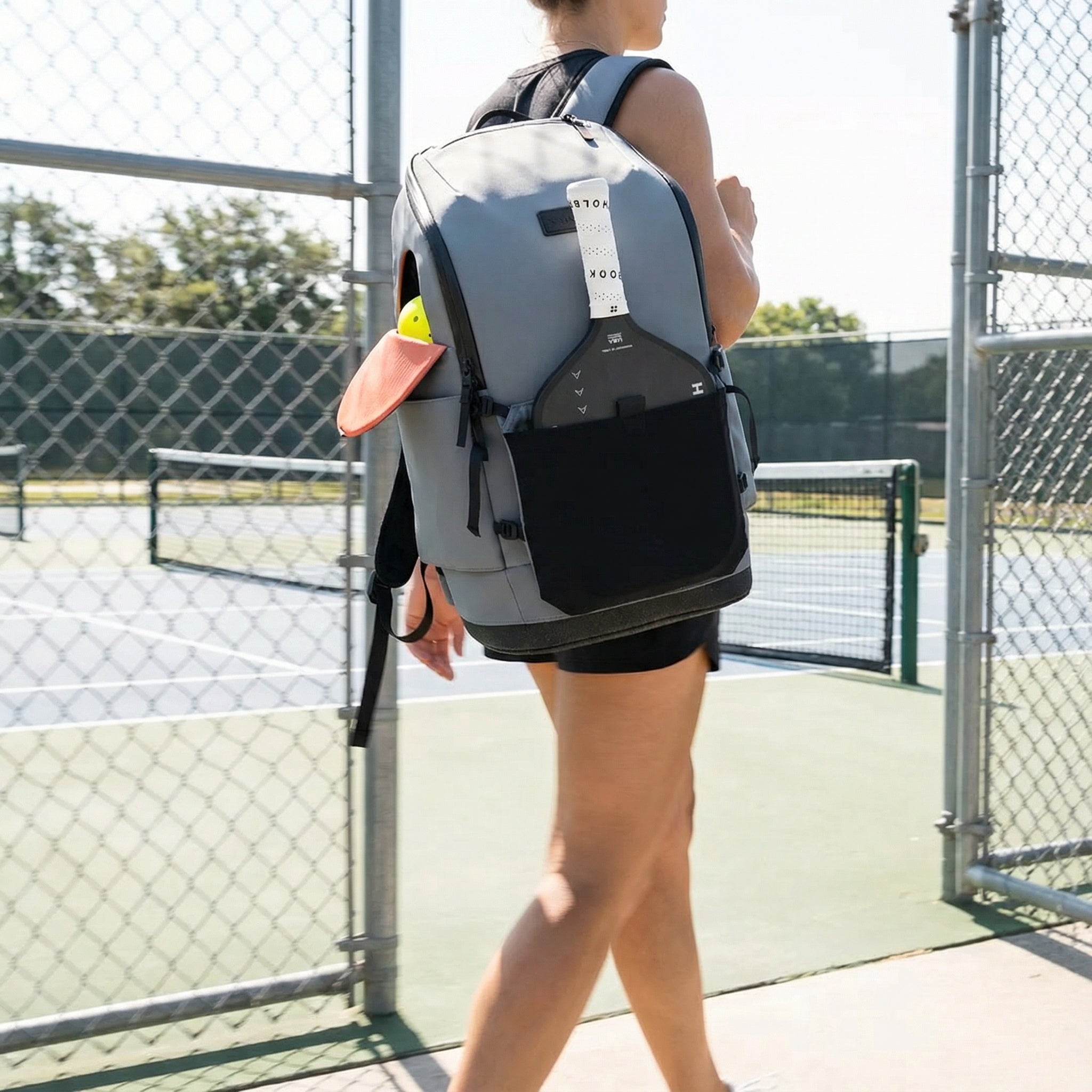
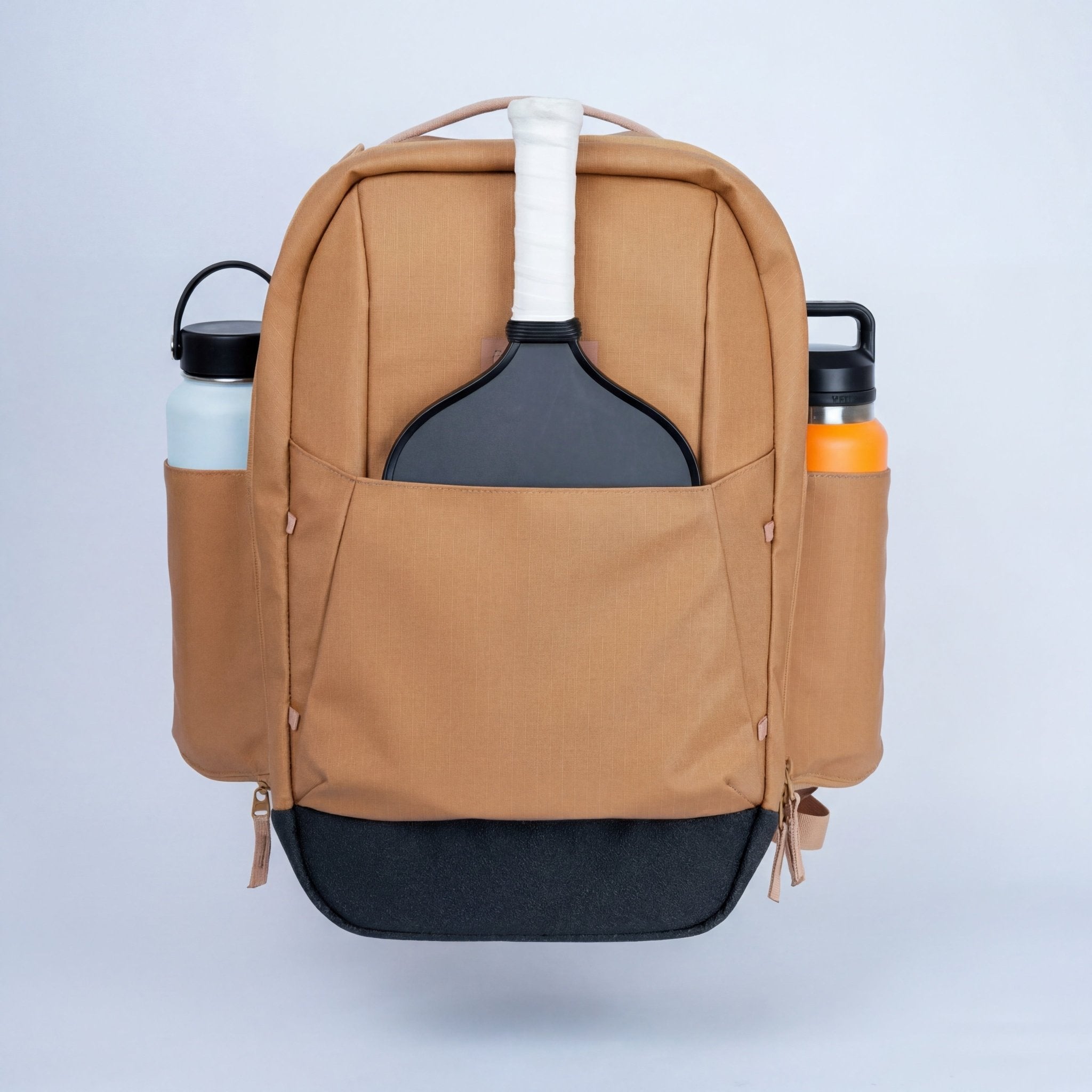
A $199 pair of glasses deserves a bag that won't crush them. The Court Ranger V2 ($195) has a top protective pocket perfect for eyewear cases. The Court Caddy has organized compartments for all your court essentials — eyewear, accessories, paddles, and your laptop — with YKK AquaGuard zippers that keep moisture out. Purpose-built for players who invest in their gear.
Court Caddy — $325 →Frequently Asked Questions
What is HVL (High Visible Light) photochromic and why does it matter for pickleball?
HVL photochromic lenses respond to visible light intensity (not just UV), which means they activate on bright overcast days where standard UV-only photochromic lenses stay clear. On a cloudy outdoor court with significant sky glare, HVL lenses adapt and reduce glare where traditional photochromics don't. For players who play in variable weather or mixed indoor/outdoor environments, this is the key advantage.
Is the Chamelo Domo Shield better than JOOLA RJX for pickleball?
It depends on your playing environment. The Chamelo Domo Shield wins in variable light conditions thanks to HVL photochromic adaptation and provides better peripheral coverage with its shield lens. The JOOLA RJX Boost wins on value — $90 vs $199 — and performs equally well in stable outdoor conditions with its fixed court-optimized tint. If you play on one consistent outdoor court, JOOLA is the smarter buy. If you switch between indoor and outdoor regularly, the Chamelo earns its premium.
How does the Chamelo slider hinge lens swap work?
The slider hinge uses a rail system — you slide the shield lens laterally out of the frame and a replacement slides in. No tools, no popping. Takes about 25-30 seconds once you've practiced it a couple times. You'd carry a second lens (clear, or alternate tint) in your bag for conditions where the primary HVL lens isn't optimal. More practical for tournament players than recreational players who play at one venue.
What's the difference between the Chamelo Domo Shield and Music Shield?
The Music Shield HVL ($260) has Bluetooth audio capability built into the frame. The Domo Shield HVL ($199) is the same frame and identical optical system without audio. If you play with music or coaching cues in your ear, the Music Shield's $61 premium may be worth it. Most competitive players prefer no audio distraction on court — for them, the Domo Shield is the right choice at $61 less.
Are Chamelo Domo Shield glasses good for outdoor pickleball in bright sunlight?
Yes — the HVL photochromic lens darkens appropriately in full sun and the anti-glare performance is excellent at the kitchen line. The shield lens's wide coverage reduces court-edge peripheral glare that narrower two-lens frames miss. In stable bright conditions, they're comparable to the best fixed-tint options. Their advantage over fixed tints shows when light conditions vary — afternoon cloud cover, shadowed sections of the court, or transition between indoor warmup and outdoor play.
Final Verdict
The Chamelo Sport Domo Shield Slider HVL is a well-executed premium eyewear option that delivers on its two core promises: HVL photochromic adaptation works as advertised, and the slider hinge is a genuinely practical mechanism rather than a marketing gimmick. At $199, you're paying for the combination of those two features — neither alone justifies the price, but together they solve the real problem serious outdoor players face: variable light conditions requiring lens adaptability.
If that's your problem — mixed indoor/outdoor play, variable weather, tournament venues with different lighting setups — the Domo Shield is the right investment. If your playing environment is consistent and you primarily want solid court glare protection, the JOOLA RJX Boost at $90 is a more honest answer and you should spend the $109 difference on extra court time.
Buy Chamelo Domo Shield Slider HVL at Pickleball Central →
FAQ: Chamelo Sport Domo Shield Slider HVL Eyewear
What is HVL photochromic and why does it matter for pickleball?
HVL photochromic lenses respond to visible light intensity — not just UV — which means they activate and adjust tint on bright overcast days where standard UV-only photochromics stay clear. For pickleball, this matters most when playing in mixed conditions: partly cloudy courts, shaded sections, or venues where you transition between indoor warmup and outdoor play within the same session.
Is the Chamelo Domo Shield better than the JOOLA RJX Boost for pickleball?
Depends on your playing conditions. The Chamelo wins in variable light — overcast outdoor, mixed venues, courts with strong shade patterns. The JOOLA RJX Boost at $89.95 is the better value for recreational players in stable outdoor conditions. One consistent outdoor court = JOOLA. Mixed venues, variable weather, or indoor-to-outdoor transitions = Chamelo earns the $109 premium difference.
How does the Chamelo Domo slider hinge lens swap work?
The rail system lets you slide the shield lens laterally out of the frame, then slide a replacement in — no tools required, takes about 25–30 seconds once you've done it a few times. Most practical for tournament players traveling to different venues with different light conditions. For recreational players at a single facility, the tool-free swap is a nice feature you may rarely use in practice.
What's the difference between Chamelo Domo Shield and Music Shield?
The Music Shield HVL ($260) adds Bluetooth audio with open-ear speakers built into the arms. The Domo Shield ($199) uses identical optics, frame, and slider hinge without any audio component. Most competitive players prefer the Domo — audio is a distraction during match play. You save $61, reduce complexity, and get the same lens performance. Choose Music Shield only if solo practice audio is a core use case.
Are Chamelo Domo Shield glasses durable enough for regular court use?
Yes — the frame is built for active sport use and the slider hinge handles repeated lens swaps without loosening over time. The HVL photochromic coating is embedded in the lens material rather than applied as a surface coat, so it won't scratch or peel with normal use. For UV-exposed outdoor courts, the anti-glare coating holds up across full seasons of regular play without significant degradation.

Leave a comment
This site is protected by hCaptcha and the hCaptcha Privacy Policy and Terms of Service apply.