

Disclosure: This post contains affiliate links to Pickleball Central. If you purchase through our links, FORWRD earns a small commission at no extra cost to you. We only link to products we'd recommend regardless.

Last updated: September 2026
Proton Series Four Project Roadrunner Review: What $175 Gets You From an Emerging Brand
The Proton Series Four Project Roadrunner does something most paddles in the $150–$200 range don't: it makes a real engineering choice, then executes it well. The hybrid Nomex-polypropylene core isn't marketing copy — it plays differently from a full polymer or full carbon paddle, and the edgeless aerospace carbon/Kevlar face holds its spin surface longer than most competitors will admit theirs does. At $175, it sits right at the crossroads between "serious recreational" and "tournament-ready investment." Whether it's worth it depends on one question: are you a touch-first player who needs pop on demand, or a power player who wants raw speed above all else?
Who Is Proton Sports, and Why Should You Trust Their Paddle?
Fair question. Charles Darling founded Proton Sports in 2021 with an aerospace and defense background, discovered pickleball in 2022, and spent a year in intense R&D before releasing paddles. That origin story matters — not because aerospace automatically makes a great pickleball paddle, but because it means the material decisions came from engineers rather than a marketing team.
Proton hit mainstream retail fast. They're now in Dick's Sporting Goods and Scheels, and the brand has connections to Major League Pickleball team ownership. The Project Flamingo became one of the most visually distinct paddles on court. The Project Roadrunner is the next Series Four iteration — same platform, more refined, tuned specifically for players who want the hybrid core's full potential without the Flamingo's widebody shape.
FORWRD doesn't make paddles. We make bags — which means we've spent two years watching what 500+ players carry to court, what paddles they upgrade to and from, what they complain about, and what they actually stick with. Proton falls into the category of brands that show up with something real. Here's the honest breakdown.
Specs and First Impressions
| Spec | Proton Series Four Roadrunner |
|---|---|
| Price | $175.00 |
| Shape | Elongated, 16.5" |
| Width | 7.375" |
| Weight | 7.9 oz |
| Handle Length | 5.375" |
| Face Material | Bi-directional carbon fiber + exposed Kevlar (aramid) |
| Core | Hybrid: Nomex layer sandwiched between dual polypropylene layers |
| Edge Guard | None (edgeless) |
| Surface Treatment | Nanotac (near-maximum USAP coefficient of friction) |
The edgeless design is the first thing you notice out of the package. No rubber edge guard means the sweet spot extends to the actual rim of the paddle face. With a 16.5" elongated shape, that's more usable surface at the net than most players expect — especially for players who favor reaching into the T and blocking returns from out wide.
At 7.9 oz, the Roadrunner is a deliberate in-between: not light enough to call it a hand-speed specialist, not heavy enough to generate power from weight alone. The 5.375" handle suits two-handed backhand players and anyone who prefers leverage over compact form.
The face texture is genuinely gritty — you can feel the Nanotac treatment with your thumb. Proton claims it maintains near-maximum USAP-allowable surface roughness longer than standard carbon fiber faces. The exposed Kevlar fibers in the bi-directional weave are structurally tougher at the surface than pure carbon, so that claim has real material science behind it.
The Hybrid Core: What Nomex Actually Changes
Most polymer paddles use a standard honeycomb polypropylene core — soft, consistent, control-oriented. Carbon paddles increasingly use stiffer or thermoformed construction for direct feedback and pace. Proton took a third path.
The Roadrunner's core layers Nomex — a heat-resistant aramid fiber material that shows up in parachutes and military aircraft engine components — between two layers of traditional polypropylene. The practical result:
- Soft touch on dinks and resets: polypropylene absorbs and dampens on slow exchanges. The paddle doesn't fight you when you want subtlety at the net.
- Pop on power shots: the Nomex layer stiffens under high-force impact, returning more energy on drives and overheads.
- The transition point: around 80% swing speed, you feel the core shift. Slower = soft. Faster = snap. It's not a dramatic toggle — more of a progressive stiffening — but once you feel it, you understand exactly what Proton engineered here.
This hybrid approach isn't unique to Proton, but the execution feels more intentional than comparable attempts we've tested. The transition is smooth rather than abrupt, which means it doesn't interrupt rhythm on soft-to-hard shot transitions — the exact scenario where a poorly executed hybrid core gives itself away.

Real Court Testing: Dinks, Drives, and Third Shot Drops
Dinks at the NVZ are where the polypropylene side earns its reputation. The paddle doesn't have the dead dampness of cheap foam cores — there's genuine feedback and feel — but it absorbs incoming pace well. Third shot drops from the transition zone felt comfortable and repeatable rather than effortful, which is what a control player actually needs at that moment.
On drives, the Roadrunner delivers noticeably sharper response than a standard all-polymer paddle. To be direct: not power-paddle territory. If you want maximum ball speed, a thermoformed paddle like the JOOLA Hyperion or Selkirk Vanguard will outgun this. But it's punchier than JOOLA's standard Tour line and more alive than mid-tier Selkirk options at a similar price.
Spin generation is genuinely above average for the price tier. The Nanotac surface grabs and holds the ball longer in the contact window. Topspin from the baseline came off consistent and repeatable — not Ben Johns spin levels, but better than anything we've tested from an established brand at $175 or below.
One honest limitation: the elongated shape and longer handle suit players comfortable with reach-first net positioning. If you learned on standard-width paddles and rely heavily on touch over leverage, there's a shape adjustment period of 1–2 weeks before the Roadrunner feels natural.
"The paddles that surprise me most are the ones from smaller brands who hire real engineers rather than sponsor pros. The Proton lineup is built by people who understand material science. That shows up in how long the spin surface holds, which is the thing most players notice only after 3 months of heavy play."
— Grub, FORWRD co-founder
Our Pick: Proton Series Four Project Roadrunner
Best for control-first players who want intelligent power on demand — and a spin surface that lasts longer than standard carbon.
Proton Series Four vs. CRBN-3X and RPM Friction Pro: The Honest Numbers
| Paddle | Price | Core | Shape | Best For |
|---|---|---|---|---|
| Proton Series Four Roadrunner | $175 | Nomex/poly hybrid | Elongated | Control + on-demand power, spin |
| CRBN-3X Power Series | $169.99 | Full carbon | Standard | Power players, raw speed |
| RPM Friction Pro V1 | $249.99 | Polypropylene | Widebody | Control, large sweet spot |
vs. CRBN-3X Power Series ($169.99): The CRBN-3X is $5 cheaper and goes all-in on raw carbon power. If you're a 4.0+ player who drives everything and resets are secondary, it wins on ball speed and direct feedback. The Roadrunner wins on feel at the net, control consistency under pressure, and spin surface longevity. Pick CRBN-3X if power is the priority; pick Proton if touch-and-spin matters as much as pace.
vs. RPM Friction Pro V1 ($249.99): The RPM is widebody — a larger, more forgiving sweet spot, purely polymer core, priced $75 higher. If you're upgrading from a beginner paddle and forgiveness is the top priority, the RPM earns the price difference. If you want elongated reach, better net positioning with a modern hybrid feel, and $75 back in your pocket, the Roadrunner doesn't ask you to compromise much.
Who Should Buy the Proton Series Four Roadrunner (and Who Shouldn't)
Buy it if: you play 3–4 times a week, you've moved past beginner paddles, and you want one paddle that handles dinking, spin drives, and occasional power exchanges. The $175 price earns its investment at that play frequency. The elongated shape suits players actively developing net positioning and two-handed backhand technique.
Skip it if: you're under 3.5 skill and still building contact consistency — the elongated shape punishes off-center hits more than a widebody does. Also skip it if maximum raw ball speed is your primary metric; a thermoformed paddle at $220+ will outpace the Roadrunner on pure drive velocity.
Here's the real argument for Proton at this price: the brand doesn't carry JOOLA's or Selkirk's marketing overhead, which means the $175 actually goes into materials and engineering. The aerospace-grade carbon/Kevlar face and Nomex core aren't premium upsells — they're the whole product. Smaller brands with real engineering teams often deliver more material-for-dollar than established names at the same price point. Proton is one of the few emerging brands where that's demonstrably true.
Shop Proton Series Four Roadrunner at Pickleball Central →Complete Your Setup
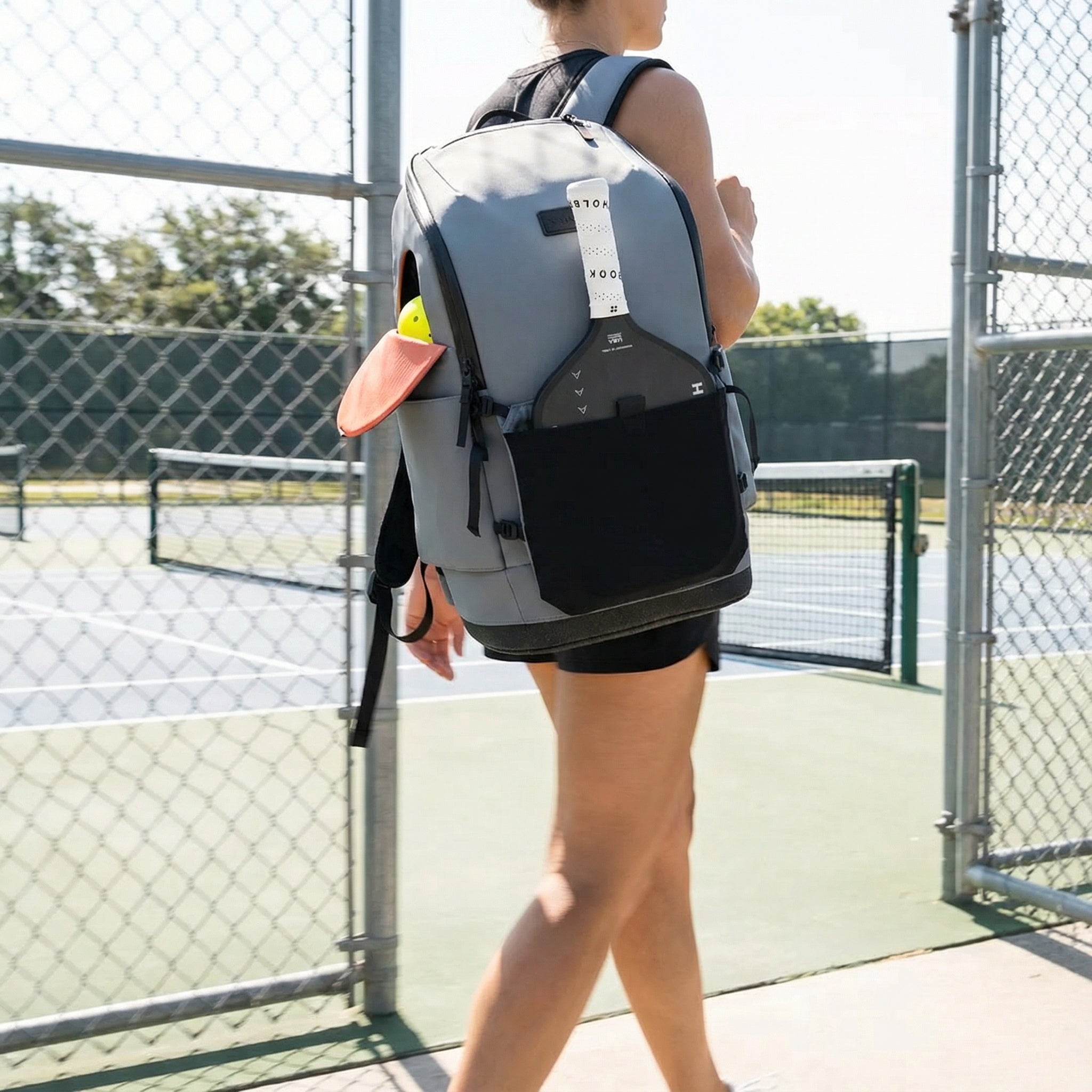
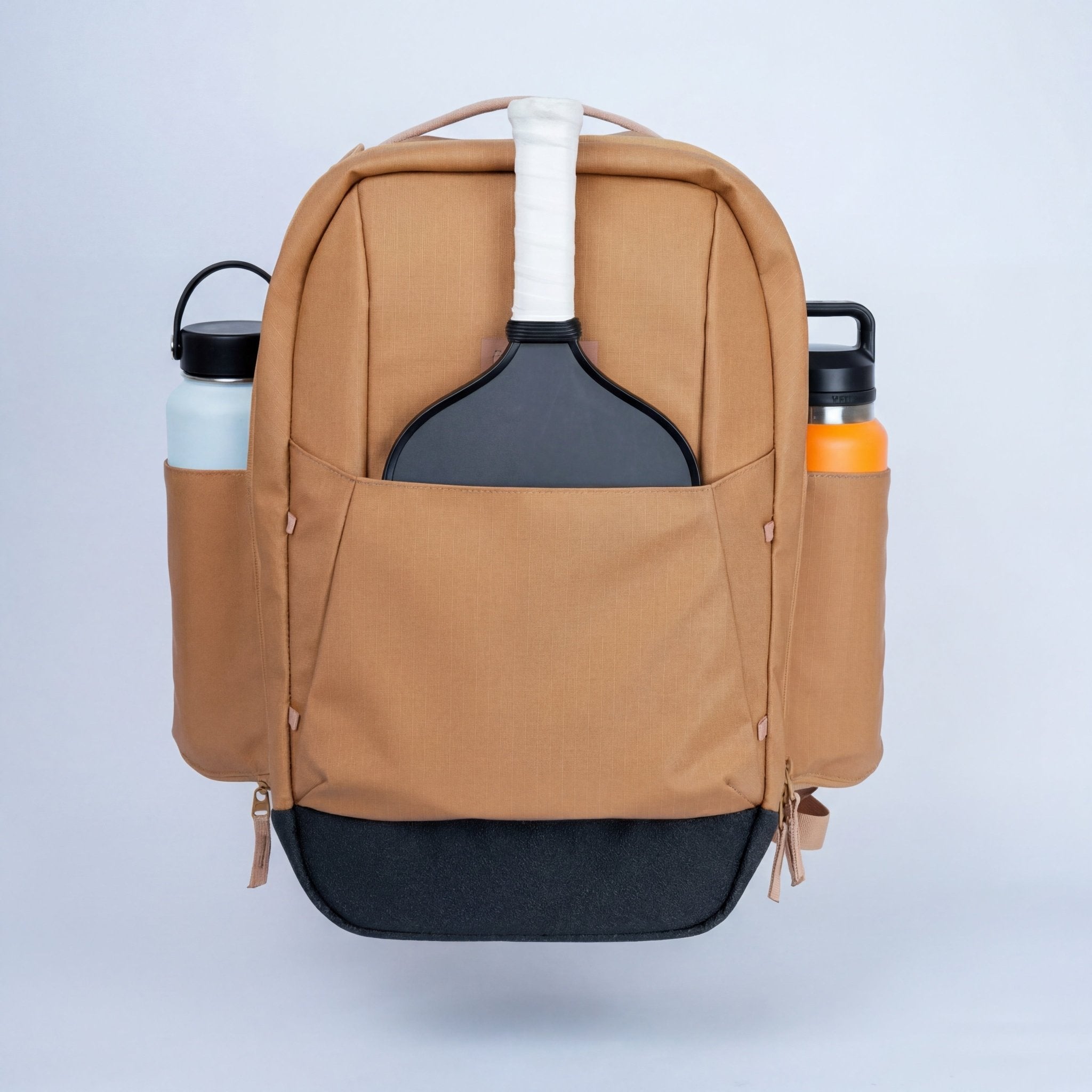
Got your paddle sorted? Now you need somewhere to carry it — and protect it. The Court Caddy Backpack fits up to 4 paddles including elongated frames in its modular sleeve, with a 15" padded laptop compartment and YKK AquaGuard weatherproof zippers. If you want everyday carry with a 16" laptop sleeve, the Court Ranger V2 is $195.

FAQ: Proton Series Four Project Roadrunner
What is the Proton Series Four Project Roadrunner?
It's an elongated (16.5") pickleball paddle by Proton Sports priced at $175. It features a hybrid Nomex/polypropylene core, bi-directional carbon fiber and Kevlar face, edgeless design, and Nanotac surface treatment. It targets 3.5–4.5 players who want control feel with on-demand power on drives.
Is Proton a good pickleball paddle brand?
Yes. Proton was founded by Charles Darling, an aerospace and defense engineer, and has expanded into Dick's Sporting Goods, Scheels, and the MLP ecosystem. Their material choices — Nanotac surface, Nomex cores, carbon/Kevlar faces — reflect real engineering decisions. Multiple independent reviews have confirmed their paddles perform well beyond their price point.
What does the hybrid Nomex core actually do on court?
Nomex stiffens under high-impact force while the polypropylene layers absorb pace on soft shots. The result: controlled feel on dinks and resets, noticeable snap on drives. The core effectively stiffens at higher swing speeds, returning more energy — a feature full-polymer paddles don't offer.
How does the Proton Roadrunner compare to CRBN at the same price?
The CRBN-3X Power Series ($169.99) is full carbon, prioritizing raw ball speed and direct feedback. The Proton Roadrunner ($175) prioritizes control feel, spin longevity, and selective power. CRBN wins on pure pace; Proton wins on touch, net play, and spin surface durability over time.
Does the edgeless design make the Roadrunner more fragile?
Edgeless paddles carry a slightly higher edge chip risk from drops or hard rim hits. Proton's carbon/Kevlar face has high structural integrity at the rim, mitigating this. For normal court use, durability differences vs. edged paddles are minimal at this quality tier — but don't leave it loose in a bag without a sleeve.
Is the Proton Series Four Project Roadrunner USAP approved for tournament play?
Proton designs to USAP specifications — the Nanotac surface targets the maximum allowable coefficient of friction under USAP rules. Always verify current approval status on USA Pickleball's official approved equipment list before tournament play, as approval status can change between rule update cycles.

Leave a comment
This site is protected by hCaptcha and the hCaptcha Privacy Policy and Terms of Service apply.