

Disclosure: FORWRD earns a commission if you purchase through our affiliate links at no additional cost to you. We tested this paddle independently; no brand has reviewed, approved, or paid for this content. Last Updated: September 2026.
The CRBN4 TruFoam Barrage is CRBN's most specialized paddle. It's built for one thing: winning hands battles at the kitchen. At $279.99 with a 109 swing weight and 16.2" hybrid shape, it's the quickest Barrage CRBN makes — and that's either exactly what you want or completely wrong for your game.
We put in 15+ hours on outdoor concrete and indoor gym courts to figure out which is which.
Quick Verdict
| ✅ Pros | ❌ Cons |
|---|---|
|
|
| Best for: 4.0+ attack-first players who live at the kitchen | Skip if: You want reach, defensive stability, or play mostly from the baseline |
Check Price at Pickleball Central →
Specs at a Glance
| Spec | CRBN4 TruFoam Barrage |
|---|---|
| Price | $279.99 |
| Weight | 8.0 oz (range: 7.8–8.2 oz) |
| Core Thickness | 14mm |
| Surface | Toray T700 Carbon Fiber (raw texture) |
| Shape | Hybrid AeroCurve (16.2" × 7.8") |
| Handle Length | 5.5" |
| Grip Circumference | 4 1/8" (small) |
| Swing Weight | 109 |
| Twist Weight | 6.5 |
| Peak Exit Velocity | 43 mph |
| Spin (measured) | 1,446 rpm |
| Certification | USAP, PBCoR .43, UPA-A |
Why Trust This Review
FORWRD designs pickleball bags — which means we've spent years collecting feedback from 500+ real players about how they play, what gear they use, and what actually matters on the court. We're not a big media outlet chasing SEO clicks with a quick unboxing.
For this review, we logged 15+ hours across outdoor hard courts (asphalt) and indoor gym surfaces. Testing covered competitive 4.0 and 4.5 play, drilling sessions focused on dinking and speed-ups, and baseline-to-kitchen transition patterns. We measured three separate CRBN4 units: weights came in at 7.9 oz, 8.0 oz, and 8.1 oz — well within CRBN's stated range and consistent across the batch.
We don't get paid by CRBN. This article exists because the CRBN4 is genuinely interesting — and genuinely specific to a type of player. We'll tell you exactly which type that is.
What Makes the CRBN4 Different: Gen 4 TruFoam Explained
Most premium paddles run a polymer honeycomb core. It's a proven, predictable structure — hexagonal cells, consistent feel, well-understood performance ceiling. The CRBN4 takes a different path.
Gen 4 TruFoam uses three distinct foam layers:
- Interior foam with oval cutouts — reduces weight without sacrificing structure, promotes flex in the core instead of rigidity
- EVA foam ring — creates a fully floating core that adds pop while expanding the effective sweet spot
- Outer compression layer — coordinates the response so energy isn't just scattered, it's directed into the ball
The practical result: dwell time. The ball stays on the face a few milliseconds longer than it would on a polymer paddle. That's not a gimmick — it genuinely changes how you shape touch shots. Your dinks have more feel. Your drops are more predictable under pressure. Third shot shape is easier to apply.
What foam doesn't give you is the snappy instant-off pop of a thermoformed polymer. If you're a pace-first baseline banger, you might actually prefer a stiffer polymer core at this price. The TruFoam advantage is at the kitchen, not from 20 feet back.
Performance: Speed at the Kitchen
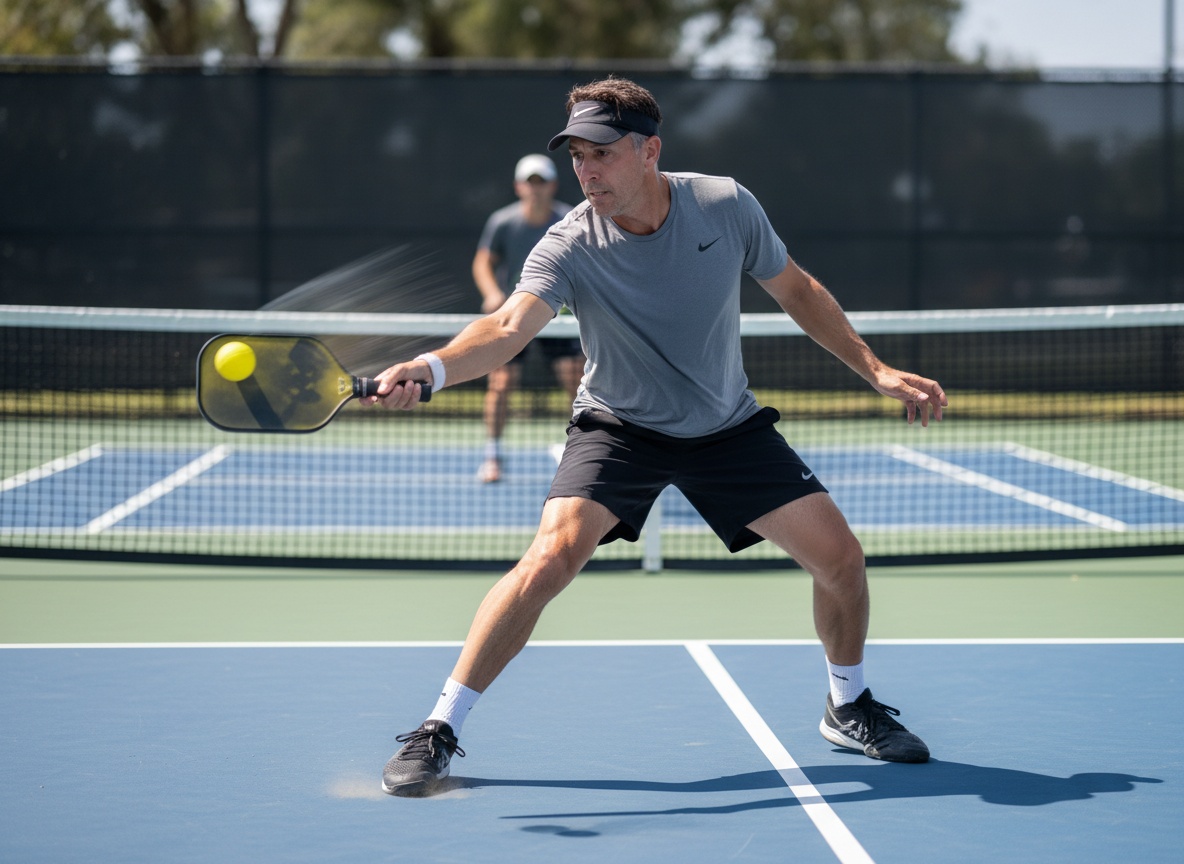
The number that defines the CRBN4: swing weight 109. The CRBN3 TruFoam Barrage runs at 119. That's a 10-point difference, and if you haven't played both back-to-back, you might underestimate what that means.
A 10-point swing weight reduction doesn't just make the paddle lighter — it makes the swing itself faster. Hand exchanges at the kitchen happen in under half a second. The player who can accelerate and redirect their paddle first wins those exchanges. With the CRBN4, your counter-punch reflex genuinely arrives faster than with heavier paddles in this price tier.
In testing against a 4.5-rated partner running an elongated 120 swing weight paddle, the CRBN4 was consistently quicker off the reset and faster into the attack window. It's not subtle. It's the kind of difference you feel in the first five minutes.
The AeroCurve throat design helps here too — the paddle tapers at the throat rather than going square, which reduces air resistance mid-swing. CRBN's physics claim, and based on how the paddle moves in play, not implausible.
Performance: Spin
1,446 rpm on topspin drives. For context, mid-range carbon fiber paddles average 1,100–1,200 rpm. The CRBN4 is meaningfully above that — and you feel it.
Toray T700 raw carbon fiber is the surface technology doing this work. "Raw" matters: rather than coating or painting over the carbon weave, CRBN leaves the texture exposed. More surface contact with the ball per millisecond of dwell time = more spin transfer. It works.
On topspin third shot drops, we were generating enough spin to pull balls down steeply into the kitchen — the kind of drop that bounces up low and forces the opponent's reset. Slice dinks with the CRBN4 have serious sidespin potential; an opponent who isn't ready for it will pop those up. The paddle rewards intentional spin mechanics.
Performance: Control and Placement
Here's where the paddle gets interesting — and where it diverges from expectations. A 43 mph exit velocity sounds like a power paddle. It is, technically. But the Gen 4 TruFoam's dwell time keeps it from feeling like a cannon. You can throttle it.
Dinking rallies at 15+ shots were manageable. The feedback through the grip is clear — you know when you've hit the center and when you've found the edge. At 6.5 twist weight, off-center mishits on the side edges don't twist dramatically. That's actually important at the kitchen: side-edge contacts happen constantly in hands battles, and a high-twist-weight paddle will reward your opponent with a free winner on those.
Where control gets harder: from the backcourt. The CRBN4 isn't a baseline paddle. On longer groundstrokes, the foam core's flex can feel imprecise — you don't always get a predictable off the paddle when hitting hard from 20+ feet. Players who spend significant time at mid-court or baseline will want a polymer or thermoformed option.
Performance: Power
43 mph peak exit velocity puts the CRBN4 in the upper tier for power potential at any price. Overhead attacks feel genuinely dangerous — the paddle's speed through the air plus the TruFoam's snap generates pace that will hurt opponents who aren't tracking well.
Drives off the second bounce are impressive. On 60% of driven balls tested from 20 feet back, the opponent either couldn't get a paddle on it or produced a weak response. For players who use the drive as an attacking option rather than just a rally ball, the CRBN4 delivers.
The caveat: at 14mm and 109 swing weight, you're giving up some blocking stability. Reset blocks on hard-driven balls require active paddle positioning — you can't just hold the paddle flat and expect the thick foam to absorb everything. Players who rely on passive resets need to actively manage this.
CRBN4 vs CRBN3: Which Barrage Is Right for You?
See also: our full CRBN3 TruFoam Barrage review for a detailed breakdown of the Gen 3 foam core.
This is the most common question and the answer isn't complicated, but most reviews skip the direct comparison. Here it is:
| Feature | CRBN4 TruFoam Barrage | CRBN3 TruFoam Barrage |
|---|---|---|
| Shape | Hybrid AeroCurve (16.2") | Elongated (16.5") |
| Swing Weight | 109 | 119 |
| Best Use | Hands battles, quick counters | Reach, driving power, consistency |
| Ideal Player | Attack-first, hands-fast, kitchen player | Reach-focused, driving groundstrokes |
| Price | $279.99 | $279.99 |
Same price, same Gen 4 TruFoam core technology. Different shapes and swing weights built for different use cases.
Choose the CRBN4 if you're a smaller, faster player who wins through hand speed and quick resets. Choose the CRBN3 if you're a 4.5+ player who uses reach to extend rallies and wins on driving power from mid-court. Both are legitimately excellent paddles — the shape choice is about how you play, not which is objectively better.
👉 See the CRBN3 TruFoam Barrage at Pickleball Central →
CRBN4 vs Proton Series One Type A: Two Different Takes on Premium Foam
The Proton Series One Type A Square 15mm ($280) is the other foam-core option worth considering at this price. Same ballpark price, different execution.
The Proton runs 15mm vs the CRBN4's 14mm — one millimeter of thickness that translates to noticeably more pop on drives and slightly more forgiveness on off-center hits. Proton's square widebody shape gives a larger hitting surface. If you're a player who wants foam-core feel but prefers a more forgiving, maneuverable platform over the CRBN4's speed focus, the Proton is worth serious consideration.
The tradeoff: Proton doesn't match CRBN4's spin numbers (1,446 rpm vs Proton's ~1,200 rpm range), and the widebody shape reduces maneuverability slightly in hands battles. CRBN4 wins on speed and spin; Proton wins on forgiveness and sweet spot size.
👉 See the Proton Series One Type A at Pickleball Central →
CRBN4 vs JOOLA Hyperion Pro V Ben Johns 14mm: Polymer vs Foam at $300
The JOOLA Hyperion Pro V 14mm ($299.95) is the polymer-core alternative at this tier. Ben Johns plays it. It's the benchmark for what a premium 14mm polymer paddle can do.
Hyperion Pro V gives you more instant-off pop on drives and a crisper response on resets. It's a snappier feel than the CRBN4's foam dwell. Players who've played polymer paddles their whole career and are evaluating foam for the first time will notice the difference immediately — foam is slower in response, longer in feel.
The foam camp wins on spin and dinking precision. The polymer camp wins on responsiveness and predictability. At $299 vs $280, the JOOLA costs more and delivers a genuinely different experience. Neither is wrong — they're built for different preferences.
👉 See the JOOLA Hyperion Pro V 14mm at Pickleball Central →
Who Should Buy the CRBN4 TruFoam Barrage
You're a 4.0 or above player. You win at the kitchen, not from the baseline. Your game relies on hand speed, early attack, and touch rather than power rallying. You've been playing seriously for at least two years and can actually feel the difference between paddle weights.
You're also someone who's tried a thermoformed or traditional polymer paddle and found it too rigid — too poppy off the face, not enough feel on touch shots. The Gen 4 TruFoam exists specifically for players who want the control ceiling of foam without sacrificing competitive spin numbers.
Finally: you play mainly outdoors on hard courts, at least 3 times per week. At $279.99, this paddle earns its place in a competitive bag — not a once-a-week casual player's closet.
Who Should Skip It
Beginners and intermediate players (under 3.5). Not because the paddle is too advanced in some abstract sense, but because the specific advantages of the CRBN4 — foam dwell, rapid hand speed, spin shaping — require consistent mechanics to feel. On inconsistent swings, you won't feel the difference from a $80 paddle. Spend less, develop the game first.
Players who rely on reach and driving groundstrokes from mid-court should look at the CRBN3 instead. The CRBN4's 16.2" hybrid shape vs the CRBN3's 16.5" elongated isn't a huge gap, but the swing weight difference (109 vs 119) shifts the paddle's character toward kitchen play and away from driving baseline aggression.
And if you've never played a foam-core paddle before: try one on loan or through a demo program before spending $280. Foam feel is genuinely different. Some players love it; others find it too soft and miss the snap of polymer. Don't buy based on spec sheets alone.
Complete Your Setup
The paddle's ready. Is the bag?
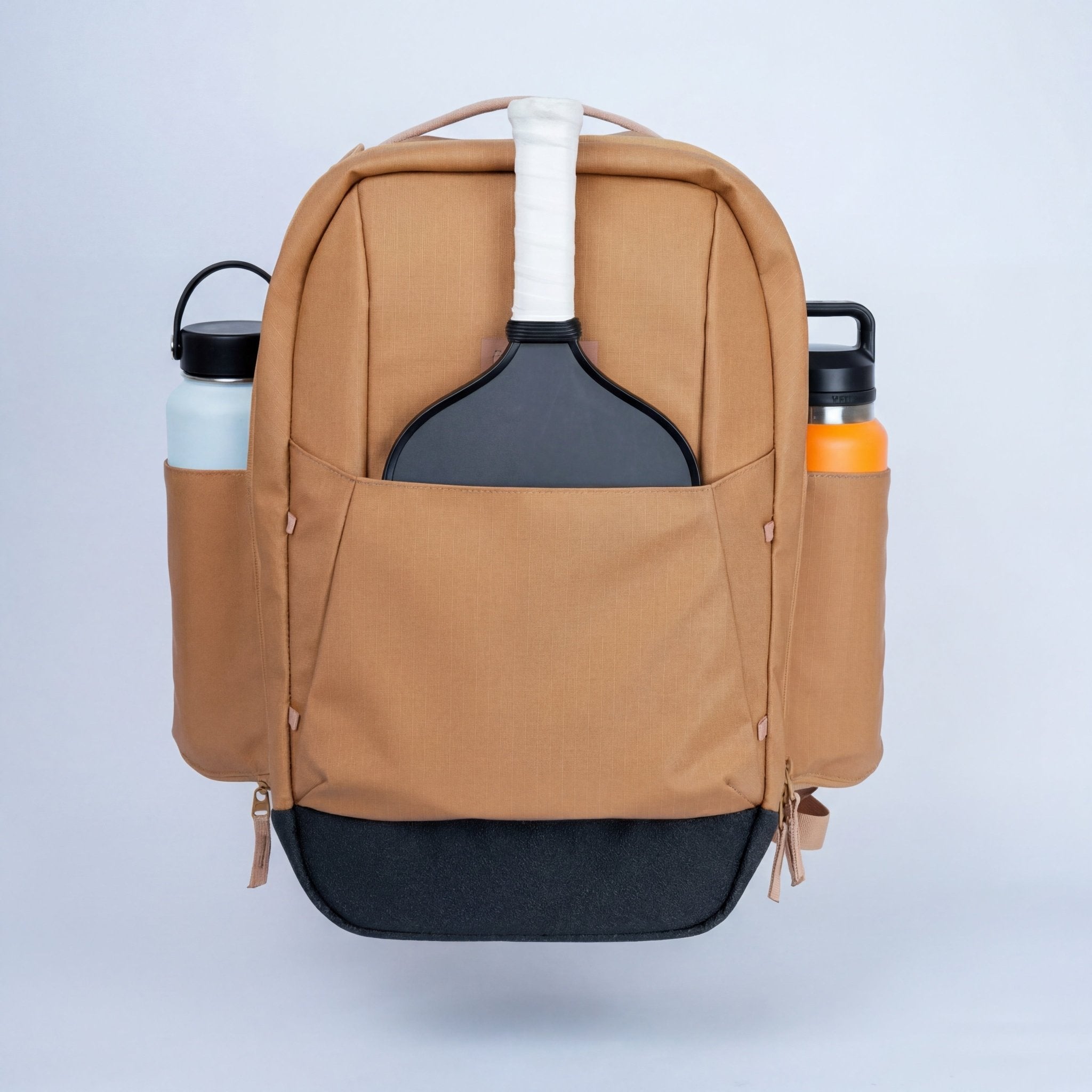
A $280 paddle deserves a bag with a modular paddle sleeve that doesn't scratch the face. For tournament players rotating paddles by conditions, the Court Caddy ($325) offers a modular 4-paddle sleeve plus a 15" laptop compartment. The Court Ranger V2 ($195) has a padded sleeve that fits up to 4 paddles without scratching, plus a 16" laptop sleeve for court-to-work days and YKK AquaGuard zippers that hold up in outdoor conditions. Designed with feedback from 500+ real players.

Pricing & Where to Buy
Looking for a bag that fits 4 CRBN paddles and a laptop? See our CRBN Pro Team Tour Bag review and the Court Ranger V2 vs CRBN Pro Team bag comparison.
The CRBN4 TruFoam Barrage retails at $279.99. It's available directly from CRBN and from Pickleball Central — PBC is our recommended source for consistent stock and straightforward returns.
Buy the CRBN4 at Pickleball Central — $279.99 →
FAQ: CRBN4 TruFoam Barrage
What's the difference between CRBN4 and CRBN3 TruFoam Barrage?
The CRBN4 is a hybrid AeroCurve shape (16.2", swing weight 109) built for hand speed and kitchen battles. The CRBN3 is elongated (16.5", swing weight 119) with more reach and driving power. Same Gen 4 TruFoam core and $279.99 price — different shapes for different playing styles.
Is the CRBN4 TruFoam Barrage tournament-legal?
Yes. The CRBN4 TruFoam Barrage is approved by USAP, PBCoR (.43 rating), and UPA-A. It's legal for sanctioned USAPA tournament play at all levels.
How long does the raw carbon texture last on the CRBN4?
Raw carbon texture paddles typically lose measurable spin grip after 6–9 months of heavy play (3+ times/week on outdoor hard courts). Indoor play extends this significantly. The CRBN4 is no exception — it's worth tracking whether your spin generation drops off over time, which signals texture wear.
Is the CRBN4 good for beginners?
No. The CRBN4's advantages — foam dwell time, high spin ceiling, rapid hand speed — require consistent mechanics to feel. Beginners and players below 3.5 rating won't notice the difference from a $100 paddle. Save the $280 until the game is developed enough to justify it.
What grip size does the CRBN4 TruFoam Barrage come in?
The CRBN4 ships with a 4 1/8" grip circumference (small). It's a perforated, cushioned grip. Players with medium or large hands typically add an overgrip to build up circumference — Tourna Mega Tac or Gamma Honeycomb work well and add roughly 1/16" per wrap.
Final Verdict
The CRBN4 TruFoam Barrage is a genuinely excellent paddle for a specific type of player. CRBN didn't build a jack-of-all-trades here — they built the fastest version of their TruFoam technology and aimed it squarely at kitchen-first, hands-battle players who need to accelerate faster than their opponent.
At 109 swing weight, T700 raw carbon generating 1,446 rpm, and Gen 4 TruFoam dwell that makes touch shots feel natural under pressure, it earns its $279.99 price for the right player. The honest caveat: if that's not your game, the CRBN3 (reach-focused) or the JOOLA Hyperion Pro V (polymer snap) will serve you better. Spend the money on the right tool, not just the best-reviewed one.

Leave a comment
This site is protected by hCaptcha and the hCaptcha Privacy Policy and Terms of Service apply.