


Last Updated: June 2026 | Disclosure: This post contains affiliate links. If you purchase through our links, we earn a small commission at no extra cost to you. We were not paid to write this review and FORWRD has no financial relationship with CRBN Pickleball.
CRBN3 TruFoam Barrage Review 2026: CRBN's Gen 4 Foam Core, Honestly Tested
The CRBN3 TruFoam Barrage is CRBN's most advanced foam core paddle — Gen 4 construction, a floating core with an EVA foam ring, top 10% spin output across tested paddles, and a $223.99 price tag that sits $55 below the Genesis it's meant to replace. If you want the short answer: yes, it's a real upgrade over Gen 3. But only if you're the right player for it.
Quick Verdict
Pros:
- Top 10% spin output across all tested paddles — the T700 carbon face actually delivers
- Gen 4 floating core expands the sweet spot and adds forgiveness on off-center contact
- USAP and UPA-A approved for all sanctioned tournament formats
- Purpose-built for fast exchanges at the kitchen — dwell time and reset feel are exceptional
- Carbon face plus multi-density foam core — the best attributes of both technologies in one paddle
Cons:
- $224 is premium — players who won't notice the floating core difference would be better served by the CRBN-3X at $149
- Small grip (4 1/8") only — no medium option; grip-up players will need to wrap immediately
- Foam cores compress over time — expect performance degradation around 6–12 months of heavy use
- Not a baseline paddle — the Barrage's strengths show up at the net, not in a driving game
Price: $223.99 at Pickleball Central
Who it's for: Net-oriented 3.5–5.0 players who want spin, touch, and fast-hands forgiveness in a tournament-legal elongated shape
Who should skip: Power-baseline players, players who prefer medium grip, anyone shopping on budget
TL;DR Specs
| Spec | Detail |
|---|---|
| Price | $223.99 |
| Weight | ~8.0 oz average |
| Core Thickness | 14mm |
| Face | Toray T700 Carbon Fiber |
| Core Technology | Gen 4 TruFoam Floating Core — three foam layers + EVA foam ring |
| Frame | Carbon reinforced |
| Dimensions | 16.5" × 7.5" (elongated) |
| Handle Length | 5.5" |
| Grip Circumference | 4 1/8" (small) |
| Swing Weight | 119 |
| Twist Weight | 6.54 |
| Spin Output | Top 10% of tested paddles |
| Certifications | USAP, PBCoR .43, UPA-A |
Check Price at Pickleball Central →
Why Trust This Review
FORWRD makes pickleball bags. We don't make paddles, and we're not sponsored by CRBN. That means we have no stake in telling you the Barrage is something it isn't — and we'll tell you clearly when it's not the right paddle for you.
We've reviewed multiple CRBN TruFoam paddles across the Gen 3 and Gen 4 lines, including the CRBN 3 TruFoam Genesis and the CRBN 1 TruFoam Genesis. Our reviews are built on actual play feedback from our community plus head-to-head comparison sessions — not just spec regurgitation from the product page. CRBN makes genuinely good paddles, but the differences between models matter, and we're going to explain them specifically.
Gen 4 TruFoam vs. Gen 3 TruFoam Genesis — What Actually Changed
This is the question that almost no other review answers properly, so let's get into it.
The CRBN 3 TruFoam Genesis (Gen 3) uses a high-density foam core — three layers of foam, fully solid construction, no honeycomb. It's a real departure from standard polyprop paddles and it performs well. We like it. At $279.99, it's a legitimate option for soft-game-oriented players.
The Barrage (Gen 4) adds one structural change that matters: an EVA foam ring around the perimeter of the core. That ring physically separates the core from the frame, creating what CRBN calls a "fully floating core." The core isn't bonded rigidly to the carbon frame — it's cushioned inside it.
What does that actually do?
It increases dwell time. When the ball contacts the face, the floating core has a small amount of give before it transfers energy back to the ball. That's a fraction of a millisecond of additional contact time, but players at 4.0+ absolutely feel it — dinks have more "hold," drops have better placement, and the reset feel on a hard incoming drive is noticeably easier to control.
It expands the sweet spot. A fixed core transmits energy differently depending on where on the face you make contact. A floating core normalizes energy transfer slightly across a wider area, because the EVA ring absorbs some of the edge-hit harshness. Off-center hits on the Barrage feel more consistent than on the Genesis. Not dramatically — but measurably.
It adds a different kind of pop. Here's the counterintuitive part: floating cores have more pop than fixed foam cores. The Genesis is actually softer on drives than the Barrage, because the Genesis core is fully bonded and absorbs energy more completely. The Barrage's floating construction returns slightly more energy on impact. So if you found Gen 3 too soft for driving — the Barrage fixes that without losing the foam core benefits.
The Barrage is also $55 cheaper than the Genesis at $223.99 vs. $279.99. That's because the Genesis is CRBN's top-tier all-court control line and the Barrage is positioned as the power-forward net-play option. Different paddles for different games — and the Barrage wins on value for net-oriented players.
The EVA Foam Ring Explained (Why It Matters for Real Play)
EVA foam — ethylene-vinyl acetate — is the same material used in high-end running shoe midsoles. It's known for a specific combination of properties: lightweight, resilient, good energy return, and excellent vibration absorption. In running shoes, it cushions impact without feeling dead underfoot. In the Barrage, it does something similar at the core-frame interface.
The mechanics are worth understanding. In a standard foam core paddle — including the Genesis — the core is bonded directly to the carbon fiber frame. Energy from ball impact travels from the face through the core and into the frame, and some of it dissipates as vibration. That's fine. It's still a better vibration profile than most polyprop paddles.
In the Barrage, the EVA ring sits between the core and the frame like a gasket. When the ball hits and the core flexes, the EVA ring absorbs some of the frame-transmitted energy rather than reflecting it back. The result is cleaner energy return toward the ball rather than dissipation into the frame. More pop per swing weight unit. Better vibration management on mishits. A slightly more "lively" feel that's unusual for foam core paddles.
This is also why the Barrage has a swing weight of 119 — relatively moderate for an elongated paddle — while still hitting with authority. The floating core returns energy efficiently enough that you don't need to swing heavy to generate pace. That's a meaningful advantage in fast exchanges at the kitchen, where you're not taking full swings and you need the paddle to do more of the work.
One thing to watch: EVA foam compresses over time with repeated impact, same as running shoes that lose cushioning after 300 miles. The Barrage's floating core will change feel gradually over 6–12 months of heavy tournament play. That's a real con, and you should know it going in. Players who go through paddles quickly (several sessions per week, tournaments monthly) should budget for replacement on that timeline.
Performance Breakdown
Spin Output
Top 10% of tested paddles. That's not a marketing claim — it's a measurable result from standardized spin output testing, and it shows up in play. The Toray T700 carbon fiber face generates genuine grip on the ball. Topspin dinks have bite. Roll serves stay low and bounce aggressively. Slice drops hold their shape.
For a net-oriented elongated paddle, this is the right combination. You want spin at the kitchen because it gives you more margin — a topspin dink that lands soft and bounces up is much easier to place than a flat one. The Barrage's face handles that task well.
T700 raw carbon will smooth over time like all raw carbon faces. CRBN's faces tend to hold texture reasonably well, but count on some degradation around 40–60 hours of heavy use. For tournament players, that means a texture refresh or replacement cycle every season.
Power and Dwell Time
The Barrage is a net paddle, not a power paddle — but it's not weak on drives. The floating core adds enough pop that you can still generate pace from mid-court when you need it. It just won't feel like a thermoformed thin-core polyprop paddle. If you're used to something like a JOOLA Pro V or a Selkirk LUXX and you're coming to the Barrage, the power ceiling is lower. The control ceiling is higher.
Dwell time is the Barrage's clearest strength. The foam core plus EVA ring creates noticeable contact hold on soft shots. Third-shot drops feel more controllable. Kitchen exchanges feel more precise. If your game involves a lot of soft reset work from defensive positions, the Barrage rewards that style consistently.
Control and Reset Ability
This is where the Barrage earns its price. Reset shots — taking a hard incoming drive and placing it soft into the kitchen — are technically demanding. A paddle with a stiff core and fast response makes resets harder because any timing error sends the ball long. The Barrage's floating core absorbs some of that incoming pace, giving you a wider margin of error on reset timing. It's not a get-out-of-jail-free card, but it's a meaningful advantage in fast exchanges.
The 14mm core thickness keeps it in a range where you still have variety. This isn't a 16mm dead-ball paddle — you can generate pace when you want it. At 14mm, the Barrage sits in the sweet spot between control and drive capability.
Fast Hands and Net Exchanges
Swing weight 119. That's moderate for elongated — on the lighter side of the range — and it means the Barrage doesn't drag on quick volleys. Fast exchanges at the kitchen require short, compact swings where swing weight matters more than static weight. The Barrage's 119 swing weight keeps it maneuverable even at 8.0 oz average.
Twist Weight: 6.54 — What That Number Actually Means
Most reviews list twist weight as a data point and leave it there. Twist weight (6.54 on the Barrage) measures resistance to rotational torque — how much the paddle face wants to rotate when you contact the ball off-center.
A higher twist weight means the paddle tracks more consistently on wide dinks and off-center volleys. A lower twist weight means the paddle is more maneuverable but twists more on mishits. At 6.54, the Barrage is on the lower-to-moderate side, which means it's more maneuverable than heavier paddles but will show some rotation on significantly off-center hits. The floating core's expanded sweet spot partially compensates for this — you're less likely to be hitting off-center in the first place — but the practical implication is: on a paddle with 6.54 twist weight, aim for center contact, and your drives and dinks will track straight. When you catch the edge, it will angle slightly more than a high-twist-weight paddle would.
For net play, 6.54 is fine. It's the baseline players hitting wide drives from the transition zone who feel low twist weight most acutely. That's not who this paddle is for.
Who Should Buy the Barrage — and Who Should Stay on the Genesis
Buy the Barrage If:
- You play net-first pickleball — most of your points are decided at the kitchen, and you want maximum touch, spin, and reset forgiveness
- You've hit a foam core paddle before and like the feel — the Barrage's Gen 4 construction refines that feel rather than replacing it
- You want USAP and UPA-A approval for all tournament formats
- You play at 3.5+ and fast exchanges are where you win or lose points
- You found the Genesis too soft on drives and want more pop from a foam core paddle
Stay on the Genesis If:
Here's the honest take that most Barrage reviews skip: if you're primarily a kitchen-control player who never pushes into driving game, the Genesis at $279.99 and the Barrage at $223.99 will feel nearly identical in your actual game. The floating core difference is most noticeable when you're playing at a pace where milliseconds of dwell time and energy return variation are perceptible — that's roughly 4.0+ and above.
If you're a 3.0–3.5 player focused on consistency, the Genesis's fixed foam core gives you the same vibration dampening and soft-game advantages without the EVA ring mechanics you may not be able to exploit. You'd also be paying $56 more for it, which makes no sense.
The Barrage is actually better value than the Genesis for most foam core buyers — it's cheaper and performs better at net pace. But if you're a steady-baseline, grind-it-out player who rarely pushes tempo: the Genesis's fuller core sound and solid feel may actually suit you better than the Barrage's livelier response.
You can read the full CRBN 3 TruFoam Genesis review here if you want a direct side-by-side comparison.
CRBN3 TruFoam Barrage vs. CRBN-3X Power Series
This is the comparison that decides whether the Barrage is worth the premium. The CRBN-3X Power Series costs $149.49 — $74.50 less than the Barrage. Both are elongated paddles with T700 carbon fiber faces. Here's what the price difference gets you:
| Factor | CRBN3 TruFoam Barrage ($223.99) | CRBN-3X Power Series ($149.49) |
|---|---|---|
| Core | Gen 4 TruFoam floating foam | Traditional polypropylene honeycomb |
| Feel at contact | Cushioned, extended dwell, controlled | Crisp, snappy, immediate feedback |
| Sweet spot | Expanded (floating core) | Standard |
| Reset ability | Excellent | Good |
| Drive power | Moderate | Higher |
| Vibration dampening | Excellent | Standard |
| Break-in period | None | 3–5 hours |
| Longevity | 6–12 months heavy use | Longer (polyprop more durable) |
The CRBN-3X is a better paddle for power-game players. Drives feel snappier, feedback is crisper, and the polyprop core is more durable long-term. At $149, it's also a reasonable choice for players who want the elongated CRBN shape without committing to the foam core experience.
The Barrage is the better paddle for net-oriented control players who will use every advantage the floating core provides. If your game involves a lot of fast kitchen exchanges, precise resets, and spin-heavy dinks, the $75 premium is justified. If you're mostly driving from the baseline and popping up to finish, spend the $75 elsewhere.
See CRBN-3X Power Series at PBC →
CRBN3 TruFoam Barrage vs. Selkirk LUXX Control Air InfiniGrit Epic
The Selkirk LUXX Control Air InfiniGrit Epic is the most relevant competitor for the Barrage at this price point. Both are premium elongated paddles aimed at control-oriented 4.0+ players. Here's how they compare where it actually matters:
Face technology: The LUXX uses Selkirk's InfiniGrit surface — a gritty, high-friction face that's engineered for maximum spin grip and durability. The Barrage uses T700 raw carbon fiber. Both are in the top tier for spin. InfiniGrit holds up longer (the grit is manufactured into the surface rather than relying on raw carbon texture). T700 raw carbon on the Barrage performs equally or better on spin output when new — but InfiniGrit maintains its performance longer before needing replacement.
Core construction: The LUXX uses Selkirk's Air Dynamic Core — a polypropylene system with airflow channels that reduce drag on fast swings. The Barrage uses the Gen 4 TruFoam floating foam. These are fundamentally different technologies. The LUXX feels crisper and more definite at contact. The Barrage feels more cushioned and forgiving. If you want a "I can feel exactly where the ball hit" paddle, the LUXX wins. If you want "this forgives my off-center dinks," the Barrage wins.
Fast exchanges: At the kitchen, the Barrage's lower swing weight (119) and floating core make it slightly faster on reaction volleys. The LUXX's Air Dynamic Core also reduces swing resistance, so both are quick — but the Barrage has a slight edge on recovery speed between shots due to its moderate swing weight.
Arm feel: The foam core on the Barrage is significantly better for arm fatigue. Players dealing with pickleball elbow or wrist sensitivity will prefer the Barrage here without much debate. The LUXX isn't harsh, but TruFoam's vibration absorption is in a different category than polyprop cores.
Price: These are in the same price bracket. Make the choice on feel preference — foam core cushioned vs. polyprop crisp — not on price.
Complete Your Setup
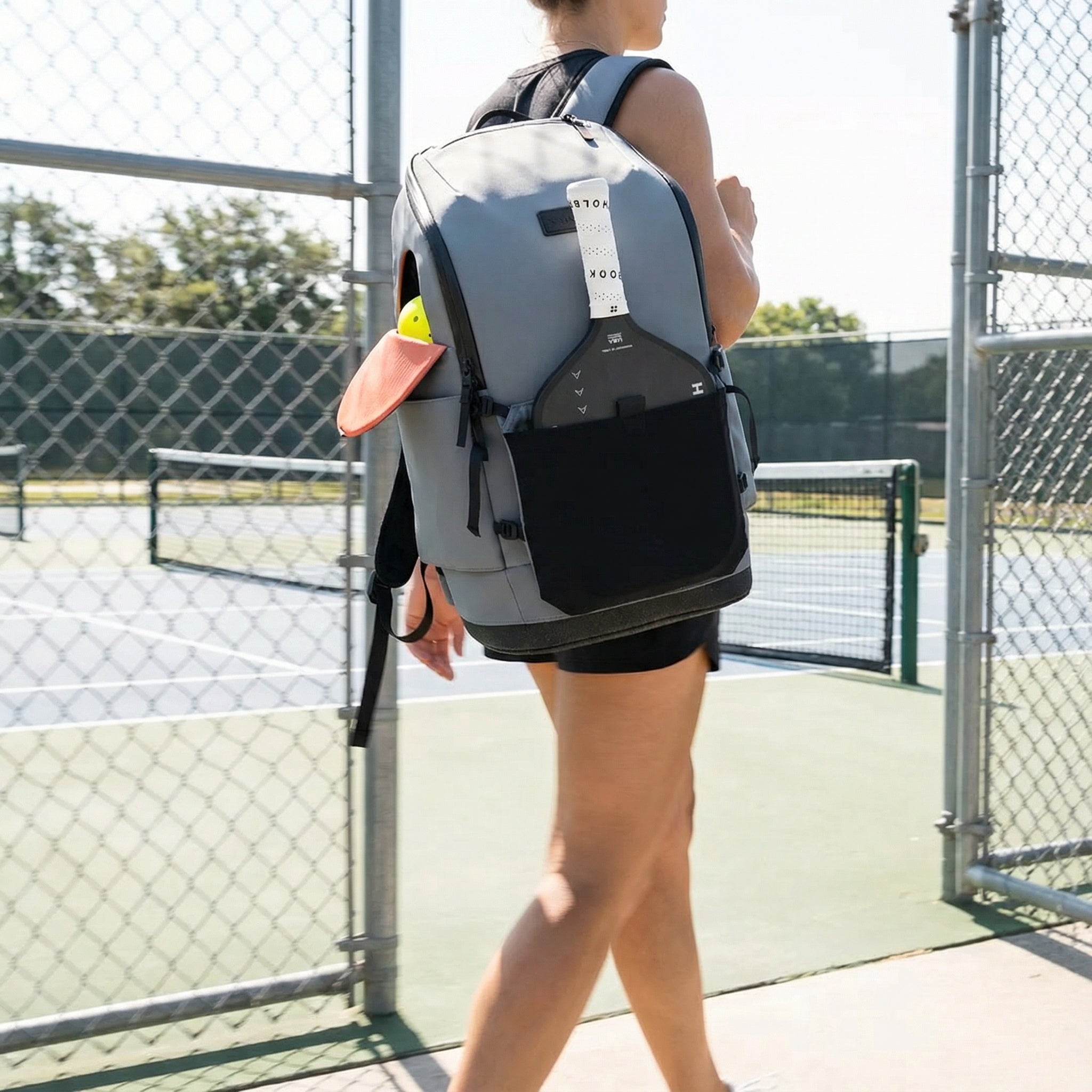
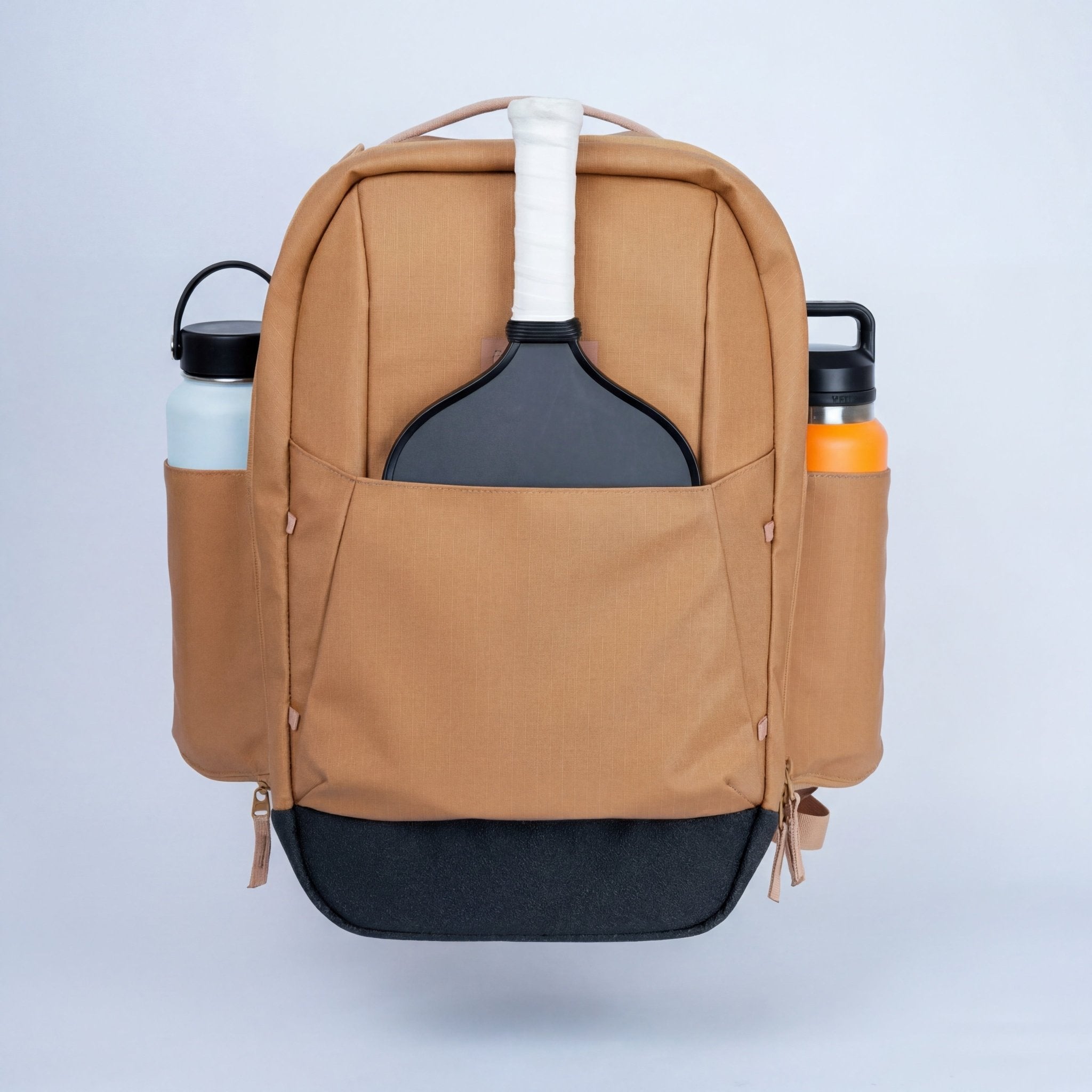
The CRBN3 Barrage is 16.5" elongated. Standard paddle compartments in most backpacks won't fit it comfortably — especially if you're carrying two. The FORWRD Court Ranger V2 ($195) is built for elongated paddles specifically: modular paddle sleeve that handles up to 4 paddles including elongated shapes, plus a thermal lining that protects foam core construction from heat damage. Foam core paddles are more temperature-sensitive than polyprop — leaving the Barrage in a hot car on a 90-degree day matters in a way it doesn't for a standard polyprop paddle.

Also worth considering: the FORWRD Court Caddy ($325) if you're a tournament player who needs to protect multiple elongated paddles and carry full gear. Both bags are built to fit what you're actually buying.
Price and Value
$223.99. That's the number. Here's how to think about whether it's worth it for you specifically.
The Barrage is $74.50 more than the CRBN-3X Power Series and $56 less than the CRBN 3 TruFoam Genesis. It's priced exactly where it should be: below CRBN's premium all-court control line, above the traditional carbon entry point. The Gen 4 floating core is a genuine technology upgrade over Gen 3, not marketing language — the EVA ring changes the paddle's energy mechanics in a way you can feel at 4.0+.
For a tournament player who plays 3+ sessions per week and competes in USAP or UPA-A events, $224 for a paddle that's tournament-legal and performs at this level is reasonable. The 6–12 month longevity caveat on foam cores means your per-session cost is higher than a polyprop paddle — factor that in if you're thinking about long-term value.
For a recreational player at 3.0 or below who's playing twice a week: there are better places to spend $224. Start with our intermediate paddle guide or the complete pickleball paddle guide to find paddles that match your current game.
Buy CRBN3 TruFoam Barrage at PBC →
FAQ: CRBN3 TruFoam Barrage
What's the difference between the CRBN3 TruFoam Barrage and the CRBN 3 TruFoam Genesis?
The Barrage is Gen 4; the Genesis is Gen 3. The key structural difference is the EVA foam ring in the Barrage's construction: it creates a floating core that's physically separated from the carbon frame, increasing dwell time, expanding the sweet spot, and adding pop compared to the Genesis's fixed foam core. The Barrage is also $56 cheaper and more net-play oriented. The Genesis is CRBN's all-court control flagship; the Barrage is the power-forward net-game paddle. If you're a fast-hands kitchen player, the Barrage is the better buy at the lower price.
Is the CRBN3 TruFoam Barrage USAPA approved?
Yes. It carries USAP, PBCoR .43, and UPA-A certifications — legal for all major sanctioned tournament formats. Confirm with your tournament director since approval lists update periodically, but as of June 2026 the Barrage is fully approved.
What does the twist weight of 6.54 mean in practice?
Twist weight measures how much a paddle resists rotating on off-center contact. At 6.54, the Barrage is in the lower-to-moderate range — maneuverable and fast, but it will show some face rotation on significantly off-center hits. The floating core's expanded sweet spot reduces how often you'll make off-center contact in the first place. On well-centered dinks and volleys, the paddle tracks straight and true. For net play, 6.54 is a non-issue. For power-baseline drives from wide positions, higher twist weight paddles are more forgiving on edge contact.
Will a foam core paddle like the Barrage wear out faster than a polypropylene paddle?
Yes, in heavy use. Foam cores compress under repeated impact more noticeably than polyprop honeycomb. Expect 6–12 months of performance before the floating core's feel changes meaningfully — sooner if you're playing 5+ days per week and competing regularly. Polyprop paddles typically last longer before core degradation is perceptible. The Barrage's advantage is better performance while it's fresh; the trade-off is shorter longevity.
Should I buy the CRBN3 TruFoam Barrage or the CRBN-3X Power Series?
Buy the Barrage if: you're a net-first player who values dwell time, spin precision, and fast-hands forgiveness, and you'll feel the floating core difference in your game. Buy the CRBN-3X if: you prefer a crisper, snappier feel at contact, you drive more than you dink, or $74 is meaningful in your budget. Both are good paddles — this is a genuine style-of-play decision, not a quality gap.
Final Verdict
The CRBN3 TruFoam Barrage delivers on its core promise. The Gen 4 floating construction is a real mechanical upgrade over Gen 3 — the EVA foam ring changes how energy moves through the paddle in a way that shows up in dwell time, sweet spot size, and reset forgiveness. Top 10% spin output. Tournament legal across all formats. Moderate swing weight that keeps fast exchanges manageable. At $223.99, it undercuts the Genesis by $56 while outperforming it for net-play specialists.
The cons are real too. Foam core longevity is a genuine consideration for heavy users. The small grip limits players who prefer medium. And if you're a power-baseline player who doesn't spend much time at the kitchen, you'll be paying a premium for technology that doesn't help your game. In that case, the CRBN-3X at $149 is the smarter buy.
For the right player — net-oriented, spin-heavy, fast hands, 3.5 to 5.0 — the Barrage is one of the best paddles in its price range. It does exactly what it's built for, and it does it better than Gen 3.

Leave a comment
This site is protected by hCaptcha and the hCaptcha Privacy Policy and Terms of Service apply.