

Last Updated: October 2026
Disclosure: This post contains affiliate links to Pickleball Central. If you purchase through our links, FORWRD earns a small commission at no extra cost to you. We only recommend products we'd genuinely buy ourselves.
The Franklin X-26 is the most common indoor pickleball in North America for a reason: it's USAPA-approved, flies consistently on hardwood and sport court surfaces, and delivers predictable bounce round after round. It's pricier than outdoor balls per unit, but for dedicated indoor play it's the benchmark everything else gets measured against.
Quick Verdict
| Pros | Cons |
| USAPA-approved for indoor tournament play | Not suitable for outdoor use — degrades fast on rough surfaces |
| Unmatched consistency match-to-match indoors | Pricier per unit than outdoor balls |
| Softer feel is easier on arm and elbow | Loses performance after 10–15 hours in humid environments |
| Quieter than outdoor balls — gym-friendly | Can feel "dead" to power players used to outdoor balls |
| Widely available, trusted brand | |
| Who it's for: Indoor club and rec players, tournament competitors on hardwood courts, gym-based programs | Who should skip: Outdoor court regulars, players seeking a single ball for both surfaces |
Check Price at Pickleball Central — Franklin X-26 →
Key Specs: Franklin X-26 Indoor Pickleball
- Price: $35.99 at Pickleball Central (October 2026)
- Hole count: 26 holes — standard for indoor USAPA play
- Construction: Softer, lighter polymer optimized for indoor hardwood and sport court bounce
- USAPA status: Approved for sanctioned indoor tournament play
- Best surface: Indoor hardwood, sport court, gymnasium concrete
- Durability estimate: 10–20 hours of active play on indoor surfaces before performance decline
- Not suitable for: Outdoor rough-surface play — polymer too soft, degrades rapidly
- Sound profile: Quieter pop than outdoor balls — better for shared gym spaces
Why Trust This Review
FORWRD makes pickleball bags, not balls — so there's no incentive to inflate one brand over another. Our gear team plays regularly at indoor rec centers in Denver, Phoenix, and Salt Lake City, tracking ball performance across multiple play sessions. The Franklin X-26 has been in rotation at nearly every indoor facility we've played at. We know it well — the good and the honest limitations.
For comparison context, we also tested the JOOLA Heleus 40 and the Franklin Fuse G2 on the same indoor surfaces. Read our full rundown in Best Pickleball Balls 2026 if you want the complete head-to-head.
The Indoor Ball Difference: Why 26 Holes Matters
New players sometimes try to use outdoor balls (40 holes) inside. Don't. The physics are different enough that it actually changes how you need to play.
Outdoor balls have 40 holes to manage wind resistance on open courts. They're harder and heavier — they fly fast and bounce high. Inside on hardwood, they come off the floor with a much higher, quicker bounce than the game was designed around. Angles open up weirdly. Dinks go long. Players conditioned to indoor play with proper 26-hole balls report that the transition to outdoor balls requires a real adjustment period of 3–5 sessions before shot patterns feel calibrated again.
The X-26's 26-hole design and softer polymer create a specific bounce profile calibrated for hardwood and sport court. The ball comes up at a lower, more consistent angle — which is why kitchen play feels natural indoors. Shots that would be attack balls on outdoor surfaces become proper dinks on indoor courts with the right ball.
Performance on Indoor Courts
Consistency
The X-26's defining quality is repeatability. Pull three balls out of the sleeve — they fly identically. Round 1 feels the same as round 8. For club players drilling third-shot drops or reset patterns, this matters enormously. Your muscle memory should calibrate to the ball behavior, not compensate for ball variance.
We've played with off-brand indoor balls that start showing flight variance by session 3. The X-26 maintains its flight characteristic significantly longer on indoor surfaces where it isn't getting chewed up by rough asphalt.
Feel and Sound
Softer contact feel than any outdoor ball. The pop on a drive is more muted — not dead, but clearly different from an outdoor ball's sharp crack. In shared gym spaces where pickleball has to coexist with basketball and volleyball, that quieter sound profile matters. A school gym coordinator skeptical about pickleball noise will be far more comfortable with X-26s than Dura Fast 40s at full power.
For dinking, the softer face is genuinely better. Paddle-to-ball contact time is fractionally longer, which means more feel for soft touch shots. Players who've switched from outdoor-heavy play to indoor club play consistently report that kitchen game improves — not just because indoor surfaces favor it, but because the softer ball rewards touch.
Durability: The Real Talk
Indoor balls get a bad reputation for durability — and some of it is earned. Here's the honest breakdown:
Under normal indoor conditions (60–75°F, 40–60% humidity), the X-26 holds its performance for 10–15 hours of active play. That's real play time, not hours in a bag. 10 hours at 2 hours per session is 5 sessions — a solid couple of weeks at a typical rec center schedule.
Where it gets tricky: humid environments. Indoor gyms with poor ventilation can run 70%+ humidity in summer. Polymer balls absorb moisture over time. An X-26 in a humid gym can start feeling marginally softer and losing bounce consistency in as few as 8 hours of play. Store your balls in a climate-controlled space and let them air out between sessions.
Also critical: don't let the X-26 anywhere near an outdoor surface. One session on rough concrete will degrade it noticeably. If your court has any outdoor access, keep indoor balls physically separate from your outdoor bag.
"Indoor and outdoor balls are different tools for different environments — not interchangeable. We see players trying to save money by using one ball for everything, and it shows up in their game. The X-26 is the right tool for indoor. Use it for what it's designed for, replace it on schedule, and you'll play better for it."
— Grub, FORWRD Co-founder
Franklin X-26 vs. JOOLA Heleus 40 Indoor Ball
The JOOLA Heleus is the other major indoor ball option you'll see at sanctioned events. It's slightly softer than the X-26 — Heleus players describe it as having a "mellower" feel, which is accurate. The trade-off is that it can feel underpowered on aggressive drives and is slightly less durable than the X-26 in our testing.
| Factor | Franklin X-26 | JOOLA Heleus 40 |
|---|---|---|
| Feel | Balanced — soft enough for touch, firm enough for drives | Softer, mellower feel |
| Consistency | Very high — X-26 is the indoor benchmark | High |
| Durability | 10–20 hours indoor | Slightly less — varies by environment |
| Tournament use | USAPA-approved, widely used | USAPA-approved |
| Sound | Quiet for a pickleball | Quieter still |
If you're an aggressive baseline player who drives indoors, the X-26 is slightly better suited. If you're a dink-and-reset player who prioritizes touch, the Heleus is worth trying. Both are legitimate choices.
Shop JOOLA Heleus 40 at Pickleball Central →
Franklin X-26 vs. Franklin X-40: Indoor vs. Outdoor
Players new to the X-26 sometimes ask if the X-40 (the outdoor standard) can just sub in indoors. Short answer: it can, but you won't like it.
The Franklin X-40 bounces 20–30% higher off hardwood than the X-26 — a significant difference. Drives feel faster and harder to control. Kitchen play becomes a battle against the ball's tendency to come up hot. Dinks that would be clean on outdoor surfaces pop up as attackable balls indoors. The game changes enough that you'll be re-calibrating constantly instead of playing.
For indoor play: X-26. For outdoor: X-40. Don't mix them up.
Shop Franklin X-26 at Pickleball Central →
Who Should Buy the Franklin X-26
- Indoor club and rec players — the X-26 is already in rotation at most major clubs, so you're practicing with the same ball you'll play with
- Tournament players competing on indoor courts — USAPA approval + widespread tournament use means it's the right tool for sanctioned play
- Gym-based programs and school leagues — the quieter sound profile and softer feel make it the sensible choice for shared facility spaces
- Players with elbow or arm issues — indoor ball's softer impact reduces cumulative stress per shot vs. outdoor balls
- Kitchen-focused and touch players — the softer polymer rewards dinking and reset patterns
Who Should Look Elsewhere
- Outdoor court regulars — the X-26 isn't built for it. Buy the X-40 instead
- Players seeking one ball for everything — there is no single ball that plays well indoors and outdoors. The physics don't allow it. Stock both
- Power-only players who live for hard drives — the X-26 can feel underpowered relative to outdoor balls; you'll likely prefer a firmer ball if driving is your primary game
- Hot/humid gym environments — the X-26 degrades faster in high humidity; if your gym routinely runs above 70% humidity, inspect balls more frequently
Practical Tips for X-26 Longevity
A few habits that materially extend X-26 lifespan:
- Air them out between sessions. Don't seal damp balls in a ball tube after a hot gym session. Let them sit exposed to air for a few hours before storage.
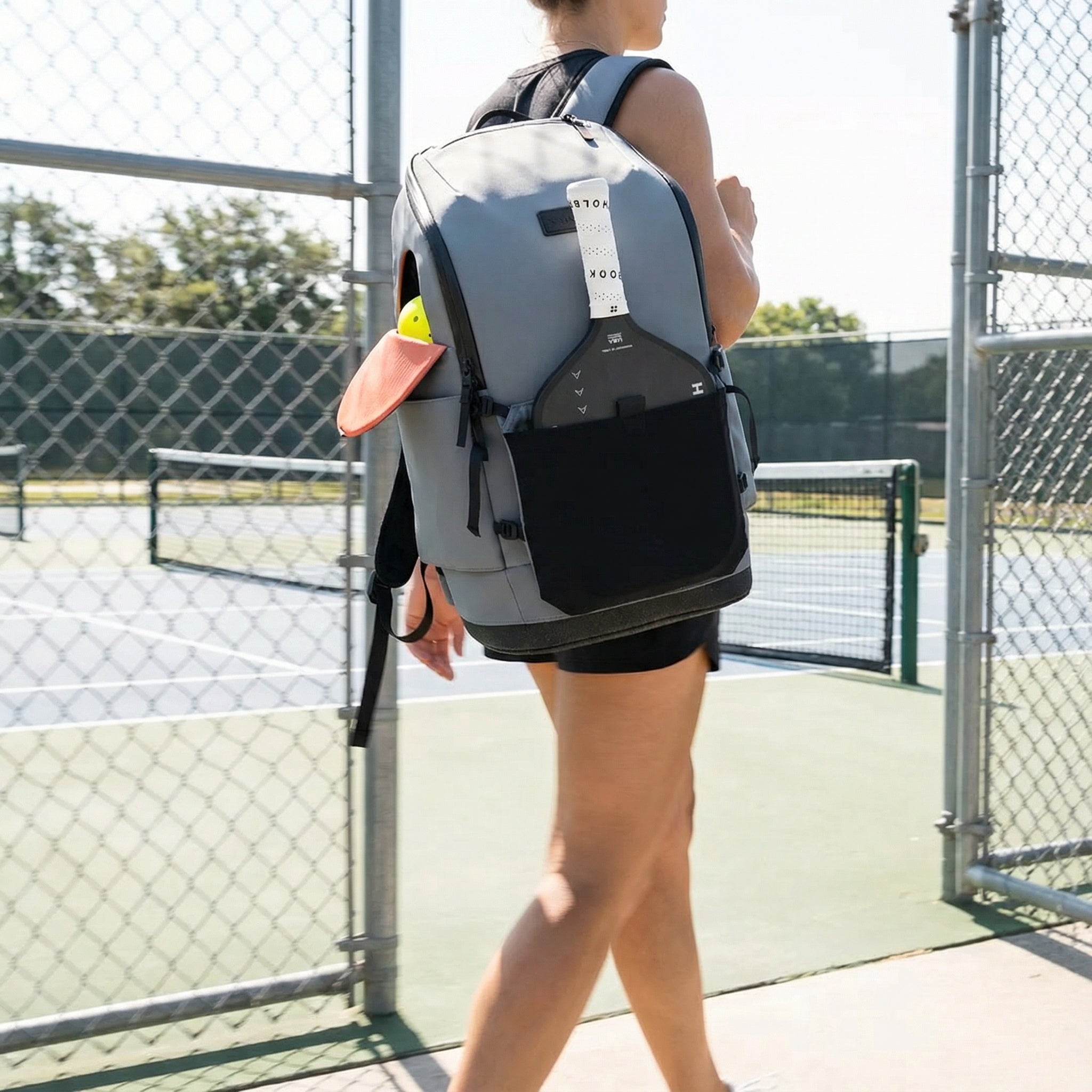
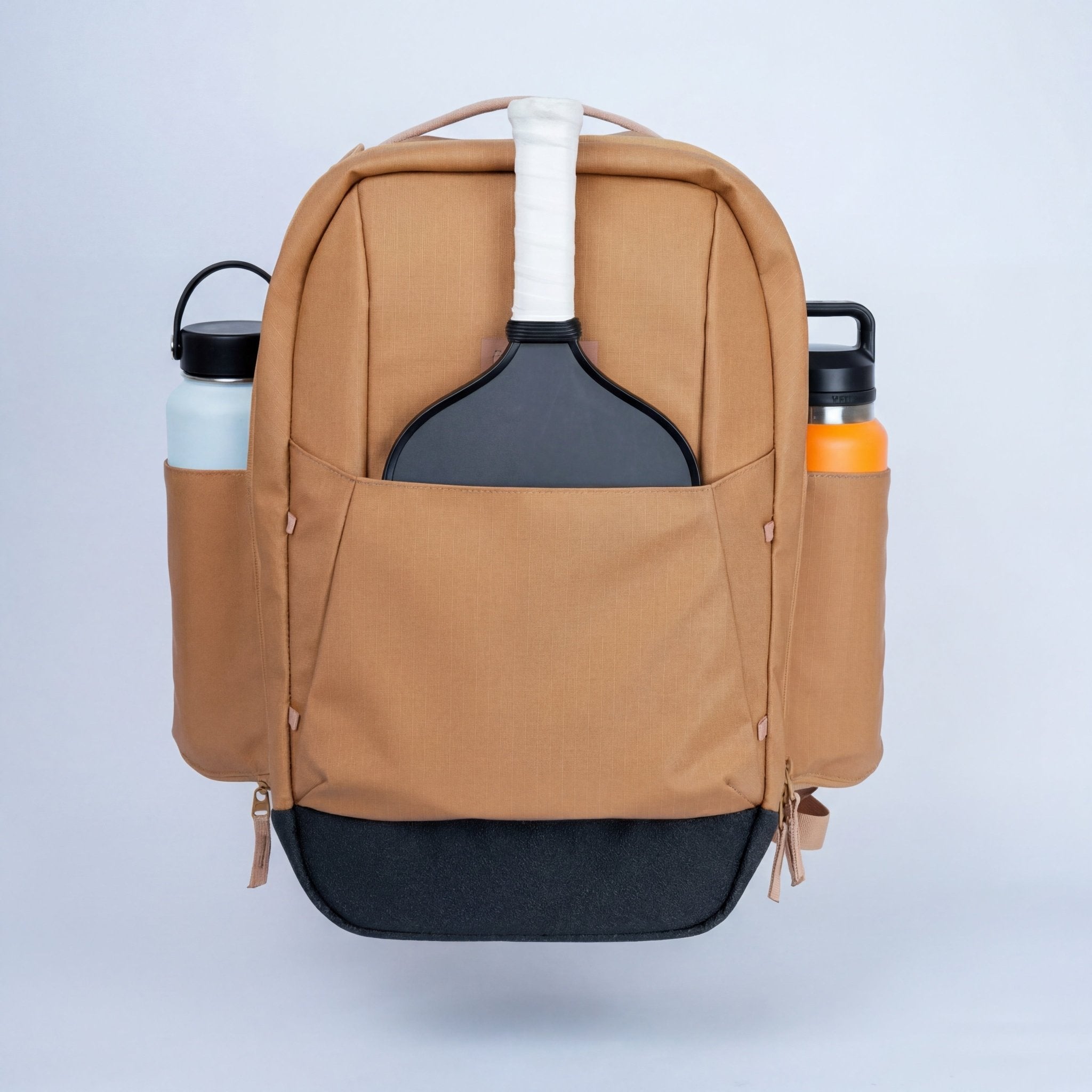
- Keep indoor and outdoor balls physically separate. Label your ball tube. One accidental outdoor session can degrade an X-26 noticeably. A bag with dedicated ball pockets — like the Court Ranger V2 — makes it easy to keep separate slots for your indoor and outdoor supply.
- Inspect before each session. Run a finger along the ball's equator. Any flat spot, crack, or notable out-of-round shape means retirement. A wobbling ball is a free handicap you're giving your opponents.
- Room temperature storage. Don't leave balls in a hot car or cold garage. Polymer expands and contracts with temperature cycling, which degrades the round shape over time.
Pricing & Availability
The Franklin X-26 is $35.99 at Pickleball Central. Free ground shipping on orders over $49. If you're stocking for a club or league, buying multiples at once makes sense both for the shipping threshold and to ensure batch consistency.
Buy Franklin X-26 at Pickleball Central →
Frequently Asked Questions
What is the best indoor pickleball ball?
The Franklin X-26 is the most widely used indoor pickleball in North America and the benchmark for indoor play. It's USAPA-approved, delivers consistent bounce on hardwood and sport court surfaces, and its softer feel rewards touch-based play. The JOOLA Heleus 40 is a softer alternative worth trying if you prefer an even mellower feel.
Can I use Franklin X-26 balls outdoors?
No — not if you want the ball to last. The X-26's softer polymer degrades rapidly on rough outdoor surfaces like asphalt and concrete. Even one outdoor session can noticeably affect performance. Use the Franklin X-40 for outdoor play and keep the X-26 for indoor only. Separate storage helps prevent the mistake.
How long do Franklin X-26 balls last?
Under normal indoor conditions (60–75°F, moderate humidity), expect 10–20 hours of active play before flight consistency declines. In humid gym environments above 70% relative humidity, lifespan can shorten to 8–12 hours. Inspect balls before each session — any out-of-round shape or flat spot means it's time to retire the ball.
What's the difference between X-26 and X-40?
The X-26 has 26 holes, softer polymer, and is designed for indoor hardwood and sport court play. The X-40 has 40 holes, harder polymer, and is built for outdoor asphalt and concrete. They're different tools — the X-26 bounces lower and softer indoors, which is what the game's indoor format requires. Using an X-40 indoors produces a significantly higher, harder bounce that changes game dynamics.
Is the Franklin X-26 USAPA approved?
Yes. The Franklin X-26 is USAPA-approved for sanctioned indoor tournament play. Always verify the current approved ball list with your specific tournament organizer, as approval lists are updated periodically.
Final Verdict
The Franklin X-26 is the indoor pickleball standard because it earns it. Consistent flight, appropriate bounce height for hardwood, USAPA-approved, and a feel that rewards touch play. It's not cheap — indoor balls cost more per unit than outdoor alternatives — but for dedicated indoor players it's the right tool.
Don't try to stretch one ball type across both surfaces. Stock the X-26 for indoor play, the X-40 for outdoor, and you'll wonder why you were fighting the physics before.
Complete Your Indoor Setup
Your X-26s deserve proper storage — separate from your outdoor balls and protected from humidity. The FORWRD Court Ranger V2 ($195) has dedicated ball pockets that keep your indoor and outdoor supply separated, a 16" padded laptop sleeve for work-to-court days, and YKK AquaGuard weatherproof zippers that handle the same humidity your balls are trying to avoid. Lifetime warranty. Built with 500+ real players.
 Shop the Court Ranger V2 — $195 →

Leave a comment
This site is protected by hCaptcha and the hCaptcha Privacy Policy and Terms of Service apply.