

Last Updated: August 2026
Most pickleball glasses don’t die from a bad shot. They die from bad cleaning habits. A paper towel wipe-down after every session, ammonia-based lens cleaner sprayed on without thinking, and a few weeks of polycarbonate lens abuse later — the optical clarity is wrecked and you’re wondering why your vision is blurry through $150 sport glasses.
Polycarbonate lenses are more scratch-prone than glass. Anti-fog coatings are chemically delicate. Both require a different cleaning approach than standard prescription frames — and almost nobody explains that when you buy a pair.
This is the actual protocol, based on how polycarbonate and sport lens coatings actually behave.
The Quick Answer (Court-Side Cleaning)
Between games, sweat and court dust are the main issue. The right move: breathe gently on the lens to add minimal moisture, then wipe with a microfiber cloth in small circular motions from center to edge. That’s it. No spray. No shirt. No paper product. If you don’t have a microfiber cloth in your bag, you’re improvising with something that’s damaging your lenses every time.
For a proper cleaning after a full session: rinse with lukewarm water, add one small drop of plain dish soap (Dawn or equivalent — no moisturizers, no antibacterial additives), work it across the lens with your fingertip for 5–10 seconds, rinse clean, and dry with a microfiber cloth. That clears sweat residue, sunscreen (a major coating killer), and the oily film that builds up from incidental contact with your hands.
What to Use (and Why)
Microfiber cloth — the only acceptable dry wipe. The ultra-fine fibers lift particles off the lens surface without scratching. Use a fresh one regularly; a dirty microfiber cloth that’s been pocket-used and then re-used is no better than a t-shirt. The FORWRD Lens Cleaning Cloth ($10) is the one we keep in our bags — it’s sized right for sport lens surfaces and doesn’t pick up court lint the way small eyeglass cloths do.
Lukewarm water + plain dish soap — for full post-session cleaning. This is the lens care industry’s standard for polycarbonate. Avoid hot water (it stresses the frame’s hinge tolerances) and avoid cold water (it doesn’t loosen sunscreen and sweat residue effectively). One small drop of dish soap is enough — you’re cleaning a lens, not a pan.
Lens cleaning spray — only if polycarbonate-safe. Most commercial lens cleaning sprays are safe for polycarbonate but not all are. Read the label before spraying anything on a sport lens. If it says “safe for coated lenses” and doesn’t list alcohol as a primary ingredient, it’s likely fine for occasional use. For anti-fog coatings specifically, use the minimal amount — excess spray can temporarily degrade anti-fog performance.
What Wrecks Coatings (Don’t Do These)
Alcohol-based cleaners. Alcohol is the most common coating killer. It strips the anti-fog layer and can cause micro-crazing (tiny surface fractures) in anti-reflective coatings. This includes hand sanitizer — which is increasingly common courtside — and most “glass” cleaners. Never wipe your lenses after using hand sanitizer without rinsing your hands first.
Paper products. Paper towels, napkins, and tissue paper are abrasive against polycarbonate at the micro level. A single wipe feels fine; 50 sessions of paper-towel wipes leaves a lens visibly scratched. Shirts are similarly abrasive, plus they transfer oils and debris from the fabric onto the lens. Both habits are silent lens killers.
Ammonia-based cleaners. Windex and similar household glass cleaners contain ammonia. Ammonia is effective on glass — and destructive on coated polycarbonate. One application won’t visibly damage your lenses; six months of occasional use will degrade the coating measurably.
Dish soap with additives. “Ultra moisturizing” dish soap, antibacterial dish soap, and citrus-formula variants leave residue on lens surfaces. Use plain dish soap without added conditioners. Dawn Original (unscented, no additives) is the standard recommendation.
Dry-wiping a dry lens. If there’s any dust or grit on the lens surface and you wipe it dry, you’re dragging abrasive particles across polycarbonate. Always breathe on the lens first or rinse with water before wiping. This matters especially at outdoor courts where fine dust and pollen are present.
Anti-Fog Maintenance
Anti-fog coatings work by making water form a thin uniform film rather than discrete droplets that scatter light. Over time, skin oils, sunscreen, and cleaning chemicals degrade this hydrophilic surface layer. The signs: fogging that used to clear in 2 seconds now lingers for 10 seconds, or you start seeing uneven fogging patterns across the lens surface.
Two approaches when anti-fog performance drops:
First — check your cleaning routine. If you’ve been using alcohol or ammonia-based products, stop immediately and switch to the water + dish soap method for 2–4 weeks. The coating can partially recover if the damage is early-stage.
Second — apply an anti-fog spray to refresh the hydrophilic layer. Anti-fog refresher sprays exist specifically for this purpose and can extend the life of coated lenses by several months. Apply sparingly; the coating is thin and layering excessive product can leave visual residue.
Once the anti-fog coating is visibly degraded — you see a persistent iridescent pattern or the fogging behavior has fundamentally changed — the coating itself needs replacement. There’s no at-home repair for a fully stripped anti-fog layer.
Storage Between Sessions
How you store your glasses between uses matters as much as how you clean them. Tossing a pair of sport glasses loose in a bag is an efficient way to scratch them — against paddles, balls, keys, and every other piece of gear in there.
At minimum: a soft eyewear pouch. The FORWRD Eyewear Pouch ($12) is microfiber-lined, keeps the lens surface away from other gear, and doubles as a cleaning cloth in a pinch. For glasses that cost $30 or less, this is the right level of protection — simple, compact, and cheap insurance against preventable scratches.
For premium eyewear ($100+): a hard case is worth it. The FORWRD Magnetic Eyewear Case ($54.99) holds frames in fixed position with a magnetic closure. The rigid shell protects against compression damage — relevant for anyone who packs a full gear bag where weight and pressure accumulate. For interchangeable-lens frames that include multiple lens sets, the structured storage keeps lenses organized and scratch-free.
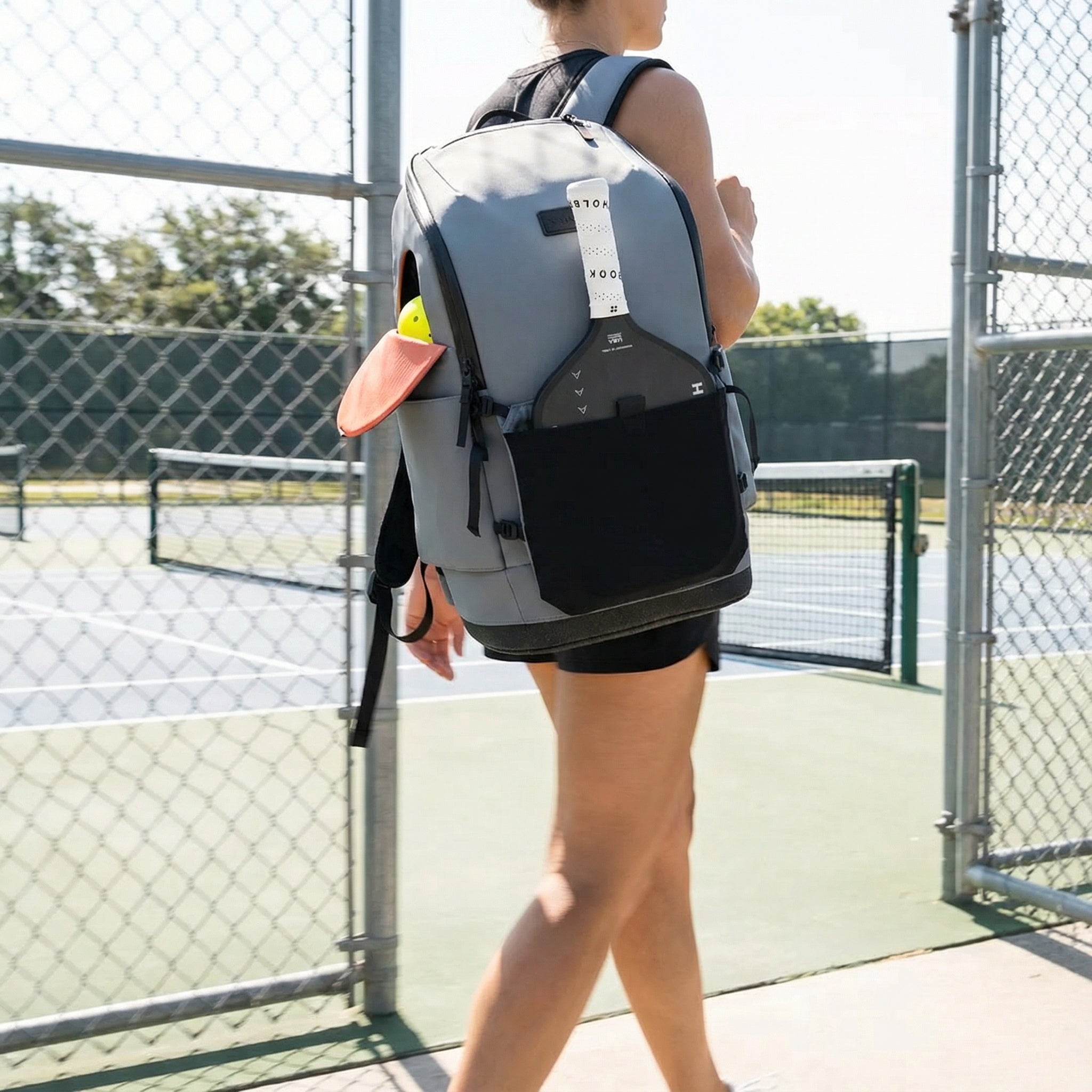
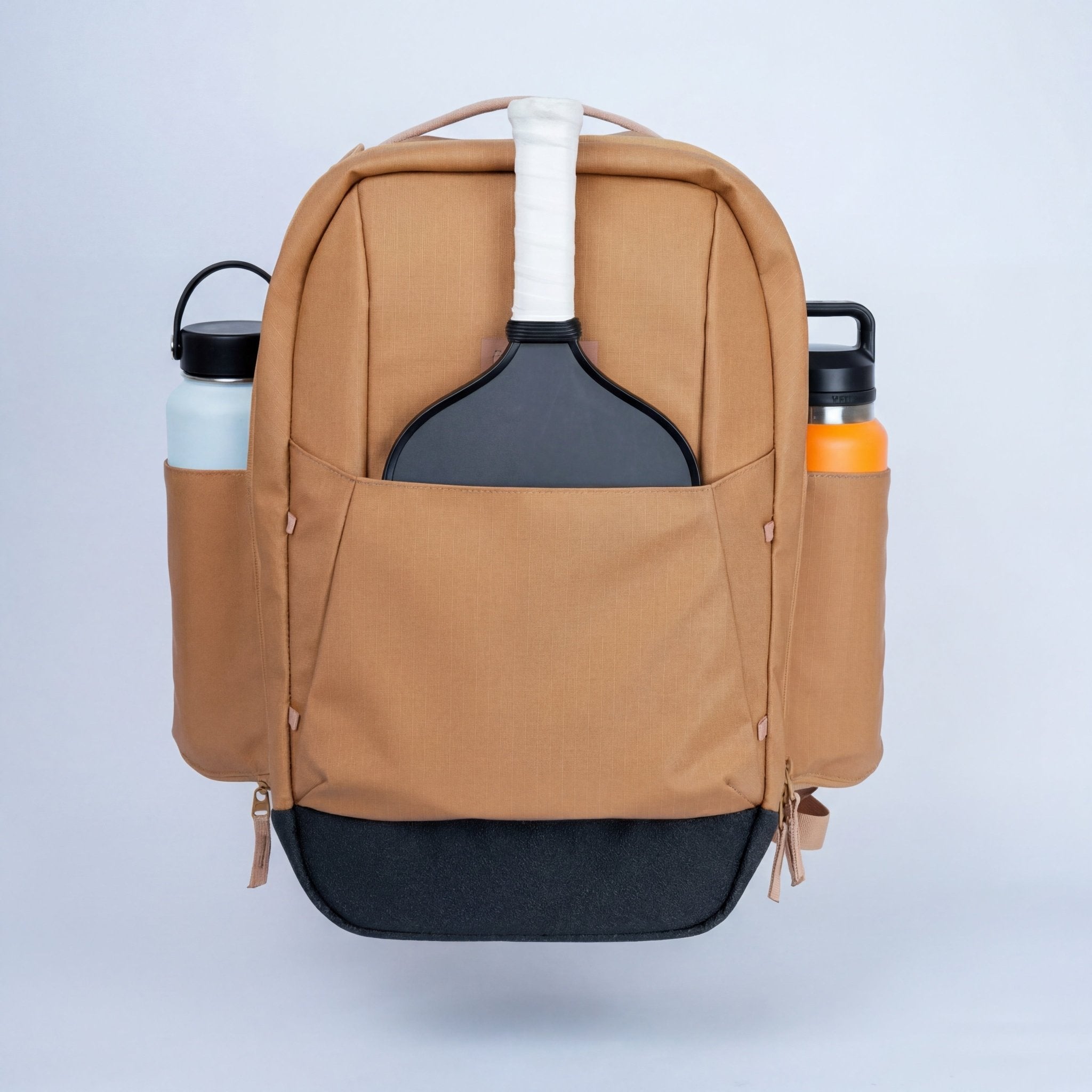
If your glasses go in a bag with paddles, don’t let them share the same compartment. The FORWRD Court Ranger V2 ($195) has separate organization zones that keep eyewear away from the main gear compartment — no more arriving at the court with scratched lenses from a mid-bag collision with a ball can.
When to Replace
Three signals that a lens is past useful life:
Visible scratches in the optical zone. If you can see scratches in the center of the lens while wearing the glasses, your vision and eye fatigue are being affected. Peripheral scratches outside the direct optical zone are cosmetically annoying but don’t necessarily impact function.
Coating failure (iridescent patterns, crazing). Irreversible. Once you see the rainbow-like iridescence pattern across the lens surface — especially visible in bright overhead light — the coating structure is compromised. No cleaning regimen fixes it.
Frame structural damage. A loosened hinge that lets the lens tilt, a crack near the lens retention groove, or a broken nose pad that changes frame alignment on your face. All of these alter where the lens sits relative to your eye, affecting both optical quality and coverage geometry.
Budget frames at $20–$40 have a natural replacement cycle of 1–2 seasons. Premium frames with proper care can last 3–5 seasons. For the full range of what to look for in pickleball eyewear at every price point, see our complete pickleball eyewear guide.
FAQ: Cleaning Pickleball Glasses
Can I use Windex on pickleball glasses?
No. Windex contains ammonia, which degrades the coatings on polycarbonate sport lenses over time. Use water and a small amount of plain dish soap for a full clean, or a polycarbonate-safe lens spray for quick touch-ups. Ammonia-based cleaners are the most common cause of premature coating failure on sport eyewear.
Can I use my shirt to wipe pickleball glasses?
You can, but you’re slowly scratching the lens every time. Fabric fibers are abrasive against polycarbonate and also transfer skin oils and lint onto the lens surface. A microfiber cloth takes up almost no space in a bag and is the only acceptable wipe for polycarbonate lenses. Keep one in your gear bag.
How do I stop my pickleball glasses from fogging?
First, check if the anti-fog coating is degraded from alcohol-based cleaners or sunscreen residue. Switch to plain dish soap cleaning and give it a few weeks. If that doesn’t help, apply an anti-fog refresher spray to restore the hydrophilic layer. Persistent fogging after coating refresh usually means the coating is at end-of-life and you need replacement lenses or a new frame.
How often should I clean my pickleball glasses?
Quick microfiber wipe between sessions; full soap-and-water clean after every playing session or at least once per week for active players. Sweat, sunscreen, and skin oils left on lenses overnight degrade coatings faster than cleaning does. The post-session clean takes about 60 seconds and extends lens life meaningfully.
Will hand sanitizer hurt my pickleball glasses?
Yes, if it contacts the lens. Hand sanitizer is mostly alcohol — the same substance that strips anti-fog and anti-reflective coatings. Never touch your lenses immediately after applying hand sanitizer, and never use sanitizer as an improvised lens cleaner. Rinse your hands before handling the lens surface if you’ve recently used sanitizer.

Leave a comment
This site is protected by hCaptcha and the hCaptcha Privacy Policy and Terms of Service apply.