

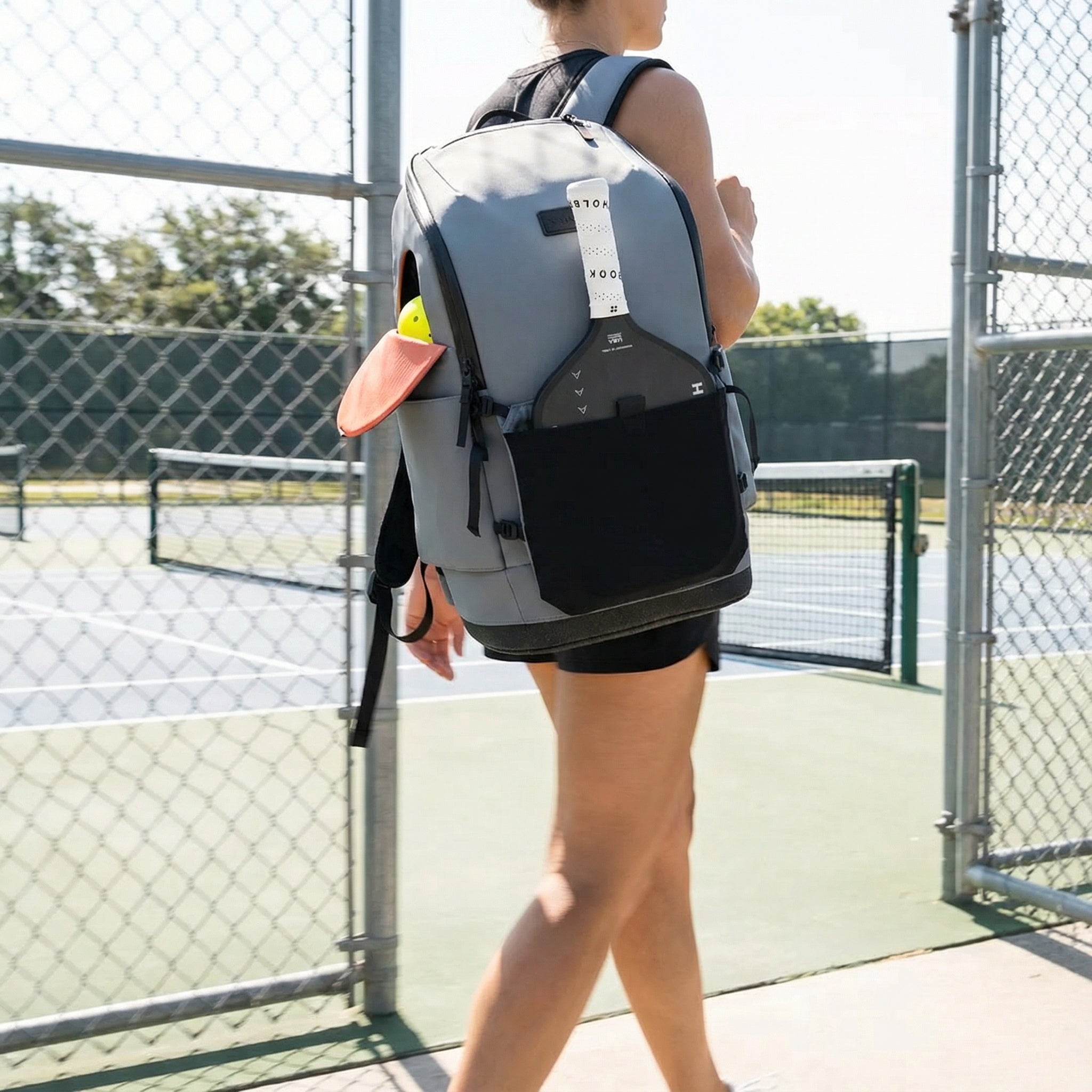
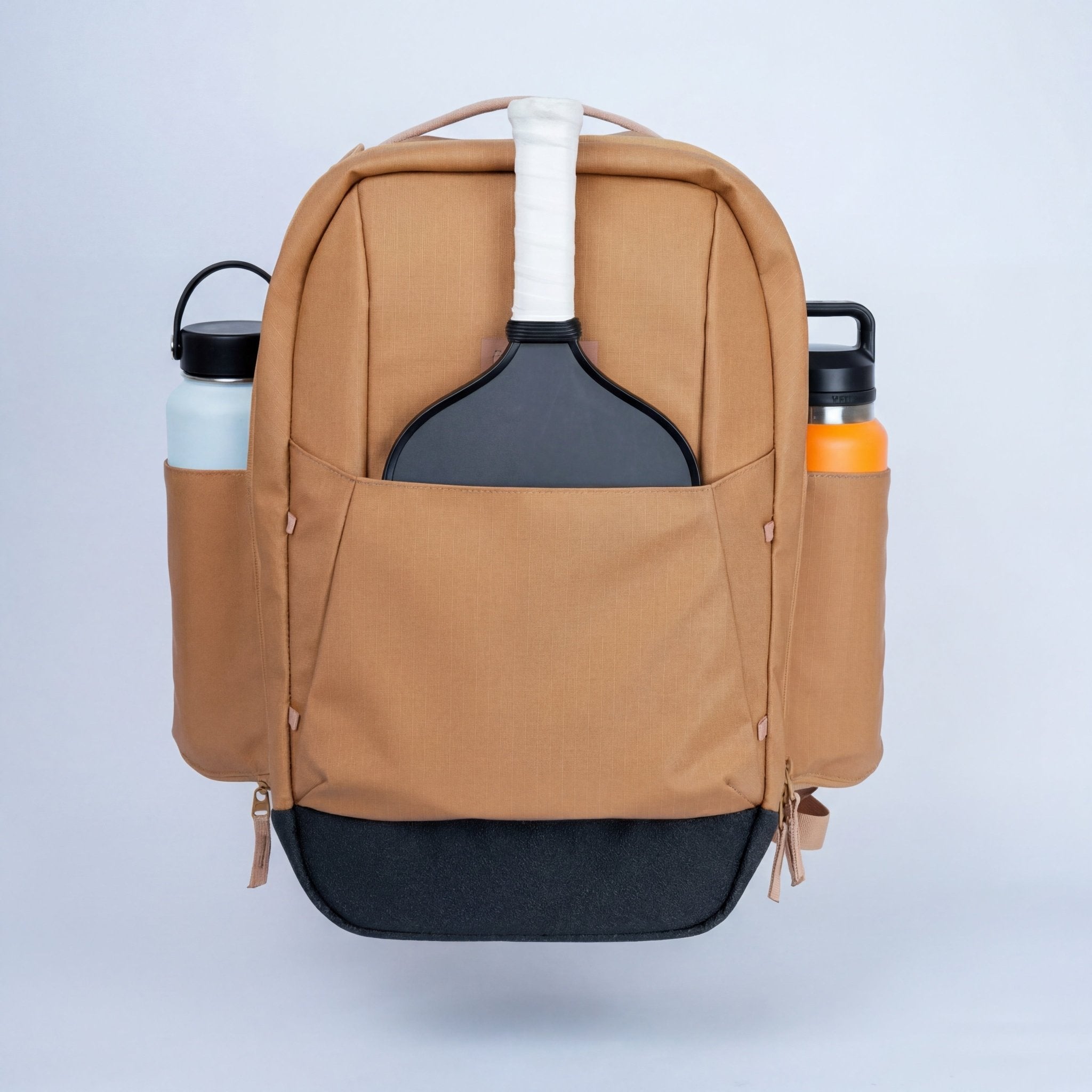
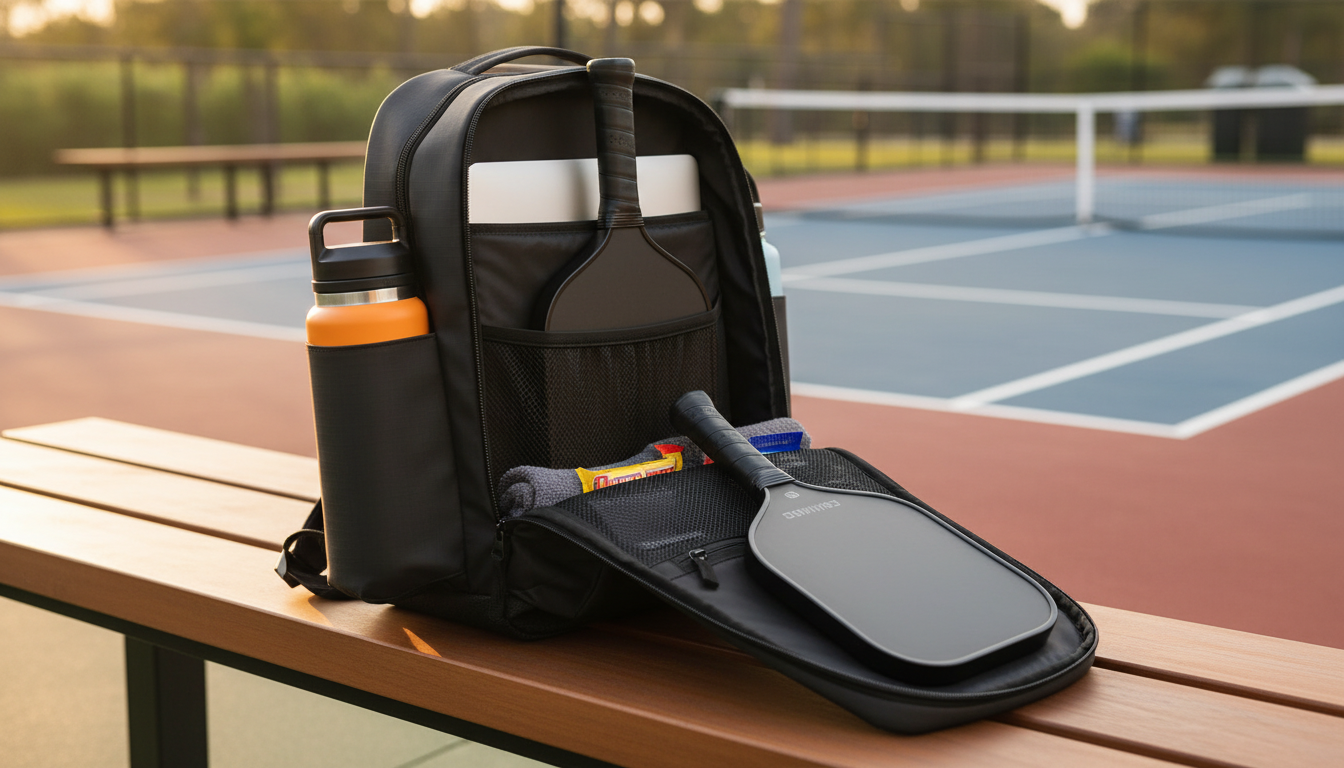
Here's the short version: paddles go in the dedicated sleeve, balls in the exterior pocket, water in the side holder, and everything else splits into "always in" vs. "pack per session." That 10-second model prevents 90% of the mid-game bag-digging that wastes warm-up time and tournaments-day energy.
The longer version — the one that actually changes how you play — treats organization as a use-case system. A daily court-to-work commuter packs completely differently than someone doing open play on Saturday, who packs differently from a player grinding through a full tournament day. Most bag guides skip that entirely. This one doesn't.
Last Updated: July 2026
Why Bag Organization Actually Matters for Your Game (It's Not Just Tidiness)
Before your first serve, you've already made dozens of micro-decisions — which paddle to use, whether the weather warrants sunscreen, if you have enough balls. None of those should get complicated by a bag where everything shares one big pile.
Across 500+ player interviews and hours of real court testing, two patterns show up constantly in players who struggle with gear chaos:
- They pack fresh every time instead of maintaining a permanent base load
- They use a bag without distinct zones — everything goes in one compartment and they sort it out courtside
The second problem is a bag problem. No organization system fixes a bag that doesn't have dedicated spaces for paddles, balls, water, and personal items. You're just reorganizing chaos into slightly neater chaos.
But even with a properly zoned bag, the system only works if you commit to the permanent/rotate split. Players who repack from scratch every session are the same ones who show up without overgrips or find sunscreen at the bottom under a soggy towel.
Organization removes friction at exactly the wrong moments — the 30 seconds before warm-up ends, mid-tournament when your partner needs a ball, the 5am departure for an all-day event. Get the system right and you stop thinking about gear. That's the actual performance benefit.
Permanent vs. Rotate: What Stays in Your Bag Always vs. What You Pack Per Session
This is the foundation. Pick it up once, put it in, and don't touch it again until it needs replacing.
Permanent items (always in your bag):
- Extra overgrips (4 minimum — buy a 12-pack, load 4, don't think about it again)
- Sunscreen (small tube, front pocket)
- Bandaids and athletic tape (3-4 bandaids, a few inches of tape on a small roll)
- Hand towel
- Extra balls (2–3, in the exterior ball pocket)
- Bag tag or ID
The rotate list is what you add and pull based on the session:
Pack per session:
- Paddles (your match paddle and backup)
- Water bottles (fill fresh — don't leave these in the bag between sessions)
- Laptop if you're commuting
- Food and snacks for longer sessions
- Change of clothes if you're going court-to-work or work-to-court
- Tournament registration paperwork or your schedule printout
"The number one thing we heard in player feedback sessions was 'I always forget my overgrips.' Our response was: make overgrips a permanent bag item. Buy a 12-pack, load four into the front pocket, and you'll never think about it again — until they're gone and you restock."
— Topher, FORWRD Co-Founder
Getting this split right means you stop forgetting the permanent items (because they live in the bag) and only have to think about the variables each session. That's the whole system.
How to Use Your Bag's Compartments (Court Caddy / Court Ranger V2 Specific Walkthrough)
The zone logic is universal: put frequently accessed items where you can reach them without opening the main compartment. Put bulky or rarely-needed items deep.

For the Court Caddy ($325):
- Modular paddle sleeve (front, exterior): Fastest-access compartment. Keep your two match paddles here, face-to-face with a microfiber cloth between them if you care about surface protection.
- 15" laptop compartment (rear panel): Padded and isolated. Laptop goes here alone — nothing competes for this space. If you're not commuting, use it for an extra shirt or document folder.
- Main compartment: Court shoes (in the optional Shoe Cube if you have it), change of clothes, overflow balls, tournament paperwork, food for long sessions.
- Front organization pockets: Overgrips, sunscreen, bandaids, phone charger, earbuds, wallet.
- Side water bottle holders: Water on your dominant-hand side, electrolyte drink opposite. Both easily accessible mid-match.
For the Court Ranger V2 ($195):
- Modular paddle sleeve: Same front-access logic as the Caddy. Paddles go here, full stop.
- 16" laptop sleeve: Slightly larger than the Caddy's — better if you're carrying a 15" laptop with a hard case, or a large tablet.
- Main compartment: Shoes, clothes, court gear organized loosely.
- Top utility pocket: Keys, phone, small items you need immediately.
- Side bottle pockets: Same dual-hydration setup.
The key difference between the two bags for organization: the Court Caddy has more interior structure. Dedicated front organization pockets keep small items from migrating to the bottom of the main compartment. The Ranger V2 is more open — easier to load quickly, but it rewards players who are already disciplined about the permanent/rotate system.
Our Pick: Court Caddy Backpack
Designed with 500+ real players: modular paddle sleeve, 15" padded laptop compartment, YKK AquaGuard zippers, and enough pocket structure to run the zone system without improvising.
Tournament Packing vs. Open Play Packing: The Difference
Open play packing is casual. Two paddles, a water bottle, and sunscreen covers most Saturday morning sessions. Tournament packing is a different problem entirely.
A full tournament day runs 8–12 hours on-site. You need to be self-sufficient across that whole window — no running to the car between matches, no borrowing overgrips from strangers, no buying an $8 granola bar from the venue snack stand because you didn't pack food. Players who "pack enough" often aren't playing their best by match 5 because they're dehydrated, under-fueled, or grinding on a grip that went dead two hours ago.
Here's what changes for tournaments:
Add to your base load:
- Third paddle (backup for a cracked face or dead strings)
- 6+ overgrips instead of 4
- Real food — something with protein, not just bars
- Electrolyte packets or a pre-mixed drink
- Tournament schedule or bracket printout
- Full first aid: ibuprofen, blister pads, athletic tape
Remove from your base load:
- Work laptop (leave it in the car)
- Business-casual change of clothes (not relevant)
The weight difference matters. A fully-loaded tournament pack is noticeably heavier than a casual session bag. The Court Caddy was designed around this reality — 500+ players described their worst tournament days, and those descriptions shaped every compartment. The main compartment depth, the modular sleeve capacity, the front pocket configuration — all of it answers the question "what does a player actually need across a 10-hour tournament?"
Managing Wet Gear, Overgrips, and Consumables (The Stuff Everyone Forgets)
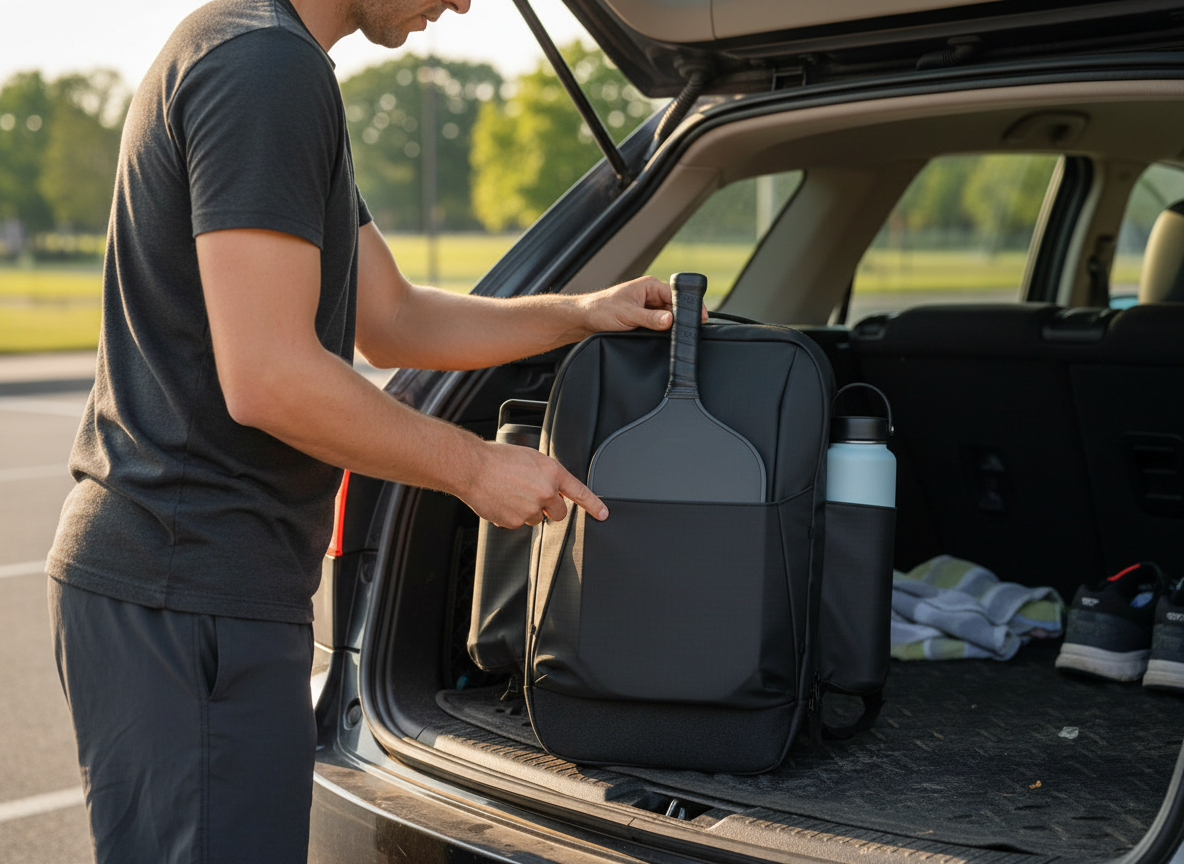
Most bag guides stop at "what to bring." Here's what actually goes wrong after a session.
Wet gear is the silent bag-killer. After outdoor play in heat — or any rain — your towel is damp, your shirt is soaked, your shoes are dirty. Throw all that loose into the main compartment and everything smells by the next session. The fix is simple and most players don't do it:
- Keep a grocery bag or small dry sack in the front pocket for wet/dirty items post-session
- Clothes and towels go in the bag, not loose in the compartment
- Air out the bag between sessions — leave it unzipped in a well-ventilated spot overnight
- Never close a damp bag and leave it in a hot car
The YKK AquaGuard zippers on FORWRD bags keep rain out during play. They don't keep moisture out if you stuff a soaking wet shirt inside. That part's on you.
Overgrip rotation is a habit, not a system. Overgrips last 3–5 sessions for most players — less in heat. The mistake is waiting until the grip is shredded to change it. By then you've already lost touch feel and you're compensating with grip pressure, which kills your arm over time.
One simple rule: put a fresh overgrip in the front pocket before each session. If it's still there after — great, backup for next time. If you grabbed it mid-session, you changed grips, and now you restock. That cycle keeps you from ever playing on a dead grip.
Post-tournament restock is a 10-minute habit worth building. The night you get home from a tournament, your bag is empty of consumables. Restock before you close it: overgrips back to 4, sunscreen tube checked, bandaids restocked, food compartment cleared. Ten minutes now vs. 20 minutes of frantic searching before your 7am match three weeks from now.
Three Use-Case Packing Lists (Screenshot These)
These are the three setups that cover 95% of player scenarios. Each maps items to specific compartments — not just "what to bring" but "where it goes."
Setup 1: Daily Court-to-Work Commuter
For players who go court → office, or office → court, on weekdays. Weight discipline matters here.
| Compartment | What Goes There |
|---|---|
| Paddle sleeve | 2 paddles (match + backup) |
| Laptop compartment | Work laptop + charger |
| Main compartment | Court shoes, business-casual change of clothes, small toiletry bag |
| Front pockets | Overgrips (2), earbuds, phone charger, deodorant |
| Side pockets | Water bottle + travel coffee mug |
Key adjustment: skip the extra balls. You're showing up to someone else's court, not hosting. Keep the weight down for the commute.
Setup 2: Weekend Open Play Session
For Saturday or Sunday rec play, 2–3 hours, no tournament pressure.
| Compartment | What Goes There |
|---|---|
| Paddle sleeve | 2 paddles |
| Main compartment | Court shoes, towel, extra shirt |
| Front pockets | Sunscreen, overgrips (3), lip balm, car keys |
| Side pockets | 32oz water + electrolyte drink |
| Exterior pocket | 3 balls |
Lightest of the three setups. Add a snack pocket if your session regularly runs 3+ hours.
Setup 3: Full Tournament Day
For USA Pickleball sanctioned events, PPA qualifiers, local tournaments, or league play.
| Compartment | What Goes There |
|---|---|
| Paddle sleeve | 3 paddles — 2 primary + 1 backup |
| Laptop compartment | Tablet or phone (bracket/schedule) — or leave empty, save the weight |
| Main compartment | Court shoes (in Shoe Cube), full change of clothes, large towel, meal prep container |
| Front pockets | 6 overgrips, sunscreen, ibuprofen, bandaids, athletic tape, energy gels |
| Side pockets | Large water + pre-mixed electrolyte drink |
| Exterior pockets | 6 balls total across available exterior pockets |
Heaviest setup. If you're using the Ranger V2 instead of the Caddy, leave the backup paddle in your car and use the saved weight for more food. The Court Caddy was built around this exact load — the main compartment depth and front pocket configuration came directly from tournament player feedback sessions.
Frequently Asked Questions: Pickleball Bag Organization
How do you organize a pickleball bag?
Use a zone system: paddles in the dedicated sleeve (never loose in the main compartment), balls in the exterior pocket, water in the side holder, and everything else split between permanent items (overgrips, sunscreen, first aid) and per-session items (paddles, water, food, laptop). The Court Caddy and Court Ranger V2 are built around this exact zone model — each compartment has a job.
What should you always keep in your pickleball bag?
Four items that should never leave: overgrips (at least 4), sunscreen, bandaids, and 2–3 extra balls. Add a hand towel and a small roll of athletic tape and you've got a permanent base layer that handles 90% of mid-session emergencies. Everything else is variable.
How do you manage wet gear in a pickleball bag?
Keep a small plastic bag in your front pocket for wet or dirty items after play. Post-session, your sweaty shirt and damp towel go in the bag — not loose in the main compartment. Air out the bag between sessions with zippers open. The YKK AquaGuard zippers on FORWRD bags keep rain out during play; managing what's inside is on you.
What should you rotate in and out of your pickleball bag?
Rotate: paddles (pull them if you prefer cold storage), water bottles (fill fresh each time), food and snacks, and overgrips (restock when you're down to 1). Don't rotate your permanent items — sunscreen, first aid, extra balls, hand towel. Those live in the bag permanently.
How do you pack a pickleball bag for a tournament?
Add to your base load: a backup paddle, 6+ overgrips, real food (not just bars), electrolyte packets, your tournament schedule, and a first aid kit with ibuprofen and blister pads. Remove your work laptop and business clothes — you're playing, not commuting. Expect the bag to run 20–25% heavier than a casual session. The Court Caddy was specifically designed for this load.
Ready to Upgrade Your Bag?

The system above only works if the bag has the zones to match. A single-compartment bag with no dedicated paddle sleeve turns every organization principle into wishful thinking.
The Court Caddy Backpack ($325) was built around the tournament-day load: modular paddle sleeve, 15" padded laptop compartment, dedicated front organization pockets, YKK AquaGuard zippers, and enough main compartment depth for a full Shoe Cube. Designed with 500+ real players, featured in The Dink and Pickleball Effect.
If you don't need the full Caddy setup — the Court Ranger V2 ($195) covers daily sessions and local tournaments in a streamlined backpack with a 16" laptop sleeve and the same modular paddle system.
Ready to build the system? Shop the Court Caddy — designed with 500+ real players for exactly this kind of court load.

Leave a comment
This site is protected by hCaptcha and the hCaptcha Privacy Policy and Terms of Service apply.