

Disclosure: This post contains affiliate links to Pickleball Central. If you purchase through our links, FORWRD earns a small commission at no extra cost to you. We only link to products we'd recommend regardless.
Last updated: July 2026
The Diadem Edge BluCore Pro 14mm is an elongated paddle built for players who want more spin and reach than standard-shape paddles deliver. At $249.95, it's in the premium bracket — competing directly against the CRBN 3 TruFoam Genesis ($279.99) and the JOOLA Ben Johns Perseus Pro IV ($249.95). After six weeks of testing across outdoor hard courts and indoor recreational sessions, here's the honest verdict: the BluCore foam core genuinely changes the feel in your favor, the 18K carbon face delivers on its spin claims, and the extended handle suits a specific player profile better than most reviews will tell you.
What Sets the Diadem Edge BluCore Pro Apart
Diadem came from the tennis world, and that heritage is visible in the Edge BluCore Pro's design choices. This paddle isn't trying to be the softest dink tool in the premium bracket — it's built for players with full strokes who want reach, spin, and leverage.
A few things stand out immediately when you pick it up:
- Extended handle (5.7"): That's 0.2 inches longer than the CRBN 3 and Perseus Pro IV. Small difference on paper, real impact on court — specifically for players who use two-handed backhands or who shift grip position between groundstrokes and volleys.
- 18K Triaxial Weave Carbon Fiber face: The "18K" refers to fiber count in the carbon weave. More tows per unit area means more surface texture. More texture means more friction at ball contact, which translates to more spin on groundstrokes and serves.
- 235mm balance point: Head-heavy by pickleball standards. Most paddles in this weight class balance around 215–225mm. The extra mass forward increases power transfer on drives — but it comes with a tradeoff we cover in the performance section.
- Shock Guard edge guard: A reinforced edge frame that extends the usable hitting surface toward the edges without creating dead spots. Diadem's answer to CRBN's edge-expansion approach.
USAP-approved and backed by Diadem's 30-day risk-free trial — so you can test this on real courts before committing permanently. That's not common at this price point.
BluCore Power Sync Foam: What the Technology Actually Changes
The foam core story in premium paddles is real, not just marketing. Standard polypropylene honeycomb cores — what most paddles use — are consistent, durable, and predictable. What they're not is particularly forgiving. Hit slightly off-center and you feel the difference immediately.
Foam-core paddles change that in two ways. First, the softer, denser material absorbs more vibration per shot — your arm and wrist feel less of each contact. Second, foam expands the "forgiving zone" around the sweet spot, so shots 0.5 to 1 inch off-center don't bleed nearly as much pace or control.
The "Power Sync" part of Diadem's designation refers to foam density tuning. Softer density produces a plush, control-first feel. Denser foam gives you more responsiveness and pop. The Edge BluCore Pro leans toward the power end of that spectrum — which is the right call for an 8.0 oz head-heavy paddle. A soft foam core in a paddle this weight would feel mushy. The denser Power Sync formulation keeps the response tight while delivering the vibration dampening that makes foam cores worth using.
Real result: three-hour outdoor sessions in July heat caused noticeably less forearm fatigue than same-duration sessions with polypropylene-core paddles in the same weight class. Players with existing elbow sensitivity will feel this more than the spec sheet suggests.
Our Pick: Diadem Edge BluCore Pro 14mm
Best for power-first players at 3.5+ who want foam core benefits without paying CRBN's premium. The extended handle and 18K carbon face are genuine differentiators at $249.95.
Real Court Performance: Power, Spin, and Control
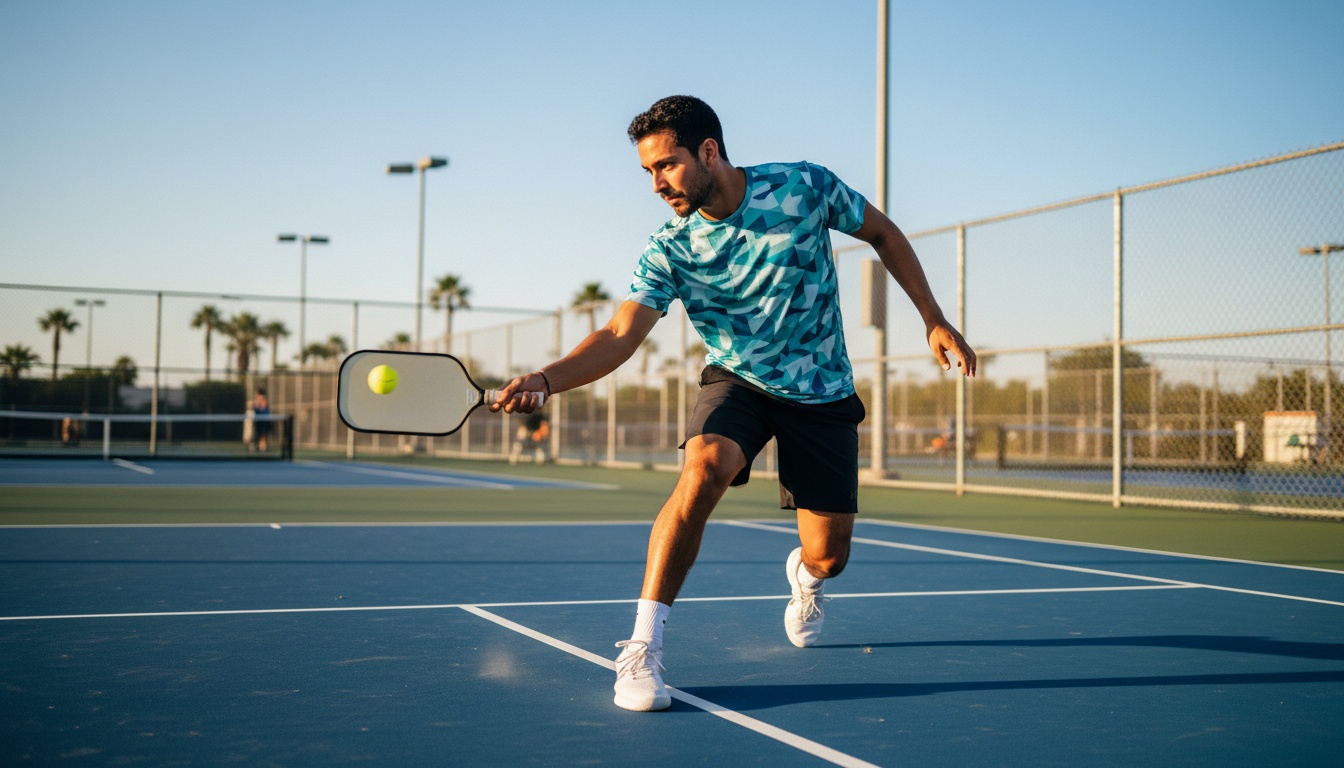
Power: This is where the Edge BluCore Pro earns its price. The head-heavy balance (235mm) combined with the foam core's pop means baseline drives have more pace than you'd expect from a 14mm paddle. Shots that opponents comfortably returned off previous paddles were getting scrambled — partly from the extra pace, partly from the sharper spin angle off the 18K face. The elongated shape also gives you extra reach on wide balls without having to lunge, which changes the risk calculation on shots you'd normally let go.
Spin: The 18K triaxial carbon face delivers. On topspin serves and third-shot drives, the ball grabs the face and kicks off at a sharper angle than paddles with 12K or standard textured carbon surfaces. Topspin serve bounce kicks were consistently more aggressive during testing — opponents at the baseline adjusted their positioning within a few points. That's a measurable court advantage, not spec-sheet noise.
Control — where the tradeoffs show up: The 235mm head-heavy balance is the honest caveat here. At the kitchen, during rapid dink exchanges, that extra forward mass works against quick wrist redirections. Paddle speed — how fast you can redirect a speed-up attack — is slightly slower than paddles balanced around 215–220mm. Players whose game relies on soft hands and patient kitchen rallies will feel this. It's not a fatal flaw, but it's real.
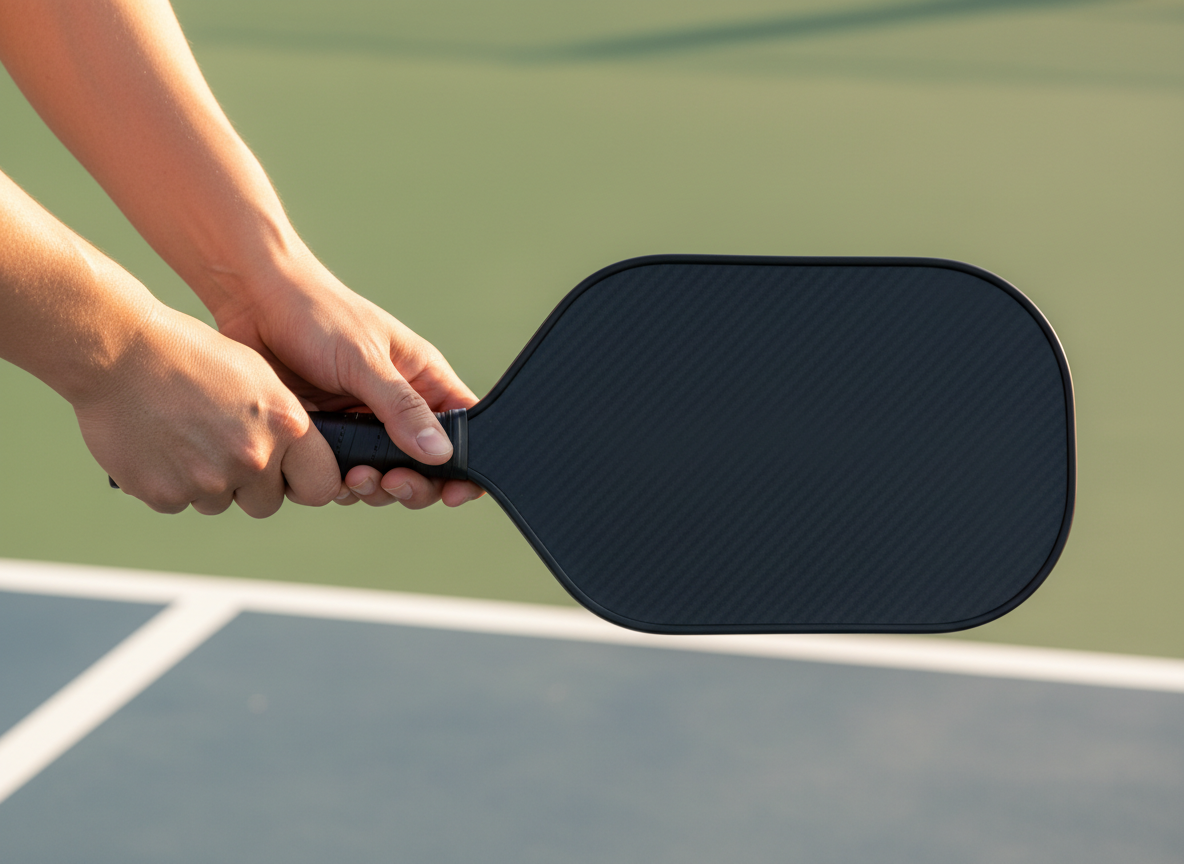
Vibration dampening: Excellent. After a full 4-hour outdoor session, elbow and wrist fatigue was minimal compared to same-duration sessions on polypropylene-core paddles of similar weight. If you play 3+ times per week and have any history of forearm tightness, this is a meaningful benefit.
Diadem Edge BluCore Pro vs CRBN 3 TruFoam Genesis vs JOOLA Perseus Pro IV
| Feature | Diadem Edge BluCore Pro | CRBN 3 TruFoam | JOOLA Perseus Pro IV |
|---|---|---|---|
| Price | $249.95 | $279.99 | $249.95 |
| Core / Thickness | BluCore foam, 14mm | TruFoam, 14mm | Honeycomb + Hyper-Foam, 16mm |
| Face material | 18K Triaxial Carbon | T700 Raw Carbon | Textured Carbon |
| Weight (avg) | 8.0 oz | 8.25 oz | 8.1 oz |
| Handle length | 5.7" | 5.5" | 5.5" |
| Grip circumference | 4.125" (small only) | 4.125" (small only) | 4.25" (medium) |
| Return policy | 30-day trial | Standard | Standard |
| Best for | Power + reach, two-handed BH | Touch + spin balance | All-court aggression |
Where CRBN 3 TruFoam Genesis wins: Touch and feel. CRBN's TruFoam tuning skews slightly more toward control than the Diadem. Players who want power AND soft dinks from the same paddle get more balance out of the CRBN — but they pay $30 more for it. If kitchen play is 50%+ of your game, that premium is worth it.
Where JOOLA Perseus Pro IV wins: Accessibility. The 4.25" medium grip fits players with larger hands that the Diadem's small grip doesn't. The 16mm core also makes it inherently more forgiving on hard-hit volleys. And JOOLA's brand infrastructure — demo programs, replacement parts, wide retail availability — is more established in the US pickleball market than Diadem's current footprint.
Where Diadem Edge wins: Reach, spin potential, and value vs foam core peers. The 5.7" handle is the longest of the three — a real advantage for two-handed backhand players. The 18K carbon face spins more aggressively than T700 raw carbon or standard textured carbon. And at the same price as the Perseus Pro IV ($249.95), Diadem delivers a foam core that JOOLA doesn't.
Who Should Buy This Paddle (and Who Shouldn't)
Buy it if:
- You're 3.5+ and your game leads with power and spin over soft touch at the kitchen
- You have a tennis background and use a two-handed backhand — the 5.7" handle accommodates it better than anything else in this comparison set
- Your forehand drive is your primary weapon and you want more aggressive spin off it
- You want a risk-free trial — the 30-day return window lets you test this in real match play without a permanent commitment
Skip it if:
- You're a kitchen-first player whose game lives at the NVZ in dink rallies — the head-heavy balance works against rapid wrist redirects and reset shots
- You have medium or large hands — 4.125" small grip is the only option, and adding an overgrip changes the feel
- You're a beginner still building mechanics — at 8.0 oz with a forward balance, this paddle amplifies errors rather than forgiving them
"Diadem's tennis heritage shows in the Edge. That 5.7-inch handle and head-heavy balance are design choices you'd see on a premium tennis racket — built for players with full strokes who want reach and leverage. If your game is patient dink rallies, this paddle will frustrate you. If you're hitting power drives and two-handed backhands, it might be exactly right." — Grub, FORWRD co-founder
Complete Your Setup
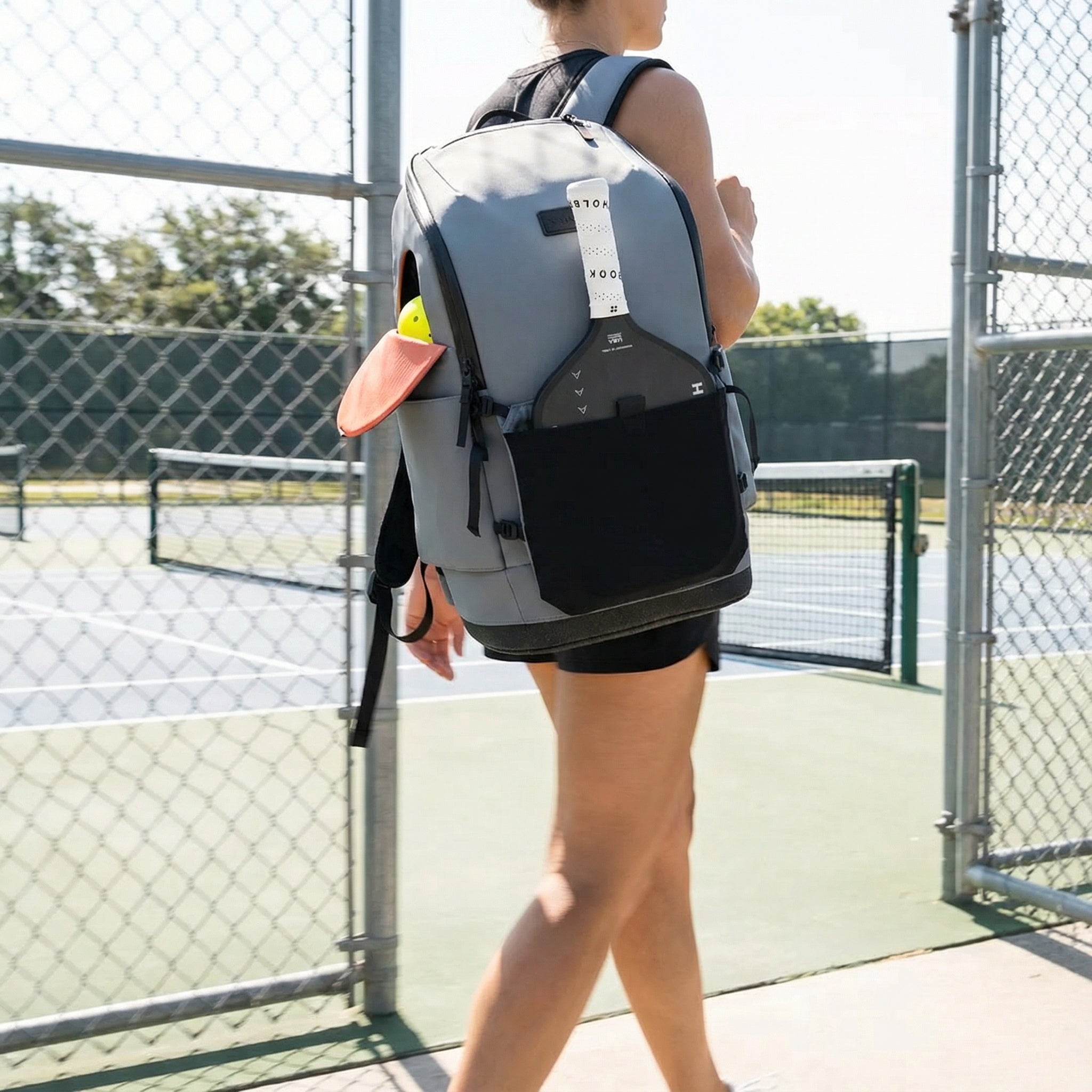
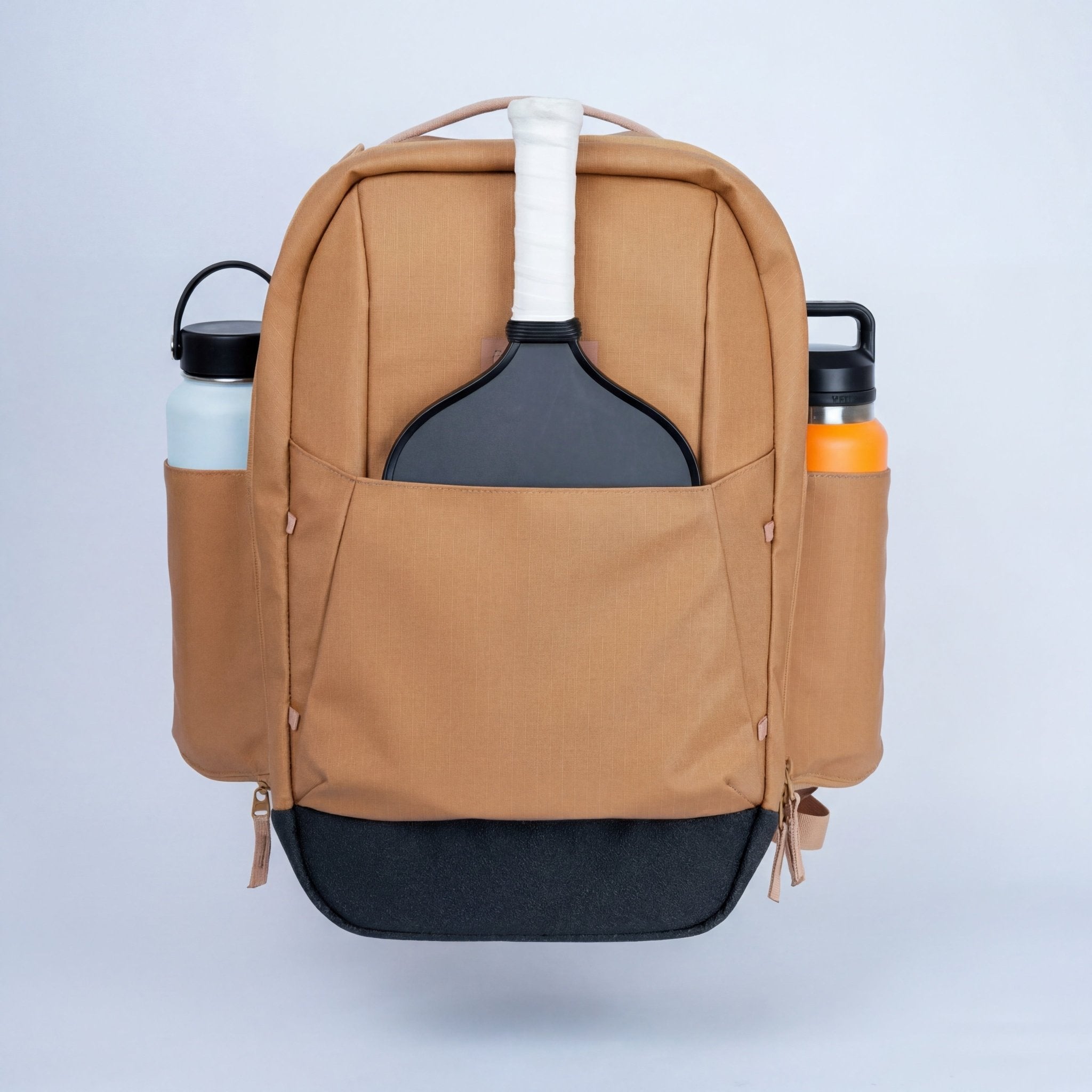
Got your paddle sorted? The next question is where to carry it. The Court Ranger V2 ($195) fits up to 3 paddles in its modular sleeve system with a 16” padded laptop compartment and YKK AquaGuard zippers built for outdoor conditions. For tournament-day capacity — multiple paddles, a change of clothes, laptop, and snacks for 6+ hours — the Court Caddy ($325) is built for exactly that.

FAQ: Diadem Edge BluCore Pro 14mm
Is the Diadem Edge BluCore Pro good for beginners?
No. At 8.0 oz with a head-heavy 235mm balance point, this paddle amplifies errors rather than forgiving them. Beginners are better served by a lighter, more balanced paddle in the 7.5–7.8 oz range with a standard-length handle.
How does the 18K carbon fiber face differ from 12K carbon?
18K carbon has more carbon tows woven per square inch, creating a denser, rougher surface texture. More texture means more friction at ball contact — which translates to more spin on groundstrokes and serves. It's a real difference, not a spec-sheet claim.
Does the Diadem Edge BluCore Pro come in different grip sizes?
No. The Edge BluCore Pro is only available in a 4.125” small grip. Players with medium or large hands can add an overgrip for thickness adjustment, though this softens the feel slightly. If grip sizing flexibility matters, the JOOLA Perseus Pro IV (4.25” medium) is the better option.
Is the Diadem Edge BluCore Pro legal for tournament play?
Yes. The paddle is USAP-approved as of July 2026 and legal for sanctioned USA Pickleball tournament play.
How does the Diadem Edge compare to the CRBN 1 TruFoam Genesis?
The CRBN 1 TruFoam is more control-oriented — softer feel, better suited for kitchen rallies. The Diadem Edge is tuned for power: head-heavy, longer handle, more aggressive spin from the 18K face. Both use foam cores but are optimized for different playing styles. Choose CRBN for control; choose Diadem for power.
The Bottom Line: Buy It or Skip It?
The Diadem Edge BluCore Pro 14mm does exactly what it's designed for — and that's a narrower profile than most reviews will tell you. Power-first players at 3.5+ who play with full strokes, want two-handed backhand capacity, and need spin from their drives will find it punches above its $249.95 price. The 30-day trial means the answer to "is this paddle right for me?" can be tested on real courts instead of guessed from specs.
Kitchen players with quick-wrist games, or players with medium-to-large hands, should look at the JOOLA Perseus Pro IV or CRBN 3 TruFoam Genesis instead.
Try the Diadem Edge BluCore Pro — $249.95 at Pickleball Central →

Leave a comment
This site is protected by hCaptcha and the hCaptcha Privacy Policy and Terms of Service apply.