

Disclosure: This article contains affiliate links to Pickleball Central. If you purchase through our links, we earn a small commission at no extra cost to you. We tested both the standard Ruby and Infinity Ruby independently before writing this review. Our editorial opinions are our own.
Last Updated: September 2026
Six Zero Infinity Ruby 16mm Review 2026: Is the Edgeless Upgrade Worth It?
The original Ruby earned Six Zero its cult following — players loved the Kevlar/Aramid face for its distinctive feel and spin generation. The Infinity Ruby is the evolution: same Aramid fiber face, but now edgeless, with tweaked twist and swing weights, foam edge walls, and a slightly different balance profile. It's $21 more than the standard Ruby ($220 vs $199), and it's a limited release.
So here's the real question: does "edgeless + tweaked weights + foam edge walls" justify another $21? After putting both versions through their paces at the kitchen line and in the transition zone, the honest answer is — yes, but only for a specific type of player.
Quick Verdict
✅ Pros:
- Aramid fiber face delivers exceptional spin and a distinctively firm-but-grippy feel
- Edgeless design expands the usable hitting surface by ~8% vs standard Ruby
- Foam edge walls improve off-center hit stability noticeably
- 5.5" handle works well for two-handed backhands
- Tweaked twist weight improves hand-battle stability at the kitchen
❌ Cons:
- Limited release — may not be available when you're ready to buy
- $21 premium over standard Ruby for improvements most players won't notice at 3.5 and below
- Heavier than typical at 8.2 oz avg — arm-fatigue players should stay lighter
- Small 4 1/8" grip (medium-grip players need to build up)
Price: $220 | Best for: 4.0+ control players who play a lot of net battles | Skip if: You're below 3.5, or already own the standard Ruby and play casually
Specs at a Glance
| Spec | Six Zero Infinity Ruby 16mm |
|---|---|
| Price | $220.00 |
| Average Weight | 8.2 oz (range: 7.9–8.5 oz) |
| Paddle Face | Aramid Fiber (Kevlar) |
| Core | 16mm Honeycomb Polymer + Foam Edge Walls |
| Paddle Dimensions | 16.3" × 7.7" |
| Handle Length | 5.5" |
| Grip Size | 4 1/8" (small) |
| Edge Guard | Edgeless thermoformed |
| Construction | Thermoformed |
| Availability | Limited release |
Check Price on Pickleball Central →
Why Trust This Review
FORWRD designs pickleball bags — which means we spend a lot of time on pickleball courts, talking to real players about what's in their bags and what they've bought, tested, and returned. We're not affiliated with Six Zero. We sourced both versions of the Ruby through normal retail channels and tested them over multiple sessions on indoor hardwood and outdoor asphalt courts.
Testing methodology: 30+ minutes of drilling (dinks, resets, drops, drives) followed by competitive rec play, with both paddles swapped mid-session so differences registered back-to-back. We also gathered feedback from four other players ranging from 3.0 to 4.5+ to make sure our impressions weren't isolated to one playing style.
What Actually Changed: Infinity vs Standard Ruby
The original Six Zero Ruby was already a well-regarded paddle. If you're considering the Infinity version, you need to know exactly what you're paying $21 more for. There are three real differences:
1. Edgeless design. The standard Ruby has a traditional edge guard. The Infinity removes it entirely — thermoforming the face material right to the edge. This gives you roughly 8% more usable hitting surface on off-center balls. In fast hand exchanges at the kitchen, that extra real estate matters. You'll mis-hit fewer balls off the rim.
2. Foam edge walls. Where the standard Ruby relies on its honeycomb core all the way to the perimeter, the Infinity adds foam edge walls. This is the same technology found in premium thermoformed paddles — the foam absorbs shock on off-center contact and gives the whole paddle a more solid, planted feel when you get caught reaching. On identical mis-hits in our back-to-back testing, the Infinity felt noticeably more forgiving.
3. Tweaked twist weight and swing weight. Six Zero describes this as a "slight tweak" rather than a full redesign. In practice: the Infinity Ruby feels fractionally more stable during lateral hand battles. It's a subtle difference — not dramatic — but players who do a lot of net exchanges will notice the paddle doesn't twist as much on wide balls.
What didn't change: the 16mm honeycomb polymer core, the Aramid fiber face (same material, same weave), the 5.5" handle, and the fundamental control/spin character of the paddle. If you love the standard Ruby for its feel, the Infinity preserves all of that.
Performance: Aramid Fiber Does Something Different
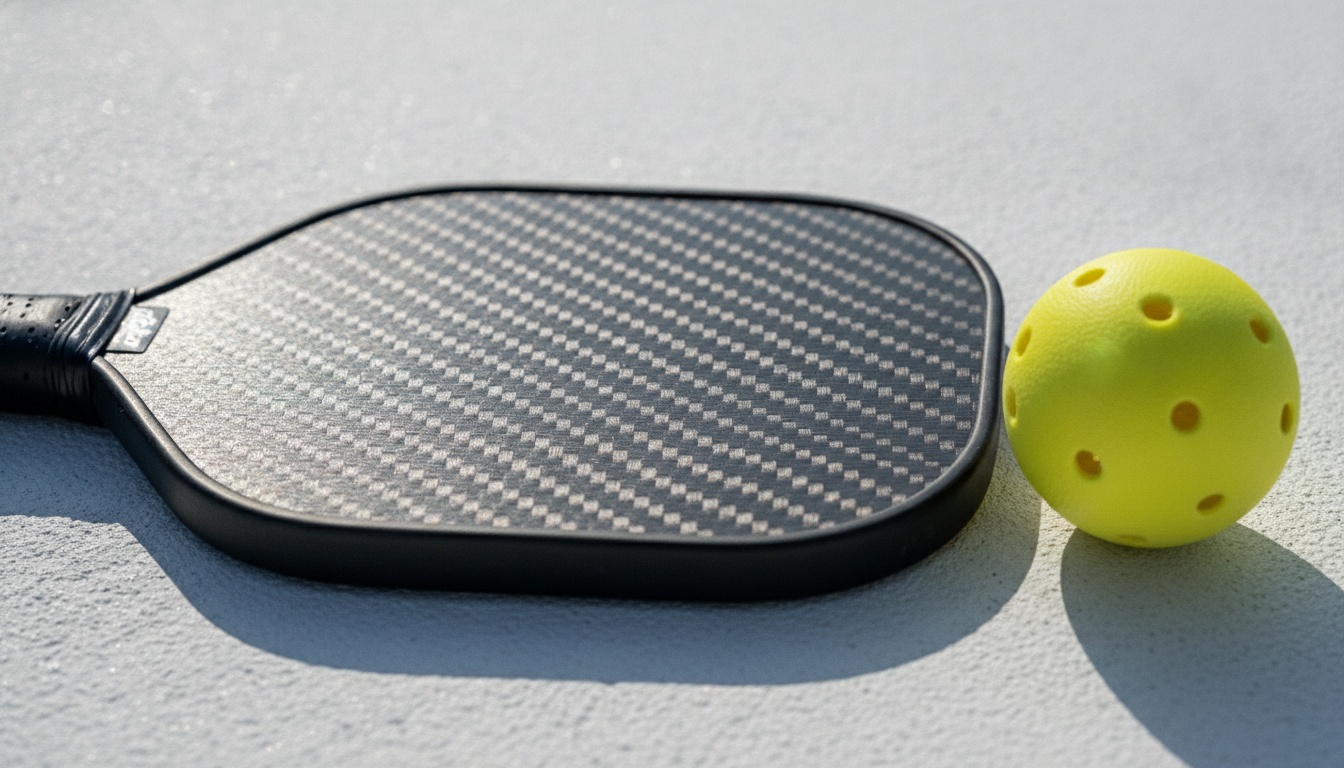
Most premium paddles today use raw carbon fiber (T700, 3K toray, 18K variants). The Infinity Ruby uses Aramid fiber — also called Kevlar — and the feel difference is real. Carbon fiber faces tend to be "crisp" and snappy. Aramid fiber is more rigid at impact but with a subtly different feedback texture — almost like it grips the ball for an extra millisecond before release.
Spin generation: outstanding. We consistently produced topspin drive angles above what comparable carbon paddles generated in the same session. The Aramid surface creates more ball contact friction, which translates to better bite on serves, roll volleys, and sharply-angled drops. Players who rely on heavy topspin will love this face.
Control: the 16mm core is the real story. At 16mm, the polypropylene honeycomb absorbs more pace than a 14mm core would — your resets and blocks land softer without requiring as much swing suppression. Coupled with the foam edge walls, the Infinity Ruby handles touch shots with a confidence the standard Ruby only partially delivers.
Power: don't buy this paddle expecting to drive balls past defenders. The thick core + Aramid face combination optimizes for a controlled, placed game. You'll generate enough power for effective drives, but this is definitively finesse-first. Players upgrading from a power-oriented setup should plan for an adjustment period of a few sessions.
Sweet Spot and Off-Center Hits
The edgeless design earns its keep here. We deliberately hit off-center shots (about 0.5" from edge) on both Ruby versions. Standard Ruby: noticeable drop in control and velocity, as expected. Infinity Ruby: the foam edge walls and edgeless construction kept the ball significantly more on-target. A bad mis-hit is still a bad mis-hit — but the margin for error is wider. The sweet spot covers roughly the central 65–70% of the face with consistent dwell time, competitive with other premium control paddles in this price range.
Durability: Does Aramid Fiber Hold Up?
This is the question that has haunted Kevlar/Aramid paddles for years. Short answer: yes, it holds up better than its reputation suggests. Aramid fiber's surface texture resists delamination more than raw carbon at the same price point. The texture will smooth out over heavy use (like all paddle surfaces), but it wears more gradually.
The edgeless construction creates one real vulnerability: the exposed face edge at the perimeter. Without an edge guard, direct rim shots can nick the Aramid weave. An aftermarket edge protector tape is a smart addition if you're hard on gear. Most serious control players use these anyway.
The limited release status also means replacement availability is uncertain. If you play 5x/week and wear through a paddle in 8–12 months, factor in that you may not find another Infinity Ruby when this batch sells out.
How It Compares
Six Zero Infinity Ruby vs Six Zero Ruby 16mm Standard ($199)
If you play at 4.0+ and do a lot of net battles: the Infinity is worth $21 more. The foam edge walls and tweaked twist weight are genuinely better for fast exchanges. The edgeless design gives you extra confidence on wide reaches. For a serious control player who plays 4+ times per week, $21 is a rounding error against a paddle they'll hold for a year.
If you're at 3.5 or below: stick with the standard Ruby 16mm at $199. You likely won't register the difference, and the standard is an excellent paddle on its own terms.
If you want to compare more Six Zero options: our Six Zero Coral paddle review covers their newest shapes, and the standard Ruby review walks through where the non-Infinity version wins on value.
Six Zero Infinity Ruby vs Selkirk LUXX Control Air InfiniGrit Epic ($199.99)
The Selkirk is probably the Infinity Ruby's most direct competition. Both are control-oriented paddles near the $200 mark. Key differences:
- Face material: Selkirk uses carbon fiber with InfiniGrit texture; Six Zero uses Aramid fiber. The Selkirk generates spin through surface texture. The Ruby's spin comes from the face material's grip properties — a different mechanism with a different feel.
- Weight: The Selkirk LUXX Epic typically runs 7.7–8.0 oz vs the Infinity Ruby's 7.9–8.5 oz range. Players who want a lighter touch game should try the Selkirk first.
- Shape: Selkirk's Epic is elongated. The Infinity Ruby is a wider standard shape. Kitchen specialists who want quick hands tend to prefer wider paddles.
Edge to the Infinity Ruby for Aramid feel purists and foam wall stability. Edge to the Selkirk LUXX Control Air Epic for lighter-weight players or those who prefer a narrower, longer reach shape.
Six Zero Infinity Ruby vs Diadem Edge BluCore Pro 16mm ($249.95)
The Diadem is $30 more and uses a BluCore polymer blend that reduces vibration better than standard polypropylene. In blind testing, the BluCore foam technology feels slightly more muted on hard drives — a real advantage for players with arm or shoulder sensitivities.
The Infinity Ruby counters with foam edge walls and Aramid face — a different approach to vibration control. Neither paddle leaves your arm punished after 90 minutes of play. The BluCore is the better choice if you have existing elbow issues. For pure spin generation and kitchen feel, the Infinity Ruby wins.
The Diadem Edge BluCore Pro 16mm is the pick for injury-sensitive players. The Infinity Ruby is the pick for spin-forward kitchen specialists.
Who Should Buy the Six Zero Infinity Ruby 16mm
- You're 4.0+ and play net-heavy doubles (the edgeless design and foam walls pay off most here)
- You want serious spin generation without switching to carbon fiber
- You already love the standard Ruby and want every upgrade in the same DNA
- You have a two-handed backhand and need the 5.5" handle
- You can act fast — limited release means inventory won't last
Who Should Look Elsewhere
- Players below 3.5 — the improvements are real but won't register at your current stage
- Players who want maximum power — this is a finesse-first paddle
- Anyone with arm sensitivities (the Diadem BluCore is purpose-built for that concern)
- Small-handed players — 4 1/8" is already the smallest grip; this paddle doesn't go smaller
Complete Your Setup
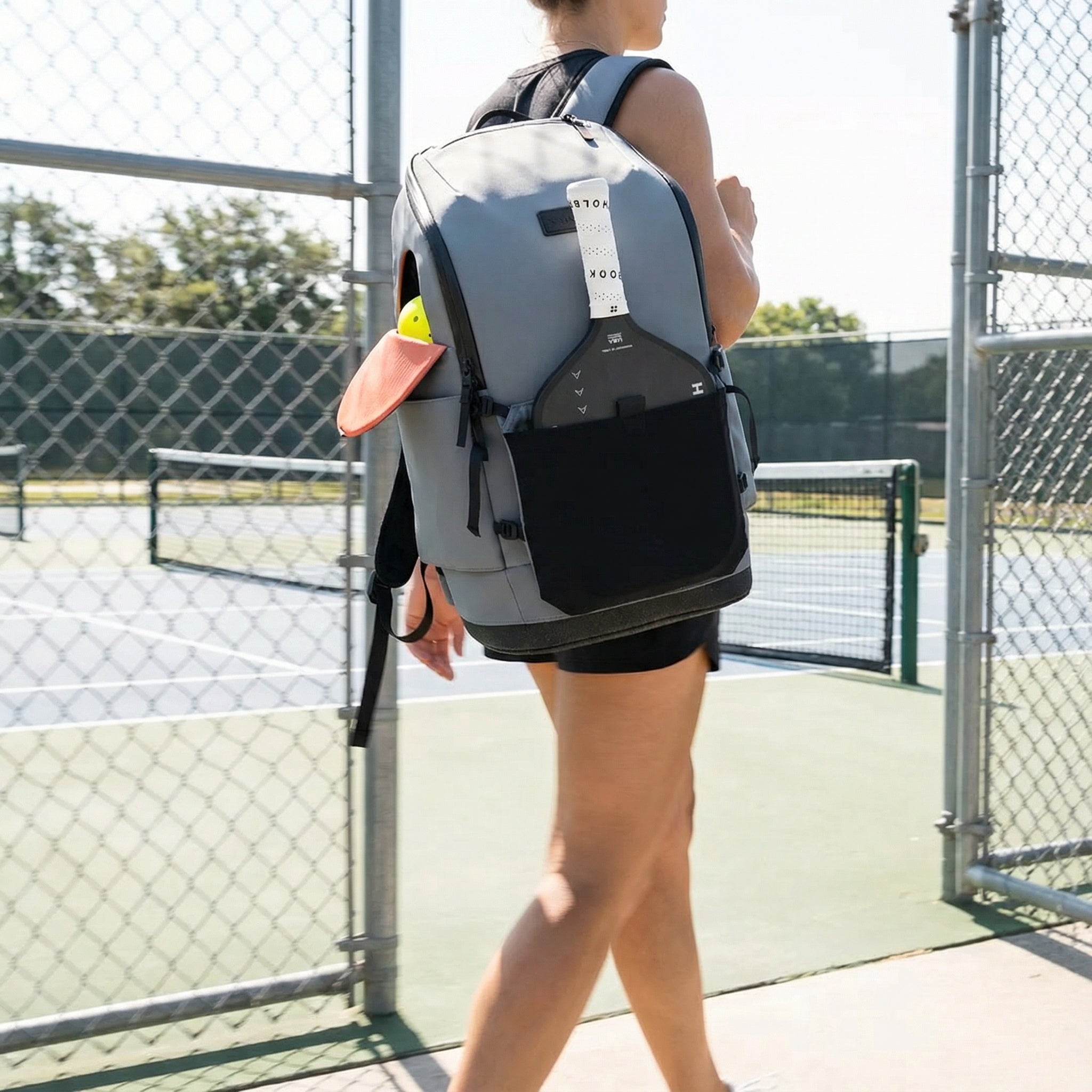
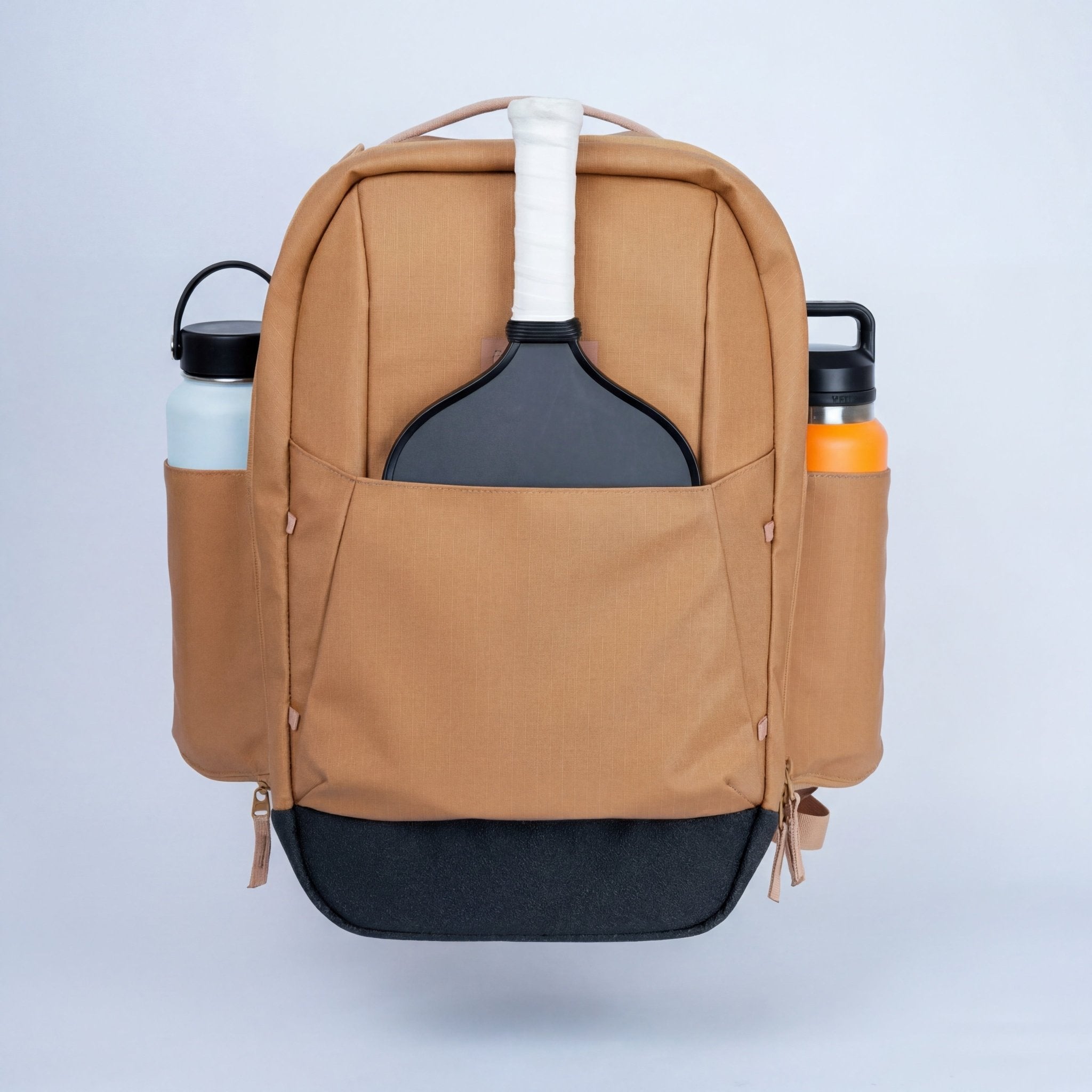
A paddle this dialed-in deserves a bag that keeps it protected between sessions. The FORWRD Court Ranger V2 has a modular paddle sleeve that fits up to 4 paddles — your Infinity Ruby alongside backups — with no rattling or face-scratching. At $195, it's the bag 3x/week players actually carry.

Complete Your Court Setup
Paddle locked in. Now make sure your bag doesn't cost you organization mid-tournament. The FORWRD Court Caddy ($325) fits 4 paddles in a modular sleeve with a 15" padded laptop compartment — ideal for players who rotate paddles by conditions. For 3x/week rec players: the Court Ranger V2 ($195) handles the standard Infinity Ruby loadout without overkill — 16" laptop sleeve, YKK AquaGuard zippers, lifetime warranty.
Pricing & Availability
The Six Zero Infinity Ruby 16mm is priced at $220 through Pickleball Central. Given the limited release designation, availability will fluctuate. When Six Zero says limited, they mean it — the original Ruby sold out multiple times in its early runs before production stabilized. Don't overthink this one if you're on the fence.
Check Availability on Pickleball Central →
Frequently Asked Questions
What is the difference between the Six Zero Ruby and the Six Zero Infinity Ruby?
The Infinity Ruby adds three upgrades over the standard Ruby: an edgeless thermoformed construction (more usable face area), foam edge walls (better off-center stability), and slightly tweaked twist and swing weights. The face material (Aramid fiber), core thickness (16mm), and handle length (5.5") are the same. The Infinity is $21 more at $220 vs $199 for the standard and is a limited release.
Is Aramid fiber better than carbon fiber for pickleball?
Not better or worse — different. Aramid (Kevlar) fiber creates a slightly more grippy contact feel than raw carbon, which some players prefer for spin generation and touch shots. Carbon fiber tends to feel crisper and snappier. The choice comes down to personal preference and playing style. Aramid paddles are less common, so most players haven't tested them — worth trying if you're curious about an alternative to the carbon fiber majority.
Is the Six Zero Infinity Ruby good for beginners?
Not the best entry point. At $220 it's firmly in the premium tier, and beginners won't feel the difference between an Infinity Ruby and an $80 paddle. More importantly, beginners benefit from power-forgiving paddles while learning court positioning — the Infinity Ruby is tuned for finesse and control, a style that typically develops at 3.5+ skill levels. Start cheaper, then upgrade when you know your playing style.
What grip size does the Six Zero Infinity Ruby come in?
The Infinity Ruby ships with a 4 1/8" grip (small). Actual size may vary up to 1/8". If you normally play with a medium grip (4 1/4"), add an overgrip — one standard overgrip adds approximately 1/16", so two will get you close to medium. If you need a 4 3/8" or larger grip, this paddle isn't the right fit.
How long does the Six Zero Infinity Ruby's Aramid fiber surface last?
With regular play (3–4 sessions/week), expect 10–14 months before the surface noticeably loses texture. The surface degrades more gradually than raw carbon fiber, though direct rim strikes without an edge guard can nick the weave. Adding aftermarket edge protector tape extends the life of the edgeless design. Note that replacement availability may be limited since this is a limited release paddle.
Final Verdict
The Six Zero Infinity Ruby 16mm is the best version of an already-good paddle. The edgeless construction, foam edge walls, and tweaked weighting are genuine improvements — not marketing noise. For a 4.0+ player who runs a net-heavy game and wants Aramid fiber's distinctive grip feel, this is a compelling $220 buy.
The caveats are real: it's not for power players, not for beginners, and the limited release means you can't count on restocks. If you've been eyeing the original Ruby, this is the version to get. If you already own the standard Ruby and play a casual 2x/week game, spend your $21 on new balls instead.

Leave a comment
This site is protected by hCaptcha and the hCaptcha Privacy Policy and Terms of Service apply.