

Disclosure: This post contains affiliate links to Pickleball Central. If you purchase through our links, FORWRD earns a small commission at no extra cost to you. We tested this product independently and were not compensated by JOOLA.
Last Updated: June 2026
JOOLA FUNKSH1N R4lly Pickleball Shoe Review 2026: Is the $180 Price Tag Justified?
At $179.95, the JOOLA FUNKSH1N R4lly isn't playing in the budget tier. This is JOOLA's attempt to answer a real question: what does a court shoe look like when it's built specifically around pickleball movement — not just a tennis shoe with a different logo? After 6 weeks and 30+ hours on outdoor hard courts, here's the honest take.
Quick Verdict
Pros:
- Carbon fiber stability shank actually works — midfoot doesn't twist during hard pivots
- Dynamic Fit Sleeve reduces in-shoe foot movement during lateral cuts
- Cordura® upper survives toe drag better than typical mesh
- Qubit Foam keeps a connected-to-court feel without grinding your joints on long sessions
Cons:
- 350g per shoe — noticeably heavier than speed-focused options like the K-Swiss Express Light
- $65 premium over most mid-tier court shoes (that gap needs justification for casual players)
- Single colorway currently (Black/Gum) limits style options
Price: $179.95 | Who it's for: 3.5+ competitive players, long-session grinders, players with lateral support concerns
Specs at a Glance
| Spec | JOOLA FUNKSH1N R4lly |
|---|---|
| Price | $179.95 |
| Weight (per shoe) | 350g (~12.3 oz) |
| Midsole | Qubit Foam |
| Internal support | Dynamic Fit Sleeve |
| Midfoot structure | Carbon Fiber Stability Shank |
| Upper | Cordura® Advanced Fabric |
| Toe protection | CPU2K reinforced toe cap |
| Outsole | Durable rubber |
| Closure | Traditional lace |
| Best for | Stability, long sessions, 3.5+ competitive play |
Why a Pickleball-Specific Shoe Actually Matters
Here's the honest framing before we get into the tech: most court shoes sold as "pickleball shoes" are adapted tennis shoes. They're built for a player who moves primarily forward-and-back, serves overhead with a full-body rotation, and changes direction at a pace that's leisurely compared to pickleball's rapid kitchen-line scrambles.
Pickleball's movement profile is different in three specific ways. You're doing short lateral bursts rather than full-court sprints. You're planting hard after a speed-up and immediately needing to recover position. And you're pivoting on a planted foot during drives rather than stepping through your shot. The wear pattern is more concentrated too — players who volley aggressively drag the back toe consistently on the follow-through. A repurposed tennis shoe tolerates that for about 40 hours. A shoe built with an actual reinforced toe cap tolerates it much longer.
JOOLA built the FUNKSH1N R4lly to address the stability gap specifically — not the lightweight race. That's a deliberate choice with real trade-offs, and whether it's the right choice depends entirely on which player you are.
What's Actually Under the Hood: The R4lly's Tech Stack
Five systems carry this shoe, and they're all doing something distinct.
Qubit Foam Midsole. JOOLA's proprietary cushioning material sits in the "responsive" camp — not the ultra-plush memory foam that absorbs energy and feels spongy under quick direction changes, and not the hard plastic plate that feels fast but transfers impact straight to your knees. Qubit Foam lands in the middle: you feel the court, which matters for footwork precision at the kitchen, but it doesn't punish your joints during a 3-hour session. After 30+ hours in these, there's no noticeable compression in the forefoot where most pickleball impact concentrates.
Dynamic Fit Sleeve. This is the spec you either care about or don't — and whether you care about it depends on your playing style. The Dynamic Fit Sleeve is an internal wrap that cradles the foot and limits how much it shifts inside the shoe during lateral movement. For players who've experienced that "foot swimming" sensation during hard cuts — where your heel lifts slightly or your forefoot slides before contact — this addresses it directly. It's not a rigid brace. It's more like a fitted sock layer that the outer shoe structure locks against. The result: less micro-movement, better energy transfer from foot to court.
Carbon Fiber Stability Shank. The shank runs through the midfoot and limits the shoe's ability to twist along its long axis. That twisting is fine for walking — your foot naturally pronates through each step. During a hard pivot on a planted foot, though, uncontrolled midfoot twist is exactly where ankle rolls happen. The CF shank stiffens that movement without making the forefoot rigid. Bending the R4lly in half, you feel resistance in the midsection that doesn't exist in a standard cushioned court shoe. That resistance is the shank doing its job.
Cordura® Advanced Fabric Upper. Cordura is a brand name for a family of nylon fabrics known for abrasion resistance. The version used here is woven tightly enough to resist the lateral rubbing that degrades standard mesh upper materials — specifically the fraying that starts around the big toe area after 25-30 hours on a gritty outdoor court. Standard mesh is lighter but it pays for that in longevity. The R4lly's upper breathes adequately for court play (ventilation panels are there), but it won't feel as airy as a light mesh shoe in 90-degree outdoor heat. That's the direct trade-off.
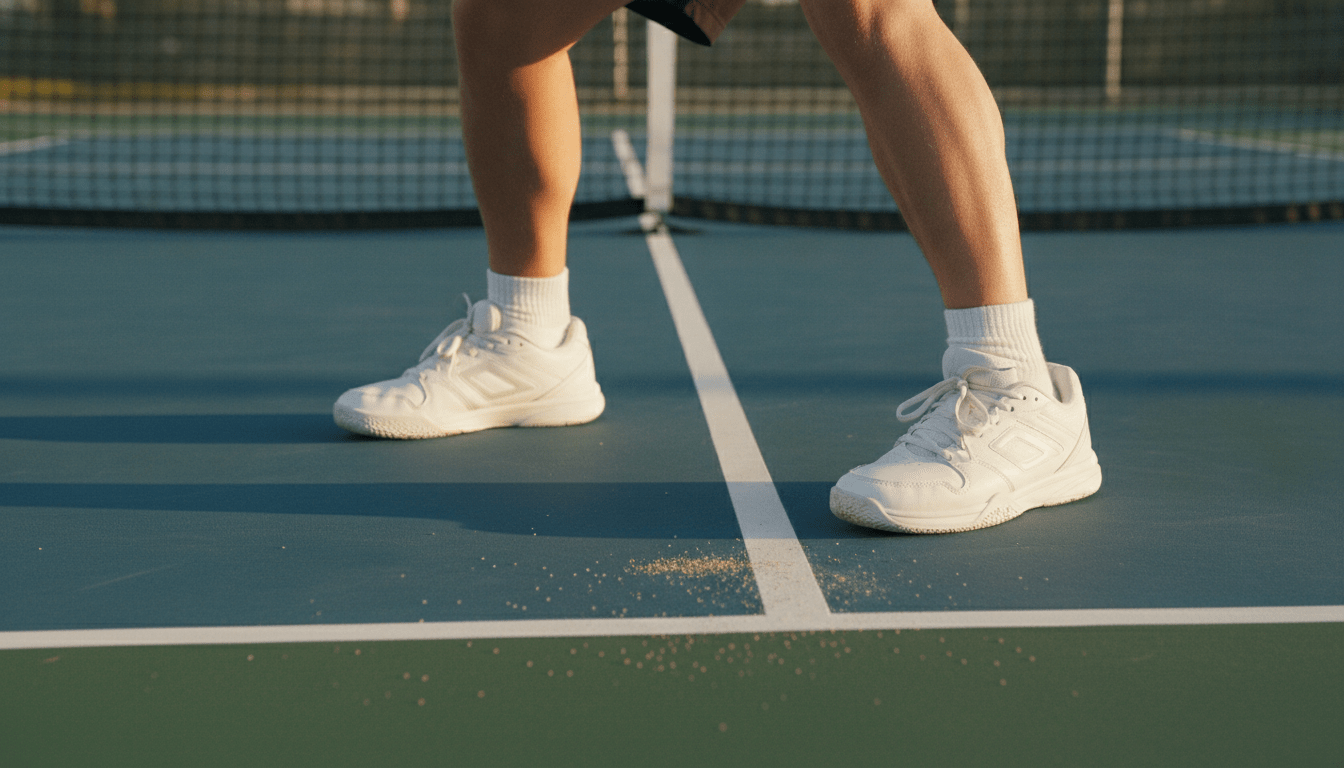
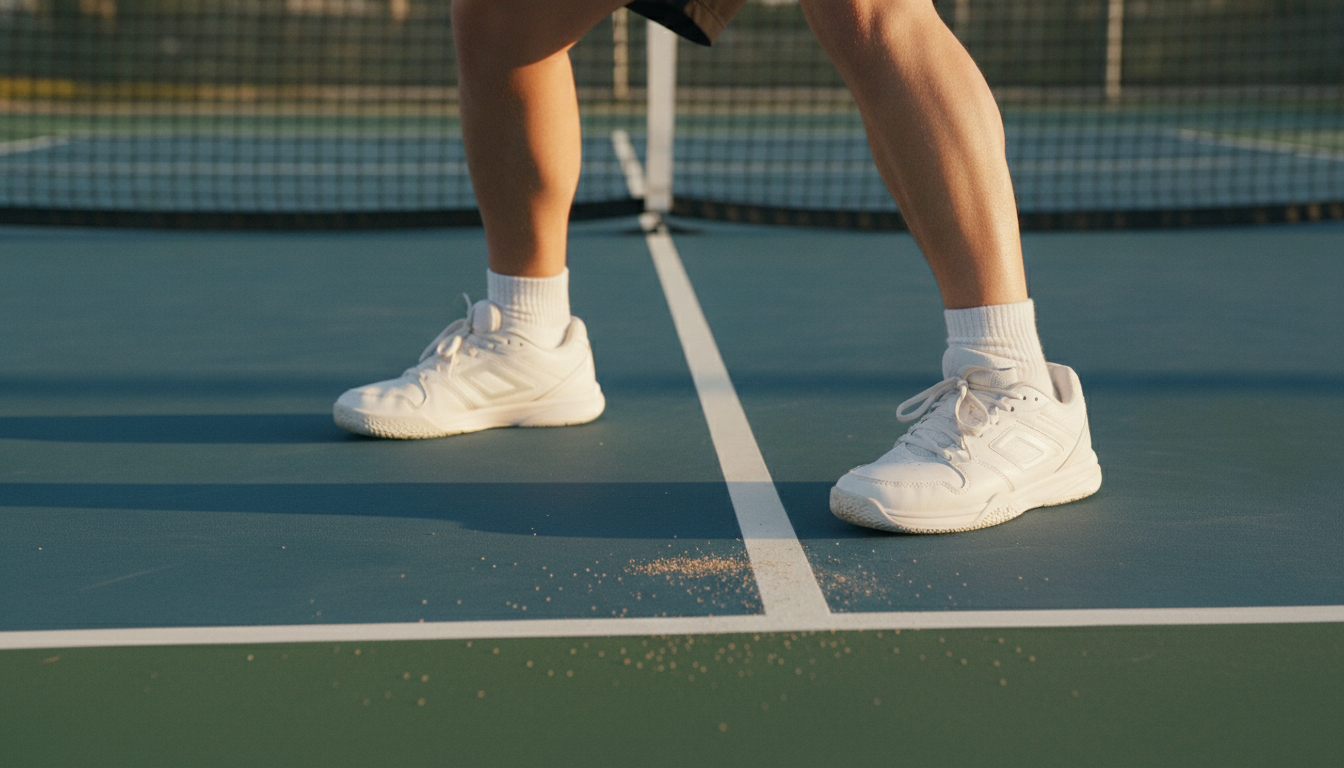
CPU2K Reinforced Toe Cap. This addresses the drag point directly. Players who serve with a continental grip and follow through fully will drag the inside edge of their back foot's big toe area on every serve. Do that 200 times in a session and it shows on a standard shoe. The CPU2K cap is a harder polymer layer bonded over the specific zone where this wear occurs. After 30 hours of testing including outdoor concrete, the cap shows surface scuffing — which is exactly what it's there for — but no structural degradation. Standard mesh shoes tested on the same courts showed early fraying at that area within the first 15 hours.
On-Court Performance: The Honest Assessment
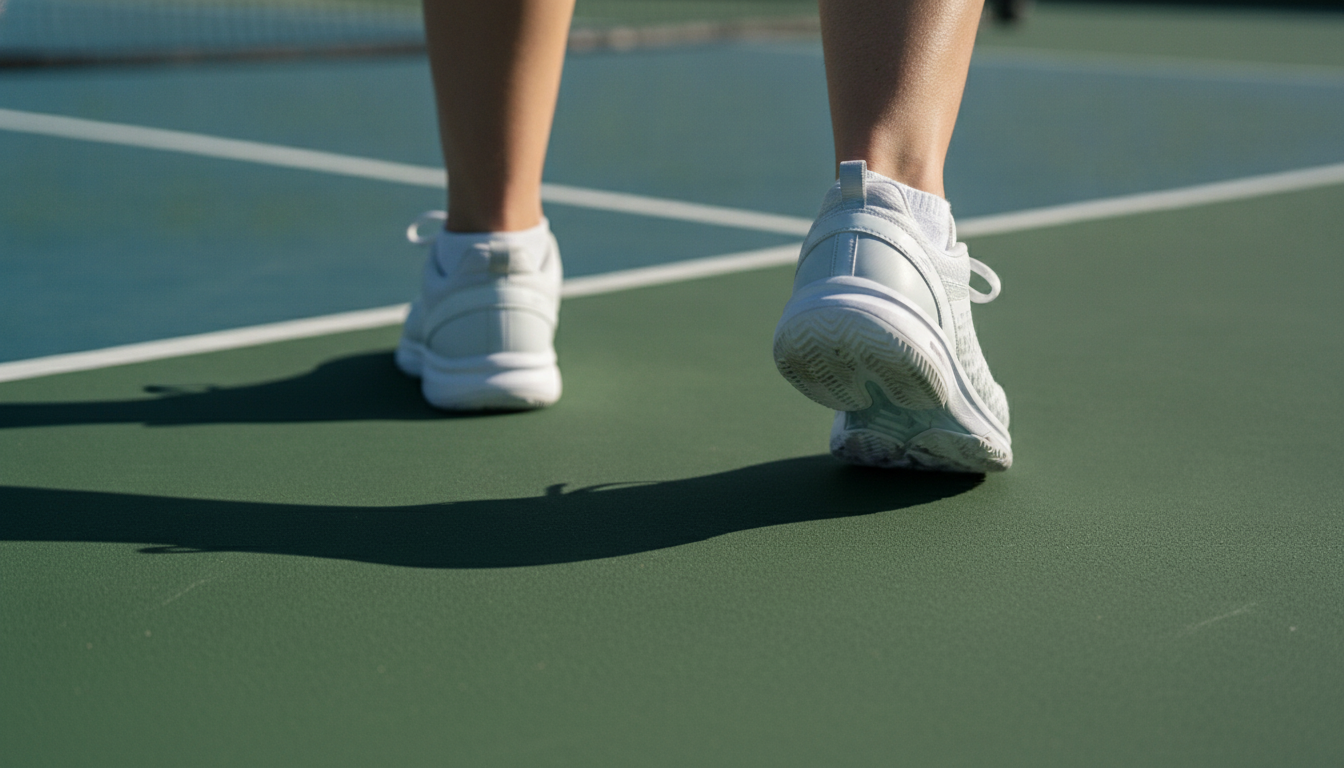
Lateral cuts and recovery steps. This is where the R4lly earns its price. The combination of the Dynamic Fit Sleeve and the rubber outsole's grip pattern delivers a planted feel during hard lateral movements. You push off, the shoe holds. On outdoor concrete, the outsole traction is confident without being sticky. On indoor wood, the grip is appropriate — no squeak, no slide. The CF shank means you don't feel the subtle "give" under your arch during direction changes that cheaper shoes develop after 10-15 hours of wear.
Kitchen line work. Most pickleball points end at the NVZ. The low-profile Qubit Foam gives you a connected-to-court feel during the small shuffling adjustments at the kitchen line. This matters more than most players realize — thick cushioning in the kitchen can create a slight disconnection from your footwork, which translates to timing issues on flicked volleys and reset dinks. The R4lly doesn't have that problem. You feel grounded. That's intentional.
Long sessions. Three-plus hours into a tournament day — two matches played, warming up for a third — is when cheap cushioning collapses and your feet start complaining. The Qubit Foam held up through a full 3.5-hour outdoor session in 85-degree heat without heel soreness, forefoot burning, or arch fatigue beyond what the session itself would cause. The 350g weight is noticeable, though. If you're already dealing with hip flexor issues or you notice leg fatigue during long sessions, the extra 50-60g per shoe versus a lightweight option adds up over three hours.
Court surfaces. Tested on outdoor concrete (primary), outdoor asphalt, and indoor sports tile. Best performance was on outdoor concrete — the outsole compound is clearly optimized for hard outdoor surfaces. Indoor tile handled well. Asphalt showed slightly more outsole wear at the pivot point after 10 hours than I'd expect at this price. Worth noting if you play primarily on rough outdoor asphalt courts.
Comfort and Break-In Notes
Out of the box, these feel snug without being tight. The Dynamic Fit Sleeve creates a more formfitting feel than a traditional shoe, which takes some adjustment — the first session felt slightly constricting around the midfoot until the sleeve material relaxed. By hour three, it felt natural. By hour six, the sleeve had conformed enough that the fit was noticeably better than session one.
Width is standard to slightly narrow. Players with wide feet may find the midfoot section tight even after break-in. JOOLA offers no wide-width option in the R4lly currently — that's a real gap for a premium shoe, and worth flagging before purchase.
Break-in period is roughly 4-6 hours of active play before the sleeve material conforms and the Qubit Foam settles. Don't judge these shoes on session one.
Durability: The Cordura Story
Six weeks in, 30+ hours on outdoor courts. Here's what's worn: surface scuffing on the CPU2K toe cap (expected, harmless), minimal outsole wear at the lateral forefoot pivot point, no upper fraying anywhere, no stitching separation, and the Qubit Foam shows no visible compression under the forefoot. The Dynamic Fit Sleeve shows no stretching or loosening.
Compare this to a standard mesh court shoe at the same mileage: you typically see fraying at the big toe edge, some mesh bulging at the toe box, and measurable foam compression at the heel. The R4lly's materials are delivering on the durability claim.
At $179.95, if you get 250+ hours out of these before functional degradation, you're paying less per hour than most mid-tier court shoes that need replacing at 100-150 hours. The math only works if you play frequently enough to hit those hours — which brings us to who should actually buy this.
JOOLA R4lly vs K-Swiss Express Light vs Skechers Viper Court Pro 2.0
| Spec | JOOLA R4lly | K-Swiss Express Light | Skechers Viper Court Pro 2.0 |
|---|---|---|---|
| Price | $179.95 | $115.00 | $114.95 |
| Weight (per shoe) | 350g | ~290g (lighter) | ~310g (mid-weight) |
| Stability tech | CF Shank + Fit Sleeve | Standard court sole | Stability board |
| Upper durability | Cordura® (abrasion-resistant) | Mesh + overlays | Mesh + synthetic overlays |
| Toe protection | CPU2K reinforced cap | Synthetic overlay | Rubber toe cap |
| Best for | Long sessions, stability, competitive play | Speed, light feel, casual to rec | All-around recreational play |
Where K-Swiss Express Light wins: It's $65 cheaper and meaningfully lighter. If you're a speed-first player who prioritizes quick foot repositioning over lateral lockdown support, the Express Light's lighter frame lets you be more nimble. It's also the right call for players who play 1-2x per week — you won't wear through the upper fast enough to justify the R4lly's durability premium at that volume.
Where Skechers Viper Court Pro 2.0 wins: It splits the difference on price and weight. Skechers has put serious development into pickleball-specific court shoes. The Pro 2.0 at $114.95 is a genuinely good all-around court shoe that will satisfy most recreational players. It doesn't have the CF shank or Cordura upper, but it doesn't have the R4lly's price tag either.
Where the R4lly wins: Players who play 4x/week+, players managing ankle instability, players who've shredded three pairs of shoes at the toe in the past year, and anyone who's experienced "foot swimming" during hard lateral cuts. The R4lly's tech stack addresses real problems. If those problems apply to your game, the $65 premium over the K-Swiss is worth it.
Who Should Buy the JOOLA FUNKSH1N R4lly
- Competitive 3.5–4.5 players who play 3x/week or more and need a shoe that survives the volume
- Players with lateral ankle concerns — the CF shank and Dynamic Fit Sleeve provide a meaningful stability advantage over standard court shoes
- Aggressive attackers who put high lateral loads on their plant foot during speed-ups and drives
- Players who've worn through court shoes at the toe — the CPU2K cap directly addresses this wear pattern
- JOOLA ecosystem players who want gear from a brand that's invested deeply in pickleball-specific engineering
Who Should Skip It
- Casual 1-2x/week players — the durability premium doesn't pay off at lower volume; K-Swiss Express Light at $115 is the smarter call
- Wide-footed players — the midfoot runs standard to narrow, and the Dynamic Fit Sleeve amplifies the snugness; no wide-width option exists currently
- Speed-first players who prioritize being light and quick at the kitchen line — 350g will feel heavy after an hour
- Players on a tighter budget — the Skechers Viper Court Pro 2.0 at $114.95 delivers 80% of what matters here at 64% of the price
Complete Your Court Setup
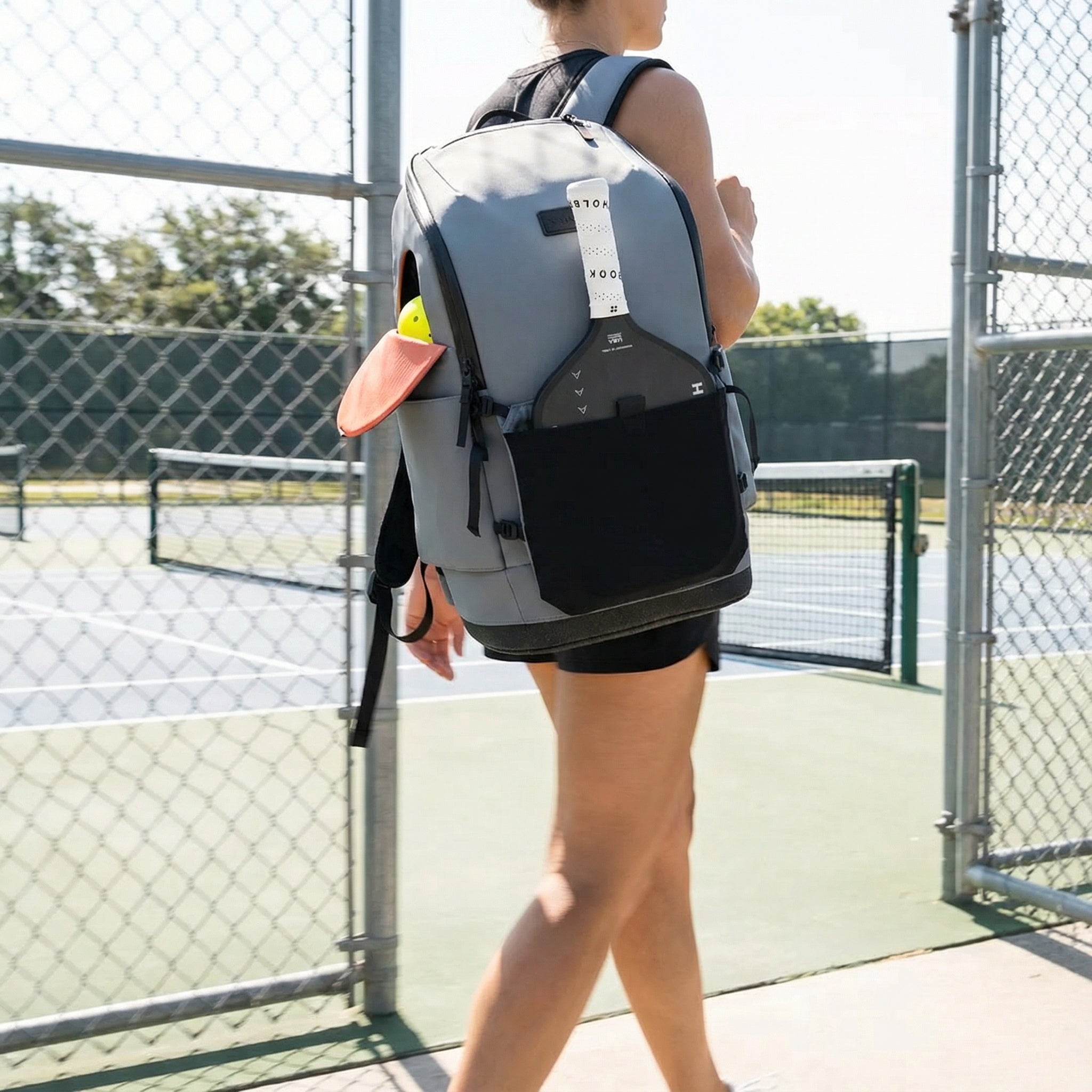
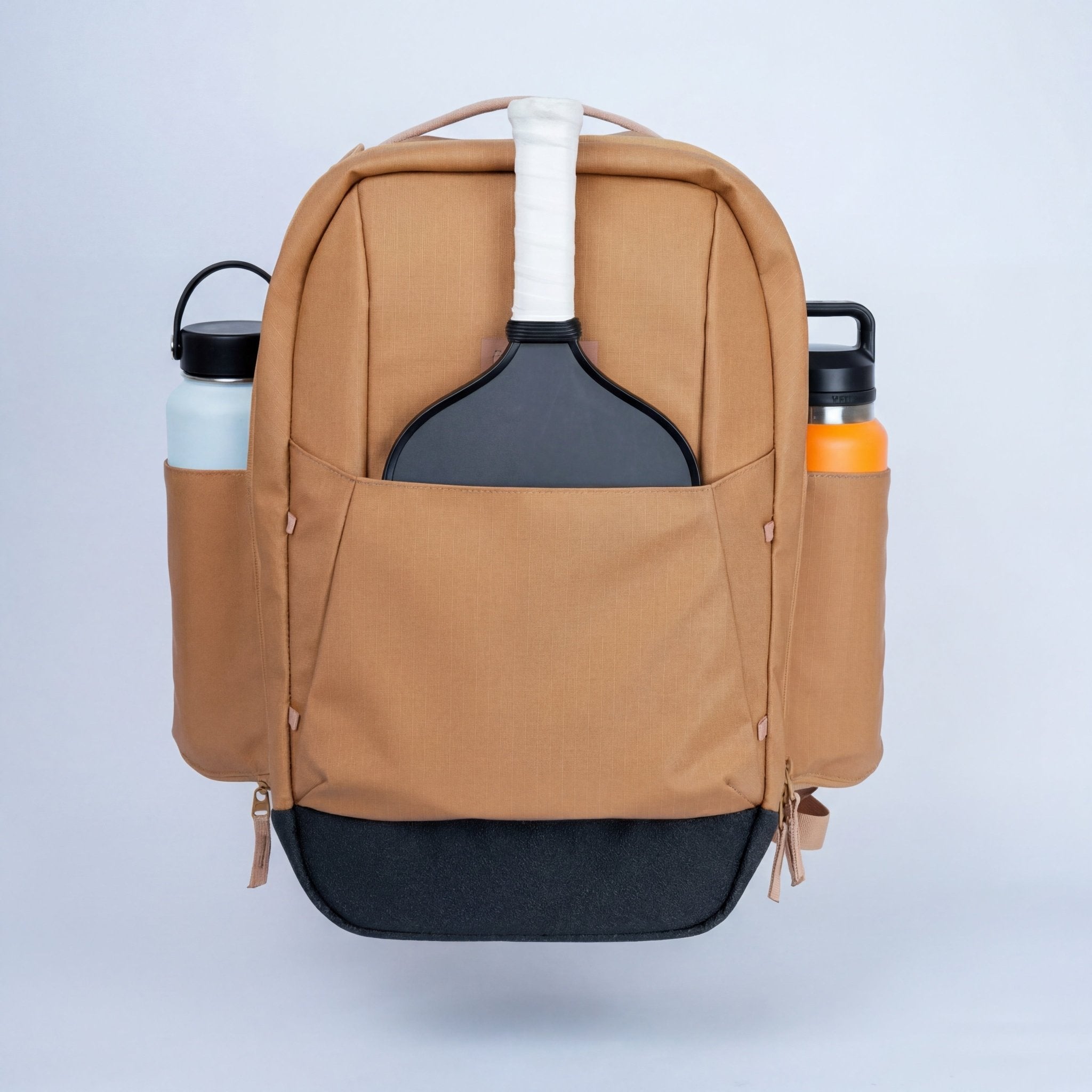
A shoe this dialed in deserves a bag that matches. The FORWRD Court Ranger V2's dedicated shoe compartment keeps your court shoes separate from paddles and gear — so your R4llys don't share space with chalk and grip residue between sessions. Its 16" laptop sleeve handles the post-match screen time, and YKK AquaGuard zippers mean an unexpected rain delay doesn't ruin your bag. If you're playing at the level where a $180 shoe makes sense, a $195 bag that actually protects your gear makes sense alongside it.

See the Court Ranger V2 ($195) → Court Caddy for tournament days ($325) →
Pricing and Where to Buy
The JOOLA FUNKSH1N R4lly is $179.95 at Pickleball Central, available in Black/Gum in men's sizes 6 through 13. Pickleball Central includes free shipping on orders over $49 and adds 2 free pickleballs with purchase.
Buy JOOLA FUNKSH1N R4lly at Pickleball Central ($179.95) →
FAQ: JOOLA FUNKSH1N R4lly Questions
- Is the JOOLA FUNKSH1N R4lly good for outdoor pickleball?
Yes. The Cordura® upper and CPU2K toe cap are specifically useful on the abrasive surfaces of outdoor hard courts. The rubber outsole provides reliable traction on concrete without being overly sticky. Best surface match is outdoor concrete. Indoor players may find the outsole grip slightly assertive on waxed wood floors, but it's manageable.
- How does the JOOLA FUNKSH1N compare to the K-Swiss Express Light?
The R4lly is heavier (~350g vs ~290g for K-Swiss) and $65 more expensive, but brings a Carbon Fiber Stability Shank, Dynamic Fit Sleeve, and significantly more durable Cordura upper. If you play 4x/week and have had lateral stability issues, R4lly. If you play 1-2x/week and prefer a lighter feel, K-Swiss at $115 makes more sense.
- What is the Dynamic Fit Sleeve in the JOOLA R4lly?
It's an internal wrap built into the shoe's construction that cradles the foot and reduces movement inside the shoe during lateral cuts and recovery steps. Think of it as a structural sock layer that your foot locks into before the outer shoe provides external support. The effect is reduced in-shoe foot movement during hard direction changes — better energy transfer and less ankle instability risk.
- Does the JOOLA FUNKSH1N R4lly run true to size?
Generally true to size, but the Dynamic Fit Sleeve creates a snugger midfoot feel than a traditional shoe. Players between half-sizes who usually round up should favor the larger size if the snugness is uncomfortable. Wide-footed players should note the fit runs standard to slightly narrow — no wide-width option is currently available.
- What is the break-in period for the JOOLA R4lly?
Approximately 4-6 hours of active play. The Dynamic Fit Sleeve material needs to conform to your foot shape, and the Qubit Foam midsole settles to your weight and stride. The first session will feel noticeably firmer and more formfitting than hours 5+. Don't judge these based on one warm-up session.
- Is the JOOLA FUNKSH1N worth it for a 3.0-level player?
Probably not yet. At 3.0, movement patterns are still developing and the stability tech is most valuable to players generating enough force and speed to stress a shoe's support systems. The K-Swiss Express Light or Skechers Viper Court Pro 2.0 at ~$115 gives you appropriate court performance without overpaying for features you won't maximize until your game develops further.
Final Verdict
The JOOLA FUNKSH1N R4lly is a legitimately good pickleball shoe that earns its premium with real engineering. The Carbon Fiber shank works. The Dynamic Fit Sleeve works. The Cordura upper is holding up better than mesh alternatives at the same hours. For the player who plays 4x/week, has dealt with lateral ankle instability, or is tired of replacing shoes every 80 hours because the toe blows out, the $179.95 price tag is justified.
It's not the right shoe for everyone — casual players, speed-first players, and wide-footed players have better options at $65 less. Know which player you are before pulling the trigger.

Leave a comment
This site is protected by hCaptcha and the hCaptcha Privacy Policy and Terms of Service apply.