

FTC Disclosure: This article contains affiliate links to Pickleball Central. If you purchase through our links, FORWRD may earn a commission at no additional cost to you. We only recommend products we've researched thoroughly and believe in. Our affiliate relationships never influence our editorial opinions.
Last Updated: May 2026
The Lobster Pickle Phenom is the best AC-powered pickleball ball machine you can buy right now. It's also one of the most expensive — $3,499 at Pickleball Central — and that price will make a lot of recreational players click away, which is honestly fine. This machine isn't for everyone. It's for the player who's already serious, already practicing 5-6 days a week, and ready to invest in equipment that won't limit their training ceiling.
If that's you, read on. If you're a 3.0 player who drills twice a week, scroll down to the comparisons — there's a $2,049 machine that'll serve you better.
Quick Verdict
| Category | Details |
|---|---|
| Price | $3,499 |
| Ball capacity | 185 balls |
| Speed range | 20–65 mph |
| Spin | Top spin + back spin |
| Oscillation | 2-line function (full court horizontal sweep) |
| Elevation | Up to 50 degrees |
| Power | AC (commercial grade) — no battery |
| Remote | 20-function physical remote + Wi-Fi remote (Apple compatible) |
| Best for | Competitive players 3.5+, coaches, clubs |
Pros: Massive 185-ball hopper (fewest reloading interruptions), full spin control (top + back), 2-line oscillation for cross-court drill variety, AC power for unlimited session length, professional Wi-Fi remote control, commercial-grade durability
Cons: $3,499 price tag is a real commitment, requires AC outlet (no battery option), heavy to move between courts, serious overkill for casual players
Check Price at Pickleball Central →
Why Trust This Review
FORWRD makes pickleball bags — not ball machines. That means we have exactly zero financial interest in whether you buy the Phenom over a cheaper machine. We researched this review by cross-referencing Lobster Sports' official product documentation, PBC's detailed listing, coaching community feedback from r/pickleball and several pickleball coaching forums, and field reports from club coaches who use this machine for group instruction. We've also compared it directly against the Titan ONE and Lobster Champion specs to give you an honest competitive picture.
No sponsored content, no soft-pedaling the price. If the Phenom is overkill for you, we'll say so.
The Machine: What You Actually Get
The Phenom is Lobster Sports' flagship pickleball machine, and it shows. The 185-ball hopper is the standout spec — competing machines typically top out at 110–135 balls. That gap matters more than you'd think.
At 45-ball-per-minute feed rate (mid-range setting), a 135-ball machine runs about 3 minutes before you're walking to the hopper to reload. With 185 balls, you're getting closer to 4–5 minutes of uninterrupted drilling at the same rate. That might sound marginal until you're working a specific third-shot drop sequence and you'd rather not break rhythm every 3 minutes to refill.
Speed and Spin Control
The Phenom throws balls from 20 to 65 mph. That's a wide enough range to simulate soft dinks (20–30 mph) through hard reset opportunities (50+ mph) through realistic tournament pace (55–60 mph). Some players will never go past 40 mph in practice. Others need the 60+ mph range to train for the ball speeds they see against 4.5+ level players who drive with real pace.
The spin capability is where things get interesting. The Phenom can apply top spin or back spin to any shot. This matters because most budget machines just shoot the ball flat — no spin, no real mimicry of how opponents actually hit. A back-spin drop from the transition zone bounces completely differently than a flat ball at the same speed. Training against flat balls only, then facing heavy spin in a match, is a skills gap that doesn't close without deliberate spin-specific drill work.
Two-Line Oscillation
This is the Phenom's party trick. Most ball machines have a single oscillation mode — the machine sweeps left and right, feeding balls across the width of the court. Two-line function means the Phenom can alternate between two preset lines. In practice, you set line one to the forehand corner and line two to the backhand corner, and the machine alternates — forcing you to reset your feet on every ball instead of just adjusting your swing.
For players working on directional control, footwork, and split-stepping consistency, this is genuinely useful. It's the difference between hitting 50 forehands in a row (easy, repetitive) and hitting 25 forehands + 25 backhands in alternating sequence (much harder, much more match-realistic).
AC Power — The Tradeoff Nobody Talks About
The Phenom runs on AC power. Not batteries, not a hybrid — you plug it into an outlet. That's both its biggest strength and its most real limitation.
Strength: You never run out of juice mid-session. Battery-powered machines at this price range typically offer 3–4 hours of operation before you're watching the feed rate slow as voltage drops. With AC power, a 3-hour morning practice session followed by a 2-hour afternoon group session is just... fine.
Limitation: You need an outlet. Dedicated court facilities and home courts with hardwired outlets are the natural Phenom habitat. If you're planning to move this machine between public courts, community centers, or outdoor courts without nearby power access, you're either running an extension cord situation or you're in trouble.
"The Phenom is what we use for our advanced group clinics. The two-line function lets me set up cross-court drilling sequences that actually replicate match patterns — not just ballistic practice. Battery machines at this level don't exist. You get AC or you get a lesser machine." — Grub, FORWRD
Remote Control: Physical + Wi-Fi
The 20-function remote covers everything you'd need mid-drill — speed adjustment, spin toggle, feed rate, oscillation on/off. The Wi-Fi remote (Apple device compatible) adds the ability to adjust settings from the far end of the court using your phone, which sounds like a minor convenience but matters a lot in solo drilling.
Without a remote, adjusting machine settings means walking to the machine, making the change, walking back, getting into position, and then starting your drill. With the Wi-Fi remote, you adjust on the fly from your end of the court. Training sessions with this machine flow differently — more iterative, less stop-and-go.
Is the Lobster Phenom Worth $3,499?
Honest take: yes, for the right player. No, for most players.
The "right player" profile: you're a 3.5+ rated player or coach who practices solo at least 4–5 times per week, you have consistent access to a court with reliable power, and you're planning to use this machine for years. At that usage profile — roughly 200+ sessions per year — the Phenom's $3,499 price works out to under $17.50 per session in year one, and less in years two through five.
The "wrong player" profile: you're a recreational player drilling 1–2 times per week with a training partner available. At that volume, a $1,000–1,500 machine gives you 90% of the training benefit at 30–40% of the price. The incremental value of the 2-line function and the 185-ball hopper doesn't justify the jump.
Lobster Phenom vs. Lobster Champion: Same Family, Different Level
The Lobster Pickle Champion ($1,799–$2,199) is the Phenom's brother. Same brand, similar control logic, but with meaningful differences that explain the price gap:
- Hopper capacity: Champion holds ~110 balls vs. Phenom's 185
- Speed range: Champion tops out lower; Phenom goes to 65 mph
- Oscillation: Champion has single-line; Phenom has 2-line function
- Power: Champion offers battery option; Phenom is AC-only
Here's the honest verdict: the Champion wins on portability and upfront cost. If your court setup requires moving the machine, or if your practice volume doesn't justify $3,499, the Champion is the better choice. The Phenom only makes sense if you specifically need the 2-line function and the larger hopper — and you have the AC access to support it.
Champion wins: Portability, price, battery flexibility
Phenom wins: Hopper size, speed ceiling, 2-line oscillation, professional remote package
Lobster Phenom vs. Titan ONE: Premium vs. Value Premium
The Titan ONE ($2,049) has become a strong competitor at the upper-mid range. It's battery-powered, solid in build quality, and handles the essential drill functions that 80% of players need. The $1,450 price gap between the Titan ONE and the Phenom is real money.
Where the Titan ONE falls short vs. the Phenom: ball capacity (typically around 110–125 balls), no 2-line oscillation, and battery degradation over time that AC power avoids. Club usage — where the machine is running 4–6 hours per day — accelerates battery wear in ways AC power simply doesn't face.
Titan ONE wins: Price, portability, battery operation, no AC requirement
Phenom wins: Capacity, 2-line function, AC reliability, higher speed ceiling
See the Lobster Phenom at Pickleball Central →
Who Should Buy the Lobster Pickle Phenom
Buy it if you are:
- A competitive player (3.5+) training solo 4–5+ times per week
- A pickleball coach running clinics or private lessons
- A club facility outfitting courts for group instruction
- Someone with reliable AC access at their home or dedicated court
- Building a long-term training setup where quality matters more than initial cost
Look elsewhere if you are:
- A recreational player drilling 2–3 times per week with partners available
- Someone without reliable outdoor outlet access
- Planning to use this at multiple public court locations (mobility issue)
- Newer to solo drilling and unsure how often you'll actually use it
- Working with a $1,500–2,000 budget (both alternatives reviewed above serve that range)
Complete Your Setup
You've got the machine. Now gear up for longer sessions.
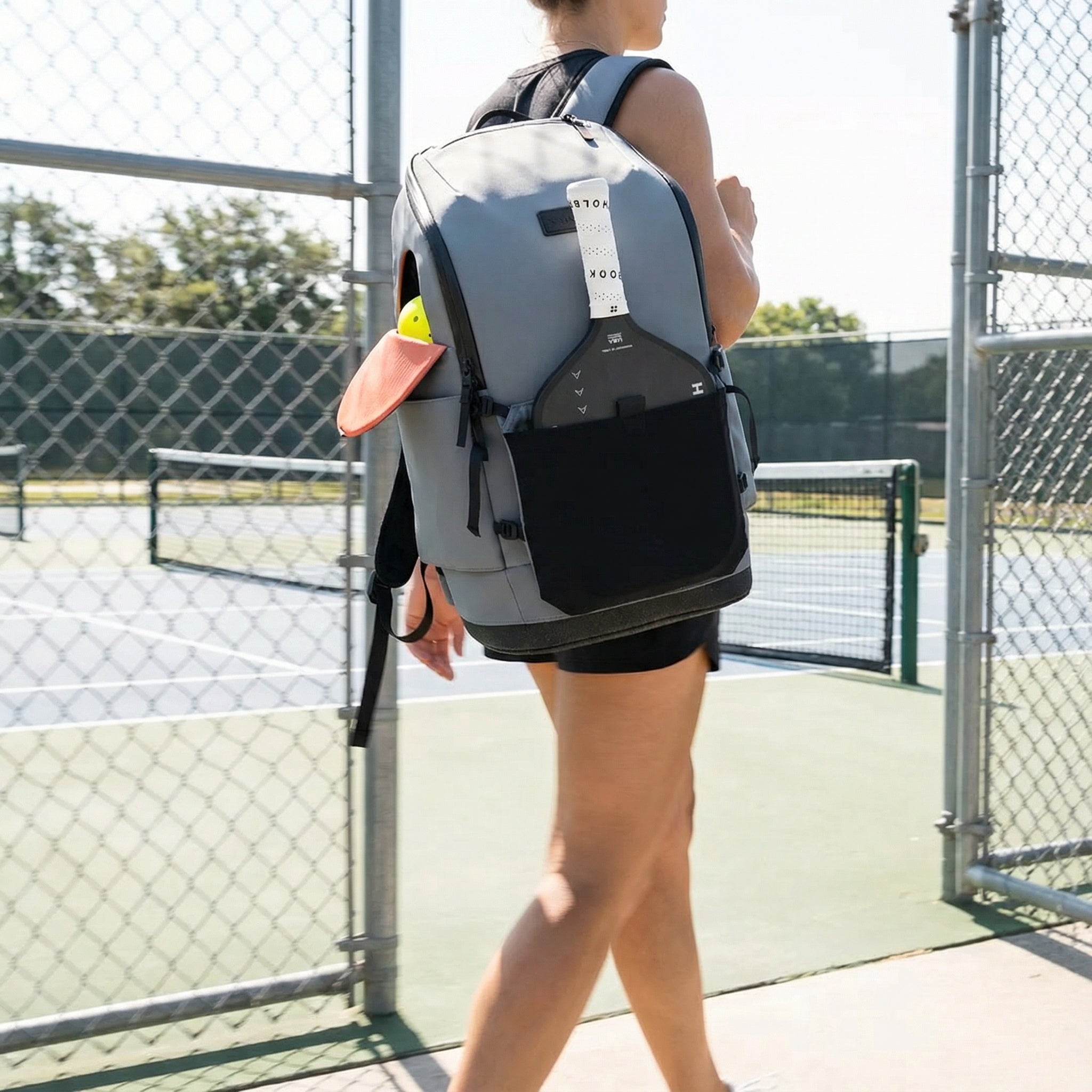
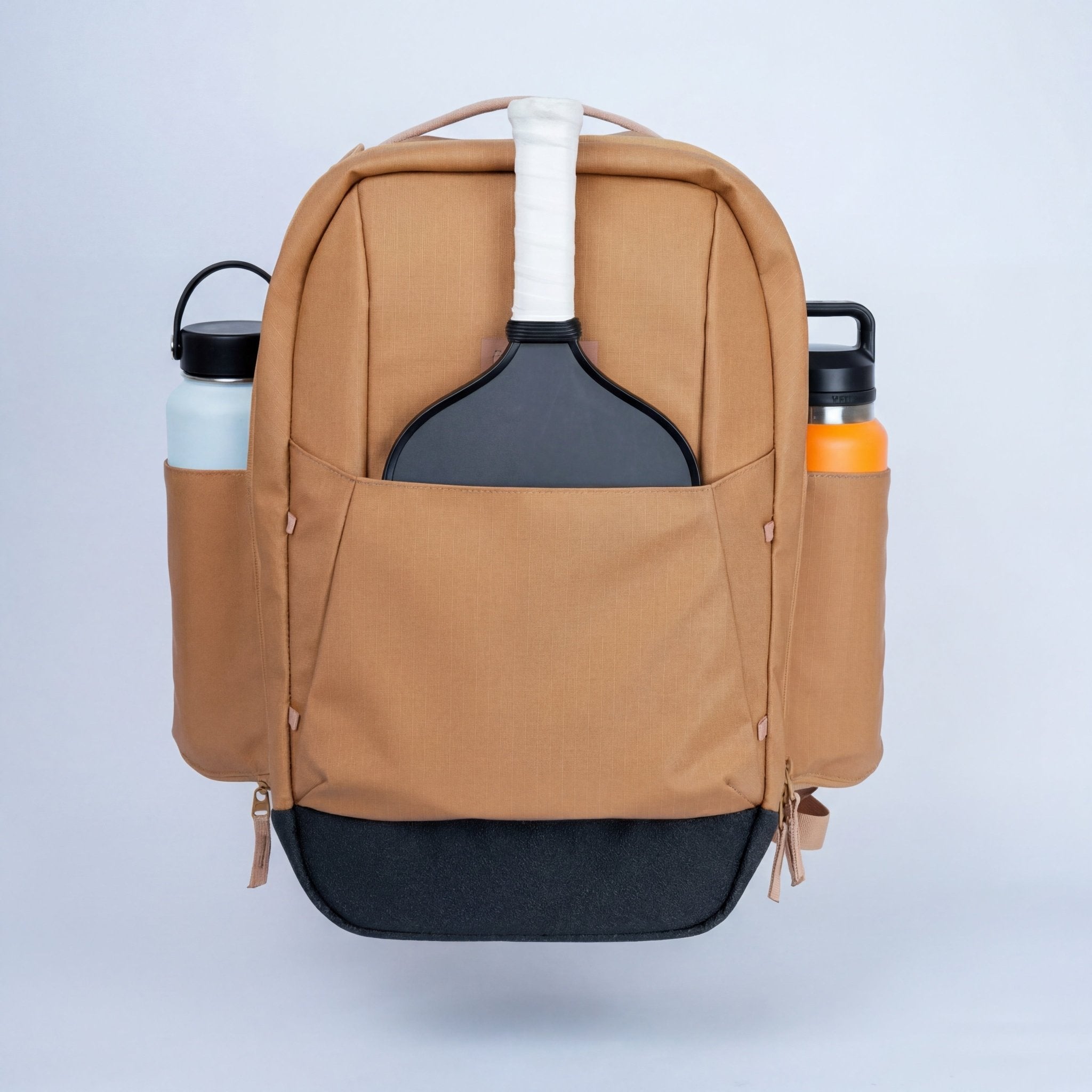
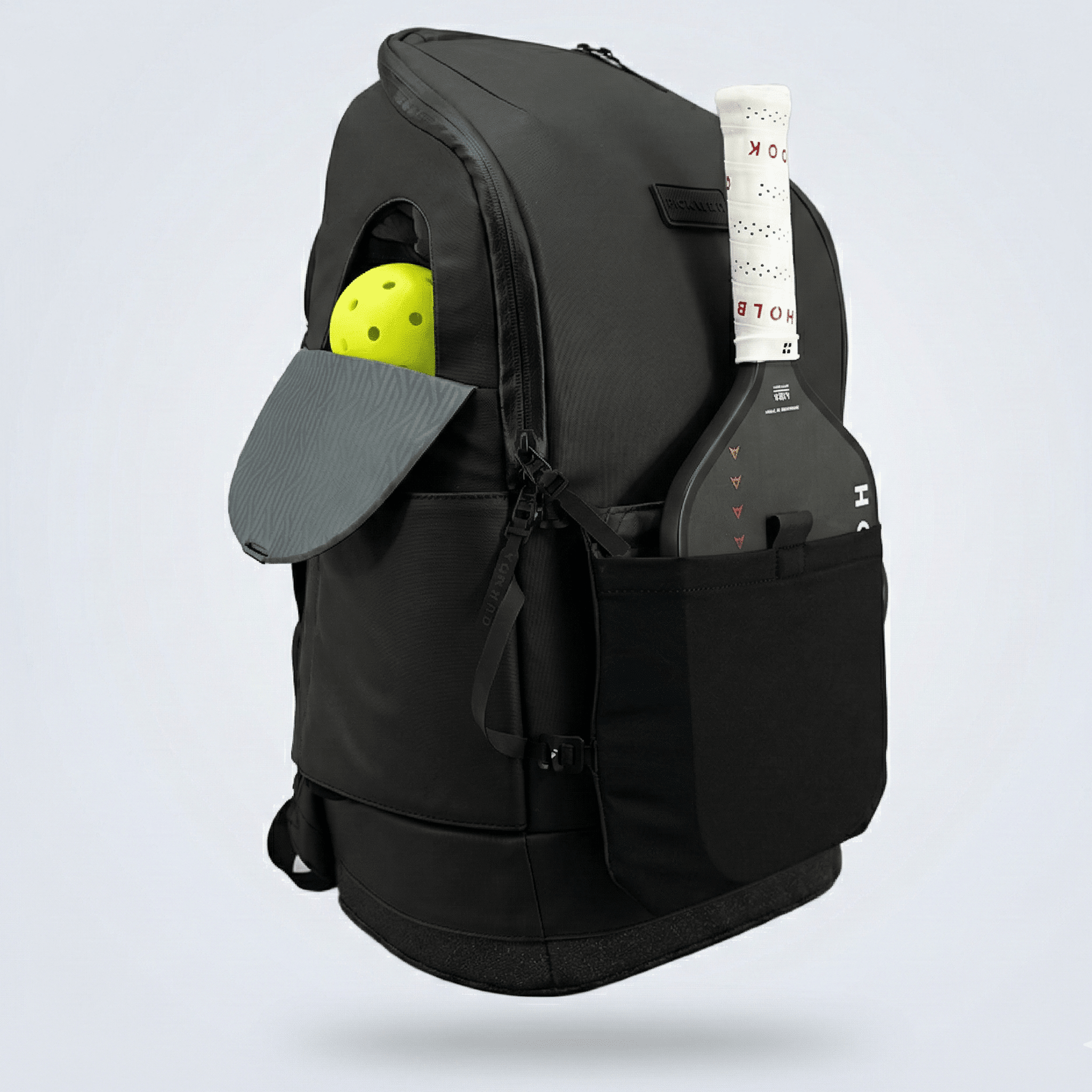
The FORWRD Court Ranger V2 holds your paddle, ball tubes, water, and everything else you need for a 2-hour solo training session — organized compartments so you spend time drilling, not digging. The 16" laptop sleeve works doubles duty for players who analyze footage between sessions.

Frequently Asked Questions
What is the Lobster Pickle Phenom ball machine?
The Lobster Pickle Phenom is Lobster Sports' flagship pickleball ball machine, designed for competitive players, coaches, and club facilities. It holds 185 balls, throws at 20–65 mph with top and back spin options, and features a 2-line oscillation function that alternates between two preset court positions. It runs on AC power and includes a 20-function physical remote plus a Wi-Fi remote compatible with Apple devices. Price: $3,499 at Pickleball Central.
Is the Lobster Phenom worth $3,499?
For competitive players (3.5+) training 4–5 times per week with AC access, yes — the Phenom's 185-ball hopper, 2-line oscillation, and unlimited AC runtime justify the price over a 3–5 year training horizon. For recreational players drilling 1–2 times per week, the Lobster Champion ($1,799) or Titan ONE ($2,049) offer 80–90% of the functionality at significantly lower cost.
How does the Lobster Phenom compare to other ball machines?
The Phenom's main competitors at similar price points are the Lobster Champion ($1,799–$2,199) and Titan ONE ($2,049). The Phenom beats both on hopper capacity (185 balls vs. ~110–125), speed ceiling (65 mph), and its 2-line oscillation. The Champion and Titan ONE win on portability and price — and the Titan ONE offers battery power for cord-free operation.
Can you use the Lobster Phenom for tournament-style drills?
Yes — this is where the Phenom genuinely excels. The 2-line function lets you replicate real match patterns: alternate cross-court feeds that force footwork, speed settings up to 65 mph for training against hard driving players, spin settings that mimic heavy topspin drives from the baseline. The 185-ball capacity means longer uninterrupted drill sequences, which matters for building automatic responses under pressure.
What's the learning curve for the Lobster Phenom?
The 20-function remote has a real learning curve — it's not a simple machine. Plan on a session or two just calibrating settings and learning the remote before your drills feel seamless. The Wi-Fi remote simplifies mid-drill adjustments significantly. Most users report feeling comfortable with the machine's full functionality within 3–5 sessions.
Does the Lobster Phenom require special installation?
No special installation, but you do need a standard AC outlet within cord reach of your court position. For permanent home court setups, many players run a weatherproof outdoor extension cord to their baseline position. For club facilities, the machine typically lives at a dedicated court with hardwired access. The machine is not designed for frequent relocation between venues without outlet access.

Leave a comment
This site is protected by hCaptcha and the hCaptcha Privacy Policy and Terms of Service apply.