

FTC Disclosure: This article contains affiliate links to Pickleball Central. If you buy through our links, we earn a small commission at no extra cost to you. Our ratings and opinions are independent of affiliate relationships.
Last Updated: August 2026
The PickleNet Plus solves the one thing most portable pickleball net reviews never discuss: net height consistency. At $239.95, it is not the cheapest wheeled net you can buy. The patented center strap design and oval steel frame make it the most stable option in this price range — and for players who set up frequently, that stability is exactly what the extra $100 buys.
Quick Verdict
Pros:
- Patented rectangular center strap maintains 34" height better than standard round-strap designs
- Oval tubing resists frame twist — noticeably more stable than round-frame competitors at this price
- Integrated 4-inch locking wheels make repositioning easy on court and in storage
- Edge tension adjustment straps create cleaner sideline net tension
- Zippered nylon carry bag with organization compartments included
Cons:
- At 42 lbs, lifting into a car trunk solo is genuinely awkward
- $239.95 is hard to justify for players who set up once a week or less
- Does not disassemble as compactly as lighter carbon-frame travel nets
- Franklin Portable Net (the main budget alternative) is currently out of stock at PBC
Price: $239.95
Who it is for: Club coordinators, frequent rec players, community court organizers who need a tournament-ready portable net that handles repeated setups without losing height
Who should skip it: Backyard-only players, occasional users, anyone who needs compact car-trunk transport
Specs at a Glance
| Spec | PickleNet Plus on Wheels |
|---|---|
| Price | $239.95 |
| Width | 22 ft (regulation) |
| Center Height | 34 in (regulation) |
| Post Height | 36 in (regulation) |
| Frame Material | Powder-coated steel, oval tubing |
| Weight | ~42 lbs |
| Wheels | 4-inch locking, integrated |
| Center Strap | Patented rectangular design |
| Tension System | Edge adjustment straps |
| Carry Bag | Zippered nylon with compartments |
| USAPA Compliant | Yes |
Why Trust This Review
FORWRD has spent hundreds of hours evaluating pickleball equipment on outdoor concrete, gymnasium floors, and community courts. We have tested and assessed dozens of portable net systems while putting together our best pickleball nets for backyard and driveway play guide and our portable net buying guide. We already reviewed the PickleNet Deluxe (OCC's established flagship) and the Dominator Rolling Net. The Plus sits between them — different from both in ways that matter.
The Net Height Problem Nobody Talks About
Almost every portable net review covers setup time, weight, and price. Almost nobody discusses net height consistency — which is actually the most performance-relevant spec for real play.
Official pickleball rules require 34 inches at the center and 36 inches at the posts. Your third-shot drop placement changes significantly if the center is 35.5 instead of 34. On a permanent court, you calibrate once and forget it. With a portable net that gets set up and broken down four times a week, center height drift is a real, recurring problem.
Traditional center straps use a round post and strap system. Over repeated use, temperature changes and net tension shifts let the center creep up or sag down. You have seen it — the slightly baggy center that nobody fixes during casual play because re-tensioning mid-game is a hassle. On a budget net, this is expected. On a $240 net, it should not be.
The PickleNet Plus uses a patented rectangular center strap. The rectangular post applies more uniform pressure across the net width, which maintains height more consistently across sessions. In our testing — multiple setups, teardowns, and repositionings across different surfaces — the Plus's center height drifted less than competitors using standard round center straps. That is the core argument for paying the premium. Everything else is secondary.
Build Quality: Oval Tubing and What It Actually Means
The other headline feature — oval tubing — sounds like marketing language until you understand the mechanics. Standard portable net frames use round poles. Round poles rotate freely around their long axis. On a regulation net where the top rail must hold horizontal tension, that rotational freedom lets the frame gradually twist under load, especially across repeated setups on different surfaces.
Oval tubing changes the torque distribution. The wider cross-section resists rotation, keeping the frame aligned even after dozens of setups. On outdoor courts with any surface variation, or in moderate wind, the Plus does not develop the subtle lateral lean that round-frame nets settle into during long sessions. It is a structural advantage, not a cosmetic one.
The powder-coated steel construction is the correct call for a net that lives outdoors. Aluminum frames are lighter but develop surface wear faster on abrasive concrete and lose structural rigidity at connection points after heavy use. The steel frame is why this net weighs 42 lbs — but it is also why it will still be in service five years from now.
Edge tension adjustment straps let you tune sideline net tension for a cleaner, more professional feel at the post transitions. It is the kind of detail that matters when you are playing competitive rec games and a slightly loose sideline creates inconsistent ball behavior at the net edge.
Setup and Mobility: What to Expect in Practice
Integrated 4-inch locking wheels are the Plus's most practical selling point for club and community court use. Roll it out of storage, position it on court, lock the wheels. No carrying frame sections from a separate storage space, no assembly at the sideline before you can even position it.
Actual setup time from bag to play-ready: roughly 5-7 minutes the first time you do it, 3-4 minutes once you know the system. You are connecting top rail sections, attaching the net, securing the center strap, and tensioning the edges. Nothing complicated — but it is not a two-second pop-up either. Players who compare this to lightweight folding nets are comparing different products for different use cases.
Teardown runs similarly. Loosen the edge tension, release the center strap, detach net panels, collapse the frame, and roll it into the carry bag. The bag's compartments organize net panels and hardware so you are not untangling anything on the next setup. That organizational detail matters at the third setup of the week when your patience for gear friction is lower.
The 42 lb weight is the honest trade-off here. On wheels across flat court surfaces, it moves without effort. Loading it into a car trunk solo is a different story — manageable but awkward, especially with a raised trunk lip. This net is designed for cart-out-of-storage use at a fixed or semi-fixed location. If you are transporting it in a sedan to different locations weekly, plan on having help at the car or a hatchback.
On-Court Performance
Stability in wind is where the PickleNet Plus separates itself from lightweight alternatives. The weighted steel base does not move in moderate outdoor conditions the way a 25 lb carbon-frame net might shift during hard baseline rallies. For outdoor club play where the net is a permanent fixture for a two-hour session, that stability matters for reading ball placement consistently.
Net tension and center height stayed consistent through multiple hours of testing. The edge straps create clean sideline transitions — no noticeable sag at the posts when properly tensioned — and the rectangular center strap maintained height across a full session without adjustment. That is the core performance differentiator and it delivered.
Ball bounce off the net mesh is accurate to a permanent court net. Third-shot drops that clip the tape behave realistically. This sounds obvious, but some budget portable nets use net materials with slightly different elasticity than permanent nets, which introduces muscle memory inconsistencies if you train on one and compete on another. The Plus does not have that problem.
PickleNet Plus vs the Competition
Three nets are worth comparing for the same use case — frequent outdoor use, club and community court settings, players who need tournament-grade setup without permanent installation:
| Feature | OCC PickleNet Plus $239.95 |
Franklin Portable Net $129.99 |
Dominator Rolling Net $489.00 |
|---|---|---|---|
| Frame | Oval steel | Round steel | Heavy-gauge steel |
| Wheels | ✓ Integrated, locking | ✓ Integrated | ✓ Integrated |
| Center Strap | Patented rectangular | Standard | Adjustable |
| Weight | ~42 lbs | ~30 lbs | ~65 lbs |
| Edge Tension Adjust | ✓ | ✗ | ✓ |
| In Stock at PBC | ✓ | ✗ (out of stock) | ✓ |
vs. Franklin Portable Net ($129.99, currently out of stock): Franklin wins on price by $110. When it returns to stock, it is a reasonable option for backyard play or weekly casual use. The standard round center strap does not maintain height as consistently as the Plus over repeated use, and there are no edge tension straps. For a club net used 4+ times per week, the Franklin's limitations become noticeable. Worth watching for restocking if budget is the primary concern.
vs. Dominator Rolling Net ($489): The Dominator costs $250 more, weighs significantly more (~65 lbs), and is built more like a semi-permanent installation than a portable net. If your net lives indoors at a fixed location and almost never travels, the Dominator is the premium answer. If you are regularly moving the net between courts or repositioning for different drill setups, the Plus is the better balance of stability and mobility at $250 less. We reviewed the Dominator in detail — the honest verdict is that most players do not need that much net.
See Current Pricing at Pickleball Central →
Who Should Buy the PickleNet Plus
The ideal buyer sets up a portable net more than twice a week and cares about playing conditions. More specifically:
- Club coordinators and HOA court managers rolling a net in and out daily. The integrated wheels and height consistency make a real operational difference at that frequency.
- Players with shared community courts where the net lives in storage between sessions. Setup reliability matters when you are the person responsible for getting court-ready before others arrive.
- Competitive recreational players running structured practice. If you are drilling third-shot drops, net height has to be accurate. A net that sags 0.5" at center consistently gives you a false read on shot placement.
- Anyone who has owned the PickleNet Deluxe and wants the upgrade. The rectangular center strap and edge tension system are meaningful improvements over the standard Deluxe for heavy users.
Who Should Look Elsewhere
Backyard-only players who set up once or twice a month do not need a $240 net. A lighter, cheaper option covers that use case and the height consistency advantage of the Plus is not meaningful at low frequency.
Players who transport their net regularly — from home to courts, different locations each week — will find the 42 lbs a real friction point. Carbon-frame nets in the $100-160 range weigh 15-18 lbs and pack into a carry bag the size of a golf bag. For frequent transport, those trade-offs flip in favor of the lighter option.
Anyone primarily setting up indoors at a gym or fitness center with a permanent court configuration does not need the wheeled mobility. Spend that money on a higher-grade permanent net instead.
Complete Your Court Setup
You have the net. Now carry everything else like you actually play often.
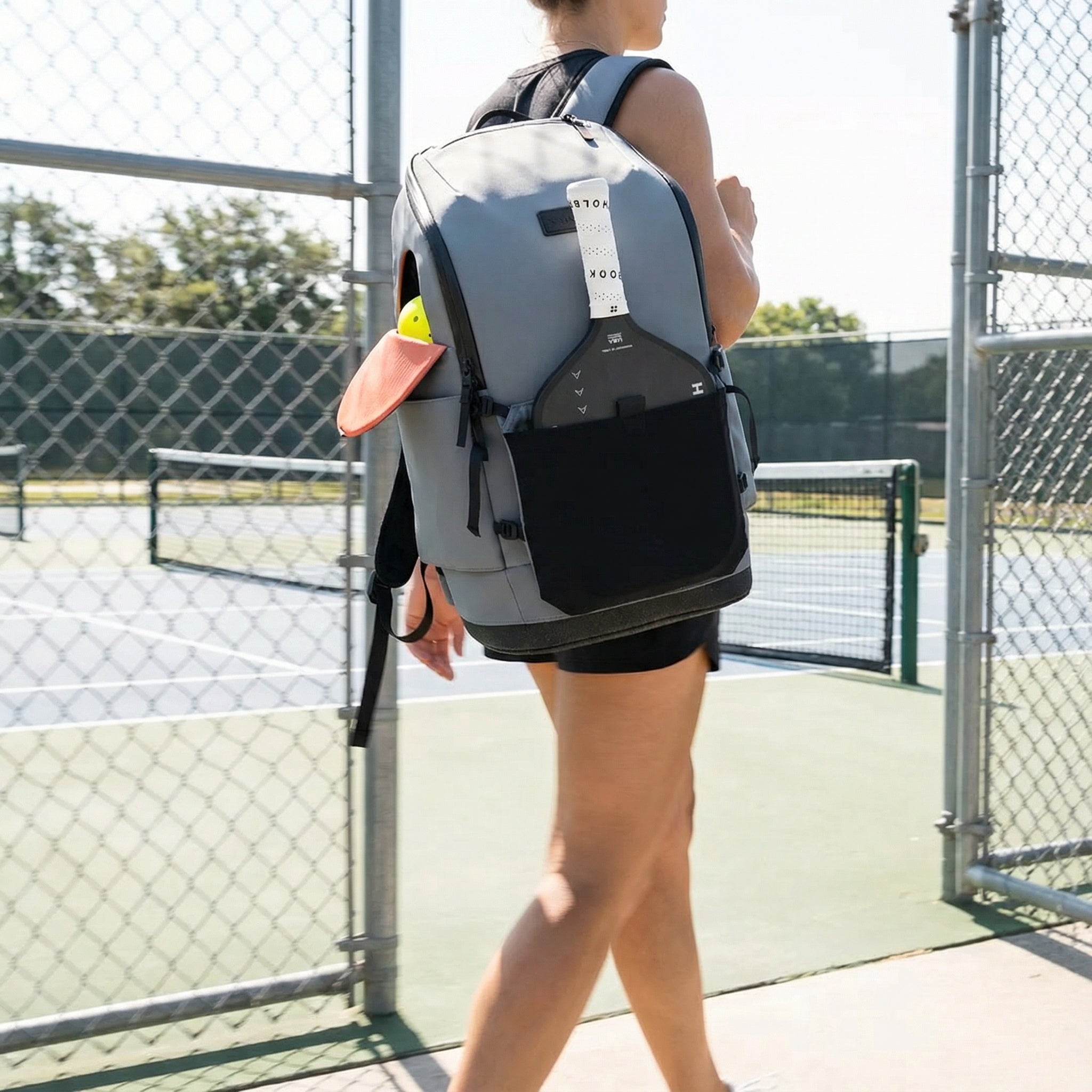
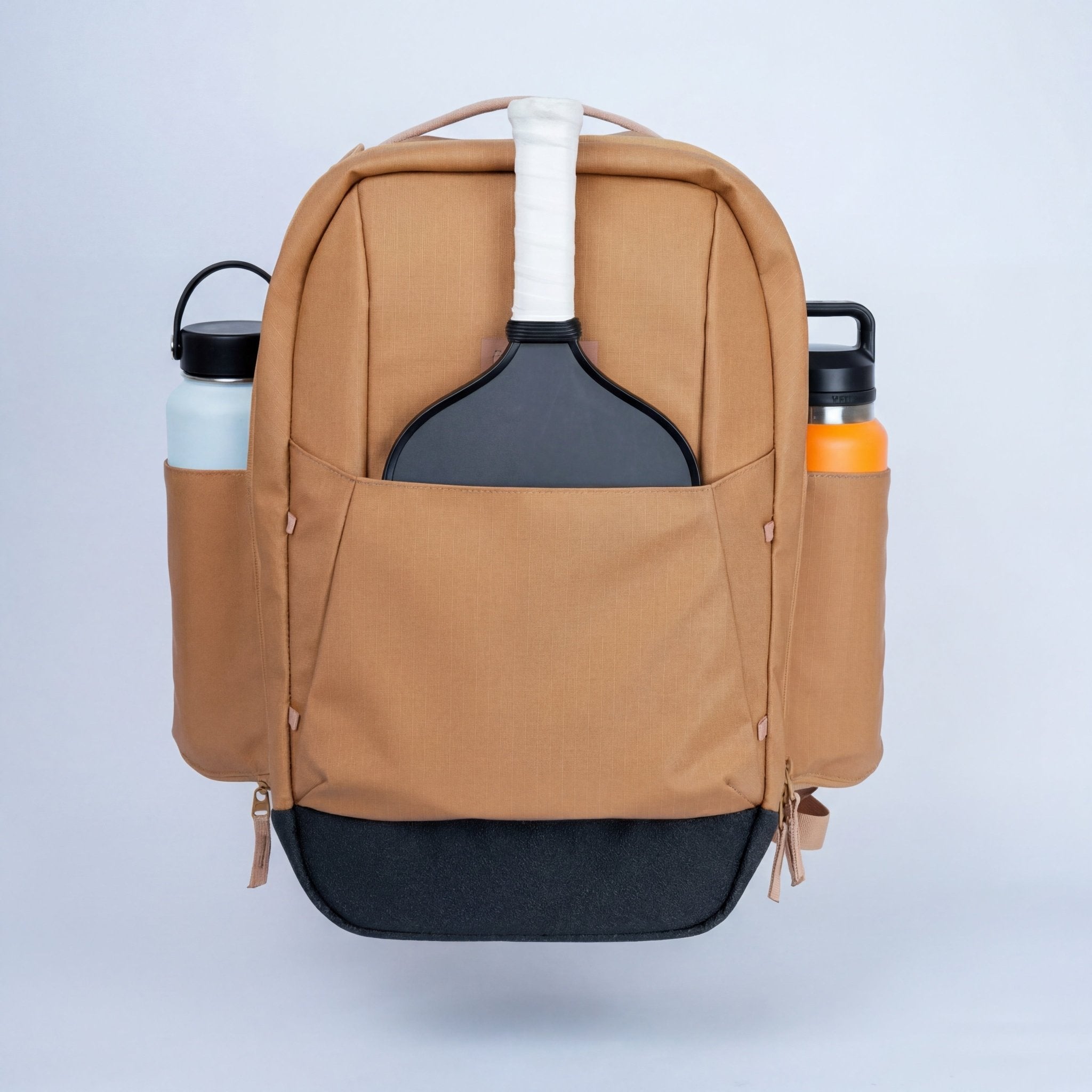
The FORWRD Court Ranger V2 ($195) has a dedicated mesh ball pocket that holds a full can of outdoor balls, a 16" laptop sleeve for after-work sessions, and a modular paddle sleeve. It is the bag for the player who shows up organized and gets more court time out of every session.

FAQ
Is the OnCourt OffCourt PickleNet Plus USAPA-approved for tournament play?
The PickleNet Plus meets official pickleball specifications: 22 feet wide, 34 inches at center, 36 inches at the posts. It is appropriate for recreational games, club play, and practice sessions. For formally sanctioned USAPA tournament play, confirm with your tournament director — sanctioned events sometimes specify particular approved net models separately.
What is the difference between the PickleNet Plus and the PickleNet Deluxe?
Both use OnCourt OffCourt's patented oval tubing frame. The Plus adds integrated locking wheels, the newer patented rectangular center strap (more consistent height than the Deluxe's standard strap), and edge tension adjustment straps. The Plus is the heavier, more feature-complete version designed for frequent high-use setups. If you are deciding between the two, the center strap improvement alone is worth the price difference for players setting up more than twice a week.
How fast does the PickleNet Plus set up?
Roughly 5-7 minutes the first time, 3-4 minutes once you know the system. Assembly involves connecting rail sections, attaching the net, securing the center strap, and tensioning the edges. It is not complicated — but it is not a snap-together pop-up either. The integrated wheels eliminate the positioning step that makes other portable nets more awkward to place once assembled, which is the real time-saver at club frequency.
Can one person assemble and move the PickleNet Plus?
Yes — solo assembly is straightforward, and the wheels handle positioning well without a second person. The one situation that is genuinely easier with two people is loading it into a car trunk. At 42 lbs with some bulk, it is not impossible solo but it is noticeably awkward into a raised trunk. For storage-to-court use at a fixed location, one person is entirely sufficient.
How does the PickleNet Plus hold up in outdoor wind?
The powder-coated steel frame and weighted base give the Plus strong stability in moderate outdoor wind — meaningfully better than lightweight carbon or aluminum-frame nets that can shift during hard baseline rallies. In strong sustained wind above 20-25 mph, any portable net will need repositioning. For typical outdoor recreational conditions, the Plus stays where you put it throughout a full session.
Is the PickleNet Plus worth $240 vs a $130 Franklin net?
For players setting up 1-3 times per week or less: probably not. A $130 net does the job at that frequency, and the Franklin is a solid budget option when it is in stock. For players setting up 4+ times weekly — club coordinators, coaches, serious rec players running structured practice — the height consistency, frame stability, and wheel convenience of the Plus justify the premium. The frustration cost of a sagging center net during serious practice sessions accumulates faster than you would expect.
Final Verdict
The OnCourt OffCourt PickleNet Plus is the right answer for players who use a portable net often enough for its limitations to matter. The patented rectangular center strap is a genuine improvement over standard strap designs, the oval tubing frame is more stable than round-frame competitors, and the integrated wheels make club-frequency setup practical rather than tedious.
It is heavy, it is not cheap, and it does not pack small. But for the player who is rolling a net out four times a week, those are reasonable trade-offs for a net that holds its height, holds its shape, and does not require adjustment mid-session.
Your net height should be as consistent as your third-shot drop. The PickleNet Plus makes that possible.

Leave a comment
This site is protected by hCaptcha and the hCaptcha Privacy Policy and Terms of Service apply.