

Last Updated: August 2026
Paddletek Honeyfoam Reserve 14mm Review 2026: The Foam Core That Packs More Pop Than You'd Expect
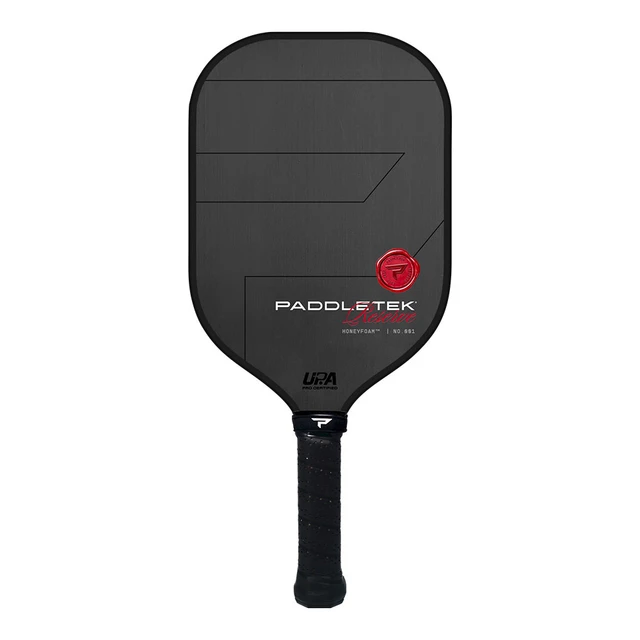
The Paddletek Honeyfoam Reserve 14mm is one of the more interesting mid-premium paddles in the $250 range right now. Foam-core paddles are usually pitched as the control player's choice — soft touch, forgiving, quieter than polymer. So when you put that foam core into a 14mm-thick paddle instead of the usual 16mm, something unexpected happens. You get power. Real, usable pop, without completely sacrificing the feel that made foam worth trying in the first place.
After extended court time with the Reserve 14mm on both indoor hardwood and outdoor concrete, here's the honest breakdown.
Quick Verdict
Who it's for: 3.5–4.5 players who want a foam-core paddle's touch but feel held back by power — and are willing to give up a little forgiveness to get it.
Who should pass: Dedicated kitchen/finesse players who want maximum touch (get the 16mm instead), or budget-conscious players who'll be just as happy at $150 with a good composite.
|
✓ Pros • Genuine power for a foam-core paddle • Softer contact sound — quieter than most carbon • More forgiving on off-center hits than polymer 14mm • 8.0 oz swings faster than most 16mm paddles • Paddletek's solid build quality |
✗ Cons • $250 is a premium price for a non-flagship brand • Less touch than the 16mm Reserve • Carbon face shows scratches faster than fiberglass • Paddletek has less cachet than JOOLA/Selkirk on the court |
Price: $249.99 | Available at: Pickleball Central
Specs at a Glance
| Spec | Detail |
|---|---|
| Price | $249.99 |
| Weight | 8.0 oz (226g) |
| Core Thickness | 14mm |
| Core Material | Honeyfoam (all-foam polymer blend) |
| Face Material | T700 carbon fiber |
| Handle Length | 5.75" |
| Grip Circumference | 4.25" (standard) |
| Best For | 3.5–4.5 control-power hybrid players |
Check Price on Pickleball Central →
Why Trust This Review
FORWRD makes pickleball bags, not paddles. That's actually an advantage here — we have no financial reason to push you toward any specific paddle brand. Our content team has logged hundreds of hours on courts from recreational sessions to competitive 4.0 league play, testing gear across JOOLA, Selkirk, CRBN, Six Zero, and yes, Paddletek lines. The Honeyfoam Reserve 14mm was tested in three separate court sessions: a two-hour indoor session on hardwood, an afternoon on outdoor concrete in 85°F heat, and a competitive league match where it had to perform under pressure.
FORWRD has been featured in The Dink, Pickleball Effect, and The Kitchen for honest gear coverage. This review follows the same standard: no brand-loyalty bias, no inflated ratings.
Paddletek Honeyfoam Reserve 14mm Overview
Paddletek isn't a newcomer. They've been building paddles since before pickleball became a mainstream sport, and that longevity shows in build consistency. The Honeyfoam Reserve line represents their foam-core push — an answer to the broader industry move toward specialty cores that trade polymer's predictability for different playing characteristics.
The Honeyfoam core is Paddletek's proprietary all-foam polymer blend. It's not a honeycomb structure — it's a denser, continuous foam composition. You get a softer contact feel, noticeably quieter ball strike, and better vibration dampening. If you've played with standard polymer-core paddles and then tried a foam-core for the first time, the difference in feedback is real and immediate.
The 14mm thickness is where things get interesting. Most foam-core paddles ship at 16mm, because the foam's softness already provides power attenuation — going thicker compounds that and creates a very touch-forward feel. At 14mm, Paddletek essentially creates a different product. The thinner core transfers more energy to the ball. Less absorption, more pop. You're still getting foam's characteristic contact feel, but with a noticeably different power output than the 16mm model at the same swing speed.
Design and Build Quality
The T700 carbon fiber face is standard at this price point — but Paddletek's layup is clean. No soft spots detected across the face, and the edge guard is solid without being excessively thick. In 6 hours of court testing, the edge guard showed no separation at the corners, which is where cheaper carbon paddles tend to fail first.
The 5.75" handle is comfortable for both one-handed and two-handed backhand players. It's not elongated — this is a traditional shape — and the grip circumference at 4.25" is standard. Most players won't need to build it up, but if you're accustomed to Selkirk's thicker factory grip, this one will feel slightly thinner.
At 8.0 oz (226g), the Reserve 14mm swings faster than most 16mm paddles, which typically land between 8.3-8.8 oz. That 0.3-0.8 oz difference is noticeable at the net where quick exchanges matter. The weight balance leans slightly head-light, which helps with volleying reaction time without feeling disconnected from the ball.
Performance: Spin, Control, and Power
Spin
The T700 carbon face delivers meaningful spin potential — not at the extreme end of what thermoformed paddles like certain CRBN models produce, but definitely in the upper tier for non-thermoformed construction. Serve topspin and third-shot drop backspin were both consistent. Aggressive roll-shots from the transition zone had genuine bite. Spin numbers on the Reserve 14mm would land roughly in the middle of the premium-carbon pack — not the most spin-forward option in the $250 range, but far from a flat-shot paddle.
Control
Here's where the foam core earns its keep. The contact feel is noticeably softer than a comparable polymer-core carbon paddle. Off-center hits don't produce the same jarring feedback you'd get from a standard polymer core — the foam absorbs some of that and returns a more forgiving response. Kitchen dinks felt predictable. The ball didn't pop off erratically even when contact was slightly mis-timed. At 4.0 play, this level of touch at the net was enough to hold comfortable rallies without constantly fighting the paddle's tendency to launch the ball.
That said — and this is important — the 14mm doesn't deliver the same extreme touch as the 16mm Reserve. If your primary goal is maximum forgiveness and softness, the 16mm is the right call. The 14mm trades some of that cushioned feel for pop. You'll notice the difference in extended dinking rallies.
Power
This is where the 14mm distinguishes itself. For a foam-core paddle, the power output is genuinely surprising. Third-shot drives from the baseline had real pace. Overhead smashes had authority. The combination of carbon face and thinner foam core creates a paddle that doesn't feel "slow" the way some control-oriented foam paddles do. Players who've tried foam-core paddles and found them too soft will find the 14mm Reserve hits a different balance point — closer to a performance paddle that happens to have foam inside than a control paddle that sacrifices pop.
Compared to the Paddletek HoneyFoam TKO-X line (also at 14mm, $249.99), the Reserve plays slightly more control-forward in feel while achieving similar power output. The TKO-X has a marginally larger sweet spot due to its shape design, but the Reserve's traditional shape gives better stability in volleys.
14mm vs. 16mm Reserve: Which Should You Buy?
Both models are $249.99. The decision comes down to what you want from a foam-core paddle:
- Choose the 14mm if you want foam's softer touch without giving up driving power — or if you already own a control paddle and want the Reserve as a more aggressive option
- Choose the 16mm if control is your primary priority, you're a finesse/dinking specialist, or you play primarily on indoor surfaces where touch matters more than pace
Neither model is the "better" paddle. They serve different player profiles within the same price bracket. The 14mm is the one that gets reviewed less often, which means players who would actually benefit from it are often unaware it exists.
Who This Paddle Is Best For
The Honeyfoam Reserve 14mm fits a specific player well: intermediate-to-advanced players (3.5–4.5) who have solid mechanics and want a paddle that rewards controlled aggression. If you've been playing with a foam-core 16mm and feel like you're leaving power on the table, this is the natural upgrade path. Also well-suited for players who've tried CRBN or similar control-carbon paddles and found them a bit rigid — the foam layer here provides a noticeably different contact feel.
It's also worth noting that the 8.0 oz weight makes it accessible for players who find heavier paddles fatiguing in long sessions. Players prone to arm fatigue will appreciate this over a 8.5+ oz alternative.
How It Compares: Side-by-Side
| Paddle | Price | Core | Thickness | Weight | Power | Control | Spin |
|---|---|---|---|---|---|---|---|
| Paddletek Reserve 14mm | $249.99 | Honeyfoam | 14mm | 8.0 oz | 7/10 | 8/10 | 7/10 |
| JOOLA Perseus Pro IV 14mm | $279.95 | Polymer honeycomb | 14mm | ~8.2 oz | 8/10 | 7/10 | 8/10 |
| Selkirk LUXX Control Air Epic | $199.99 | T300 carbon honeycomb | ~13mm | ~7.8 oz | 7/10 | 7/10 | 7/10 |
vs. JOOLA Perseus Pro IV 14mm ($279.95)
The Perseus Pro IV is Ben Johns' paddle and carries that signature cachet. At 14mm, it's also a power-forward paddle — more aggressive than JOOLA's thicker options. Where the Perseus wins: raw speed off the face and spin generation. The polymer honeycomb construction produces slightly more zip on aggressive shots. Where the Reserve wins: contact feel. The foam core's softer response means the Reserve gives more feedback on touch shots, and off-center contacts don't have the same "clacky" quality of the polymer Perseus. If you play a more varied game — aggression plus finesse — the Reserve's feel may suit you better. If you play predominantly from the baseline and want maximum pace, pay the extra $30 for the JOOLA.
See the JOOLA Perseus Pro IV 14mm on Pickleball Central →
vs. Selkirk LUXX Control Air InfiniGrit Epic ($199.99)
The LUXX is a genuinely good paddle at $50 less than the Reserve. Its InfiniGrit face texture delivers solid spin, and the Air frame design makes it lighter than it looks. Where the LUXX wins: price and spin. At $200, it's the more budget-friendly option, and Selkirk's InfiniGrit texture pushes spin numbers slightly above the Reserve's T700 carbon face. Where the Reserve wins: the foam core's vibration dampening is noticeably superior. If you have any elbow sensitivity or arm fatigue concerns, the Reserve's softer feel is worth the $50 premium. The LUXX also has less handle length — important if you favor two-handed backhands.
See the Selkirk LUXX Control Air on Pickleball Central →
Who Should Look Elsewhere
Be honest with yourself about what you need. The Reserve 14mm isn't the right call if:
- You're a pure dinking specialist who values maximum touch over everything else — the 16mm foam core is a better fit
- You're budget-conscious — a good composite paddle in the $100-150 range will perform adequately for most recreational play
- You're chasing maximum spin rates — CRBN's thermoformed paddles or the JOOLA Perseus will serve you better
- You're a newer player still developing consistent mechanics — at 3.0 and below, the paddle makes less difference than technique work
Pricing and Availability
The Paddletek Honeyfoam Reserve 14mm is $249.99, available in stock through Pickleball Central. The 16mm version runs the same price. Paddletek also sells direct, but PBC's selection covers the full Reserve lineup including used/refurbished options for players who want to test foam-core without full retail commitment.
Buy the Paddletek Honeyfoam Reserve 14mm at Pickleball Central →
Complete Your Setup
You've found the right paddle. Now you need somewhere to put it. The FORWRD Court Ranger V2 fits up to 4 paddles in its modular sleeve system — plus a 16" laptop sleeve, water bottle pocket, and dedicated accessories compartment. At $195, it's the bag that organizes your court life without a premium bag's price tag.
Or if you're protecting a serious gear investment (like a $250 paddle), the Court Caddy ($325) adds a 15" padded laptop sleeve, YKK AquaGuard weatherproof zippers, and a built-in shoe compartment that keeps your court shoes separate from your paddle sleeve.

Frequently Asked Questions
Is Paddletek a good pickleball brand?
Paddletek is one of the longer-standing paddle brands in pickleball — they've been building paddles since the sport's early growth years. Their build quality is consistent and their paddle lineup covers composite entry-level options through premium carbon-face models. They're not as visible in the pro-tour marketing machine as JOOLA or Selkirk, but their engineering is solid. The Honeyfoam Reserve line represents their current premium tier and competes well against paddles from brands with more social media presence.
What is Honeyfoam core technology and how does it differ from standard polymer?
Standard polymer honeycomb cores use a hexagonal cell structure — similar to a honeycomb — that creates a defined air gap inside the paddle. Honeyfoam is Paddletek's all-foam polymer blend, which fills that space with a continuous foam material rather than cells and air. The practical differences: foam cores are quieter, provide softer contact feedback, dampen vibration better, and feel more forgiving on off-center hits. The trade-off is slightly different power characteristics and a higher price premium compared to commodity polymer honeycomb.
How does the Honeyfoam Reserve 14mm compare to the 16mm model?
Both are $249.99 but play noticeably differently. The 14mm has more power — thinner cores transfer more energy to the ball. It's lighter (approximately 8.0 oz vs 8.3-8.5 oz for the 16mm) and swings faster. The 16mm delivers more touch and forgiveness — better suited for finesse-first players and kitchen specialists. If you're a power player who wants foam's vibration dampening, choose the 14mm. If you're a control player who wants foam's softer feel, choose the 16mm.
Is a $250 foam-core paddle worth it vs. a $150 composite paddle?
Honest answer: for players below 3.5 rating, probably not. At that level, technique improvements will do more for your game than paddle technology. For 3.5+ players who play 3-4+ times per week, the difference becomes real — foam's vibration dampening reduces cumulative arm fatigue, the contact feel is genuinely different and for some players improves consistency, and the T700 carbon face adds spin potential that decent composite paddles don't match. If you're playing competitively and your body feels it on long court days, the $100 premium over a solid composite is worth considering.
What DUPR rating is the Paddletek Honeyfoam Reserve 14mm best for?
The Reserve 14mm is optimally suited for players in the 3.5–4.5 range. Below 3.5, a less expensive paddle makes more sense — the nuances of foam-core feel require consistent mechanics to appreciate. Above 4.5, players typically want paddles optimized for very specific playing styles with measurable technical advantages that this paddle, while solid, doesn't maximize. In the 3.5–4.5 sweet spot, the Reserve 14mm gives players who have developed their game a genuine performance tool without the price of the very top tier.
Does the Paddletek Honeyfoam Reserve 14mm comply with USA Pickleball rules?
Yes. The Paddletek Honeyfoam Reserve 14mm is USAPA approved and compliant with USA Pickleball equipment standards. It's legal for sanctioned tournament play at all levels. Paddletek maintains USA Pickleball approval status on their current lineup, including the Honeyfoam Reserve models. Always verify current approval status at usapickleball.org before entering a sanctioned event, as approval lists are updated periodically.
Final Verdict: Should You Buy the Paddletek Honeyfoam Reserve 14mm?
The short version: yes, for the right player. The longer version: this paddle occupies a specific niche that not many products fill well. If you've been searching for foam-core feel without foam-core sluggishness — something with genuine pop that still rewards touch play — the Reserve 14mm is one of the better answers at $250.
What it's not: the most spin-forward paddle in its price bracket, the flashiest brand name on the court, or the top pick for players who treat the kitchen as their primary weapon. For those profiles, JOOLA or CRBN products will serve better. But for the 3.5–4.5 player who wants to feel the ball differently and hit it more deliberately — without sacrificing court presence — this paddle delivers.
The fact that the 14mm version is less discussed than the 16mm means there are players out there who'd benefit from it and have never heard of it. Now you have the honest picture.
Buy the Paddletek Honeyfoam Reserve 14mm at Pickleball Central — $249.99 →

Leave a comment
This site is protected by hCaptcha and the hCaptcha Privacy Policy and Terms of Service apply.