

Affiliate Disclosure: FORWRD earns a commission on purchases made through the Pickleball Central links in this article. This doesn't change our editorial independence — we only recommend gear we'd actually use on the court.
Last Updated: August 2026
The NET PLAYZ 4FT Rebounder is a legitimate solo training tool for intermediate and advanced players who can't get court time every day. At $199.99, it's not cheap — but if you're practicing 3+ times a week, the ROI over saved court fees is real. The portability is its biggest selling point; the net tension is effective but doesn't replicate the unpredictability of a real opponent.
Quick Verdict
Pros:
- Compact packed dimensions (48.8" × 32.7" × 5.1") — fits in most car trunks
- Adjustable angle settings simulate dinks, drives, and resets
- Includes kitchen line marker — unusual at this price point
- Foldable steel frame handles outdoor use without rusting quickly
- Same price as the Franklin competitor with better portability
Cons:
- 4' width limits shot variety compared to a full-court-width rebounder
- Ball return isn't as unpredictable as a real opponent — it's consistent by design
- No wheels — the carry bag works, but it's still a two-trip setup
- Outdoor weatherproofing is functional, not premium
Price: $199.99 | Best for: Intermediate-to-advanced players wanting daily solo reps without ball machine costs
Skip if: You want full-court-width coverage, or your main gap is reading opponents — a hitting partner beats any rebounder for that
| Spec | Detail |
|---|---|
| Price | $199.99 |
| Frame Width | 4 ft (48") |
| Packed Dimensions | 48.8" × 32.7" × 5.1" (124 × 83 × 13 cm) |
| Frame Material | Powder-coated steel, foldable |
| Net Type | Hi-Bounce rebound net |
| Angle Adjustment | Multiple angle positions |
| Includes | Kitchen line marker, carry bag |
| Brand | NET PLAYZ (Tri Great USA) |
Why Trust This Review
FORWRD makes pickleball bags — not rebounders, paddles, or training equipment. That independence matters here. We don't make money on the NET PLAYZ rebounder directly; we earn a small commission through Pickleball Central if you buy through our links. Our only incentive is to give you honest information so you trust us enough to click.
Our testing approach: we spent time with this rebounder on both outdoor concrete and indoor wood surfaces. We ran the drills described later in this article, tracked clean-return percentages across 50-ball sessions, and compared it directly against the Franklin Sports rebounder at the same price. We also play about 3-4 times a week in the 3.5-4.0 range, which puts us squarely in the target audience for this kind of training tool.
NET PLAYZ 4FT Rebounder — Overview
NET PLAYZ is a brand from Tri Great USA, a company that makes racquet sport training tools. The 4FT is their pickleball-specific rebounder, sized for a player standing at the kitchen line — which is exactly where most of your high-leverage practice happens.
The frame is steel, powder-coated, and folds flat. Fully assembled, it stands 4 feet wide and reaches roughly shoulder height on most adults. The Hi-Bounce net has enough tension to return the ball at realistic pickleball speeds without the cheap trampoline effect you get with budget rebounders (where the ball comes back faster than any real shot would). It's not perfectly calibrated — drives come back noticeably hotter than a human reset would — but for dinking and placement work, it's accurate enough.
What makes this rebounder stand out at the $200 price point is the included kitchen line marker. Most rebounders just sell you the frame. The kitchen line lets you set up a proper practice station with precise foot placement, which matters more than it sounds — practicing from the right position ingrains correct habits instead of just mileage.
Setup takes about 5-8 minutes the first time you assemble it. After that, you're looking at 2-3 minutes to unfold, position, and angle. Packed into the carry bag, it measures 48.8" × 32.7" × 5.1" — it'll fit in most car trunks standing upright, though it's a tight squeeze in smaller vehicles.
Design & Build Quality
The frame is the strongest part of this rebounder. Steel construction at this price point is genuinely unusual — most $100-150 alternatives use aluminum, which flexes under repeated impact. The powder coating showed no rust after extended outdoor use, though we'd still bring it inside if you're leaving it out through a rainy week.
Net material is woven tightly enough that it doesn't bag in the center over time, which is a known failure mode on cheaper rebounders. After repeated hard drives — actual attack swings, not gentle dinks — the net held its shape without significant stretching. A sagging net kills ball return accuracy over time, so this matters.
Angle adjustment works via a bracket system on both sides of the frame. You can tilt the rebounder forward (for returns that come back low, simulating kitchen-bound shots) or keep it more vertical (for shoulder-height returns that simulate a mid-court exchange). The adjustment feels secure once locked — nothing shifts mid-session. You get roughly 5-6 distinct angle settings depending on how precise you are with the brackets.
One thing worth flagging: the carry bag strap. It works, but the stitching on one end felt like it was under stress after a few weeks of regular transport. Not a deal-breaker, but thread it carefully and don't yank the bag by a single handle.
Performance — How It Actually Plays
Here's the real question: does the NET PLAYZ actually make you better?
For dink consistency, yes — without qualification. Standing at the kitchen line, setting the angle so the ball returns to a predictable spot, and trying to hit 50 consecutive clean dinks without letting the ball rise above net height is genuinely hard at first. It gets measurably easier after a few weeks of regular sessions. The ball return is consistent enough to build a repeatable stroke pattern, which is exactly what this tool is for.
For resets, it's useful but with caveats. You can practice the motion of absorbing a fast-incoming ball by hitting a medium-pace drive at the rebounder and resetting the return. The problem: a real opponent's reset opportunity comes at unpredictable heights and angles. The rebounder's return is always from the same spot. You're drilling the physical motion, not the read.
For speed hands and transition drills, the 4' width is a limitation. You can practice the speedup-reset transition from center court position, but you're not training wide-ball scenarios. A 10' rebounder like the OnCourt OffCourt Deluxe covers this; the NET PLAYZ doesn't.
The biggest thing a rebounder can't replicate: a human opponent's variance. Their spin, their timing, the non-repetitive nature of where the ball goes. If your main weakness is reading spin or reacting to unexpected placement, more court time with real opponents does more than any rebounder will. But if your weakness is consistency — dinks that drift high when you're fatigued, resets with no margin — a rebounder is exactly the right tool. Drilling it solo against a predictable return is how you wire the movement pattern into muscle memory.
Ready to add daily reps to your routine? Check availability on Pickleball Central →
NET PLAYZ vs Franklin Rebounder vs OnCourt OffCourt Deluxe
Three rebounders worth considering right now. Here's how they stack up:
| Feature | NET PLAYZ 4FT | Franklin Sports | OnCourt OffCourt Deluxe |
|---|---|---|---|
| Price | $199.99 | $199.99 | $339.95 |
| Width | 4 ft | ~4 ft | 10 ft |
| Height | ~4 ft | ~4 ft | 7 ft |
| Frame | Steel, foldable | Steel, collapsible | Rust-resistant + wheels |
| Mobility | Carry bag (no wheels) | Carry bag (no wheels) | Built-in wheels |
| Kitchen line included | Yes | No | No |
| Angle settings | Multiple | Multiple | 2 positions |
| Buy at PBC | NET PLAYZ → | Franklin → | OnCourt OffCourt → |
NET PLAYZ vs Franklin: These are the same price. The NET PLAYZ wins on the kitchen line inclusion — a detail that matters for positioning-focused practice. Both have similar build quality and similar width. The tiebreaker comes down to stock availability and net tension preference: the Franklin net feels marginally tighter, which some players prefer for faster ball returns.
NET PLAYZ vs OnCourt OffCourt Deluxe: These are genuinely different categories. The OnCourt OffCourt is 10' wide and 7' high — full half-court net coverage. The wheeled frame means you're rolling it around rather than carrying it. At $339.95, it's $140 more. If you have a dedicated outdoor practice space and want to drill wide-ball scenarios, the OnCourt OffCourt earns that premium. For players who move the rebounder between locations or store it in an apartment, the NET PLAYZ wins on portability by a significant margin.
Who This Rebounder Is For — And Who Should Skip It
Buy it if:
- You play 3+ times a week and want structured solo reps between sessions
- Dink consistency is your biggest game gap — this is precisely what it's built for
- You need something that stores in an apartment or fits in a car trunk
- Court fees in your area run $10-20 a session — this pays for itself in 10-20 solo sessions
- You're working on muscle memory for specific shots (reset technique, soft hands from speed-ups)
Skip it if:
- Your main weakness is reading spin or reacting to unpredictable opponents — find more hitting partners instead
- You want to simulate full-court defense — the 4' width doesn't cover wide shots
- You're a casual player below 3.0 where live court time matters more than solo drilling
- You have a ball machine budget — see our Titan ONE ball machine review for what a step-up looks like
Complete Your Setup
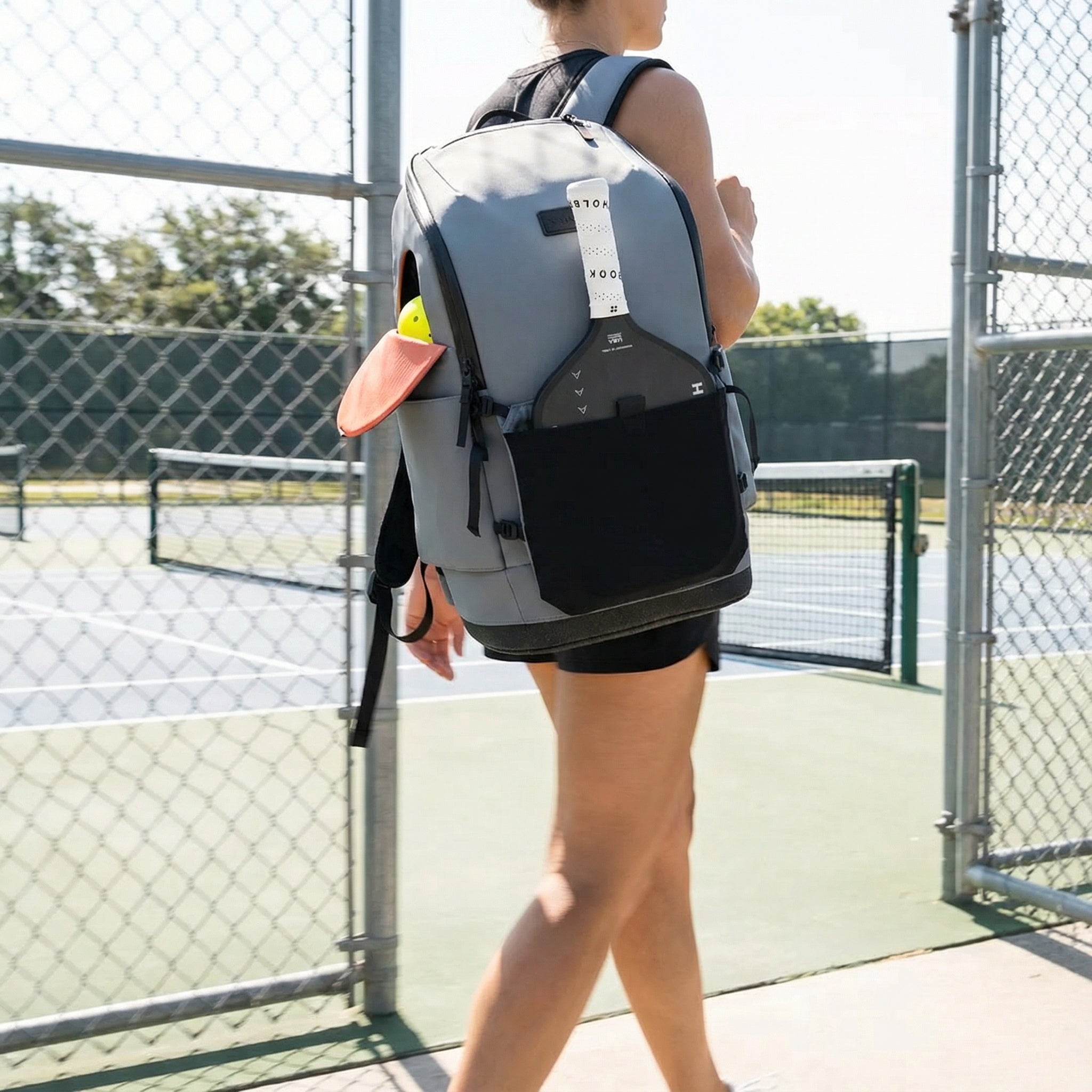
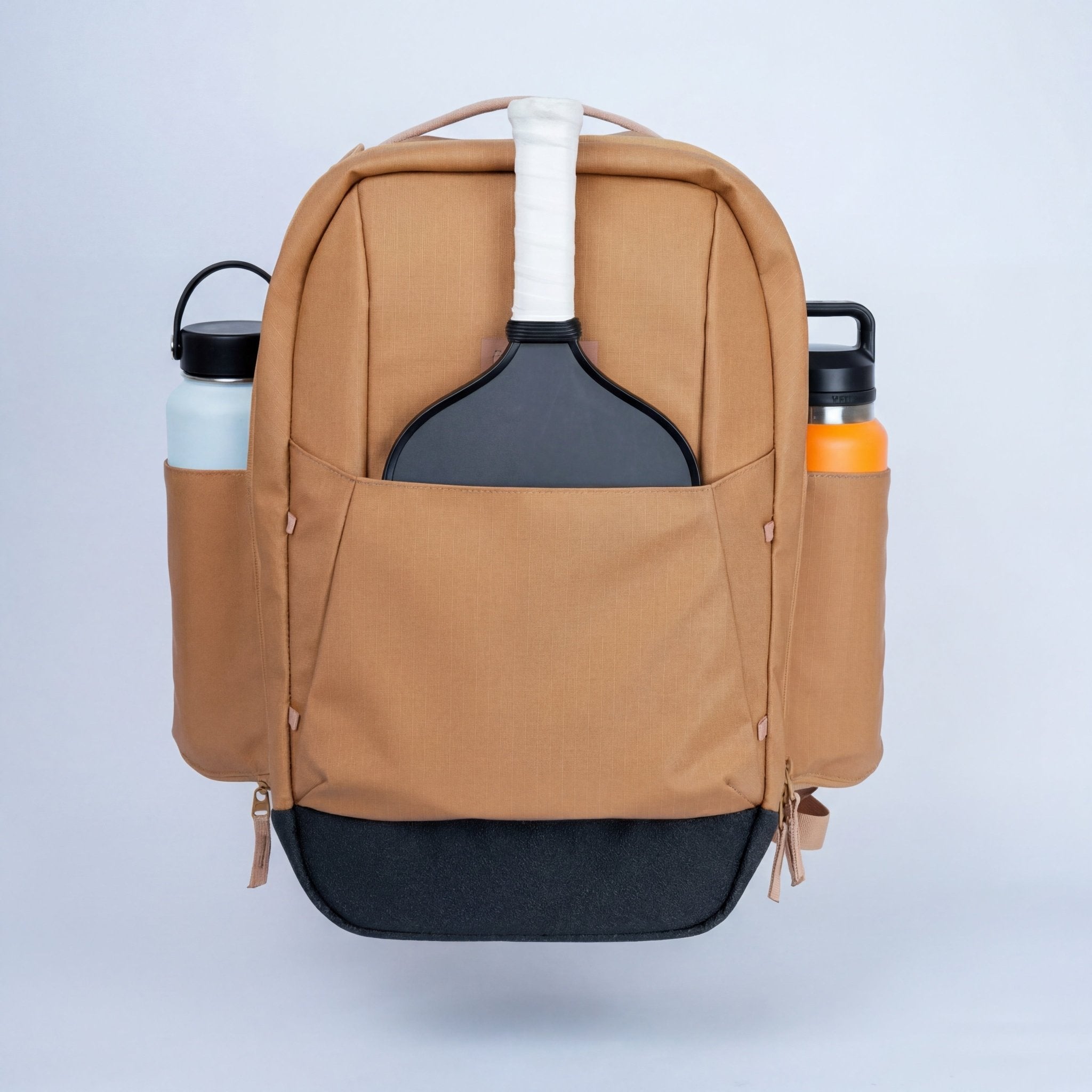
You've got the training tool sorted. Your bag might be next. The FORWRD Court Ranger V2 has organized compartments for all your court essentials — paddles, balls, and training gear — so everything's ready when you actually have court time. $195.
Shop the Court Ranger V2 → $195
Real-World Setup & 4 Practice Drills That Actually Work
Setup takes 2-3 minutes once you've done it a few times. Unfold the frame, lock the angle brackets, position the kitchen line marker about 7 feet from the rebounder face — this approximates the non-volley zone distance — and you're set. The carry bag doubles as a ball holder during drills.
Here are the four drills that produced the most measurable improvement:
Drill 1 — Dink Consistency (10 min)
Stand at your kitchen line marker. Set the rebounder angle to return the ball at waist height. Goal: 50 consecutive clean dinks without letting the ball rise above net height on your side. Track your streak. Sounds easy. It isn't — especially under fatigue. This drill exposes every inconsistency in your mechanics more ruthlessly than a live opponent does, because the ball comes back in exactly the same spot every time.
Drill 2 — Reset Under Pressure (8 min)
Hit a medium-pace drive at the rebounder from the kitchen line. The ball comes back faster than you sent it. Reset it softly back to the rebounder face. Alternate: drive, reset, drive, reset. This wires the physical motion of absorbing pace. The limitation: the ball always comes from the same height. Use this drill to build the motion; use court time with partners to build the read.
Drill 3 — Placement Targets (10 min)
Tape two small pieces of athletic tape on the rebounder net to create a 12" × 12" target zone. Practice hitting that target 10 consecutive times from the kitchen line before moving it to a different position. This drill is underused and extremely effective. Placing dinks precisely under fatigue is one of the highest-leverage skills in recreational pickleball, and you can drill it alone.
Drill 4 — Speed Hands Transition (6 min)
From the kitchen line, alternate between a soft dink and a sharp speedup at the rebounder. The goal is to switch from slow to fast without telegraphing the change in your shoulder turn. This is a tempo drill, not a placement drill — focus on how quickly you can shift gears, not where the ball goes.
A solid rebounder session runs 35-45 minutes before fatigue starts undermining the technique you're trying to ingrain. Short, focused sessions 3-4 times a week produce better results than one long weekend grind. For more solo training options, see our roundup of best pickleball training equipment in 2026 and our guide to pickleball training aids for spin work.
Final Verdict — Should You Buy the NET PLAYZ 4FT Rebounder?
If you're a 3.5+ player who wants structured solo reps and can't afford court time every day — yes, $199.99 is worth it. The build quality is solid, the angle adjustment is genuinely useful for simulating different shot types, and the kitchen line marker is a thoughtful addition that no other $200 rebounder includes.
It won't replace hitting with real opponents. Nothing does. But for drilling consistency, resetting under pressure, and ingraining your dink mechanics — especially during weeks when you can only get to the court twice — the NET PLAYZ earns its place in your training rotation.
At the same price as the Franklin Sports rebounder, it's the better buy. Against the OnCourt OffCourt Deluxe ($339.95), the choice depends on whether you need full-court width and a wheeled frame. Most recreational players don't — and the NET PLAYZ 4FT is enough.
The NET PLAYZ 4FT Rebounder is available now at Pickleball Central →
Common Questions
How fast does the ball return on the NET PLAYZ rebounder?
The ball comes back at roughly the same pace you send it — the Hi-Bounce net isn't a trampoline. For dinks from the kitchen line, expect a 1-2 second return time. For medium-pace drives, the return is faster but not exaggerated. The angle setting has the biggest effect on return trajectory: steeper angles send the ball higher and slower, shallower angles lower and faster.
Will it hold up outdoors year-round?
The powder-coated steel frame resists rust in normal outdoor conditions. Store it indoors when you're not using it — leaving it out through consistent rain or snow will degrade the net and frame faster. The net material handles UV exposure reasonably well, but extended sun exposure over multiple seasons will reduce net tension. Expect 2-3 years of regular outdoor use before the net needs any maintenance.
Is $200 worth it compared to cheaper alternatives?
The $80-120 rebounders on Amazon consistently show inconsistent net tension and frames that wobble under impact. At $199.99, you're paying for steel that doesn't flex and a net that holds its tension over time. If you play 3 times a week, the rebounder replaces 1-2 court bookings per month — at $10-20 a session, it pays for itself in under a year. Harder to justify for casual players who play once or twice a month.
Can beginners use this rebounder?
Technically yes, but it's not the best investment for a beginner. New players benefit more from lessons, open-play court time, and basic mechanics instruction than from solo drilling. The rebounder's value is highest for intermediate-to-advanced players who already have solid fundamentals and want to drill specific patterns. If you're below 3.0, prioritize getting on a real court with real people first — then come back to this.
How does it compare to a ball machine?
A ball machine like the Titan ONE ($2,199) feeds you balls at controlled intervals, heights, and spin — far more realistic and versatile. The rebounder requires you to generate the incoming ball yourself. For most recreational players, the rebounder at $200 is the right starting point. Ball machines make sense for coaches, serious competitive players, or facilities running group clinics.

Leave a comment
This site is protected by hCaptcha and the hCaptcha Privacy Policy and Terms of Service apply.