

Disclosure: This post contains affiliate links to Pickleball Central. If you purchase through our links, FORWRD earns a small commission at no extra cost to you. We only link to products we'd recommend regardless.
Last Updated: June 2026
Ball machines solve a specific problem: you want to improve faster than partner availability allows. If you're a 3.0 player working on third-shot drops, or a 4.5 player drilling transition zone footwork, having a machine that throws 85 balls exactly where you tell it is worth more practice-time per session than any rally partner. The TITAN ONE at $2,199 sits in the sweet spot between "this is actually affordable" and "this is actually good." Here's what you need to know before spending two grand.
Quick Verdict
Pros:
- Up to 70 mph ball speed — fast enough for any skill level's drive training
- Internal oscillation covers the full court without repositioning the machine
- 3-hour wireless battery life covers full practice sessions
- Titan Drills app with 12 pre-programmed drills — actual structured practice, not just ball throwing
- Trolley handle + large wheels make it genuinely portable — one person can move it
- Expandable from 85 to 240 balls with hopper extension
- 2-year machine warranty (6 months on battery)
Cons:
- 85-ball base capacity is lower than Lobster Champion (135) — drill sequences pause for reloads
- 48 lbs — portable but not light; loading into a car is a two-arm lift
- No AI, no player tracking, no adaptive feed — it runs the same drill sequence regardless of where you stand
- Battery warranty is only 6 months vs. 2 years for the machine itself
- $2,199 is real money — justifiable for serious players and coaches, harder to justify for casual use
Price: $2,199 | Speed: Up to 70 mph | Capacity: 85 balls (extendable to 240) | Battery: ~3 hours
Best for: Individual players drilling 3+ times per week, coaches running solo sessions, clubs looking for a portable machine under $2,500.
Skip it if: You're a casual 1x/week player who just wants to warm up; you need 135+ ball capacity without an extension; budget is firm under $2,000.
Specs at a Glance
| Price | $2,199 (down from $2,449 MSRP) |
| Ball Speed | Up to 70 mph |
| Hopper Capacity | 85 balls (expandable to 240 with extension) |
| Oscillation | Internal oscillation (horizontal) |
| Battery Life | Up to 3 hours wireless |
| Weight | 48 lbs |
| Dimensions | 31"H × 22"L × 14"W |
| Drills | 12 pre-programmed via Titan Drills app |
| Power Options | Dual 4AH batteries, 6AH battery, or AC module (purchased separately) |
| Portability | Extendable trolley handle + large wheels |
| Storage | Zippered compartment for paddles and balls |
| Warranty | 2 years (machine) / 6 months (battery) |
| Distinction | Official ball machine of UPA Tournament Store |
Who Actually Benefits From a Ball Machine
Before spending $2,199, be honest with yourself. A ball machine makes you better if — and only if — you use it consistently for deliberate practice. Deliberate practice means drilling specific shots repeatedly with intentional form correction. It doesn't mean warming up or hitting 85 balls semi-randomly while listening to a podcast.
The players who get the best ROI from the TITAN ONE:
- 3.0–4.0 players who need to groove specific mechanics (third-shot drop, reset volleys, transition zone footwork) and can't do it efficiently in open play because rallies are too chaotic and short.
- 4.0–4.5 players drilling high-rep pattern sequences — around the post, erne setups, ATP footwork — that require exact ball placement you can't get from a human feeder consistently.
- Coaches running solo sessions or serving multiple students with a consistent feed machine running in background.
- Club players who book early morning court time before partners are available.
If you play twice a week casually and want to warm up before rec play, the TITAN ONE is overkill. A friend with a hopper and feed consistency will do.
"The biggest improvement I made in my game happened over a winter when a buddy had a Lobster and we split court time. Drilling the same third-shot drop 200 times back-to-back is just not something you can replicate in open play. A machine does what no partner can — it doesn't miss the feed."
— Topher, FORWRD Co-founder, 4.0 player
Setup and Operation
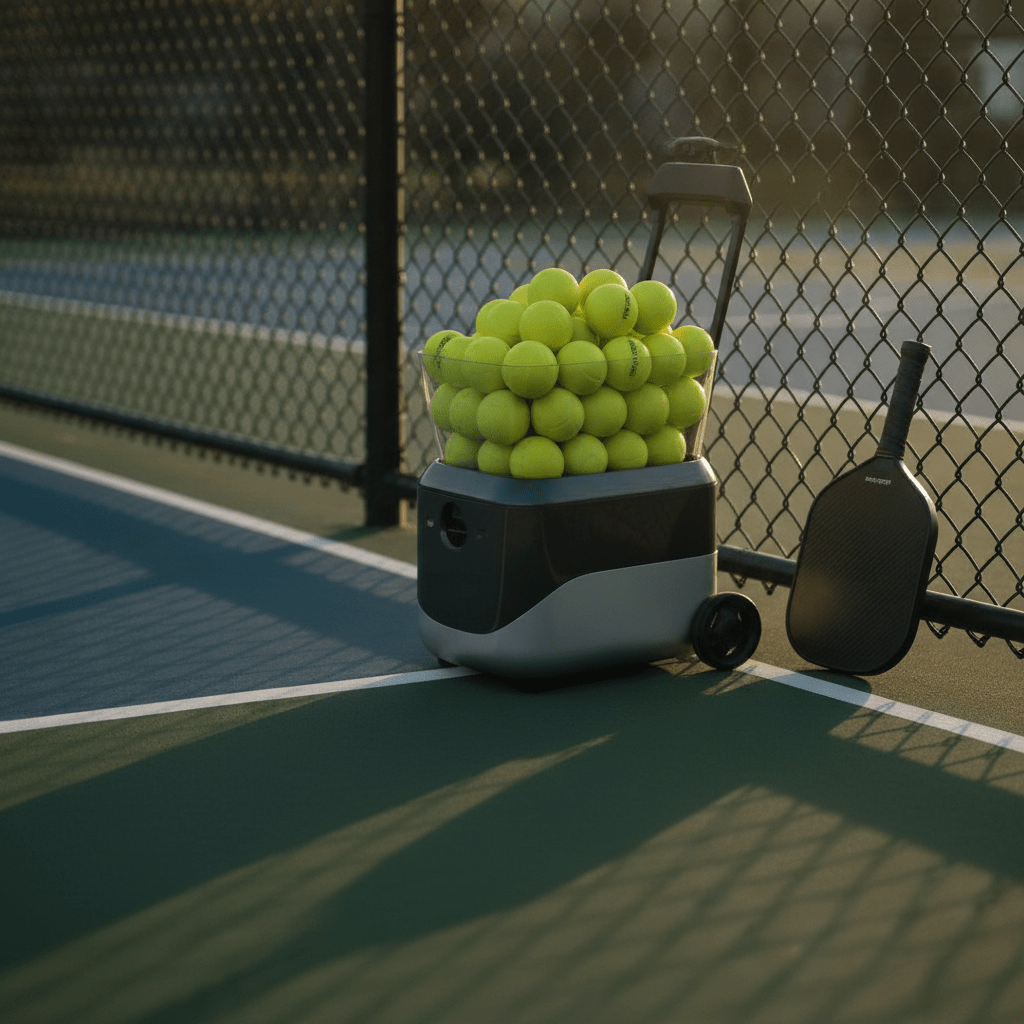
Out of the box, the TITAN ONE is a suitcase-style machine with an extendable trolley handle and large wheels — you pull it to the court like luggage. At 48 lbs, it's a two-arm lift into a car but manageable solo on flat surfaces. One person can set up and break down without assistance.
Loading: the top hopper holds 85 balls. You can do a full practice session with that capacity if your drills run 10–20 ball sequences — which the pre-programmed drills are designed around. If you want longer sequences without pausing to reload, the expansion hopper (sold separately) takes you to 240.
Setup time from parking lot to first ball: about 4 minutes. Position the machine at the center service line baseline, connect the battery, open the Titan Drills app, select your drill. The oscillation system means you don't need to manually reposition for wide feeds — the machine handles left/right variation automatically.
The Titan Drills App — What 12 Drills Actually Get You
The Titan Drills app is free, connects via Bluetooth, and comes pre-loaded with 12 pickleball-specific drills. Each drill has a set sequence of ball placement, speed, and spin. You select, it runs. No custom programming required.
The 12 drills cover core skill areas: transition zone footwork, kitchen dinking patterns, third-shot drop sequences, overhead smash setups, reset volley training, and baseline drive series. For 3.0–4.0 players, these 12 drills alone will cover most of what you need for 6–12 months of focused improvement.
The limitation: every drill runs identically regardless of where you are on the court. The machine doesn't track your position, doesn't adapt the feed based on your response, and doesn't tell you if you're hitting the target. You bring the accountability. Players who've used AI-adaptive machines (SIMON X, Lobster Elite) will notice the static drill sequences feel less dynamic. But for most individual players, the 12 pre-programmed drills are more than they'll exhaust.
A legitimate knock: the app is solid but basic. Remote control, drill selection, speed/spin adjustments. No video feedback integration, no progress tracking, no performance analytics. It's a remote, not a coaching platform. Titan has indicated expanded app features are in development — they're not there yet.
Ball Speed: Does 70 MPH Matter?
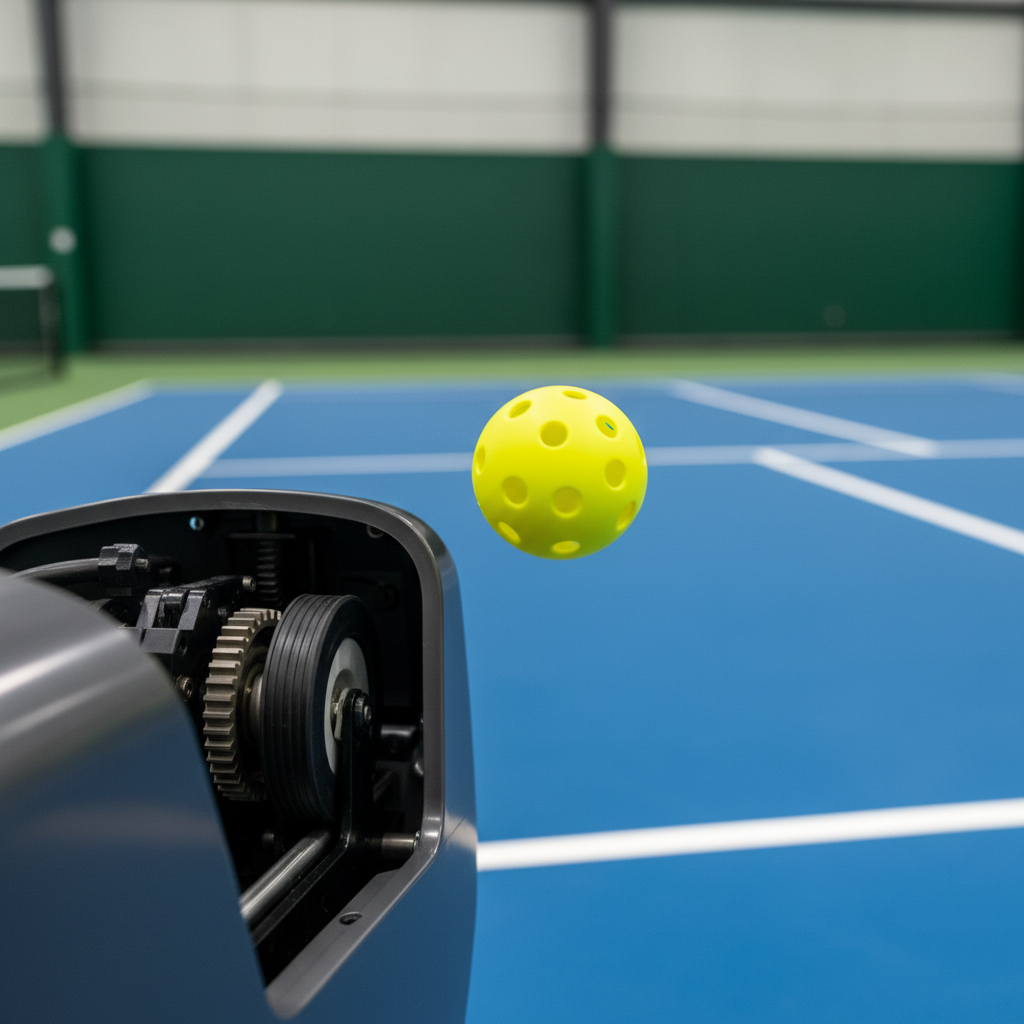
Yes — for a specific use case. Training against fast feeds at 65–70 mph at the baseline simulates the pace you face against 4.5+ opponents. Most rec players play against 30–50 mph pace; drilling at 70 mph in practice makes game-speed feel manageable.
The speed range (adjustable from slow feeds up to 70 mph) means the same machine works for 2.5 beginners learning to track balls and 4.5 players training reaction time. The upper speed ceiling is high enough that it doesn't get outgrown quickly — this matters for long-term value.
For context: the Lobster Pickle Champion tops out at 65 mph. The TITAN ONE's 70 mph ceiling gives it a slight edge for players drilling against fast feeds, though 5 mph difference at the extreme upper end is unlikely to matter for most practice sessions.
Battery and Portability
The standard configuration ships with dual 4AH batteries providing up to 3 hours of wireless practice. A 6AH single battery upgrade is available for longer sessions. AC module available for courts with outlet access (facilities, permanent indoor courts).
Three hours of practice is ample for individual players — most structured drill sessions run 45–90 minutes. Two sessions on a single charge without reloading. For coaches running back-to-back clinics or multi-hour sessions, the 6AH upgrade or AC module is worth planning for.
Battery warranty is 6 months — shorter than the 2-year machine warranty. This is the industry norm for lithium battery warranties and not unique to Titan, but worth noting. Budget for potential battery replacement after year 2–3 of heavy use.
Hopper Capacity — The Honest Weak Spot
85 balls is the base capacity. Against the Lobster Pickle Champion's 135-ball hopper, this is TITAN's biggest functional disadvantage. If your drills require long sequences without pause — 100+ balls before reload — you'll either interrupt sessions to reload or buy the expansion hopper.
The expansion hopper (brings capacity to 240 balls) is a separate purchase. If you're buying for a club or coaching context, factor that cost in from the start. For individual practice with 10–20 ball drill sequences, 85 balls is adequate and you'll reload during natural breaks.
This isn't a dealbreaker — it's a workflow consideration. Know how you practice before deciding whether the base capacity works or whether you need to budget for the extension.
TITAN ONE vs. Lobster Pickle Champion
The most direct comparison — two portable battery machines priced within $200 of each other ($2,199 TITAN ONE vs. ~$1,999 Lobster Champion).
| Factor | TITAN ONE | Lobster Pickle Champion |
|---|---|---|
| Price | $2,199 | ~$1,999 |
| Max speed | 70 mph | 65 mph |
| Hopper capacity | 85 balls (240 with extension) | 135 balls |
| Battery life | ~3 hours | ~6 hours |
| Weight | 48 lbs | 44 lbs |
| App drills | 12 pre-programmed | Pre-programmed (fewer options) |
| Wheel size | Large (trolley) | 8-inch — better on rough terrain |
| Machine warranty | 2 years | 2 years |
The Lobster Champion wins on base hopper capacity (135 vs 85 balls) and battery life (6 hours vs 3). The TITAN ONE wins on max speed (70 vs 65 mph) and drill app quality. At $200 more, the TITAN ONE makes sense if you specifically need the higher speed ceiling or a better app experience. The Champion makes more sense if you want more balls in the hopper and longer uninterrupted sessions.
Check the Lobster Pickle Champion at Pickleball Central →
TITAN ONE vs. Lobster Pickle Phenom
These aren't really the same category — the Lobster Pickle Phenom is a commercial-grade AC-powered facility machine at ~$3,899 that weighs 99 lbs and requires a power outlet. The TITAN ONE is a portable battery machine at $2,199. The comparison matters because facility buyers often consider both.
Lobster Phenom wins for: permanent facility installation, high-volume coaching (185-ball hopper, AC power = unlimited sessions), and commercial durability. It's not portable — you're not loading this in a car. TITAN ONE wins for: every use case requiring portability, personal ownership, or courts without dedicated outlet access. The $1,700 price difference is real — unless you're running a club facility, the Phenom's commercial specs are overkill.
Check the Lobster Pickle Phenom at Pickleball Central →
The Cost-Per-Session Math
Ball machines feel expensive until you do the math against the alternative. A private lesson with a 4.5 coach in most markets runs $60–$120/hour. An hour of drill time with a consistent feeder-partner (assuming they're 4.0+ and actually feed well) costs you reciprocal practice time plus court fees.
A realistic usage case for the TITAN ONE: individual player, 3 practice sessions per week, 2 years of use before considering replacement.
- 3 sessions/week × 52 weeks × 2 years = 312 sessions
- $2,199 ÷ 312 sessions = $7.05 per session
- Add $200/year in court fees for dedicated drill time = $8.33/session fully loaded
For players who actually use it consistently, that's objectively cheap. The risk is buying the machine, using it 20 times over 2 years, and paying $110/session. Know yourself before buying.
Who Should Buy the TITAN ONE
Competitive individual players who play 3+ times per week and have identified specific weaknesses to drill. You're not using it for warm-up — you're using it for deliberate practice on specific shots with measurable repetitions. The 12 pre-programmed drills cover your needs for a year of focused work, and 70 mph max speed future-proofs the machine as your skills improve.
Coaches running sessions at courts without permanent facility machines. The trolley portability and 3-hour battery means you set up at any court, run a structured session, and pack up without infrastructure. The $2,199 price is the lowest entry point for a machine with legitimate coaching utility.
Clubs considering their first shared machine. At $2,199, the TITAN ONE is accessible enough for a member-funded purchase, portable enough to be stored and transported, and robust enough (2-year warranty) for shared use.
Who Should Look Elsewhere
Casual players who play once a week or less — the cost-per-session math doesn't work, and you'll get better bang for your buck from occasional lessons. Players who need 135+ ball capacity without extension — budget for the expansion hopper or look at the Lobster Champion's 135-ball standard capacity. Players with a strict budget under $2,000: the Lobster Champion at ~$1,999 delivers comparable function at the lower price point. Players who want AI-adaptive drill sequences: neither the TITAN ONE nor the Lobster machines offer this — the Erne or SIMON X are the correct category, at higher prices.
Pricing & Availability
The TITAN ONE retails at $2,199 at Pickleball Central (reduced from the original $2,449 MSRP). Multiple power configurations available — confirm whether base price includes battery at purchase. Free shipping included.
Buy the TITAN ONE at Pickleball Central →
Complete Your Setup
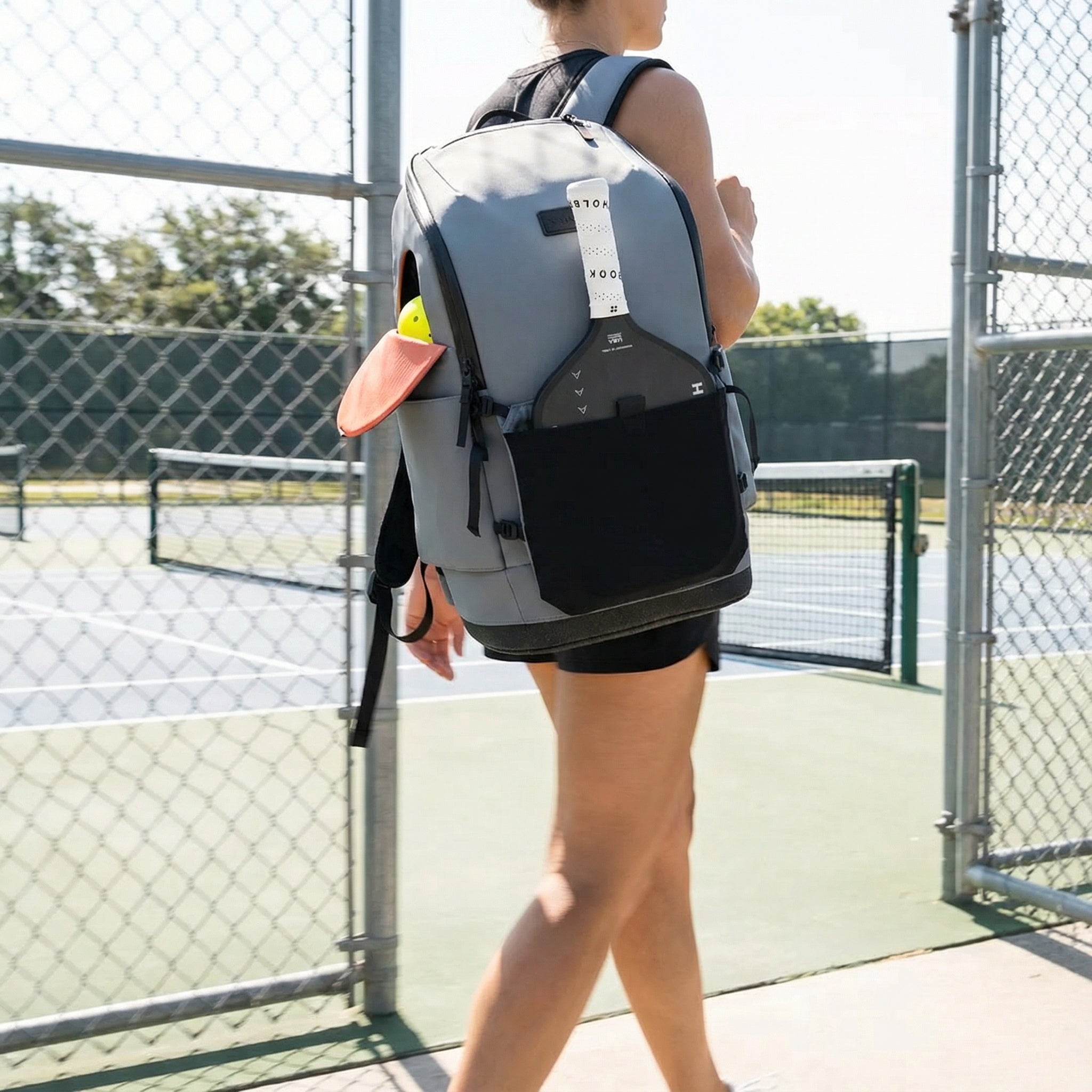
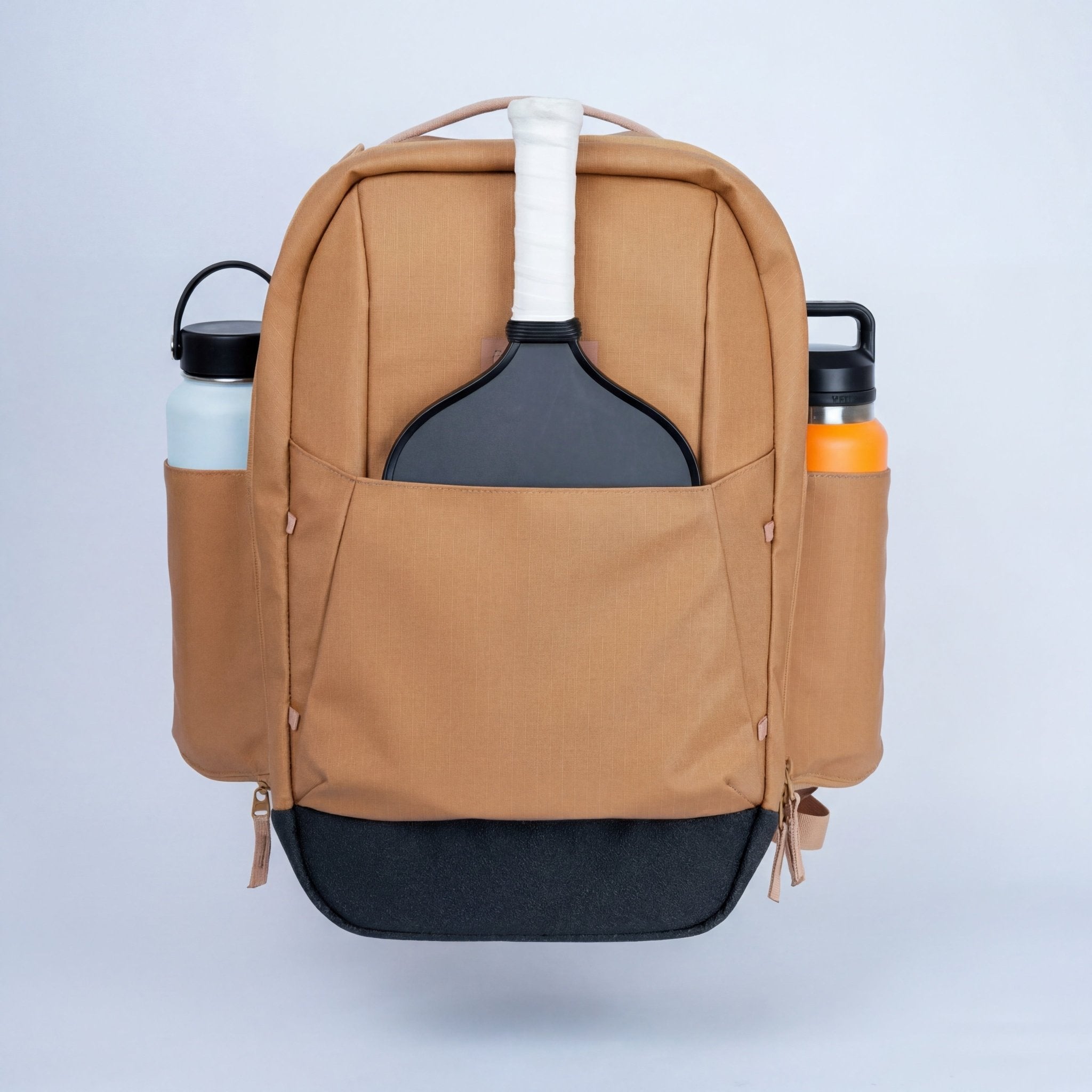
Your machine handles practice. Your bag handles everything else. The FORWRD Court Ranger V2 ($195) has organized compartments for all your court essentials — paddles, extra balls, tablet/phone for the Titan app, water bottle. Built with 500+ player feedback, 16" laptop sleeve, YKK AquaGuard zippers.
Shop Court Ranger V2 →
FAQ: TITAN ONE Pickleball Machine
What is the best pickleball ball machine?
It depends on your use case. For individual players who want a portable battery machine under $2,500 with a solid drill app: the TITAN ONE and Lobster Pickle Champion are the top options. TITAN ONE edges it for drill variety and max speed (70 mph). Lobster Champion wins on base hopper capacity (135 balls) and battery life (6 hours). For facilities and coaches wanting unlimited AC power and 185-ball capacity: the Lobster Pickle Phenom at ~$3,899.
Is the TITAN ONE a good machine?
Yes, for the right player. The 70 mph speed ceiling, internal oscillation, 12-drill app, and 3-hour battery life cover everything most individual players and coaches need. The 85-ball base hopper is the weakest spec versus competitors — buy the expansion if your drills need longer sequences without reloading. For $2,199 with a 2-year machine warranty, it's a legitimate mid-tier machine at a competitive price.
How much does a TITAN ONE cost?
The TITAN ONE retails at $2,199 at Pickleball Central (reduced from original $2,449 MSRP). Multiple power configurations exist — the base machine, single 6AH battery, dual 4AH batteries, or AC module. Confirm which configuration is included at your purchase price. The expansion hopper (to 240 balls) is sold separately.
What is the difference between the TITAN ONE and a Lobster Pickle machine?
TITAN ONE vs. Lobster Pickle Champion: TITAN ONE is $200 more, tops out at 70 mph (vs 65), has a better drill app, but has a smaller base hopper (85 vs 135 balls) and shorter battery life (3 vs 6 hours). TITAN ONE vs. Lobster Pickle Phenom: completely different category — the Phenom is a 99-lb commercial facility machine at ~$3,899 that requires AC power. TITAN ONE is a 48-lb portable battery machine for individual players at $2,199.
Can one person set up the TITAN ONE alone?
Yes — the trolley handle and wheels are designed for single-person transport across flat court surfaces. Loading it into a vehicle requires lifting 48 lbs, which most players can do solo. Setup from arrival to first ball takes about 4 minutes. No installation, no tools, no permanent mount required. It's a genuine one-person operation for court-side use.
Final Verdict
The TITAN ONE is a well-engineered mid-tier ball machine that hits the right price point for serious individual players and coaches. At $2,199, it's not cheap — but the cost-per-session math works out to under $8/session for players who actually use it consistently. The 70 mph speed ceiling, internal oscillation, 12-drill app, and 3-hour battery cover real practice needs.
The honest weakness is the 85-ball base hopper — if you run long drill sequences without pause, budget for the expansion. The battery warranty (6 months) is standard but shorter than you'd hope. And if you're the type of player who'll use a machine twice and let it collect dust, no machine at any price is a good investment.
For the player it's designed for — someone who practices regularly, drills with intention, and wants a machine that covers current skill level and grows with them — the TITAN ONE delivers. It competes seriously with the Lobster Pickle Champion on features and beats it on drill depth, while staying $1,700 under the commercial Lobster Phenom for use cases that don't need commercial capacity.

Leave a comment
This site is protected by hCaptcha and the hCaptcha Privacy Policy and Terms of Service apply.