

Best Pickleball Training Aids for Spin Drills 2026: Build a Topspin Serve in 8 Weeks
Last Updated: July 2026
Spin has become the most talked-about skill gap in recreational pickleball — and for good reason. A consistent topspin serve or topspin third shot drop changes the geometry of the rally in your favor before your opponent even decides what to do with the ball. The problem is that most training content either lists products or explains technique, but never connects them. This guide does both.
For the companion guide to general training equipment, see our ball machine deep-dive. For building spin into your weekly practice structure, cross-reference the Pickleball Practice Routine templates.
Why Spin Has Become the Biggest Skill Gap Between 3.5 and 4.0 Players
Three years ago, most recreational players were hitting flat serves. Now, watch any open play at a 4.0+ session: topspin serves, sidespin serves, topspin third shot drops that bounce low and kick sideways — spin is everywhere. The 3.5-to-4.0 jump in 2026 is increasingly a spin jump.
The reason isn't that spin is harder to generate than it used to be. Modern carbon fiber paddle faces with raw texture (like the InfiniGrit weave on Selkirk's control line) grab the ball much more aggressively than the older fiberglass faces most rec players started on. Spin is more accessible than ever. But developing it requires a specific kind of drilling — repetitive, solo-friendly, feedback-rich — that most players aren't doing because they don't have the right tools.
The serve is the right place to start. It's the one shot in pickleball where you have complete control of the ball and infinite time to set your grip and swing path. Get the topspin serve dialed first. The topspin third shot drop follows from the same mechanics.
The Three Types of Spin in Pickleball (and Which Is Worth Drilling First)
There are three spin types worth developing as a recreational player:
Topspin — the ball rotates forward (same direction as travel), causing it to dip quickly after clearing the net and bounce low and fast. This is the serve spin worth learning first. It's also what drives the nasty third shot drops that die at the opponent's feet at the kitchen line.
Sidespin — the ball rotates left or right, causing lateral movement after the bounce. Most useful on serves to push opponents off the centerline, and on drives to make the ball skid sideways at the kitchen. Harder to develop, higher payoff once consistent.
Backspin (slice) — the ball rotates backward, causing it to slow down and stay low after bouncing. This is your drop shot spin — the one that makes reset dinks die in the kitchen. Most players already have some of this from the natural downward trajectory of drops; the training focus is on making it more consistent and pronounced.
The 8-week program in this guide focuses on topspin first. Get that one locked in before adding sidespin to your serve arsenal. Backspin develops naturally as a side effect of the topspin work — the brush mechanic is similar.
Best Training Aids for Solo Spin Practice (No Partner Needed)
Most spin development happens solo. You need volume — hundreds of serves, not tens — and a partner can only feed you so many balls before someone's wrist gives out. Here's what actually works for solo drilling:
1. Ball Machine with Topspin Capability: Pickleball Tutor Spin
The Pickleball Tutor Spin Ball Machine is the gold standard for solo spin training. It throws balls with topspin, slice, or sidespin at programmable intervals, letting you groove your return mechanics repeatedly. But the real value for spin development isn't in the return practice — it's in the serve practice you do while the machine is loading balls. The machine gives you a consistent rhythm: 5 seconds to reset, 5 seconds to serve. That cadence builds serve repetitions fast.
More importantly: returning actual topspin shots from a machine teaches your body what topspin looks and feels like as it comes in, which accelerates your ability to recognize and produce it on your own serves. It's a mirror mechanic.
2. Ball Hopper for Solo Serve Volume
If a ball machine isn't in the budget, a high-capacity ball hopper is the non-negotiable training tool for solo serve development. The Franklin Pickleball Ball Hopper holds 50+ balls — enough for a meaningful serve session without constant ball-chasing interruptions.
The protocol: load the hopper, serve until empty, chase balls, repeat. No partner, no dependencies, no wasted time. For topspin serve development specifically, you want to hit 40–60 serves per session focused purely on the brush contact — not thinking about placement, just the spin mechanic. The hopper makes that volume possible in 20 minutes.
3. Overgrip for Spin Feel Development
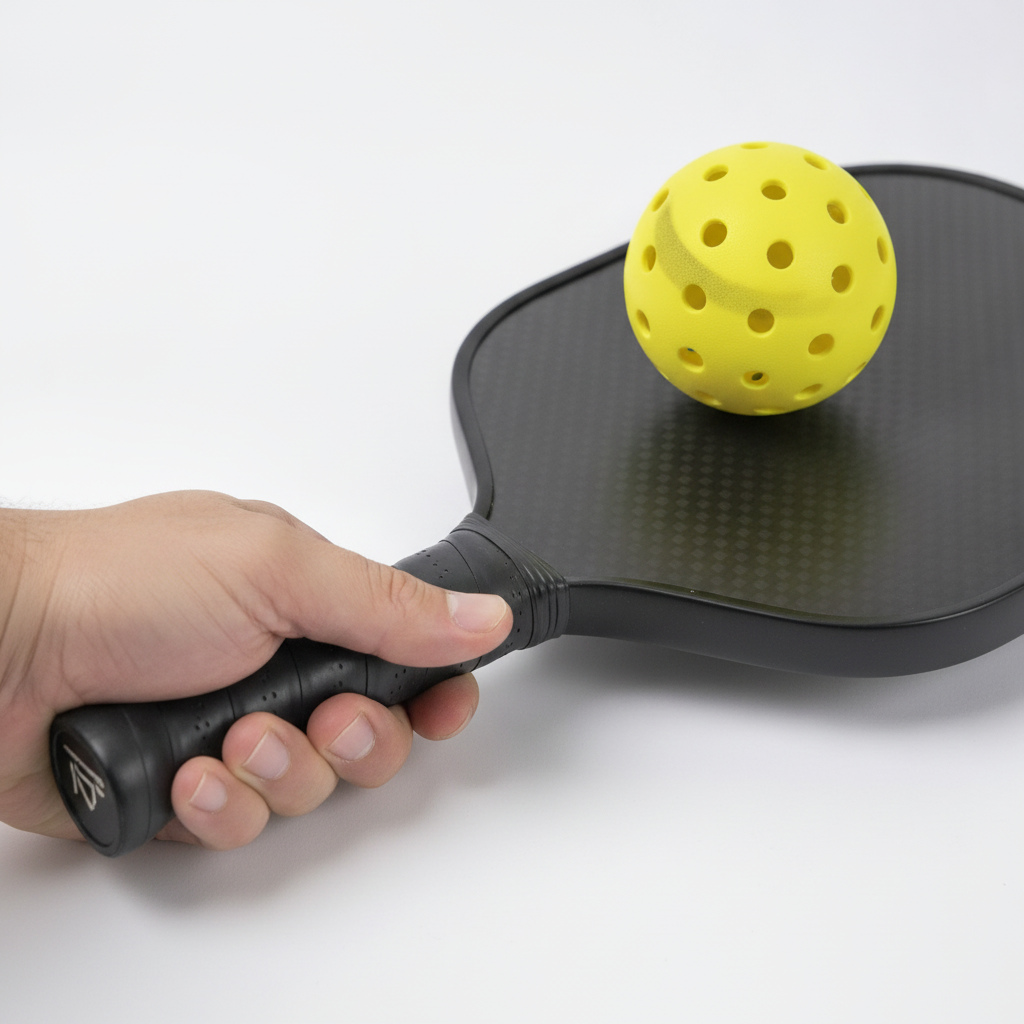
This one surprises players, but grip texture directly affects how much spin you can feel generating. A dry, worn overgrip gives you no tactile feedback on whether you've brushed the ball properly. A fresh, tacky overgrip lets you feel the ball bite the surface during contact — which is how you learn the difference between brushing and hitting.
For spin training sessions, replace your overgrip fresh every 2–3 sessions. The overgrip selection at Pickleball Central includes multiple tackiness levels — Selkirk and Tourna both make excellent spin-training-appropriate options.
Best Training Aids for Spin Drills With a Partner
Partner sessions let you add a different dimension: feedback on the receiving end. When you're hitting topspin serves, your partner is the one experiencing what actually got spin on it. Their reaction — did they pop it up? Did it bounce low? — tells you more than self-analysis does.
For partner spin drills, the most effective tool is simply more balls. A full hopper split between two players means you're both drilling with high volume and minimal wait time. One player serves 10 balls with spin focus; the other returns and calls out what they're seeing ("that one had real topspin — it caught me off guard on the bounce"). Then switch.
The ERNE Training Pickleballs are worth considering for partner spin drills specifically — the dual-color design makes the ball's rotation visible mid-flight, which gives both players real-time feedback on whether the spin is actually there. At $2.80/ball, they're a premium purchase for training; use 6–8 of them per partner session rather than your full hopper.
The 8-Week Spin Serve Development Progression (Tool-by-Tool)
This is the structure that actually worked for me over a 6-week focused training block (I compress the full 8 weeks here for the 3× and 5×/week player). The key insight from weeks 1–3: if you're thinking about placement, you're not thinking about spin. They're separate skills. Only merge them in week 5.
Weeks 1–2: Contact Mechanics
Tool: Ball hopper + fresh overgrip
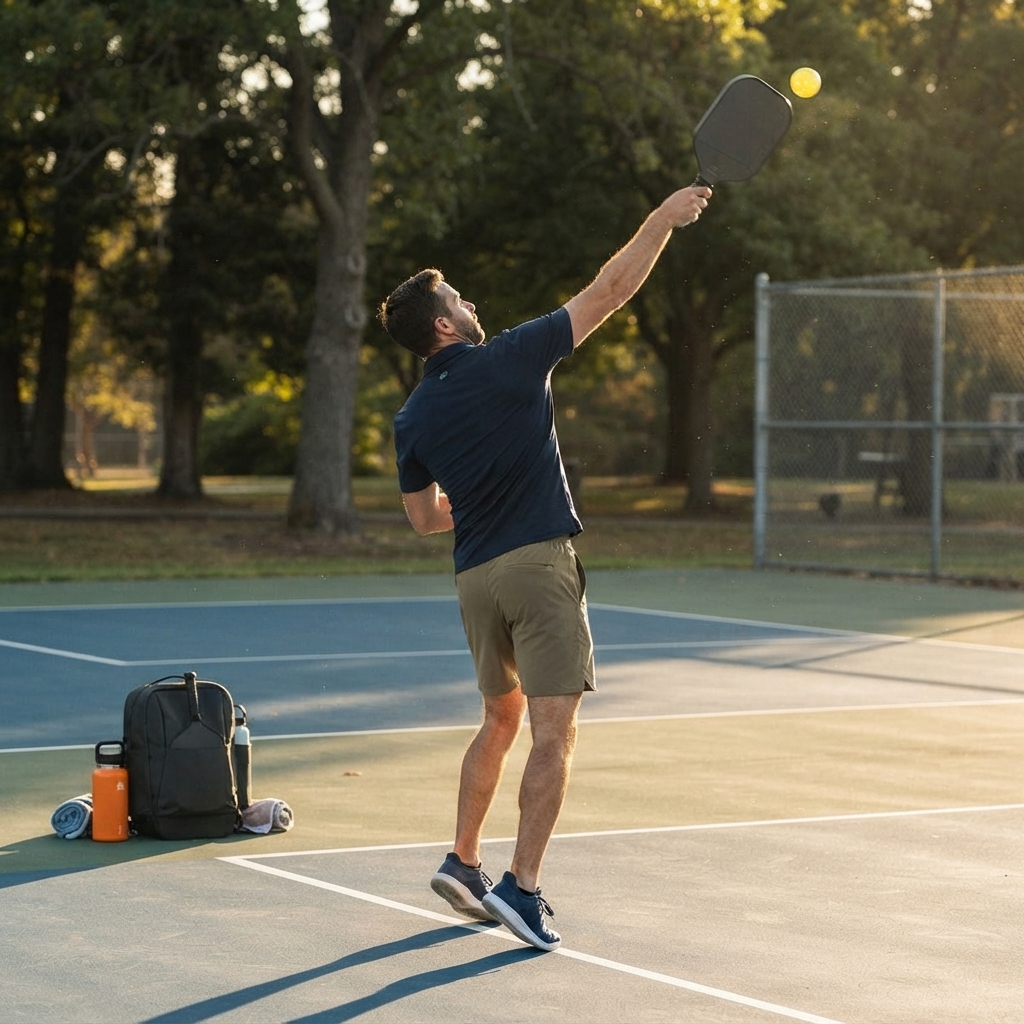
Serve to the far end of the court — placement doesn't matter. Focus entirely on the swing path: low-to-high, brushing from the 7 o'clock position on the ball to the 1 o'clock position. Every serve should feel slightly awkward. You're building a motion that's unnatural at first.
Self-assessment benchmark: 5 of 10 serves should feel like the ball "grabbed" the paddle face. You'll know it when it happens.
Weeks 3–4: Rotation Recognition
Tool: Ball hopper, ERNE training balls (optional), partner
Add a partner for part of each session. Hit 20 serves; they call which ones had visible spin. You're not trying to get every serve spinning — you're trying to understand what the physical difference feels like between a flat serve and a spin serve, from both ends.
Benchmark: partner should confirm spin on at least 7 of 10 serves by end of week 4.
Weeks 5–6: Speed and Placement
Tool: Ball hopper, target cones
Now add placement. Serve to a cone at the backhand corner — still with the topspin swing path. The ball will tend to kick left (for right-handed servers) after the bounce, pushing your opponent further back. Learn to exploit that angle.
Benchmark: 6 of 10 topspin serves land within 3 feet of the target cone.
Weeks 7–8: Match Integration
Tool: Open play, not drills
Stop drilling and start using. The goal this week is committing to your topspin serve in actual games, even when it goes wrong. You'll fault more than usual for 1–2 sessions. Push through it. By week 8, the serve should be reliable enough to use 50%+ of points in open play.
Benchmark: 8 of 10 topspin serves clear the net and land in (not just spin attempts).
"The players who develop spin fastest are the ones who commit to looking bad for three weeks. They'll fault more, they'll feel awkward, they'll wonder if it's worth it. Week four is where it clicks. After that it's just refinement. The ones who give up in week two and go back to their flat serve — they're still hitting flat serves two years later."
— Topher Donahue, FORWRD co-founder and certified pickleball instructor
Complete Your Setup
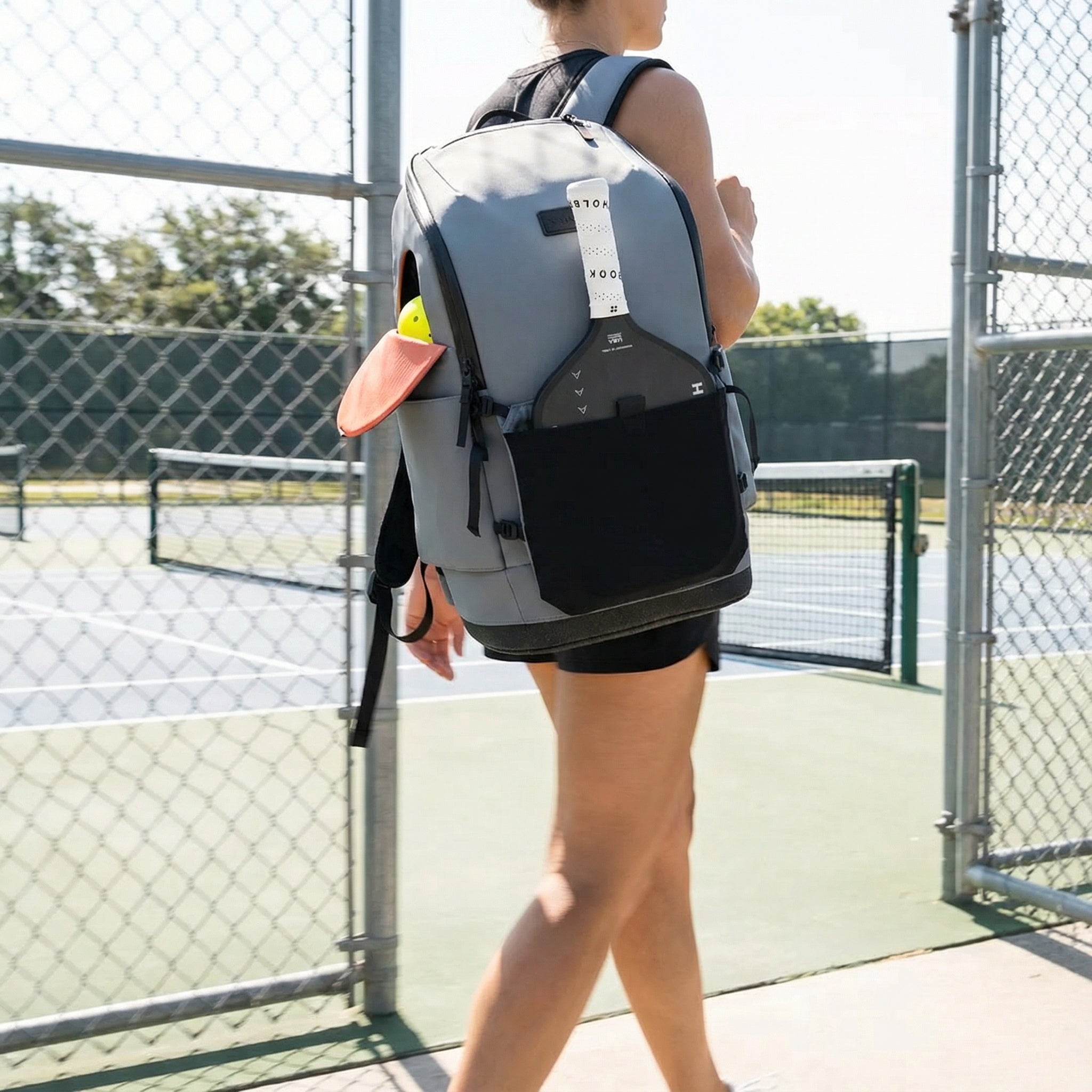
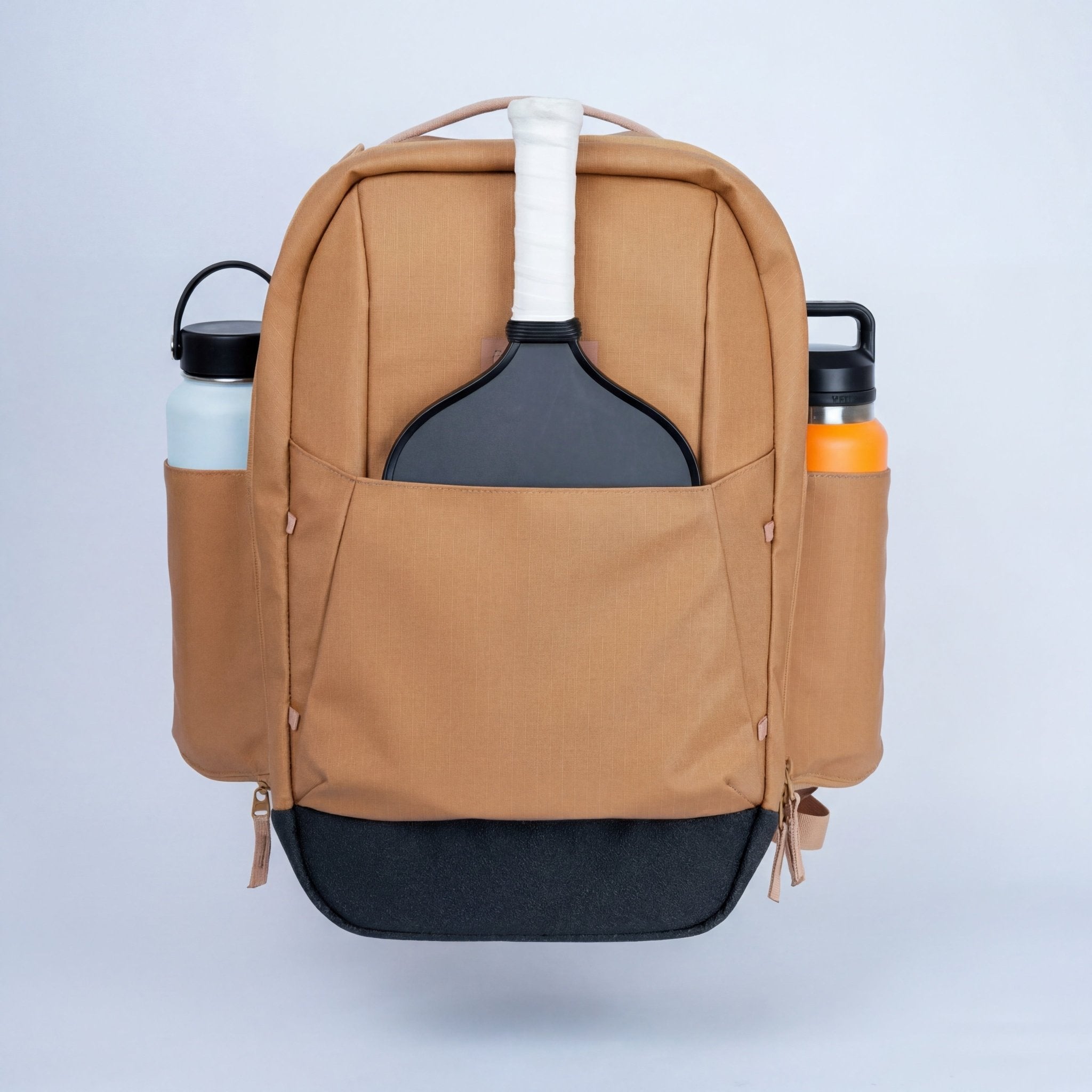
Once your spin game is consistent enough to bring to tournaments, the FORWRD Court Caddy has a dedicated ball pocket that holds a full tube of outdoor training balls separate from your match balls — so your spin-practice pickleballs and your fresh game balls never get mixed up.

FAQ: Pickleball Spin Training Questions
What's the best training aid for improving pickleball spin?
A ball hopper with 40–60 ball capacity is the most accessible and highest-impact tool for solo spin development — it lets you drill serve volume without constant interruption. If budget allows, the Pickleball Tutor Spin Ball Machine adds the dimension of returning topspin shots, which accelerates pattern recognition. For a partner-based tool, dual-color training pickleballs like the ERNE Training Pickleballs make spin visible in flight.
Can you really improve your pickleball spin without a partner?
Yes — and solo drilling is often more effective for spin development than partner drilling, at least in the early weeks. A partner introduces variability and social pressure that distracts from the contact mechanic you're trying to groove. Solo serve sessions with a full hopper give you the focused, high-volume repetitions where spin habits actually form. Add a partner in weeks 3–4 for feedback on what they're seeing from the receiving end.
What drills help develop a topspin serve in pickleball?
The most effective solo drill: stand at the baseline with a full hopper, serve to the opposite service box focusing only on the swing path (low-to-high, brushing 7 o'clock to 1 o'clock on the ball). Placement is irrelevant in weeks 1–2. Count serves that felt like the ball "grabbed" the face — that tactile sensation is what you're training. Do 40–60 reps per session, 3× per week minimum.
Do spin machines help recreational pickleball players?
They help most with return and reset practice — a machine throwing topspin at you teaches your body to read and respond to topspin trajectories. For serve development specifically, a ball hopper delivers better ROI because it gives you serve volume (outgoing spin) rather than return practice (incoming spin). Both are valuable; for a first spin training tool, the hopper is the better starting investment.
What makes a pickleball easier to put spin on?
Two things: your paddle's face texture and your overgrip condition. A carbon fiber face with a raw, rough weave (like InfiniGrit carbon) grabs the ball far more aggressively than a smooth fiberglass face. A fresh, tacky overgrip lets you feel the ball bite during contact — giving you feedback on whether your swing path actually generated spin. Replace your overgrip every 2–3 spin-focused training sessions to keep that feedback loop alive.
Final Verdict
The gear list for building spin in 8 weeks isn't long: a ball hopper for serve volume, a fresh overgrip for contact feedback, and a Pickleball Tutor Spin machine if you want to accelerate the return-side pattern recognition. The rest is commitment to looking awkward in weeks 1–3 and trusting the process. The players who develop consistent topspin are almost never the most talented — they're the ones who drilled it specifically, with the right tools, at volume, until it stopped feeling forced.
Pair this with the serve improvement guide for the technique side, and the practice routine templates for building spin drilling into your weekly structure.

Leave a comment
This site is protected by hCaptcha and the hCaptcha Privacy Policy and Terms of Service apply.