

Disclosure: This post contains affiliate links to Pickleball Central. If you purchase through our links, FORWRD earns a small commission at no extra cost to you. We only link to products we'd recommend regardless.
The fastest way to improve at pickleball isn't to play more — it's to practice with structure. A well-designed pickleball practice routine separates players who actually improve from players who show up twice a week, hit the same shots, and plateau for years. Below you'll find both a 3x/week and a 5x/week template you can use immediately, plus a session tracker and the drills that actually move the needle.
Last updated: June 2026
Why a Practice Routine Beats Casual Play for Improvement
For 14 months, I showed up to open play three times a week and stayed right at the same 3.5 level. Every session, I played hard. Had fun. Lost to the same people. Beat the same people. No movement.
Then I spent 90 days doing something different: I replaced one open play session per week with a structured 45-minute solo drill block, and I replaced a second one with deliberate partner practice — specific drills, specific goals, not just rallying. Within three months, I was winning matches I'd been losing for over a year.
The difference isn't magical. Open play is essentially match practice without focused learning. You repeat your existing patterns under competitive pressure. Structured practice breaks those patterns on purpose — with repetition that builds new muscle memory before you bring it into a real match.
The research on skill acquisition is clear: deliberate practice with specific feedback loops accelerates improvement significantly faster than equivalent time in unstructured game play. USA Pickleball's coach certification program is built around the same principle — structured progressive repetition, not just match reps. Tyson McGuffin — who's been vocal about his own training philosophy in interviews — puts it simply: repetition over volume. Forty focused third-shot drops matters more than 200 scattered ones across a match.
The 3-Tier Practice Framework: Solo, Partner, and Match Practice
Not all practice is the same. Each tier has a different function, and you need all three to improve consistently.
Tier 1: Solo Practice (No Partner Required)
Wall drilling, shadow swings, footwork patterns, and self-feeding drills. Solo practice is where you hardwire motor patterns in a low-pressure environment. You can repeat a specific shot 40 times in a row without interrupting anyone's game. For 3x/week players, this is one session per week minimum.
Tier 2: Partner Practice (Structured)
Drilling with a specific goal — not rallying, not playing points. A partner practice session has a defined focus: dinking patterns with resets, third-shot drops followed by a drive transition, speed-up defense. The moment it turns into "just playing," the practice value drops sharply. Stay disciplined.
Tier 3: Match Practice (Live Play)
Open play or organized competitive play where you deliberately apply what you've been drilling. The key distinction from regular open play: you enter with a specific focus area. "Today I'm resetting every speed-up instead of counter-attacking." "Today I'm going to the opponent's backhand on every third shot." A focus converts match play into training. Without one, it's just fun — which is fine, but not practice.
Weekly Practice Calendar Template
Two versions below. Use the 3x/week version if you're playing and practicing three times per week total. Use the 5x/week version if you're more committed and have more court access.
3x/Week Practice Calendar
| Day | Session Type | Duration | Focus |
|---|---|---|---|
| Monday | Solo drill block | 40–45 min | Wall work: third-shot drops, dink mechanics, footwork patterns |
| Wednesday | Partner practice | 30–45 min | NVZ dink clinic + third-shot drop sequences with partner |
| Friday/Sat | Match practice (open play) | 90–120 min | Apply one focus area from the week's drilling |
5x/Week Practice Calendar
| Day | Session Type | Duration | Focus |
|---|---|---|---|
| Monday | Solo drill block | 45 min | Wall work: third-shot drops, dink mechanics, serve repetition |
| Tuesday | Match practice | 90 min | Open play with a focus area from Monday's drilling |
| Wednesday | Partner practice | 45 min | NVZ dinking patterns + reset-to-attack sequences |
| Thursday | Recovery + light solo | 20–30 min | Shadow swings, footwork only — no ball, no intensity |
| Saturday | Full match simulation | 2 hrs | Competitive play applying the week's work — keep score, track focus |
The Practice Tracker (Copy This)
One table. Fill it in after every session. After 30 days, you'll have data — not feelings — about what's improving and what to target next.
| Date | Session Type | What I Drilled | How It Felt | Next Session Target |
|---|---|---|---|---|
| June 2 | Solo | 40 third-shot drops at 6–7 ft depth | Inconsistent — landing 60% in zone | Slow down hip rotation, focus on contact point |
| June 4 | Partner | Dink cross-court to backhand × 20 min | Getting better, kept popping up at 15 min | Address elbow position when fatigued |
Solo Practice Drills: What You Can Do Without a Partner
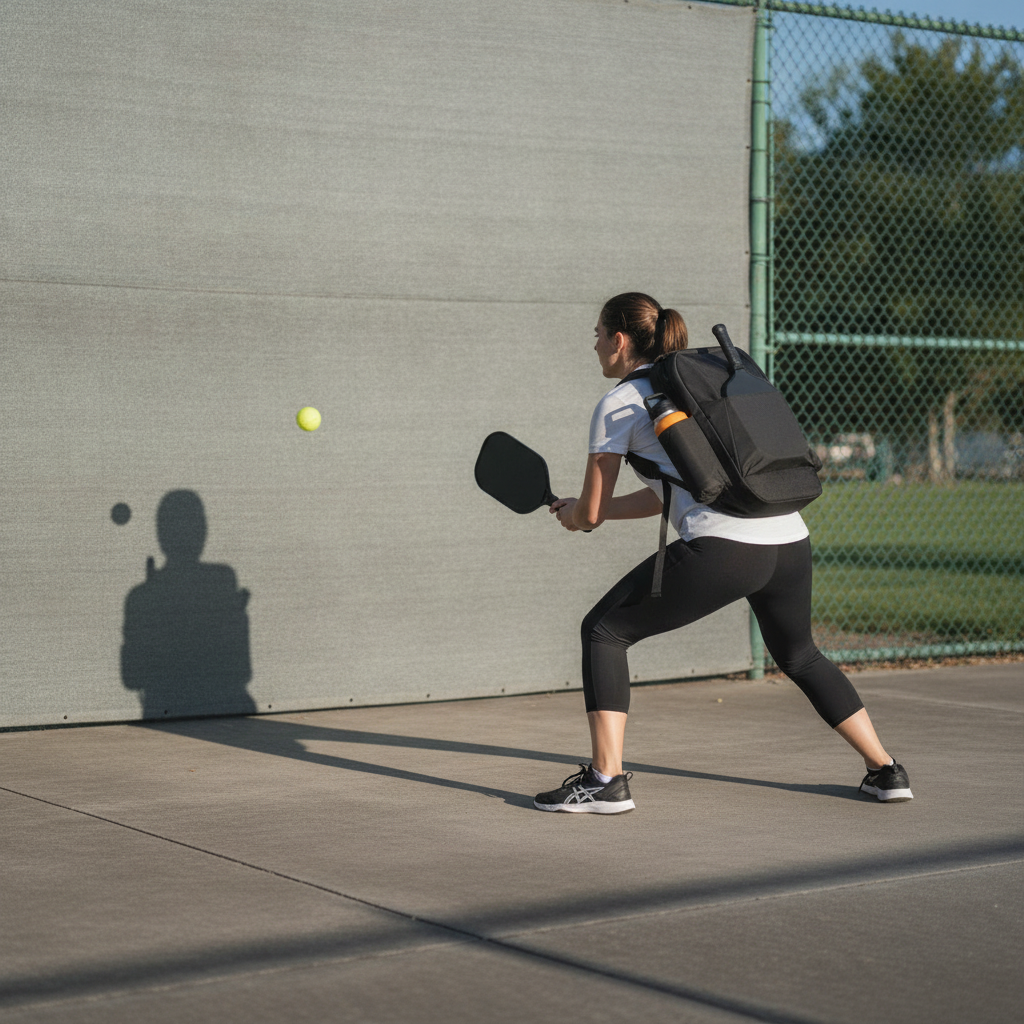
Most courts don't have practice walls, but you don't need one. Here's what actually works solo:
Third-Shot Drop Repetition
Self-feed from mid-court (around the transition zone), drop into the NVZ. Your goal: 40 drops landing within 6–7 feet of the NVZ line before you call it a set. If you're hitting under 60%, slow down and focus on contact point first — speed comes later. Track the ratio: if you hit 28 out of 40 in zone on Monday, you should hit 32+ by Thursday.
Serve Consistency Blocks
Pick a target zone — deep middle, deep crosscourt, or wide angle — and serve 20 in a row to that zone. Don't mix targets during the block. Specific repetition beats varied repetition for building consistency. Check out our pickleball singles strategy guide for how serve placement translates to match situations.
Wall Dinking (If You Have Access)
Stand 7 feet from a smooth wall and dink continuously for 3 minutes without letting the ball bounce twice. It's harder than it sounds. This trains NVZ patience, paddle control, and lateral adjustment — the three skills that matter most in dink exchanges. A ball hopper is essential here — chasing individual balls wastes half your solo session time.
Footwork Pattern Drills
No ball required. Set up two cones (or water bottles) at the NVZ corners and shuffle between them in a defensive ready stance. Three sets of 30 seconds each. This builds the lateral movement pattern that NVZ defense requires — and it doesn't fatigue your arm before you drill.
"I stagnated at the same level for almost two years. The thing that changed it wasn't playing more — it was specifically drilling the third-shot drop until it stopped being a problem shot. Once it wasn't a liability, my whole game opened up because I wasn't giving opponents free points off the transition zone." — Topher, co-founder of FORWRD
Partner Practice: The 30-Minute Session That Moves the Needle
Before you start: both players should agree on the drill format and stick to it. The second someone says "let's just play," you've lost the practice value. Here's a 30-minute template that consistently works:
Minutes 1–5: Warm-Up Dinking
Cross-court dinks from the NVZ, no speed-ups. Warm up properly before you start — a cold shoulder on third-shot drops is a fast path to injury. Goal: both players are calm, controlled, and in a neutral rally rhythm.
Minutes 5–15: Third-Shot Drop Sequences
One player serves, the other returns deep. Server executes a third-shot drop, both players move toward the NVZ. The point continues with only resets and dinks allowed — no speed-ups. This forces you to complete the transition pattern in a controlled environment. Fifteen minutes of this builds more muscle memory than two hours of open play.
Minutes 15–25: Reset Scenarios
Feed a speed-up at the partner's body or backhand shoulder. Partner's only job: reset it into the NVZ without counter-attacking. Twenty resets in a row before switching roles. This single drill is what separates 3.5 players from 4.0 players — not power, not spin, but the ability to absorb and neutralize.
Minutes 25–30: Debrief
Literally talk about what you noticed. "Your reset was going wide when you were rushed — try contacting the ball earlier." "My third-shot drops are landing consistently but short when I'm moving forward." This verbal loop is the difference between drilling and practicing. Link this back to your drill work on your backhand if that's been a focus area.
Match Practice: How to Use Live Play as Structured Training
Open play isn't practice by default. But it can be — if you go in with one explicit focus.
Choose one of these before every open play session:
- Reset focus: Every time an opponent speeds up, your only response is a reset. No counter-attacks. Track how many you get into the NVZ versus popping up.
- Third-shot focus: Every point you serve, you drop the third shot. No drives. See what happens to your transition zone success rate.
- Targeting focus: Go to your opponent's backhand on every third shot and every poach. No exceptions for 30 minutes.
One focus per session. Not three. One.
After the session, open your tracker and write one line: what you focused on, whether it worked, and what you'd change. Twenty minutes of reflection over two weeks reveals patterns your feel alone won't catch.
What to Pack for a Practice Session
Solo drilling burns through balls fast — a ball hopper is non-negotiable if you're drilling more than once a week. Franklin X-40 balls are the standard for outdoor drilling — consistent bounce, durable, and the same ball used in USA Pickleball sanctioned events. Your grip wears out faster in practice than in matches — overgrips are worth keeping in your bag. A pack of Tourna overgrips lasts about three weeks of intensive drilling before you notice the difference in feel.
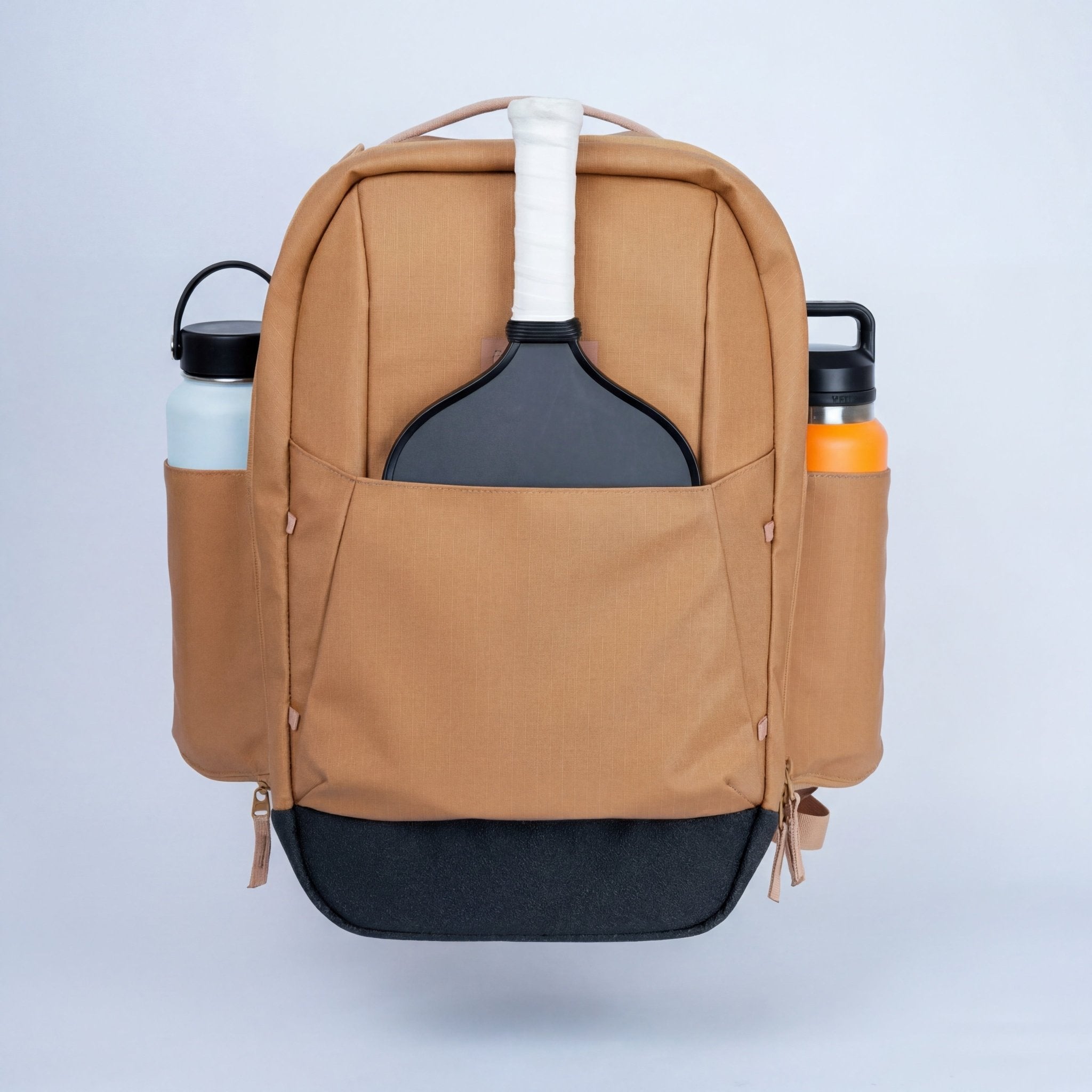
For day-long clinic sessions or if you're drilling and then playing a full afternoon of open play: the Court Ranger V2's 16" laptop sleeve handles your tablet or practice notes while the modular sleeve keeps your paddles accessible between sessions. For players carrying 3–4 paddles to test different grip weights during practice, the Court Caddy was built specifically for that load.
FAQ: Pickleball Practice Routine Questions
How often should you practice pickleball to improve?
Three structured sessions per week — with at least one being solo drills and one being partner practice — produces measurable improvement for most recreational players within 4–6 weeks. More sessions help, but structure matters more than volume. Two hours of deliberate drilling beats six hours of open play for skill development.
What is the best way to practice pickleball alone?
Third-shot drop self-feeds, wall dinking (if available), and footwork pattern drills without a ball. The key is specific repetition: choose one shot type per solo session and drill it 40+ times before moving on. A ball hopper keeps your solo sessions efficient — chasing individual balls between shots wastes more time than most players realize.
How do you build a pickleball practice routine?
Start with the 3-tier framework: one solo session, one partner practice session, and one match practice session per week. Each session has a defined goal — not "get better" but "land 70% of third-shot drops in the NVZ" or "successfully reset 15 consecutive speed-ups." Add a session tracker and review it weekly. Adjust based on data, not feelings.
What drills should beginners do in pickleball?
Beginners benefit most from three fundamentals: dinking cross-court (develops kitchen line patience), serve-and-return repetition (builds the foundation every point starts on), and third-shot drop self-feeds (trains the transition zone skill that separates 2.5 players from 3.5 players). Start with controlled, slow repetition — don't drill at match speed until the form is clean at 50% pace.
How long does it take to get good at pickleball?
Most players see significant improvement within 90 days of structured practice. "Getting good" depends heavily on your starting point and what "good" means — but moving from 3.0 to 3.5 typically takes 6–9 months of 3x/week structured practice. Players who rely on open play alone often take 2–3x longer to make the same gains, because unstructured play reinforces existing habits rather than building new ones.

Leave a comment
This site is protected by hCaptcha and the hCaptcha Privacy Policy and Terms of Service apply.