

Disclosure: This post contains affiliate links to Pickleball Central. If you purchase through our links, FORWRD earns a small commission at no extra cost to you. We only link to products we'd recommend regardless.
Your shoulder isn't sore because you played too much. It's sore because you didn't warm up. That's not a scolding — it's the pattern we hear from players who pick up an injury 45 minutes into rec play and spend two weeks icing their rotator cuff wondering what happened.
Most pickleball warm-ups are three minutes of arm circles and a couple of baseline rallies. That's not a warm-up — it's a wishful thinking ritual. A proper warm-up for pickleball only takes 15 minutes, doesn't require a partner for the first two phases, and if you do it right, you'll play better in the first five points instead of spending half a game just getting loose.
Last updated: June 2026
Why Pickleball Warm-Up Is Different
Pickleball isn't like running. It isn't like tennis, either, even though the surface and racket feel familiar. The sport puts distinct physical demands on joints most people haven't trained specifically: rapid lateral direction changes, explosive split-step reactions at the kitchen line, and repetitive wrist and elbow loading from dinking — all in the first three points of a competitive game.
The non-volley zone is where most injuries originate. The dinking game looks calm from the sideline. Your elbow and shoulder don't see it that way. Controlled, repetitive stroke production at NVZ depth puts cumulative stress on the medial elbow, the posterior shoulder capsule, and the wrist flexors. If those haven't been activated before play, the first hard exchange is loading a cold joint.
The other injury hotspot: ankles and knees during transition. When you're sprinting from the baseline to the kitchen after a third shot drop, you're asking your stabilizer muscles to perform a rapid deceleration. Cold stabilizers don't catch you. Warm ones do.
"I didn't get hurt playing hard — I got hurt playing cold. First game of the day, third point in, I went wide for a dink and felt my shoulder catch in a way it never does after I've been moving for twenty minutes. Spent six weeks working through that. Now I've added ten minutes of shoulder prep to every session and haven't had an issue since."
— Topher, FORWRD co-founder
The mental side of pickleball also benefits from a real warm-up — players who arrive pre-activated make better early-game decisions than players who're still physically adjusting while trying to hold a rally.
The 15-Minute Protocol Overview
Three phases. Each builds on the last. Phases 1 and 2 can be done alone. Phase 3 needs a court and ideally a partner, though a wall or ball machine works fine.
| Phase | Duration | Location | Purpose |
|---|---|---|---|
| 1. Dynamic Movement | 5 min | Off-court or sideline | Elevate heart rate, mobilize hips and ankles |
| 2. On-Court Footwork | 5 min | Court (no ball) | Activate split-step pattern, NVZ footwork |
| 3. Skill Activation | 5 min | Court (with ball) | Calibrate touch, spin, and reaction speed |
Phase 1: Off-Court Dynamic Movement (Minutes 0–5)
Don't stretch here. Static stretching before athletic activity reduces power output by 5–8% — your dinks don't need to be weaker before the first game. Dynamic movement warms tissue without compromising it.
The sequence (approximately 60 seconds each):
Light jog in place or short court jog — 10% effort max. This isn't cardio; it's a temperature increase.
Hip circles — 10 clockwise, 10 counter per leg. Pickleball rotates the hip in ways most recreational players don't otherwise mobilize.
Leg swings (front-to-back, then side-to-side) — 15 per direction per leg, standing near a fence for balance. This directly prepares the lateral shuffle and split-step patterns.
Arm circles and shoulder rolls — 15 forward, 15 backward. Follow with wrist circles. Don't skip the wrists — they're the last link in the dinking chain and the most consistently overlooked joint in pre-game prep.
High knees into butt kicks — 20 seconds each. Gets the quads, hip flexors, and hamstrings firing before you ask them to stop a direction change at full speed.
You should feel warmer but not sweaty, alert but not winded.
Phase 2: On-Court Footwork Without the Ball (Minutes 5–10)
This is the phase almost nobody does. It's also the phase that separates players who feel ready from players who spend the first game just getting their legs under them.
The sequence (approximately 90 seconds each):
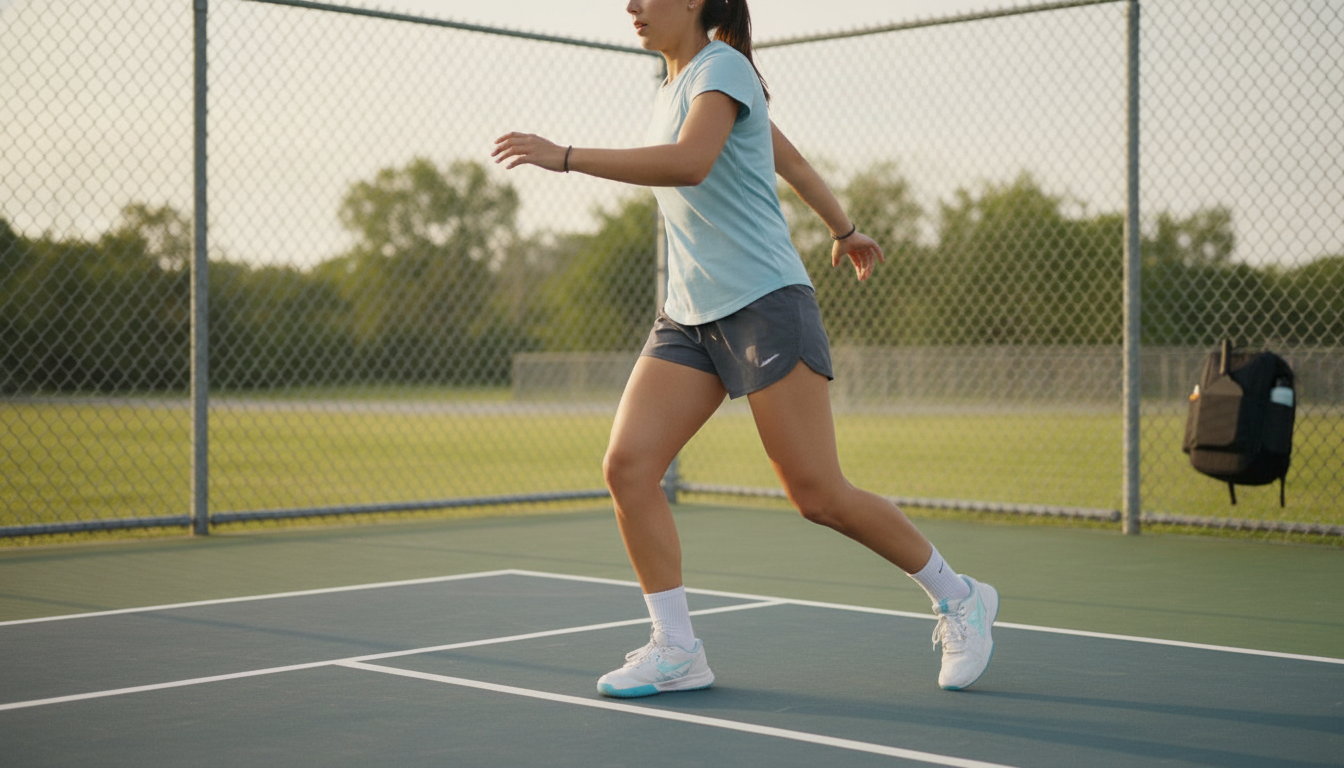
Lateral shuffle across the baseline — side to side, staying low, feet never crossing. Four widths of the court. This specifically primes the stabilizers for direction change without the cognitive load of tracking a ball.
Split-step practice at the NVZ line — stand at the kitchen, take a slow step back, then explode forward with a two-foot split-step as if responding to an incoming volley. 10 reps. The split-step is a reflex; you're training the timing before you need it under pressure.
Baseline-to-kitchen sprint drill — start at the baseline, drive toward the kitchen as if you've just hit a third shot drop, stop with a split-step at the NVZ line. Walk back. 6 reps per side. This puts the transition pattern into your legs before the first real point demands it.
Optional: 20 shadow dink strokes without a ball — slow, controlled — to warm up the shoulder's internal rotation before ball contact. For the singles game specifically, add a shadow forehand drive sequence across the full court width.
Phase 3: Skill Activation With the Ball (Minutes 10–15)
Here's what competitors' warm-up guides miss: the first five minutes of hitting is not a warm-up if you're already in rally mode. Skill activation means starting slow and building calibration — not hitting balls until your timing accidentally feels right.
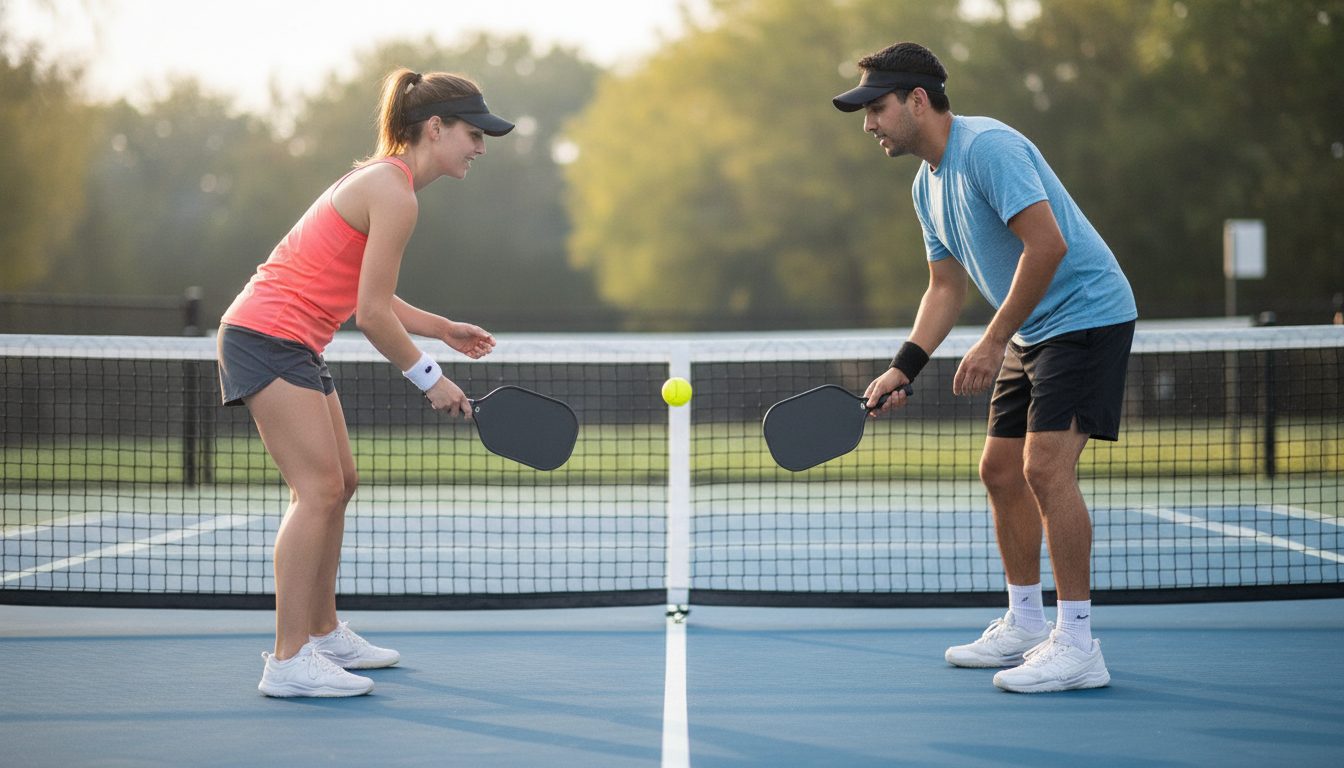
60 seconds of soft dinking — both players at the kitchen, no pace, just touch. This isn't practice; it's calibrating your wrist and grip pressure before those things matter in a real exchange.
60 seconds of target groundstrokes — slow and deliberate, each player hitting crosscourt to a specific spot. Don't try to win these. You're syncing your footwork-to-swing timing.
90 seconds of third-shot shadow sequence — server hits a controlled serve, returner hits a soft return, server drives or drops to start a rally. Three-point exchanges maximum, soft pace. You're activating the pattern, not practicing strategy.
90 seconds of volley exchanges at the kitchen — both players at the NVZ, compact swings, controlled pace. By the time you start your first real game, the kitchen exchange already feels familiar — not foreign.
Playing solo? A wall session covers phases 1 and 3. Five minutes of slow, controlled dinks against a wall calibrates touch better than most partner rallies do at warm-up speed.
Partner Warm-Up Games
If your group tends to warm up together before the first game — or if you have 2-3 minutes beyond the 15-minute protocol — these build activation faster than a loose rally:
10 dinks in a row, then switch spots — a simple rally count keeps both players engaged without creating competitive pressure too early in the session.
Cross-court only volleys from mid-court — both players start at mid-court and work toward the kitchen, each hitting only crosscourt. This activates lateral movement awareness before full-court play begins.
Avoid full-speed attacks in warm-up. One hard drive into a cold partner's elbow is how warm-ups end early and playing partners drift to other courts.
Post-Play Cool-Down
Static stretching belongs here — not in the warm-up. After your last game, muscle tissue is pliable and holding a stretch actually produces a lasting mobility benefit.
Quick cool-down sequence (3-5 minutes):
Standing quad stretch — 30 seconds per leg. Standing hip flexor lunge stretch — 30 seconds per side. Cross-body shoulder stretch — 30 seconds per arm. Wrist flexor stretch: arm extended, palm facing out, 20 seconds per wrist. That last one is the one most pickleball players skip — and the one that catches up with you after a heavy dinking session.
If you're playing multiple sessions in a day, add a 5-minute walk between games. Just walking, keeping circulation going. It prevents the "tight in game two" feeling that makes the second session feel worse than the first.
What to Pack to Support Your Warm-Up
The practical side: your warm-up routine is only as good as your preparation. A few things that change how consistently you execute it:
Extra balls — Solo wall sessions and skill activation drills need spare balls. The Franklin X-40 is the official USA Pickleball tournament ball and holds up well for both practice and match play. Keep 4-6 extras in your bag.
Fresh overgrip — The grip pressure difference between a tacky overgrip and a slick worn one is enough to throw off your dink mechanics. Keep a fresh overgrip in your accessories pocket and change it before a session when you notice yourself gripping harder to compensate. FORWRD's Premium Overgrips are what we keep in our own bags — tackier than most, and they last through a full week of heavy play before the texture breaks down.
A ball hopper — If you're doing solo pre-game drills, a hopper is the difference between productive work and chasing balls across three courts. The Franklin Pickleball Ball Hopper is a lightweight option that fits in most bag side pockets or straps to the outside of a backpack.
Most of this fits in your bag without effort. If you're still figuring out how to organize your kit, the FORWRD bag organization guide covers the full setup. For tournament days when you need to carry more, the Court Caddy ($325) adds fence hooks and a modular paddle system for up to 5 paddles.
Complete Your Warm-Up Setup
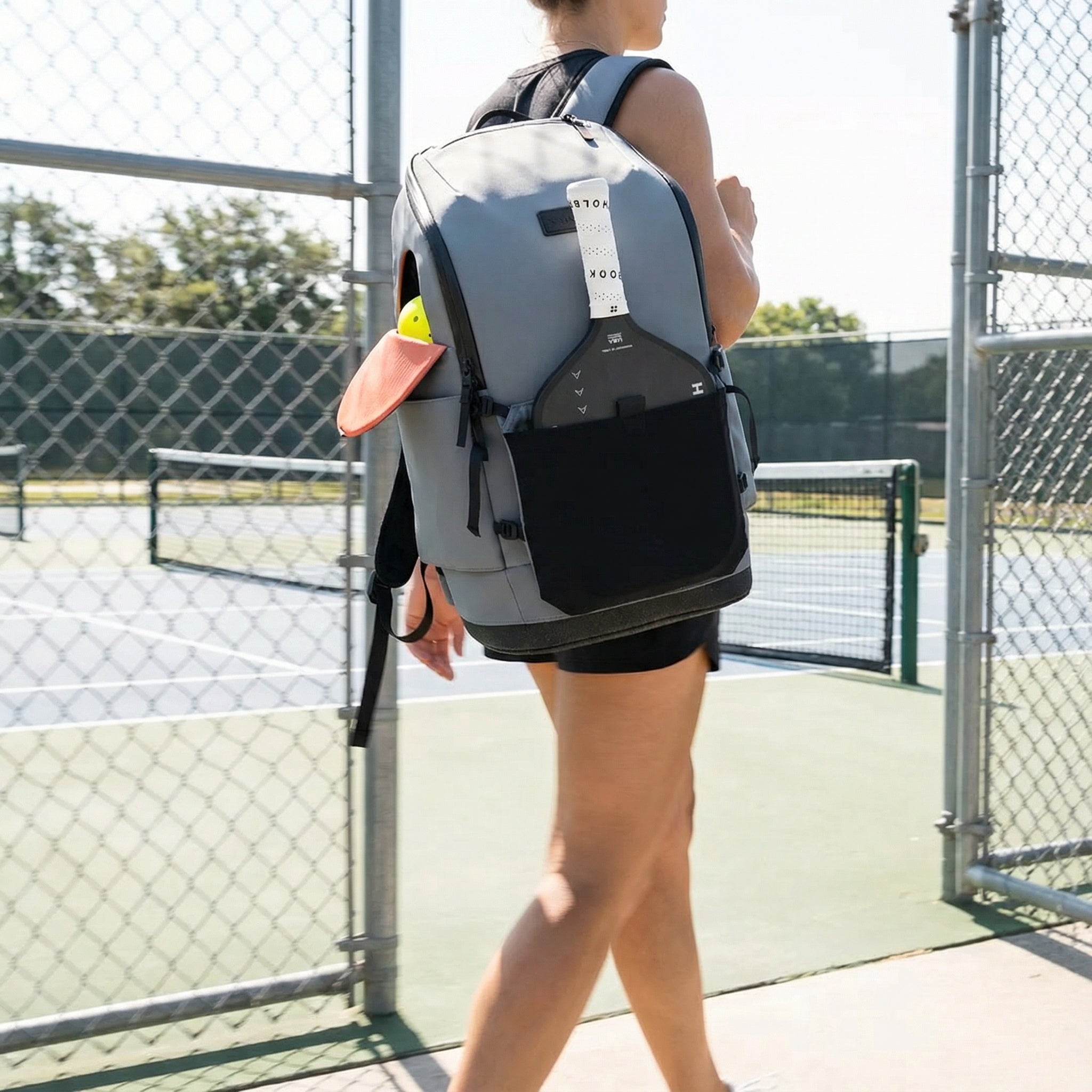
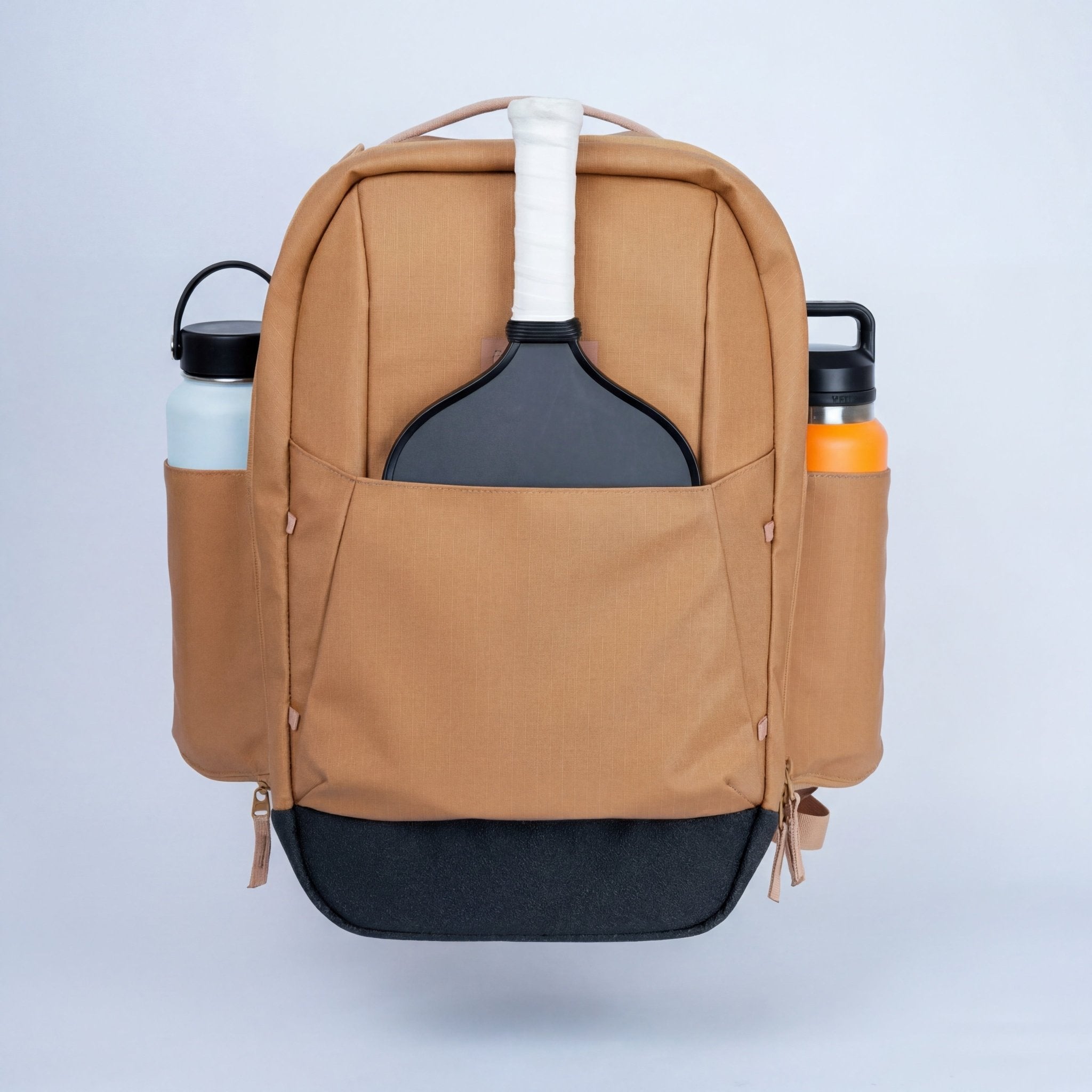
Consistency in your warm-up starts with being organized. The FORWRD Court Ranger V2 ($195) has a dedicated shoe compartment that keeps your court shoes separate from paddles and gear, so you're not digging through a packed bag when you arrive. YKK AquaGuard zippers handle outdoor play in any weather, and the 16" laptop sleeve works for the commute. If your current bag makes your pre-match routine harder than it needs to be, that's the problem to solve.

FAQ: Pickleball Warm-Up Questions
How long should you warm up before pickleball?
15 minutes covers it — 5 minutes of off-court dynamic movement, 5 minutes of on-court footwork without a ball, and 5 minutes of skill activation with the ball. If you're pressed for time, do at least 8 minutes: cut the footwork phase short, but never skip dynamic movement or skill activation entirely.
What stretches are good for pickleball?
Save stretching for after you play, not before. Before a game, use dynamic movements instead: leg swings, hip circles, arm circles, and high knees. These warm tissue and increase range of motion without the power output reduction that comes from holding static stretches before activity.
How do you prevent pickleball injuries?
Three things cover most of it: warm up properly every session, stop playing through pain (the body sends a first warning before the injury — listen to it), and give your arm a real off day between sessions if you're playing four or more times per week. The repetitive elbow and shoulder stress of heavy dinking adds up. Most pickleball elbow is preventable with consistent warm-up and load management.
What drills should I do to warm up for pickleball?
Start with shadow swings — no ball, just slow controlled dink strokes to warm up the shoulder and wrist. Then move to soft partner dinking for the first 60-90 seconds of ball contact. Add target groundstrokes, then a short third-shot exchange sequence. The goal is building from zero to game speed gradually, not hitting hard as fast as possible.

Leave a comment
This site is protected by hCaptcha and the hCaptcha Privacy Policy and Terms of Service apply.