

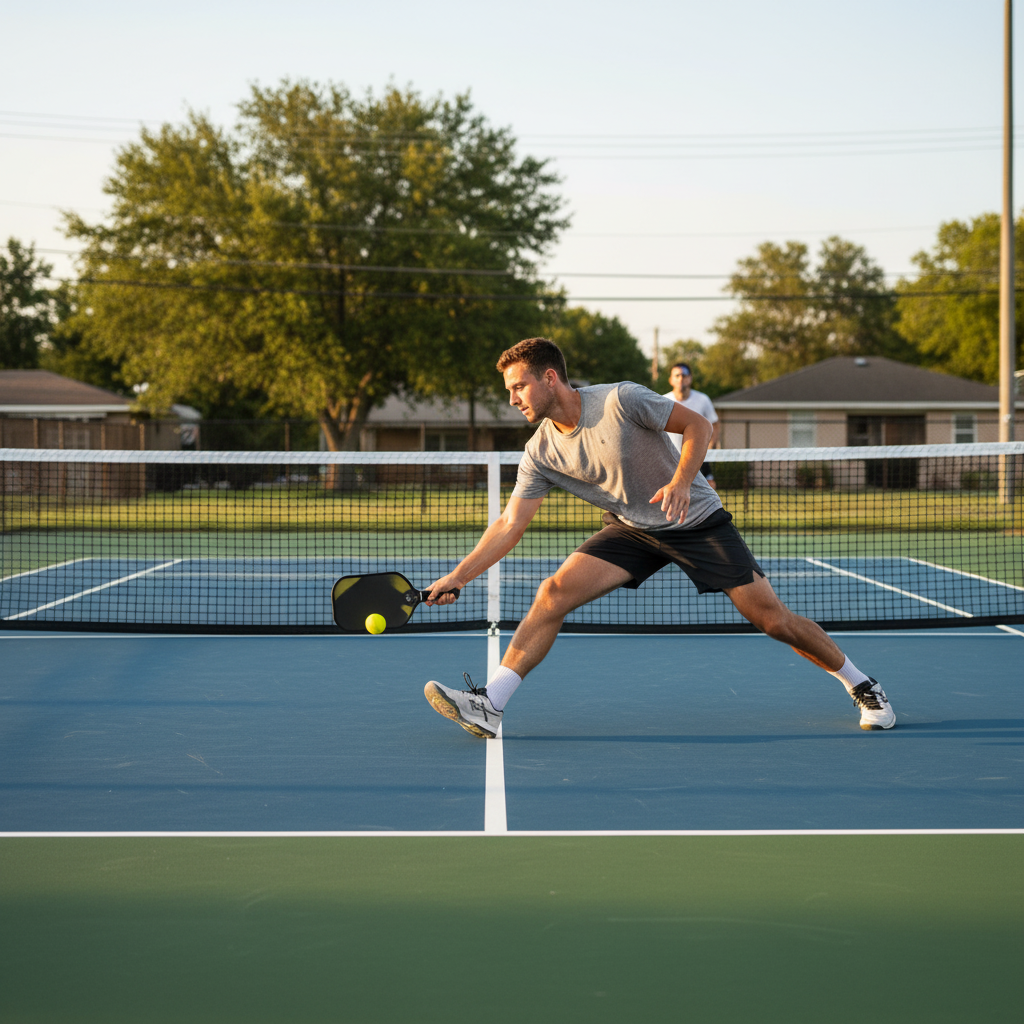
Pickleball singles exposes weaknesses fast. In doubles you can hide a shaky backhand for entire matches behind a strong partner. In singles, your opponent finds your weak side in the first three points and camps there for the rest of the match. The good news: court geometry dictates singles more than raw skill does, and once you understand how to use it, you win more points before the rally even gets difficult.
Last updated: June 2026
Disclosure: This post contains affiliate links to Pickleball Central. If you purchase through our links, FORWRD earns a small commission at no extra cost to you. We only link to products we'd recommend regardless.
Why Singles Is a Different Game (Court Coverage Is Everything)
You cover roughly 2.5× more court in singles than you do in doubles. That number sounds abstract until you've just sprinted to a wide forehand and then watched your opponent lob the ball to the corner you just vacated. The entire game changes when there's no partner to cover your blind spots.
Most players transition from doubles to singles and immediately lose — not because their shots are wrong, but because their positioning logic is wrong. Doubles trained you to share the court. Singles demands you own all of it.
Three things shift immediately:
- Recovery position becomes non-negotiable. In doubles, if you're slightly out of position after a shot, your partner covers. In singles, there's no covering. Every shot must end with a sprint back to center.
- The kitchen line matters differently. Rushing to the NVZ on every third shot works in doubles because you have help once you get there. In singles, getting to the kitchen and staying there is harder — your opponent has more angles to drive past you, and you can't afford to be pinned when the lob comes.
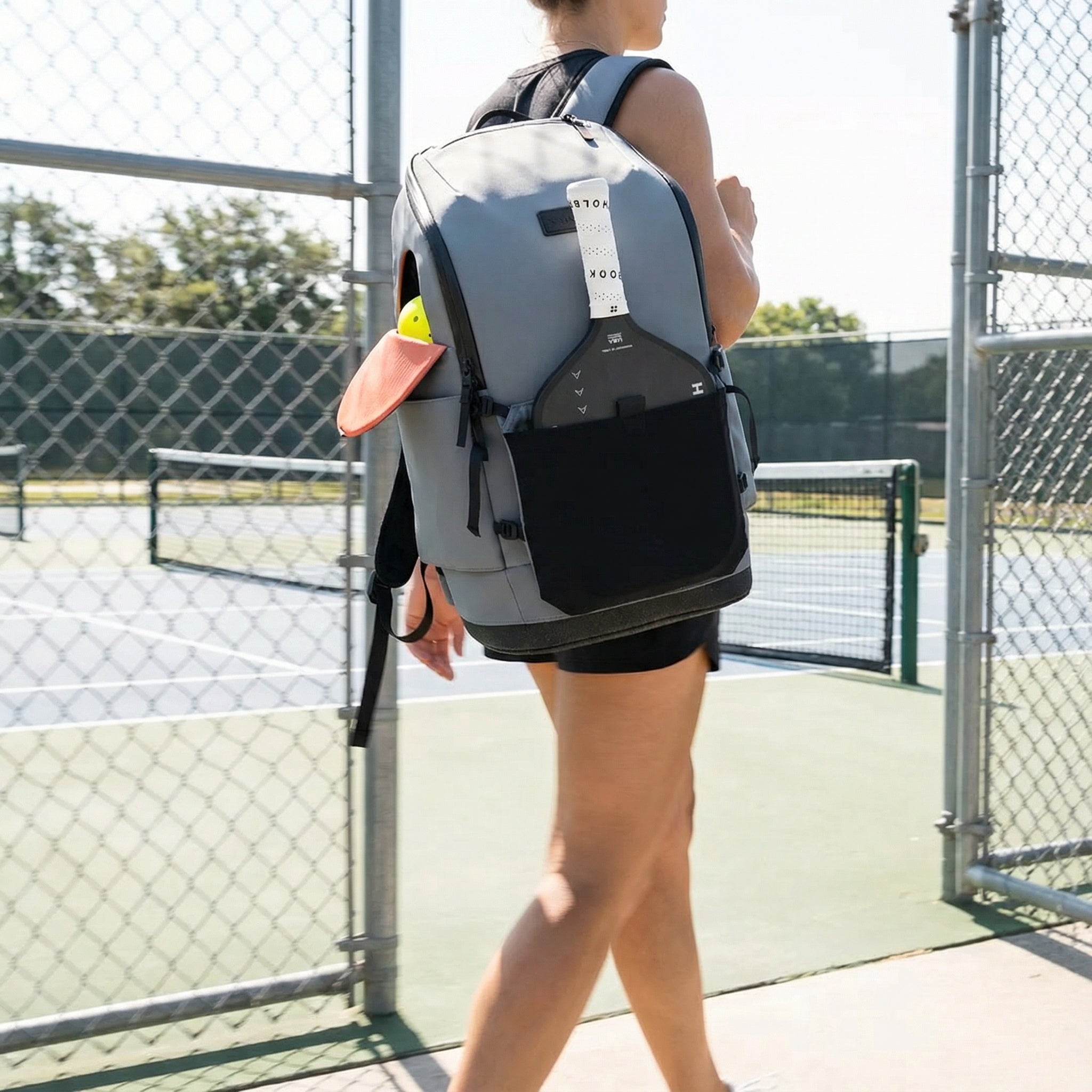
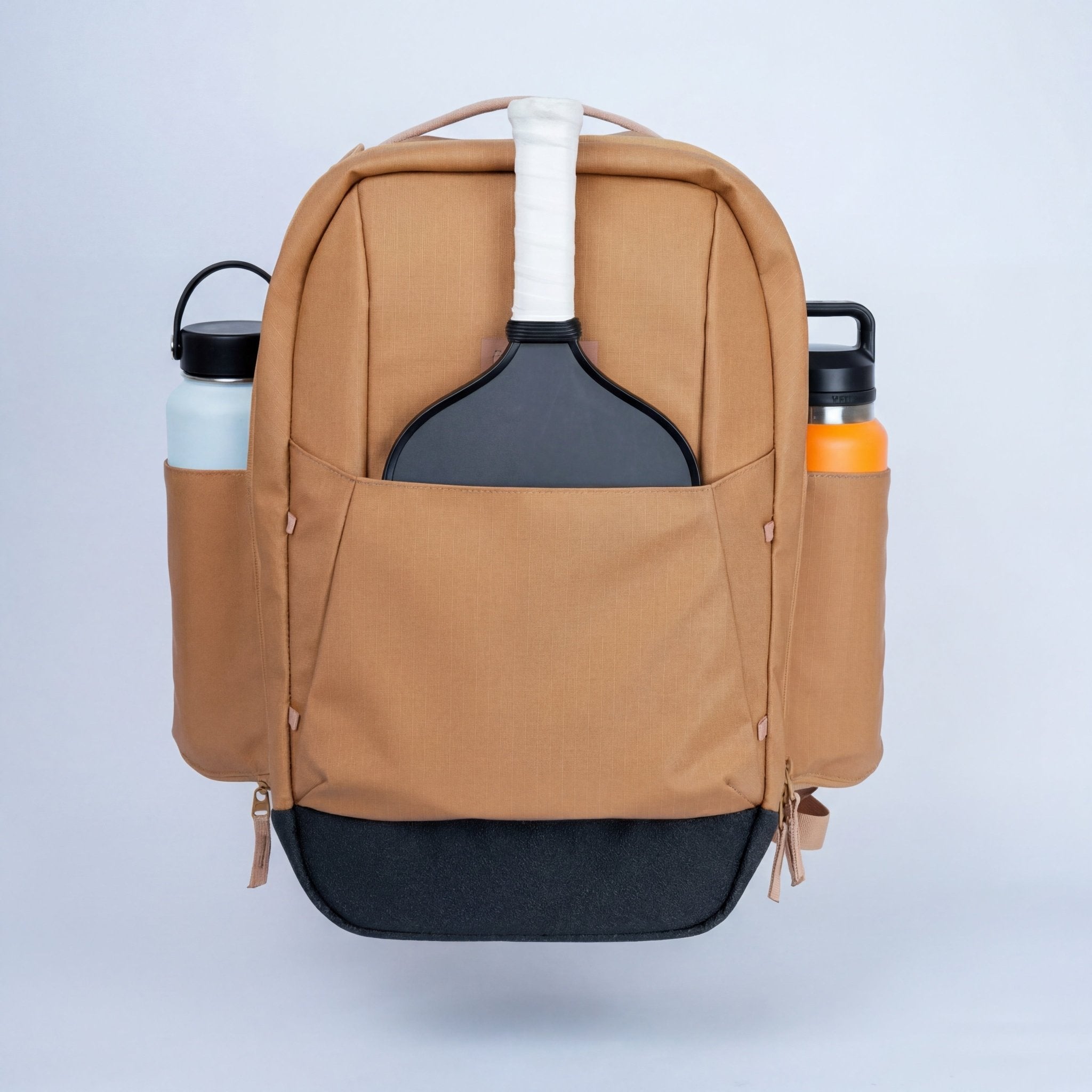
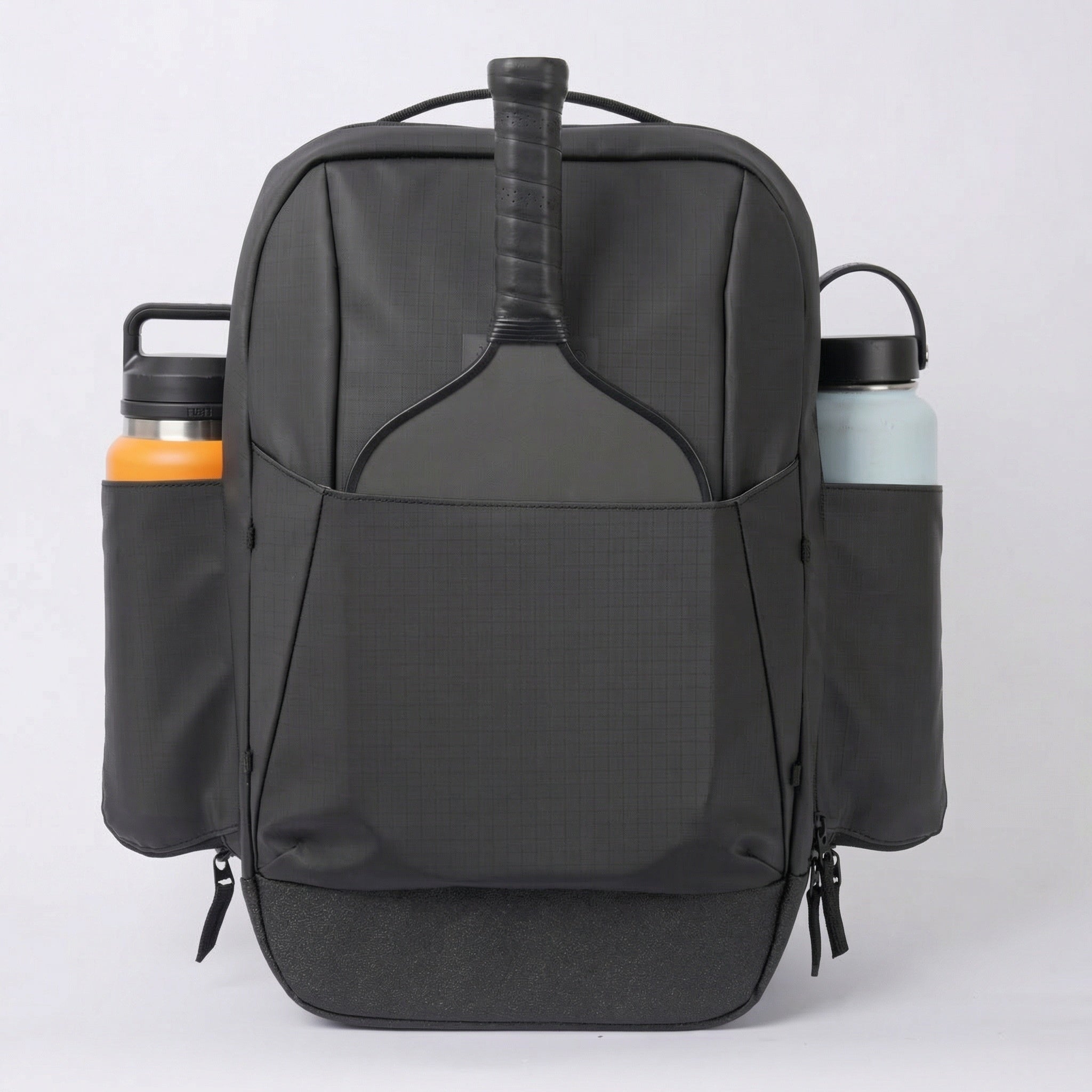
- Points last longer and your legs decide the outcome. A five-shot rally in doubles feels quick. The same five-shot rally in singles requires twice the footwork. By game two of a competitive singles match, conditioning isn't background context — it's the main variable. Singles regulars tend to carry more gear too: two paddles for rotation, extra clothing, a recovery kit. The Court Caddy ($325) handles that full load — 15" laptop sleeve, modular paddle compartment — while the lighter Court Ranger V2 ($195) is the move for quick singles-only sessions where you're packing lean.
For the full strategic framework covering both singles and doubles, see our complete pickleball strategy & tactics guide.
Serve Strategy for Singles: Placement, Patterns, and Targets
Deep. That's the single most important thing your serve can do in singles. A ball that lands 6 inches from the baseline pins your opponent back, buys you time to set up, and immediately puts the pressure on their third shot. Short serves in singles are gifts — they let your opponent attack early and close the gap to the kitchen line.
Beyond depth, placement works in specific patterns that most singles guides don't map out explicitly:
The Center-T Serve
Serving into the T — the center of the service box near the baseline — is underused in singles. It cuts your opponent's return angles in half. Instead of going wide in either direction, they're forced into a more neutral return. That means your recovery after serving is simpler: you're not scrambling to cover a wide angle you gave them. Use this when your opponent has a strong crosscourt return that's been hurting you.
The Wide Serve to Open the Line
Here's the pattern most guides skip: serve wide to the ad side to pull your opponent off the court, then drive your third shot down the deuce-side line that just opened up. This isn't complicated — it's a two-shot sequence you can drill in 20 minutes. The key is committing to the line shot before you serve. If you serve wide and then hesitate, your opponent recovers and you've gained nothing. Decide: serve wide, third shot down the line. Then execute.
The Body Serve at Reduced Pace
A serve aimed directly at the body forces a backhand-versus-forehand decision mid-motion. It's not elegant, but in a tight third set when your opponent is tired, a body serve at 65–70% pace disrupts timing in ways a harder serve they've already dialed in doesn't. Save this for late in the match when the mental load is highest.
What not to do: Don't over-spin in singles. Spin serves that kick high work in doubles (limited reaction time, partner to cover). In singles, your opponent has more time and court to react, and a high-kicker can sit up nicely for an aggressive return. Deep + placement beats spin + short every time.
Return Strategy and Advancing to the Kitchen Line
Your return in singles has one job: get deep and get you toward the kitchen line if you can. A crosscourt return gives you the highest margin for error and the best opportunity to advance. The crosscourt angle is longer (more court to aim for), higher net clearance, and doesn't require you to change direction sharply on the way to the kitchen.
Go crosscourt on your return about 70% of the time. Until your opponent proves they can hurt you from that pattern, don't deviate from it.
The down-the-line return is a weapon, not a default. Use it when your opponent has drifted toward center on their serve, or when they're serving wide and their recovery puts them on the wrong side. It's higher risk — the margin is smaller — but executed at the right moment, it puts them in scramble mode for their third shot.
Advancing to the NVZ after your return: do it when the return is deep. If you've hit a weak, short return, don't advance — get to a midcourt position, let the next shot bounce, and look for an opportunity to come in later. Players who rush to the kitchen on weak returns get passed repeatedly. That's not a talent gap; it's a judgment gap.
Controlling the Center: Your Recovery Position
Every shot in singles ends with the same question: where do I go next? The answer is almost always the centerline — but adjusted based on where you just hit the ball and where your opponent is most likely to go next.
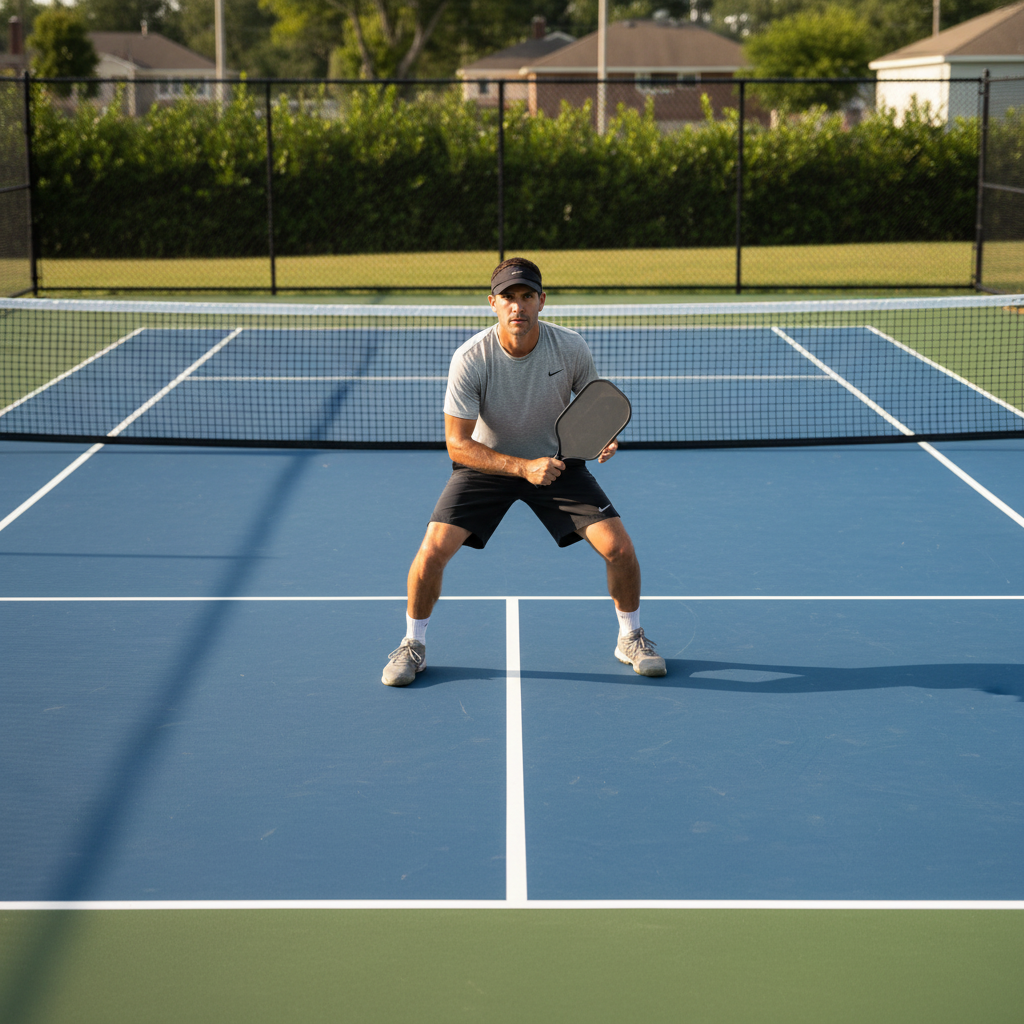
Here's what directional shading looks like in practice:
- You hit a ball to your opponent's forehand on the deuce side. Their most likely response is crosscourt, toward your backhand on the ad side. Shade toward the ad side. Not all the way — shade, then stop.
- You hit a drop shot from mid-court. They can either attack or drop it back. Your recovery is different for each scenario: against an attacker, stay compact and low; against someone resetting, advance while they're in defensive mode.
- After a lob, recover toward center immediately. A lob you hit 8 feet deep to your opponent's backhand corner buys 1.5–2 seconds. Use them to sprint center, not to watch where the ball lands.
The centerline is your anchor. Drift left or right based on geometry — but your brain should always know where centerline is, because that's home base between every shot.
One drill that builds this faster than anything: solo shadow footwork. After each imagined shot, sprint back to centerline. No ball needed. Do it for 10 minutes before your next singles practice and watch how quickly the habit installs.
Attack Patterns in Singles (Drop Shots, Deep Drives, Pace Variation)
Singles players who hit every ball hard eventually lose. Predictable power is easy to defend. Your attack game needs variation — and the specific shots that create openings in singles are different from doubles because your opponent has no partner to bail them out.
The Drop Shot Attack
In doubles, a drop shot that barely clears the net is defended by two players who can cover the court. In singles, your opponent has to cover everything. A well-executed drop shot that lands just inside the kitchen while your opponent is behind the baseline is often an outright winner. Don't overuse it — once you've hit two in a row, they're camping the kitchen line — but use it consistently enough that they can't ignore the threat. The threat of a drop shot is often more valuable than the drop shot itself.
Deep Drive to the Backhand, Deliberately
Most recreational singles players have a weaker backhand. Drive deep to it consistently. Not randomly — deliberately. Every third shot goes to the backhand for three-shot sequences. "Deliberately" means you've decided before the rally starts that you're targeting the backhand. Not "I'll aim there if it feels right" — you're targeting it until they prove they can handle it or until you've set up a forehand opening on the other side.
Pace Variation: The Underrated Disruptor
Fast. Slow. Fast. The pace change breaks rhythm better than anything else in singles. A hard drive followed by a soft floater gives your opponent a completely different problem. They've sprinted back for your drive; now they have to come in for a floater. That direction change — stopping a backward sprint and starting a forward run — is where points break down physically and mentally. Use it intentionally after a run of pace: once they've adjusted to fast, slow down and watch them misread the shot.
When you're doing extended singles sessions, a paddle with a larger sweet spot helps on difficult angles you're catching on the move. The JOOLA Perseus Pro V Ben Johns 16mm is built for control under pressure — it gives you the touch on transition shots without requiring perfect contact.
Singles vs. Doubles: The Mindset Shift
The biggest adjustment when moving from doubles to singles isn't physical — it's mental. In doubles, you're reactive: a ball comes, you deal with it, your partner covers the rest. In singles, you have to be proactive. You're constructing points two and three shots ahead, not just responding to what arrives.
"Singles taught me more about shot selection than doubles ever did. In doubles, I could get away with a weak third shot because my partner bailed me out. In singles, that same weak shot costs you the point almost every time. The accountability is higher — and honestly, the improvement is faster too." — Topher, FORWRD Co-Founder
Patience matters more in singles than in doubles. You're not trying to win the point with the third shot; you're trying to create a situation where winning the point with shot seven or eight becomes easy. Force early and you force errors. Play patient singles and you construct opportunities.
Two mindset shifts that matter immediately:
Accept longer rallies. A five-shot rally in singles is short. A fifteen-shot rally is medium length. Don't mentally check out of a point because it's taking longer than you're used to in doubles. Most unforced errors in singles happen because the player got impatient — not because they lacked the shot.
Take conditioning seriously. This is the reality check most singles guides skip. You can play recreational doubles at a reasonable level without being in peak physical shape. Singles at a competitive level — even recreational competitive — is genuinely aerobic. Your cardio base, lateral agility, and the ability to sprint and stop repeatedly for 45+ minutes all matter in ways they simply don't in doubles. If you're playing singles in tournaments or serious club sessions, weekly court-movement drills and cardio work aren't extras; they're part of your pickleball training. The players who fall apart in game three almost always fell apart physically in game two.
For tournament singles, keeping your gear organized between games matters — the Court Ranger V2 ($195) keeps your match paddle and warmup paddle in separate modular sleeve slots, so you're not digging through a bag between games at a fast-moving tournament.

Our Pick: Court Ranger V2 Pickleball Backpack
Separate modular paddle sleeves for match and warmup paddles — no digging mid-tournament. 16" laptop sleeve, YKK AquaGuard zippers, designed with 500+ real players.
For more strategy and skill development, check out our third shot drop guide — in singles, that shot becomes one of your most important tools for transitioning from baseline to net.
FAQ: Pickleball Singles Strategy Questions
What is the best strategy for pickleball singles?
Serve deep to control court position, recover to the centerline after every shot, and use pace variation to move your opponent laterally. The best singles players construct points methodically rather than forcing early. Patience combined with consistent depth to the opponent's weaker side wins most singles matches at both recreational and competitive levels.
How is singles pickleball different from doubles?
In singles you cover roughly 2.5× more court than in doubles, points tend to last longer, and there's no partner to cover your weaker side. Positioning and recovery are more demanding, conditioning becomes a significant factor by game two and three, and pace variation creates bigger openings because your opponent has no help covering the court. Singles uses a different scoring format — games go to 15, with no side-out second server. USA Pickleball’s rules summary covers the full singles format if you need the reference.
Where should you position yourself in singles pickleball?
Return to the centerline after every shot, but shade slightly toward the side your opponent is most likely to hit based on where you just sent the ball. After hitting to their forehand, shade toward your backhand side. The centerline is your default recovery position; directional shading is the adjustment you layer on top based on court geometry.
How do you win points in pickleball singles?
Most singles points are won by forcing errors, not by outright winners. Consistent depth to the opponent's weaker side (usually their backhand), pace variation to disrupt rhythm, and drop shots that pin them at the baseline create the openings where a clean winner becomes available. Trying to hit winners on shots 2 or 3 almost always produces unforced errors instead.
What serve strategy works best in pickleball singles?
Deep serves to the center T of the service box limit return angles and simplify your court coverage. Wide serves to the ad side can open the deuce-side line for your third shot — but commit to the pattern before you serve, not after. Body serves at 70% pace are underrated disruptors late in matches when fatigue affects your opponent's reaction time and decision-making.
Is pickleball singles harder than doubles?
Physically, yes — by a significant margin. You cover more court, rallies run longer, and conditioning becomes a real differentiator in game two and three. Mentally, singles is more demanding because every positioning and shot decision is yours alone. Most players find that singles accelerates their improvement faster than doubles does, because there's no partner to mask weaknesses that need work.

Leave a comment
This site is protected by hCaptcha and the hCaptcha Privacy Policy and Terms of Service apply.