


Disclosure: This post contains affiliate links to Pickleball Central. If you purchase through our links, FORWRD earns a small commission at no extra cost to you. We only link to products we'd recommend regardless.
Last Updated: June 2026
Most pickleball strategy advice is either too basic ("just dink more") or too abstract ("control the point mentally"). Neither helps you on a Tuesday night when you're down 8-3 against someone who keeps attacking your backhand hip.
This guide is different. It's organized around decisions — what to do at each moment of a point, and why. Steal what's useful right now. Bookmark the rest for when you're ready.
The Kitchen Line Principle: Where Every Strategy Starts
Here's the core truth of pickleball strategy: the team that controls the non-volley zone line wins. It's not more complicated than that — but understanding why changes how you play every single point.
From the kitchen line, you have three massive advantages. First, you can volley balls before they bounce, taking time away from your opponents. Second, your angles multiply — a soft dink from the kitchen line can land at your opponent's feet or pull them wide of the court. Third, you're forcing your opponents to hit upward, which dramatically limits their offensive options. When you're hitting up, you're defending. When they're hitting up, you're attacking.
The team at the kitchen line doesn't always win the rally — but they win the rallies that matter at a 60-70% rate in competitive play. That's the math behind why every strategy ultimately points toward the net.
This principle cascades into every other decision you make. Your serve strategy exists to prevent your opponents from reaching the kitchen line easily. Your third shot exists to get you to the kitchen line safely. Your dinking strategy exists to hold the kitchen line while you look for an opportunity to attack. Everything flows from that position.
Before diving into specific shots and formations, internalize this: when you're confused about what to do, ask yourself "does this move help me get to or stay at the kitchen line?" If yes, do it. If no, think harder.
"The kitchen line is your real estate. You fight to get there, you fight to stay there. Give it up voluntarily and you've already lost the point." — Topher Donahue, FORWRD co-founder and 4.5-rated player
For a deep dive into the specific rules governing the non-volley zone, read our complete kitchen rules guide.
The Three-Shot Triangle: How Points Are Decided Before the Rally
Watch elite doubles play for 20 minutes and you'll notice something: most rallies are decided by shot number three or four, not shot number twelve. The sequence of serve → return → third shot determines who arrives at the kitchen line first — and that usually determines who wins the point.
The Serve: Deep and Consistent Over Flashy
The serve's job isn't to win points directly. It's to keep your opponent pinned deep behind the baseline so their return is defensive. A deep serve to your opponent's weaker side (usually the backhand) accomplishes two things: it makes a penetrating return harder to execute, and it buys you more time to set up your third shot.
Vary your placement. A player who serves to the same spot every time is a player whose opponent is moving before the ball leaves the paddle. Alternate between body serves, wide serves to the backhand, and deep center serves — the center serve is underused and specifically neutralizes the cross-court angle advantage.
For specific serve mechanics, spin options, and a decision framework, read our complete 2026 serve guide.
The Return: Deep, High, and Move to the Kitchen Line
The return of serve is the one shot in pickleball where the receiver has a clear structural advantage — you can't be faulted for an NVZ violation on the return because you're behind the baseline, and the serving team has to let the ball bounce once (the double-bounce rule). Use this advantage aggressively.
Return deep. Return high. Return to the middle or the backhand. Then move to the kitchen line while the ball is in the air. Don't wait to see where it lands. If your return is deep enough, you'll arrive at the line with time to spare. If you wait, you'll get stuck in the transition zone — which we'll cover in detail below.
The return is the most undercoached shot in recreational pickleball. Most players make a decent return and then hesitate, wondering whether to advance. Don't wonder. Advance every time on a good return.
The Third Shot: The Serving Team's Dilemma
While the returning team gets to walk to the kitchen line for free, the serving team has to earn it. The third shot is how you do that. See the next section for a full decision framework.
The Third Shot Decision Matrix: Drop, Drive, or Roll?
The third shot is where recreational players lose the most points unnecessarily. They either always drop (and get slow and predictable) or always drive (and get attacked off the court). The answer is a decision based on three variables: ball height, ball speed, and your opponent's position.
| Situation | Shot | Why |
|---|---|---|
| Return is deep, bounces low, opponent at the kitchen line | Drop | Gives you time to advance; they can't attack a well-placed drop |
| Return is short and sitting up at or above waist height | Drive | Attackable ball; punish it before they set up at the line |
| Return is mid-depth, waist high, opponent transitioning | Topspin roll | Hybrid that lands in the kitchen but arrives with pace — forces a difficult read |
| You're off-balance or out of position | High reset | Live to fight another day; buy time to recover your position |
The topspin roll is worth special attention because most recreational players either don't know it or don't practice it. It's a third shot that travels with more pace than a pure drop but with enough forward spin that it dips into the kitchen instead of floating like a slow drive. Ben Johns uses it when the return lands mid-court — it puts opponents in a difficult position because they can't read it as purely attackable or purely resettable.
The key to executing it: brush up on the ball at contact to generate topspin, aim for the net tape rather than clearing it high, and lean into the shot rather than blocking it. It takes a few hundred reps to groove — the Pickleball Tutor Spin ball machine is worth every cent if you want to practice drop consistency without a drilling partner.
For a complete breakdown with drills, see our third shot drop guide.
Dinking Strategy: How to Win the Kitchen Game
Dinking is where pickleball is won or lost at every level above 3.5. It's also where most players have the most tactical room to improve — not in their mechanics, but in their decision-making.
Crosscourt Is Your Default
The crosscourt dink is the highest-percentage placement in a dinking rally because it travels over the lowest part of the net (2 inches lower at the center than the sidelines) and uses the full diagonal length of the court. This gives you the biggest margin for error. When in doubt, hit it crosscourt.
A common mistake is getting caught in a straight-down-the-line dinking exchange because it feels more "aggressive." It isn't — it's just riskier. The net is higher on the sidelines, the court is shorter down the line, and your opponent is closer to their ideal hitting position. Keep it cross unless you have a specific reason to go down the line.
Using Dinks Offensively
Dinking isn't passive play. The goal of a dinking rally isn't survival — it's to create a ball you can attack. The ways to do that:
- Target the backhand hip. Most players have a weaker transition between their forehand and backhand. A dink that lands at the backhand hip forces a compact, awkward swing — and compact, awkward swings pop up.
- Pull them wide. A dink that lands near the sideline pulls your opponent out of position. If they follow, you attack the open court behind them. If they don't move, you've earned a better angle on the next shot.
- Change pace. A sudden fast dink — faster than a speed-up but not full attack pace — can freeze a player's reaction. It's especially effective after 4-5 slow crosscourt exchanges.
- Attack the feet. Not a speed-up, just an angled dink that bounces at their feet. Forces a lift. When they lift, you're ready.
For more on dinking fundamentals, read our beginner's guide to dinking.
When to Be Patient vs. When to Pull the Trigger
The mental shift most 3.5-4.0 players need: dinking isn't the endgame, it's the setup. Patience means waiting for the right opportunity, not endlessly dinking hoping something good happens. The right opportunity is almost always: a ball that rises above net height, approximately 34 inches. That's your green light. Below net height, keep dinking. Above net height, attack.
Speed-Ups and Attacks: Knowing When to Go
The speed-up is probably the most misused shot in recreational pickleball. Players go too early (when they're in a neutral or defensive position) and too predictably (always to the same location). Here's the framework for doing it right.
The 34-Inch Rule
The standard net height at the center is 34 inches. Any ball above that height is attackable — it's traveling downward by the time it reaches you, which means you can redirect it downward with pace. Any ball below that height has to be lifted, which means you're still defending even if you're trying to attack. The 34-inch rule is the clearest objective signal for whether to speed up or continue dinking.
Target Zones for Speed-Ups
The two highest-percentage attack targets are: (1) the backhand shoulder of the closer opponent, and (2) directly at the body of the player who's slower to react. Crosscourt speed-ups tend to travel too far and give the target extra reaction time. Down-the-middle attacks split responsibilities between partners and create confusion.
The one speed-up that wins points even when telegraphed: a hard flat ball at the hip, right at the transition between forehand and backhand coverage. Even when opponents know it's coming, the hip is awkward to defend — it requires a compact swing that most players can't direct with precision.
The Erne: An Attack Variant Worth Learning
The Erne shot is a speed-up variant where you move around or over the corner of the kitchen to volley a ball that would otherwise be a dink. It's showy and intimidating, and when executed well it's nearly un-returnable because of the angle it creates. If you haven't learned it, read our complete Erne shot guide.
Surviving the Transition Zone: No-Man's Land Is a Strategy, Not a Place to Avoid
Most guides tell you to avoid the transition zone — the area between the baseline and the kitchen line. That's wrong. You can't avoid it. You have to pass through it on every third shot that isn't a drive. The real skill isn't avoiding the transition zone; it's getting through it quickly and safely.
The transition zone is dangerous because you're moving while your opponents are stationary at the line, you're hitting balls that are bouncing at unusual heights, and you're vulnerable to attacks at your feet. But the solution isn't to stop at the baseline and never advance. That just guarantees you lose the rally eventually.
How to Move Through the Transition Zone
The split-step is your best friend here. As you advance toward the line, pause your forward momentum just as your opponent contacts the ball — plant your feet wide, knees bent, weight on the balls of your feet. This gives you a split second to read where the ball is going before committing to a direction.
Don't sprint. Advancing at 70% speed and arriving in a split-step is more effective than sprinting full speed and arriving off-balance. The kitchen line will wait for you. Charging at it while out of control is how you get caught flat-footed by a fast dink at your feet.
The Moving Dink: Your Transition Zone Weapon
The moving dink is an underrated concept: instead of trying to hit offensive shots while transitioning, focus on hitting quality resets that land in the kitchen and give you time to advance another step. Each shot in your transition sequence should either (a) buy you time or (b) pressure them enough to slow their offense. You don't need to win the point from the transition zone — you just need to survive it until you're at the line.
Doubles Strategy: Positioning, Stacking, and Partner Chemistry
Doubles pickleball has more strategic depth than most players give it credit for. Court positioning, formation choices, and partner communication can compensate for a meaningful gap in raw shotmaking skill. Here's what actually matters.
Side-by-Side vs. Stacked Formation
The default doubles formation is side-by-side — each player covers half the court width, both at the kitchen line. This is fine for most situations and requires no communication overhead. But it has a weakness: if both players are right-handed and stacked across from each other, there's a natural seam down the middle that a smart opponent will exploit.
Stacking means both players start on the same side of the court (usually the left side) and then shift into position after the serve or return. The purpose is to control which player's forehand covers the center — typically, you want your stronger player's forehand to dominate the center of the court. Read our full doubles strategy guide for the mechanics of stacking.
The Shake-and-Bake
One of the most effective offensive sequences in doubles is the shake-and-bake: Player A drives the third shot hard at an opponent, and Player B rushes the net immediately to poach any weak defensive pop-up. It requires synchronization — Player B has to read Player A's drive and move the moment the ball leaves the paddle, not after it lands — but it creates a two-on-one attack situation that's hard to defend.
It only works when Player A's drive is hard enough to force a pop-up. If the drive is too slow, the opponent handles it easily and Player B is now out of position.
Role Clarity and Communication
Most recreational doubles pairs communicate too late ("yours!" after the ball has already split them) and not about the right things. Before the match, agree on two things: who covers the middle backhand-to-backhand seam, and who calls "switch" when you've been pulled wide. Those two conversations prevent 60% of confusion-based errors.
Role specialization also matters. If one player has a significantly better backhand and the other has a significantly better forehand, you can stack to maximize that — but only if you've practiced it. Stacking in a casual match without rehearsal usually creates more chaos than it prevents.
Singles Strategy: An Entirely Different Game
Singles pickleball shares the same court and equipment as doubles, but the strategy is so different it's almost a separate sport. Without a partner to cover half the court, everything changes.
The three pillars of singles strategy:
- Deep, wide serves. In singles, your serve can actually win points or force errors — not because you're serving aces, but because a deep serve to the corner forces your opponent to cover extra lateral distance on their return. Unlike doubles, where deep center is often best, in singles you want width.
- Control the center after every shot. Your recovery position in singles is always the center of the court. After every shot, take two steps toward center before watching the ball. This keeps you equidistant from the two main attack targets. Players who chase their shots laterally without recovering get exposed on every rally.
- Mix pace and placement aggressively. In doubles, patience often wins. In singles, point construction matters more — you have no partner to bail you out of a defensive position. Use drop shots to pull opponents short, then punish them as they advance. Use deep drives to push them back. Variety is your offense because you can't overpower a good defensive player from the baseline.
Singles also rewards athleticism more directly. Players with faster court coverage and better endurance win more singles rallies than their skill level would predict in doubles. If you're serious about singles, it's worth conditioning as a specific discipline.
Reading Your Opponents: Adapt or Get Beaten
This is the strategic layer most guides skip entirely, and it's where 4.0+ players separate themselves from 3.5 players with similar raw skills.
The 10-Point Rule
Give yourself the first 10 points of any match to gather data. Don't force your preferred patterns immediately — explore. Where do they struggle on the return? Does one player avoid their backhand? Do they both drift off the kitchen line after a speed-up? Is one player visibly faster moving right vs. left? The answers define your attack plan for the rest of the match.
Four Opponent Types and How to Beat Them
The Banger: Drives everything. Thrives against players who try to speed-up trade with them. Counter: let them drive into your resets. Slow the game down. Bring them into the kitchen — most bangers are terrible dinkers because they haven't developed patience. If you reset consistently, they'll eventually try to drive a ball they can't drive and make an error.
The Lobber: Uses the lob repeatedly. Thrives against players who crash the kitchen line too eagerly. Counter: stay back 12-18 inches from the line rather than pressing right to the tape. This gives you time to read the lob and cover it with an overhead. Punish it every time it's medium-quality — one good overhead winner usually stops the frequent lobbing pattern.
The Steady Player: Rarely makes errors, waits for yours. Thrives against aggressive players who over-attack from neutral positions. Counter: be more patient, not more aggressive. Make them beat you with attacks. Reset every ball below 34 inches. Let the match come to you — steady players often have no "plan B" when they're not getting errors from their opponent.
The Attacker: Speed-ups constantly, goes early. Thrives against players who panic at fast balls. Counter: lower your contact point by bending your knees more. Meet fast balls with a compact block, not a swing. Most attackers speed up into the same spot (backhand hip) — once you've identified it, your block mechanics can be practiced specifically.
Mid-Match Adjustments
If you're down 7-2, something isn't working. Don't grind harder at the same strategy — change something. Common adjustments: move serving targets, change your third shot shot type, target the weaker player more consistently, or slow/speed up your dinking tempo. One deliberate change gives you information. Zero changes means you've accepted the deficit.
Defensive Strategy: Reset, Neutralize, Counter
Defense isn't exciting, but it wins matches. The three-phase defensive framework:
Phase 1 — Reset. When you're being attacked and off-balance, your only goal is to get the ball back in the kitchen. Not in a perfect spot, not with spin, just in the kitchen. A low reset that forces them to lift is a win. This is the reset shot, and it's worth building into a reliable reflex.
Phase 2 — Neutralize. Once you've reset, you're no longer actively losing the point. Now build back toward a neutral position. This means moving toward the line, hitting quality dinks to the crosscourt, and recovering your court positioning. Don't try to attack from a neutral position — earn your way to an offensive position first.
Phase 3 — Counter. You've reset and neutralized. Your opponent is looking for another attack opportunity. Now you start looking for yours. The counter phase is when patience converts into attack — the moment they give you a ball at or above 34 inches, you've earned the right to go.
One mental note: most recreational players try to skip directly from Phase 1 to Phase 3. They reset, then immediately try to attack from the next ball even if it's still a defensive position. That's how you give away easy points. The three phases exist for a reason — respect the sequence.
For the specific mechanics of the reset shot, read our dedicated guide.
The Strategy Pyramid: What to Focus on by DUPR Level
Here's the thing about strategy: the right focus is completely different at 2.5 versus 4.5. Telling a 2.5 player to "work the stacking formation" is useless at best and actively harmful because it takes mental bandwidth away from fundamentals. Here's what actually matters at each level.
| DUPR / Rating | Primary Focus | What to Ignore (For Now) |
|---|---|---|
| 2.0–2.5 | Keep it in bounds. Get to the kitchen line. Serve and return consistently. | Spin, stacking, attack timing |
| 2.5–3.0 | Kitchen line positioning. Deep returns. Dinking consistently crosscourt. | Speed-ups, Erne shots, stacking |
| 3.0–3.5 | Third shot drop. Patient dinking. Basic speed-up mechanics. Reading opponent patterns. | Stacking, match-specific adjustments |
| 3.5–4.0 | Attack timing (34-inch rule). Transition zone movement. Doubles communication. | Highly complex formation shifts |
| 4.0–4.5 | Reading opponents, mid-match adjustments, stacking, partner specialization. | |
| 4.5+ | Point construction patterns, match pressure management, opponent exploitation, shake-and-bake sequences. |
The 20/80 rule applies at every level: 20% of your improvement comes from technical shot refinement, 80% comes from positioning, patience, and decision-making. A 3.5 player who moves to the kitchen line efficiently, dinks crosscourt 85% of the time, and waits for balls above 34 inches to attack will beat a 3.5 player with better shot mechanics who constantly advances from the wrong position and attacks too early.
The best competitive paddles for players in the 3.5–4.5 range tend to balance power and control — look at the Selkirk lineup at Pickleball Central or JOOLA's current offerings — both brands have multiple options in the $150-250 range with distinct feel profiles worth testing before committing.
Solo Practice Pick: Pickleball Tutor Spin
The best way to groove your third shot drop and reset mechanics is repetition — and the Tutor Spin's variable spin settings mean you can practice against realistic ball behavior, not just flat feeds.
Tournament and Match Strategy: Playing When It Counts
Playing well in practice doesn't automatically transfer to tournaments. Here's why, and what to do about it.
Warm Up for Your Weaknesses
Most players warm up their strengths — forehands, overheads, their favorite shots. That's backwards. Warm up your resets, your backhand drops, your transition zone movement. Those are the high-leverage moments in a match. You don't need to warm up the shots you're already confident about.
The 5-Point Reset Protocol
Any time you lose five consecutive points, stop and reset mentally. Don't push through — your body and brain are in a pattern that isn't working. Bounce on your heels between points, take the full time allowed before receiving, and mentally switch to a different serve target or third shot type. Pattern interruption doesn't always work, but it works more often than grinding harder at the same losing strategy.
Physical Preparation Matters More Than You Think
At the 3.5+ level, most losses have a physical component: tight shoulder muscles affecting the serve, dehydration affecting decision speed in the third game, cramped toes from ill-fitting shoes affecting split-step timing. None of those are strategy failures — they're preparation failures.
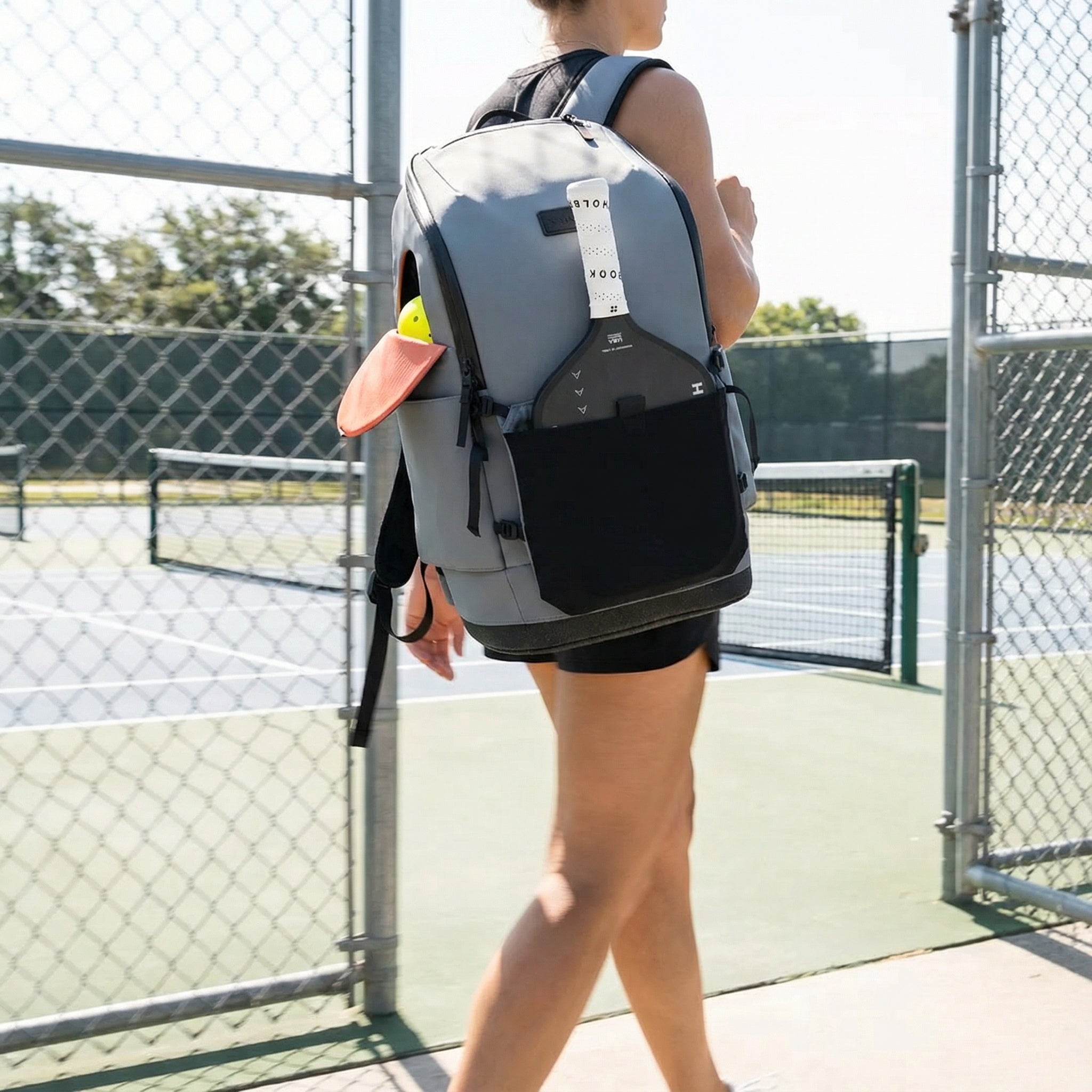
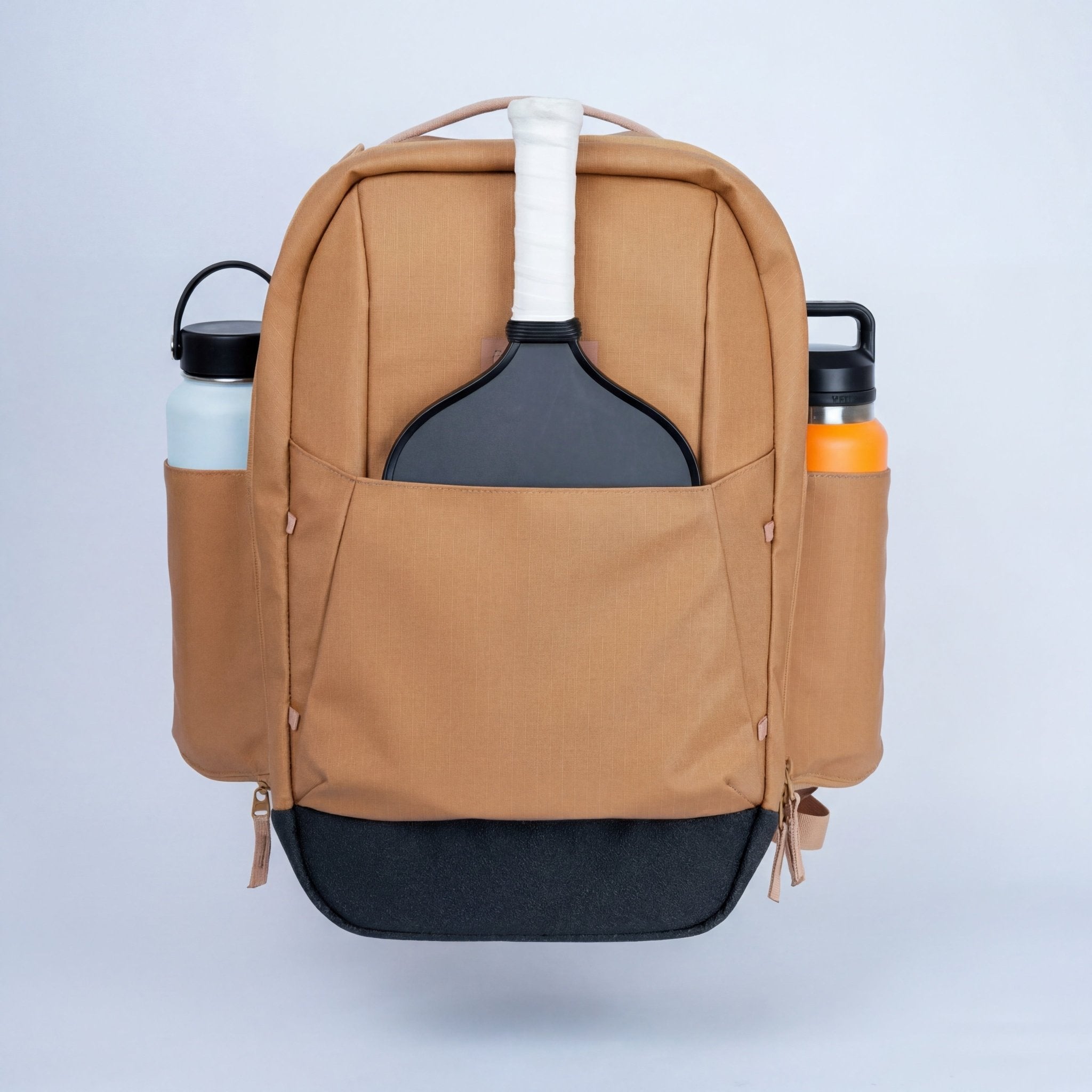
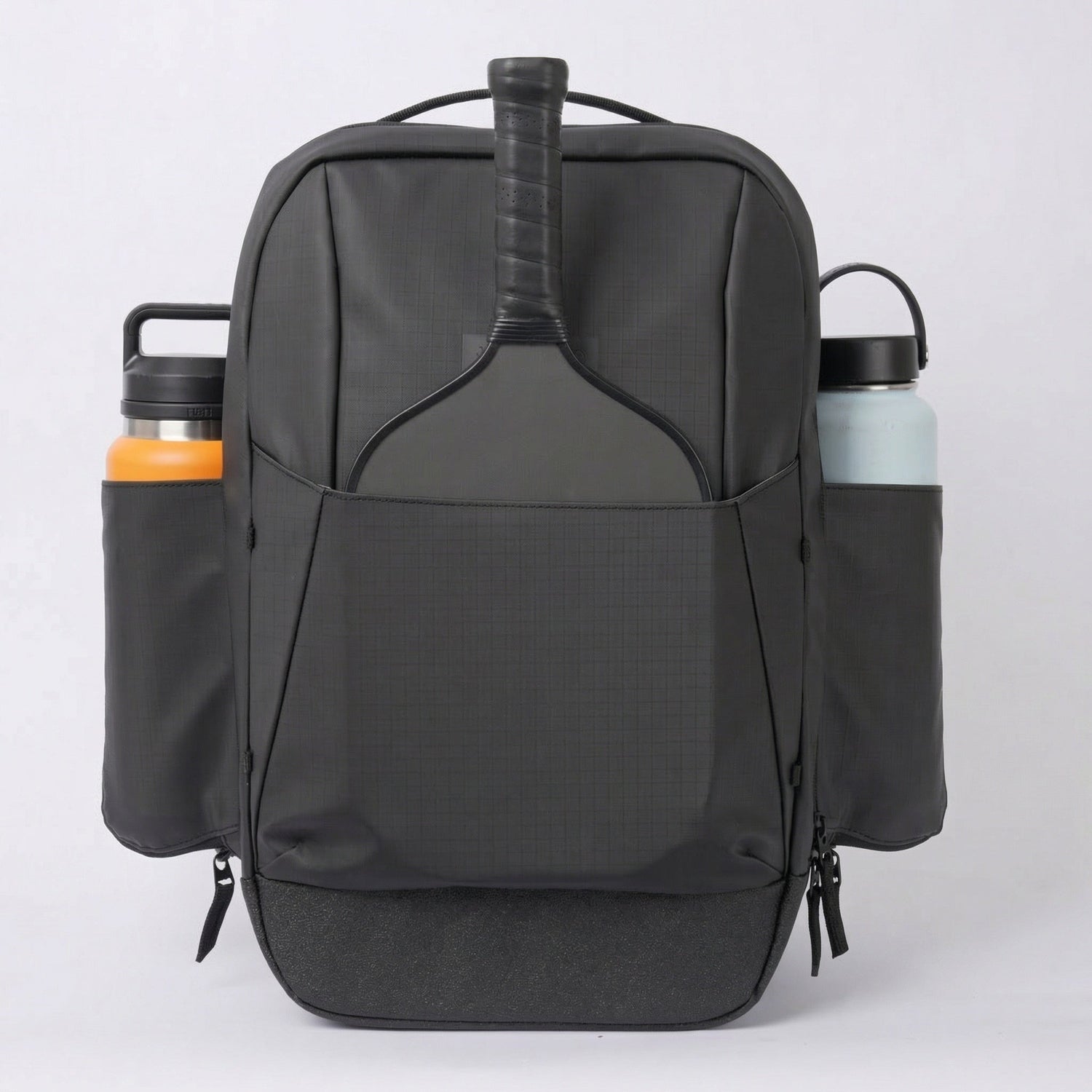
Tournament players know that their bag organization directly affects their between-game routine. Hydration in the right pocket, spare balls accessible without digging, dry grip tape within reach, snack in the hip belt. FORWRD's Court Ranger V2 ($195) was designed with exactly this in mind — the modular paddle sleeve keeps your main paddle protected during warmup, and the water bottle pockets on both sides mean you don't have to choose which hand you use courtside. Small things compound across a 5-match tournament day.
Know Your A-Game and Commit to It
Tournament strategy doesn't mean trying to implement every tactic in this guide at once. Pick two or three things that are currently your strongest plays and commit to them for the tournament. If you win 65% of your points by drawing opponents into long dinking rallies and attacking backhand hips, that's your A-game. Build your match strategy around it. You can work on expanding your repertoire in practice — but in competition, depth in a few patterns beats shallow coverage of many.
FAQ: Pickleball Strategy Questions Answered
What is the most important pickleball strategy for beginners?
Get to the kitchen line on every return of serve and hold it. Everything else is secondary. A beginner who consistently reaches the non-volley zone and stays there will beat a technically superior player who hangs back at the baseline. Focus on this one movement pattern before worrying about shot selection, spin, or formations.
What is the third shot drop and why is it so important?
The third shot drop is a soft shot hit by the serving team on the third shot of the rally (serve → return → third shot) that lands in the kitchen, forcing the receiving team to hit upward. It's critical because it neutralizes the serving team's structural disadvantage — after the serve, the serving team is stuck at the baseline while the returning team walks to the kitchen line. A well-placed drop gives the serving team time to advance to the line safely. Without it, they're stuck defending from the baseline indefinitely.
Should I always dink, or is driving the ball better strategy?
Neither is always correct — the right shot depends on the ball height and your position. The 34-inch rule is the clearest guide: any ball above net height (34 inches at the center) is attackable with a drive or speed-up. Any ball below that height should be reset or dink-returned to the kitchen. Players who always dink miss attack opportunities. Players who always drive create easy targets for a patient opponent. The best players blend both based on what the ball dictates.
What is stacking in pickleball and should I use it?
Stacking is a doubles formation where both players start on the same side of the court so that after the ball is in play, a designated player's forehand covers the center of the court. It's most commonly used when a team wants to keep a stronger player's forehand dominant or to keep a weaker player's backhand away from the center seam. It's worth learning at the 4.0+ level, but below that the communication and positional requirements often create more confusion than benefit.
How do I beat a player who just drives everything hard?
Reset everything. Bring them into the kitchen. A "banger" who drives constantly thrives when opponents try to trade drives with them or panic and make errors. Your weapon against bangers is patience — take the pace off every ball and redirect it softly into the kitchen. Most heavy hitters have poor dinking mechanics because they've never needed them. Once you bring the rally to the NVZ, you've neutralized their primary weapon.
What's the best way to improve my pickleball strategy faster?
Two things work faster than anything else: (1) drill with a partner who forces you to execute specific situations repeatedly — third shot drops, reset mechanics, transition zone movement — because a 30-minute focused drill session beats 3 hours of casual play for skill development; and (2) watch video of your own play. Most players have no idea how often they're out of position or how early they're attacking. Ten minutes of video review after a session reveals patterns that take months to notice in real-time.
Is pickleball strategy different for indoor vs. outdoor play?
Yes, meaningfully. Outdoors, wind is the primary variable — dinks and lobs are affected, and your serve patterns may need to adjust based on wind direction. The ball also plays differently: outdoor balls (like the Franklin X-40) are harder and faster than indoor balls, which means speed-ups arrive faster and reset mechanics require better reactions. Indoors, the surface is usually harder and more consistent, shots are more predictable, and court temperature doesn't affect ball bounce the way summer heat does on asphalt.
What strategy should I use when receiving serve?
Return deep and move immediately to the kitchen line. The return should be high enough to give you time to advance (aim for 6-8 feet above the net at the center) and deep enough to push the server back (within 3-4 feet of the baseline is ideal). Target the server's backhand when in doubt. The moment your paddle makes contact on the return, take two to three steps forward. Don't wait to watch where the ball lands — a good return buys you the time to advance without watching it.
All the Deep Dives: Cluster Articles in This Strategy Hub
This pillar covers the strategic landscape at 30,000 feet. Each section links out to a dedicated guide — here's the full map of the strategy cluster:
Shot-Specific Guides
- Pickleball Third Shot Drop: 2026 Technique & Drill Guide
- Pickleball Erne Shot: How to Hit and Defend It
- Pickleball Reset Shot: How to Stop Giving Away the Point
- Pickleball Backhand Guide 2026: Techniques, Grips & Drills
- Types of Pickleball Shots Every Player Should Know
- Pickleball Dinking for Beginners: How to Master the Kitchen
Serve & Return
Formation & Doubles Play
Rules & Fundamentals
- Pickleball Kitchen Rules: 2026 NVZ Guide + Myths Busted
- Pickleball Rules: The Complete 2026 Guide
- Pickleball Scoring: Complete Guide

Leave a comment
This site is protected by hCaptcha and the hCaptcha Privacy Policy and Terms of Service apply.