

Last updated: May 2026
The fastest path to winning more doubles matches isn't a better paddle — it's knowing where to stand and when to move. At every skill level from 3.0 to pro, the teams that control the kitchen line control the match. Court positioning is the highest-leverage skill in doubles pickleball, and most recreational players spend almost no time drilling it.
This guide covers the core principles: court positioning, stacking, the third shot drop, dinking strategy, communication, and a concrete in-point decision tool you won't find anywhere else. Work through it once, apply it in your next session, and watch your unforced errors drop.
Key Facts: Pickleball Doubles Strategy
- Kitchen line dominance: Professional rally analysis consistently shows teams that fail to advance to the non-volley zone lose the large majority of doubles rallies — court position is the single biggest statistical predictor of doubles outcomes.
- Stacking is legal at all levels: Both players on a team may line up on the same side of the court before a serve or return, then shift to preferred sides after the ball is struck — no rule prohibits it.
- Third shot drop purpose: It's a neutralizing shot, not an attack. The goal is to land softly in the opponent's kitchen so the serving team can advance to the net before the 4th shot.
- Cross-court dinking advantage: A cross-court dink travels over the lowest point of the net (34 inches at center vs. 36 inches at the sides), giving more margin for error than a down-the-line dink.
- Attack threshold rule: Most coaches teach attacking only when the ball is above net height at contact — dinking anything lower risks a pop-up your opponents can punish easily.
- Middle coverage assignment: For two right-handed players, the left-side player owns middle balls — their forehand naturally faces center court, which is the highest-traffic zone in most rallies.
Why Positioning Beats Power in Doubles
Most recreational players assume the best doubles teams hit harder. They don't — they stand smarter.
Positioning controls angles. Good angles limit the shots your opponents have available. When both partners are in the right spots on the court, you close down the high-percentage attack lanes and force opponents into low-percentage shots. A team with mediocre power but excellent court positioning routinely beats a team with great power and poor court sense.
The two most important positions in doubles: both teams want to be at the kitchen line. Whoever gets there first has the angle advantage, the volley advantage, and the psychological advantage. Everything in doubles strategy — stacking, third shot drops, transition movement — exists to get you to that line faster than your opponents.
Ben Johns, the top-ranked player in professional pickleball, has credited kitchen dominance as the core principle behind his doubles success. The same principle applies at every level. If you're losing recreational league matches, the first question isn't "what shot should I add?" — it's "are both of us at the kitchen line at the right time?"
The Kitchen Line: Both Partners Must Advance
Here's the rule every competitive doubles player internalizes: you can't dink effectively from mid-court. And mid-court — the transition zone between the baseline and the kitchen — is the most dangerous place to get stuck in a rally.
When the serving team hits their third shot, both partners need to move forward together. Not one at a time. Moving in unison keeps court coverage balanced. If one player charges to the kitchen while the other lingers at the baseline, you leave a massive gap in the middle that any halfway competent opponent will find in seconds.
"Moving together" doesn't mean moving at identical speeds — it means maintaining roughly equal distance from your respective sidelines and communicating as you advance. The goal is to arrive at the kitchen line at approximately the same time, in a balanced side-by-side stance that covers the full 20-foot width.
The practical test: After a rally ends, look at where you and your partner stopped. If there's a 10-foot gap between you along the kitchen line, one of you moved wrong. Practice transitioning from the baseline to the kitchen as a unit during warm-ups. It's the most undercoached rep in recreational doubles, and it's responsible for more lost points than any individual shot error.
What If You Can't Get to the Kitchen Right Away?
Sometimes the third shot lands too high or the opponent drives it back fast — and you're stuck mid-court. Don't panic and rush the kitchen anyway. Stop, reset with a drop or a defensive volley, and advance incrementally. Two steps forward on each reset is better than one reckless charge that leaves you attacking from mid-court.
Stacking Explained: Choose Your Side Every Point
Stacking is legal, effective, and still confuses a large percentage of recreational players who've never seen it explained clearly.
The simple version: stacking lets you and your partner choose which side of the court each of you plays on, regardless of what the score dictates. Normally, the score determines who serves from which box — even-score puts the server on the right, odd-score on the left. If you're stronger from one side, you'd spend half the match on your weak side. Stacking fixes that, every single point.
How Stacking Works (Serving Team)
The server serves from the correct box per the score — that part doesn't change. But instead of the non-server standing in the middle of the court, they line up near the sideline on the same side as the server. After the serve crosses the net (once it's legally in play), both players shift to their preferred sides. The server moves to their preferred side; the non-server fills the vacated half.
The shift happens immediately after contact — not after you see where the return goes, not after the 3rd shot. Immediately after the serve.
How Stacking Works (Returning Team)
Same concept, different trigger. The returner hits the return from their required position (the correct service box). Their partner, instead of standing in the middle, waits near the sideline. Once the return crosses the net, both shift to preferred sides and advance to the kitchen together.
When Stacking Makes Sense
The most common reason to stack: one player is left-handed. A right-left pairing without stacking puts both players' backhands toward the center of the court — the highest-traffic zone in most rallies. Stacking flips this so both forehands face center. That's a structural advantage on every point you play.
Even two right-handed players benefit from stacking if one has a significantly stronger forehand on the left side (common in former tennis players who dominated the deuce side). Stack to keep that forehand in position on every point.
The downside: stacking requires communication and practice. If you've never done it, spend one warm-up session walking through the movements before trying it in a match. One confused handoff mid-rally is worse than no stacking at all.
The Third Shot Drop: The Most Important Shot in Doubles
Ask any professional doubles coach what the single most important shot in pickleball is, and most will say the same thing: the third shot drop. Here's why it matters so much.
After the serve, the serving team is at the baseline. The returning team hits the return and immediately charges to the kitchen. The returning team reaches the kitchen first — almost every time. That's a structural disadvantage for the serving team built into the sport. The third shot drop is the answer.
A third shot drop is a soft arc shot that clears the net and lands in the opponent's kitchen (non-volley zone). A ball that lands in the kitchen can't be volleyed — the opponent has to let it bounce, which slows the rally down and gives the serving team 2–3 steps of recovery time to advance toward the net.
What makes a drop work:
- High arc — think "rainbow," not "line drive"
- Lands in the kitchen, not at the opponent's feet just past the non-volley line
- Slow enough that the opponent can't step in and volley it before it bounces
- Consistent — you need to execute this under pressure, not just in practice
The most common mistake: players hit the drop too hard. If your drop is fast enough to reach the kitchen quickly, it's fast enough that your opponent can volley it from the transition zone. Aim slow. The ball should arc up and settle softly like it ran out of momentum.
Third Shot Drive: When to Skip the Drop
The drop isn't always the right call. If the return of serve lands short — inside the kitchen or just past it — drive it. A short ball punishable from the baseline is a gift; attacking it puts your opponents on defense immediately. The drop is for neutralizing a deep, well-placed return. Against a short return, you can attack and advance simultaneously. Use the decision tree in the next section to identify which call fits your situation.
Want to sharpen your third shot drop with deliberate practice? A ball machine set to moderate pace and placement into the kitchen zone is the most effective drill setup. See our pickleball training equipment guide for the machines worth the investment.
Dinking Strategy: How to Win the War at the Net
Once both teams are at the kitchen line, the game shifts. It's no longer about advancing — it's about patience, angles, and waiting for a ball above net height to attack. This is the dinking game, and it's where most recreational doubles points are actually decided.
The goal of dinking isn't to hit a winner — it's to force an error or set up a high ball you can attack. Patience is the strategy. Most recreational players end dinking rallies too early by attacking a ball below net height, popping it up for an easy opponent put-away. The discipline to keep dinking when it feels passive is a separating skill between 3.5 and 4.0 players.
Cross-Court vs. Down-the-Line: Default to Cross-Court
Cross-court dinks are your default for good reason. They travel over the lowest part of the net (34 inches at center, vs. 36 inches at the sides), which gives you more clearance and more margin for error. They also pull your opponent wide — creating gaps in the court for an eventual attack or speed-up.
Down-the-line dinks feel aggressive but clear less net height and leave less margin. Use them to change pace in a long dinking rally or to reset when you're out of position on the cross-court angle. They're a variation, not the default.
The Speed-Up Attack: When and Where
After several soft dinks, your opponents get comfortable — their weight settles, their paddle position drops. That's when the speed-up works. Pick a dink that rises above net height (the ball is above your hip from the kitchen line) and drive it fast at your opponent's non-dominant shoulder or hip.
The target is the body — not the open court. A ball driven hard at a player's body forces an awkward response their paddle can't get into position for quickly. The open court target is for mid-court attacks; at the kitchen line, jam the body.
After the speed-up, recover immediately. If your opponent handles it and resets with a dink, get your paddle back down and return to the patient dinking game.
Moving as a Unit: The Shadow Principle
You and your partner aren't two solo players sharing a court — you're one defensive unit with two halves. The "shadow principle": when your partner moves, you move. When the ball goes wide to the left side of the court, both players shift left. When it goes right, both go right.
This keeps the gap in the middle from opening up. A widening middle gap is the most reliable attack target for experienced opponents — the shot down the center forces a "mine or yours?" communication breakdown and often goes untouched.
The practical fix: maintain roughly equal distance from your respective sidelines at all times. If your partner is pushed wide by a sharp cross-court, you shift toward center to cover the gap they've left. If you're pulled wide, your partner covers your side. Think of a bungee cord connecting you — stretch it too far and it pulls you back toward balance.
Communication Wins Rallies
Before a match even starts, make three decisions with your partner:
- Who covers middle? Two right-handers: left-side player takes middle. Mixed handedness: forehand player takes middle. Decide once, apply all match.
- Are you stacking? If yes, walk through the movement before the first serve. Don't improvise mid-match.
- What's your default third shot? Drop unless the return is short. Same call both players execute consistently — no in-rally debates.
During rallies, call balls early. "Mine" or "yours" before you make contact, not after. When you're moving forward, announce it: "coming up." When your opponent hits a shot neither of you can attack cleanly, say "reset" — it tells your partner to stop advancing and drop back to a defensive position.
The best doubles strategy in the world means nothing if your partner doesn't know what you're doing. Talking is a competitive skill. Practice it like you practice the third shot drop.
The Attack Decision Tree: Dink or Drive?
Most doubles strategy guides list shots. None give you a tool for the fraction of a second when you actually have to decide. This framework fills that gap — three questions you run through in real time as the ball comes toward you.
In-Point Attack Decision Tree
Question 1: Is the ball above net height when I contact it?
→ No: Dink it. A ball below net height means you're hitting upward to attack — low percentage, high error. Stay patient.
→ Yes: Go to Question 2.
Question 2: Am I at the kitchen line?
→ No (mid-court or baseline): Don't attack from here. Drop it into the kitchen and keep advancing. Attacking from no-man's land gives your opponent time to reset.
→ Yes: Go to Question 3.
Question 3: Is my opponent out of position or off-balance?
→ No (they're balanced and ready): Keep dinking. A well-positioned opponent handles most attacks. Create the opening first.
→ Yes: Attack. Target the body (non-dominant shoulder or hip). Snap your wrist, drive through the ball, then recover immediately.
Screenshot this. Walk through it before your next match. After 4–5 sessions applying it deliberately, the questions collapse into instinct. You'll stop attacking balls below net height — which is responsible for a huge percentage of recreational doubles errors — and start attacking only when the math is in your favor.
5 Common Doubles Mistakes (and the Fix)
Mistake 1: Charging the Net Solo
One player rushes to the kitchen; the other stays at the baseline. The partner at the kitchen is now dangerously overextended, and the baseline player can't defend the angles. Fix: Move forward together. If your partner isn't ready to advance, wait for the next reset opportunity and move as a unit.
Mistake 2: Attacking From Mid-Court
Players stuck in the transition zone try to attack to "escape" the dangerous position — and usually net the ball or give up an easy put-away. Fix: Drop from mid-court every time. Take the patient path even when it feels passive. Getting to the kitchen matters more than winning that specific exchange.
Mistake 3: No Pre-Agreement on Middle Coverage
The ball splits the middle. Both players hesitate — or both lunge. The rally is over. Fix: Pre-agree before every match who owns the middle. One conversation, enforced consistently throughout the match.
Mistake 4: Over-Relying on Down-the-Line Dinks
Down-the-line dinks feel powerful but clear less net height with less margin. Beginners overhit these and net them constantly. Fix: Make cross-court your default. Use down-the-line only to vary pace or when the cross-court angle is congested.
Mistake 5: Abandoning the Third Shot Drop Under Pressure
The return goes deep and hard. Player panics, drives it flat from the baseline. Now they're stuck at baseline against opponents who are set and ready to attack. Fix: Commit to the drop even under pressure. A mediocre drop that lands in the kitchen is better than a hard flat drive that your opponent volleys back for a winner.
"The players who level up fastest in doubles aren't the ones adding shots — they're the ones eliminating unforced errors. Stop attacking low balls. Stop rushing the net solo. Get to the kitchen together and dink until you get a ball above net height. That's the whole game at 3.5 and 4.0. It's still most of the game at the pro level."
— Grub, FORWRD Co-founder
Gear Built for Serious Doubles Players
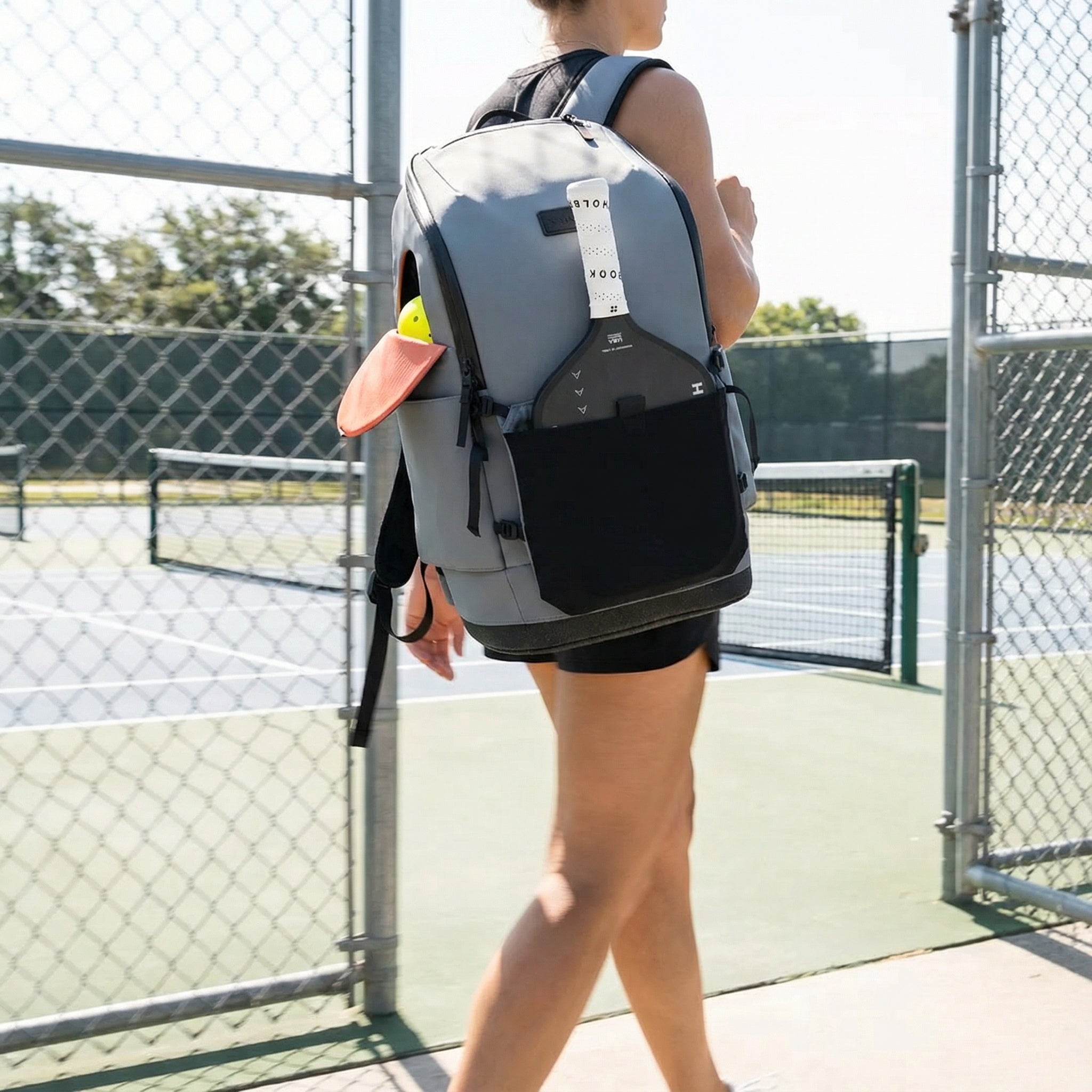
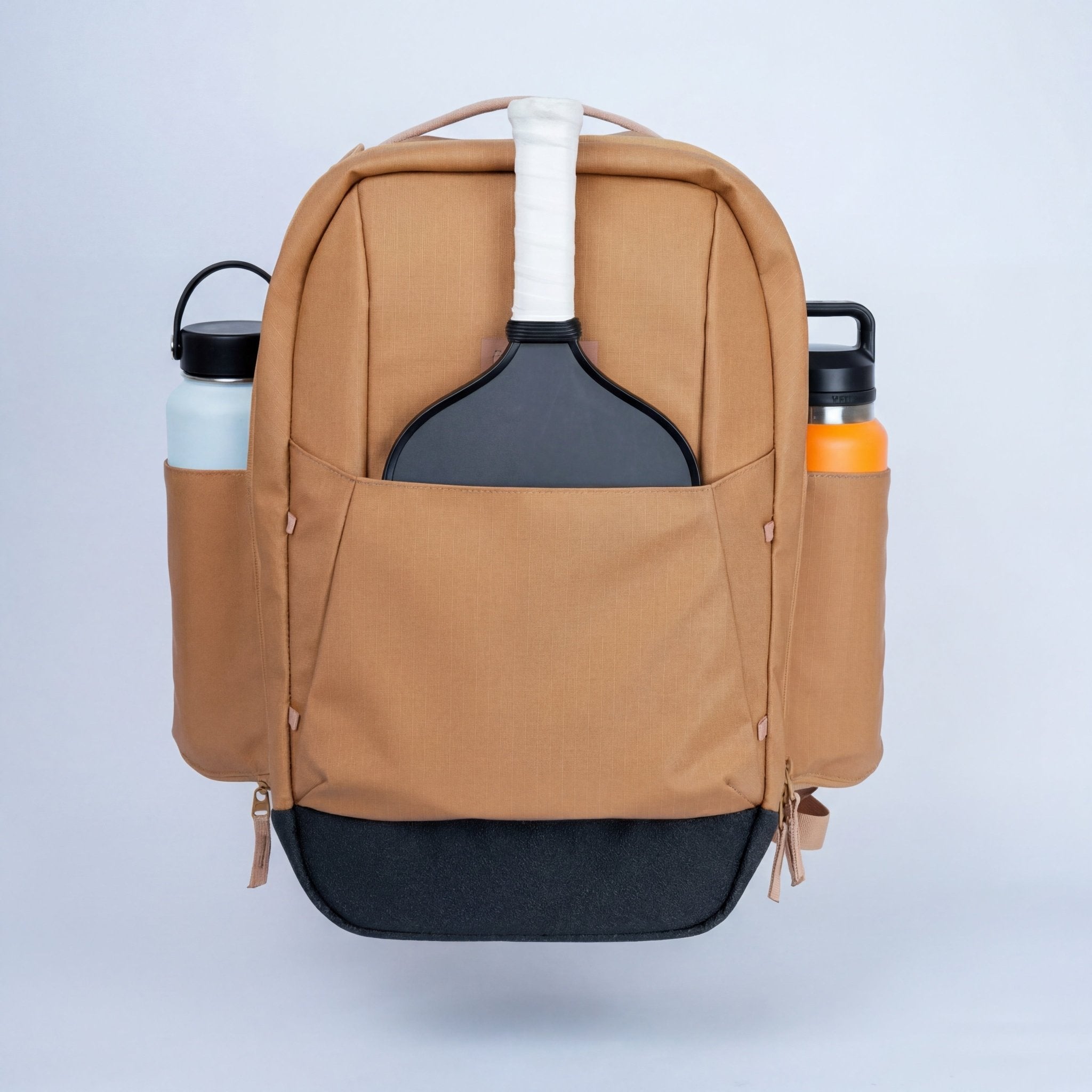
If you're playing doubles three or four times a week — league nights, open play, local tournaments — your gear setup matters more than you'd expect. The FORWRD Court Caddy ($325) was designed with feedback from 500+ competitive players specifically to handle tournament-day doubles loads: four paddles, balls, a change of clothes, a water bottle, and a 15" laptop in a dedicated padded sleeve. Organized the night before, so your focus on match day is on strategy, not digging through your bag.
Ready to upgrade your game on and off the court? Shop the Court Caddy — designed with 500+ real players and built to last.
For more foundational skills to pair with your doubles strategy, see our complete pickleball beginner guide and the Pickleball for Beginners pillar for rules, scoring, and court fundamentals.
FAQ: Pickleball Doubles Strategy
What is the best positioning strategy in pickleball doubles?
Both partners should advance to the non-volley zone (kitchen line) together as quickly as possible. Kitchen-line positioning gives you angle advantages, volley options, and the ability to control the soft game. Teams that fail to reach the kitchen lose most doubles rallies — it's the single highest-leverage positioning decision in the sport.
What is stacking in pickleball, and should I use it?
Stacking lets both partners play their preferred side of the court regardless of what the score dictates. It's most useful when partners have mismatched handedness — stacking puts both forehands toward the center court. It's legal at all levels and used by recreational and professional players alike. Practice it in warm-up before applying it in match play.
What is the third shot drop and why does it matter in doubles?
The third shot drop is a soft arc from the baseline that lands in the opponent's kitchen, buying the serving team time to advance to the kitchen line. It neutralizes the serving team's positional disadvantage (they start at the baseline while the returning team rushes to the net) and is the most practiced shot by serious doubles competitors.
Should you always go to the kitchen in pickleball doubles?
In most situations, yes — the kitchen line is where doubles points are won and lost. The exception: don't charge the kitchen before the two-bounce rule completes on the third shot, and don't rush from mid-court if your reset shot wasn't good enough to neutralize the opponents. Advance incrementally, not recklessly.
How do you cover the middle in doubles pickleball?
Pre-agree before the match. Two right-handed players: the left-side player owns middle balls (their forehand faces center naturally). Right-left mixed pair: the forehand player takes middle shots. Call the ball early — "mine" — before contact, not after. One decision before the match eliminates mid-rally confusion throughout the game.
When should you speed up the ball instead of dinking in pickleball?
Speed up when: (1) the ball is above net height at contact, (2) you're at the kitchen line (not mid-court), and (3) your opponent is off-balance or out of position. Target the body — specifically the non-dominant shoulder — not the open court. Attack only when all three conditions are met; dink when any one is missing.

Leave a comment
This site is protected by hCaptcha and the hCaptcha Privacy Policy and Terms of Service apply.