

Last Updated: October 2026
Best Pickleball Training Equipment in 2026: Ranked by What Actually Improves Your Game
Disclosure: This post contains affiliate links to Pickleball Central. If you purchase through our links, FORWRD earns a small commission at no extra cost to you. We only link to products we'd recommend regardless.
The best pickleball training equipment, ranked by improvement-per-dollar: target aids ($20–$50) for placement accuracy, a rebounder ($80–$200) for dink mechanics, a training ball hopper ($40–$100) for serving and self-feed drills, a portable net ($149–$159) for home court setups, and a ball machine ($499–$2,049) for pace variation and advanced solo drilling. Buy in that order — the cheapest tools deliver the biggest gains for most players.
Most players practice wrong. They rally casually, call it drilling, then wonder why their dink collapses at the NVZ in a real match. During the design of the Court Ranger V2, we had detailed conversations with 500+ players about what they actually carry to training sessions — and the pattern was clear: players who bought a ball machine first and plateaued, versus players who started with $30 of disk targets and saw their dink consistency jump within a month. Here's the honest breakdown by category, ranked by improvement-per-dollar, not sticker price.
Want deeper drill protocols for each tool? Our companion guide covers individual training aids in detail: Pickleball Training Aids: The Complete 2026 Guide.
Training Equipment by Category: 2026 Comparison
Before buying anything, understand where each category sits in the training hierarchy. The most expensive tool isn't the most effective one for most players — especially under 3.5 DUPR.
| Category | Price Range | Best Skill Impact | Best For | Improvement ROI |
|---|---|---|---|---|
| Target aids / court markers | $20–$50 | Placement accuracy, third shot drop | All levels, baseline drilling | Highest |
| Rebounder | $80–$200 | Dink mechanics, NVZ touch, volleys | Under 3.5 DUPR, soft-game focus | Very high |
| Training balls + ball hopper | $40–$100 | Serving consistency, placement drills | Any level, partner or solo feeds | High |
| Portable net | $149–$159 | Dinking, short-court games, footwork | Players without regular court access | High (if no court access) |
| Ball machine | $499–$2,049 | Pace variation, third-shot drops, return patterns | 3.0+ players, 3+ sessions per week | High (with structured drills) |
The through-line: equipment gets more expensive as you move up the skill ladder, but the highest-ROI tools are almost always the cheapest. A $30 pack of target markers used deliberately beats an $800 ball machine used without a plan. Every time.
The Buy Order: What to Purchase First
Don't skip steps. Players who jump to expensive gear often plateau because they haven't built the deliberate repetition habits that make expensive equipment useful.
Stage 1 — Start ($50–$100): Target aids and a ball hopper. Know where your third shot actually lands before spending anything else. Most players are genuinely shocked when they first place targets — their "consistent third shot" clips 4 feet short of the kitchen 60% of the time.
Stage 2 — Home practice ($200–$350): Add a rebounder. Now you can drill dinks solo, work on NVZ touch, and practice blocking volleys without a partner. If you don't have regular court access, a portable net ($149–$159) goes here too. This is also when gear organization starts to matter — a dedicated training bag that holds paddles, a hopper, extra grips, and water without turning into a tangled mess saves more session time than players expect.
Stage 3 — Committed ($499–$2,049): Ball machine. Adds pace variation and the ability to drill third-shot drops from a live feed — the training gap that separates 3.0 from 3.5 play. Only invest here after 6+ months of structured rebounder and target work. The machine amplifies discipline; it doesn't install it.
Best Pickleball Ball Machines 2026: What's Changed This Year
Ball machines are the highest-leverage solo training tool once you're past rebounders and target work. The 2026 market has matured fast — app-controlled machines with pre-programmed drill sequences are now accessible at multiple price points, not just the premium tier. Here's the honest breakdown:
Entry level ($499): Best for 2.5–3.0 players
The Lobster Pickle Phenom ($499) is still the most practical entry point in 2026. Holds 135 balls, oscillates horizontally for side-to-side drilling, runs 4+ hours on battery. Speed and spin range covers everything from beginner-pace feeds to competitive 3.5 drive speeds. No power cord required. Consistent players see measurable improvement within 3 months of structured use.
Mid-range (~$1,100): Best for 3.0–3.5 players
The Pickleball Tutor Spin (~$1,100) adds programmable spin variation to horizontal oscillation. Useful for players who want to drill reading topspin drives and slice returns under realistic match pressure. The topspin feed setting specifically replicates the timing challenge of a third-shot drop from a live high-bounce serve — something no other single-drill setup recreates as well. Pickleball Tutor publishes drill guides on their official site that pair well with this machine.
Premium ($1,999–$2,049): Best for 3.5+ players training 4+ days/week
The biggest development in 2026's ball machine market: app-controlled premium machines with pre-programmed drill libraries. The Erne machine leads on capacity — 150 balls, 24 pre-built drill sequences, full smartphone control. The Titan ACE ($1,999) brings a UPA partnership and free app with customizable drill sequences; the Titan ONE ($2,049) adds more granular feed-pattern customization. For competitive players training for APP or PPA open events, these machines justify the premium — the drill specificity approaches what a live hitting partner delivers. For anyone under 4.0 DUPR, the Lobster or Tutor tier is more than enough.
Ball supply for any machine: Stock at least 150–200 DURA Fast 40 training balls — they hold up to machine feeds better than match balls and are approved for outdoor use. Constant retrieval breaks drill rhythm.
Rebounders and Portable Nets
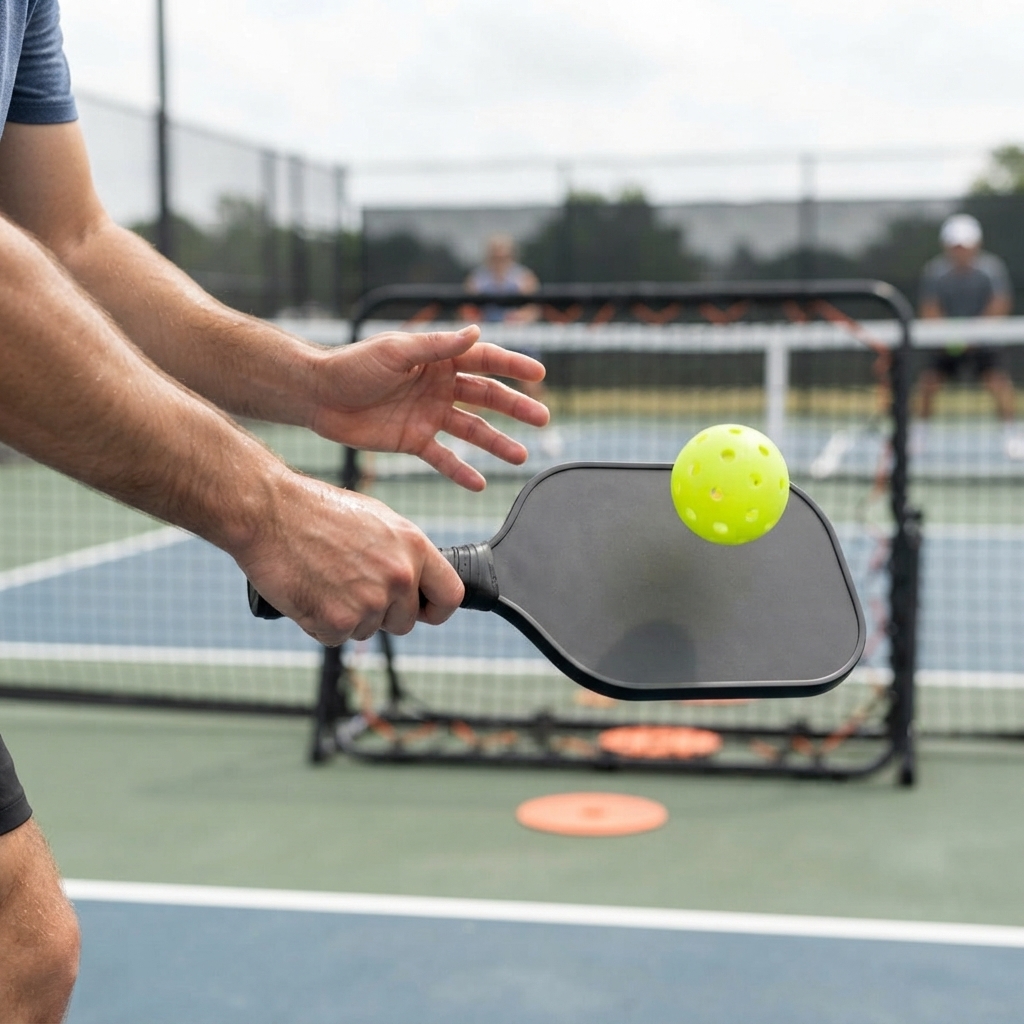
Rebounders are the most underrated training tool in pickleball — and the one most serious players wish they'd bought before their ball machine. At $80–$200, they require no partner and work specifically on the thing most recreational players are worst at: soft game touch and dink consistency at the NVZ.
The mechanics are simple: you dink into the rebounder at NVZ distance, the ball returns on a predictable arc, you respond. After 500 reps, your NVZ dink mechanics become automatic instead of reactive. That's the difference between holding the kitchen in a tense match and collapsing under pace. The rebound angle more closely mimics a real dink exchange than flat wall bounces do — which is why it transfers to match play better than most players expect.
What to look for: a sturdy base (lighter rebounders walk across the court on hard hits), adjustable angle (controls return arc), and enough face area to work on cross-court dink angles. Find pickleball rebounders at Pickleball Central across multiple price points.
For players setting up home practice without regular court access: the PickleNet Mini portable net ($149.95) sets up anywhere — driveway, backyard, gym floor. Regulation height, 10-foot span, under 2-minute setup. Pair it with a rebounder and you have a complete home practice station for under $350. The Rally Deluxe Portable Net ($159) is worth considering if you want a longer net for full baseline-to-kitchen drilling.
For specific drill sequences for rebounders and portable nets, see: Pickleball Training Aids: The Complete 2026 Guide.
Target Aids and Court Markers
If there's one purchase that punches hardest above its price, it's target markers. At $20–$50, they're almost free — and they force the deliberate, placement-focused practice that actually transfers to match play.
The third shot drop is the most drilled shot in pickleball, and for good reason: it determines whether you get to the NVZ or play defense from mid-court. Most players "practice" it by feeding themselves balls and hitting until they're tired. Players who place a target in the kitchen corner — 2 feet inside the sideline, 1 foot inside the NVZ — immediately discover whether they're landing where they think they are. Most aren't, even players who'd describe their third shot as "pretty consistent."
The protocol that actually transfers:
- Set two flat disk targets in the NVZ — one near each sideline corner
- Feed 30 balls from the baseline position where you'd hit a real third shot in a match
- Track your hit rate separately for forehand and backhand side
- Once you're at 7/10 from baseline at game pace, add movement before each feed
Find pickleball training aids and court markers at Pickleball Central. Flat disk markers beat rubber cones — they don't roll when you clip them, so you get clear feedback on the miss instead of just watching a cone spin away.
Bag Organization for Training Sessions
Training sessions have a gear problem that casual open play doesn't. You're carrying a ball hopper (or machine magazine), potentially a rebounder, multiple paddles, extra grips, water for a 90-minute solo session, and a change of clothes. A gym bag or sling pack falls apart under this load within a few weeks — not from force, just from zipper wear and strap stress under uneven load.
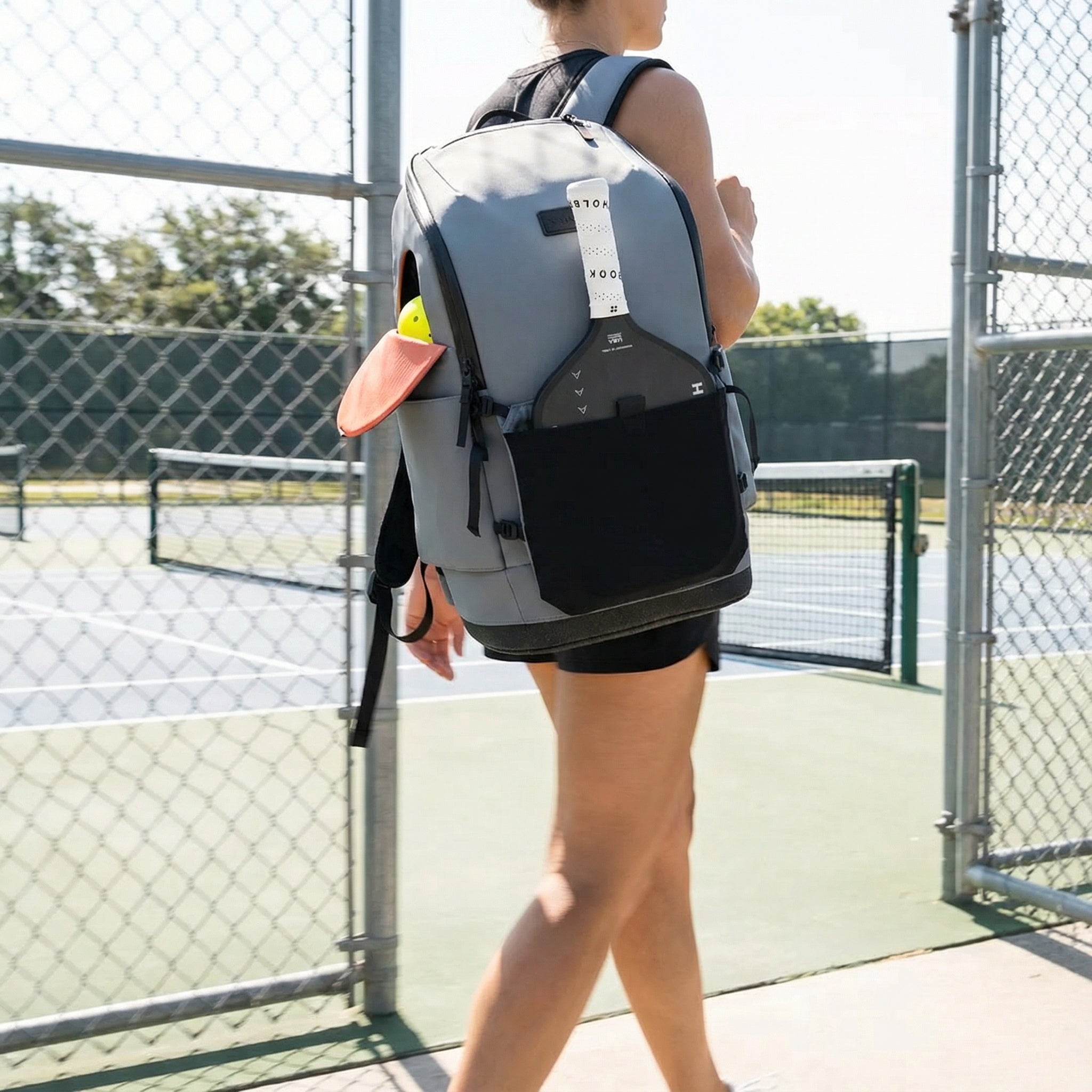
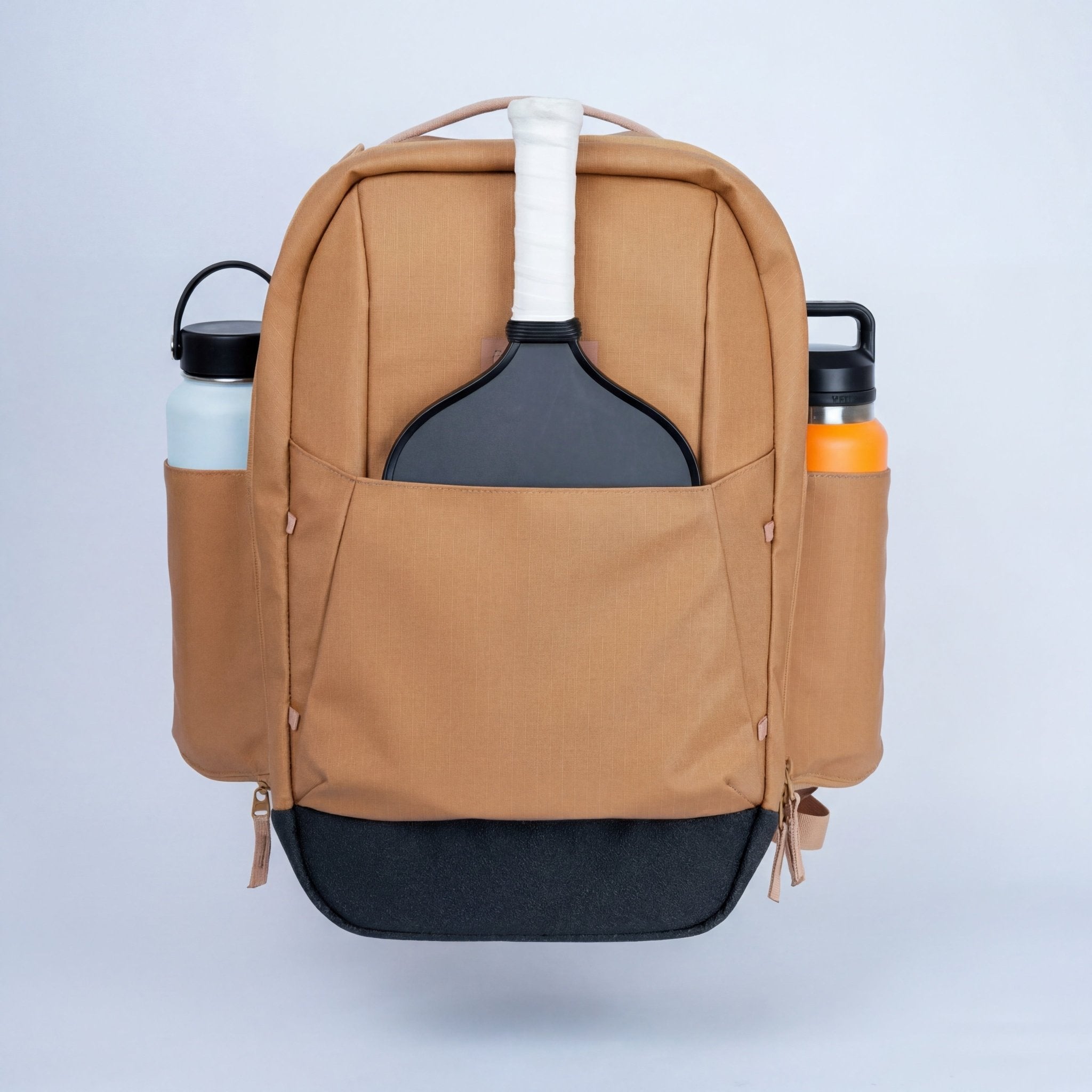
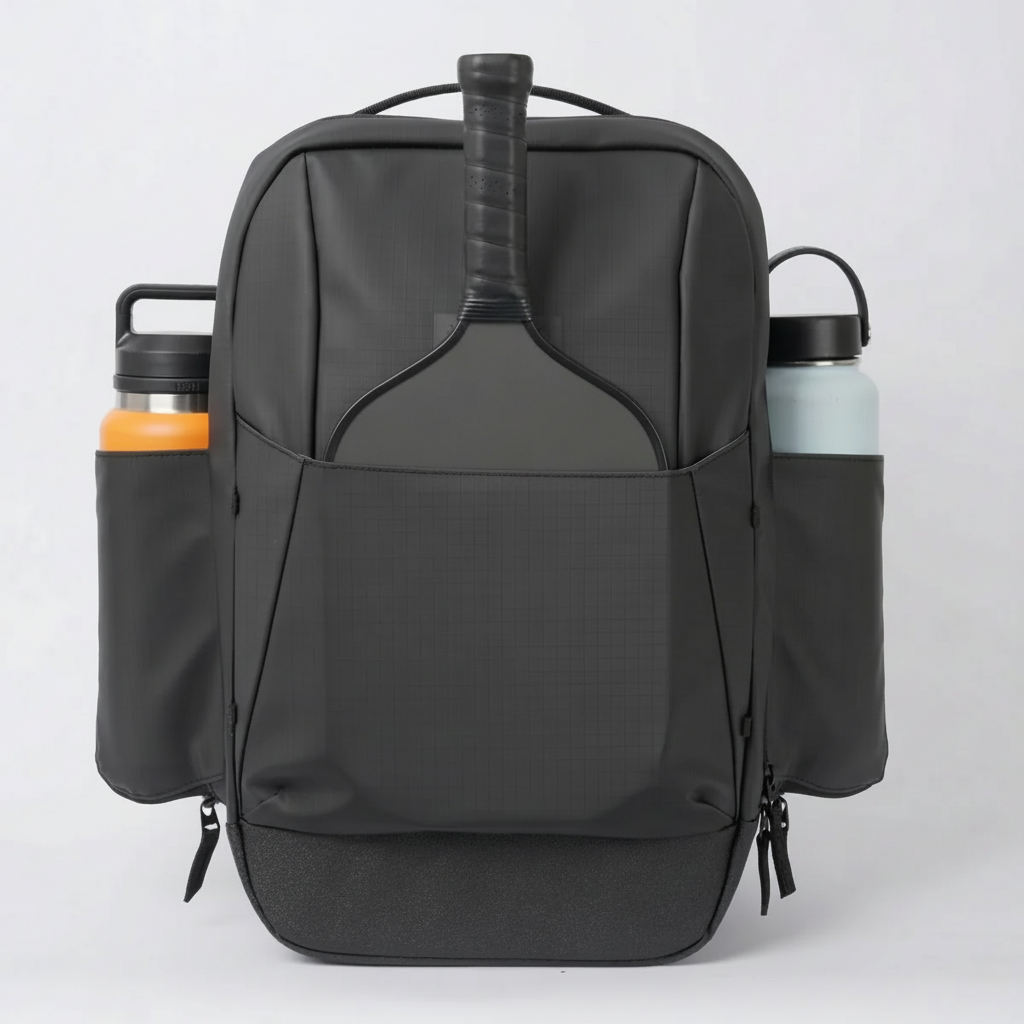
The Court Ranger V2 ($195) is built for this use case. The dedicated paddle sleeve isolates paddles from the rest of your gear — matters when you're testing lead tape configurations or carrying a backup. The 16" laptop sleeve holds a tablet for reviewing instructional video between sets. YKK AquaGuard zippers handle outdoor sessions in all conditions.

For players who carry 4 paddles to compare configurations in the same session, the Court Caddy Backpack ($325) handles the full load in its modular 4-paddle sleeve system. Both bags were designed with feedback from 500+ players, including serious practitioners who raised the "how do I carry a hopper, rebounder, and two paddles in one bag" problem during the design process.
FAQ: Pickleball Training Equipment Questions
What is the best training aid for pickleball?
For most players under 3.5 DUPR, a rebounder is the best training aid — $80–$200, no partner required, specifically trains dink mechanics and NVZ touch. Pair it with flat disk target markers ($20–$50) in the kitchen zone and you have the highest-ROI training setup at any skill level. Neither item requires a court reservation.
What is the best ball machine for solo pickleball practice?
At the entry level, the Lobster Pickle Phenom ($499) is the most practical machine — 135-ball capacity, horizontal oscillation, 4+ hour battery. For players training 4+ days per week who want app-based drill programming, the Erne (150-ball hopper, 24 pre-programmed drills) and Titan machines ($1,999–$2,049) are 2026's premium options. Start with the Lobster unless you're already competing at 3.5+.
What is the best portable net for pickleball drills?
The PickleNet Mini ($149.95) is the standard for home practice — regulation height, under 2-minute setup, works on any flat surface. The Rally Deluxe Portable Net ($159) is worth the extra $10 if you want a longer net for full short-court game simulation or driveway doubles play.
Do I need a ball machine or is wall practice enough?
Wall and rebounder practice is enough for most players under 3.5 DUPR — it specifically trains dink mechanics and soft-game touch, which is where most recreational players lose points. A ball machine adds genuine value when you're ready to drill pace variation, third-shot drops from a live feed, and return patterns from multiple court positions. If your soft game is the weakness (it usually is), start with the rebounder. The machine can wait.
What equipment do I need to practice pickleball at home?
The minimum home setup: a rebounder ($80–$200) for dink work, target markers ($20–$50) for placement training, and a hopper of training balls. A portable net like the PickleNet Mini ($149.95) significantly expands what you can practice. A ball machine ($499+) unlocks full solo drilling with pace variation — but it's Stage 3, not where to start.
What training aids help improve the third shot drop?
Flat disk target markers in the NVZ kitchen corners give immediate visual feedback on where your third shot lands. Set targets 2 feet inside each sideline, feed 30 balls from baseline at game pace, track hit rates for forehand and backhand separately. Most players discover a significant gap between their two sides — that asymmetry is the drill focus, not generic "practice your third shot" repetitions.
Are pickleball rebounders worth it?
Yes — a rebounder is the highest-ROI training tool for most players under 3.5 DUPR. At $80–$200, it requires no partner and trains dink mechanics and soft-game touch specifically — the area where most recreational players lose the most points. The limitation: rebounders can't replicate driving pace variation or third-shot timing under pressure. That's where a ball machine adds value a rebounder can't replace.
Ready to upgrade your training bag too? Shop the Court Ranger V2 — built with 500+ real players to handle the full training load.

Leave a comment
This site is protected by hCaptcha and the hCaptcha Privacy Policy and Terms of Service apply.