

Last Updated: September 2026
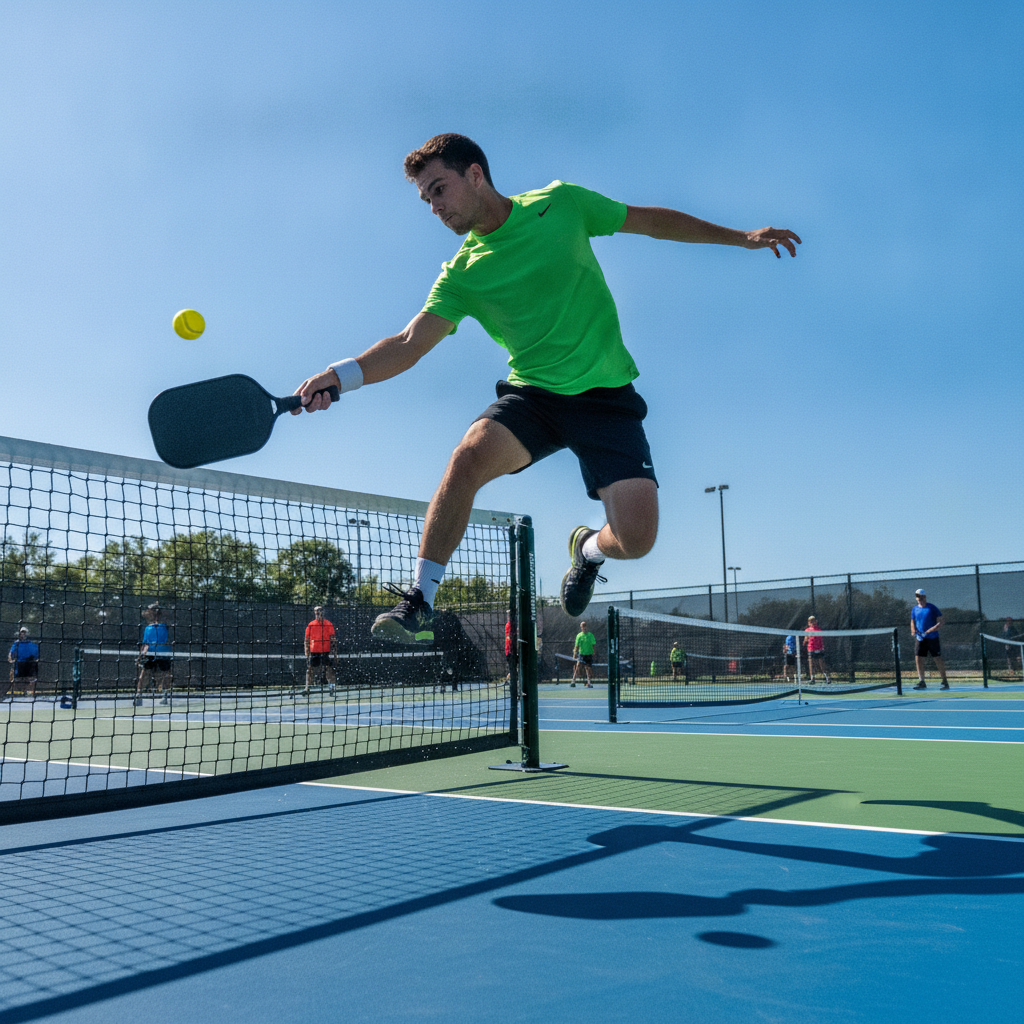
The erne is a volley hit from outside the sideline, beside the non-volley zone, while your feet are completely clear of the kitchen. It's legal, it's spectacular, and — when you pull it off correctly — it's almost unreturnable. Here's how to actually execute it.
Named after Erne Perry, who popularized the shot in competitive pickleball's early days, the erne works because it removes the NVZ restriction entirely. You're not volleying from the kitchen — you're vollying from outside the court boundary. That's a fundamentally different and more dangerous angle than anything your opponent expects.
What the Erne Shot Is (And Why It's Legal)
The erne is legal under USA Pickleball Rule 9.B, which states that a player may reach over the net to volley a ball once it has crossed to their side, provided they don't touch the net, net post, or any part of the opponent's court. The erne exploits a different rule: nothing stops you from running around the net post and volleying from outside the court boundary entirely.
There are two ways to execute it physically:
- The jump erne: You leap over the NVZ corner, make contact in the air with both feet outside the sideline, and land outside the court. This is the flashy version you see at the pro level.
- The run-around erne: You exit the court by running through the NVZ (briefly touching kitchen), circle around the net post, and establish both feet outside the sideline before volleying. Legal as long as your feet are fully planted outside the boundary when you contact the ball.
Either way, once you're outside the sideline with both feet clear of the kitchen, you're playing by regular volley rules. The ball just has to clear the net — you're no longer restricted by the NVZ.
The 3-Step Setup for a Consistent Erne
The erne doesn't happen spontaneously. It's engineered through your dink sequence. Here's the setup:
Step 1: Bait the Crosscourt Pattern
The erne works when your opponent is in a predictable crosscourt dink exchange. You need 2-3 dinks going the same direction to establish rhythm in their shot-making. Your job in this phase is to appear locked into the standard dink battle while you read the pattern. Don't drift toward the sideline yet — telegraphing the move kills the element of surprise that makes the erne work.
Step 2: Set Up the Bait Shot
On your dink, push the ball slightly toward the sideline on your opponent's side — not wildly wide, just enough to make their return land closer to the sideline. A tight crosscourt dink that hugs the sideline gives you the optimal contact point. You're engineering where their next ball will land relative to the net post.
Step 3: Move After They Commit
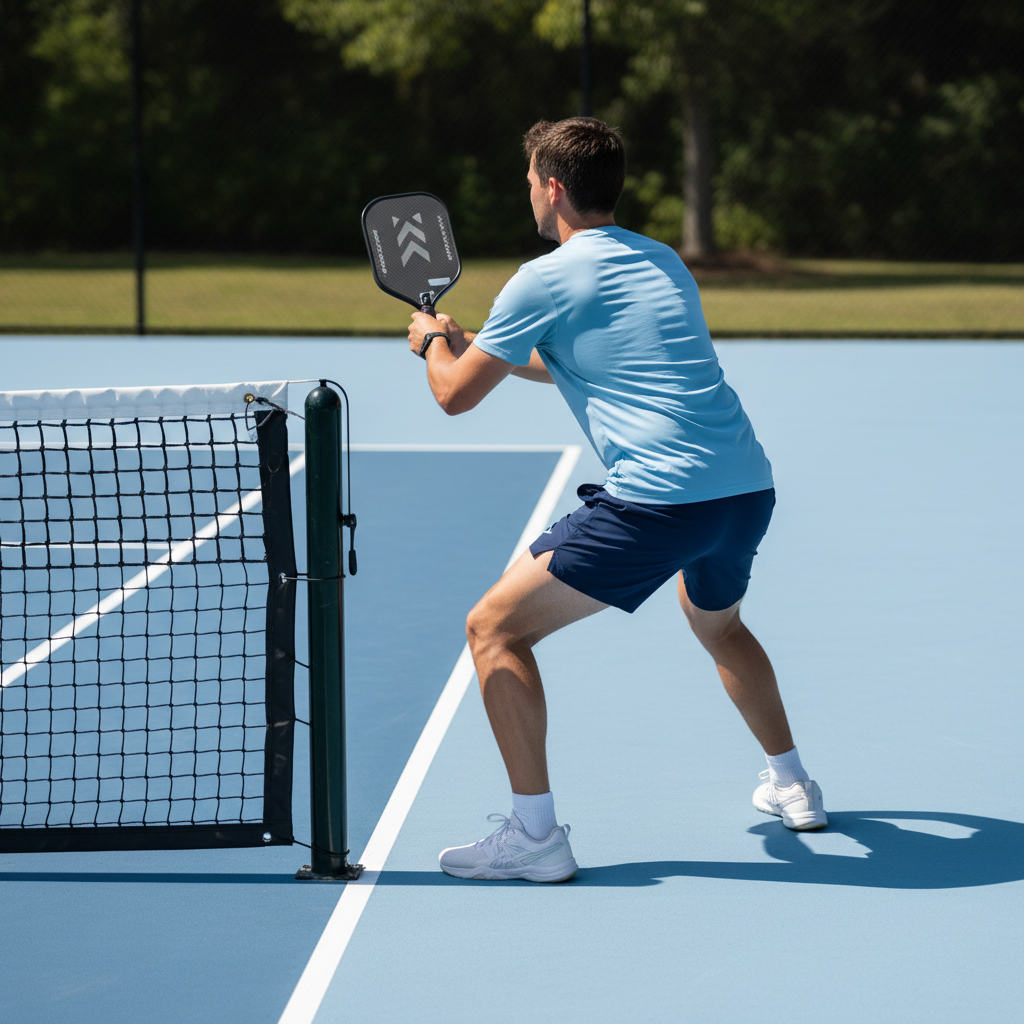
This is the step most players get wrong. You make your lateral move after your opponent has committed to the shot — not as you're hitting your setup dink. Watch their paddle face angle, watch their weight transfer. The moment you see they're locked into the dink pattern, you move. Late is right. Early is a telegraphed run that gives them time to redirect down the line.
Erne Trigger Points: When the Shot Is Actually On
Most erne guides explain what the shot is. This one tells you when to actually pull the trigger.
Run this 4-point checklist mid-point before committing to the erne:
The Erne Trigger Checklist
- Pattern established? Have they dunk crosscourt 2+ times in a row? If yes: proceed. One dink is not a pattern.
- Ball landing near the sideline? Is their next ball tracking toward the near sideline — not the center? If yes: proceed. A ball in the center of the court gives you no angle from the erne position.
- Are they watching the ball, not you? Experienced opponents will see you moving. If their eyes are on you, they're about to redirect down the line. If they're locked on the ball: proceed.
- Do you have a clear lane? Is your opponent's partner positioned in a way that your erne winner has a landing zone? If the angle is crowded: abort. A forced erne into traffic is worse than no erne at all.
All four green? Go. Any one red? Stay in the dink battle. A patient player who attempts erneés only when the checklist clears will execute them at a dramatically higher success rate than a player who "feels like going for it."
The Fake Erne (The Variation Nobody Teaches)
Here's a tactic that almost no guide covers: the fake erne. You start the lateral movement toward the NVZ corner — enough that your opponent sees the threat — then pull back and redirect your dink down the line instead.
Why this works: at 4.0+ play, opponents are watching your movement. When you drift toward the corner, their instinct is to redirect away from the erne path — toward the center. That center-redirect is exactly where you want their ball to land. You've just opened up the sideline angle by never even attempting the erne. The fake erne is often more effective than the actual erne because the threat generates the same result without the execution risk.
Common Erne Mistakes (And Why They Backfire)
The erne fails in predictable ways. Here's what to watch for in your own game:
Telegraphing the Run
Starting your lateral movement too early is the most common erne killer. The moment a 4.0+ opponent sees you drifting, they redirect down the line — which is wide open because you've just vacated your court position. Move only after they've committed. Every millisecond earlier than that sacrifices a point, not wins one.
Jumping Too Early
For the jump erne, timing the takeoff too early means you're already landing when the ball arrives. The erne is a volley — you need to be at full extension at contact, not on your descent. Watch the ball, not your feet.
Not Establishing Your Feet
If you're using the run-around erne and any part of your foot is still inside the NVZ boundary at contact, it's a fault — your point. There's no gray area here. Both feet must be fully outside the sideline before you contact the ball. Practice the footwork in isolation before adding it to live play.
Choosing Bad Ball Locations
The erne only works when the ball is coming to the sideline near the net. Attempting an erne on a ball that's tracking toward the center of the court means you're reaching across your body at a terrible angle. The erne is a positional shot, not a reach shot. If the ball isn't near the sideline, you're not in erne range — stay home.
The Erne Drill: 5-Ball Practice Sequence
You cannot develop erne timing in live games alone. The footwork, the timing of the lateral move, and the contact point all need repetition before they work reliably in competition. Here's a structured 5-ball sequence:
- Ball 1: Feed a crosscourt dink to the practice partner. They return crosscourt. You hit a setup dink — slightly toward their sideline. No movement yet.
- Ball 2: Partner returns crosscourt again. You hit another setup dink, this time tighter to the sideline. Still no movement.
- Ball 3: Partner hits the bait ball — a dink that tracks toward your sideline at the net. Now you move. Lateral step toward the NVZ corner, then execute the jump or run-around, contact outside the sideline.
- Balls 4-5: Repeat the 3-ball setup with the same trigger read. Don't skip the setup phase — it's where the erne becomes a natural continuation of the dink exchange, not an unnatural decision.
Run this sequence 20 times per side before live gameplay. The goal is to make the lateral trigger feel automatic when you recognize the pattern — not a conscious decision you make mid-point, but a conditioned response to a specific ball location.
"The erne is the shot that separates players who understand dink patterns from players who just dink. The setup is the whole thing — I've never seen someone execute a great erne spontaneously. You engineer it over 2-3 shots, or you don't get it."
— Grub, FORWRD Co-Founder
The erne pairs well with a strong third-shot game. If you haven't locked in your third shot drop yet, start there — the erne becomes available once you're controlling the kitchen consistently. For a full picture of how the erne fits into doubles strategy, the complete pickleball strategy guide maps out when to use each shot.
Complete Your Setup
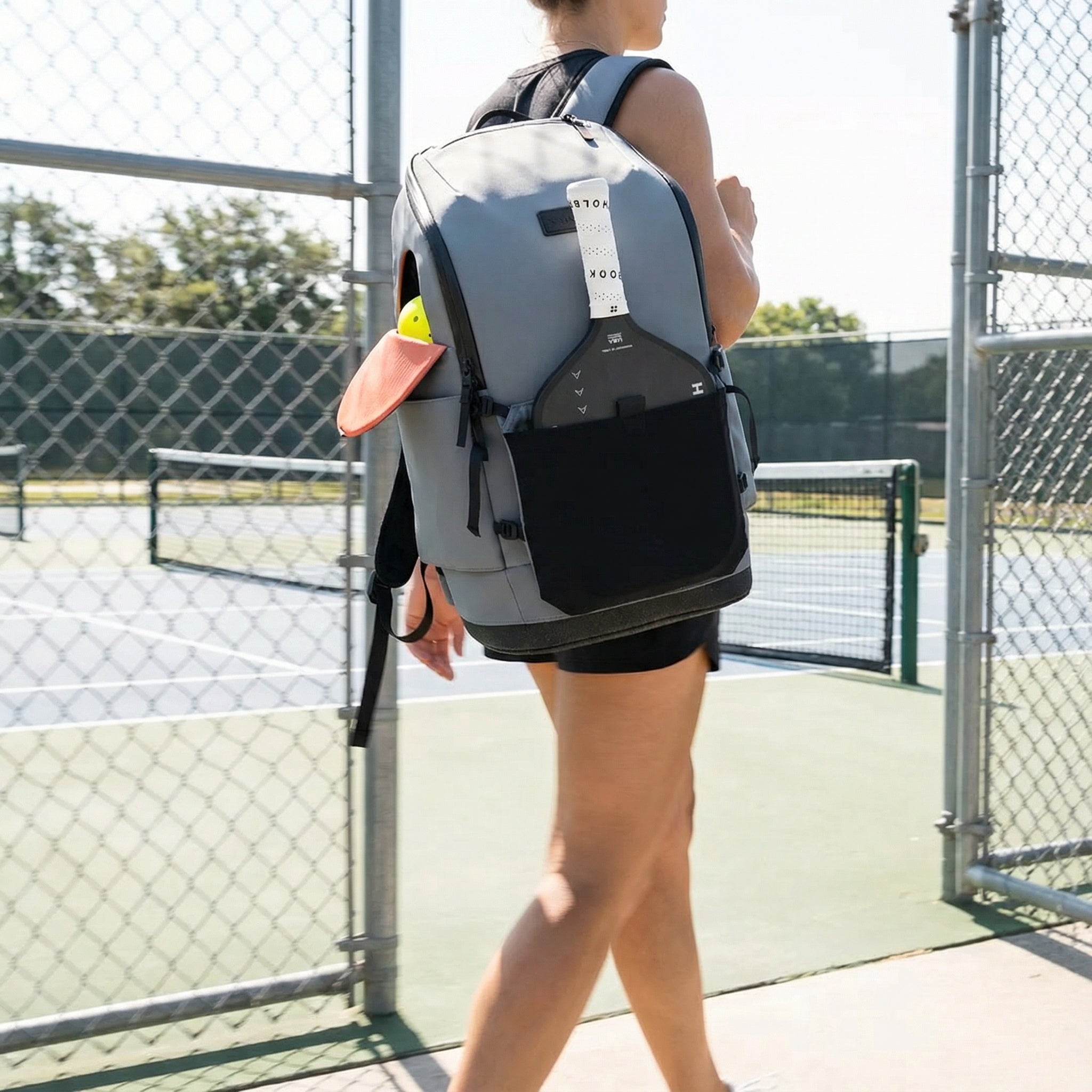
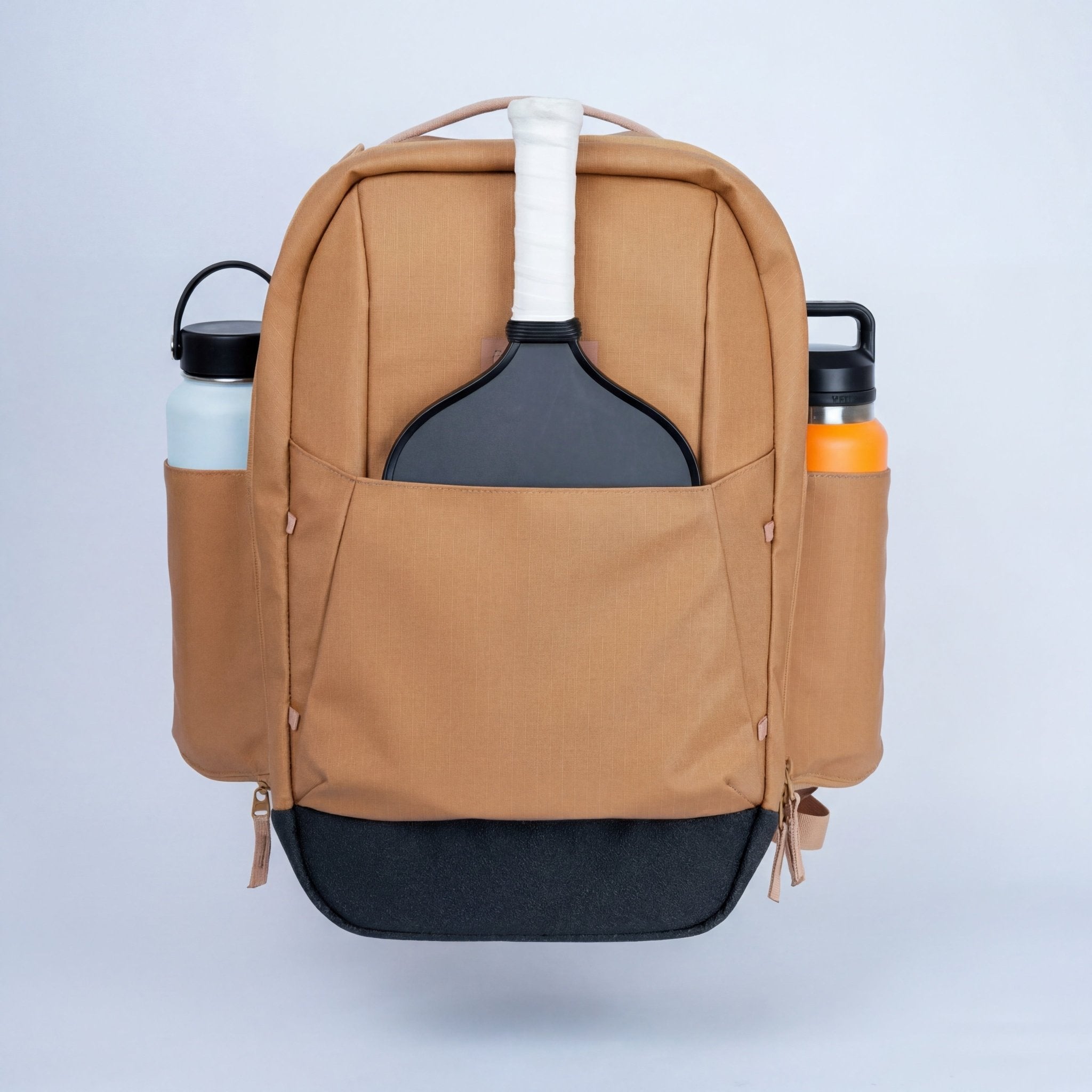
Tournament players running erne drills 3+ times a week carry at least two paddles — hard exchanges chip edges mid-match. The Court Ranger V2 ($195) fits 2–3 paddles in a protected modular sleeve with a separate ball compartment, so you're not digging through a main cavity between games. If you're carrying 3–4 paddles plus a full gear loadout, the Court Caddy ($325) is the step-up with more organization pockets and a 15" padded laptop sleeve for court-to-work days.

How to Defend Against the Erne
The erne is beatable. Your opponent has to commit hard to one side of the court and they have to do it early. When they move, they leave the rest of the court open. Your job is to read it and punish the vacancy.
Read the tell before the move
Watch their weight distribution, not just their paddle. Players setting up an erne shift their weight laterally right as they're about to make contact with a dink. Their outside shoulder drops slightly. Their stance opens toward the sideline direction. That's the signal — and it comes a beat before they actually move.
If you catch it: redirect the ball down the line or toward the center, away from where they're going. They can't stop momentum and change direction simultaneously. A soft, low ball down the line while they're mid-sprint to the corner is an unreturnable shot.
Three counters that work
The down-the-line redirect. They're moving toward the sideline. Hit straight down the line back toward where they started. They've abandoned that entire zone. This is the most reliable counter and doesn't require pinpoint accuracy — just direction.
The soft lob to the open sideline. They committed hard to one corner. A slow, arcing lob to the opposite sideline gives them zero time to recover. Even when they track it down, they're hitting from a disadvantaged position.
The drive to the middle seam. The erne often pulls both opponents to one side — the runner and their partner sliding to cover. That creates a wide seam down the center. A hard, flat drive into that gap, aimed low, is extremely difficult to handle from a sideways-shifted position.
The long-term defense: break the setup
Against players who run the erne repeatedly, the most effective counter is structural — stop giving them the setup. Avoid crosscourt dinks that hug the sideline. Keep your dinks toward the center of the kitchen, or vary the direction unpredictably. No repeating crosscourt pattern means no erne window. They can't fire a shot that never gets set up.
FAQ: Erne Shot Questions
What is the erne shot in pickleball?
The erne is a volley hit from outside the sideline, beside the non-volley zone, named after player Erne Perry. Instead of volleying from inside the NVZ (which is illegal), you jump or run around the net post and contact the ball from completely outside the court boundary. Legal, difficult to counter, and near-impossible to return when executed correctly.
Is the erne shot legal in pickleball?
Yes. Under USA Pickleball Rule 9.B, the erne is fully legal as long as your feet are outside the NVZ and the court sideline when you contact the ball, and you don't touch the net or net post during the shot. Your feet must be completely outside the sideline boundary — any foot in the kitchen at contact is a fault.
How do you set up the erne shot?
Bait a crosscourt dink pattern over 2-3 shots, then push one dink slightly toward your opponent's sideline. Watch for their paddle to commit to the return, then make your lateral move toward the NVZ corner. The key is moving after they've committed — not before — so they can't redirect down the open line you've vacated.
When should you attempt the erne shot?
Use the 4-point trigger checklist: a crosscourt dink pattern is established (2+ consecutive), the ball is tracking toward the near sideline, your opponent is watching the ball (not your movement), and you have a clear landing zone on their side. All four conditions should be true before committing. A selective erne at the right moment wins points; a forced erne creates an easy winner for your opponent.
How do you defend against the erne?
Watch for your opponent's lateral weight shift during the dink exchange — that's the tell. Once you see it, redirect the ball down the line or toward the center, away from where they're going. They can't reverse momentum while mid-sprint. Long-term: stop hitting predictable crosscourt dinks near the sideline. No consistent crosscourt pattern means no erne setup window.
What skill level do you need for the erne shot?
Realistically, 3.5+ for recreational use and 4.0+ for competitive execution. At 3.5 you have the dink consistency needed to set up the pattern. At 4.0+ you have the footwork control and reading ability to time the lateral move correctly. Below 3.5, the lack of dink pattern control means you'll rarely engineer the setup shot — and a misfired erne leaves your entire court wide open.

Leave a comment
This site is protected by hCaptcha and the hCaptcha Privacy Policy and Terms of Service apply.