


Last updated: October 2026
A reset shot in pickleball is a soft, controlled stroke hit from the transition zone that lands in the non-volley zone, neutralizing an aggressive ball and giving you time to advance to the kitchen. You're not trying to win the point with a reset. You're buying time and eliminating the opponent's speed-up advantage.
Most players understand the concept. Most players still pop it up. Here's why — and how to fix it.
What Is a Reset Shot in Pickleball? (The 30-Second Answer)
A reset is a defensive soft shot hit from the transition zone — the area between the baseline and the kitchen line — that drops into the non-volley zone (NVZ) on your opponent's side. The goal is to remove pace from the rally, neutralize an aggressive ball, and create time to move forward into the kitchen.
You don't swing for a reset. You block. The paddle absorbs the ball's energy rather than redirecting it. Done correctly, the ball dies softly in the kitchen. Done wrong — too much grip, too much backswing, contact too far behind your body — it pops up and becomes a gift for your opponent.
The reset is not a weak shot. It's a high-skill, high-pressure shot that separates 3.5 players from 4.0 players more than almost any other technique. The difference isn't the swing; it's whether the player knows when to use it and how to stay relaxed under fire.
When to Reset: Reading the Court Situation That Demands It
The most common reset mistake isn't the mechanics. It's choosing the wrong shot. Players reset when they should attack. They attack when they should reset. The result is a 50/50 gamble on every transition shot instead of a system.
Here's the decision tree that actually works:
| Situation | Recommended Shot | Why |
|---|---|---|
| Ball is below net height, coming fast | Reset | You can't attack a ball below the net — you'll push it down into the net or up for an easy put-away |
| Ball is at knee height, opponent at kitchen | Reset | Attacking into a set opponent at the kitchen creates a 50/50 exchange at best — the reset neutralizes the pressure |
| You're off-balance or out of position | Reset | Any attack from a compromised position is a mistake. The reset buys you time to recover |
| Ball floats above net height, you're stable | Attack | This is the ball you've been waiting for — a soft block here wastes the opportunity |
| Short ball bounces in your midcourt, you're set | Drive or attack | Early contact on a short bounce creates pace. Resetting this ball gives your opponent time to reset |
| Hard ball coming at your body in transition | Reset | Shoulder contact point is compromised — absorb the pace and live to fight from the kitchen |
The rule of thumb: if the ball is below net height or you're compromised in any way, reset. If the ball is above net height and you're stable, attack. Everything in between is a judgment call that gets easier with reps.
The Mechanics of a Good Reset: Grip, Contact Point, and Follow-Through
The reset is a push, not a swing. Three things have to happen simultaneously for it to land soft in the kitchen:
1. Loose grip. Most players rate their grip pressure at 7 or 8 out of 10 under pressure. A successful reset needs 3 out of 10. A tight grip turns the paddle face into a wall the ball bounces off. A loose grip lets the paddle absorb the energy. Practice holding the paddle as loosely as you can without dropping it. Your hand feels wrong. That's correct. Do 50 reps until it doesn't.
2. Paddle in front of your body. When the ball gets to the side of your body — past your hip — your shoulder locks up and you lose control. The contact point for a reset is out in front, between your torso and the net. This is a positioning discipline, not just a technical one. You have to get to the ball before it gets to you.
3. No backswing. The motion is a block with a slight forward push. Your elbow stays tucked. The shoulder does the work, not the wrist or arm. If you find yourself taking any kind of backswing before a reset, the ball is going up — every time.
Follow-through: short and controlled. Point the paddle face at the target (the opponent's kitchen). Don't let the paddle drift high after contact. If it drifts up, the ball goes up.
Grip selection also affects your reset quality. If you're still using a grip that's too thin or worn down, you'll compensate with extra hand pressure — a fresh, properly-sized grip eliminates one variable from your reset mechanics.
The 3 Most Common Reset Shot Mistakes (And How to Fix Them)
| Mistake | What It Looks Like | The Fix |
|---|---|---|
| Contact behind the hip | Ball gets beside or behind your body before you contact it | Move earlier. If you're late on the ball, you're missing the window. Take one shuffle step toward the ball as it travels — get your paddle in position first. |
| Wrist snap or arm swing | The reset sails high or long; you feel like you hit it too hard despite not trying to | Freeze your elbow to your ribcage. Literally hold your elbow against your body for the first few reps. The only motion is a small shoulder push. Everything else is still. |
| Tight grip under pressure | Ball rockets off the paddle faster than you intended, even with a "soft" motion | Consciously loosen grip between each shot during drills. Squeeze your paddle firmly, then release before the ball arrives. The deliberate release trains the loose-grip habit under match conditions. |
4 Drills to Build Your Reset Under Pressure
You can understand every mechanical principle above and still pop it up in a real rally. The reset is a muscle memory skill. The drills below build it progressively — start easy, add pressure as you succeed.
Drill 1: The Feed Progression (with a partner)
You stand in the transition zone. Your partner feeds balls from the kitchen, starting slow. For every successful reset — lands in the NVZ, below net height — your partner feeds slightly faster. For every pop-up or miss, they feed slower. Run 50 balls per set. You want to get to "fast" by the end of each set. If you're staying at "slow" for more than 3 consecutive sets, your grip is too tight.
Drill 2: 30-Ball Consecutive Reset (solo or partner)
Simple and brutal. Count 30 consecutive successful resets into the NVZ before stopping. One pop-up resets the count to zero. This forces focus and builds the habit of consistent contact. Most 3.5 players struggle to hit 10 in a row the first time. Most 4.0 players can hit 30 without a mistake. The drill tells you where you actually are.
Drill 3: The Advance Drill (progress toward the kitchen)
Start at the baseline. Your partner feeds medium-pace balls from the kitchen line. Each successful reset that lands in the NVZ earns you one step forward. A miss or pop-up means one step back. Get from the baseline to the kitchen without going backwards. This simulates the pressure of the real transition — if you give up one bad reset, you don't get to advance.
Drill 4: Body Ball Drill (simulate the hardest resets)
Have your partner deliberately feed balls at your body — at your right hip, left hip, and straight at your chest. Body balls are the hardest resets to execute because there's no natural contact window. You have to make one. This drill forces elbow tuck, early preparation, and loose grip simultaneously. Do 20 body balls per session. They feel awkward for weeks and then click.

"The reset isn't a weak shot — it's a decision. Players who see it as a concession miss it more than players who see it as buying time. When you own the reset, you own the pace of the rally. The team that doesn't panic in transition wins."
— Topher, FORWRD co-founder
Reset vs Dink: Why They're Not the Same Shot
Players mix these up constantly, especially at the 3.0–3.5 level. They're similar — both land in the NVZ, both require control — but they're mechanically and situationally different.
A dink is hit from the kitchen line when you have time and position. You're not under pressure. You're choosing to place a soft ball into the NVZ to maintain control, move your opponent, or set up an attack. The dink is an offensive or strategic shot.
A reset is hit from the transition zone when you're under pressure. You're not choosing it freely — the situation demands it. The ball is hard and fast. You're not in ideal position. The reset's only job is to neutralize pace and get you to the kitchen. It's a survival shot that often looks identical to a dink but requires different mechanics (more compact motion, more grip awareness, less time to prepare).
The confusion matters because the mindset is different. A dink player has time to think. A resetter has to react. Practicing dinks doesn't build your reset; it builds your dink. The drills above specifically train the compressed, pressure-response motion that a reset demands. Don't conflate them.
Once you've developed a reliable reset, the kitchen rules unlock differently — you know you can defend anything in the transition zone, which makes you more aggressive at the kitchen line and less afraid of being pushed back. Read our guide to pickleball kitchen rules to understand the NVZ rules that govern where your reset needs to land.
The natural progression: build your third shot drop first (same soft-hands discipline, less time pressure), then apply that feel to the reset under live-ball pressure.
FAQ: Common Questions About Pickleball Reset Shots
What is a reset shot in pickleball?
A reset shot is a soft, controlled stroke hit from the transition zone that lands in the opponent's non-volley zone. Its purpose is to neutralize a hard or fast incoming ball, remove pace from the rally, and give you time to advance to the kitchen line. It's a defensive play, not a point-winning shot.
When should you use a reset in pickleball?
Use a reset when the ball is below net height, coming fast or at your body, or when you're off-balance in the transition zone. If you can't attack a ball above net height with control, reset it instead. The reset buys you time to reach the kitchen, where you have the strategic advantage.
How do you practice reset shots in pickleball?
The most effective drills are feed progressions (partner speeds up with each successful reset), consecutive reset challenges (30 in a row into the NVZ), and advance drills (earn one step forward per successful reset from baseline to kitchen). Body ball drills — practiced at your hip and chest — train the most difficult real-match resets.
What is the difference between a reset and a dink?
A dink is an intentional soft shot hit from the kitchen line when you have time and position. A reset is a forced soft shot hit from the transition zone under pressure. Dinks are offensive or strategic; resets are defensive and reactive. Both target the NVZ, but the mechanics and mindset are different — dinks require touch, resets require discipline under pressure.
Why do my reset shots pop up?
The three most common causes: contact too far behind your body (past your hip), grip pressure too high (aim for 3/10 not 7/10), or a backswing before contact. Any one of these adds energy the ball doesn't need. Fix the contact point first — get the paddle in front of your body before the ball arrives — then work on grip pressure in drills.
Complete Your Setup
Serious drilling means more gear, not less.
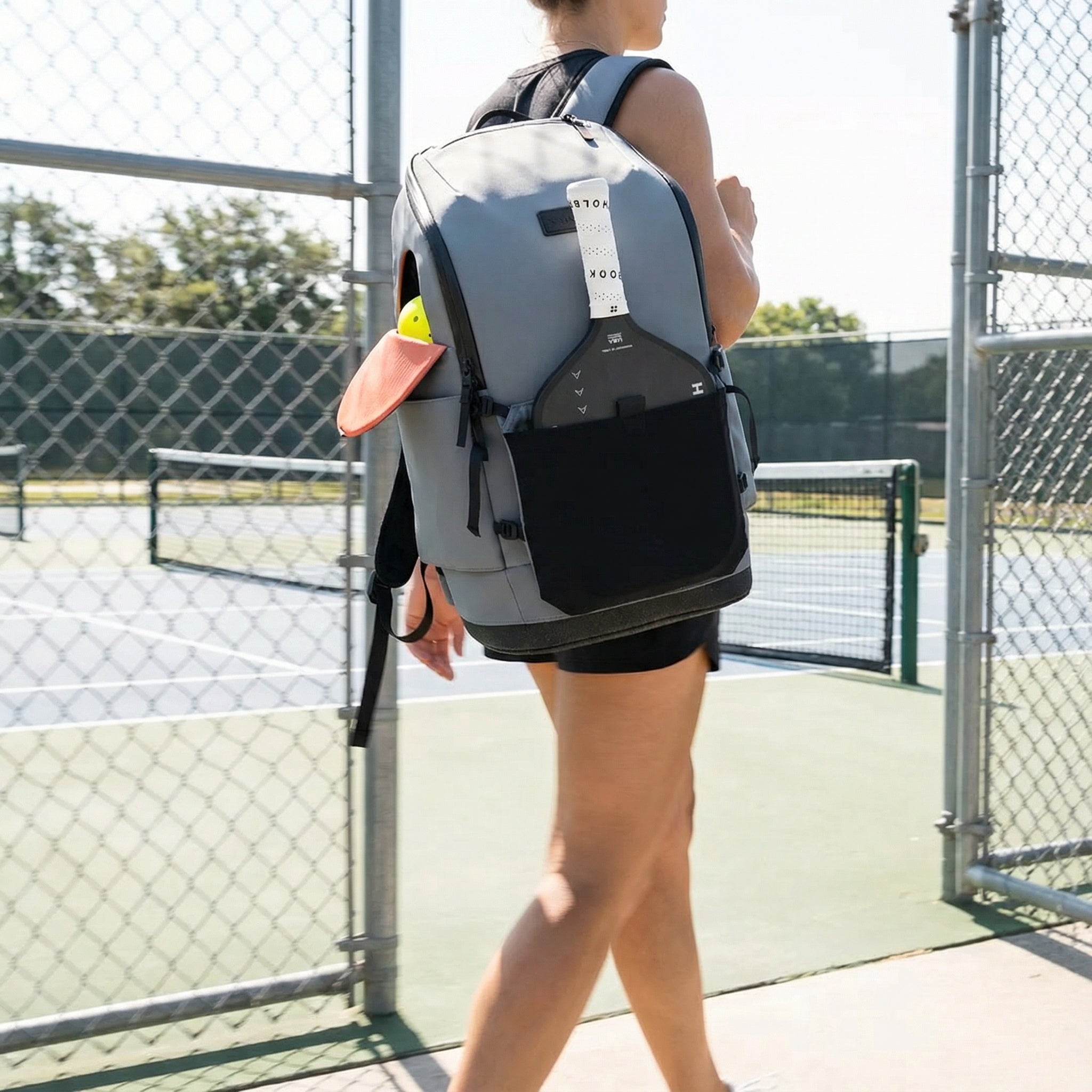
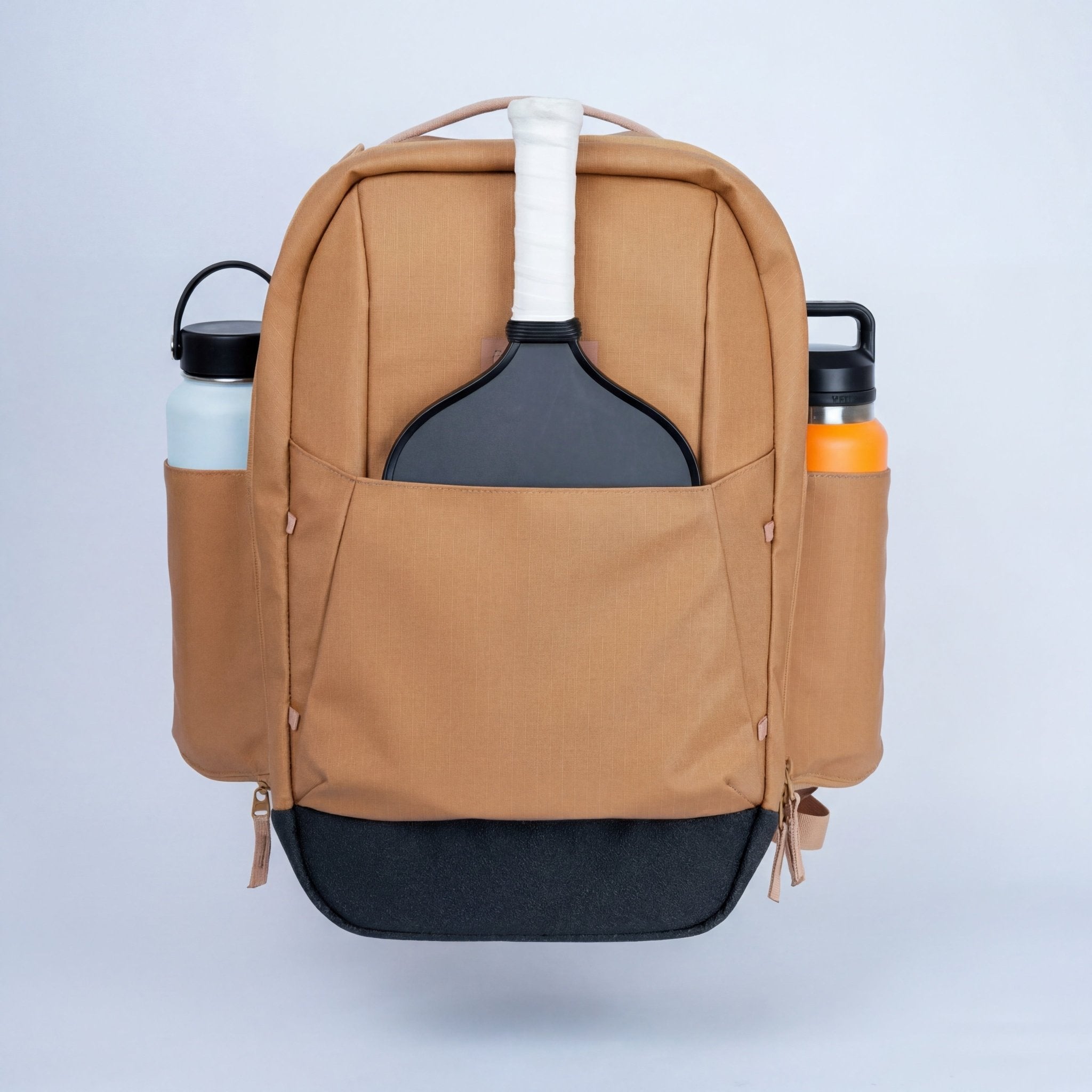
The FORWRD Court Caddy ($325) was designed for players who actually practice — modular paddle sleeve keeps multiple paddles protected and separate, YKK AquaGuard zippers hold up session after session, structured base stands upright on any bench. The Court Caddy organizes everything so you're focused on your drills, not your gear. If you play 3+ times per week and reset drills are now part of your routine, it's time to stop fighting a bag that doesn't work for you.

Leave a comment
This site is protected by hCaptcha and the hCaptcha Privacy Policy and Terms of Service apply.