

Last Updated: August 2026
The kitchen is a 7-foot zone. You can't volley from it. You can stand in it when the ball bounces. And somehow it still generates more disputes per hour of club play than every other pickleball rule combined.
Most of those disputes trace back to five specific misunderstandings — the momentum rule, the "I was already stepping back" defense, the "my paddle didn't touch the line" argument. This guide clears all of them up in plain language, sourced from the current USA Pickleball official rulebook. No hedging, no "it depends" non-answers.
The pickleball kitchen (non-volley zone) is the 7-foot area on both sides of the net, including the boundary lines. You cannot volley — hit the ball out of the air — while any part of your body, paddle, or clothing touches the kitchen. You can stand in the kitchen any time the ball has bounced first. If a volley's momentum carries you into the NVZ after contact, it's still a fault.
Key rules at a glance:
The kitchen line is part of the kitchen — touching the line while volleying is a fault, identical to stepping inside the zone.
Momentum is always in play — USA Pickleball Rule 9.B: if your momentum after a volley carries you into the NVZ, it's a fault regardless of when you cross the line.
You can stand in the kitchen any time the ball has bounced — including during dinking rallies, returns, and reset shots.
Everything connected to you counts — hat, paddle strings, shirt, shoelace. If it's part of you (or attached to you) and touches the NVZ during a volley, it's a fault.
Reaching over the kitchen is legal — body and paddle cannot touch the NVZ surface or line at contact, but extending your arm over the zone is fine.
"The momentum rule is the number-one call dispute we see at every skill level during club play. What makes it tricky is that it feels unfair — you hit the ball, you were stepping back, but your shirt grazed the line. The rule doesn't care about intent. It cares about where you were at contact and the trajectory that follows. Once players internalize that, the disputes basically disappear."
— Topher Lake, FORWRD Co-founder
Complete Your Setup
When you're playing 3+ times a week, a bag that keeps your kit organized matters. Court time is limited — you don't want to spend it digging through gear.
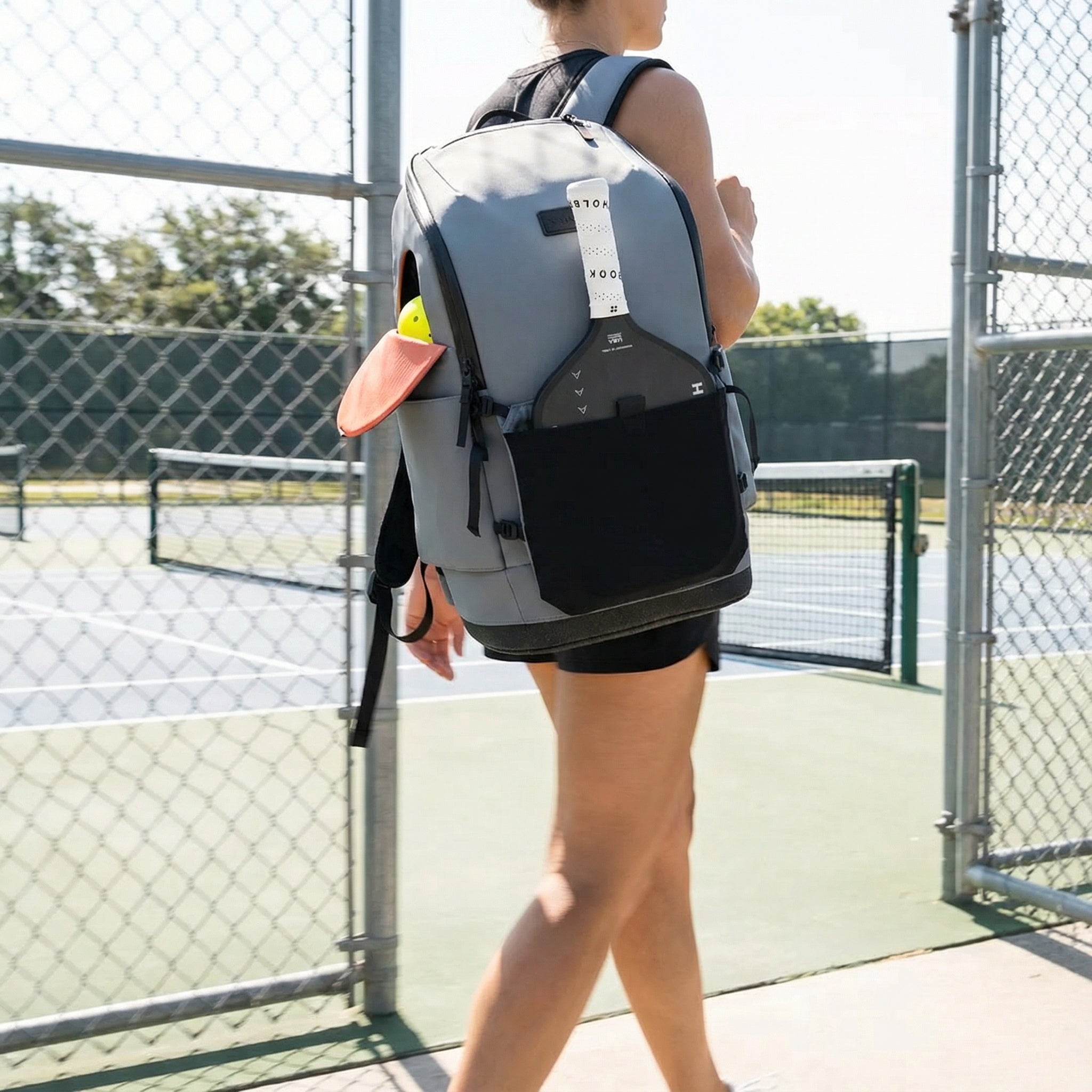
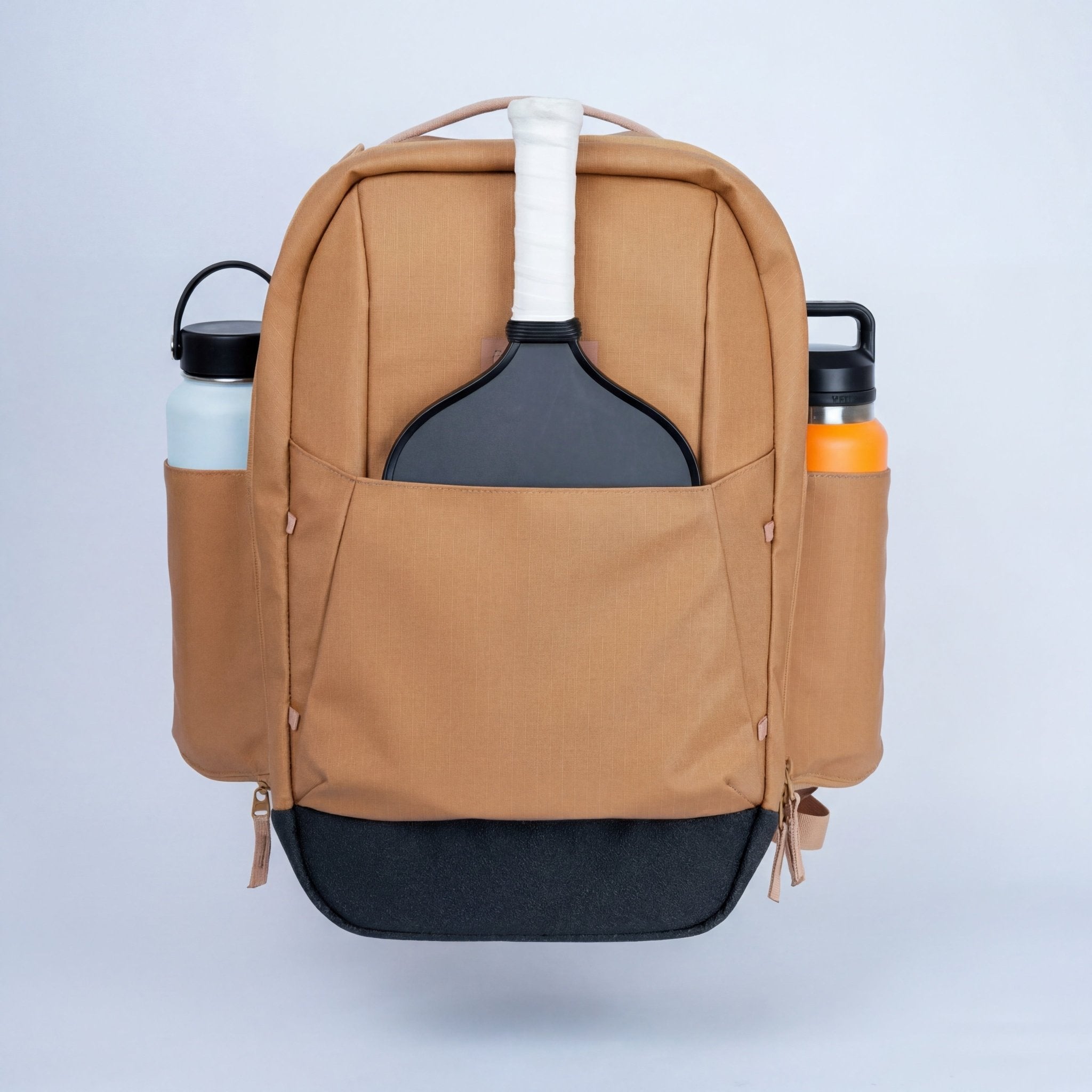
Our Pick: FORWRD Court Ranger V2
Modular paddle sleeve, 16" padded laptop sleeve, YKK AquaGuard zippers — designed with 500+ real players. Paddles organized, game-ready every time you show up.
Tournament-ready setup? The Court Caddy ($325) fits 4 paddles, 15" padded laptop sleeve — built for players who bring everything to the court.
The Kitchen in 60 Seconds: The Answer for People Who Just Want the Rule
Here's the rule stripped to its bones:
- The kitchen (non-volley zone) is the 7-foot rectangle on both sides of the net, including the lines.
- You cannot volley — hit the ball out of the air — from anywhere inside the kitchen or while touching the kitchen line.
- You can stand in the kitchen any time the ball has bounced first.
- You cannot use momentum to enter the kitchen after a volley, even after you've made contact with the ball.
That covers 95% of situations. The other 5% is where club games stall out in arguments. The sections below cover every edge case in detail.
One thing that surprises players coming from tennis: the kitchen doesn't become off-limits after the ball bounces inside it. Entering the kitchen to hit a bounced ball is completely legal. The restriction is specifically on volleying — hitting the ball before it bounces while in or touching the NVZ.
The 5 Kitchen Rules Players Get Wrong Most Often
Myth 1: "You can't ever step in the kitchen."
Wrong. You can be in the kitchen all day. Stand there, camp there, lean over it — the restriction is specifically on volleying while you're in it. You're allowed in the kitchen when the ball has bounced, when you're dinking (ball bounces first), or any time you're not about to volley. Backing out of the kitchen to hit a hittable dink is one of the most common self-inflicted errors in recreational play.
Myth 2: "If the ball lands in the kitchen, I have to leave before I hit it."
No — and this one costs players real points. If the ball bounces in the kitchen, you can be in the kitchen to return it. No rule requires you to exit first. The only fault is volleying while in the NVZ. A ball that bounces in the kitchen is fair game from anywhere inside the zone. Step in, let it bounce, hit it.
Myth 3: "My paddle didn't touch the line, so it's not a fault."
Irrelevant. The fault triggers when your body, paddle, clothing, or any connected equipment touches the NVZ or its boundary line during a volley sequence. The paddle is one of several possible triggers. Your hat falling off, your shirt brushing the tape, your shoe heel dragging — all faults. The rule covers everything connected to you. It doesn't require paddle contact.
Myth 4: "I was already stepping back when the ball came — so it's fine."
Nope. If any part of you is in the kitchen at the moment of volley contact, it's a fault. "I was in the process of leaving" isn't a valid defense under the official rules. This is the most contested call in recreational pickleball, and also the one most consistently called wrong by players who've been playing for years. Your intent doesn't factor into the ruling — only your position at the moment of contact.
Myth 5: "I can jump from outside the kitchen, volley over it, and land inside."
Fault. USA Pickleball Rule 9.C explicitly covers this: jumping from outside the non-volley zone, striking a volley, and landing inside the NVZ is a fault. Your landing position counts, not just your takeoff. This comes up on erne attempts — the aggressive side-of-the-court intercept shot that PPA Tour players like the sport's top competitors use in high-level play. Jump erne attempts are legal only if you land outside the kitchen.
The Momentum Rule: The One That Confuses Everyone
Here's the language directly from the USA Pickleball 2026 rulebook: "If a player's momentum after a volley causes any part of the player or anything carried by the player to touch the non-volley zone, it is a fault."
Translated: there is no safe momentum. If you volley and your forward movement carries you into the kitchen — one step later, mid-backpedal, even if you were clearly moving away — it's a fault if the volley created the momentum that led to the NVZ entry. The rule doesn't care about direction of travel. It cares about causation.
Two scenarios to make it concrete:
Scenario A: You're at the kitchen line. You hit a volley. Your follow-through carries your paddle across the kitchen line. Fault — your paddle (part of you) entered the NVZ as a result of the volley's momentum.
Scenario B: You volley from two feet behind the kitchen line. The shot's force pulls your weight forward. You take one step and your toe grazes the kitchen line. Fault — same rule, same outcome, greater distance doesn't change the analysis.
The counter-intuitive part: if you step into the kitchen (legally, because the ball has bounced), and then someone lobs you a ball you decide to volley while you're still inside the NVZ — that's a separate, unambiguous fault. You volunteered a fault by volleying from inside the zone. The momentum discussion doesn't even enter into it.
For players who want to understand the transition zone positioning that leads up to kitchen-line moments, our pickleball third shot drop guide walks through the approach sequence in detail — including the common footwork mistakes that put players in compromised positions at the NVZ.
Can You Stand in the Kitchen? (Yes — Here's When)
Yes. Completely legal. Here are the situations where being in the kitchen is not only permitted but smart:
- During a dink rally: The ball bounces in the kitchen. You can be standing inside the NVZ when you contact it. Most advanced players position themselves right at or just inside the kitchen line — they're in the zone at contact because the ball bounced first.
- After a drop shot lands short: Opponent's drop lands in the NVZ — step in, let it bounce, hit it. No fault.
- Strategically between shots: Using the kitchen as a recovery zone during scramble rallies is legal as long as you don't volley from inside it.
- After re-establishing outside position: If you entered the kitchen legally (ball bounced), you can volley again once both feet are clearly outside the NVZ. You don't need to wait for another bounce — just get your feet out first.
Players who fear the kitchen unnecessarily give up the most valuable real estate on the court. The NVZ restriction is narrow and specific: don't volley from it. Everything else — standing, dinking, resetting — is fair game. For a full grounding in pickleball's rules and court layout, our complete beginner's guide to pickleball is the natural starting point.
FAQ: Common Questions About the Pickleball Kitchen
Can you stand in the kitchen in pickleball?
Yes — completely legal. You can stand in the kitchen any time you're not volleying. During dink rallies, when the ball bounces inside the NVZ, or between shots, being in the kitchen is fine. The restriction is only on volleying while your body or equipment touches the kitchen or its boundary lines. Stand there freely.
What happens if your momentum carries you into the kitchen?
Fault. USA Pickleball Rule 9.B: if a volley's momentum carries any part of you or your equipment into the non-volley zone, it's a fault — even after contact. No "stepping back" exception exists. If the volley created the momentum that led to the NVZ entry, the fault stands regardless of when you crossed the line.
Can you reach over the kitchen line to volley?
Yes. Reaching over the kitchen is legal as long as your body, paddle, and equipment don't touch the NVZ surface or boundary line at contact. Erne shots work this way — the reach is legal, the landing position determines the fault. If your feet land outside the NVZ after the volley, no fault.
What is the kitchen line rule in pickleball?
The kitchen line is part of the non-volley zone — touching it while volleying is a fault, identical to stepping inside. A toe on the line, a shoe edge brushing the tape, a paddle swinging across it — all faults. There's no partial-contact exception. The NVZ restriction applies to the entire boundary in full.
Next read: Now that you know what you can't do in the kitchen, learn how to consistently get to the kitchen in the first place. Our pickleball third shot drop guide covers the drive-vs-drop decision tree, the 30-day drill progression, and the five mechanics checkpoints that separate inconsistent drops from match-reliable ones.

Leave a comment
This site is protected by hCaptcha and the hCaptcha Privacy Policy and Terms of Service apply.