

How to Dink in Pickleball: The Beginner's Guide to the Kitchen Battle
Last updated: May 2026
Most beginners lose points at the kitchen because they're trying too hard to win them. Here's the counterintuitive truth: dinking isn't defensive. It's how you build toward an attack — and missing that concept is why so many new players spend matches popping balls up for their opponents to crush.
A dink is a soft, controlled shot hit from near the non-volley zone (the kitchen) that arcs over the net and drops into your opponent's kitchen. It stays low. It forces your opponent to hit upward. Done right, it's an offensive weapon disguised as a passive shot.
New to pickleball entirely? Read our Pickleball for Beginners: Complete Guide before diving in here — it covers the court layout, scoring, and rules you'll need to understand what's happening during a kitchen battle.
A dink in pickleball is a soft, arcing shot hit from near the non-volley zone (kitchen) that lands inside the opponent's kitchen. It stays low over the net to prevent attacks. Dinking is the foundational skill of competitive net play — effective dinks force your opponent to hit upward, eliminating clean attack angles and building toward a point-ending opportunity.
The Basics of a Good Dink
- Where it's hit from: At or near the non-volley zone line, typically within 1–2 feet of it
- Where it lands: Inside the opponent's non-volley zone (kitchen), 7 feet deep from the net on the other side
- The ball height rule: A ball at or below net tape height when you contact it cannot be attacked effectively — dink it. Balls above net height may be attackable depending on trajectory.
- Grip pressure: 3–4 out of 10. A tight grip kills touch and creates inconsistency at the kitchen line.
- Swing mechanics: Shoulder rotation drives the dink, not the wrist. Wrist-driven dinks are the #1 source of pop-ups in beginner play.
- Dink vs. third shot drop: A dink is a kitchen-to-kitchen shot for players already at the net. A third shot drop is a baseline-to-kitchen transition shot — different purposes, similar soft mechanics.
- Pro patience benchmark: Ben Johns averages 25+ dink exchanges per kitchen rally in competitive PPA Tour matches before finding a ball worth attacking. Beginners try to force attacks in 4–5 exchanges. That gap is where points bleed.
What Is a Dink in Pickleball?
A dink is a short, soft shot that travels from your kitchen to your opponent's kitchen. Both start points — kitchen to kitchen — roughly 14 to 20 feet depending on positioning. The goal isn't power. It's arc, placement, and patience. You're trying to keep the ball low over the net on their side, forcing them to hit upward and hand you control of the rally.
The non-volley zone is 7 feet deep on each side of the net — as defined by USAPA official rules. You can't volley (hit out of the air) while standing in it. That rule is why dinking exists: once both teams are at the kitchen line, everyone has to let the ball bounce before hitting — which makes soft placement beats power every time.
Anna Leigh Waters, the dominant force on the PPA Tour women's side, is one of the best dinkers in professional pickleball. She doesn't win points by bashing — she wins them by being the most patient player in the rally, picking her attack moments carefully. That's the model.
What a dink is NOT: a defensive retreat. When beginners dink, it often looks tentative, like survival. Competitive dinking is aggressive patience — you're targeting corners, changing angles, reading your opponent's footwork, and waiting for the exact ball that rises above net height so you can attack it. The dink sets up the attack. Miss that concept, and the dink stays a weak shot instead of becoming your strongest one.
The Mechanics of a Good Dink
Bad dinking feels inconsistent and hard to control. Good dinking feels effortless — repeatable, low, and purposeful. Here's what separates them:
Get to the kitchen line first. This sounds obvious, but beginners constantly try to dink from mid-court and then wonder why the ball keeps sailing long or netting. The kitchen line is your base. Get there before you engage in a dink rally, or you're hitting something closer to a third shot drop — a different shot with different mechanics.
Stance: Feet shoulder-width apart, knees slightly bent, weight forward on the balls of your feet. You want to be leaning slightly into the court, not backed up on your heels. If someone pushed you gently from behind, you should step forward — not backward.
Grip pressure at 3–4 out of 10. Think of how you'd hold a tube of toothpaste if you didn't want any to come out — firm enough to control, loose enough to feel the contact. A tight grip deadens your touch and makes every dink feel like guesswork. Relax your hand.
Swing from the shoulder, not the wrist. This is the single most common fix coaches give beginners and the most ignored one. The motion for a dink comes from your shoulder rotating slightly forward — a short pendulum swing. Your wrist stays stable throughout. When you flick with your wrist, the ball trajectory becomes unpredictable in a hurry.
Contact point in front of your body. Every dink should be struck with your paddle arm extended slightly in front of you and below your waist. If you're reaching, you're late. If the ball is beside your hip, you've already lost control of direction. Contact in front, every time.
Follow-through low and short. Your paddle should finish below net height — not up by your shoulder. Think of brushing the ball forward and slightly downward. A high follow-through almost always means the ball goes high, and a high dink is exactly what your opponent wants.
When to Dink vs. When to Attack: The Ball Height Rule
This is where most beginners' kitchen games stall out. They don't have a decision framework, so every ball feels like a judgment call they're not qualified to make. Here's the rule:
Ball at or below net tape height when you contact it → dink. No debate. From that position, you'd have to swing upward to drive it, which means your shot angle points toward the ceiling and then down into your opponent. That's a pop-up. Your only option is to arc it softly back into their kitchen.
Ball above net height → now you have a choice. Ask: is this ball rising, flat, or falling? Rising balls and flat balls are attackable — the trajectory gives you room to flatten your swing and still keep the ball in bounds. Falling balls that still happen to be above net height are trickier; they need precision to attack cleanly. If you're not sure, dink.
The thing beginners miss is that you're not looking for any ball above net height to attack — you're looking for the right one. Ben Johns doesn't swing at every ball that comes above the net. He swings at the ones where the geometry is genuinely favorable. Everything else gets a patient dink back into the corner, waiting for the next opportunity.
Patience is the point. A dink rally isn't a failure to attack — it's construction. Every dink you hit forces your opponent to hit upward. Eventually they'll give you something short and rising, or they'll try to attack a ball they shouldn't and go wide. Your job is to keep building until that moment arrives, not to force it three exchanges in.
Common Dinking Mistakes and How to Fix Them
These five errors show up in nearly every beginner game. All fixable with focused practice.
Wrist-flicking instead of shoulder swing. The fix: slow the drill pace down and consciously lock your wrist. Hit 20 dinks focusing only on shoulder rotation. The trajectory becomes more consistent immediately, even if the motion feels slow. Speed comes later — consistency comes first.
Stepping back from the kitchen line. New players back up when the rally pace speeds up. Don't. Backing up does two things, both bad: it gives your opponent more reaction time on their side, and it changes the arc you need to land the ball in the kitchen. You're now hitting from mid-court into a shorter target. Move side to side. Stay at the line.
Too much backswing. A dink doesn't need a wind-up. If your paddle goes back past your hip, you're generating more power than you can control at close range. Keep the backswing compact — 6 to 8 inches, not a foot and a half. Most of the control in a dink comes from contact angle and follow-through, not backswing length.
Swinging upward through the ball. This is the pop-up culprit. When your swing plane travels upward through contact, the ball climbs — and a climbing ball at the kitchen is the most attackable shot your opponent will see all game. Contact the ball with a forward-and-slightly-downward swing path. Push the ball toward the target, not up toward the ceiling.
Watching your paddle instead of your opponent. Once you've made contact, your eyes belong on your opponent — their position, their paddle angle, their weight shift. A perfectly placed dink to their backhand corner means nothing if they've already repositioned for it. Read where they're not, and aim there.
3 Dinking Drills for Beginners (Setup and Reps)
These build in sequence. Don't skip to drill three before you can consistently execute drill one — the progressions are deliberate.
Drill 1: Cross-Court Consistency Rally
The goal: basic dink mechanics, 20 consecutive clean hits.
Setup: Two players, each at the kitchen line, positioned at their respective cross-court corner (not center). Rally dinks cross-court only — this is the most natural and statistically most common angle in real games.
Reps: Rally to 20 consecutive dinks without a pop-up, net error, or ball going wide. When you hit 20, switch to straight-ahead dinks. When you hit 20 straight, switch to cross-court from the other corner. Rotate until you've covered all four angles.
Watch for: If you keep sailing long → check your backswing length. If you keep netting → check contact point (too far back = too little loft) and paddle face angle (too closed = digs into net).
Drill 2: Dink and Move
The goal: maintain mechanics while moving laterally along the kitchen line.
Setup: Player A stands at one side of the kitchen line and moves laterally — step, shuffle, step — along the full width of the court while dinking. Player B hits alternately to Player A's forehand and backhand, forcing constant footwork.
Reps: Player A hits 15 dinks while moving, then both switch. Add this rule: if Player A produces a pop-up (ball above their shoulder height), Player B calls it, the rally resets, and the pop-up counts as zero toward the 15 reps. Start over.
Watch for: Most beginners rush their swing when their feet are moving. The goal is separating footwork from swing mechanics so both become automatic.
Drill 3: Pressure Dinking — The Attack Decision
The goal: learn the dink/attack decision from both sides of the ball.
Setup: Player A dinks every ball, no matter what. Player B looks for any ball above net height with a favorable trajectory and attacks it (flat drive or roll). Player A's job is to not give Player B an attackable ball.
Reps: Play to 10 points. Ball lands in the kitchen → 1 point for the dinking player. Ball goes out or into the net → 1 point for the opponent. Switch roles after each game.
Watch for: Player A will quickly discover what their pop-ups look like from the receiving end — usually their first reaction is "that was way more attackable than I realized." Player B will learn the difference between genuinely attackable balls and borderline ones that go into the net when forced.
"After playing with hundreds of recreational players at every skill level, the one pattern I keep seeing is beginners trying to win kitchen rallies by speeding them up — when the real skill is slowing them down and making your opponent uncomfortable. A great dink isn't passive. It's aggressive restraint. You're forcing your opponent to make a difficult shot upward, over and over, until they can't."
— Grub, FORWRD Co-founder
Dink vs. Third Shot Drop: What's the Difference?
Beginners conflate these constantly, and the confusion causes them to execute both incorrectly. The distinction is actually simple:
A dink is a kitchen-to-kitchen shot. You're already at the non-volley zone, and you're hitting a soft shot across roughly 14–20 feet that lands in your opponent's kitchen. Short distance, precision focus, touch-based mechanics.
A third shot drop is a baseline-to-kitchen shot. You hit it after the serve return, usually from near the baseline — 30 to 40 feet from the net — and the ball has to travel that full distance before dropping softly into the kitchen. It's how you transition from the back of the court into the kitchen rally. Completely different geometry, longer arc, more timing required.
Here's the sequence in a real point: you serve, your opponents return deep, you hit a third shot drop into their kitchen, you move toward the net as the ball floats, and once you arrive at the kitchen line — now you're dinking.
The third shot drop gets you to the kitchen. The dink keeps you there. They share similar soft-touch mechanics, but they serve entirely different roles in point construction. Don't try to dink from mid-court. If you're not at the line, you're hitting a drop shot — and drop shot mechanics from 30 feet are completely different from dink mechanics at 14 feet. Get to the line first. Then dink.
FAQ: Pickleball Dinking
What is a dink shot in pickleball?
A dink is a soft, controlled shot hit from near the non-volley zone (kitchen) that arcs over the net and lands in the opponent's kitchen. It stays low to limit attack options. The goal is to force your opponent to hit upward, keeping them from driving the ball aggressively.
How do you dink in pickleball?
Stand at the kitchen line with knees bent and grip at 3–4 out of 10 pressure. Swing from the shoulder — not the wrist — contact the ball in front of your body, and follow through low. Aim for a shallow arc that clears the net by 2–4 inches and drops before the kitchen line on their side.
Why is dinking important in pickleball?
Dinking controls the kitchen rally, which is where most points in competitive pickleball are decided. A consistent dink forces your opponent to hit upward, eliminating their attack angles. It builds toward a point-ending opportunity — players who dink well don't just survive kitchen rallies, they win them.
When should you dink vs. attack in pickleball?
Use the ball height rule: if the ball reaches you at or below net height, dink — you can't attack it cleanly from that angle. If the ball is above net height with a rising or flat trajectory, you have an attack option. When in doubt, dink. Forcing attacks on borderline balls produces more errors than points.
How do you stop popping up dinks?
Pop-ups come from swinging upward through the ball at contact. Fix it by using a forward-and-slightly-downward swing path rather than an upward scoop. Also check: backswing length (too long = too much power), paddle face angle (too open = ball climbs), and contact point (hitting beside your hip instead of in front of your body).
Dinking is the skill that separates recreational players from competitive ones — not because it's physically demanding, but because it requires a kind of disciplined patience most beginners haven't developed yet. Work through the three drills above in order, and you'll notice your kitchen game holding up under pressure within a few weeks of consistent practice.
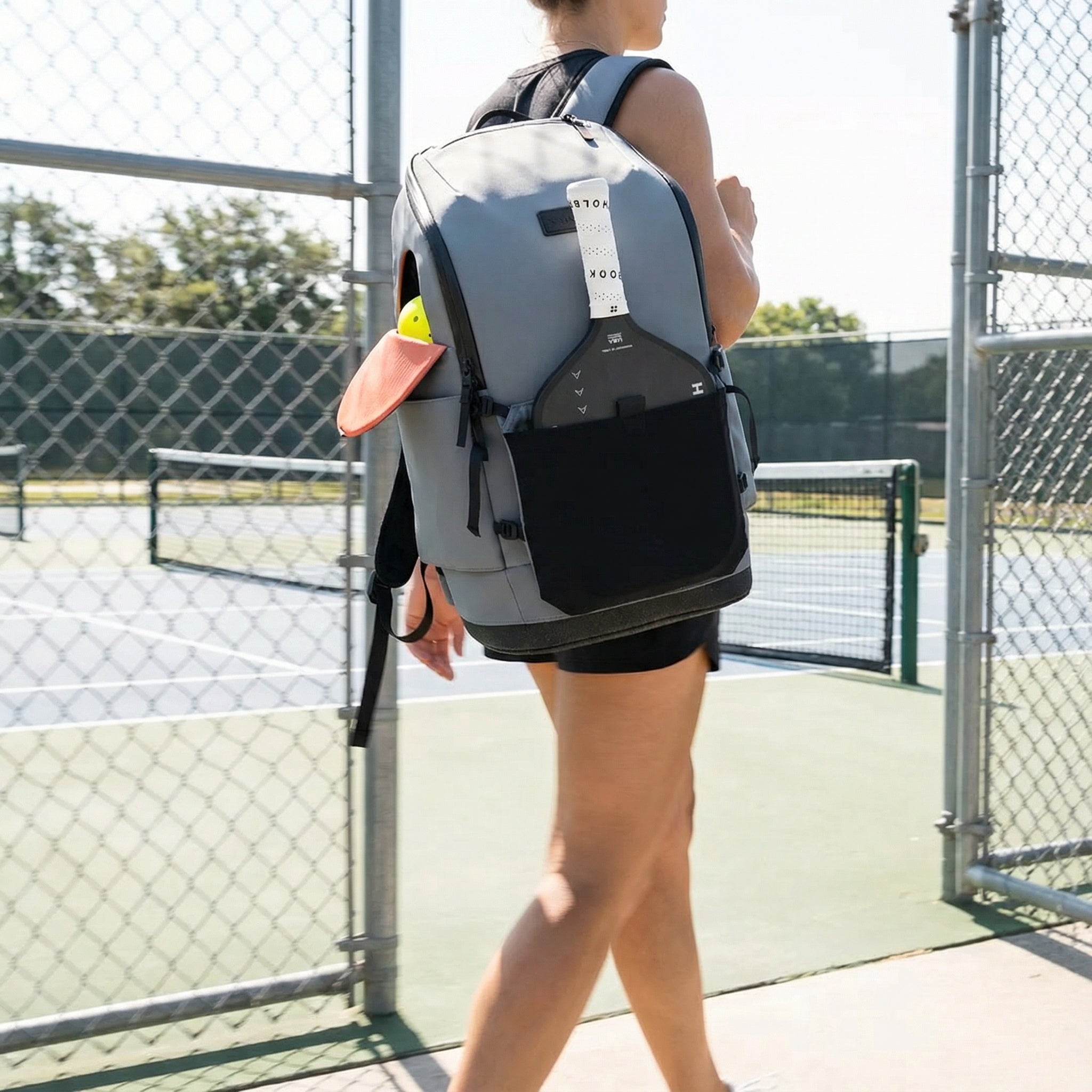
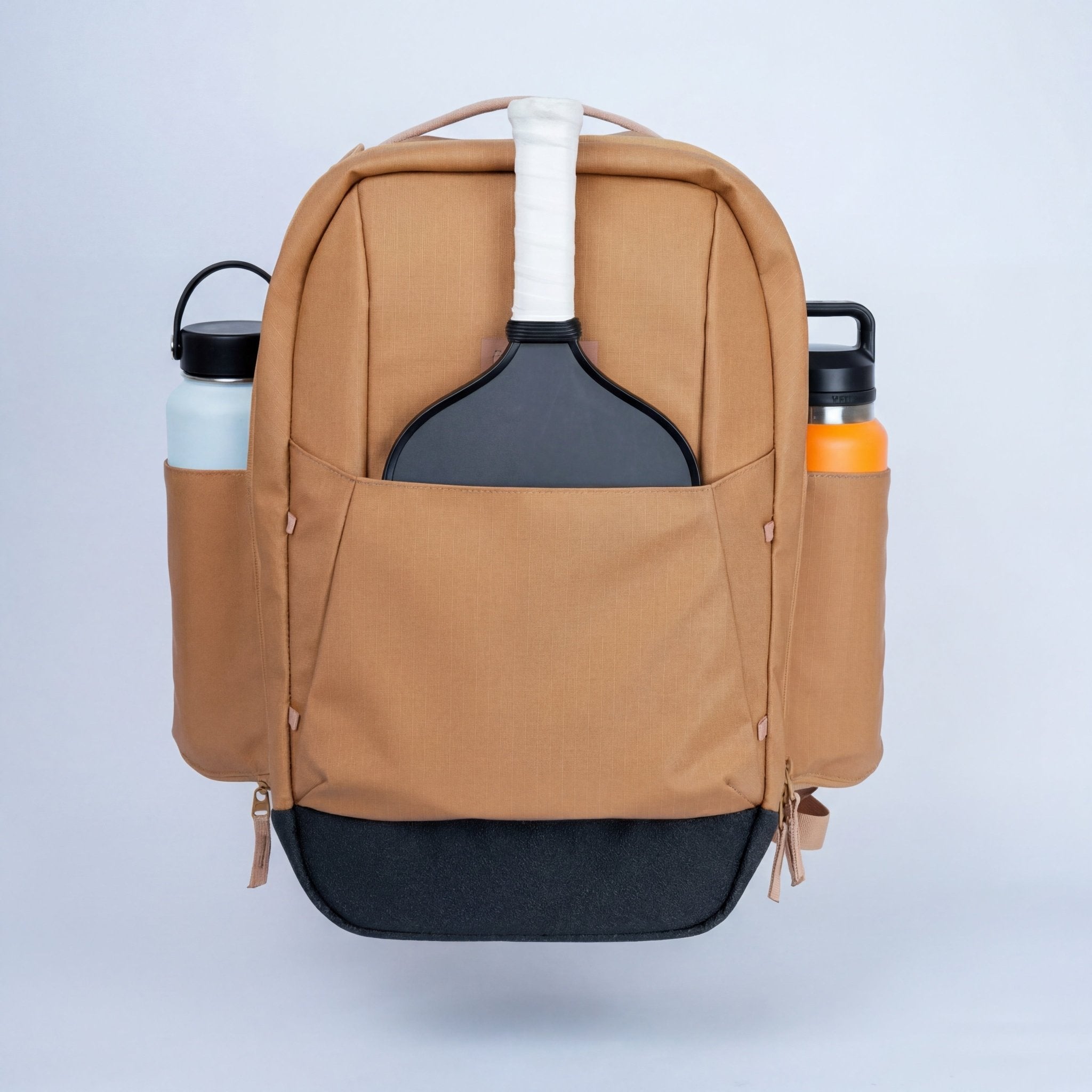
One thing that helps during dedicated kitchen practice: having your paddles protected and organized rather than jumbled at the bottom of a bag. The Court Ranger V2 ($195) has a modular paddle sleeve that keeps your practice paddle and match paddle separate — grab what you need without digging. Small detail, but when you're drilling dinks three times a week it adds up.
Ready to go deeper on every foundational skill? The Pickleball for Beginners: Complete Guide covers everything from scoring to strategy to gear in one place — the right next read once you've got the dink dialed in.

Leave a comment
This site is protected by hCaptcha and the hCaptcha Privacy Policy and Terms of Service apply.