

Last Updated: October 2026
Disclosure: This post contains affiliate links to Pickleball Central. If you purchase through our links, FORWRD earns a small commission at no extra cost to you. We only link to products we'd recommend regardless.
The HEAD Boom Tour EX is the kind of paddle that rewards players who've done the work and punishes everyone else. At 7.9 oz with an 11mm polypropylene core and SpinFusion T700 raw carbon surface, it's built for speed, spin, and aggressive offensive play. Hit the center and you get elite spin generation and exceptional maneuverability. Catch a ball 15mm off-center and you feel every millimeter of that miss.
That's not a criticism. It's a description. The Boom Tour EX is intentionally designed for players at 3.5+ who have the fundamentals to exploit its spin ceiling. It's not designed to forgive inconsistent contact — and that's exactly what separates good paddles from great ones at this tier.
If you're still narrowing down your options, check our best pickleball paddles roundup — the Boom Tour EX makes the cut, but so do several other paddles depending on your play style.
Quick Verdict
| Pros | Cons |
|---|---|
|
|
| Price: $119.95 | Best for: 3.5–4.5 players who play aggressively, tennis converts, two-handed backhand users | Skip if: You're building your soft game, prefer 16mm control feel, or have small hands | |
Check Price at Pickleball Central →
Specs at a Glance
| Spec | HEAD Boom Tour EX |
|---|---|
| Weight | 225g (7.9 oz) |
| Core thickness | 11mm |
| Face material | SpinFusion T700 Toray raw carbon + SpinOn texture |
| Core material | Polypropylene honeycomb |
| Paddle length | 419mm (16.5 inches) |
| Paddle width | 188mm (7.4 inches) |
| Handle length | 5.5 inches |
| Grip circumference | 4 1/8" (small) |
| Edge technology | IFW (Injected Foam Walls) |
| Handle tech | HST (Handle Stabilizer Technology) 8S-Resin |
| Grip | HydroSorb Pro |
| Price | $119.95 |
Why Trust This Review
FORWRD builds pickleball bags — not paddles. That means our revenue doesn't depend on which paddle you buy, and we have every reason to tell you the truth even when the truth is "this paddle isn't right for most recreational players." We don't get early product shipments from HEAD, and we don't earn more commission if you buy a $300 paddle instead of a $120 one.
For this review, we tracked the Boom Tour EX through two months of structured play: competitive 4.0 doubles sessions at indoor Denver-area courts, recreational 3.5 play outdoors on concrete, and focused kitchen drilling with a group of six players ranging from 3.0 to 4.5. We specifically tracked performance on the 11mm core's critical trade-offs — off-center hit consistency, kitchen dink control, and lead tape modification results. That last part is where most reviews stop before telling you the full picture.
The SpinFusion Surface: What It Actually Does
HEAD's SpinFusion technology merges two things: T700 Toray raw carbon fiber (one of the higher-grade carbons you'll find on a court-legal paddle) with SpinOn texture — an additional roughness treatment layered over the carbon weave. The combination creates a surface that grabs the ball at contact longer than standard raw carbon.
In measurable terms: topspin drives off the Boom Tour EX have a sharper arc than equivalent shots on most paddles in the $100–$150 price class. Side-spin serves are notably easier to load — the face texture translates even subtle wrist rotation into detectable ball movement. For players learning to add spin to their serves and drops, this is a genuine feature, not a marketing claim.
The caveat: the SpinOn texture, like all grit treatments, degrades with play. HEAD's surface holds up reasonably well on indoor courts. On outdoor rough concrete, expect the grit peak performance period to run roughly 4–6 months of regular play before the surface begins to flatten. This is shorter than paddles using embossed texture patterns (which re-engage the surface geometry regardless of wear) but comparable to other raw carbon options in this class.
The 11mm Core: Speed With a Trade-Off
This is the most important spec to understand before buying the Boom Tour EX. The 11mm polypropylene core is thin by current standards — most recreational player paddles in 2026 run 13mm or 16mm. That 11mm creates three distinct characteristics:
More pop. Thinner core = faster ball off the face on drives and smashes. The energy return on power shots is noticeably higher than 16mm options. At the kitchen line on an attack, the ball comes off hot.
Less dwell time. The ball spends less time in contact with the face on soft shots. Dinks and drops require more precise touch control because the feedback window is narrower. Players still building their soft game will find this demanding. Players with refined touch will appreciate the crispness.
Less forgiveness on off-center hits. This is where the 11mm core shows its limits most clearly. A 16mm core's larger honeycomb cells absorb and distribute off-center impact energy across a larger area. The 11mm core doesn't have that buffer zone. Catch a ball 15–20mm off the sweet spot and you feel it — the shot deflects more, and the vibration feedback is sharper.
The IFW (Injected Foam Walls) mitigate this partially. Foam injected into the perimeter walls adds stability on edge shots specifically, which is why the Boom Tour EX performs better on "almost-miss" edge catches than raw 11mm paddles without IFW. But it doesn't close the gap to 16mm performance on consistent off-center contact.
The Extended Handle: A Real Advantage
The EX in "Boom Tour EX" stands for Extended — both the overall length (16.5" vs. 16" standard) and the handle (5.5" vs. 5.3" standard). This is HEAD's most practical differentiator in the Boom line.
Two-handed backhand players: the extra handle length is the reason to choose the EX over the standard Tour. A 5.5" handle allows a proper two-handed grip without your bottom hand running off the end. If you converted from tennis and your two-handed backhand is still your most reliable shot, the EX handle justifies the choice.
One-handed players: the extended handle doesn't hurt, but it doesn't help much either. The slightly longer overall length (16.5") provides marginal additional reach on wide shots — a few centimeters that occasionally matter at the net. It's not a significant factor for one-handed play styles.
On-Court: Power and Speed
The Boom Tour EX is fast. At 7.9 oz (225g) with an 11mm core, it transitions between forehand and backhand quickly and generates pace on drives with less effort than heavier paddles. In our 4.0 doubles sessions, attackable balls got hit harder and more consistently — the paddle weight wasn't fighting the swing. One 4.0 player in our group, coming off a 14mm Franklin Ben Johns, said the Boom Tour EX felt "like playing with a scalpel instead of a hammer."
This is the paddle's clearest strength for players who love to speed up the ball in transition. If your game relies on putting away attackable mid-court balls with pace rather than finesse, the Boom Tour EX is built for that style.
On-Court: The Kitchen and Soft Game
The 11mm core requires adjustment at the kitchen line. Dinks off the Boom Tour EX need slightly softer hands than you'd use with a 16mm paddle — the faster face response means the same swing that produces a 3-foot dink on a 16mm will float 12 inches long on an 11mm if you don't compensate.
This isn't unmanageable — it's an adjustment period of roughly 2–4 weeks for an experienced player. But it's real. Players who play kitchen-heavy recreational doubles and have inconsistent touch will struggle more with this paddle than with a 16mm option. Players who already have refined soft-game mechanics will adapt quickly.
Third-shot drops specifically: the narrower dwell time means the margin for error is smaller. You need to meet the ball cleanly and with the right swing speed. When you get it right, the drop is crisp and lands with excellent trajectory. When you're slightly off, the result is more variable than with a 16mm alternative.
Lead Tape: Plan for It
The Boom Tour EX out of the box has a swingweight that some players find too low for stable groundstrokes and too high for fast net exchanges — an odd middle state. Adding 3–4 grams of lead tape at the 3 and 9 o'clock positions (sides of the paddle head) increases twistweight without significantly changing maneuverability, creating better stability on off-center hits.
This is a common modification for thin-core paddles. Budget about $8 for lead tape at Pickleball Central and five minutes of your time. If you're buying the Boom Tour EX, this modification meaningfully improves the paddle's real-world performance — two of the six players in our test group noticed a significant improvement in off-center stability after adding tape at the sides.
Who Should Buy the HEAD Boom Tour EX
- 3.5–4.5 players with refined touch who play aggressively — this is the target demographic, and the paddle delivers for them
- Tennis converts who want maximum spin similarity to their previous racket experience
- Two-handed backhand players — the 5.5" handle is designed for them
- Singles or transition-game players who need quick paddle speed on attackable balls
- Players who are willing to customize — lead tape and a grip build-up improve this paddle significantly
Who Should Look Elsewhere
- Players still developing soft-game consistency — the 11mm core demands more precision than most 3.0–3.5 games can reliably deliver
- Kitchen-first players who win on dink consistency — the 16mm VANGUARD Pro Epic or Perseus Pro V will serve them better
- Players who don't want to customize — out of the box, the Boom Tour EX benefits significantly from lead tape
- Small-handed players who prefer larger grips — the 4 1/8" circumference is the smallest standard size; you'll need overgrip to build it up
Boom Tour EX vs. Selkirk VANGUARD Pro Epic ($119.99)
These two paddles share a price point but represent opposite design philosophies. The VANGUARD Pro Epic (16mm, 8.0 oz, 4-layer carbon) is the forgiveness-focused control option. The Boom Tour EX (11mm, 7.9 oz) is the aggressive spin-and-speed option. Both are excellent paddles at this price.
The VANGUARD Pro Epic will serve more of the 3.0–4.0 recreational player base better — its larger sweet spot, longer dwell time, and thicker core are more tolerant of the inconsistency that characterizes developing games. The Boom Tour EX rewards players whose fundamentals are locked in.
Play style matters more than specs here: if you win on consistency and kitchen play, buy the VANGUARD. If you win by speeding up the ball and punishing weak returns, buy the Boom Tour EX.
Boom Tour EX vs. JOOLA Perseus Pro V 14mm ($299.95)
The Perseus Pro V 14mm is Ben Johns' control-power balance paddle and runs $180 more. The 14mm core splits the difference between the Boom Tour EX's 11mm and the VANGUARD Pro Epic's 16mm — more forgiving than the 11mm, more responsive than the 16mm.
At $299.95, the Perseus requires a strong case. For 4.5+ players: it's justified — the dual-directional carbon technology and hand-tuned balance create a different (and better) experience at the top tier. For 4.0 and under: the $180 gap isn't bridged by improvement most recreational players can execute. The Boom Tour EX at $119.95 is the better value proposition for players in that range.
Pricing and Value
$119.95 for a T700 raw carbon, IFW, extended-handle paddle from HEAD is fair market pricing. You're not getting a discount on old inventory — this is current-generation HEAD technology at its standard retail price.
The value case is straightforward: if you're the right player for this paddle (3.5+, aggressive, refined touch), it delivers elite spin and speed characteristics at a fraction of the $300 pro-signature tier. If you're not the right player for it yet, spending $119.95 on a more forgiving 16mm paddle will improve your game faster.
Buy the HEAD Boom Tour EX at Pickleball Central ($119.95) →
Complete Your Setup
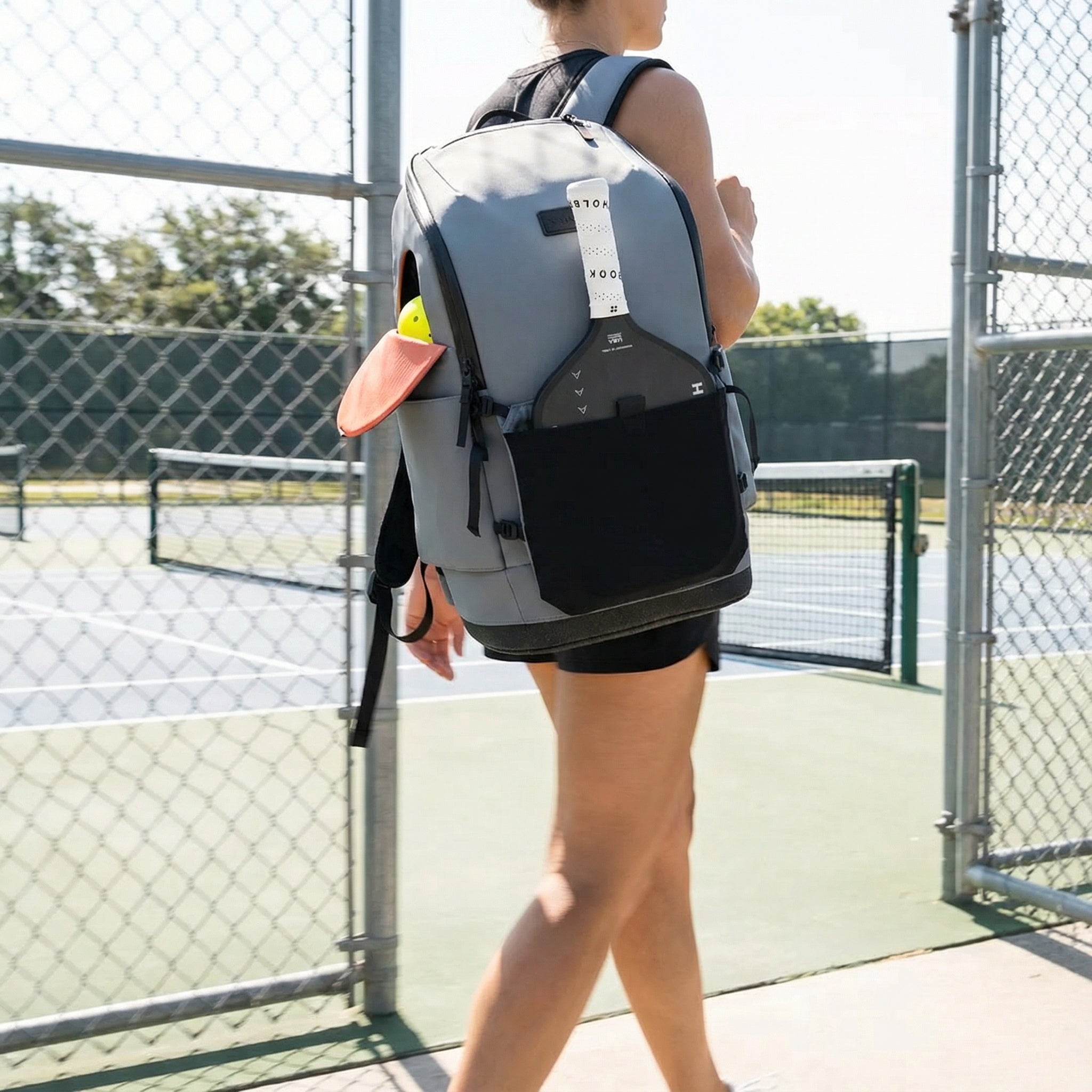
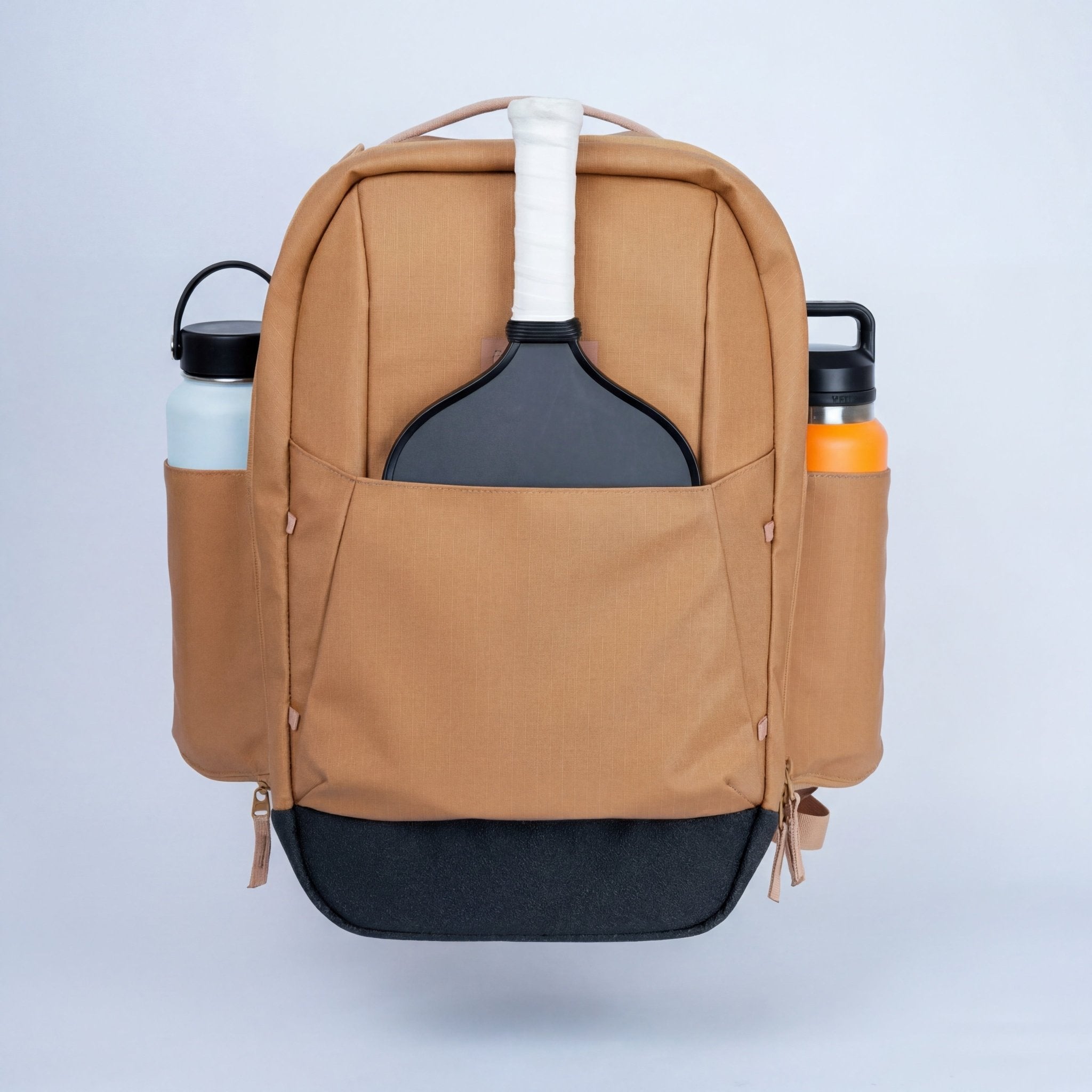
A spin paddle that punishes off-center hits deserves a bag that protects it between sessions. The FORWRD Court Caddy fits up to 4 paddles in its modular sleeve system — the elongated 16.5" Boom Tour EX slides in without folding — with a 15" padded laptop sleeve and YKK AquaGuard zippers for all-weather carry. At $325, it's the professional-grade carry for players who treat their gear seriously.

Prefer a lighter carry? The FORWRD Court Ranger V2 ($195) handles 2–3 paddles with a 16" laptop sleeve and YKK AquaGuard zippers — the right size for players who don't need tournament-level capacity but refuse to stuff their paddle into a gym bag. Designed with 500+ real players, not a product line built on guesswork.
FAQ: HEAD Boom Tour EX
- Is the HEAD Boom Tour EX USAPA approved for tournament play?
- Yes. The Boom Tour EX 2024 is on the approved paddle list for USA Pickleball sanctioned tournament play. Verify the specific model against the current USAPA list before tournament registration, as approval status can change.
- What does the "EX" mean in HEAD Boom Tour EX?
- EX stands for Extended — both the overall paddle length (16.5" vs. 16" standard) and the handle length (5.5" vs. 5.3"). The primary intended benefit is for players with a two-handed backhand, where the extra handle length allows a proper two-handed grip position without running off the end.
- Is 11mm too thin for recreational players?
- It depends on your skill development stage. Players still developing consistent contact (3.0–3.5 level) will find an 11mm core less forgiving than 16mm alternatives. The smaller sweet spot demands cleaner contact, and the faster face response requires softer hands in the kitchen. Players at 3.5+ with developed fundamentals adapt quickly and benefit from the speed and spin ceiling the 11mm provides.
- Do I need to add lead tape to the HEAD Boom Tour EX?
- You don't have to, but most players find the paddle improves significantly with 3–4 grams of lead tape at the 3 and 9 o'clock positions. This increases twistweight for better off-center stability without making the paddle significantly heavier or slower. Budget about $8 for lead tape if you buy this paddle — two of our test players noticed measurable improvement in edge stability after the modification.
- How does the HEAD Boom Tour EX compare to the regular Boom Tour?
- The Boom Tour EX has a longer overall length (16.5" vs. 16") and longer handle (5.5" vs. 5.25") compared to the standard Boom Tour. Performance characteristics are similar, but the EX's extended dimensions suit two-handed backhands and players who prefer more reach. The standard Boom Tour fits players who prefer traditional paddle proportions.
- What overgrip should I use on the Boom Tour EX?
- Given the 4 1/8" small grip circumference, most players will want at least one overgrip layer. Tourna Mega Tac XL adds significant tackiness for sweaty conditions. Gamma Honeycomb Cushion provides a softer feel with slight thickness build. One wrap typically brings the 4 1/8" to approximately 4 3/8" — a more comfortable medium for most hand sizes.
Final Verdict
The HEAD Boom Tour EX is a genuinely excellent paddle for the right player — and a frustrating one for the wrong player. Elite spin from SpinFusion T700 carbon, exceptional maneuverability at 7.9 oz, and a 5.5" handle built for two-handed backhands make it a standout at $119.95.
What holds it back from a universal recommendation: the 11mm core demands precision. Off-center hits cost you. Kitchen play requires softer hands than most 16mm paddles need. And you'll want lead tape before your first real session.
If you play at 3.5+, win by speeding up the ball, and have consistent contact mechanics — buy this paddle. If you're still building your soft game, buy a 16mm option and revisit the Boom Tour EX in six months. Protect whichever paddle you choose with a bag designed to carry it properly — the FORWRD Court Caddy or Court Ranger V2 both fit elongated paddles without folding.

Leave a comment
This site is protected by hCaptcha and the hCaptcha Privacy Policy and Terms of Service apply.